Automated Lead Scoring: Models, Pricing, and CRM Fit
ON THIS PAGE
Written by: Matt Beucler, CEO, Plura AI | Last updated: August 26, 2026
Key Takeaways
Automated lead scoring platforms fall into two groups: rule-based models that rely on manual criteria and predictive models that require substantial historical CRM data for training.
Plura AI’s AI Lead Intelligence delivers real-time scoring and enrichment from 30+ sources at first contact, so teams are not blocked by closed-deal minimums required by traditional predictive systems.
Native CRM integrations with Salesforce, HubSpot, and Zoho enable Plura to embed live enrichment directly into conversations across voice, SMS, RCS, and webchat without identity-matching issues.
Plura supports enterprise-grade compliance (SOC 2, HIPAA, ISO, GDPR, TCPA, DNC) as a built-in layer, which reduces the need for separate bolt-on solutions.1,2
Teams evaluating lead scoring solutions can test Plura AI’s real-time AI Lead Intelligence in live conversations by booking a demo.
Rule-Based vs. Predictive Lead Scoring
Rule-based lead scoring assigns manually defined points to explicit criteria such as job title, company size, page views, and form fills. The logic is transparent, fast to implement, and requires no historical data. It works well for teams with fewer than 500 closed-won opportunities in CRM history. In that range, machine learning models lack enough signal to outperform a carefully maintained points table. The primary liability is drift, because weights become stale as markets evolve and models lose accuracy without regular recalibration.
Predictive lead scoring uses machine learning trained on historical closed-won and closed-lost outcomes to output a conversion probability score. Production accuracy often runs 78–88%3 once a team has sufficient historical data with clean outcome labels. That threshold varies by platform, with published minima ranging from 40–120 converted or disqualified leads up to 1,000+ closed-won or closed-lost records. That accuracy ceiling helps explain why the predictive lead scoring market now sits in the billions, with a large percentage of B2B companies adopting or piloting AI-driven scoring despite the data requirements.
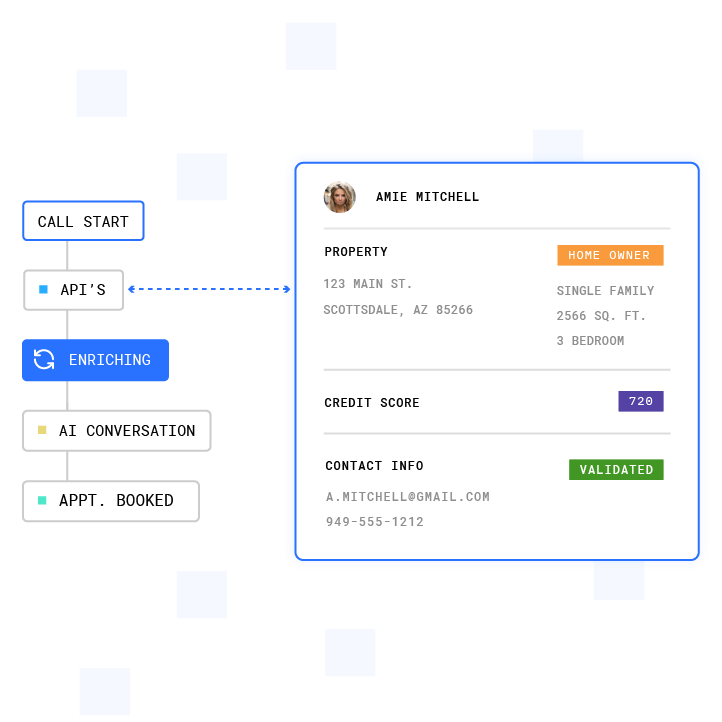
Plura AI’s AI Lead Intelligence scores leads in real time using behavioral signals, conversation context, and predictive intent modeling, enriching every contact from 30+ data sources before the first word is spoken. A solar operator using this layer increased conversion rates from 6% to 18%3 with the same leads and offer.
Plura Lead Intelligence enriches customer data with AI-powered insights, validation, and lead qualification to improve conversion performance.
CRM Integration Realities
Those conversion gains depend on how scoring data reaches your sales team. Native integration with Salesforce, HubSpot, or Zoho is the baseline expectation for any automated lead scoring platform. The implementation gap between expectation and reality is where most mid-market evaluations stall. A Deloitte survey found that 72% of companies lack unified, accessible data in the context of agentic AI adoption3,4, with identity-matching problems across CRM, email, and analytics tools as the most common root cause.
Timeline benchmarks for CRM-native scoring tools vary by platform and can range from one to several weeks depending on complexity. Enterprise setups extend further because of complex data landscapes, multiple stakeholder approvals, and custom integration requirements.
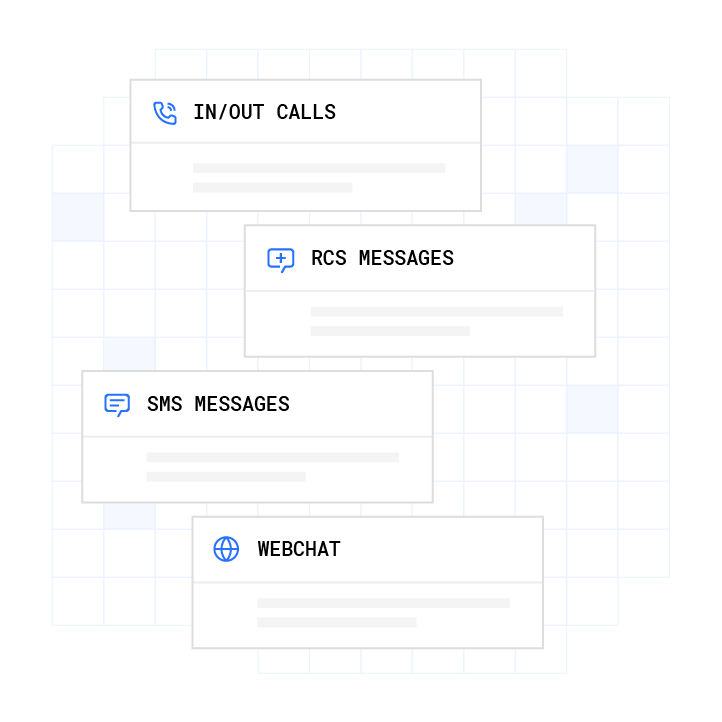
Plura’s native CRM integrations with HubSpot, Salesforce, and Zoho connect the AI Lead Intelligence layer directly to the contact record. Enrichment data from the multi-source enrichment layer arrives in the live conversation rather than in a downstream batch job. Every interaction is keyed to a customer token across voice, SMS, RCS, and webchat, which reduces the identity-matching fragmentation that breaks many multi-tool scoring stacks.
Plura Unified Inbox centralizes AI Voice, SMS, RCS, and Webchat conversations into one streamlined omnichannel communication workspace.
Run your numbers through Plura’s calculator to check your ROI in real time.
Choosing a Model by Company Size and Deal Volume
The following table maps your company profile and closed-deal volume to the scoring model that typically delivers the fastest time-to-value, with specific guidance on where Plura fits each scenario.
Company Profile
Closed-Deal Volume
Recommended Model
Plura Fit
Early-stage / SMB (<$10M ARR)
Limited closed-deal history
Rule-based or real-time AI enrichment
AI Lead Intelligence enriches from 30+ sources at first contact regardless of deal history
Mid-market ($10M–$50M ARR)
Moderate closed-deal history
Hybrid (rule-based base + predictive re-ranker)
Primary fit: real-time cross-channel scoring via AI Lead Intelligence with Stateful Conversation Database
Rule-based or real-time enrichment until data accumulates
AI Lead Intelligence operates on real-time enrichment signals, not solely historical CRM patterns
2026 Pricing Ranges and Gotchas
Pricing structure shapes both total cost and predictability for automated lead scoring. Per-seat pricing charges by the number of users accessing the platform and scales poorly as RevOps analysts and marketing users are added. Per-lead pricing offers predictability at low volumes but becomes costly as inbound scales. Usage-based pricing scales with API calls or scoring events and requires monitoring to avoid unexpected bills during campaign spikes. Flat-tier pricing provides cost predictability but often forces a jump to a significantly higher tier when a single volume limit is exceeded.
Common hidden cost categories include:
Overage fees when exceeding monthly lead or scoring limits
Charges for CRM integrations beyond the first connected system
API rate limits that force tier upgrades for higher throughput
Seat counts that include unanticipated roles such as admin or read-only analyst access
Differing definitions of a “lead” for billing purposes, where some platforms count every form submission including duplicates
Dedicated intent data platforms such as Bombora and 6sense typically start at $25,000+/year (around $2,000+/month) for SMBs, with 6sense averaging over $9,000/month, while AI lead scoring built into existing CRM platforms is often included at no extra cost.4
Plura’s transparent pricing is published at plura.ai/pricing with three tiers on annual contracts billed monthly, each including a 90-day opt-out window.
Implementation Timeline
Once pricing fits your budget, the next constraint is how quickly you can deploy. Implementation timelines vary by model type and CRM complexity. Rule-based scoring or native CRM scoring deploys quickly. Hybrid models often require several weeks. Pure predictive models can require several months, including data preparation, model training, and a parallel validation period running alongside the existing rule-based model for at least one full sales cycle.
Plura’s AI Lead Intelligence onboarding follows a defined sequence: discovery audit, intake of existing scripts and SOPs, overnight build of a conversation mockup, production workflow engineering, pilot test on a live call subset, and full go-live. Simple qualification flows are typically live in days. Complex multi-step intake workflows often run closer to one to two months.
Free CRM-native scoring carries three structural limitations. First, accuracy is capped by the data available inside a single CRM instance, with no enrichment from external intent or firmographic sources. Second, maintenance burden falls entirely on RevOps, with no automated retraining. Third, compliance coverage for the frameworks mentioned above is not included in scoring tools and must be sourced separately.
Paid platforms address accuracy and enrichment but introduce the pricing gotchas described above. Salesforce research indicates 79% of B2B teams are using or piloting AI lead scoring in 2026, while independent analyses from Forrester and Gartner report AI lead scoring achieving 72–85% predictive accuracy compared to 48–54% for rule-based scoring.3,4
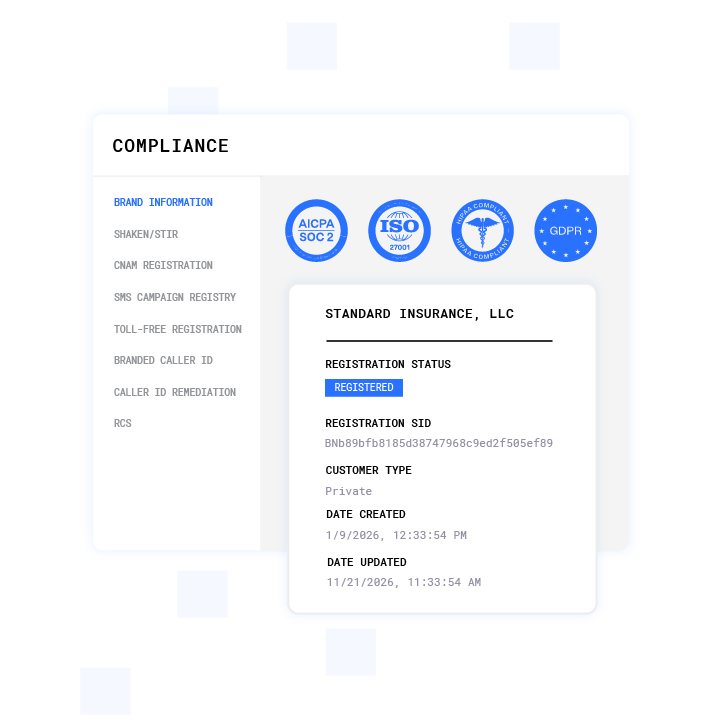
Plura’s platform supports those compliance requirements as first-class layers of the platform. Every outbound contact is checked against federal and state DNC registries in real time before dial. Consent records are timestamped and immutable. Customers remain responsible for their own regulatory obligations; Plura provides the infrastructure.
Plura Security & Compliance supports SOC 2, ISO, and GDPR standards with trust registration, verification management, and secure AI communications.
Next-Step Checklist
Use the following steps to eliminate options in under 10 minutes:
Count your closed-won deals in the last 18 months. With limited history, favor rule-based or real-time enrichment. With moderate history, consider hybrid. With extensive history, evaluate full predictive.
Audit your CRM data quality. If key firmographic fields are populated for fewer than 70% of records, predictive models will underperform regardless of platform.
Map your compliance requirements. Confirm whether any vendor on your shortlist supports the frameworks mentioned above natively, not via bolt-on.
Check integration depth. Native CRM integration with Salesforce, HubSpot, or Zoho should include real-time enrichment, not batch sync.
Verify pricing structure. Identify whether the model is per-seat, per-lead, usage-based, or flat-tier, and request a written definition of how a “lead” is counted for billing.
Confirm deployment timeline against your 30-day evaluation window. Rule-based and native CRM scoring can deploy quickly. Hybrid requires additional time for data preparation and testing.
Plura’s AI Lead Intelligence operates outside the closed-deal minimum constraint by enriching leads from the same multi-source enrichment layer at the moment of first contact across AI voice, AI SMS, RCS, and AI webchat. The AI Predictive Dialer prioritizes contacts using stateful conversion signals from the same database, so scoring and outreach operate on a single data layer rather than two disconnected systems.
Book a live demo with Plura at plura.ai/plura-webchat to see AI Lead Intelligence in a live conversation.
Frequently Asked Questions
What is the minimum data requirement to start using automated lead scoring?
Rule-based lead scoring has no data minimum. It deploys on any CRM using manually defined criteria such as job title, company size, and page visits, and can be live in days to weeks. Predictive lead scoring data requirements vary by platform, with published minima ranging from 40–120 converted or disqualified leads up to 1,000+ closed-won or closed-lost records before the model has enough signal to outperform a well-maintained rule set. Below that threshold, predictive models risk fitting to noise rather than genuine conversion patterns. Plura’s AI Lead Intelligence operates differently, because it enriches every lead from the same real-time data layer at the moment of first contact, so scoring begins on the first conversation regardless of how many closed deals exist in the CRM.
How does Plura AI’s lead scoring differ from CRM-native scoring tools like HubSpot or Salesforce Einstein?
CRM-native scoring tools score leads using data already inside the CRM, typically after a form fill or sales activity. Plura’s AI Lead Intelligence scores and enriches leads in real time during the conversation itself, pulling from external sources including firmographic data, intent signals, property data, and contact validation. The enrichment arrives in the live interaction, not in a downstream batch job. Plura’s scoring layer is shared across voice, SMS, RCS, and webchat via the Stateful Conversation Database, so a lead scored during an SMS thread carries that context into a subsequent voice call. CRM-native tools typically do not maintain cross-channel conversation memory by default.
What compliance frameworks does Plura support for lead scoring and outreach?
Plura supports compliance with SOC 2, HIPAA, ISO certification, GDPR, SHAKEN/STIR caller ID verification, TCPA compliance, and DNC compliance as built-in platform layers.1,2 Every outbound contact is checked against federal and state DNC registries in real time before dial. Consent records are timestamped and immutable. Quiet-hours rules enforce automatically through time-zone detection. The compliance dashboard exports audit-ready reports in one click. Customers are responsible for their own regulatory obligations and certifications; Plura provides the infrastructure that supports those obligations.
How long does it take to implement a hybrid lead scoring model for a mid-market team?
Hybrid models, which combine a rule-based base layer with a predictive re-ranker, can require several weeks from data audit to live deployment. The standard 90-day implementation plan for mid-market companies covers Days 1–30 for data audit and technology selection, Days 31–60 for data cleaning and model training, and Days 61–90 for pilot operation and feedback loops. Enterprise setups extend further because of complex data landscapes, multiple stakeholder approvals, and custom integration requirements. Plura’s AI Lead Intelligence onboarding compresses this timeline for teams that do not yet have sufficient closed-deal history for predictive training, because enrichment operates on real-time signals rather than historical CRM patterns alone.
What are the most common hidden costs in automated lead scoring platforms?
The most common hidden costs are overage fees when monthly lead or scoring limits are exceeded, charges for CRM integrations beyond the first connected system, API rate limits that force tier upgrades for higher throughput, and seat counts that include unanticipated roles such as admin or read-only analyst access. Platforms also differ in how they define a “lead” for billing purposes. Some count every form submission including duplicates and spam entries, while others count only net new contacts created in the CRM. Requesting a written billing definition before signing is a standard step in any evaluation. Plura’s pricing is published transparently at plura.ai/pricing with three tiers on annual contracts billed monthly, each including a 90-day opt-out window.
1 Plura AI maintains SOC 2, HIPAA, ISO, and GDPR posture as part of its platform infrastructure. References to compliance frameworks in this article describe Plura’s platform capabilities and do not constitute a guarantee that any customer using Plura will themselves be compliant with applicable laws or standards. Customers remain solely responsible for their own regulatory obligations, certifications, consent management, recordkeeping, and the claims they make to their own end users. Consult qualified legal counsel for guidance specific to your use case.
2 This article describes regulatory frameworks at a general level and does not constitute legal advice. Laws and regulations vary by jurisdiction, change over time, and apply differently depending on facts and circumstances. Readers should consult qualified legal counsel before making compliance decisions.
3 Performance figures, customer outcomes, and industry statistics referenced in this article are drawn from cited third-party sources or Plura customer case studies. Individual results vary based on implementation, use case, industry, audience, and execution. Past or aggregate performance is not a guarantee of future results.
4 References to third-party products, services, companies, or research are made for informational and comparative purposes only. Plura AI is not affiliated with, endorsed by, or sponsored by any third party named in this article unless explicitly stated. Trademarks and product names referenced remain the property of their respective owners.
5 This article contains forward-looking statements regarding industry trends, technology adoption, and future capabilities. These statements reflect current expectations and are subject to change. Plura AI undertakes no obligation to update forward-looking statements except as required.
This article is provided for informational purposes only and reflects Plura AI’s understanding at the time of publication. Product capabilities, integrations, and specifications are subject to change. For the most current information, visit plura.ai.
This article was produced with the assistance of AI tools and reviewed by Plura AI prior to publication.