Live Transfer Call Recording Requirements: 2026 Guide
ON THIS PAGE
Written by: Matt Beucler, CEO, Plura AI
What You Need To Know About Live-Transfer Recording
Live-transfer recording requires clear disclosure and consent from every party at each handoff, with the strictest applicable state law applied.
Thirteen states are commonly treated as all-party consent jurisdictions, so multi-party calls often need consent from everyone on the line.
Re-disclosure must occur at the moment of transfer, in addition to the initial disclosure at call start, with consent logged at each stage.
Industry rules such as CMS, HIPAA, and state insurance regulations often require 3 to 10 years of secure storage, with opt-outs captured and timestamped.1
Why Consent Rules Matter For Live-Transfer Workflows
Live-transfer calls sit at the intersection of federal wiretap rules and state consent laws. The federal baseline comes from 18 U.S.C. § 2511(2)(d), part of the federal Wiretap Act.2 Under that provision, a person who is a party to a call may record it if at least one party has given prior consent, unless the interception is for a criminal or tortious purpose. Violations of the Wiretap Act can carry criminal penalties, including fines or imprisonment of up to five years under 18 U.S.C. § 2511(4)(a).
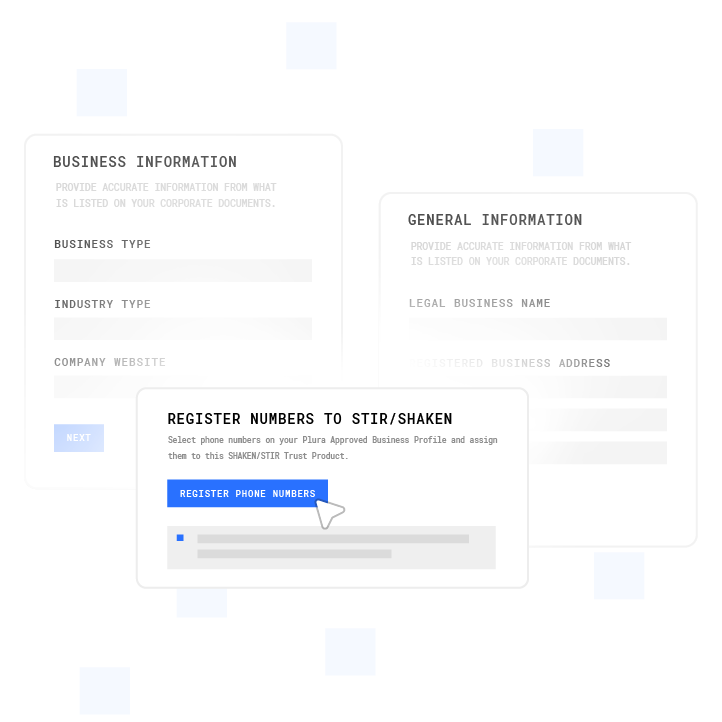
Plura’s FCC-licensed AI communications platform simplifies compliant business registration and phone number provisioning for AI Voice, SMS, RCS, and Webchat workflows.
State law often sets a higher bar than the federal standard. Thirteen states are commonly treated as requiring all-party consent for call recording, although some are hybrid or interpreted differently in specific scenarios. When a live transfer creates a multi-party call, the consent analysis changes. If the caller is in an all-party state and the receiving agent is in a one-party state, the stricter all-party rule still governs the caller’s rights. Many contact centers choose to obtain consent from all parties on every call to simplify operations across geographies. For current state requirements, review the Reporters Committee for Freedom of the Press state-by-state recording guide or consult qualified counsel.
*Some sources treat Connecticut, Michigan, and Oregon as hybrid or one-party in certain contexts. Review current state guidance and case law with qualified counsel.
The Live-Transfer Handoff And Consent Continuity
The live-transfer handoff is usually the highest-risk moment in a recorded call. The FCC notes that it has no rules for individuals recording calls, so state law controls most commercial scenarios. In all-party states such as Florida, Fla. Stat. § 934.03 requires prior consent from all parties to the communication. A call that starts with proper disclosure can become noncompliant if a new party joins and does not receive a recording notice.
Risk increases when the receiving party is a separate entity, such as a lead-generation partner transferring to a licensed insurance agent. The caller needs a fresh notification that a new party has joined and that recording continues. Their decision to stay on the line after that point can then be tied to a clear consent record.
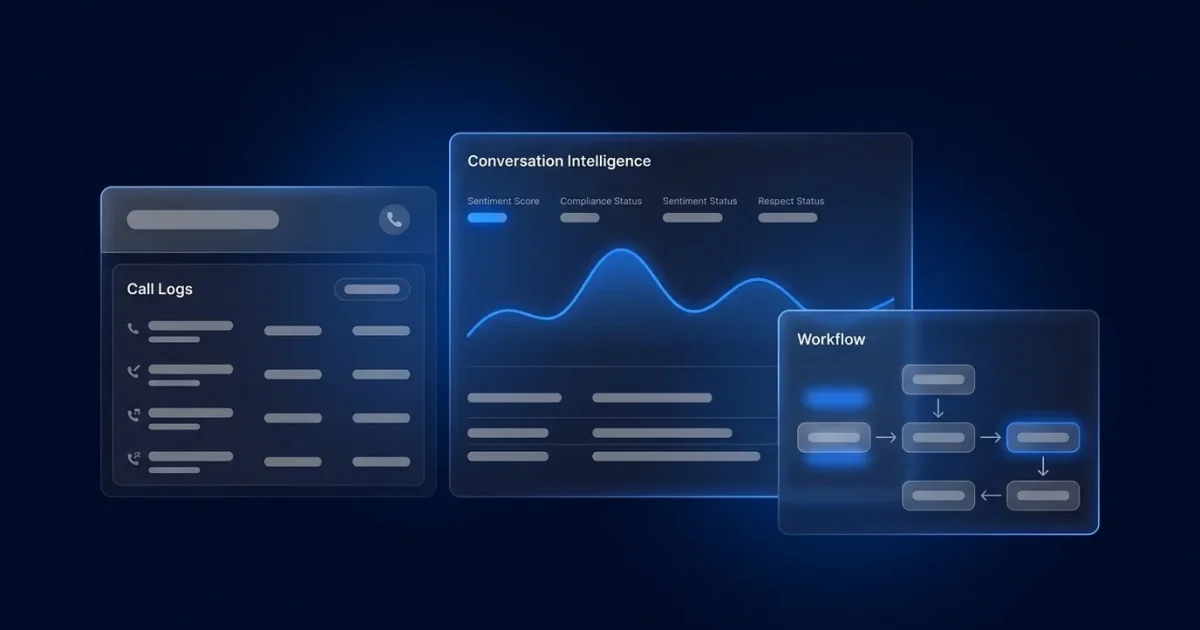
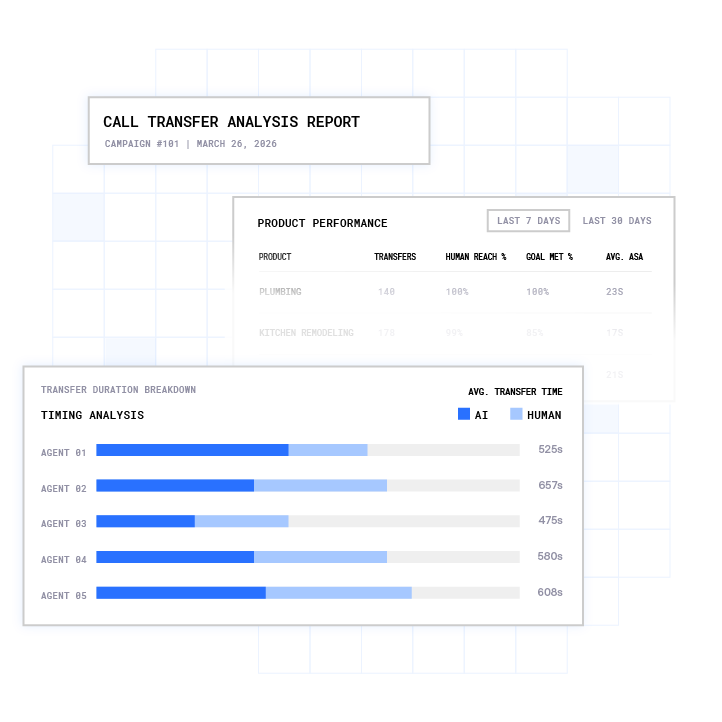
Plura Conversation Intelligence gives businesses AI-powered analytics, call transfer tracking, and customer interaction insights across every conversation.
The following steps outline a typical live-transfer workflow that supports consent continuity:
Initial disclosure at call start: The caller hears that the call is being recorded before any substantive discussion begins.
Transfer announcement: The first agent announces the transfer and confirms that recording will continue during the handoff.
Re-disclosure by the receiving agent: The receiving agent independently notifies the caller that recording is active on their side.
Affirmative consent where required: In all-party consent states, the receiving agent asks for explicit permission to keep recording before proceeding.
Opt-out handling: If the caller objects, recording stops immediately and the request is documented with a timestamp.
Consent should remain uninterrupted and traceable at each stage. Many live-transfer compliance issues arise from a missing disclosure or unlogged consent at the exact moment of transfer.
The states commonly cited as requiring all-party consent include California, Connecticut, Delaware, Florida, Illinois, Maryland, Massachusetts, Montana, Nevada, New Hampshire, Pennsylvania, Oregon, and Washington. In these jurisdictions, every participant on the call typically must consent before recording begins or continues.
Definitions and penalties differ by state. In California, Penal Code § 632(c) defines a “confidential communication” as one carried on in circumstances that reasonably indicate a desire for privacy. Communications in public gatherings or open proceedings fall outside that definition. In Florida, Fla. Stat. § 934.03(4)(a) classifies certain violations of the interception prohibition as a felony of the third degree.
New York illustrates the contrast. It is generally treated as a one-party consent state under N.Y. Penal Law § 250.00, which defines wiretapping as recording without the consent of either the sender or receiver. One party’s consent is therefore sufficient under that statute. Because state rules evolve, review the Reporters Committee guide and work with qualified counsel before finalizing your recording workflow.
Retention Rules That Affect Live-Transfer Recordings
Retention obligations vary widely by industry, product line, and record type. The table below summarizes several common frameworks that affect live-transfer recordings.
Industry / Regulation
Retention Expectation
Governing Rule
CMS Medicare (insurance marketing and sales)
6 years for call recordings, 10 years for enrollment records
42 CFR 422.2274(g)(2)(ii)
HIPAA (protected health information)
6 years from creation or last effective date
45 CFR 164.316
TCPA (telemarketing)
No specific period, but consent records are often retained to support audits
47 U.S.C. § 227
State insurance regulations
Often 3 to 7 years, with some rules extending to 10 years
Check your state department of insurance
General business
Varies by state and contract
Consult qualified counsel
Recorded calls that contain protected health information should be stored in line with the technical safeguard requirements in 45 CFR Part 164. The TCPA, through 47 U.S.C. § 227 and the FCC’s rules at 47 CFR 64.1200, focuses on automatic telephone dialing systems and prerecorded or artificial voice messages.2 It does not directly govern recording consent. Many organizations keep TCPA consent records separate from recording consent records so each can be produced independently during an audit.
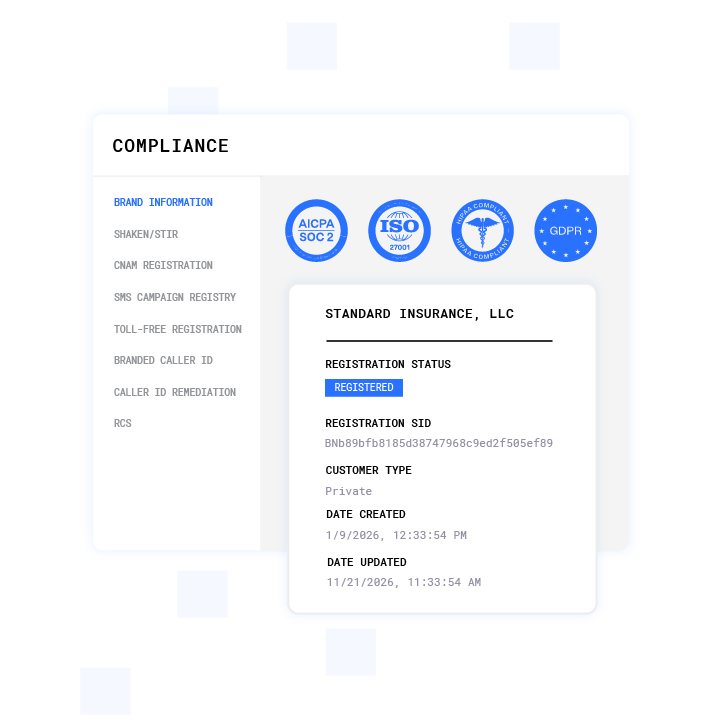
Plura Security & Compliance supports SOC 2, ISO, and GDPR standards with trust registration, verification management, and secure AI communications.
Practical Disclosure Scripts For Live Transfers
The following scripts provide starting points for your teams. Adapt them to your products, brands, and calling geographies, and review them against applicable law before rollout.
Initial disclosure script (at call start):
“This call is being recorded for quality and training purposes. Please hold while I transfer you to [Agent Name].”
Transfer-specific script (receiving agent):
“This call is being recorded. You are now speaking with [Name] from [Company]. Do I have your permission to continue recording this call?”
All-party consent script (for all-party states):
“I need to let you know that this call is being recorded. Do I have your permission to continue?”
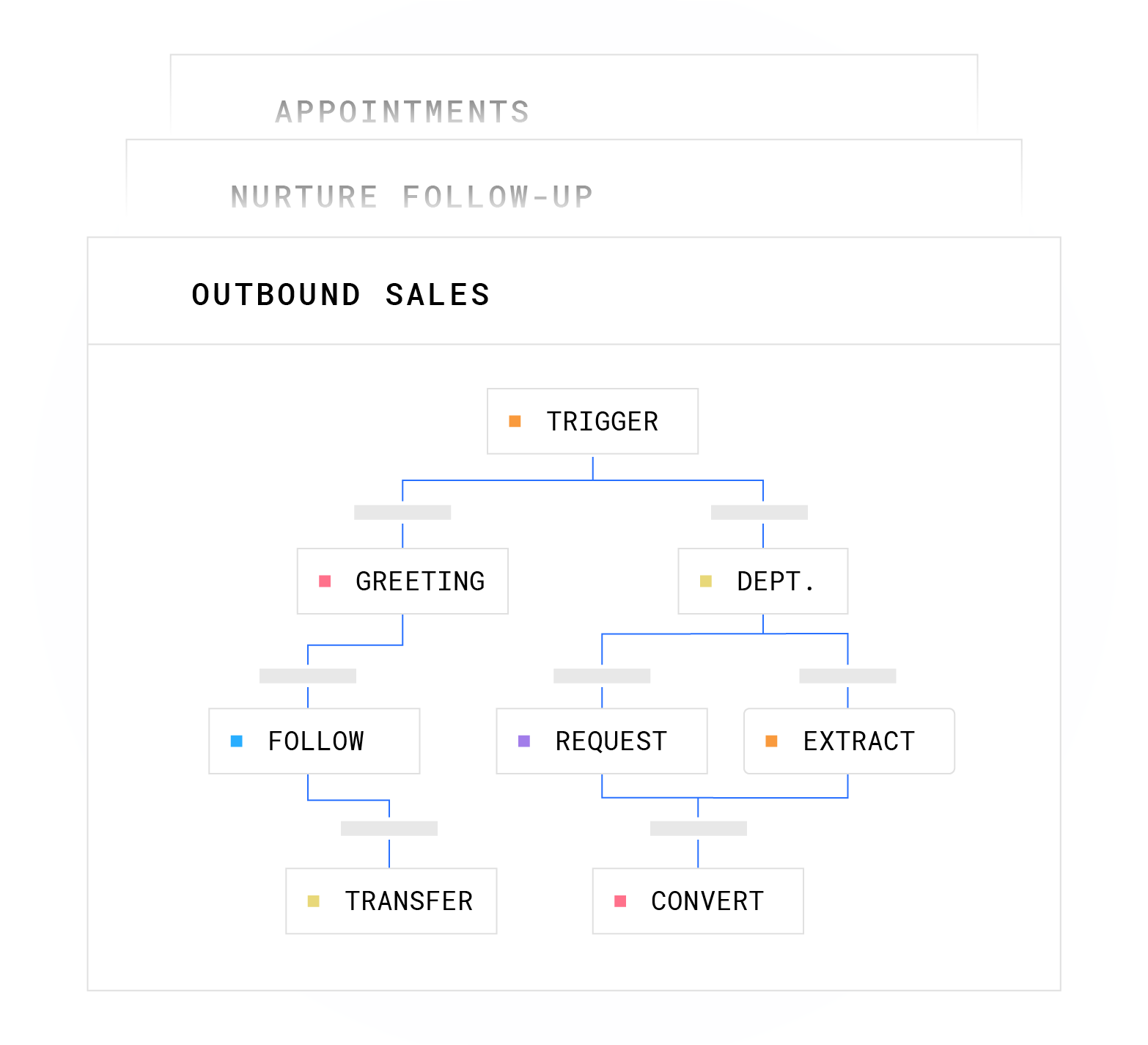
Plura Workflow Builder maps AI conversation flows with triggers, routing paths, follow-ups, transfers, and conversion logic.
Handling Opt-Out Requests During A Transfer
Callers sometimes change their minds about recording in the middle of a transfer. In all-party consent states, continuing to record after an objection can create significant exposure. A clear, repeatable process helps agents respond quickly and gives compliance teams a defensible audit trail.
To handle an opt-out request effectively, give agents a one-click way to pause or stop recording so they can act immediately. Then log the request with a timestamp and the agent’s identifier at the moment it is received, which creates a traceable record. If the conversation needs to continue, route the caller to a non-recorded line. Finally, document the opt-out in your consent records, stored separately from the call audio, so you can produce the record without exposing call content.
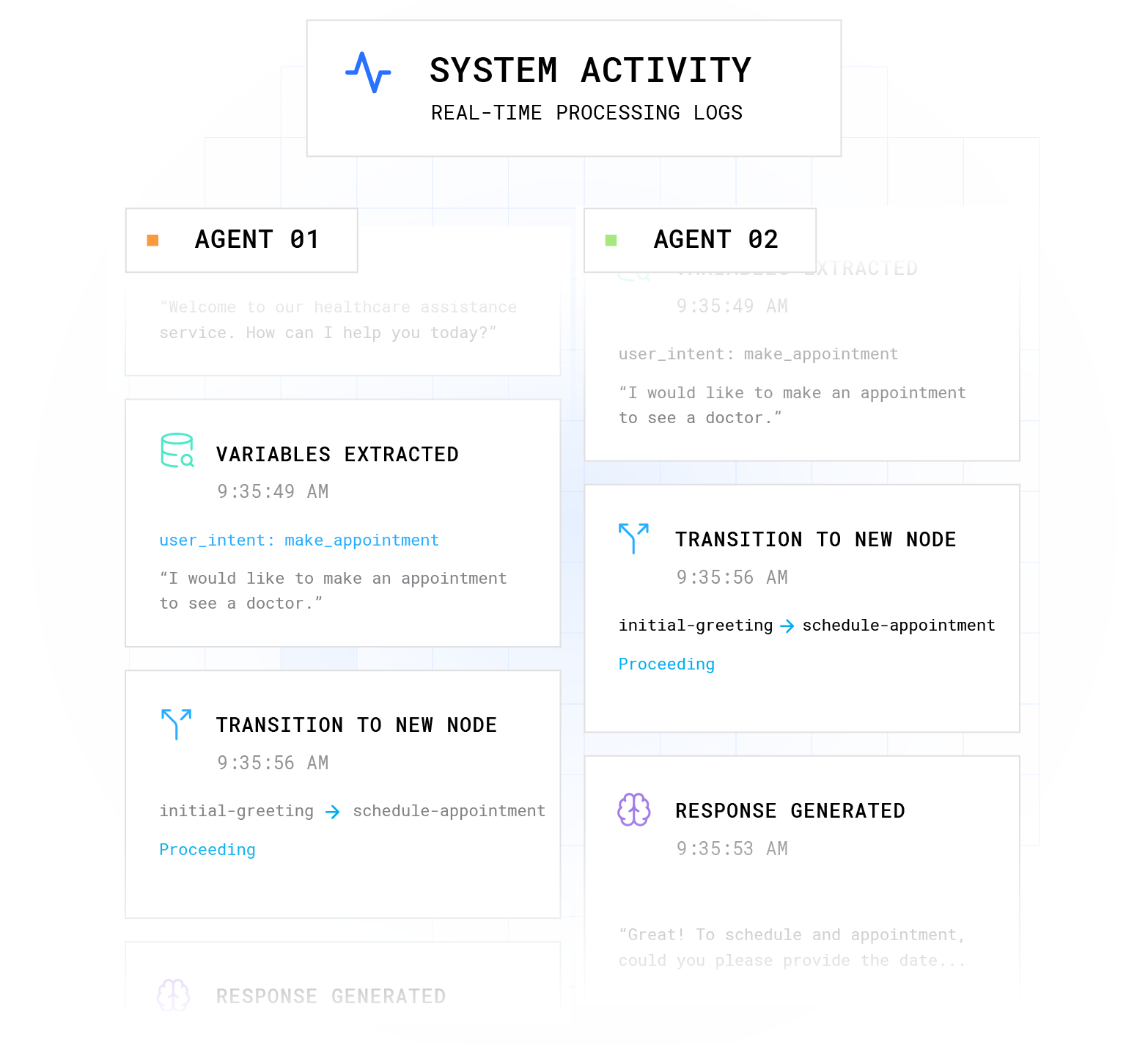
Plura Agent Monitoring provides real-time AI workflow visibility with live processing logs, response tracking, and conversation monitoring.
Checklist For Reviewing Your Live-Transfer Recording Setup
Compliance leaders and operations teams can use this checklist as a starting point when designing or auditing a live-transfer recording workflow.
Confirm consent rules for both the caller’s location and the receiving agent’s location, and apply the stricter standard across the workflow.
Configure re-disclosure at the transfer moment, in addition to the initial disclosure at call start.
Capture and log consent with timestamps at each stage of the call, including every handoff.
Provide agents with a fast way to pause or stop recording and a clear script for handling opt-outs.
Store recordings securely and align retention with CMS, HIPAA, state insurance, and other applicable frameworks.
Train agents on disclosure language, transfer protocols, and how to respond when a caller declines recording.
Audit recordings regularly, with special focus on the transfer handoff and any points where new parties join.
Maintain immutable consent records that can be produced quickly during internal reviews or external audits.
How Plura AI Supports Live-Transfer Recording Compliance
Plura AI runs on Plura’s own FCC-licensed audio bridging carrier, which keeps enforcement close to the network layer instead of relying on a third-party CPaaS. That architecture helps contact centers manage live-transfer rules where carrier-level controls, DNC scrubbing, and recording policies need to work together. Plura’s compliance engine supports real-time DNC scrubbing, immutable consent logging with timestamps, and audit-ready reporting on every outbound contact.
Plura’s AI voice agents handle live transfers with stateful conversation memory, so the receiving agent inherits the full context of the prior call leg. You can configure re-disclosure scripts to trigger automatically at each handoff, while consent records write into the same stateful database that powers Plura’s live-transfer and AI predictive dialer workflows. Voice origination, model hosting, data storage, and call recording all run on U.S.-based infrastructure.
Plura provides infrastructure and tooling that support compliance. Your overall posture still depends on your configuration, training, and internal policies. Explore outbound calling workflows with Plura’s AI predictive dialer, or review live-transfer behavior with AI voice agents in action.
Can a call be recorded without telling the other person?
In many one-party consent states, a party to the call may record it under the federal Wiretap Act baseline. In all-party consent states, every participant typically must consent before recording begins. Many organizations choose to disclose recording in all states because caller location can be uncertain and state rules change over time. Work with qualified counsel to determine how these rules apply to your calling footprint.
Is re-disclosure required after a live transfer?
When a new party joins a call, the original disclosure may not clearly cover that participant. In all-party consent states, statutes often require prior consent from all parties to the communication, which means the new participant should receive a recording notice and provide consent before recording continues. Many contact centers treat re-disclosure at the transfer moment as a standard control that reduces audit risk and strengthens consent records. The receiving agent typically delivers this re-disclosure so the consent chain is clear.
How long should recorded calls be retained?
Retention periods depend on industry and record type. As summarized in the table above, CMS rules for Medicare Advantage marketing and sales calls reference 6 years for recordings and 10 years for enrollment records. HIPAA frameworks often reference 6 years from creation or last effective date for certain records. State insurance regulations frequently fall in the 3 to 7 year range, with some extending to 10 years. The TCPA does not specify a recording retention period, but many organizations retain TCPA consent records to support audits. Check your state department of insurance and consult qualified counsel for requirements that apply to your programs.
How does the TCPA relate to recording live-transfer calls?
The TCPA, through 47 U.S.C. § 227 and the FCC’s rules at 47 CFR 64.1200, focuses on automatic telephone dialing systems and prerecorded or artificial voice messages. It does not directly govern recording consent. TCPA consent and recording consent operate as separate obligations. A consumer may have provided TCPA consent to be contacted while still having separate rights under state wiretap law regarding recording. Many organizations maintain TCPA consent records and recording consent records independently so each can be produced for review.
What if the caller and receiving agent are in different consent states?
Many operations apply the stricter law when participants are in different states. If the caller is in an all-party consent state such as California or Florida, obtaining consent from all parties often becomes the practical standard, regardless of the agent’s location. The caller’s state law shapes the caller’s rights, and a recording that does not meet that standard can create risk in that jurisdiction. When caller location is uncertain, some organizations configure workflows to default to all-party consent practices. Work with qualified counsel to align this approach with your industry and calling geography.
1 Plura AI maintains SOC 2, HIPAA, ISO, and GDPR posture as part of its platform infrastructure. References to compliance frameworks in this article describe Plura’s platform capabilities and do not constitute a guarantee that any customer using Plura will themselves be compliant with applicable laws or standards. Customers remain solely responsible for their own regulatory obligations, certifications, consent management, recordkeeping, and the claims they make to their own end users. Consult qualified legal counsel for guidance specific to your use case.
2 This article describes regulatory frameworks at a general level and does not constitute legal advice. Laws and regulations vary by jurisdiction, change over time, and apply differently depending on facts and circumstances. Readers should consult qualified legal counsel before making compliance decisions.
This article is provided for informational purposes only and reflects Plura AI’s understanding at the time of publication. Product capabilities, integrations, and specifications are subject to change. For the most current information, visit plura.ai.
This article was produced with the assistance of AI tools and reviewed by Plura AI prior to publication.