

Written by: Matt Beucler, CEO, Plura AI
Key Takeaways
- Live transfer call center software connects pre-qualified prospects to closing agents in real time, which prevents speed-to-lead decay and lifts conversion rates 5x to 10x.3
- Plura AI’s workflow delivers sub-5-second response, stateful cross-channel qualification, and automated compliance (SOC 2, HIPAA, ISO, GDPR, SHAKEN/STIR, TCPA, DNC) on 100% U.S. infrastructure.1
- Modern AI platforms outperform legacy dialers by scaling logarithmically, cutting labor costs up to 76%, and reducing turnover risk while maintaining a strong regulatory posture.3
- Speed-to-lead benchmarks show that responding within one minute raises conversion odds 391%; Plura agents achieve this across voice, SMS, RCS, and webchat 24/7.3
- Operators ready to modernize can book a live demo with Plura AI to see the transfer workflow in action.
How Plura AI Runs Live Transfers End to End
Plura AI’s AI-powered live transfer workflow runs in four sequential steps that compress the traditional qualification-to-handoff cycle from hours into seconds.
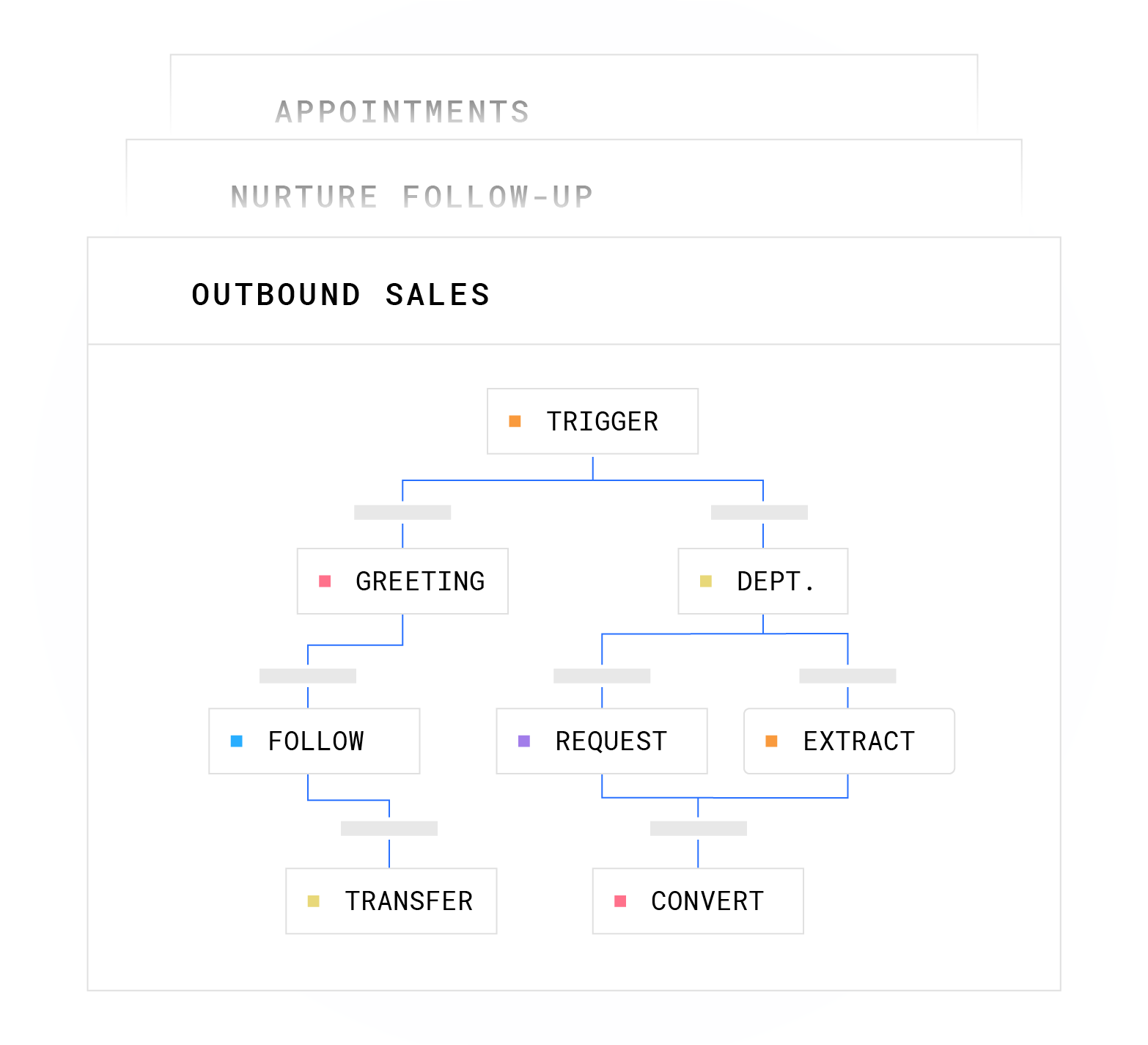
- Instant text-to-call engagement. When a prospect submits a form or triggers a campaign, Plura’s AI SMS agent sends a qualifying message in under 5 seconds. Leads contacted within 1 minute are 391% more likely to convert than those contacted after 24 hours. Sub-minute response becomes the highest-impact variable in outbound operations.
- Stateful qualification across channels. The AI runs a real conversation over text-to-call, enriching the lead record in real time from 30+ data sources. Every response writes to Plura’s Stateful Conversation Database. The voice agent that receives the transfer already knows the prospect’s qualification status, objections raised, and offers presented.
- Warm bridge to a closing agent. After the prospect meets qualification criteria, the AI dials the prospect and bridges the call to a U.S.-based closing agent. The agent receives a concise context summary before the prospect speaks. The prospect avoids re-introductions and repeated questions.
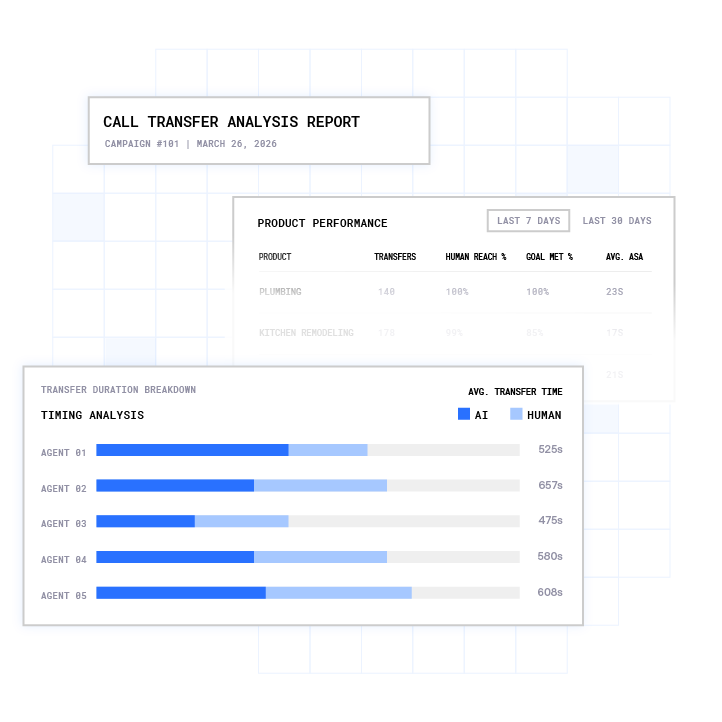
- Post-transfer intelligence loop. Plura’s conversation intelligence layer analyzes every transfer for objection patterns, conversion gaps, and script drift. These findings feed back into workflow tuning and script updates.
This architecture separates a modern live transfer platform from a legacy dialer with a warm-transfer button added on. The stateful memory layer creates the operational difference.
Legacy Dialers vs. AI Conversation Platforms
Legacy dialers built for human agents price per seat and scale linearly, so more volume requires proportional headcount.2 Contact centers allocate 60-70% of operating costs to agent labor, and annual agent turnover runs 35-45%, which forces constant recruiting and retraining.3 Offshore BPOs reduced cost for two decades through wage arbitrage, but that model now carries regulatory exposure under the FCC’s Notice of Proposed Rulemaking (NPRM, CG Docket No. 26-52), which proposes caps on offshore customer-service calls and restrictions on offshore handling of sensitive consumer data.
Plura’s per-conversation pricing scales logarithmically, not linearly, so cost per conversation drops as volume increases. This pattern reverses the economics of seat-based models where cost rises in lockstep with demand. Operators can see this cost curve in action during a live demo that walks through real transfer scenarios at their target volume.
Compliance Automation Built Into the Workflow
Plura’s compliance engine operates as a core layer of the platform, not a post-deployment checkbox. Every outbound contact runs through real-time DNC scrubbing against federal and state registries before dial, which screens the number against applicable lists. Once cleared, the platform validates that TCPA consent exists and is audit-ready, with timestamped and immutable records. At the carrier level, SHAKEN/STIR caller ID verification authenticates each outbound voice call to reduce spoofing flags. Finally, quiet-hours rules enforce automatically through time-zone detection on the contact record.
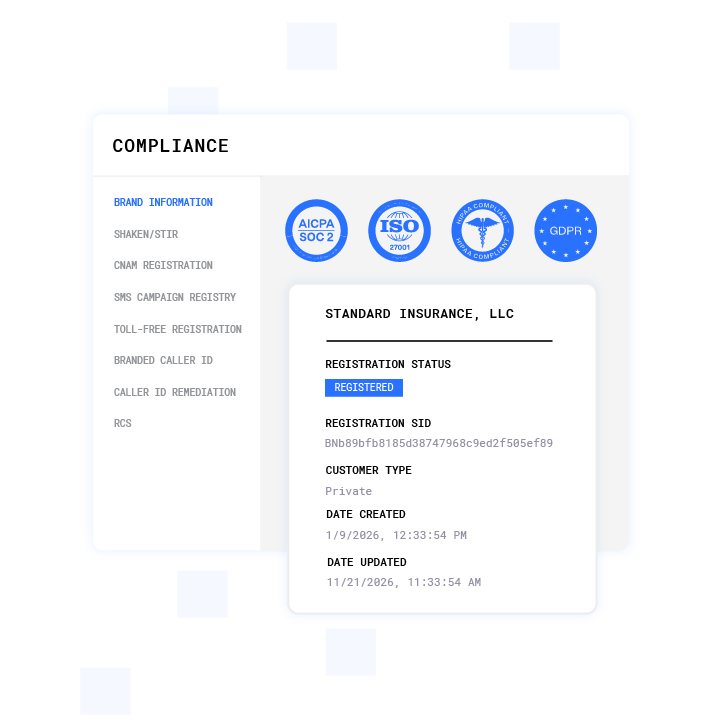
The platform’s compliance posture spans federal and international frameworks, including the standards listed above, with enforcement on 100% U.S. infrastructure. Plura runs on U.S. infrastructure by architecture, which aligns with the FCC NPRM (CG Docket No. 26-52) and companion legislation including the Keep Call Centers in America Act (S.2495) and the Foreign Robocall Elimination Act (S.2666). State statutes in New York, New Jersey, Connecticut, Missouri, and Florida already restrict offshore handling of medical, financial, and consumer data.
Plura supports customer compliance and does not replace customers’ own legal obligations. Operators should consult qualified counsel regarding their specific regulatory posture under TCPA (47 U.S.C. § 227), HIPAA (45 CFR Parts 160, 162, 164), and applicable state statutes.2
TCPA filings rose 26.8% year-over-year through February 2026, with 72.3% filed as class actions. TCPA litigation reached 2,788 cases filed in 2024, a 67% increase from the prior year. With compliance infrastructure established as table stakes, the operational question becomes how fast a platform must respond to justify the investment. The answer sits in speed-to-lead data.
Speed-to-Lead Benchmarks for Live Transfers
Speed to lead is the single most quantified variable in live transfer performance. The data is consistent across multiple independent studies.
A Harvard Business Review study found that companies responding within five minutes are 100x more likely to connect with a prospect than those waiting 30 minutes. Narrowing the window further, this 1-minute threshold translates to a 391% lift in conversion likelihood compared to 24-hour delays, yet the industry standard for first contact remains 47+ hours. Live transfers achieve 5x to 10x higher conversion rates than standard web leads because prospects are pre-qualified, warm, and connected in real time, which matters because 78% of buyers purchase from the company that responds first.
Plura’s AI agents maintain this sub-5-second response across voice, SMS, RCS, and webchat, 24/7. Plura enables lead response times under 60 seconds, multichannel engagement via voice, SMS, RCS, and webchat, real-time AI lead scoring, and cost per qualified lead of $25 to $60.
Industry Use Cases for Plura’s Four-Step Workflow
The four-step workflow of instant engagement, stateful qualification, warm bridge, and intelligence loop adapts to each industry’s qualification criteria and compliance profile. It operates across six primary verticals where conversion speed and regulatory exposure are highest.
- Healthcare. Patient intake, eligibility surveys, and appointment confirmations run on HIPAA-aligned infrastructure with sensitive-data redaction at the field level. Plura supports up to 40% improvement in no-shows through automated follow-up sequences that reuse the same stateful conversation data.
- Insurance. Sub-5-second response on inbound quotes leads into warm transfer to a licensed agent for the bind. Live transfers in insurance typically achieve 15–25% close rates.
- Financial services. Loan follow-ups, account alerts, and advisor-appointment scheduling run on 100% U.S. infrastructure, which aligns with FCC NPRM focus on offshore handling of sensitive financial data.
- Legal. Mass-tort and personal-injury intake uses PII redaction, claimant qualification against firm criteria, and routing to U.S. counsel, with the AI capturing facts before the warm bridge.
- Real estate. Property-inquiry follow-up and showing confirmations rely on rapid response and context carryover. Real estate agents responding within 5 minutes are 100x more likely to reach leads than those waiting 30 minutes, while average industry response time is 42 hours.
- Franchise networks. Multi-location operators use Plura to enforce identical greeting, qualification, and SLA across every unit, which narrows the 3x to 5x performance gap between best and worst locations that characterizes many multi-unit systems.
Total Cost Comparison for Live Transfer Operations
The economics of live transfer software become clear in a direct TCO comparison. Using Plura’s default ROI calculator inputs of 15 agents at $20/hour with 25% taxes, benefits, and commissions and 40% talk utilization, monthly human agent costs run $60,000.3 Replacing that team with Plura AI at $15/hour and 100% talk utilization using 6 agents drops monthly cost to $14,400, producing 30-day savings of $45,600, 12-month savings of $547,200, and 60-month savings of $2,736,000.
That 15-agent scenario represents a mid-market operation. At enterprise scale, a 100-seat equivalent contact center running traditional operations costs $4M to $7M annually, while Plura’s TCO for equivalent volume runs $300K to $700K. The gap is structural, driven by 100% talk utilization versus the roughly 40% typical of human agents, zero turnover cost, and no hiring ramp during peak seasons.
Run your numbers through Plura’s calculator to check your ROI in real time.
Implementation Checklist for Plura Live Transfers
Plura deploys in 2 to 4 weeks for standard live transfer workflows. The sequence remains consistent across deployments.
- Week 1: Discovery audit. The team reviews current call economics, existing scripts, sample call recordings, and SOPs. They identify qualification criteria, transfer triggers, and compliance requirements by vertical and state.
- Week 1-2: Conversation build. Plura engineers build a dynamic conversation mockup using the no-code workflow builder. The customer reviews and iterates on the mockup before the production build begins.
- Week 2-3: Integration and compliance configuration. The team connects CRM, calendar, and attribution systems via Plura’s 50+ integrations. They configure DNC scrubbing, TCPA consent records, quiet-hours enforcement, and SHAKEN/STIR caller ID verification at the campaign level.
- Week 3-4: Pilot test. The workflow runs on a subset of real calls. Operators monitor transfer rates, qualification accuracy, and compliance flags, then tune before full go-live.
- Week 4: Full go-live. Operations scale to full volume. Plura’s conversation intelligence layer begins surfacing optimization signals within the first week of production traffic.
Annual contracts include a 90-day opt-out window. If the deployment is not delivering, customers are not held to the annual term.
Book a live demo with Plura to walk through the implementation sequence for your operation.
Frequently Asked Questions
What is live transfer call center software?
Live transfer call center software is a platform that qualifies a prospect on one call or text thread and then immediately bridges that prospect to a closing agent while the prospect remains on the line. Modern AI-powered platforms like Plura handle the qualification step autonomously, using voice and SMS agents that enrich the lead record in real time, confirm qualification criteria, and execute the warm bridge without human involvement in the pre-transfer stage. The result is a prospect who arrives at the closing agent already qualified, already engaged, and already on the phone.
What is the best software for call centers doing live transfers at high volume?
The answer depends on three operational requirements: speed to first contact, compliance infrastructure, and cost structure. For high-volume U.S. operators, the relevant criteria are response time under 5 seconds, real-time DNC scrubbing and TCPA consent enforcement before every dial, stateful cross-channel memory so context carries from SMS qualification into the voice transfer, and 100% U.S. infrastructure to address FCC NPRM exposure. Plura is built specifically for this combination. It operates as an FCC-licensed carrier, not a third-party CPaaS wrapper, which means branded caller ID, SHAKEN/STIR caller ID verification, and compliance enforcement happen at the carrier level rather than as bolt-on features. Operators handling 500 or more daily interactions or spending $5,000 or more monthly on paid media are the primary fit.
How do you do a call transfer in a live transfer workflow?
In a modern AI-powered live transfer workflow, the transfer sequence runs as follows. The AI agent qualifies the prospect over SMS or an outbound voice call and confirms the prospect meets the defined criteria. The AI then dials the closing agent and bridges the prospect into a three-way call. The AI introduces the prospect with a context summary and drops off the line. The closing agent receives the full conversation history, qualification status, and any enrichment data collected during the AI interaction. The prospect never waits on hold and never repeats qualification information. The entire bridge process takes seconds. Plura’s Stateful Conversation Database ensures the closing agent sees the same lead picture the AI built during qualification, regardless of which channel handled the qualification.
How does AI predictive dialing connect to live transfer workflows?
An AI predictive dialer and a live transfer workflow operate as complementary layers of the same outbound operation. The predictive dialer determines who to call next using stateful conversion signals, historical answer rates, and prior negotiation outcomes, then connects the call to the AI qualification agent. After the AI qualifies the prospect, the live transfer bridges the call to a closing agent. The dialer maximizes the number of qualified conversations per hour. The live transfer workflow maximizes the conversion rate on each qualified conversation. Plura’s platform runs both layers on the same FCC-licensed carrier infrastructure, with shared stateful memory across the full sequence.
What compliance frameworks apply to live transfer call center software in 2026?
The primary federal frameworks governing live transfer operations in the U.S. are the Telephone Consumer Protection Act (TCPA, 47 U.S.C. § 227), the FTC’s Telemarketing Sales Rule, and the National Do Not Call Registry. The FCC’s NPRM (CG Docket No. 26-52) introduces proposed requirements specific to offshore-originated calls. State-level frameworks in Florida, New York, New Jersey, Connecticut, Missouri, and other states impose additional calling-window restrictions, consent requirements, and data-handling rules. For operations involving protected health information, HIPAA (45 CFR Parts 160, 162, 164) applies. Plura’s compliance engine supports TCPA compliance, DNC compliance, SHAKEN/STIR caller ID verification, SOC 2, HIPAA, ISO certification, and GDPR at the platform level. Operators are responsible for their own legal obligations and should consult qualified counsel regarding their specific compliance posture.
What ROI timeline should operators expect from AI live transfer software?
Plura delivers 3x average ROI in 90 days across its customer base. The primary drivers are talk utilization, speed to first contact, and turnover elimination. Human agents in traditional contact centers operate at roughly 40% talk utilization; Plura’s AI agents run at 100%. The default scenario on Plura’s ROI calculator, using 15 agents at $20/hour with standard overhead, shows 30-day savings of $45,600 and 12-month savings of $547,200 after switching to Plura. At enterprise scale, the TCO differential between a traditional $4M to $7M contact center and Plura’s $300K to $700K range compounds significantly over a 3 to 5 year planning horizon. Operators can model their specific numbers at plura.ai/calculator.
Run your numbers through Plura’s calculator to check your ROI in real time.
Compare plans and rates side by side at Plura pricing.
1 Plura AI maintains SOC 2, HIPAA, ISO, and GDPR posture as part of its platform infrastructure. References to compliance frameworks in this article describe Plura’s platform capabilities and do not constitute a guarantee that any customer using Plura will themselves be compliant with applicable laws or standards. Customers remain solely responsible for their own regulatory obligations, certifications, consent management, recordkeeping, and the claims they make to their own end users. Consult qualified legal counsel for guidance specific to your use case.
2 This article describes regulatory frameworks at a general level and does not constitute legal advice. Laws and regulations vary by jurisdiction, change over time, and apply differently depending on facts and circumstances. Readers should consult qualified legal counsel before making compliance decisions.
3 Performance figures, customer outcomes, and industry statistics referenced in this article are drawn from cited third-party sources or Plura customer case studies. Individual results vary based on implementation, use case, industry, audience, and execution. Past or aggregate performance is not a guarantee of future results.
This article is provided for informational purposes only and reflects Plura AI’s understanding at the time of publication. Product capabilities, integrations, and specifications are subject to change. For the most current information, visit plura.ai.
This article was produced with the assistance of AI tools and reviewed by Plura AI prior to publication.