AI SDR Personalization: The No-Hype Guide to Better Outreach
ON THIS PAGE
Written by: Matt Beucler, CEO, Plura AI
Updated September 2026
Key Takeaways
AI SDR personalization uses live web research, CRM integration, and dynamic content generation to craft outreach that references real buying signals.
The process completes in seconds what takes a human SDR 15 to 30 minutes, across voice, SMS, RCS, and webchat.3
Most AI SDR deployments underperform because of stale data, token-swap personalization, deliverability issues, and weak reply handling.
Hybrid models work best, with AI handling research and first-draft outreach while humans manage qualification, relationships, and strategy.
Plura AI delivers personalized omnichannel engagement in under 5 seconds across all channels with stateful memory.
What Does AI SDR Mean?
An AI SDR (Sales Development Representative) is an AI-powered system that automates top-of-funnel sales work: prospecting, research, personalized outreach, and follow-up. A human SDR researches each lead manually. An AI SDR uses machine learning and data integrations to research prospects and generate context-aware messaging at scale. One AI SDR can handle hundreds of personalized touches where a human handles dozens.
How AI SDR Personalization Actually Works
AI SDR personalization completes in seconds what takes a human SDR 15 to 30 minutes per lead. The mechanics break down into four stages.
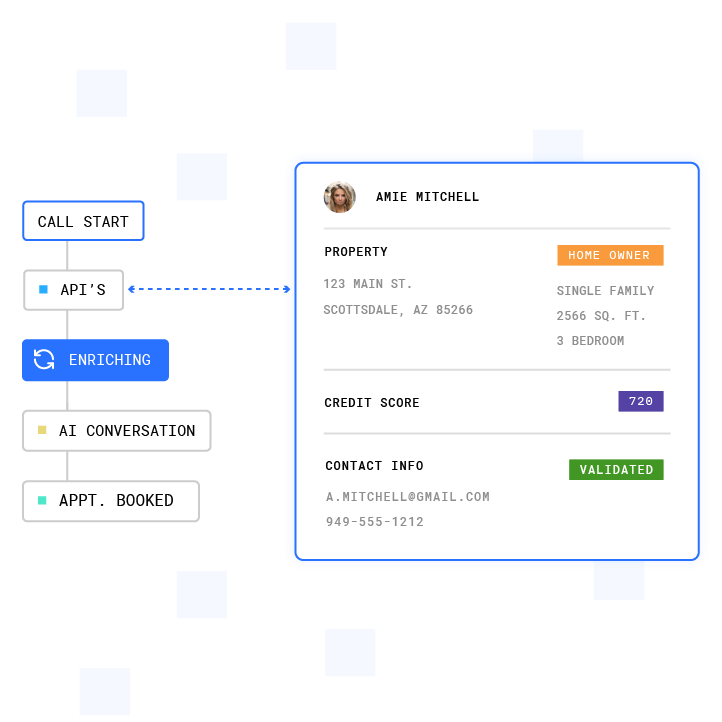
Plura Lead Intelligence enriches customer data with AI-powered insights, validation, and lead qualification to improve conversion performance.
Live Web Research and Data Enrichment: The AI scans LinkedIn profiles, company websites, recent news, job postings, and funding announcements to identify real triggers such as a new VP of Marketing, a Series B round, or a product launch. This research happens in seconds.
CRM and Data Source Integration: The AI pulls firmographic data (company size, industry, revenue), technographic data (software stack), and buyer intent signals from your CRM and connected tools. Plura integrates with 50+ platforms including HubSpot, Salesforce, and Zoho through its integrations layer, so the AI works with your existing data instead of operating in a silo.4
Dynamic Content Generation: The AI crafts custom opening lines and tailored value propositions based on the specific trigger it found, instead of simple mail-merge token swapping. Apollo.io’s guidance on personalizing outreach at scale recommends stacking two to three buyer signals per message, such as a funding round plus a relevant pain point, rather than a single variable like a first name.
Autonomous Handling and Follow-Up: Advanced AI agents read replies, manage basic objections, and schedule meetings before handing off to human reps. Plura’s AI agents extend this across voice, AI SMS, RCS, and webchat with stateful memory. An agent that texted a lead at 9 a.m. can pick up the call at noon already knowing what was said.
Real-World Example: Generic vs. Signal-Based Outreach
Generic (Token-Swap) Email:
“Hi [First Name], I noticed [Company] is in the [Industry] space. We help companies like yours improve [vague benefit]. Would you be open to a quick call this week?”
Truly Personalized (Signal-Based) Email:
“Hi Sarah, Congratulations on [Company]’s Series B. I saw the announcement in TechCrunch. As you scale the sales team from 15 to 40 reps, most founders tell us their biggest challenge is keeping outreach personal while volume triples. We help revenue teams use AI to research every prospect and send context-aware messages, referencing real triggers like your recent funding, without sounding automated. Worth a 15-minute conversation on how we’d approach this for [Company]?”
The second email references a specific, recent event, connects it to a likely pain point, and offers a relevant value proposition. That is personalization beyond token-swapping. Even well-designed personalization efforts can still miss the mark, so it helps to understand where they break.
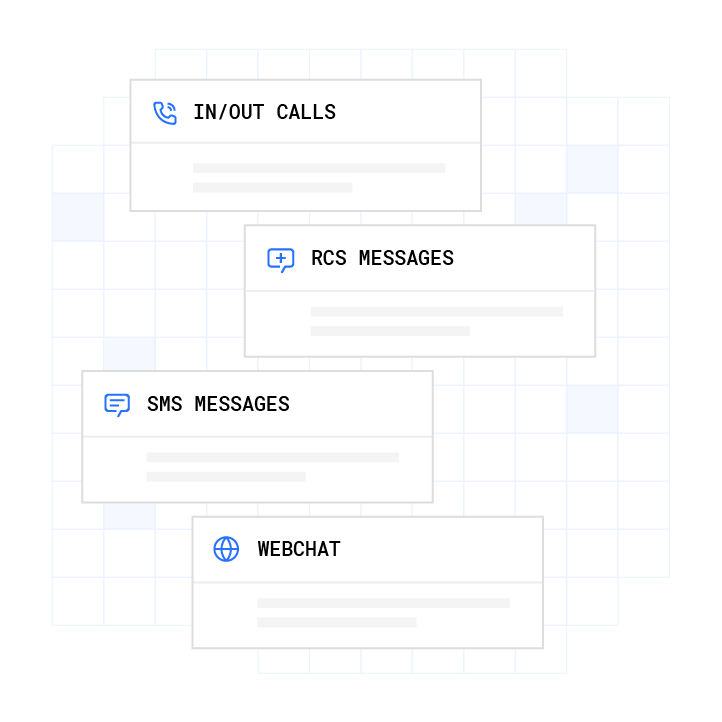
Plura Unified Inbox centralizes AI Voice, SMS, RCS, and Webchat conversations into one streamlined omnichannel communication workspace.
Buyer skepticism about AI SDR tools is well-founded. Many deployments underperform because the operating environment is not ready for AI. These are the documented failure modes and the practical fixes.
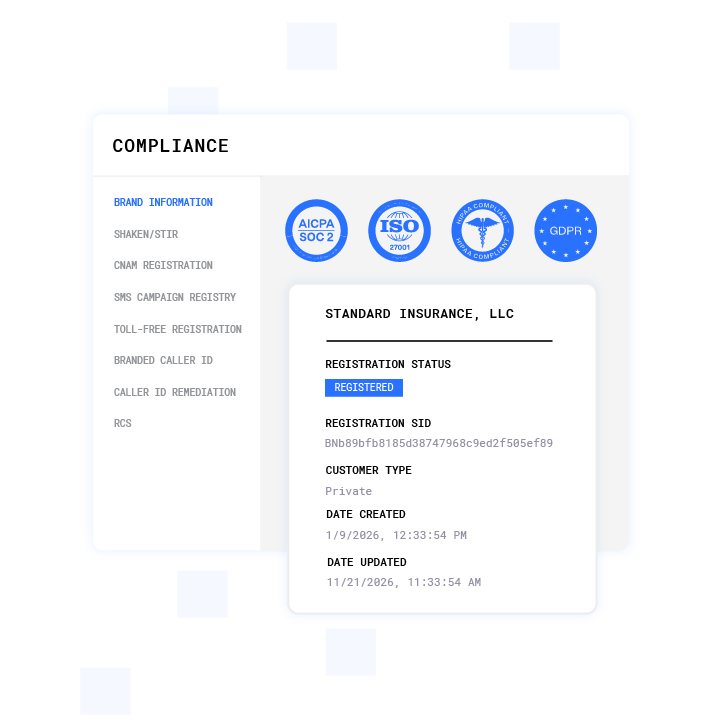
Plura Security & Compliance supports SOC 2, ISO, and GDPR standards with trust registration, verification management, and secure AI communications.
Common Pitfalls in AI SDR Programs
Token-Swap Personalization: Dropping a first name and company into a template does not qualify as personalization. As Tanya Priya, Associate Sales Manager at SMARTe, writes: “A first name and a company name dropped into a template isn’t personalization. It’s mail merge with better branding.”4 Prospects recognize this pattern quickly, and reply rates fall off within a few touches once the pattern becomes obvious.
Deliverability Collapse: A 2026 Digital Applied analysis of 100,000 emails found that AI-generated emails carry a higher spam-flag rate (8%) than human-written emails (3%), because filters detect statistical fingerprints of generated text. Organizations sending at aggressive 1-day intervals achieve only 71% inbox placement versus 93% at 3-day intervals.
Over-Personalization: Referencing five different data points overwhelms the reader. Apollo.io’s cognitive-load rule is to lead with one or two high-salience signals per touchpoint, not every available data point.
Slow Speed-to-Lead: Personalization quality loses impact when outreach arrives late. Contacting a lead within 5 minutes makes them up to 100x more likely to connect than waiting longer, according to industry research. The average first contact on an inbound lead still sits above 47 hours in many teams.
Use Trigger-Based Outreach: Next, shift from list blasts to signal-based sequences. Signal-triggered personalization achieves reply rates of 4% to 8% versus 1% to 3% for generic outreach, according to a 2026 Digital Applied analysis of 100,000 emails.
Maintain Human Oversight: Then deploy approval or co-pilot modes. Human review catches false personalization, overclaiming, and tone mismatch. Apollo.io recommends a human-in-the-loop QA step focused on these issues before sending.
Best Practices for High-Performing AI SDR Personalization
Prioritize Data Quality Over Volume:GTM Lens frames the math clearly. A 0.5% positive reply rate on a bad list of 5,000 yields 25 replies. A 3% reply rate on a good list of 500 yields 15 replies. The AI SDR sends 10 times more emails for fewer useful conversations in the first scenario.
Continuously Test and Iterate: Track reply rate by signal type, positive reply rate (excluding “not interested”), signal-to-meeting ratio, and time from signal to send. Keeping signal-to-send under 24 hours is a consistent differentiator among top-performing teams.
Protect Speed-to-Lead: Build workflows that respond to inbound interest within minutes across channels. Teams that combine fast response with relevant context see higher connect and meeting rates than teams that respond slowly with generic scripts.
Maintains quality control and brand voice at scale
Apollo’s 2026 analysis identifies data quality, personalization depth, deliverability infrastructure, and qualification accuracy as the four structural constraints that separate tools that produce pipeline from tools that produce activity metrics. Evaluate vendors on all four before committing.
For high-volume operators, the carrier layer matters as much as the AI layer. Plura is its own FCC-licensed audio bridging carrier, not an API reseller built on top of a third-party communications platform. Branded caller ID is issued at the carrier level, real-time DNC scrubbing runs before every outbound contact, and TCPA compliance support is built into the platform rather than bolted on.2 Plura’s CRM integration connects with 50+ platforms so the AI works from your existing data, and its managed workflows let operators design conversation logic on a no-code canvas without engineering resources.
The Future: AI SDRs and Human Reps Working Together
The data consistently points to the hybrid model as the highest-performing configuration. AI handles scale and research. Humans close deals and build relationships.
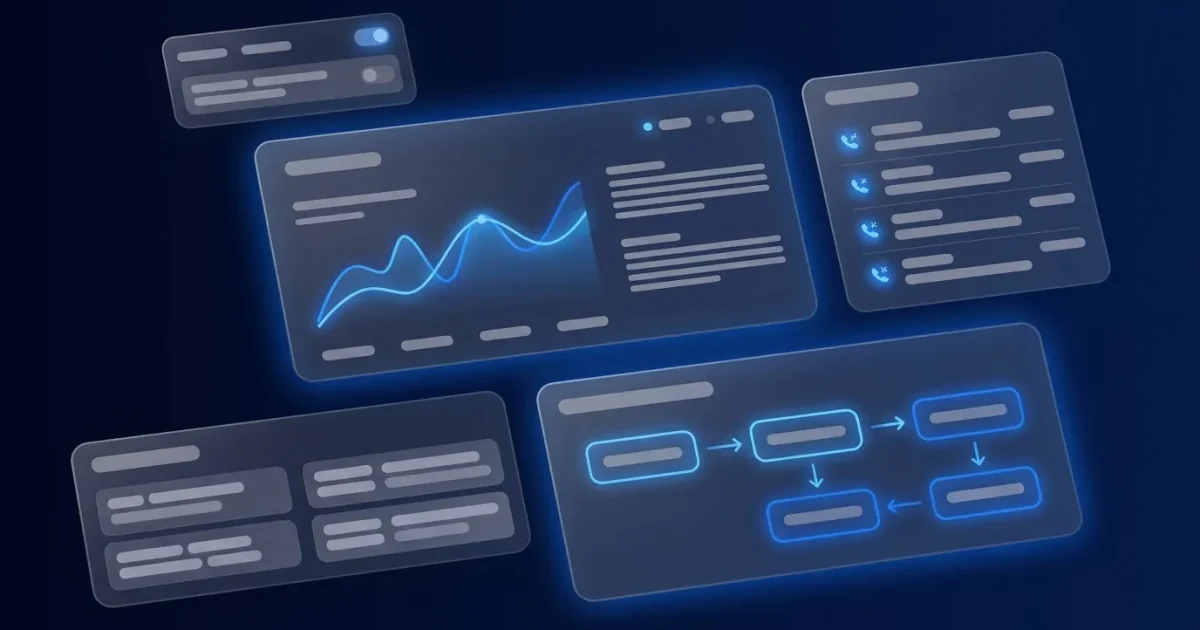
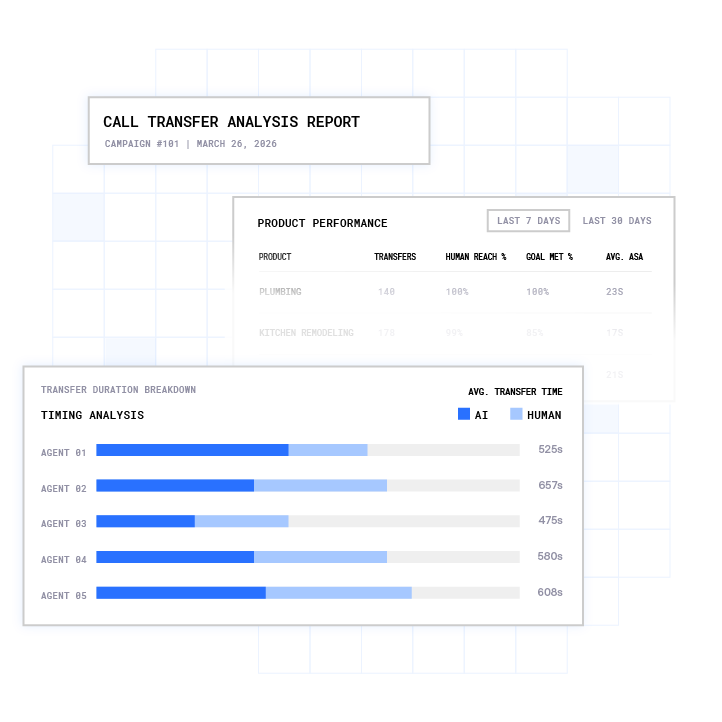
Plura Conversation Intelligence gives businesses AI-powered analytics, call transfer tracking, and customer interaction insights across every conversation.
Plura’s conversation intelligence layer surfaces the patterns that inform this division of labor: which scripts close, which objections recur, and which conversion paths win. That data feeds back into the workflow tuning loop continuously, so the AI improves in month three rather than plateauing at week two.
Frequently Asked Questions
What does AI SDR mean?
An AI SDR (Sales Development Representative) is an AI-powered system that automates top-of-funnel sales work, including prospecting, research, personalized outreach, and follow-up. It uses machine learning and data integration to research prospects and generate context-aware messaging at scale, handling hundreds of personalized touches where a human handles dozens. The term is used interchangeably with “AI sales agent” and “AI sales assistant,” though these imply different levels of autonomy and carry different implementation requirements.
How does AI SDR personalization work?
AI SDR personalization works by combining live web research, CRM data integration, and dynamic content generation. The AI scans LinkedIn, news, job postings, and funding announcements for real buying signals. It pulls firmographics, technographics, and intent signals from connected tools. It then crafts custom messages that reference specific triggers rather than generic variables. The entire process executes in seconds per prospect. The quality of the output depends directly on the quality of the data inputs, so stale CRM records and missing enrichment fields produce generic messages regardless of how capable the underlying model is.
What are the best AI SDR platforms?
The right AI SDR platform depends on your volume, channels, and compliance requirements. Evaluate tools on research depth, CRM integration, personalization logic, omnichannel coverage, compliance features, and human-in-the-loop options. For high-volume operators who need voice, SMS, RCS, and webchat running on a single stateful conversation database, with carrier-grade compliance support and sub-5-second response times, Plura AI provides an infrastructure-grade option. Compare plans and rates side by side on our pricing page.
Is AI replacing SDRs?
AI is augmenting SDRs rather than replacing them. The hybrid AI-plus-human model consistently outperforms both fully autonomous AI and human-only configurations on cost per qualified opportunity and pipeline quality. AI handles research, first-draft copy, and follow-up logistics. Humans own relationship building, qualification, and strategy. The SDR role is shifting toward higher-value work.
How do I get started with AI SDR personalization?
Start with a data hygiene sprint: deduplicate, validate emails, and enrich firmographics. Define your ICP sharply, layer in buyer intent signals, and deploy with human-in-the-loop review for at least the first 90 days. Plan a phased rollout. Use days 1 to 30 for data preparation and workflow design. Use days 30 to 60 for initial deployment with heavy human review and A/B testing. Use days 60 to 90 for optimization and scaling. Many teams cancel too early because they expect meaningful pipeline impact before day 60. Run your numbers through Plura’s ROI calculator to model the cost and return before committing to a platform.
Conclusion: Turning AI SDR Personalization into Revenue
Generic outreach is a relevance problem, not a volume problem. Many AI SDR tools automate generic messaging at scale, producing token-swap emails that prospects recognize immediately and spam filters flag with increasing accuracy.
Plura delivers on this infrastructure requirement. AI agents respond in under 5 seconds across AI voice, AI SMS, RCS, and AI webchat, with stateful memory that carries context across every channel. Plura enables lead response times under 60 seconds with stateful omnichannel memory that keeps every conversation connected.
Compare plans and rates side by side on our pricing page.
Run your numbers through Plura’s ROI calculator to check your projected return in real time.
1 Plura AI maintains SOC 2, HIPAA, ISO, and GDPR posture as part of its platform infrastructure. References to compliance frameworks in this article describe Plura’s platform capabilities and do not constitute a guarantee that any customer using Plura will themselves be compliant with applicable laws or standards. Customers remain solely responsible for their own regulatory obligations, certifications, consent management, recordkeeping, and the claims they make to their own end users. Consult qualified legal counsel for guidance specific to your use case.
2 This article describes regulatory frameworks at a general level and does not constitute legal advice. Laws and regulations vary by jurisdiction, change over time, and apply differently depending on facts and circumstances. Readers should consult qualified legal counsel before making compliance decisions.
3 Performance figures, customer outcomes, and industry statistics referenced in this article are drawn from cited third-party sources or Plura customer case studies. Individual results vary based on implementation, use case, industry, audience, and execution. Past or aggregate performance is not a guarantee of future results.
4 References to third-party products, services, companies, or research are made for informational and comparative purposes only. Plura AI is not affiliated with, endorsed by, or sponsored by any third party named in this article unless explicitly stated. Trademarks and product names referenced remain the property of their respective owners.
This article is provided for informational purposes only and reflects Plura AI’s understanding at the time of publication. Product capabilities, integrations, and specifications are subject to change. For the most current information, visit plura.ai.
This article was produced with the assistance of AI tools and reviewed by Plura AI prior to publication.