

Written by: Matt Beucler, CEO, Plura AI
Key Takeaways for a 30-Day AI SDR Launch
- Successful AI SDR deployment starts with a CRM data audit that hits 90%+ field completeness, under 5% duplicates, and contacts verified within the last 90 days.
- Choose an autonomy model that matches deal size, using AI-assisted or hybrid approaches for most motions under $100K ACV.
- Wire Apollo, Claude, and Outreach with scoped tokens, MCP servers, and human-approval gates so every AI action stays auditable.4
- Protect deliverability and support compliance from day one with warmed domains, capped daily sends, DNC scrubbing, and SPF/DKIM/DMARC plus SHAKEN/STIR.1
- Plura AI runs on carrier-owned infrastructure that removes wrapper-tax and reduces spam-label exposure while supporting enterprise-grade compliance; start your 30-day pilot today.
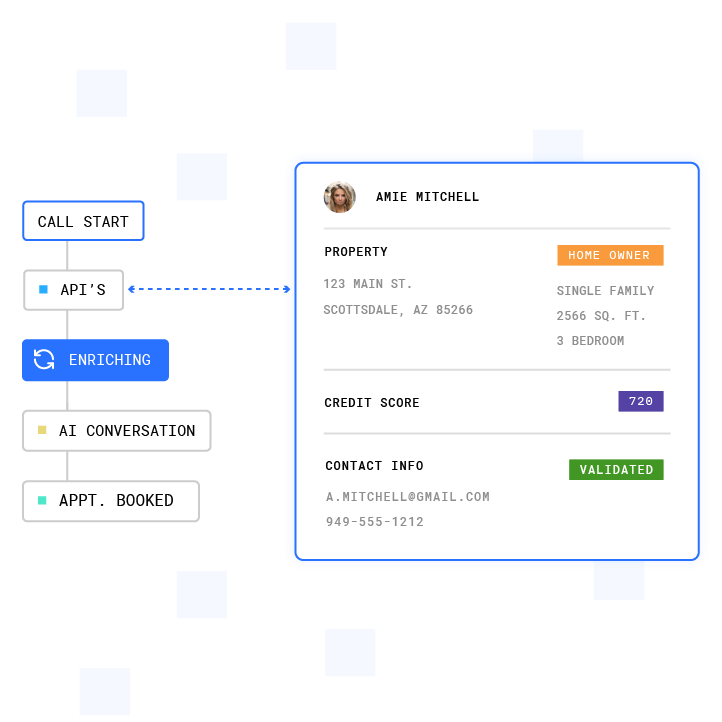
Step 1: Audit CRM Data Before the AI SDR Goes Live
Data quality determines whether an AI SDR produces qualified pipeline or damages domains. AI prospecting readiness typically requires CRM adoption above 80%, core fields populated for at least 90% of records, and contact information verified within the last 6 months.
Start with a full database audit. Any contact older than 90 days needs verification before it enters a sequence, because B2B contact data decays at measurable monthly rates across email and phone fields.
The pre-launch checklist covers four areas:
- Field completeness: Target above 90% for verified email, job title, company name, company size, and industry code on every active contact. These fields should function as CRM hard stops at record creation.
- Duplicate rate: Keep duplicate rate below 5% for active contacts. Flag and merge duplicates before sequences launch.
- Recency: Maintain at least 6-12 months of historical closed-deal data to establish reliable qualification patterns.
- Data guardrails: Block internal deal notes, contract terms, pricing tiers, and customer health scores from AI prompts unless explicit policy approval exists. Restrict the AI SDR by default to job title, company, and firmographic data.
Assign a named data steward with authority to enforce validation rules and run monthly field-completeness audits. Gartner research estimates that bad data costs companies an average of $12.9 million per year.3
Step 2: Match AI SDR Autonomy to ACV and Risk
Autonomy level sets governance load, time-to-value, and the deal sizes the deployment can realistically support. ACV influences AI SDR autonomy choices, with autonomous models fitting high-volume motions at roughly $5–25K ACV and human-augmented approaches fitting most teams under $100K ACV.
Step 3: Wire Apollo and Outreach for Safe AI SDR Access
The integration pattern that keeps CRM writes auditable uses three layers working together: direct API access for reads, an MCP server for Claude tool use, and webhook filters for event-driven writes.
The recommended wiring sequence:
- Grant Claude a scoped read token to Apollo for contact and firmographic data only, with no access to open opportunity values or support history.
- Configure a separate write token for Outreach sequence enrollment and activity logging so read and write permissions stay separated.
- Set webhook filters in your CRM to exclude bot-generated events from triggering further agent actions, which prevents write-back loops.
- Route all AI-generated draft emails to a human-approval queue before send. One outbound SDR agent workflow uses a CRM webhook trigger on new leads, an agent runtime that researches the lead, drafts a personalized email, writes the draft back as a note, then waits for human approval before sending.
- Log every AI action with the agent identity, timestamp, and before-and-after field values to maintain audit trail integrity.
Every AI SDR action, including list building, message sending, and record enrichment, should generate an immutable audit log entry for incident response and compliance review.
Step 4: Load Proven Playbooks and Tighten Prompts
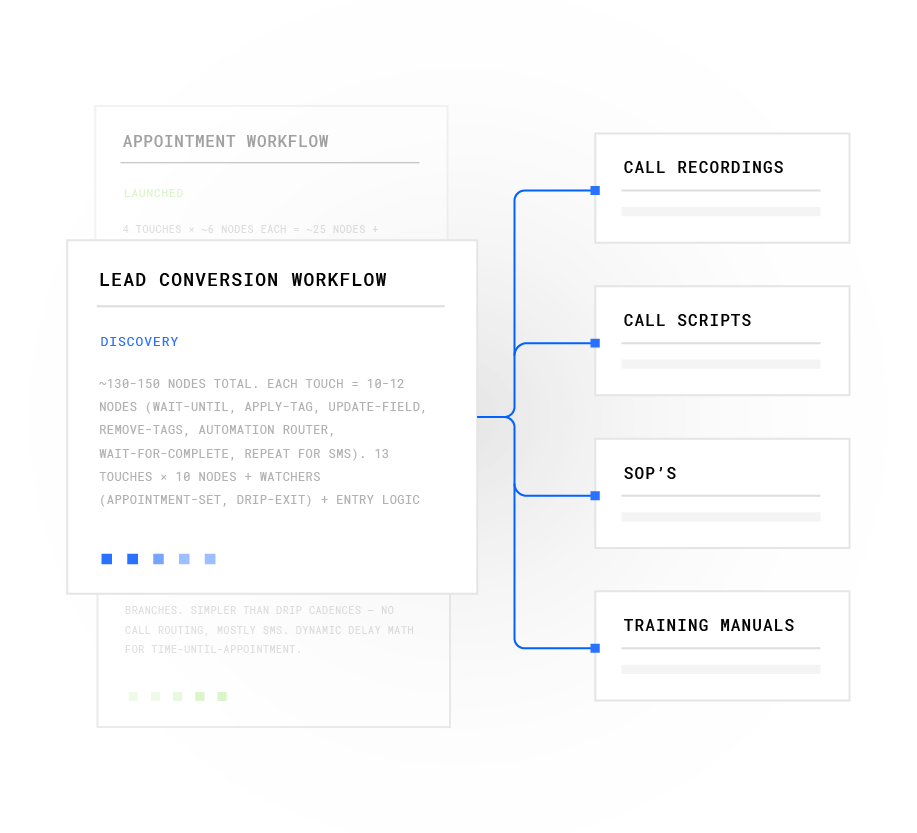
Load three proven human playbooks into the model context before writing any prompts so the AI mirrors messaging that already converts. AI tools clone existing motions rather than create them, which is why validating outbound with humans first and closing at least 10 deals through human-led sales is a recommended starting point.
Once playbooks are loaded, apply these prompt engineering rules to protect deliverability while preserving the human patterns you validated:
- Version every prompt with a date stamp and store prior versions for rollback. This versioning enables quick recovery if a prompt change harms reply rates.
- Block internal CRM notes, pricing tiers, and customer health scores from model context to prevent data leakage and keep a clear boundary between what the AI can read and what it can reference.
- Audit every prompt for generic openers and AI-signaling vocabulary, because these patterns often reduce reply rates and trigger spam filters.
- Require a real signature block on every message to maintain authenticity and avoid a generic AI voice.
Step 5: Run a Pilot with Clear Human-Review Gates
The pilot starts with 50 Tier-1 prospects instead of a 5,000-contact blast. Blast radius equals who can be impacted, how fast the action propagates, and how reversible it is. High-impact, fast-propagating, or irreversible actions such as first-touch sends and new segment launches should use human approvals, rate limits, batch caps, and audit logs.
Use four approval gates for the pilot:
- First-touch messages require human approval before send.
- Any new persona or account segment launch requires human sign-off.
- Messages referencing pricing, legal terms, or specific ROI claims route to a human reviewer.
- Any CRM truth change, such as stage updates, disqualification, or suppression, requires human approval.
During the 50-prospect test, monitor daily open rate, reply rate, positive reply rate, spam complaint rate, and unsubscribe rate against your internal targets.
Step 6: Build a Metrics Dashboard and Weekly Optimization Loop
Reply-Rate and Meeting-Booked Targets
| Metric | Target | Source |
|---|---|---|
| Positive reply rate | 2.5-4%3 | DevCommX 2026, 75 B2B deployments |
| Meeting-booked rate | 1.5-2.5% | Chrysales 2026 analysis |
| Meeting show rate | 67-75% | Laxis Research State of AI SDR 2026 |
| Bounce rate | Under 2% | Chronic Digital ROI Scorecard |
| Spam complaint rate | Under 0.1% | Apollo 2026 guardrails guide |
The weekly calibration review focuses on ICP segment performance, subject lines, email bodies, off-ICP accounts, and recurring objections. Update the ICP definition document, sequence copy, and enrichment criteria after each review so the system keeps improving.
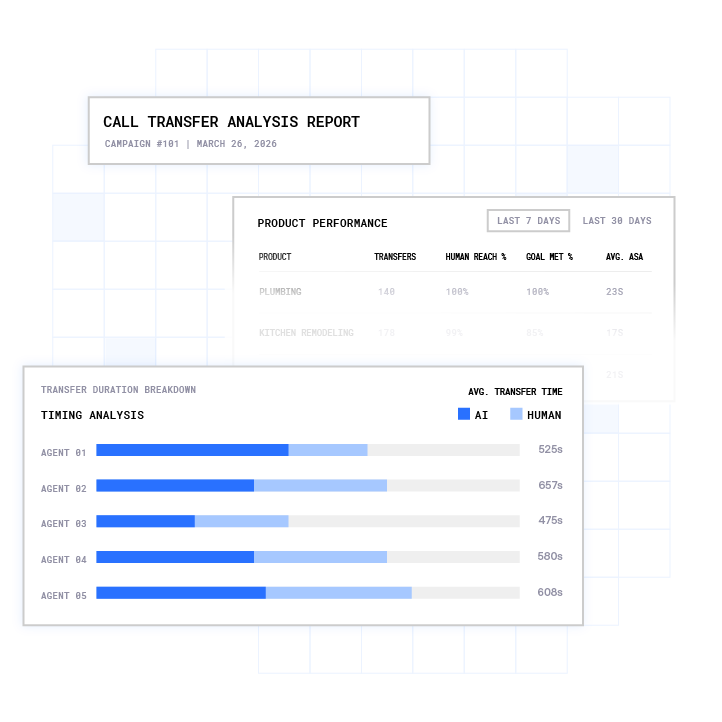
Configure reply classification labels as four categories: Interested, Not Now, Wrong Person, and Unsubscribe. Each label should trigger a different automated next action. Positive replies route to same-day AE follow-up with sequence pause and CRM opportunity logging, while Unsubscribes trigger immediate suppression.
Run your numbers through Plura’s ROI calculator to compare a calibrated AI SDR deployment against your current outbound spend.
Step 7: Monitor Reply Rates and Protect Deliverability
Deliverability functions as core infrastructure rather than a cleanup task. Nearly half of AI SDR deployments hit domain-reputation limits within the first 90 days when send volumes ramp too quickly.
Complete these technical prerequisites before any live send:
- Configure SPF, DKIM, and DMARC on every sending domain.
- Use dedicated sending domains or subdomains that sit apart from the primary business domain.
- Warm domains gradually, starting at 10-15 emails per inbox per day and increasing by 10-20% weekly.
- Rotate mailboxes across 3-5 mailboxes per domain, capped at 50 cold emails per mailbox per day.
- Run real-time DNC scrubbing before every outbound contact.
For TCPA and DNC compliance considerations, operators should consult qualified legal counsel and review the applicable regulations directly.2 Plura’s compliance engine supports this process with pre-loaded rule sets, real-time DNC scrubbing, and SHAKEN/STIR caller ID verification on outbound voice calls, while overall compliance posture remains the operator’s responsibility.
Plura AI: Carrier-Owned Infrastructure for AI SDRs
Most AI SDR stacks that use third-party CPaaS wrappers inherit the telecom reputation of the reseller, not their own. Branded caller ID cannot be issued at the carrier level, real-time DNC scrubbing often appears as an add-on, and SHAKEN/STIR authentication runs through a third party. The wrapper-tax shows up in per-minute rates, spam labels, and compliance exposure that sits outside the platform.
Plura AI is its own FCC-licensed audio bridging carrier. Voice originates on Plura’s domestic infrastructure, not a third-party CPaaS. Plura provides built-in data enrichment from over 30 sources, while Twilio-based API resellers typically require Segment or custom integrations. Building a production-ready AI voice agent on Twilio APIs often takes 6 to 12 months and costs $300K to $500K or more in first-year engineering and infrastructure.
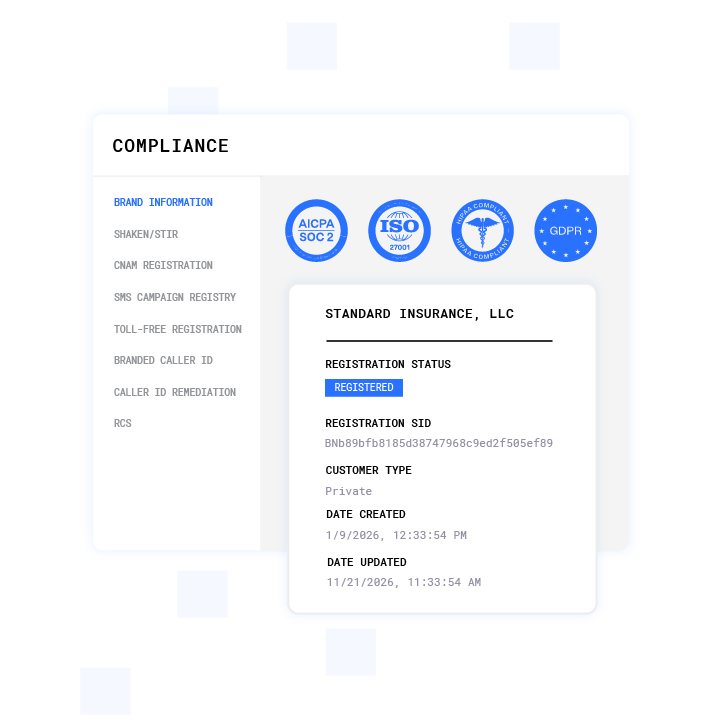
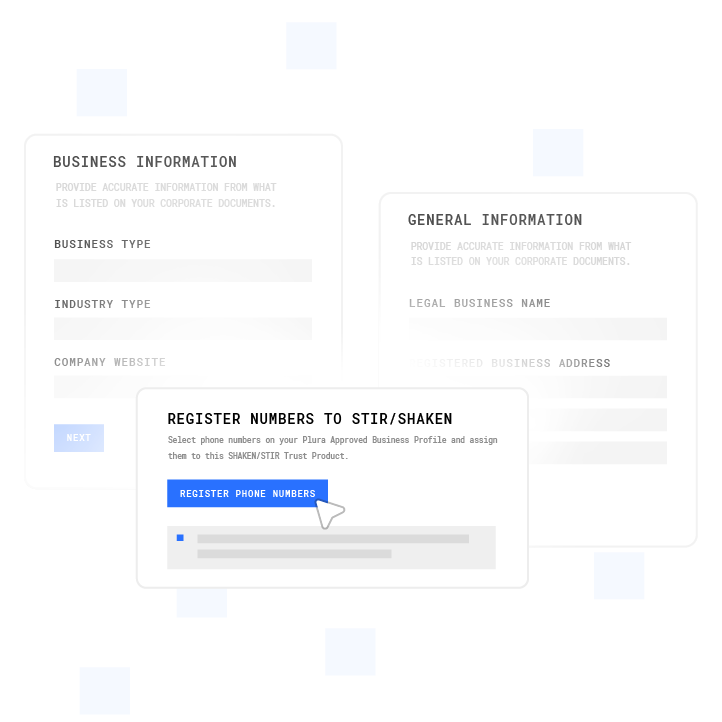
Plura’s compliance engine includes SOC 2 infrastructure, TCPA compliance support, SHAKEN/STIR caller ID verification, integration with Blacklist Alliance for DNC screening, and Number Verifier for caller ID reputation. The platform also supports HIPAA, ISO certification, and GDPR requirements.1 Every outbound contact is checked against federal and state DNC registries in real time before dial, consent records are timestamped and immutable, and quiet-hours rules enforce automatically through time-zone detection.
For high-volume operators running 500 or more daily interactions, wrapper-tax compounds quickly. For a 50-seat equivalent contact center, traditional offshore operations can cost $35,000-$50,000 monthly, while AI contact centers often land in the $8,000-$15,000 monthly range.3 Plura’s lead qualification and AI voice agent capabilities run on that same carrier-owned foundation, with conversation intelligence feeding every optimization loop.
Compare Plura’s plans and rates against your current stack to see where wrapper-tax appears in your numbers.
Frequently Asked Questions
How long does a 30-day AI SDR implementation take to show results?
The 30-day window covers setup, not full pipeline impact. Week 1 focuses on CRM audit and data cleanup, week 2 on tool wiring, domain warmup, and playbook ingestion, week 3 on the 50-prospect pilot with human-review gates, and week 4 on calibration based on pilot data. Meaningful pipeline signal typically appears in weeks 5-8 after running a holdout comparison against a matched control group, while teams that skip data and warmup steps often face domain-reputation issues that reset the clock.
What CRM field completeness rate works for an AI SDR pilot?
A practical threshold is 90% or higher for core fields on active contacts, including verified email, job title, company name, company size, and industry code. Below that level, the AI SDR operates on incomplete qualification signals and books meetings that rarely convert. A pre-launch audit should also confirm a duplicate rate below 5% and contact recency within the last 6 months, with older records verified through an email validation tool before entering a sequence.
How does wrapper-tax differ from carrier-owned infrastructure?
A wrapper-tax occurs when an AI voice or SMS platform routes traffic through a third-party CPaaS like Twilio instead of using its own FCC-licensed carrier. The operator pays a margin on every minute and message, inherits the reseller’s caller ID reputation, and relies on compliance layers that sit outside the origination stack. Carrier-owned infrastructure means the platform issues branded caller ID directly, runs SHAKEN/STIR authentication at origination, and enforces DNC scrubbing before the dial. For high-volume operators, the per-unit cost difference compounds across thousands of daily interactions, and spam-label exposure changes because the carrier identity is the operator’s own.
What reply-rate benchmarks should RevOps teams track for AI SDRs?
For technical B2B outbound, a positive email reply rate of 2.5% to 4% represents healthy performance, with higher numbers indicating top-quartile results. A positive reply rate below roughly 1.5% often signals a deliverability issue, ICP mismatch, or message relevance problem rather than a pure model issue. Meeting-booked rate targets typically run 1.5% to 2.5% of contacts enrolled, and show rate benchmarks for AI-booked meetings often land between 67% and 75%. Teams should track these metrics separately from raw email volume so volume-focused KPIs do not hide lead quality deterioration or deliverability debt.
How does Plura AI support compliance for high-volume AI SDR deployments?
Plura’s compliance engine is built into the platform rather than added as a third-party bolt-on. It includes real-time DNC scrubbing against federal and state registries before outbound contact, SHAKEN/STIR caller ID verification on outbound voice calls, TCPA compliance support with timestamped and immutable consent records, quiet-hours enforcement through automatic time-zone detection, and SOC 2, HIPAA, ISO certification, and GDPR support across voice, SMS, RCS, and webchat. Operators should consult qualified legal counsel regarding their specific obligations under applicable regulations, because Plura provides infrastructure while compliance posture remains the operator’s responsibility.
Conclusion: Launch an AI SDR That Scales Safely
A 30-day AI SDR implementation that holds up at scale requires clean data before the first sequence, a hybrid autonomy model matched to deal size, auditable tool wiring with scoped tokens and human-review gates, domain warmup that precedes volume, and a weekly calibration loop tied to positive reply rate and meeting show rate instead of email volume.
The compliance layer becomes essential at high volume. TCPA, DNC, SHAKEN/STIR, SOC 2, HIPAA, ISO, and GDPR guardrails work best when enforced at the infrastructure level rather than through spreadsheets and manual suppression lists. Third-party CPaaS wrappers introduce structural exposure at each of those points, while carrier-owned infrastructure reduces wrapper-tax and keeps branded caller ID, real-time DNC scrubbing, and SHAKEN/STIR authentication inside the platform.
Plura’s FCC-licensed stack is built for operators running this volume. The no-code workflow builder, CRM integrations across HubSpot, Salesforce, and Zoho, and conversation intelligence layer give RevOps teams an optimization loop without rebuilding the telecom stack from scratch.
Compare Plura’s plans and rates to understand how a carrier-owned AI SDR deployment stacks up against your current outbound infrastructure.
1 Plura AI maintains SOC 2, HIPAA, ISO, and GDPR posture as part of its platform infrastructure. References to compliance frameworks in this article describe Plura’s platform capabilities and do not constitute a guarantee that any customer using Plura will themselves be compliant with applicable laws or standards. Customers remain solely responsible for their own regulatory obligations, certifications, consent management, recordkeeping, and the claims they make to their own end users. Consult qualified legal counsel for guidance specific to your use case.
2 This article describes regulatory frameworks at a general level and does not constitute legal advice. Laws and regulations vary by jurisdiction, change over time, and apply differently depending on facts and circumstances. Readers should consult qualified legal counsel before making compliance decisions.
3 Performance figures, customer outcomes, and industry statistics referenced in this article are drawn from cited third-party sources or Plura customer case studies. Individual results vary based on implementation, use case, industry, audience, and execution. Past or aggregate performance is not a guarantee of future results.
4 References to third-party products, services, companies, or research are made for informational and comparative purposes only. Plura AI is not affiliated with, endorsed by, or sponsored by any third party named in this article unless explicitly stated. Trademarks and product names referenced remain the property of their respective owners.
This article is provided for informational purposes only and reflects Plura AI’s understanding at the time of publication. Product capabilities, integrations, and specifications are subject to change. For the most current information, visit plura.ai.
This article was produced with the assistance of AI tools and reviewed by Plura AI prior to publication.