

Written by: Matt Beucler, CEO, Plura AI | Last updated: August 26, 2026
Key Takeaways
- Attrition risk scoring uses five daily behavioral signals to predict agent departure before the 31% six-month quit-intent rate turns into actual resignations.
- Industry turnover averages 40-45% annually, which can cost contact centers $10,000-$46,000 per agent in replacement expenses and up to $6M yearly for a 1,000-seat operation.
- AI automation of after-call work and real-time coaching reduces agent burnout by removing repetitive administrative tasks that drive voluntary exits.
- Plura’s closed-loop measurement system converts risk scores into targeted interventions, supporting sub-20% turnover through weekly reviews and a 90-day opt-out structure.
- Plura AI delivers 3x ROI within 90 days by shifting high-turnover human workloads to AI agents that carry 0% attrition, so leaders can close the structural gap between current performance and target outcomes.3
1. 2026 Turnover Benchmarks for Contact Centers
Insignia Resources’ 2026 data puts industry-average annual call center turnover at 40-45%, roughly 2.5 to 3 times higher than other U.S. industries.4 High-stress verticals run higher, and first-year attrition creates the sharpest problem.
The cost compounds fast. A Verint research report on scheduling flexibility calculates that replacing agents can cost $3M–$6M annually for a 1,000-seat contact center.4 Per-agent replacement cost in call centers is $10,000–$20,000 in direct costs, with total costs including indirect losses reaching up to $46,000. A 100-agent center running 40% turnover absorbs $400,000-$800,000 per year in replacement expense alone, before any productivity drag during ramp.
Traditional responses such as hiring faster, paying slightly more, and running engagement surveys have not moved the needle. Metrigy’s 2024 benchmark data shows only 5% of contact centers achieve the healthy threshold of under 15% attrition.4 The gap between where most operations sit and where they need to be is structural, not simply a management issue. That structural gap calls for AI-driven attrition prediction combined with automated workload reduction, which together form the system described in the sections that follow.
Book a live demo with Plura to see how AI automation closes that structural gap in your operation.
2. The Five-Signal Attrition Risk Model for Daily Prediction
Effective call center agent turnover automation starts with knowing which agents are at risk before they submit a resignation. Traditional contact centers rely on exit interviews and manager intuition, which surface problems only after an agent has already decided to leave. The automation approach replaces this reactive model with five behavioral signals, tracked daily by AI, that form a reliable early-warning system.
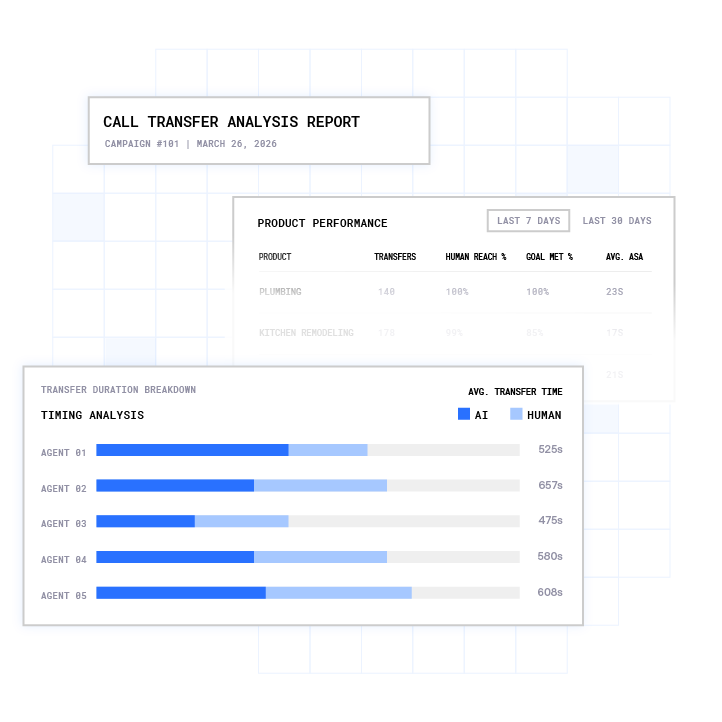
- Occupancy above 90% sustained. Sustained high occupancy correlates with higher burnout indicators and increased voluntary attrition compared to moderate occupancy levels.
- Adherence degradation. Call center agents who are disengaging often show schedule adherence drops before resignation. A previously consistent agent whose adherence slips across two consecutive measurement periods becomes a high-probability departure candidate.
- Negative sentiment shift. Natural language processing can detect sentiment deterioration by tracking declines in voice tone, language patterns, and emotional markers across an agent’s interactions. This surfaces risk that manual QA sampling at 1-3% of calls would never catch.
- Rising escalation frequency. Agents experiencing disproportionate supervisor escalations face compounding stress. Tracking escalation rates across teams highlights individuals who may need additional support before frustration reaches a tipping point.
- Schedule dissatisfaction. Approximately 68-70% of agents in Verint’s 2026 survey rank scheduling flexibility as a top two factor when choosing a job. Unscheduled absenteeism often signals schedule dissatisfaction and is one of the most reliable leading indicators of attrition.
Plura’s business intelligence layer scores each of these signals daily inside a stateful database. The system produces individual-level risk scores that managers review on a weekly cadence and uses those scores to feed the intervention engine described later. The model does not wait for an exit survey and instead flags risk while there is still time to act.
3. Automating After-Call Work and Coaching to Reduce Burnout
Once the five-signal model identifies agents at risk, the next step is addressing a core driver of burnout: repetitive administrative work. Many calls require after-call work (ACW), which includes summarization, CRM updates, and disposition coding that consume agent time after the customer hangs up. This category of work drives burnout quickly because it is repetitive, offers no customer interaction, and accumulates invisibly across every shift.
AI summarization addresses this directly. A Metrigy report found that generative AI summarizations save agents 35% of after-call time per interaction.
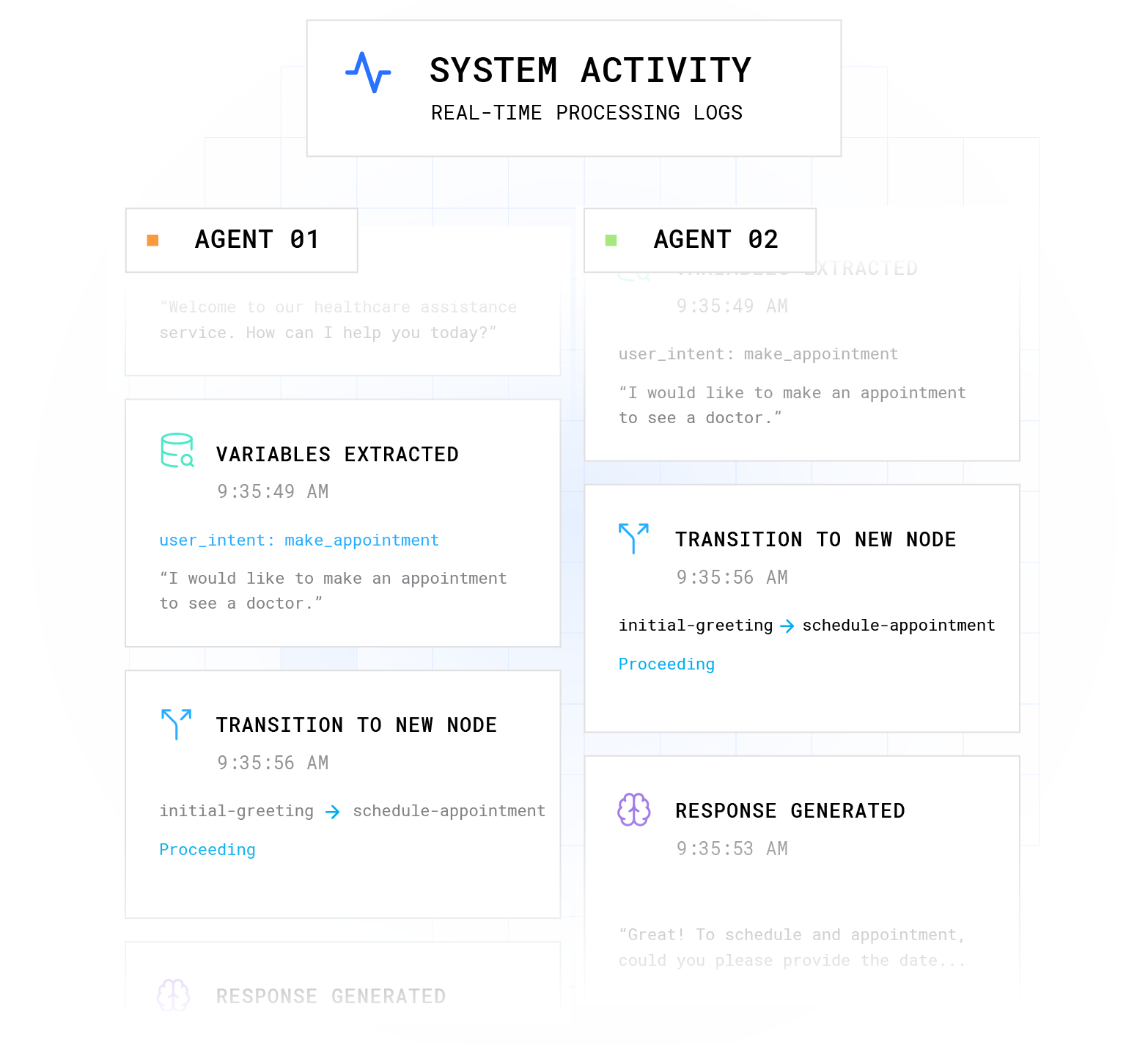
Plura’s managed workflows automate ACW end to end. The AI writes the call summary, pushes the update to the connected CRM through Plura’s integrations with HubSpot, Salesforce, and Zoho, and queues the next coaching recommendation based on the interaction’s quality signals. Agents move to the next contact without administrative drag. Real-time coaching then surfaces suggested responses during live calls, which reduces the cognitive load agents feel when they must navigate multiple systems to resolve a single issue.
4. AI Agent Replacement Economics: $700K vs. $7M TCO
The five-signal model and ACW automation reduce attrition among human agents. For operations that cannot achieve sub-20% turnover through retention alone, AI agent replacement removes the positions where turnover occurs. The economic case for call center agent turnover automation is structural, and AI agents provide the structural alternative.
In a 15-agent scenario at Plura’s default ROI calculator inputs, 15 human agents at $20 per hour with standard taxes, benefits, and commissions, running at 40% talk utilization, cost $60,000 per month.3 Six Plura AI agents handling equivalent volume at $15 per hour and 100% talk utilization cost $14,400 per month. The 30-day saving is $45,600. Over 12 months, that becomes $547,200. Over 60 months, the saving reaches $2,736,000.
At higher volume, the same model produces a total cost of ownership of $700,000 per year against a traditional contact-center benchmark of $7 million.3 For a 50-seat equivalent operation, traditional offshore operations cost $35,000-$50,000 monthly, while AI contact centers cost $8,000-$15,000 monthly.
The turnover cost line disappears entirely in the AI scenario. AI agents carry 0% annual attrition versus the industry average discussed earlier. There is no recruiting cycle, no 2-4-week training ramp, and no productivity drag during the first 90 days of tenure.
Plura’s AI Predictive Dialer handles outbound volume on Plura’s FCC-licensed carrier with branded caller ID and SHAKEN/STIR caller ID verification on every call.1 This setup reduces the “Spam Likely” labels that collapse connect rates on many third-party CPaaS platforms.
Run your numbers through Plura’s ROI calculator to check your cost savings in real time.
5. Scheduling Self-Service as an Attrition Leading Indicator
For operations that retain human agents alongside AI automation, scheduling flexibility remains a powerful retention lever. Unplanned absenteeism is not just an operational inconvenience. Elevated absenteeism often serves as a behavioral precursor and leading indicator of voluntary resignation. It is one of the most reliable leading indicators available to contact center leaders and is heavily influenced by schedule inflexibility.
Approximately 68-70% of agents in Verint’s 2026 survey rank scheduling flexibility as a top two factor when choosing a job. Contact centers offering meaningful schedule flexibility report 20 to 25 percent lower attrition in comparable environments. As noted earlier, scheduling flexibility ranks as a top-two job factor for roughly seven in ten agents.
Plura’s AI-driven scheduling layer gives agents self-service access to shift swaps, flexible blocks, and preference submissions without manager intervention on every request. The system reads occupancy forecasts from the stateful database and approves or queues schedule changes against real-time staffing needs. This keeps occupancy within the 80-85% target range that aligns with lower annual attrition compared with levels above 90%.
When absenteeism trends upward for a team or shift, the attrition risk model flags it automatically and triggers a manager alert before the pattern becomes a departure wave.
6. Closed-Loop Measurement to Maintain Sub-20% Turnover
Deploying the five-signal model and automating ACW creates the foundation. Sustaining sub-20% turnover requires a closed-loop measurement system that converts risk scores into repeatable interventions.
The operating cadence inside Plura’s platform runs on three layers.
- Weekly risk-score reviews. Managers receive a ranked list of agents by attrition probability, segmented into Low, Moderate, High, and Critical categories, each with a corresponding intervention timeline. High-risk agents, with a 35-70% probability of departure within 30 days, trigger manager alerts, while Critical agents above 70% within 14 days escalate to HR.
- Intervention playbooks. Those risk scores drive action through defined playbooks. Each risk tier maps to specific steps such as schedule adjustment, coaching sessions, workload rebalancing, or career development conversations. Using multiple leading indicators can be predictive of an employee’s potential departure and gives managers a concrete basis for intervention rather than intuition.
- Contract structure with a 90-day evaluation period. The entire system is backed by a 90-day evaluation period in every Plura annual contract. If the deployment is not delivering measurable attrition reduction, the customer is not held to the annual term. The math is transparent: 3x average ROI in 90 days, with TCO moving from $7 million toward $700,000 as AI agents absorb burnout-prone workload that drives the 31% six-month quit-intent rate.
Deloitte’s research discusses predictive retention models as a way to address attrition but does not report specific reductions in attrition-related replacement costs of 15-30%.4
The closed loop works because every signal feeds back into the model. An intervention that succeeds updates the historical attrition profile. An intervention that fails surfaces a new pattern. Over 90 days, the model becomes more accurate for the specific workforce it monitors, not just the industry average it started from.
Frequently Asked Questions
How long does deployment take?
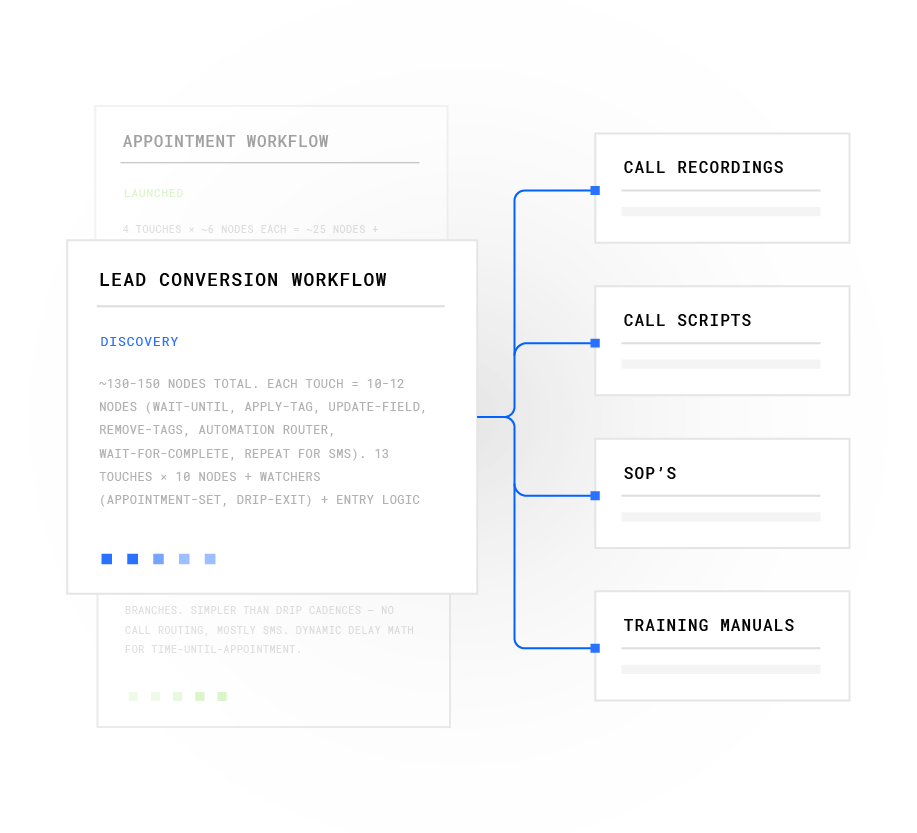
A standard Plura deployment follows a defined onboarding sequence: discovery audit, intake of existing scripts and call recordings, overnight build of a conversation mockup, review and iteration, engineering build of the production workflow, pilot on a subset of live contacts, and full go-live. Simple inbound qualification flows are typically live within days. Complex multi-step workflows, such as a 25-question intake survey with branching logic, run closer to one to two months. The 90-day evaluation period in every annual contract means the deployment timeline is not a risk the customer absorbs alone.
What data inputs are required to run the attrition risk model?
The five-signal model draws from data most contact centers already collect. Inputs include occupancy and utilization logs from the workforce management system, schedule adherence records, call transcripts or sentiment scores from quality assurance tools, escalation logs, and schedule-satisfaction survey responses. Plura’s stateful conversation database ingests these inputs and scores them daily at the individual agent level. No new data collection infrastructure is required in most deployments. Plura integrates with HubSpot, Salesforce, Zoho, and more than 50 other tools across CRM, WFM, and analytics categories.
What is the fully loaded cost?
Plura’s pricing is structured across three tiers, with the Multi tier starting at $7,500 per month on annual contracts billed monthly. All tiers include a 90-day evaluation period. The illustrative 15-agent scenario on Plura’s ROI calculator shows a monthly platform cost of $14,400 replacing $60,000 in human agent costs, which produces a 30-day saving of $45,600 and a 12-month saving of $547,200. For higher-volume operations, the TCO comparison is $700,000 per year with Plura against a traditional contact-center benchmark of $7 million. Agent build fees are $2,750 per agent. Full plan details are available on Plura’s pricing page.
Which compliance frameworks does Plura support?
Plura supports compliance with SOC 2, HIPAA, ISO certification, GDPR, SHAKEN/STIR caller ID verification, TCPA compliance, and DNC compliance.1 Every outbound contact is checked against federal and state DNC registries before dial. Consent records are timestamped and immutable. Quiet-hours rules enforce automatically through time-zone detection. HIPAA-aligned encryption, access controls, and audit logging cover protected health information across voice, SMS, RCS, and webchat. The compliance dashboard exports audit-ready reports in one click. Customers are responsible for their own regulatory obligations and certifications, and Plura provides infrastructure that supports those obligations.
Which CRMs and WFM systems integrate with Plura?
Plura integrates with HubSpot, Salesforce, and Zoho on the CRM side. On the automation and workflow side, integrations include Go High Level, Make, and Zapier, which connect to most WFM platforms. Calendar integrations cover Cal.com, Calendly, and Google Calendar. The full integration directory spans more than 50 tools across CRM, attribution, data enrichment, documents, payments, messaging, and team management. The complete list is available on Plura’s integrations page. For WFM systems not on the standard integration list, the Zapier and Make connections provide a bridge in most cases.
What operational risks exist during the transition to AI agent automation?
The primary operational risk in any AI agent deployment is conversation quality drift during the initial pilot period, before the workflow has been tuned against real call data. Plura addresses this through a structured pilot phase on a subset of live contacts before full go-live, continuous conversation engineering after launch, and real-call monitoring that surfaces objection patterns and conversion gaps week over week. Workflow guardrails define hard limits at every conversation node, including BATNA floors and ceilings for negotiation flows, so the AI does not improvise on outcomes that matter. When a customer response falls outside defined paths, the system warm-transfers to a U.S. agent or flags the conversation in the Unified Inbox. The 90-day evaluation period in every annual contract serves as a structural backstop, so if the deployment is not delivering measurable results, the customer can exit without penalty.
Compare plans and rates side by side to see which tier fits your operation’s volume and attrition targets.
1 Plura AI maintains SOC 2, HIPAA, ISO, and GDPR posture as part of its platform infrastructure. References to compliance frameworks in this article describe Plura’s platform capabilities and do not constitute a guarantee that any customer using Plura will themselves be compliant with applicable laws or standards. Customers remain solely responsible for their own regulatory obligations, certifications, consent management, recordkeeping, and the claims they make to their own end users. Consult qualified legal counsel for guidance specific to your use case.
2 This article describes regulatory frameworks at a general level and does not constitute legal advice. Laws and regulations vary by jurisdiction, change over time, and apply differently depending on facts and circumstances. Readers should consult qualified legal counsel before making compliance decisions.
3 Performance figures, customer outcomes, and industry statistics referenced in this article are drawn from cited third-party sources or Plura customer case studies. Individual results vary based on implementation, use case, industry, audience, and execution. Past or aggregate performance is not a guarantee of future results.
4 References to third-party products, services, companies, or research are made for informational and comparative purposes only. Plura AI is not affiliated with, endorsed by, or sponsored by any third party named in this article unless explicitly stated. Trademarks and product names referenced remain the property of their respective owners.
This article is provided for informational purposes only and reflects Plura AI’s understanding at the time of publication. Product capabilities, integrations, and specifications are subject to change. For the most current information, visit plura.ai.
This article was produced with the assistance of AI tools and reviewed by Plura AI prior to publication.