

Written by: Matt Beucler, CEO, Plura AI | Last updated: August 26, 2026
Key Takeaways for High-Volume U.S. Calling
- Leading speed-to-lead dialers deliver verified sub-5-second first contact while enforcing TCPA, DNC, and state onshoring rules on U.S. infrastructure.
- Only platforms that own an FCC-licensed carrier stack can issue branded caller ID, enforce real-time compliance, and avoid third-party latency or added regulatory exposure.
- Plura AI meets four critical criteria: speed, owned infrastructure, built-in compliance controls, and 100% U.S. deployment, which makes it a fully integrated platform in its category.
- Sub-5-second response depends on infrastructure design, including co-located AI inference, SHAKEN/STIR verification at the carrier level, and stateful conversation memory across channels.
- Operators running 500+ daily interactions can cut monthly costs from $60,000 to $14,400 by replacing human teams with Plura; see your projected ROI in a live demo with Plura’s AI webchat.
Executive Summary and Evaluation Framework
High-volume U.S. operators evaluating dialer infrastructure for speed to lead need a framework that goes beyond marketing claims. Four criteria determine whether a dialer can reliably deliver sub-5-second first contact at scale.
- Speed: Verified time from lead event to first live contact attempt, measured in seconds, not minutes.
- Infrastructure: Whether the vendor owns its carrier stack or routes through a third-party CPaaS (Communications Platform as a Service) such as Twilio.
- Compliance: Real-time TCPA compliance enforcement, DNC scrubbing, SHAKEN/STIR caller ID verification, and state-level rule enforcement built into the dial path, not added later.
- Deployment: Time to go live, integration depth, and whether the platform runs on 100% U.S. servers.
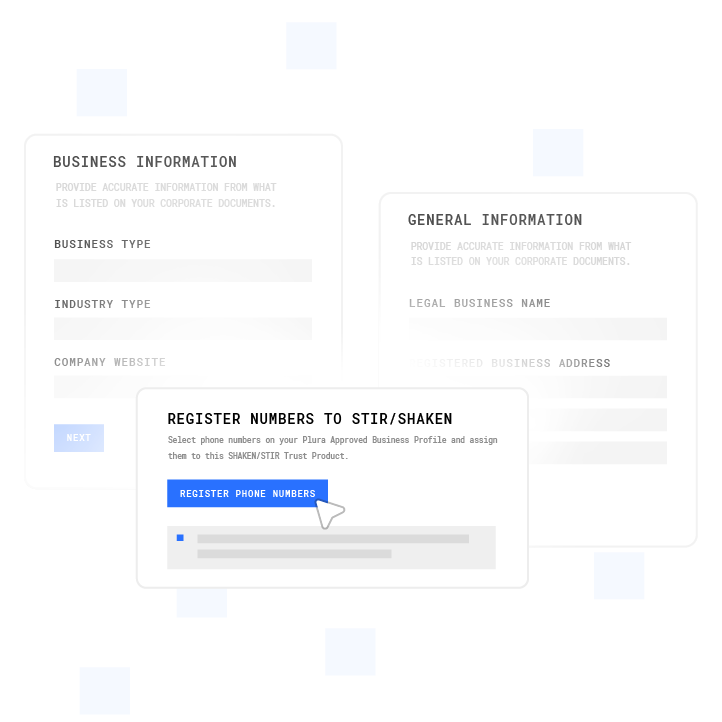
Plura AI meets all four criteria. Voice originates on Plura’s own FCC-licensed audio bridging carrier. The AI Predictive Dialer, AI SMS, AI voice agent, and AI webchat all share a Stateful Conversation Database running on 100% U.S. infrastructure. DNC scrubbing, TCPA consent logging, and SHAKEN/STIR caller ID verification run at the carrier level before any call leaves the network.
Run your numbers through Plura’s calculator to see your ROI in real time.
Dialer Options for U.S. Outbound Calling
The U.S. outbound calling market in 2026 breaks into four vendor categories, each with a distinct infrastructure profile and compliance posture.
In-house human teams carry the highest cost structure. A 15-agent operation at $20 per hour with standard taxes, benefits, and commissions runs approximately $60,000 per month at a 40% talk-utilization rate typical of human contact-center work, per Plura’s ROI calculator. Human teams cannot scale into peak seasons without months of advance hiring.
Offshore BPOs reduced cost for two decades through wage arbitrage. That model now faces growing regulatory pressure. The FCC’s Notice of Proposed Rulemaking (CG Docket No. 26-52) proposes caps on offshore customer-service calls and restrictions on offshore handling of sensitive consumer data. State laws in New York, New Jersey, Connecticut, Missouri, and Florida already restrict offshore handling of medical, financial, and consumer data. Every offshore contract a covered entity holds is now a compliance risk that operators should review with qualified counsel.
Faced with offshore regulatory pressure, many operators have turned to CPaaS-based AI tools as an alternative, but this apparent escape hatch carries its own infrastructure limits. CPaaS-based AI tools are usually API resellers built on top of third-party carriers such as Twilio.4 They cannot issue branded caller ID under their own carrier identity, cannot enforce real-time DNC scrubbing before the call leaves the network, and may be affected by future FCC rules on foreign infrastructure. They also lack stateful cross-channel memory, so a lead who texted at 9 a.m. often has to re-explain themselves when the call comes at noon.
End-to-end AI platforms with owned carrier infrastructure represent the only category that can deliver verified sub-5-second speed to lead while supporting U.S. regulatory requirements. Plura is the only platform in this category that owns its FCC-licensed audio bridging carrier, runs on 100% U.S. servers, and enforces TCPA and DNC controls plus SHAKEN/STIR caller ID verification at the carrier level on every outbound contact.
Several U.S.-specific regulatory factors directly affect dialer selection.
- TCPA compliance (47 U.S.C. § 227) consent requirements for autodialed or prerecorded calls to cell phones, including the FCC’s 2024 revocation order requiring suppression within 10 business days.2
- DNC scrubbing against the National Do Not Call Registry, which must occur no more than 31 days before each campaign under FTC Telemarketing Sales Rule requirements.2
- SHAKEN/STIR caller ID verification under the TRACED Act, which relies on full A-level attestation to avoid spam flagging by destination carriers.
- State-level calling-hour restrictions that are stricter than the federal 8 a.m. to 9 p.m. window in more than 20 states, which require time-zone-aware enforcement on every outbound contact.
- The FCC’s April 2026 Know Your Customer proposal, which sets a base forfeiture of $2,500 per illegal call for high-volume originating providers.
Fast Dialer Performance Benchmarks
Verified Speed Benchmarks
The research base on speed-to-lead conversion is consistent across multiple large-sample studies. The MIT/InsideSales.com study of 15,000+ web-generated leads found that companies attempting contact within 5 minutes were 100x more likely to reach the lead and 21x more likely to qualify the lead compared to waiting 30 minutes.3 Velocify’s study of nearly 3.5 million leads found that responding to leads within 1 minute resulted in a 391% improvement in conversion rates, while calling within the first 30 minutes after missing the initial window increased conversion by an average of 62%.
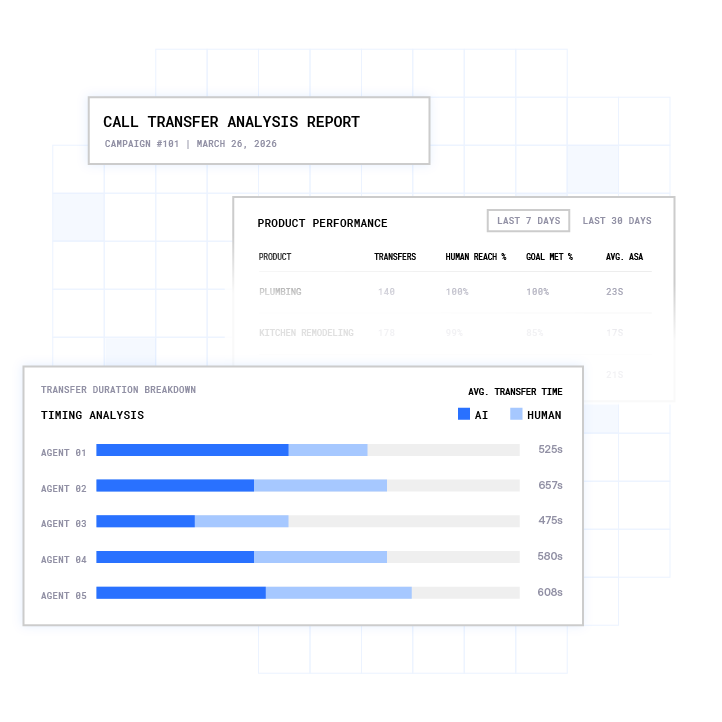
The table below shows how infrastructure ownership shapes real-world speed. Platforms with owned carrier stacks reach sub-5-second response, while tools that depend on third-party telephony sit in the 28 to 60 second range, and human-only approaches measure in hours.
| Platform / Approach | Published Speed Claim | Infrastructure Basis | Source |
|---|---|---|---|
| Plura AI Predictive Dialer | Under 5 seconds to first AI-powered contact | FCC-licensed owned carrier, 100% U.S. servers, stateful AI orchestration | plura.ai/ai-predictive-dialer |
| Aloware AloAi voice agent | Under 60 seconds after form submission | Telephony integration, carrier not disclosed | aloware.com/blog/speed-to-lead4 |
| Close Chloe AI voice agent (top 10% of customers) | Under 60 seconds speed-to-conversation for top 10% of customers | Event-driven workflow on lead creation, carrier not disclosed | close.com/blog/how-to-get-speed-to-lead-under-one-minute |
| LimeCall instant callback | Approximately 28 seconds via simultaneous dial of both parties | Callback bridging widget, carrier not disclosed | limecall.com/post/speed-to-lead-playbook-2026 |
| Human SDR team (industry median) | 42 hours median first response | Manual queue, no AI triggering | getperspective.ai 2026 benchmark aggregation |
Why Sub-5-Second Response Depends on Owned Carrier Infrastructure
Sub-5-second speed to lead starts as an infrastructure challenge before it becomes a software feature. A reliable sub-5-second inbound-call pipeline requires a telephony gateway that publishes the call event immediately upon answer, a durable event queue between telephony and AI orchestration, co-located speech-to-text and LLM inference tuned for first-token latency, and streaming text-to-speech so the first audio chunk plays before the full answer completes.
Reseller connectivity introduces intermediary carrier hops that add invisible latency and create geography-dependent performance that cannot match direct carrier ownership of PSTN connectivity. CPaaS-wrapped platforms inherit their upstream carrier’s latency budget, caller ID reputation, and compliance posture. They cannot tune the carrier layer independently.
Plura owns its FCC-licensed audio bridging carrier, and voice originates on Plura’s domestic infrastructure. SHAKEN/STIR caller ID verification runs at the carrier level on every outbound call, and branded caller ID is issued directly under Plura’s own carrier identity rather than through a reseller. Network ingress should stay under 50 ms and inference should be tuned for first-token latency rather than raw throughput to reach sub-200 ms voice AI round-trip latency. That target requires co-located inference and synthesis on the same low-latency network path as the call, which Plura’s U.S.-only architecture supports.
Plura owns its telecom infrastructure and holds an FCC carrier license, whereas platforms that depend on Twilio operate as a software layer without a carrier license. That distinction determines whether branded caller ID, real-time DNC scrubbing, and SHAKEN/STIR caller ID verification run inside the platform or sit with a third party.
Strategic Trade-offs for Speed-to-Lead Programs
Automation vs. human oversight. AI voice agents can sit inside the predictive dialer call path to perform first-line qualification on leads before routing only suitable or high-intent conversations to human agents, which reserves skilled human capacity for complex interactions. The trade-off is workflow design complexity. Every AI-to-human hand-off needs explicit mapping, defined escalation triggers, and clear warm-transfer logic.
Speed vs. personalization. Sub-5-second response delivers the highest contact and qualification rates. At the same time, Plura supports lead response times under 60 seconds with multichannel engagement via voice, SMS, RCS, and webchat, real-time AI lead scoring, and full conversation transcripts that feed personalization at scale. The Stateful Conversation Database means the AI that texted a lead at 9 a.m. can pick up the call at noon already knowing what was said, which removes the re-introduction friction that hurts conversion on disconnected platforms.
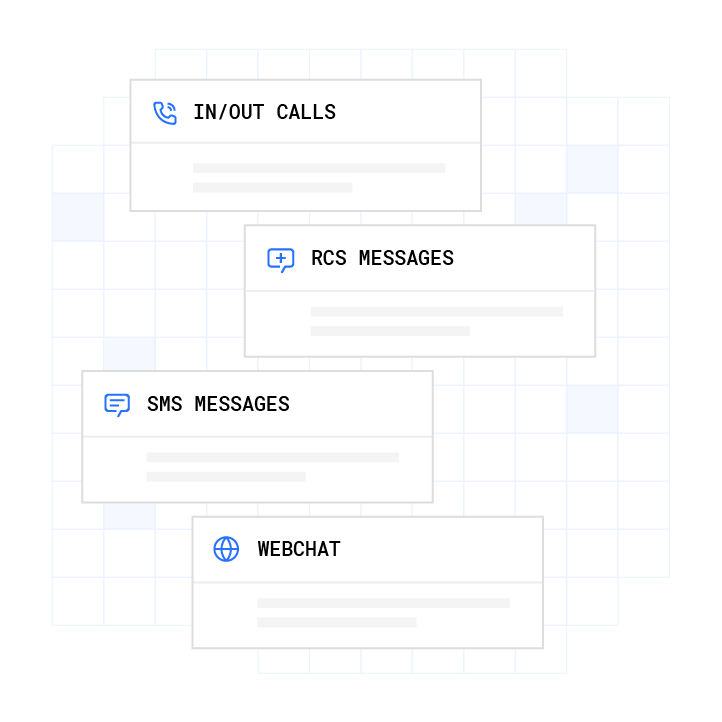
Channel-mix impact. Organizations deploying AI for speed to lead see response times drop from hours to seconds and connection rates increase by 3x to 5x. Voice alone rarely covers the full contact opportunity for high-volume operators. Combining the AI Predictive Dialer with AI SMS creates parallel contact paths that reach leads on their preferred channel without adding headcount.
Current Best Practices for Sub-5-Second Programs
Operators running sub-5-second speed-to-lead programs at scale in 2026 follow a consistent set of practices that reinforce each other.
- Clear routing logic. A practical rollout sequence defines a narrow use case first, then stands up a healthy number pool, wires compliance into the dial path, and turns on conversation-level QA before scaling volume. This routing foundation sets the stage for the next practice.
- Shared context across channels. The Stateful Conversation Database in Plura’s platform ensures every channel inherits the full memory of every prior touchpoint, including pricing offers made, objections raised, and qualification status. That shared context allows routing logic to make informed decisions about escalation and transfer without forcing the lead to repeat information.
- Consent management built into the dial path. For high-speed dialers, consent validation should occur before call routing or dialing, and any lead missing required consent metadata should be flagged and held rather than queued. Plura’s compliance engine enforces this at the carrier level before any call attempt.
- Performance monitoring on compliance metrics. Operational safeguards for AI predictive dialers include monitoring connect rates, abandon rates, and compliance metrics as volume increases, with pacing tuned continuously against measured data rather than static ratios.
- SHAKEN/STIR caller ID verification at A-level attestation. STIR/SHAKEN call authentication with full A attestation supports answer rates by reducing spam flagging by carriers, independent of consent practices. Plura issues branded caller ID directly through its FCC-licensed carrier and runs SHAKEN/STIR on every outbound call.
Implementation Readiness Assessment for Plura
Before deploying a sub-5-second speed-to-lead dialer, operators should assess readiness across five dimensions that directly affect ROI and risk.
- Interaction volume. Plura’s platform is designed for operators running at least 500 daily customer interactions or $5,000 per month in paid-media spend. Below that threshold, the ROI model often does not generate sufficient return to justify the deployment depth.
- Process maturity. A practical rollout sequence begins with defining the commercial use case, then mapping every AI-to-human hand-off, auditing input data quality and consent status, setting system ownership for records, and limiting the pilot to a single end-to-end workflow.
- Data quality. The AI Predictive Dialer’s stateful conversion signals depend on clean CRM data. Operators with fragmented or duplicate records should audit and remediate data quality before go-live.
- Compliance requirements. Operators in healthcare, insurance, financial services, and legal verticals often carry additional obligations under HIPAA, state mini-TCPA statutes, and the FCC’s 2026 Know Your Customer proposal. Plura’s compliance posture includes the certifications and frameworks outlined in the Executive Summary, with additional detail available at plura.ai/privacy. Operators remain responsible for their own regulatory obligations and should consult qualified counsel on their specific posture.
- Integration needs. Plura connects to 50+ tools across CRMs, calendars, attribution platforms, and data enrichment providers. Review the full directory at plura.ai/integrations to confirm your stack is covered before deployment.
Common Pitfalls in Speed-to-Lead Deployments
Automating broken workflows. Speed-to-lead infrastructure amplifies whatever process sits underneath it. A dialer that fires in under 5 seconds on a poorly designed qualification script produces high contact volume and low conversion. Plura’s onboarding sequence addresses this risk through a discovery audit of existing call economics, intake of sample calls and SOPs, and iterative conversation engineering before go-live.
Underestimating compliance complexity. State-level time-zone mapping and real-time opt-out processing are key compliance features for predictive dialers, alongside real-time DNC scrubbing and consent verification, and smaller vendors sometimes cut corners on these elements. Operators who treat compliance as a post-deployment checkbox rather than a first-class architectural layer expose themselves to TCPA statutory damages of $500 to $1,500 per violation under 47 U.S.C. § 227, with no cap on the number of violations that can be aggregated in a class action.
Measuring activity instead of outcomes. Dials per hour and talk time are operational metrics. The metrics that matter are lead-to-opportunity rate, cost per qualified lead, and pipeline growth. Plura’s conversation intelligence generates outcome-based metrics across every channel, including conversion lift, contact rates, and cost per completed action, rather than dashboard summaries with limited operational signal.
Conclusion and Next Steps for Operators
The fastest speed-to-lead dialer in 2026 is not defined by marketing claims. It is defined by four verifiable criteria: sub-5-second response time, owned FCC-licensed carrier infrastructure, real-time TCPA and DNC controls built into the dial path, and 100% U.S. server deployment that avoids offshore infrastructure exposure.
Plura AI is the only platform that meets all four criteria. The AI Predictive Dialer runs on Plura’s own FCC-licensed audio bridging carrier, delivers verified sub-5-second first contact, enforces SHAKEN/STIR caller ID verification and real-time DNC scrubbing at the carrier level, and operates on 100% U.S. infrastructure by architecture. The compliance controls described earlier, including SOC 2, HIPAA, ISO, and GDPR, are architectural rather than add-ons.1
For operators running 500 or more daily interactions, the ROI case is straightforward. The cost reduction outlined earlier, from $60,000 to $14,400 per month, translates to $547,200 in annual savings under standard utilization assumptions, per the default scenario on Plura’s ROI calculator.
Run your numbers through Plura’s calculator to check your ROI in real time.
Frequently Asked Questions
What defines the fastest dialer for speed to lead, and how is that measured?
Speed to lead refers to the elapsed time between a prospect’s expression of interest, such as a form submission, inbound call, or SMS reply, and the first meaningful contact from the sales or AI system. The fastest dialers achieve this in under five seconds by combining an event-driven trigger that fires the moment a lead record is created, a carrier-level call origination path with no intermediary hops, and AI orchestration that begins the conversation without waiting for a human agent to become available. Platforms that route through third-party CPaaS providers add latency at every handoff point. Plura’s AI Predictive Dialer reaches sub-5-second first contact because voice originates on Plura’s own FCC-licensed carrier, with co-located AI inference and no upstream reseller in the path. The benchmark that matters operationally is not average speed but consistent speed, so a dialer that hits sub-5-second response on 95% of leads at peak volume delivers more value than one that only achieves it on a demo call.
How does Plura support TCPA and DNC compliance in a high-speed dialing environment?
Plura’s compliance engine functions as a primary layer of the platform rather than a post-deployment add-on. Every outbound contact is checked against federal and state DNC registries in real time before the dial attempt. TCPA consent records are timestamped, immutable, and audit-ready, with express written consent tracked per contact. Quiet-hours rules apply automatically through time-zone detection on the called party’s location, and the system applies state and federal calling-window restrictions to every campaign. SHAKEN/STIR caller ID verification runs on every outbound call at the carrier level, supporting A-level attestation. The compliance dashboard exports audit-ready reports in one click. Operators are responsible for their own regulatory obligations, consent documentation, and compliance posture under applicable law. Plura provides the infrastructure and supports compliance workflows, while operators and their counsel determine how those tools apply to their specific programs.
What is the difference between a CPaaS-wrapped AI dialer and a carrier-owned AI dialer like Plura?
A CPaaS-wrapped AI dialer is a software layer built on top of a third-party telecom provider such as Twilio. The vendor rents the carrier layer, which means it cannot issue branded caller ID under its own carrier identity, cannot enforce compliance before the call leaves the network, and inherits the upstream carrier’s latency budget and spam-label reputation. A carrier-owned AI dialer, by contrast, originates voice on infrastructure the vendor operates under an FCC license. Plura is its own FCC-licensed audio bridging carrier. Branded caller ID is issued at the carrier level. Real-time DNC scrubbing, TCPA consent logging, and SHAKEN/STIR caller ID verification occur inside the platform before any call attempt. This distinction determines whether sub-5-second speed to lead is architecturally achievable or dependent on a third party’s performance and compliance posture.
What interaction volume is required to justify deploying Plura’s AI Predictive Dialer?
Plura’s platform is designed for operators running at least 500 daily customer interactions or $5,000 per month in paid-media spend. Below that threshold, the ROI model often does not generate sufficient return to justify the deployment depth. For operations at or above that floor, the economics become significant. A 15-agent human team at standard utilization rates costs approximately $60,000 per month, while an equivalent Plura deployment runs approximately $14,400 per month, with 12-month savings of $547,200 in the default calculator scenario. Operators in healthcare, insurance, financial services, legal, real estate, franchise networks, and performance-marketing agencies consistently hit the volume threshold and represent Plura’s primary deployment base. The ROI calculator at plura.ai/calculator allows operators to input their own headcount, hourly rates, and utilization figures to generate a deployment-specific model.
How does Plura’s stateful conversation memory affect speed-to-lead performance across channels?
Most AI voice and SMS tools operate as separate products from separate vendors with separate memories. A lead who texted at 9 a.m. often has to re-explain their situation when the call comes at noon, which degrades conversion and increases handle time. Plura’s AI Predictive Dialer, AI SMS, AI voice agent, and AI webchat all share a single Stateful Conversation Database. Every interaction is keyed to the customer’s phone number, email, or ID, and every channel inherits the full memory of every prior touchpoint, including pricing offers made, objections raised, qualification status, and sensitive-data redactions. In a speed-to-lead context, this means the AI that fires within five seconds of a form submission already knows what the lead browsed, what enrichment data was pulled from 30+ sources, and what was said in any prior interaction. The conversation starts informed rather than from zero, which directly affects qualification rate and transfer quality.
1 Plura AI maintains SOC 2, HIPAA, ISO, and GDPR posture as part of its platform infrastructure. References to compliance frameworks in this article describe Plura’s platform capabilities and do not constitute a guarantee that any customer using Plura will themselves be compliant with applicable laws or standards. Customers remain solely responsible for their own regulatory obligations, certifications, consent management, recordkeeping, and the claims they make to their own end users. Consult qualified legal counsel for guidance specific to your use case.
2 This article describes regulatory frameworks at a general level and does not constitute legal advice. Laws and regulations vary by jurisdiction, change over time, and apply differently depending on facts and circumstances. Readers should consult qualified legal counsel before making compliance decisions.
3 Performance figures, customer outcomes, and industry statistics referenced in this article are drawn from cited third-party sources or Plura customer case studies. Individual results vary based on implementation, use case, industry, audience, and execution. Past or aggregate performance is not a guarantee of future results.
4 References to third-party products, services, companies, or research are made for informational and comparative purposes only. Plura AI is not affiliated with, endorsed by, or sponsored by any third party named in this article unless explicitly stated. Trademarks and product names referenced remain the property of their respective owners.
This article is provided for informational purposes only and reflects Plura AI’s understanding at the time of publication. Product capabilities, integrations, and specifications are subject to change. For the most current information, visit plura.ai.
This article was produced with the assistance of AI tools and reviewed by Plura AI prior to publication.