
Written by: Matt Beucler, CEO, Plura AI
Updated September 8, 2026
Key Takeaways
- Cost per call often hides the real picture. Cost per resolution and first-contact resolution (FCR) drive total support cost.
- Volume reduction through deflecting routine inquiries creates the largest savings because most contact center costs stay fixed in the short term.
- AI-powered self-service resolves contacts for roughly $1.84 versus $13.50 for assisted interactions, with many teams seeing 3x ROI in 90 days.3
- Cutting after-call work (ACW) from 4–6 minutes to 1–2 minutes per call can free up to two hours of agent capacity per shift.
- Plura AI’s AI voice, SMS, and webchat agents carry context across channels to improve FCR and reduce cost per resolution.
Cost Per Call Definition and Formula
Cost per call is the total cost of running your contact center divided by the number of calls handled in the same period.
Formula: Cost Per Call = Total Operating Costs ÷ Total Calls Handled
The cost base includes agent and supervisor pay plus employer costs, telephony and software licenses, premises, utilities, equipment leases, training, and outsourced support. Abandoned calls drop out of the denominator, but queuing time still sits in the numerator.
Consider a simple example. A contact center with $500,000 in monthly operating costs that handles 100,000 calls has a cost per call of $5.00. If volume drops to 80,000 calls while costs stay at $500,000, cost per call rises to $6.25. Most call center costs stay fixed in the short term, so cost per call reacts sharply to volume.
Why Cost Per Resolution Beats Cost Per Call
Cost per resolution gives a clearer view of performance than cost per call. A $5.00 call that resolves an issue in one contact costs less than a $3.00 call that requires three follow-ups.
Gartner’s benchmark data shows a median cost of $13.50 for assisted contacts versus $1.84 for self-service.3,4 A deflected call that fails and drives a callback increases total cost.
Cost per resolution is total support operating cost divided by issues fully resolved, excluding repeat contacts within 7–30 days. This metric penalizes false containment and rewards first-contact resolution.
Centers that cut AHT by pushing agents to talk faster often see FCR drop and repeat contacts rise. High-performing teams treat AHT as a diagnostic signal, not a primary target.
Book a live demo with Plura AI to see how AI voice, SMS, and webchat agents reduce cost per resolution across your top call drivers.
Apply the 80/20 Rule to Your Call Drivers
Most leaders know the “80/20” service level target of 80 percent of calls answered within 20 seconds. The Pareto Principle also applies to call volume.
McKinsey research indicates that 20–30 percent of calls in many contact centers come from a single issue.4 A small set of problems drives a large share of volume.
Pull your top 15–20 call drivers from last month’s data. Rank them by volume and cost. Flag the issues that are routine, repeatable, and suitable for automation. That list becomes your roadmap.
Cut After-Call Work Without Hurting Quality
After-call work such as notes, CRM updates, and wrap codes consumes capacity without improving the customer experience.
Agents spend an average of 4–6 minutes per call on after-call work, and AI summarization tools can reduce that to 1–2 minutes.3 At 40 calls per day, that shift frees roughly two hours of productive time per agent per shift.
Effective tactics for reducing ACW while maintaining quality include:
- AI-generated call summaries that auto-populate CRM fields
- Structured wrap-up forms that replace free-text entry
- Screen-pop and CTI that surface the customer record before the agent speaks
- Integrated knowledge bases that reduce hold time during the call
Structured wrap-up forms, AI-generated summaries, and automated CRM updates can cut 20 to 40 seconds off every call. Lower ACW increases agent availability and reduces cost per call without rushing conversations.
Deflect Routine Inquiries With AI Self-Service
Deflecting routine inquiries creates the largest cost-per-call impact. Self-service resolves a contact for $1.84 versus $13.50 for an assisted interaction, a seven-to-one cost difference.
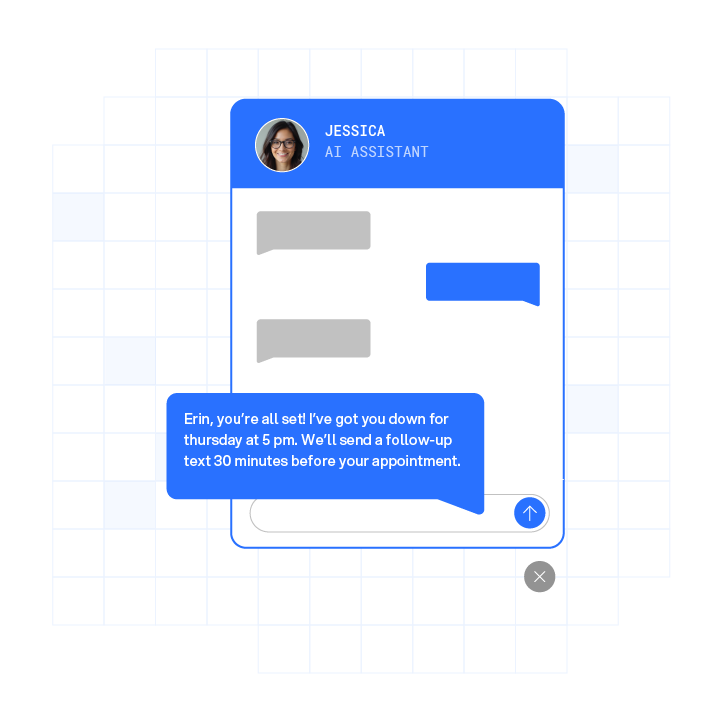
Plura AI’s AI voice agents handle routine inquiries end-to-end. AI SMS resolves simple requests asynchronously. AI webchat engages website visitors before they pick up the phone.
Deflection must produce real resolution. Industry research shows that 20–40 percent of “deflected” contacts return through another channel within days. Effective deflection relies on automation with write access to backend systems, not just FAQ responses.
Plura integrations connect AI agents directly to CRM, order management, and scheduling systems so the AI can complete the task, not just answer questions.
Increase First Contact Resolution With Context
A 1 percent improvement in FCR often aligns with roughly a 1 percent reduction in operating costs. Training, routing, and context all contribute.
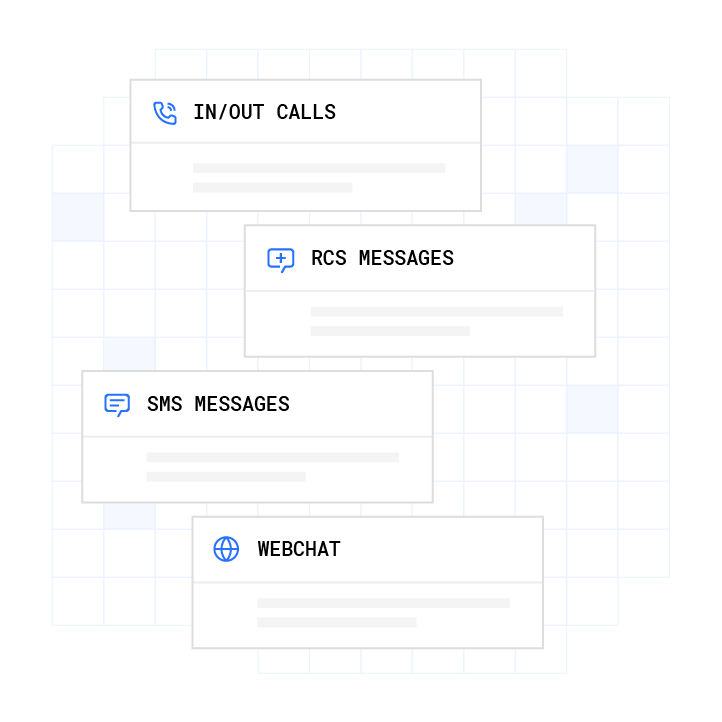
Plura uses a Stateful Conversation Database that carries context across voice, SMS, and webchat. A customer who texts at 9 a.m. does not repeat their story when they call at noon.
That continuity supports higher first-contact resolution. Contact centers allocate 60–70 percent of operating costs to agent labor, and repeat contacts drive a large share of that spend.
Align Staffing and AI Capacity
Labor accounts for 60–70 percent of contact center operating costs. Workforce management, forecasting, and shrinkage control remain essential, yet human staffing scales linearly with volume.
AI agents scale instantly during peaks without hiring, training, or overtime. Plura’s ROI calculator models a 15-agent operation at $60,000 per month in human costs, assuming $20 per hour, 25 percent for taxes and benefits, and 40 percent talk utilization.
Six Plura agents handling the same volume at 100 percent talk utilization cost $14,400 per month. That scenario shows a 30-day savings of $45,600 and a 12-month savings of $547,200.
Plura absorbs overflow and seasonal surges at a fraction of temporary staffing costs, with no ramp time and consistent scripts.
Run your numbers through the Plura ROI calculator to see projected savings for your operation.
Industry Benchmarks for Cost Per Call
| Industry | Voice Cost Per Contact (Fully Loaded) | Source |
|---|---|---|
| E-commerce and Retail | $7–$12 | The Office Gurus, 2026 |
| SaaS and B2B Software | $12–$20 | The Office Gurus, 2026 |
| Fintech and Financial Services | $10–$18 | The Office Gurus, 2026 |
| Healthcare and Insurance | $12–$22 | The Office Gurus, 2026 |
| Telecommunications | $8–$14 | The Office Gurus, 2026 |
| Cross-Industry Blended (Voice) | $9–$16 | The Office Gurus, 2026 |
| U.S. Onshore Inbound (All Industries) | $7–$14 | Contact Center USA, 2026 |
| Median Cost Per Assisted Contact | $13.50 | Gartner, February 2024 |
| Median Cost Per Self-Service Contact | $1.84 | Gartner, February 2024 |
Note: Self-service costs $0.10–$0.60 per successful resolution, per The Office Gurus’ 2026 benchmarks.
Action Plan to Lower Cost Per Resolution
Leaders see the biggest gains from volume reduction rather than aggressive AHT cuts. The following sequence keeps that focus clear.
- Analyze Call Drivers. Rank your top 20 percent of issue types by volume and cost. Separate preventable upstream failures from genuine customer demand.
- Deflect Routine Inquiries With AI. Deploy AI voice agents, AI SMS, and AI webchat for the top 5–10 call drivers. Give the AI write access to backend systems so deflection produces real resolution.
- Improve FCR. Provide agents with full context and intelligent routing. Use stateful conversation history so customers never repeat themselves.
- Reduce ACW. Automate call summarization and CRM updates. Aim for 1–2 minutes of wrap time per call.
- Align Staffing. Use AI for overflow and peak seasons. Model headcount against resolved volume instead of raw call volume.
How Plura Reduces Cost Per Call and Cost Per Resolution
Plura AI focuses on deflection and FCR improvement, the two highest-impact levers for cost reduction. Its AI voice agents handle routine inquiries end-to-end on Plura’s FCC-licensed carrier infrastructure.
AI SMS and AI webchat capture digital conversations before they escalate to voice. The Stateful Conversation Database holds context across every channel so FCR improves over time instead of resetting at each touchpoint.
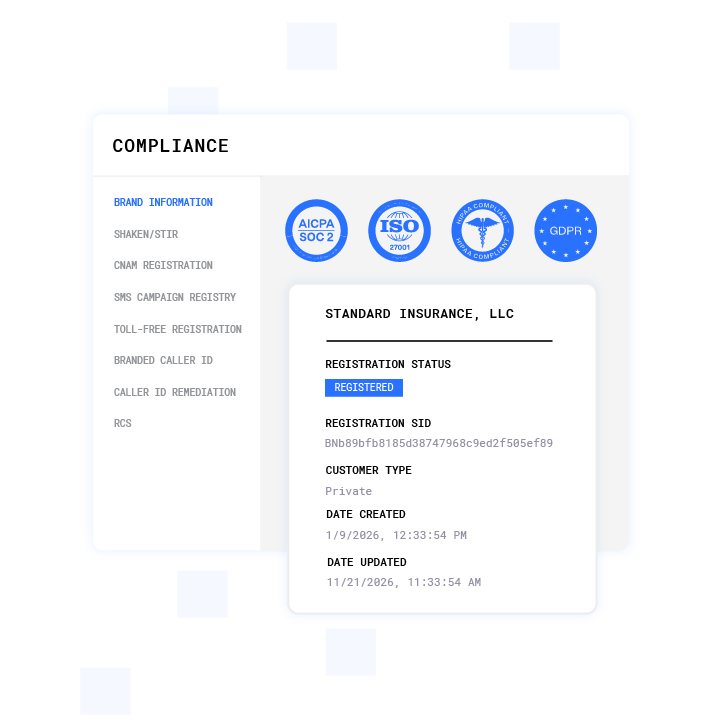
Plura runs on 100 percent U.S. infrastructure and includes features that support compliance with frameworks such as TCPA, DNC, SOC 2, HIPAA, and SHAKEN/STIR caller ID verification. Customers remain responsible for their own regulatory obligations and certifications.1,2
For a 100-seat contact center, traditional operations can cost $4 million to $7 million annually, while AI-powered communications using Plura can range from $300,000 to $700,000.
Run your numbers through the Plura ROI calculator and compare plans and rates side by side.
Book a live demo with Plura to see AI voice, SMS, and webchat agents reduce your cost per resolution.
Frequently Asked Questions
What Is the 80/20 Rule in Call Centers?
In contact centers, “80/20” usually describes the service level target of 80 percent of calls answered within 20 seconds. This standard originated in the telecommunications industry in the 1980s and spread through early workforce management tools and benchmarking.
The Pareto Principle also applies to call volume. Roughly 80 percent of calls often come from 20 percent of issue types. Identifying and automating that 20 percent of call drivers creates the fastest path to volume reduction.
The two meanings stay separate. Service level measures speed of answer, while the Pareto view guides where to focus deflection and automation investment.
How Do You Reduce After-Call Work in a Call Center?
Leaders reduce ACW by automating non-conversational wrap-up tasks. AI call summarization generates a structured summary as soon as the call ends and populates CRM fields automatically.
Structured wrap-up forms replace free-text entry with coded selections. Screen-pop and CTI integration surface the customer record before the agent speaks, which removes identity verification time from the call.
A well-maintained knowledge base shortens hold time during calls and reduces total handle time. Together, these tactics can cut ACW from 4–6 minutes per call to 1–2 minutes and free roughly two hours of agent capacity per shift.
What Is the Average Cost Per Call in a Call Center?
The average cost per inbound call ranges from $7–$14 for U.S. onshore operations across all industries, according to Contact Center USA’s 2026 benchmarks. Costs vary by vertical.
Healthcare and insurance run $12–$22 per voice contact, SaaS and B2B software run $12–$20, fintech and financial services run $10–$18, telecommunications run $8–$14, and e-commerce and retail run $7–$12, per The Office Gurus’ 2026 benchmarks.
Gartner’s median for assisted contacts across all channels is $13.50. Self-service resolves contacts for $0.10–$0.60 per successful resolution, so shifting appropriate volume from voice to self-service creates a major cost lever.
How Does AI Reduce Cost Per Call?
AI reduces cost per call through deflection, FCR improvement, and ACW reduction. AI voice agents can handle routine calls end-to-end at roughly $0.10–$1.50 per resolved call, compared with approximately $4–$8 per call for a fully loaded U.S. agent.
Stateful AI gives every channel full context from prior interactions, which reduces repeat contacts and improves FCR. AI call summarization and automated CRM updates cut ACW from 4–6 minutes to 1–2 minutes per call and increase agent throughput without new headcount.
What Is Cost Per Resolution?
Cost per resolution is total support operating cost divided by issues fully resolved, excluding repeat contacts within 7–30 days. A call that appears handled but generates a callback two days later counts as an unresolved issue.
Cost per resolution rewards first-contact resolution and genuine self-service deflection. Cost per call can look healthy even when rushed interactions create repeat volume. For leaders under pressure to cut costs while protecting CSAT, cost per resolution aligns operational decisions with customer outcomes.
1 Plura AI maintains SOC 2, HIPAA, ISO, and GDPR posture as part of its platform infrastructure. References to compliance frameworks in this article describe Plura’s platform capabilities and do not constitute a guarantee that any customer using Plura will themselves be compliant with applicable laws or standards. Customers remain solely responsible for their own regulatory obligations, certifications, consent management, recordkeeping, and the claims they make to their own end users. Consult qualified legal counsel for guidance specific to your use case.
2 This article describes regulatory frameworks at a general level and does not constitute legal advice. Laws and regulations vary by jurisdiction, change over time, and apply differently depending on facts and circumstances. Readers should consult qualified legal counsel before making compliance decisions.
3 Performance figures, customer outcomes, and industry statistics referenced in this article are drawn from cited third-party sources or Plura customer case studies. Individual results vary based on implementation, use case, industry, audience, and execution. Past or aggregate performance is not a guarantee of future results.
4 References to third-party products, services, companies, or research are made for informational and comparative purposes only. Plura AI is not affiliated with, endorsed by, or sponsored by any third party named in this article unless explicitly stated. Trademarks and product names referenced remain the property of their respective owners.
This article is provided for informational purposes only and reflects Plura AI’s understanding at the time of publication. Product capabilities, integrations, and specifications are subject to change. For the most current information, visit plura.ai.
This article was produced with the assistance of AI tools and reviewed by Plura AI prior to publication.