
Written by: Matt Beucler, CEO, Plura AI
Key Takeaways
- Contact center cost per contact can move from the current $7–$17 range to under $1 by shifting from human-agent staffing to AI agents that run at 100% utilization.3
- The standard cost-per-contact formula (Total Operating Costs ÷ Total Contacts) covers agent labor, technology, facilities, training, and management overhead, while excluding one-time projects.
- 2026 benchmarks show a 5–50x cost advantage for AI, with AI voice and chat operating far below fully loaded human voice interactions.5
- AI self-service for Tier-1 contacts, channel shift for routine queries, and AI Conversation Intelligence to cut repeat volume are the primary levers for reaching sub-$1 cost per contact.
- Plura AI delivers these outcomes on its own FCC-licensed U.S. carrier stack with 100% domestic infrastructure; start a conversation with Plura AI to see how your operation can reach similar ROI.
Call Center Cost Per Contact Formula and Benchmarks
Step 1: Apply the formula Total Operating Costs ÷ Total Contacts.
The standard cost per contact formula is straightforward. Add every recurring operating cost for the period, then divide by total contacts handled. Include the following cost categories:
- Agent salaries plus benefits and payroll taxes
- Telephony and software licenses
- Facilities and real estate
- Training and onboarding
- Quality assurance and management overhead
- Recruitment and turnover replacement costs
Exclude one-time projects, infrastructure migrations, and unusual items. Industry benchmarks for phone and voice interactions typically average around $7–$14 per contact, with fully loaded estimates higher once benefits, overhead, and turnover are included. Gartner’s customer service benchmarks report a median of $13.50 for assisted channels versus $1.84 for self-service channels.4
2026 Human vs AI TCO for Voice and Digital Channels
Step 2: Benchmark your current cost against 2026 channel economics before you set a reduction target.
The table below compares 2026 human and AI costs by channel, using sourced benchmarks. The key pattern is the 5–50x cost advantage for AI voice and chat, which creates the economic foundation for sub-$1 cost per contact at scale.
| Channel | Human Cost Per Contact | AI Cost Per Contact | Source |
|---|---|---|---|
| U.S. Onshore Voice | $7–$14 | $0.08–$0.35 (AI voice contained) | Contact Center USA 2026 Benchmarks |
| Fully Loaded Human Voice | $12–$17+ | N/A | Kustomer 2026 Benchmarks |
| AI Chat / Webchat | $2–$4 (human chat) | ~$0.50 | Kustomer 2026 Benchmarks |
| Self-Service (Web/IVR) | N/A | $1.84 median | Gartner Customer Service Benchmarks |
For a 100-seat contact center, traditional operations cost $4M–$7M annually while AI-powered communications using platforms like Plura cost $300K–$700K. That gap forms the TCO case for AI replacement.
Run your numbers through Plura’s calculator to check your ROI in real time.
Raising First-Contact Resolution With AI Self-Service
Step 3: Deploy AI Voice and AI SMS for Tier-1 resolution.
SQM Group research shows that every 1% improvement in first-contact resolution (FCR) reduces operating costs by roughly 1%4, because avoided follow-up contacts free agent time and reduce repeat volume. The industry FCR benchmark sits at 70–79%, with 80% and above considered world-class.
Plura’s AI voice agent and AI SMS handle Tier-1 contacts autonomously, including order status, password resets, appointment confirmations, and qualification flows. Every resolved contact at the AI layer removes a human-agent handle and pulls cost per contact toward the $0.08–$0.35 range documented in the 2026 benchmarks above. Contacts that require human judgment are warm-transferred to a U.S. agent with full conversation context already loaded.
Moving Routine Contacts to Lower-Cost Digital Channels
Step 4: Route repeatable queries to AI Webchat and AI RCS.
Voice is not the right channel for every contact. Routine questions about order status, billing, and scheduling resolve faster and at lower cost in text-based channels. AI chatbot and automated interactions benchmark at approximately $0.50 per contact, compared to $7.16 for the average voice interaction.
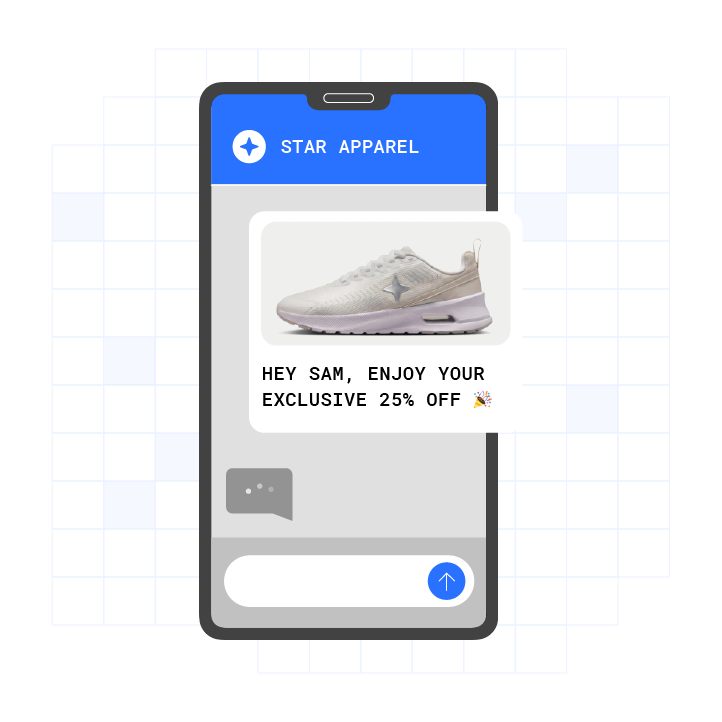
Plura’s AI webchat replaces static web forms with a conversational agent that reads the visitor’s page context in real time and qualifies them in a single session. Plura’s AI RCS delivers branded, interactive messages with in-thread document signing and payments, which keeps customers inside the conversation rather than sending them to a separate page. Both channels share the same Stateful Conversation Database as voice and SMS, so context is preserved across touchpoints.
Cutting Repeat Volume With AI Conversation Intelligence
Step 5: Use AI Conversation Intelligence and root-cause analysis to cut repeat volume.
Repeat contacts are the most expensive volume in any contact center. On 10,000 monthly issues with a blended cost per contact and 65% FCR, unresolved issues can generate thousands of repeat contacts that consume a large portion of total spend. Raising FCR from 65% to 75% on that same volume reduces repeat contacts by 1,000, which can lower costs substantially without adding headcount.
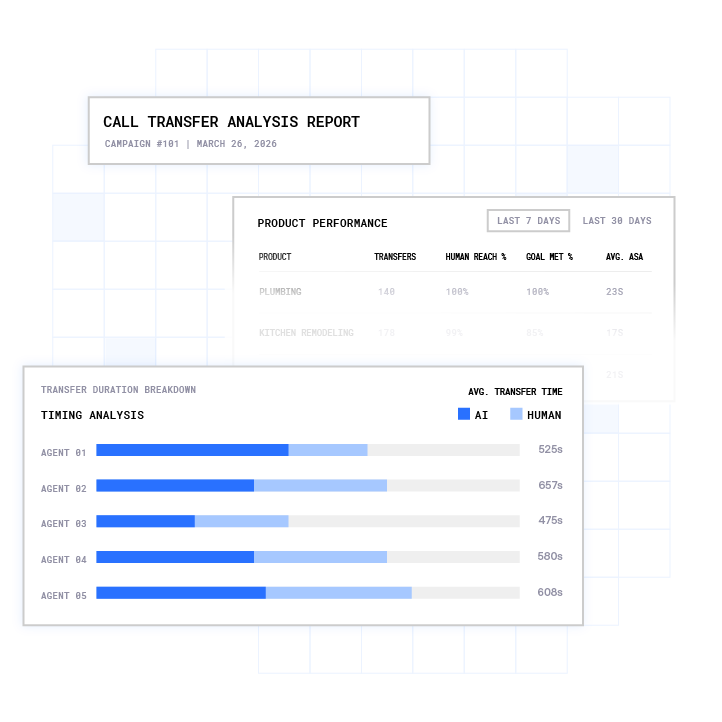
Plura’s AI Conversation Intelligence analyzes every interaction across voice, SMS, RCS, and webchat to surface which contact types generate repeats, which scripts close on first contact, and where escalation patterns cluster. That data feeds directly into workflow tuning and narrows the gap between deflection and genuine resolution.
Architecting Compliance Controls Into Every Contact
Step 6: Run on Plura’s FCC-licensed carrier with compliance controls enforced before each contact.
The FCC released a Notice of Proposed Rulemaking in March 2026 seeking comment on capping the percentage of customer-service calls handled offshore, mandating customer disclosure when calls are handled abroad, and tying anti-robocall measures to foreign call centers.2 State laws in New York, New Jersey, Connecticut, Missouri, and Florida already describe restrictions on offshore handling of certain medical, financial, and consumer data.2 Every offshore contract a covered entity holds now represents a compliance exposure on the balance sheet.
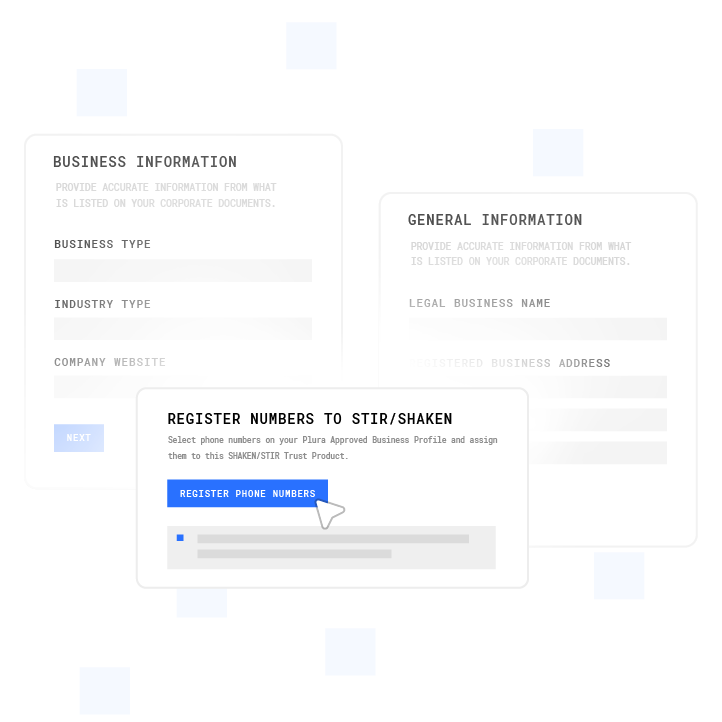
Plura runs on 100% U.S. infrastructure by architecture. Voice origination, model hosting, data storage, and call recording all sit on domestic infrastructure. Plura’s compliance engine supports TCPA compliance, DNC compliance, STIR/SHAKEN caller ID verification, HIPAA, SOC 2, and ISO certification, with 50+ state rule sets evaluated before each outbound contact.1 Real-time DNC scrubbing, immutable consent logging, and quiet-hours enforcement by time-zone detection are core layers of the platform, not bolt-on additions. Customers remain responsible for their own regulatory obligations; Plura provides infrastructure that supports those obligations.
Consult qualified legal counsel regarding your organization’s specific compliance requirements under applicable federal and state law.
90-Day Measurement Plan for AI ROI
Step 7: Track cost per contact, FCR, and utilization weekly, then iterate workflows against real call data.
Plura’s default 15-agent model shows a 30-day ROI of $45,600.3 In that model, 15 human agents at $20 per hour with 25% taxes, benefits, and commissions at 40% talk utilization cost $60,000 per month. Six Plura AI agents handling the same 2,400 hours at 100% talk utilization cost $14,400 per month. The $45,600 monthly difference compounds to $547,200 over 12 months and $2,736,000 over 60 months.
The table below breaks the 90-day deployment into three phases. Month one establishes the baseline, month two focuses on channel shift and FCR improvement, and month three uses workflow iteration to lock in sub-$1 cost per contact.
| Timeline | Primary Action | Target Metric |
|---|---|---|
| Days 1–30 | Deploy AI Voice and AI SMS for Tier-1 contacts, then establish baseline CPC and FCR | 30-day ROI: $45,600 (15-agent model) |
| Days 31–60 | Shift routine queries to AI Webchat and AI RCS, then run root-cause analysis on repeat contacts | FCR improvement toward 75% and higher, repeat contact volume reduction |
| Days 61–90 | Iterate workflows using Conversation Intelligence data, then validate CPC against the $1 target | CPC under $1 on AI-handled volume, 12-month ROI trajectory confirmed |
The 90-day timeline above aligns with Plura’s contract structure. Every annual contract includes a 90-day opt-out window, so if the deployment is not delivering the projected ROI by day 90, customers are not held to the annual term. This structure turns the measurement cycle into the commitment evaluation period.
Run your numbers through Plura’s calculator to check your ROI in real time.
Frequently Asked Questions
What is the average cost per call at a call center?
The average cost per call varies by channel, geography, and staffing model. U.S. onshore inbound voice interactions benchmark in the $7–$17 range discussed earlier, with the higher end reflecting fully loaded costs including benefits, turnover, training, and management overhead. Gartner’s customer service benchmarks place the median for assisted channels at $13.50. Self-service and AI-handled interactions benchmark significantly lower, with AI voice at the $0.08–$0.35 range shown in the 2026 comparison and AI chat at approximately $0.50 per contact.
How do you calculate cost per call in a call center?
Cost per call is calculated by dividing total contact center operating costs for a period by the total number of calls handled in that same period. Operating costs include agent salaries and benefits, telephony and software licenses, facilities, training, quality assurance, and management overhead. One-time expenses such as software implementations or infrastructure migrations are excluded so the metric reflects a clean recurring trend. For channel-specific calculations, allocate costs to the relevant channel before dividing by that channel’s contact volume.
How to reduce cost in a call center?
The most direct path to contact center cost reduction combines four levers applied in sequence. First, deploy AI self-service for Tier-1 contacts to eliminate human-agent handle time on repeatable queries. Second, shift routine interactions to lower-cost channels such as AI webchat and AI SMS. Third, improve first-contact resolution to cut repeat contact volume, which is the most expensive volume in any center. Fourth, enforce compliance by architecture rather than by manual process, which reduces the overhead of compliance bolt-ons and audit preparation. Applying all four levers on an FCC-licensed U.S. carrier stack moves cost per contact from the human-agent range discussed earlier toward the AI-handled range documented in 2026 benchmarks.
What is the 80/20 rule in call center?
The 80/20 rule in contact centers refers to the service-level standard of answering 80% of incoming calls within 20 seconds. It is the most widely cited inbound service-level target in the industry and is used as a baseline SLA in staffing models, workforce management tools, and vendor contracts. Separately, the 80/20 principle also applies to contact volume distribution: roughly 80% of contacts typically involve a small set of repeatable issue types, which is the volume AI self-service is best positioned to contain.
What are the 4 commonly used KPIs in a call center?
The four most commonly tracked contact center KPIs are cost per contact, first-contact resolution rate, average handle time, and customer satisfaction score. Cost per contact measures operational efficiency and is the primary financial metric for AI ROI calculations. First-contact resolution measures quality and directly correlates with cost, as noted in the FCR discussion above, since each percentage point of improvement reduces operating costs by roughly the same percentage. Average handle time measures agent efficiency per interaction. Customer satisfaction score measures the customer outcome of all three. AI deployments are evaluated against all four, with the goal of reducing cost per contact and average handle time while maintaining or improving FCR and customer satisfaction.
How long does it take to see 50%+ cost per contact reduction?
The 15-agent model detailed in Step 7 shows measurable savings in the first 30 days, with the $45,600 monthly reduction visible immediately after deployment. A 50% and higher reduction in cost per contact on AI-handled volume is achievable within the first 30–60 days as AI agents reach full utilization on Tier-1 contacts. The 90-day timeline in this playbook is structured to move from baseline measurement in days 1–30, through channel shift and FCR improvement in days 31–60, to validated cost per contact under $1 on AI-handled volume by day 90. Median payback period for AI customer service deployments is approximately 4.1 months across the industry, with voice-agent deployments averaging 2.8 months according to IDC AI ROI research.
Does Plura AI meet FCC onshoring requirements?
Plura runs on 100% U.S. infrastructure by architecture. Voice origination, model hosting, data storage, and call recording all sit on domestic infrastructure. Plura is its own FCC-licensed audio bridging carrier, not a reseller of a third-party CPaaS. This means Plura clients handle customer contacts entirely on U.S. infrastructure, with no offshore data routing or foreign infrastructure dependencies. The FCC’s March 2026 Notice of Proposed Rulemaking and companion state laws in New York, New Jersey, Connecticut, Missouri, and Florida describe compliance exposure for any operator using offshore infrastructure or foreign-hosted AI models. Consult qualified legal counsel regarding your organization’s specific obligations under the FCC NPRM and applicable state law.
How is first-contact resolution measured after AI deployment?
After AI deployment, FCR is measured by tracking the percentage of contacts resolved by the AI agent without requiring a human escalation, a callback, or a repeat contact on the same issue within a defined window, typically 24–72 hours. Plura’s AI Conversation Intelligence analyzes every interaction across voice, SMS, RCS, and webchat to surface resolution rates by contact type, escalation triggers, and repeat contact patterns. This data is available in the platform dashboard and can be exported for reporting. FCR is tracked weekly in Plura’s recommended 90-day iteration cycle, with workflow adjustments made against real call data to close the gap between AI deflection and genuine first-contact resolution.
The Case for Replacing Linear Cost Structures
The 7-step playbook above moves contact center cost per contact from the human-agent range discussed earlier to under $1 by replacing linear staffing economics with AI agents that run at 100% talk utilization on a carrier-grade U.S. stack. Each step builds on the last. Accurate cost measurement sets the baseline. 2026 TCO benchmarks establish the target. AI self-service eliminates Tier-1 handle time. Channel shift routes routine queries to lower-cost surfaces. Root-cause analysis cuts repeat volume. Compliance by architecture reduces regulatory exposure. Weekly iteration then locks in the 90-day ROI.
Plura AI is the only platform that owns its FCC-licensed carrier stack end to end. That structure enables branded caller ID issued at the carrier level, real-time DNC scrubbing enforced before each contact, STIR/SHAKEN authentication on every outbound call, and 100% U.S. infrastructure by architecture, not by promise. For operations leaders facing FCC NPRM exposure and finance teams targeting 50% and higher cost reduction, that combination separates a short-term cost-reduction project from a sustainable operating model.
For a deeper look at how AI contact centers compare to offshore and onshore alternatives, see Plura’s AI Voice Agents vs. Offshore Call Centers comparison and the Complete Guide to AI Contact Centers.
Run your numbers through Plura’s calculator to check your ROI in real time.
Compare Plura plans and rates side by side at plura.ai/pricing.
1 Plura AI maintains SOC 2, HIPAA, ISO, and GDPR posture as part of its platform infrastructure. References to compliance frameworks in this article describe Plura’s platform capabilities and do not constitute a guarantee that any customer using Plura will themselves be compliant with applicable laws or standards. Customers remain solely responsible for their own regulatory obligations, certifications, consent management, recordkeeping, and the claims they make to their own end users. Consult qualified legal counsel for guidance specific to your use case.
2 This article describes regulatory frameworks at a general level and does not constitute legal advice. Laws and regulations vary by jurisdiction, change over time, and apply differently depending on facts and circumstances. Readers should consult qualified legal counsel before making compliance decisions.
3 Performance figures, customer outcomes, and industry statistics referenced in this article are drawn from cited third-party sources or Plura customer case studies. Individual results vary based on implementation, use case, industry, audience, and execution. Past or aggregate performance is not a guarantee of future results.
4 References to third-party products, services, companies, or research are made for informational and comparative purposes only. Plura AI is not affiliated with, endorsed by, or sponsored by any third party named in this article unless explicitly stated. Trademarks and product names referenced remain the property of their respective owners.
5 This article contains forward-looking statements regarding industry trends, technology adoption, and future capabilities. These statements reflect current expectations and are subject to change. Plura AI undertakes no obligation to update forward-looking statements except as required.
This article is provided for informational purposes only and reflects Plura AI’s understanding at the time of publication. Product capabilities, integrations, and specifications are subject to change. For the most current information, visit plura.ai.
This article was produced with the assistance of AI tools and reviewed by Plura AI prior to publication.