
Written by: Matt Beucler, CEO, Plura AI
Key Takeaways
-
The conversational AI skills shortage is driving up costs for regulated industries as demand for specialized roles far exceeds supply.
-
Regulatory mandates such as the FCC NPRM and state onshoring laws are increasing the need for U.S.-based AI infrastructure and talent.
-
Key shortage areas include MCP engineers, context-pipeline specialists, multimodal conversation designers, and AI-literate compliance leads, each critical for compliant AI deployments.
-
Deploying a pre-built platform like Plura AI enables faster, lower-cost AI adoption without the delays and expenses of hiring scarce AI talent.
-
Start closing your talent gap today, and talk to Plura to see how the platform can deliver production-ready conversational AI in days.
Rising Costs From The Conversational AI Skills Shortage
The U.S. contact center industry spends $25 to $50 billion annually, with 60 to 70% of operating costs locked into agent labor. That labor-heavy cost structure was already under pressure before the conversational AI skills shortage arrived. Two forces now compound the problem. Enterprises cannot find the technical talent to build AI-powered systems, and regulatory pressure is inflating demand for the same scarce roles.
The FCC’s (Federal Communications Commission) Notice of Proposed Rulemaking, CG Docket No. 26-52, proposes capping offshore customer-service calls at 30% and limiting offshore handling of sensitive consumer data, including passwords, multi-factor authentication credentials, Social Security numbers, and banking and card data.2 Every covered entity that currently routes voice or data offshore now needs AI infrastructure that runs on domestic soil, and it needs the engineers to build and operate it. State-level laws in New York, New Jersey, Connecticut, Missouri, and Florida add further restrictions on offshore handling of medical, financial, and consumer data, each carrying its own penalty structure.2
These regulatory pressures are colliding with a broader talent shortage. Global demand for applied AI talent has grown substantially, yet the supply of talent for skills including natural language processing, data science, and machine learning remains limited. Many organizations feel unprepared to adopt AI in day-to-day operations. When regulated industries cannot find the engineers to build compliant conversational AI systems, every quarter of delay translates directly into continued reliance on a $4 million to $7 million traditional contact center cost structure that a platform deployment could replace for $300,000 to $700,000 annually.3
Check your ROI in real time with Plura’s calculator: calculate your ROI now.
Four Critical Conversational AI Roles In Short Supply
Four specific roles sit at the center of the conversational AI talent gap in regulated industries. Each is hard to hire for distinct reasons, and regulatory pressure increases demand for all four.
MCP engineers. Model Context Protocol engineers connect large language models (LLMs) to internal tools, databases, CRMs (Customer Relationship Management systems), and compliance registries so that an AI agent can act on live data rather than static training. The FCC NPRM’s domestic-infrastructure expectations mean these engineers must also understand U.S. carrier-grade telecom architecture, a combination that narrows the candidate pool further.
Context-pipeline specialists. These engineers maintain memory across multi-turn, multi-channel conversations so that a customer who texted at 9 a.m. is recognized when the call comes at noon. NLP (Natural Language Processing) Engineer demand has grown substantially in job postings, driven by LLM-powered conversational applications and the need for latency management and hallucination mitigation in context handling. Regulated industries require that this context pipeline also handle PHI (Protected Health Information) redaction, consent-record persistence, and audit-ready logging. These compliance requirements go beyond what most candidates have encountered in prior roles.
Multimodal conversation designers. These specialists build voice, SMS, RCS, and webchat flows that feel continuous to the customer regardless of which channel they use. AI Chatbot Developer roles grew 71% year-over-year on Upwork. These roles require practical experience with LLM APIs, conversation design, and the ability to maintain context across complex multi-turn interactions. Skills for multimodal model tuning were barely taught in university programs until 2024, so the pool of experienced practitioners remains structurally small.
AI-literate compliance leads. These professionals embed TCPA (Telephone Consumer Protection Act), DNC (Do Not Call), HIPAA (Health Insurance Portability and Accountability Act), and 50-plus state rules directly into agent workflows rather than treating compliance as a post-deployment audit.2 Regulatory, ethical, or legal concerns are significant barriers to AI adoption. The FCC NPRM, the Keep Call Centers in America Act (S.2495), and the Foreign Robocall Elimination Act (S.2666) each add new compliance surface area that a generalist compliance officer cannot cover without specific AI-system knowledge.2
The talent gap for specialized agentic AI roles such as AI Agent Architect shows a demand-supply mismatch exceeding 50% as 40% of enterprise apps are expected to embed AI agents by year-end 2026.4 For regulated industries operating under the FCC NPRM and state onshoring laws, that mismatch becomes a direct hiring challenge.
How Operations Leaders Are Responding To The Talent Gap
Organizations facing the conversational AI skills shortage are choosing between two paths. They either build skills in-house or deploy an existing platform. The comparison below uses four objective criteria.
Deployment timeline. An in-house build requires recruiting MCP engineers, context-pipeline specialists, multimodal conversation designers, and AI-literate compliance leads before a single production conversation runs. Contact center agent training takes 2–4 weeks before handling live calls, and that timeline applies to human agents following existing scripts. Building the AI infrastructure underneath those conversations takes months longer. A platform deployment compresses that timeline to days for standard qualification flows.
Infrastructure ownership. An in-house build requires obtaining an FCC carrier license, standing up STIR/SHAKEN (Secure Telephone Identity Revisited/Signature-based Handling of Asserted information using toKENs) authentication, registering 10DLC (10-Digit Long Code) numbers for A2P (Application-to-Person) SMS, and building a stateful conversation database from scratch. Plura’s FCC carrier license took approximately two years to obtain. A platform deployment gives customers access to that infrastructure on day one.
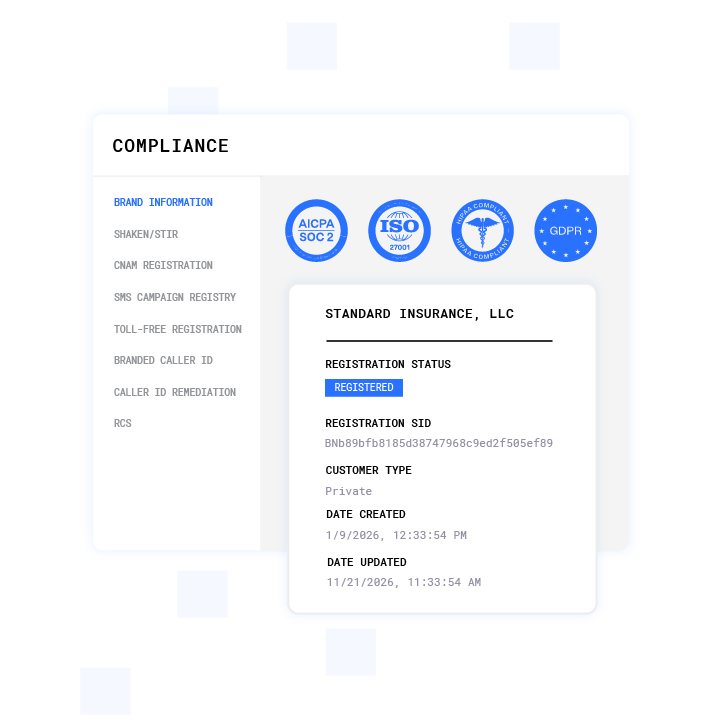
Compliance controls. The gap between a working demo and a production deployment in regulated environments is almost never about the model. It is about the permissioning, the escalation logic, the audit trail, and the jurisdiction handling. An in-house build requires engineering each of those layers separately. Plura’s compliance engine pre-loads TCPA, DNC, HIPAA, SOC 2 (System and Organization Controls 2), and 50-plus state rule sets, with real-time DNC scrubbing before every outbound contact and immutable consent records.1 Customers are responsible for their own regulatory obligations. Plura provides the infrastructure that supports compliance workflows.
Total cost of ownership (TCO). A 100-seat traditional contact center costs $4 million to $7 million annually, while a platform deployment can run $300,000 to $700,000 for equivalent volume.3 The illustrative 15-agent scenario on Plura’s ROI calculator shows $60,000 per month in human agent costs dropping to $14,400 per month with Plura, producing $45,600 in 30-day savings and $547,200 over 12 months.3 A 50-seat offshore team costs approximately $1.2 million annually fully loaded in the insurance industry, while Plura handling equivalent volume costs $180,000 to $300,000 annually.
Compare plans and rates side by side on Plura’s pricing page.
Using Plura To Bypass The AI Hiring Bottleneck
Plura’s architecture provides an infrastructure path that bypasses the conversational AI skills shortage entirely. Voice originates on Plura’s own FCC-licensed audio bridging carrier, not a third-party CPaaS (Communications Platform as a Service). Branded caller ID is issued at the carrier level. Real-time DNC scrubbing runs before every outbound contact. TCPA consent records are timestamped and immutable. HIPAA-aligned encryption, SOC 2 Type II controls, and ISO certification cover the underlying infrastructure.1
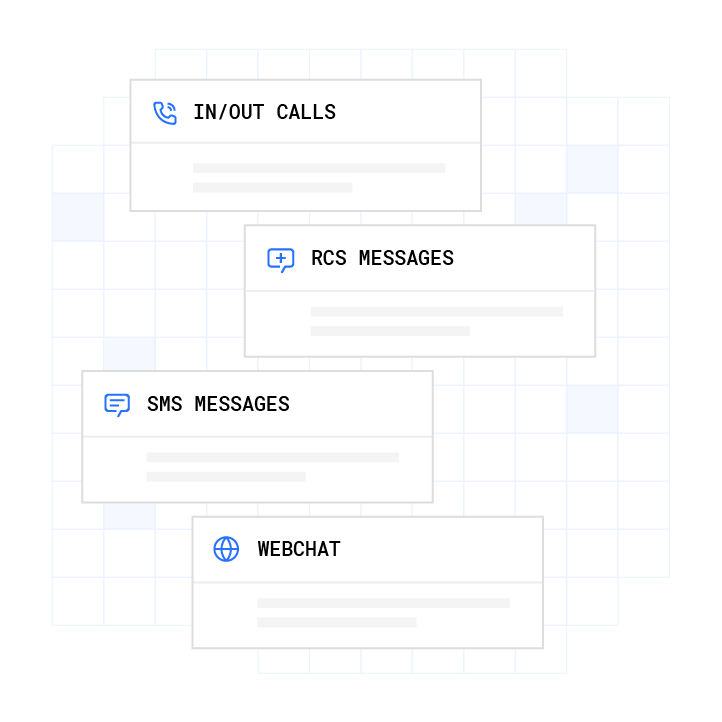
The Stateful Conversation Database holds context across voice, SMS, RCS, and webchat so every channel inherits the full memory of every prior touchpoint. Operators do not need to hire MCP engineers to connect the LLM to their CRM, context-pipeline specialists to maintain cross-channel memory, multimodal conversation designers to build channel-consistent flows, or AI-literate compliance leads to embed regulatory rules into agent workflows. Those layers already operate inside the platform.
Plura’s AI agents respond in under 5 seconds across voice, SMS, RCS, and webchat,3 compared with an industry standard of 47-plus hours for first contact. Organizations deploying AI for speed to lead see response times drop from hours to seconds and connection rates increase by 3x to 5x.3
The 90-day ROI path. Plura’s onboarding sequence runs from discovery audit to production go-live in days to weeks depending on conversation complexity. Every annual contract includes a 90-day opt-out window. See your potential savings in under 60 seconds with Plura’s ROI calculator.
For regulated industries facing the FCC NPRM, state onshoring laws, and a talent market with the 50%-plus talent gap described earlier, the platform path functions as a faster, lower-TCO, and lower-risk route to production conversational AI at scale.
FAQ: Timelines, Compliance, And ROI
How long does it take to go live without AI engineers?
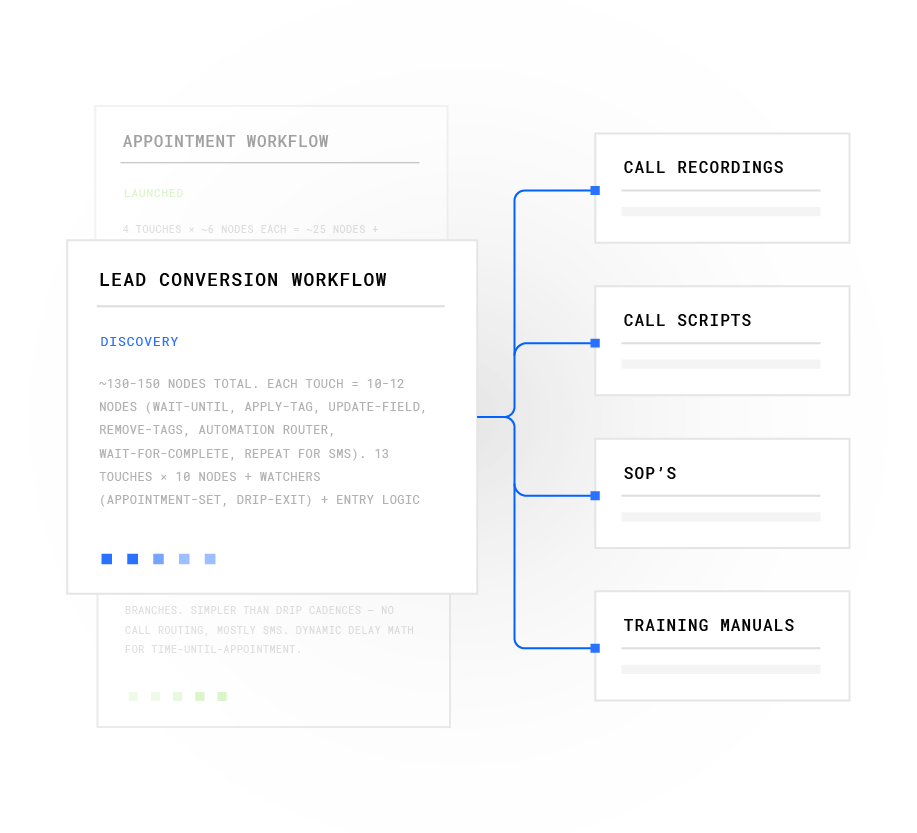
A standard inbound qualification flow typically deploys in days. A complex multi-step intake, such as a 25-question health-history survey, runs closer to one to two months because the workflow logic requires design and validation time. Plura’s onboarding sequence covers a discovery audit, intake of sample calls and existing scripts, an overnight conversation mockup build, a review meeting, engineering build of the production workflow, a pilot test on a subset of real calls, and full go-live. No MCP engineers, context-pipeline specialists, or multimodal conversation designers are required on the customer side.
What makes the conversational AI talent gap worse in regulated industries specifically?
Regulated industries require that every AI system layer, from the LLM connection to the conversation memory to the outbound dialer, carry compliance controls that most AI engineers have not built before. TCPA consent logging, real-time DNC scrubbing, HIPAA-aligned PHI redaction, STIR/SHAKEN authentication, and 50-plus state rule enforcement are not standard features of foundation model APIs. Engineers who understand both the AI architecture and the regulatory requirements are rare. The FCC NPRM’s domestic-infrastructure expectations add a further constraint. The entire stack must run on U.S. soil, which removes offshore engineering teams as a cost-reduction option for the build itself.
How does Plura handle compliance across TCPA, DNC, HIPAA, and state rules?
Plura’s compliance engine is a first-class layer of the platform, not a bolt-on. Every outbound contact is checked against federal and state DNC registries in real time before dial. Consent records are timestamped and immutable. Quiet-hours rules enforce automatically through time-zone detection. HIPAA-aligned encryption, access controls, and audit logging cover PHI across all four channels.1 SOC 2 Type II certification covers the underlying infrastructure. The compliance dashboard exports audit-ready reports in one click. Customers are responsible for their own regulatory obligations and should consult qualified counsel on their specific compliance posture. Plura provides the infrastructure that supports those workflows. Full details are at plura.ai/products/compliance.
Can Plura replace an offshore BPO under the FCC NPRM?
Plura runs on 100% U.S. infrastructure by architecture. Voice origination, model hosting, data storage, and call recording all sit on domestic infrastructure. The FCC NPRM (CG Docket No. 26-52) proposes capping offshore customer-service calls at 30% and limiting offshore handling of sensitive consumer data. Plura clients report 100% U.S.-handled operations in their broadband consumer label disclosures. Whether a specific deployment aligns with a covered entity’s obligations under the NPRM or companion legislation is a legal question that requires qualified counsel. Plura’s infrastructure posture removes offshore exposure at the architecture level.
What does the 90-day ROI path look like in practice?
The 15-agent scenario detailed earlier breaks down as follows. The default scenario on Plura’s calculator uses a 15-agent operation at $20 per hour with standard taxes, benefits, and commissions, running at a 40% talk-utilization rate typical of human contact center work. That structure costs $60,000 per month. Replacing that team with Plura at $15 per hour, 100% talk utilization, and 6 Plura agents doing the work of 15 humans drops the monthly cost to $14,400. The 30-day saving is $45,600, and the 12-month saving is $547,200. Every annual contract includes a 90-day opt-out window if the deployment is not delivering.
Conclusion: Turning A Structural Talent Gap Into An Infrastructure Decision
The conversational AI skills shortage is not a temporary hiring problem. It reflects a structural gap between the pace of regulatory demand and the pace at which universities and training programs can produce MCP engineers, context-pipeline specialists, multimodal conversation designers, and AI-literate compliance leads. For regulated industries operating under the FCC NPRM, state onshoring laws, and a structural talent mismatch, waiting for the talent market to correct does not protect margins or service levels.
Plura’s FCC-licensed, stateful, U.S.-infrastructure platform delivers production voice, SMS, RCS, and webchat agents without requiring customers to hire or build any of those scarce roles. The carrier stack, the compliance engine, the stateful conversation database, and the conversation engineering layer already operate at scale. Plura’s TCO advantage, detailed in the comparison above, shifts traditional contact center economics while the 90-day opt-out window in every annual contract puts the performance commitment on the line.
Ready to see what Plura can do for your operation? Calculate your ROI or explore pricing options to get started.
1 Plura AI maintains SOC 2, HIPAA, ISO, and GDPR posture as part of its platform infrastructure. References to compliance frameworks in this article describe Plura’s platform capabilities and do not constitute a guarantee that any customer using Plura will themselves be compliant with applicable laws or standards. Customers remain solely responsible for their own regulatory obligations, certifications, consent management, recordkeeping, and the claims they make to their own end users. Consult qualified legal counsel for guidance specific to your use case.
2 This article describes regulatory frameworks at a general level and does not constitute legal advice. Laws and regulations vary by jurisdiction, change over time, and apply differently depending on facts and circumstances. Readers should consult qualified legal counsel before making compliance decisions.
3 Performance figures, customer outcomes, and industry statistics referenced in this article are drawn from cited third-party sources or Plura customer case studies. Individual results vary based on implementation, use case, industry, audience, and execution. Past or aggregate performance is not a guarantee of future results.
4 This article contains forward-looking statements regarding industry trends, technology adoption, and future capabilities. These statements reflect current expectations and are subject to change. Plura AI undertakes no obligation to update forward-looking statements except as required.
This article is provided for informational purposes only and reflects Plura AI’s understanding at the time of publication. Product capabilities, integrations, and specifications are subject to change. For the most current information, visit plura.ai.
This article was produced with the assistance of AI tools and reviewed by Plura AI prior to publication.