

Written by: Matt Beucler, CEO, Plura AI | Last updated: August 27, 2026
Key Takeaways for Contact Center Leaders
- Conversational AI solutions compress new-agent ramp time from 4–6 months to about 6 weeks by delivering real-time expertise from top performers on every call.
- Novice agents see a 34–35% productivity boost, nearly double the 14–15% average lift, when AI copilots surface proven scripts and compliance guidance during live interactions.3
- AI copilots shift hiring criteria from “experienced agent” to “empathetic communicator,” expanding the candidate pool while the platform supplies product knowledge and objection-handling patterns.
- Plura AI’s 7-layer architecture (carrier compliance, stateful memory, AI channels, lead intelligence, conversation intelligence, workflows, unified inbox) reduces structural dependency on scarce experienced agents.
- Plura AI delivers carrier-grade infrastructure with support for TCPA, DNC, SOC 2, HIPAA, and ISO compliance, so contact centers can scale without proportional headcount increases.1 See a live demo of the expertise layer inside a working contact center.
The 15% Productivity Lift for Low-Skilled Agents
Field data from 5,179 customer-support agents in the Quarterly Journal of Economics study by Brynjolfsson, Li, and Raymond shows how AI changes junior-agent performance.4 Access to a generative AI conversational assistant increased productivity by 14–15% on average, measured as issues resolved per hour. The gains concentrated in novice and lower-skilled workers, who improved by 34–35%, while experienced agents saw minimal change. Agents with two months of tenure who used the AI tool performed at the level of untreated agents with more than six months of tenure. The mechanism is direct: the AI captures behavioral patterns from top-performing agents and makes those patterns available to every agent on every call.
This model solves the expertise-transfer problem at scale. A new hire no longer needs six months of live-call exposure to internalize what your best agents do. The AI supplies that expertise in real time from day one.
See the expertise layer in action with a live Plura walkthrough inside a live contact center environment.
The Structural Talent Problem Behind Contact Center Turnover
That 34–35% productivity boost for novice agents connects directly to a deeper structural problem in contact centers. The talent math in contact centers does not work. Insignia Resources’ 2026 industry data puts average annual call-center turnover at 40–45%, with high-stress sectors reaching 55–60%. First-year retention for contact center agents averaged 50–65% in 2026, which implies attrition of 35–50%. A McKinsey report cited by Vonage puts new-hire time-to-peak-proficiency at four to six months, depending on role complexity.
The replacement cost per agent runs $10,000 to $20,000 in direct expenses, with total impact including lost productivity and coverage reaching up to $46,000 per agent, per Stealth Agents. A contact center replacing a large share of its floor each year is not managing a stable workforce. It is running a perpetual onboarding operation.
Verint’s The State of Agent Experience 2026, based on 1,000 agents across insurance, telecom, banking, retail, and BPOs, found that 31% of agents said they were likely to leave within six months. The two biggest frustrations were unrealistic performance expectations at 47% and lack of schedule flexibility at 45%. Both reflect a workforce model that asks new hires to perform at experienced-agent levels before knowledge transfer has occurred.
A 2026 industry statistics roundup found that 58% of U.S. hiring managers reported that finding qualified workers has become more difficult compared to the previous year. The skills shortage is not only a pipeline problem. It is a structural issue in an industry that builds its operating model around experience that takes months to develop, then loses many people before they develop it.
How AI Copilots Close the Skills Gap for New Agents
AI copilots address the skills gap through three documented mechanisms: real-time guidance during live interactions, automated after-call work, and simulation-based pre-floor training.
Zendesk’s 2025 CX Trends Report found that AI-assisted onboarding tools and real-time knowledge base surfacing can reduce average ramp time by 25 to 40 percent in documented deployments. NICE’s CX Transformation Benchmark 2025 found that new-agent ramp time to full proficiency drops to 3–4 months with copilots providing real-time guidance during live interactions.
WFM Labs describes how real-time AI copilots can compensate for knowledge gaps during live interactions. McKinsey research examines simulation-led and AI-assisted onboarding in more depth.
The compounding effect is straightforward. When the AI supplies the expertise layer, operators no longer need to hire for it. The hiring profile shifts from “experienced agent who already knows the product, the compliance rules, and the objection-handling playbook” to “empathetic communicator who can work with AI guidance.” That shift opens a substantially larger candidate pool and reduces dependency on a shrinking supply of experienced agents.
Plura’s 7-Layer Architecture Mapped to Talent and Skills Pain
Plura’s platform addresses the talent and skills shortage across seven integrated layers. Each layer targets a specific operational pain that traditional hiring cannot solve at scale.
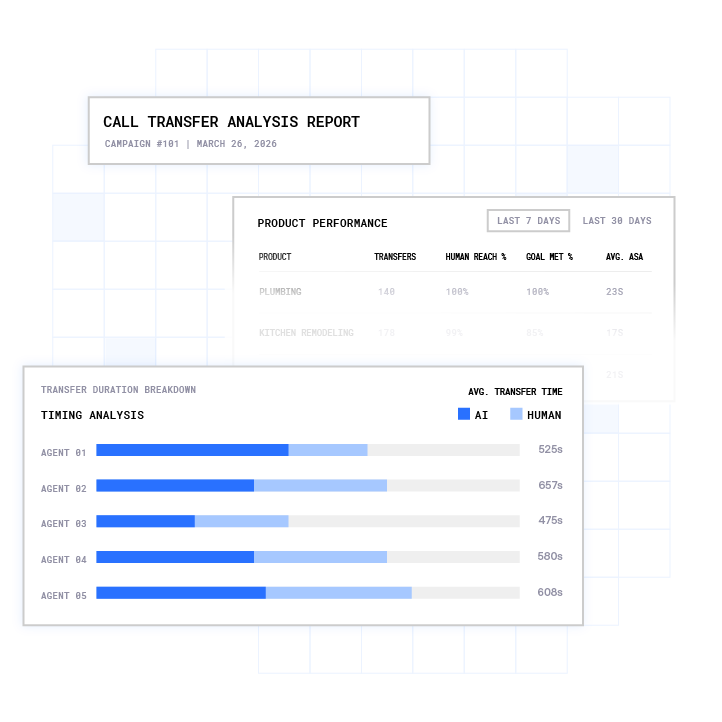
| Layer | Plura Capability | Talent or Skills Pain Solved |
|---|---|---|
| Carrier & Compliance | FCC-licensed audio bridging carrier, SHAKEN/STIR caller ID verification, TCPA compliance, DNC compliance | Reduces compliance knowledge gaps in new hires, with rules enforced at the carrier level before any agent touches the call |
| Stateful Conversation Database | Cross-channel memory keyed to each customer token across voice, SMS, RCS, and webchat | New agents inherit full customer context on every interaction, so they do not need prior history to understand the account |
| AI Voice / SMS / RCS / Webchat | AI voice agent, AI SMS, RCS, AI webchat | AI handles structured, repetitive volume so human agents receive only escalations that require judgment and empathy |
| Lead Intelligence | Real-time enrichment from 30+ data sources during live interactions | Removes the need for agents to manually research customers, giving junior agents senior-level context at the start of each conversation |
| Conversation Intelligence | Conversation intelligence surfacing objection patterns, script performance, and conversion paths | Replaces informal knowledge transfer from senior to junior agents by capturing and distributing best-practice patterns systematically |
| Workflows | No-code workflow builder with BATNA-style negotiation guardrails and branching logic | Encodes experienced-agent decision logic into the platform so new hires follow proven paths instead of improvising |
| Unified Inbox | Single screen consolidating voice transcripts, SMS threads, RCS exchanges, and webchat sessions per customer | Reduces multi-tool complexity that overwhelms new agents by presenting one interface with full context and no system switching |
New Contact Center Roles Emerging with Conversational AI
Pathors does not project the contact-center workforce ratio shifting from roughly 80% human and 20% automated in 2024 to 20% human and 80% automated by 2030. No Pathors publication projects specific 2030 contact-center role-percentage changes such as frontline agents declining from 60% to 15% while escalation specialists rise from 15% to 30%, AI trainers and QA monitors rise from 5% to 25%, and customer relationship managers rise from 10% to 20%.
The roles emerging from AI adoption require a different hiring profile:
- Escalation Specialists: Handle higher-emotion, cross-department cases that remain after automation. The core skills are empathy, negotiation, and systems thinking, not encyclopedic product recall.
- AI Trainers and Quality Auditors: Analyze failed interactions, label data, adjust conversation flows, and test new scenarios. Gartner research found that 58% of customer service leaders plan to upskill agents into knowledge management specialists as AI systems depend on accurate, well-governed information.
- Knowledge Management Specialists: Curate, update, and validate knowledge articles and decision trees that feed AI systems. A Gartner survey of 321 customer service leaders found that 84% plan to add new skills to frontline positions.
- Workflow Auditors: Monitor AI outputs for accuracy, track error rates, check alignment with business rules and compliance requirements, and tune models and workflows continuously.
PwC’s 2026 Global AI Jobs Barometer, based on analysis of 2.4 million U.S. entry-level jobs, found that AI-exposed entry-level roles are seven times more likely to require traditionally senior-level human-intensive skills such as leadership, creativity, and face-to-face interaction. Job openings for these “seniorised” entry-level roles have grown 35% since 2019. The hiring shift is visible today in job postings, not just forecasts.
For contact-center leaders, the constraint shifts from “find experienced agents” to “find empathetic communicators and let the platform supply the expertise.” That shift creates a more scalable hiring model.
Cost Impact and TCO of the Contact Center Talent Crisis
The traditional turnover model carries a compounding cost that many P&L analyses undercount. Direct replacement costs of $10,000 to $20,000 per agent represent only the visible line item. Beyond these direct expenses, invisible costs multiply the true impact. The four-to-six-month productivity gap on every new hire means each replacement operates below capacity for an extended period. Management time absorbed by perpetual onboarding pulls leaders away from strategic work. Customer experience also suffers during ramp periods when CSAT scores run below veteran-agent levels.
Plura’s platform addresses this through logarithmic rather than linear cost scaling. The AI communications strategy guide documents a total cost of ownership of $700,000 replacing traditional $7M contact-center economics on equivalent volume. The AI voice agents vs. offshore call centers comparison notes that Plura scales instantly to handle 10x volume overnight with no additional hiring or training, while traditional operations require 4 to 8 weeks to recruit and train additional agents. AI agents carry 0% turnover compared with the traditional turnover model, per Plura’s complete guide to AI contact centers.
Leaders can run their own numbers through Plura’s ROI calculator to see projected cost savings in real time.
Platform Channels and Compliance Support
Plura’s channel stack covers the full conversation surface of a modern contact center:
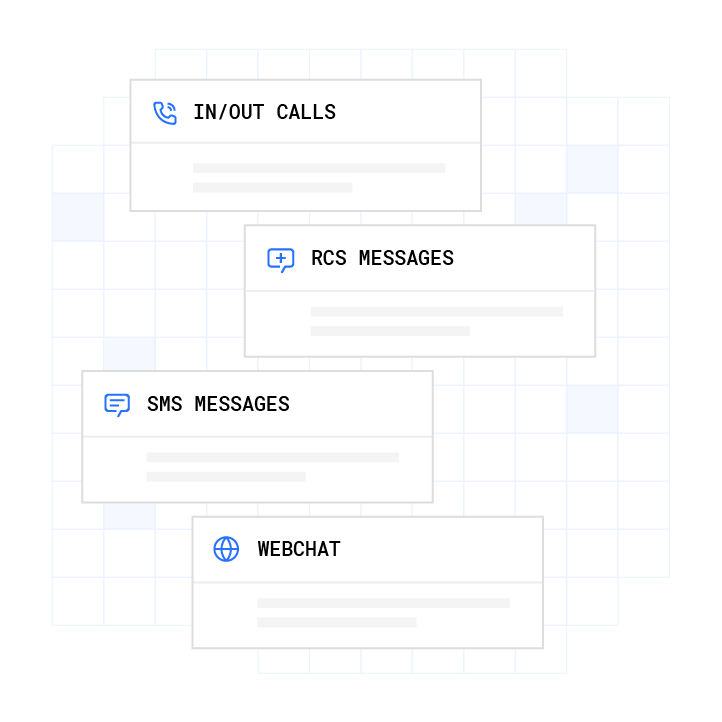
- AI voice agent: inbound and outbound calls on Plura’s FCC-licensed carrier, with branded caller ID and SHAKEN/STIR caller ID verification on every call, handling English and Spanish
- AI Predictive Dialer: stateful conversion signals determine call priority, with branded caller ID and SHAKEN/STIR authentication on every outbound dial
- AI SMS: outbound and inbound SMS with TCPA compliance, DNC compliance, and per-state quiet-hours enforcement
- AI webchat: conversational agent that reads visitor context in real time and qualifies leads without static webforms
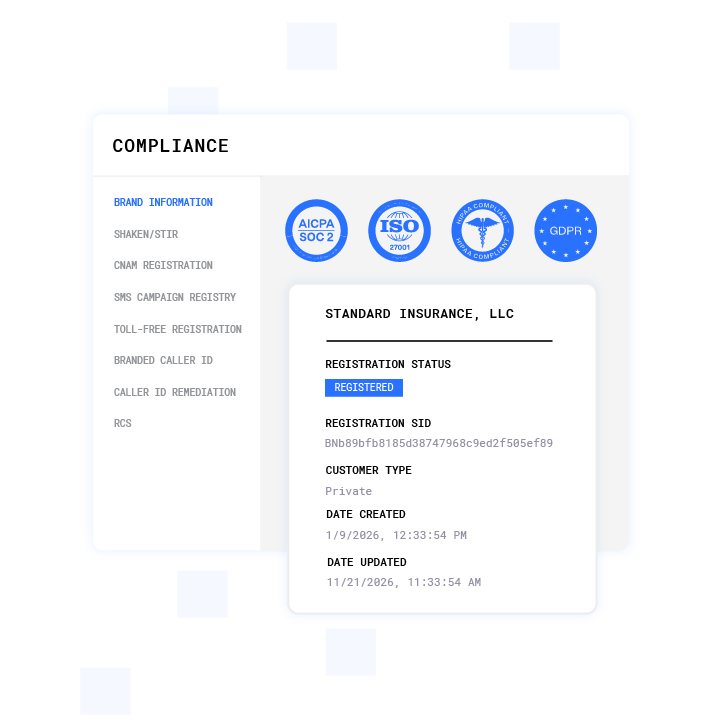
The platform supports compliance with SOC 2, HIPAA, ISO certification, GDPR, SHAKEN/STIR caller ID verification, TCPA compliance, and DNC compliance.2 Every outbound contact is checked against federal and state DNC registries before dial. Consent records are timestamped and immutable. Quiet-hours rules apply automatically through time-zone detection. Customers are responsible for their own regulatory obligations. Plura provides the infrastructure and supports compliance operations within that environment.
Leaders can compare plans and rates to match tiers with volume and compliance requirements.
90-Day Implementation Roadmap for Plura Deployment
Plura deployments follow a structured sequence with defined milestones at each phase:5
- Weeks 1–2: Discovery and Workflow Audit. Map current call flows, identify the highest-volume structured interactions suitable for AI handling, audit existing scripts and SOPs, and establish baseline metrics for escalation rate, handle time, and CSAT.
- Weeks 3–6: Pilot on 20% of Volume. Deploy AI handling on a defined subset of inbound or outbound volume. Target metric: 25% reduction in escalations from the pilot cohort. New agents assigned to the pilot cohort receive real-time AI guidance on every interaction.
- Weeks 7–12: Full Rollout. Expand to full volume. Target metrics include a 15% junior-agent productivity lift, 6-week time-to-proficiency for new hires, and measurable reduction in first-90-day attrition. The Unified Inbox and conversation intelligence dashboard surface performance data in real time.
- Ongoing: Metrics Dashboard and Workflow Tuning. Conversation intelligence identifies objection patterns and conversion gaps. Teams update workflows on the no-code canvas without engineering involvement. Every annual contract includes a 90-day opt-out window if the deployment is not delivering against agreed targets.
Schedule a deployment consultation to walk through the 90-day roadmap against your operation’s volume and staffing profile.
Frequently Asked Questions
Will conversational AI replace call center agents?
Evidence points to workforce redesign rather than mass elimination. A Gartner survey of more than 320 customer service and support leaders found that 85% are expanding human agent responsibilities, and only 31% have implemented or plan AI-related layoffs through Q1 2027. By 2027, 50% of organizations that expected to significantly reduce their customer service workforce due to AI will abandon those plans, per a March 2025 Gartner poll of 163 leaders. The interactions that remain for human agents after AI absorbs routine volume are more complex, more emotionally nuanced, and higher-stakes. This shift moves the agent role toward work where judgment, empathy, and relationship-building matter most. Forrester predicts AI-powered augmentation for 20% of jobs over the next five years rather than outright elimination.
How does conversational AI compress agent ramp time from months to weeks?
AI copilots address ramp time through three mechanisms that operate together. Real-time guidance surfaces the right answer, the right script segment, and the right compliance disclosure during the live interaction, so the agent does not need to memorize them in advance. Automated after-call work removes administrative tasks that consume new-agent time and attention. Simulation-based pre-floor training lets agents practice high-volume interaction types before they handle live calls. The combined effect documented across multiple enterprise deployments is a 25–40% reduction in average ramp time. Plura’s 7-layer architecture delivers all three mechanisms through a single platform instead of separate point tools.
What new roles do contact centers need to hire for as AI adoption scales?
The emerging role stack concentrates on four areas. Escalation specialists handle complex, emotionally charged interactions that AI routes to humans, which requires empathy and negotiation skills rather than deep product expertise. AI trainers and quality auditors review AI outputs, flag errors, correct conversation flows, and train models on edge cases using frontline experience that data scientists cannot easily replicate. Knowledge management specialists curate and validate the information that AI systems draw from, ensuring accuracy and currency. Workflow auditors monitor AI behavior against business rules and compliance requirements and tune performance continuously. Gartner found that 84% of service leaders plan to add new skills to frontline positions. Compensation structures are shifting as well, with escalation specialists and AI trainers trending toward higher pay than traditional frontline agents due to their specialized skills.
How does hiring for empathy instead of experience work in practice?
When the AI supplies the expertise layer, the hiring constraint changes. Operators no longer need candidates who already know the product, the compliance rules, and the objection-handling playbook. Those elements sit inside the platform’s workflows and appear in real time during every interaction. The candidate pool shifts toward people who can communicate clearly, de-escalate emotionally charged situations, and exercise judgment on edge cases that the AI routes to a human. PwC’s 2026 Global AI Jobs Barometer found that AI-exposed entry-level roles are seven times more likely to require traditionally senior-level human-intensive skills such as leadership, creativity, and face-to-face interaction. The practical result is a larger, more accessible candidate pool and a hiring process that evaluates observable interpersonal skills instead of scarce prior industry experience.
What does Plura’s compliance support cover for contact center operations?
Plura’s platform supports compliance operations across TCPA compliance, DNC compliance, SOC 2, HIPAA, ISO certification, GDPR, and SHAKEN/STIR caller ID verification. Every outbound contact is checked against federal and state DNC registries in real time before dial. Consent records are timestamped and immutable. Quiet-hours rules apply automatically through time-zone detection. The compliance dashboard exports audit-ready reports in one click. Plura provides the infrastructure and supports compliance operations within it, and customers remain responsible for their own regulatory obligations, certifications, and the claims they make to their end users. Organizations with specific TCPA, HIPAA, or state-law questions should consult qualified legal counsel.
Conclusion: Resetting the Contact Center Talent Model
The call center talent crisis is structural. High annual turnover, significant first-year attrition, extended ramp times, and a shrinking supply of experienced agents do not respond to more aggressive recruiting alone. They reflect a workforce model built on a dependency that no longer scales.
Conversational AI solutions for call center talent and skills shortage address that dependency directly. The AI supplies the expertise layer, compresses time-to-proficiency to roughly six weeks, delivers a documented productivity lift for junior agents, and enables operators to hire for empathy rather than experience. The human workforce shifts toward escalation, relationship management, AI oversight, and knowledge governance, which are roles that carry higher value and, based on emerging evidence, higher retention.
Plura AI delivers this through a carrier-grade 7-layer architecture running on its own FCC-licensed infrastructure, with built-in support for TCPA compliance, DNC compliance, SOC 2, HIPAA, ISO certification, GDPR, and SHAKEN/STIR caller ID verification. The platform covers voice, SMS, RCS, and webchat on a single stateful conversation database, with a no-code workflow builder, conversation intelligence, and a Unified Inbox that consolidates every channel into one operational surface.
The 90-day opt-out window in every annual contract keeps performance measurable and accountable. Leaders can evaluate the impact against their own metrics and staffing plans.
Request a personalized demo to see how conversational AI solutions for call center talent and skills shortage align with your operation, headcount strategy, and compliance requirements.
1 Plura AI maintains SOC 2, HIPAA, ISO, and GDPR posture as part of its platform infrastructure. References to compliance frameworks in this article describe Plura’s platform capabilities and do not constitute a guarantee that any customer using Plura will themselves be compliant with applicable laws or standards. Customers remain solely responsible for their own regulatory obligations, certifications, consent management, recordkeeping, and the claims they make to their own end users. Consult qualified legal counsel for guidance specific to your use case.
2 This article describes regulatory frameworks at a general level and does not constitute legal advice. Laws and regulations vary by jurisdiction, change over time, and apply differently depending on facts and circumstances. Readers should consult qualified legal counsel before making compliance decisions.
3 Performance figures, customer outcomes, and industry statistics referenced in this article are drawn from cited third-party sources or Plura customer case studies. Individual results vary based on implementation, use case, industry, audience, and execution. Past or aggregate performance is not a guarantee of future results.
4 References to third-party products, services, companies, or research are made for informational and comparative purposes only. Plura AI is not affiliated with, endorsed by, or sponsored by any third party named in this article unless explicitly stated. Trademarks and product names referenced remain the property of their respective owners.
5 This article contains forward-looking statements regarding industry trends, technology adoption, and future capabilities. These statements reflect current expectations and are subject to change. Plura AI undertakes no obligation to update forward-looking statements except as required.
This article is provided for informational purposes only and reflects Plura AI’s understanding at the time of publication. Product capabilities, integrations, and specifications are subject to change. For the most current information, visit plura.ai.
This article was produced with the assistance of AI tools and reviewed by Plura AI prior to publication.