

Written by: Matt Beucler, CEO, Plura AI
Key Takeaways for Contact Center and CX Leaders
- Five evaluation criteria, carrier ownership, stateful cross-channel memory, compliance engine depth, TCO math, and 100% US infrastructure, determine which conversational AI platforms can handle 2026 regulatory and operational demands.
- Plura AI is the only platform in this comparison that meets all five criteria as an FCC-licensed carrier running voice, SMS, RCS, and webchat on domestic infrastructure with platform-level compliance controls.
- High-volume US businesses face mounting regulatory pressure from FCC NPRM CG Docket No. 26-52 and multiple state laws that restrict offshore infrastructure and data handling.
- Replacing a traditional 15-agent contact center with Plura can deliver $45,600 in monthly savings and nearly $550,000 annually while supporting SOC 2, HIPAA, and TCPA compliance programs.1
- Businesses ready to modernize customer communications can see how Plura performs on all five criteria in a live demo.
Executive Summary: Five Criteria That Actually Matter
Five criteria separate platforms that can handle 2026’s regulatory and operational environment from those that cannot. Each criterion addresses a specific failure point that high-volume operators encounter when running 500 or more daily interactions.
- Carrier ownership. A platform either owns an FCC-licensed carrier or rents from a third-party CPaaS (Communications Platform as a Service) like Twilio. Carrier ownership determines whether branded caller ID, STIR/SHAKEN (Secure Telephone Identity Revisited/Signature-based Handling of Asserted information using toKENs) authentication, and real-time DNC scrubbing are enforced at origination or bolted on afterward.
- Stateful cross-channel memory. A single conversation database must persist context across voice, SMS, RCS, and webchat. Without that shared memory, a customer who texted at 9 a.m. must re-explain themselves when the call comes at noon.
- Compliance engine. TCPA, DNC, HIPAA (Health Insurance Portability and Accountability Act), SOC 2, and 50+ state rule sets either run before each contact or sit in a paperwork layer the customer manages separately.
- TCO math. A platform either scales cost logarithmically with volume or mirrors the linear headcount model it is supposed to replace.
- US infrastructure. Every layer of the stack, including voice origination, model hosting, data storage, and call recording, either sits on domestic infrastructure or depends on foreign components. FCC NPRM (Notice of Proposed Rulemaking) CG Docket No. 26-52 describes this posture for covered entities.
Platforms that fail even one criterion carry compounding risk in 2026. Spam-label pressure collapses pickup rates, offshore infrastructure creates regulatory exposure, and context loss across channels erodes conversion economics.
Request a platform walkthrough to see how these criteria operate together in a single environment.
2026 Regulatory Reality for High-Volume US Businesses
These five criteria exist because the regulatory environment for high-volume customer communications shifted materially in 2025 and 2026. Understanding this context explains why carrier ownership, US infrastructure, and platform-level compliance engines now sit at the center of vendor selection.
The FCC’s NPRM CG Docket No. 26-52 describes a cap on offshore customer-service calls at 30% of total volume and restrictions on offshore handling of sensitive consumer data, including passwords, multi-factor authentication codes, Social Security numbers, banking credentials, and card data.2 The proposal applies to entities subject to FCC jurisdiction that route customer interactions through foreign infrastructure, including AI platforms with overseas model hosting or data storage.
Companion federal legislation expands the perimeter. The Keep Call Centers in America Act (S.2495) describes advance-notice requirements and financial penalties for covered entities that relocate call-center operations offshore. The Foreign Robocall Elimination Act (S.2666) targets voice traffic originating from foreign infrastructure and provides carrier-level blocking authority.
Several state laws already apply. New York’s Call Center Jobs Act describes penalties up to $10,000 per day for covered violations.2 New Jersey’s mirror statute applies parallel restrictions. Connecticut restricts offshore handling under state contracts. Missouri’s executive order requires offshore-disclosure in state-adjacent operations. Florida restricts offshore handling of medical information. Secondary coverage of these statutes is available from JD Supra/Littler, NJ.gov, Polsinelli, and the Connecticut General Assembly.
The combined exposure across the $400 billion offshore BPO (Business Process Outsourcing) industry is material. Every contract a covered entity signed with an offshore vendor now functions as a compliance risk that qualified counsel should review against the applicable statutes and the pending FCC rule.
Market Landscape: Human, Offshore, and API-Reseller AI Options
Three categories currently serve high-volume US operators, and each solves only part of the problem.
Onshore human contact centers keep operations domestic but retain the cost structure that made the math difficult before AI. A 100-seat operation runs $4M–$7M annually, with 60–70% of operating costs locked into agent labor and 35–45% annual turnover forcing perpetual retraining. These centers cannot scale into peak season without committing hiring budgets months in advance.
Offshore BPOs reduced cost for two decades through wage arbitrage. That model now faces the regulatory pressure described above. A 50-seat offshore team in the insurance vertical costs approximately $1.2M annually fully loaded, and every dollar of that spend now carries regulatory exposure that did not exist three years ago.
API-reseller AI tools appear to offer a clean escape path. Most do not. These tools run as software layers on top of Twilio or another CPaaS, so they do not own the carrier, cannot issue branded caller ID at the carrier level, and cannot enforce real-time DNC scrubbing at origination. This CPaaS dependency also prevents them from avoiding FCC foreign-infrastructure exposure when model hosting or data storage sits outside the US. The lack of carrier ownership compounds into a second structural problem: conversation memory does not persist across channels, so each interaction starts from zero.
Five Evaluation Criteria for Conversational AI Platforms
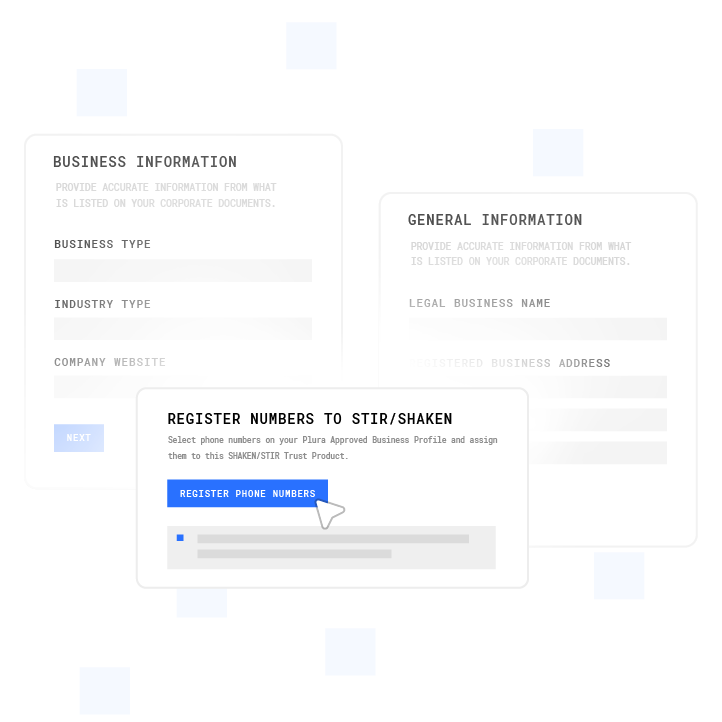
Criterion 1: Carrier ownership. A platform that owns an FCC-licensed carrier originates voice traffic on domestic infrastructure, issues branded caller ID directly, authenticates calls through STIR/SHAKEN at the carrier level, and enforces DNC scrubbing before the first dial attempt. A platform that rents from a CPaaS inherits that CPaaS’s caller-ID reputation and compliance posture. Plura owns its telecom infrastructure and holds an FCC carrier license; Synthflow, for example, depends on Twilio and operates as a software layer without a carrier license.4
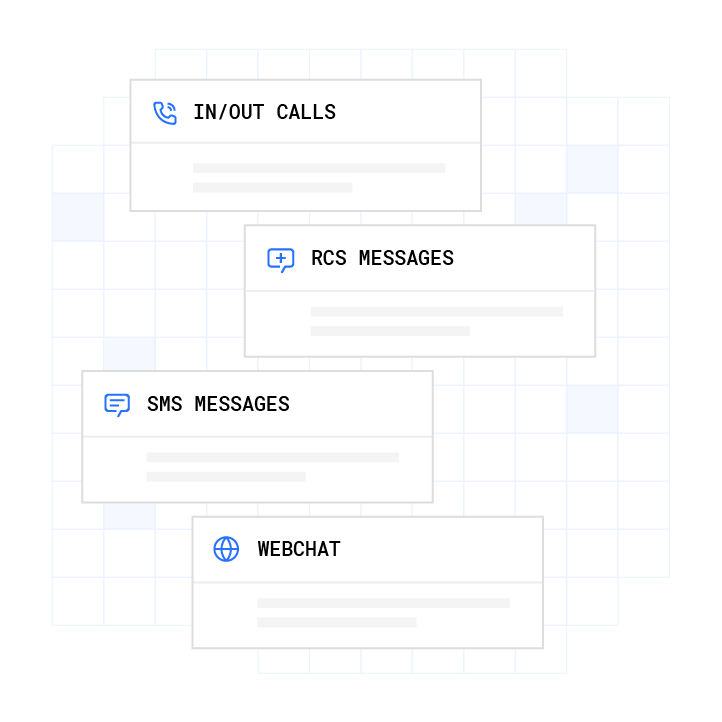
Criterion 2: Stateful cross-channel memory. Every interaction across voice, SMS, RCS, and webchat must be keyed to a single customer token and persisted in one database. Plura offers omnichannel support for voice, SMS, webchat, and RCS within a unified stateful inbox that maintains full conversation history. Vapi, by contrast, is developer-focused and primarily voice-only with a stateless architecture.
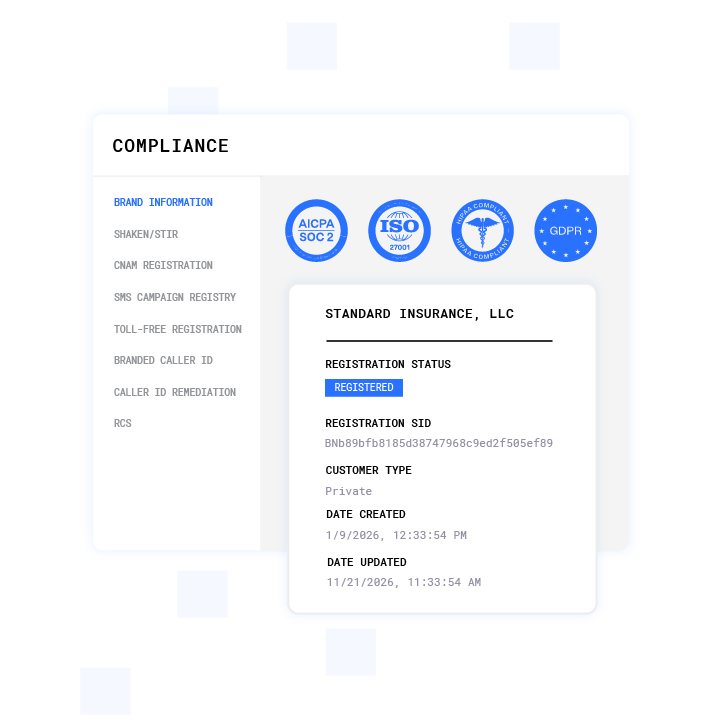
Criterion 3: Compliance engine. TCPA, DNC, HIPAA, SOC 2, ISO certification, GDPR (General Data Protection Regulation), SHAKEN/STIR caller ID verification, and 10DLC (10-Digit Long Code, the A2P/Application-to-Person messaging registry for SMS) support work best when enforced at the platform level before each contact, not managed manually after the fact. Readers should consult the applicable regulations and qualified counsel to assess their own obligations. Plura supports HIPAA and SOC 2 compliance programs and integrates with The Blacklist Alliance’s TCPA Litigation Firewall for real-time DNC scrubbing and litigation protection.1
Criterion 4: TCO math. At default calculator inputs, 15 human agents at $20/hour with 25% taxes, benefits, and commissions at 40% talk utilization cost $60,000/month. Six Plura AI agents handling equivalent volume at 100% talk utilization cost $14,400/month, a 30-day savings of $45,600 and a 12-month savings of $547,200.3 Gartner’s customer service benchmarks (February 2024) put the median cost per assisted-channel contact at $13.504, which compounds quickly at 500 or more daily interactions.
Criterion 5: US infrastructure. Voice origination, model hosting, data storage, and call recording work safest for covered entities when they sit on domestic infrastructure by architecture, not by contractual promise. This posture reduces FCC NPRM exposure at the infrastructure layer rather than shifting it into vendor agreements.
Platform Categories and Decision Table
Conversational AI platforms for high-volume US businesses fall into three functional categories. The table below maps each category against the five evaluation criteria. Readers should verify current capabilities directly with each vendor before making procurement decisions.
| Category | Carrier Ownership | Stateful Cross-Channel Memory | US Infrastructure |
|---|---|---|---|
| FCC-licensed carrier platform (Plura AI) | Yes, FCC-licensed audio bridging carrier | Yes, voice/SMS/RCS/webchat on one database | Yes, 100% domestic by architecture |
| Voice-heavy API resellers (e.g., Bland AI, Vapi, Synthflow) | No, CPaaS-dependent (typically Twilio) | Partial to none; primarily single-channel | Varies; verify with vendor |
| CRM-native AI tools (e.g., Salesforce Agentforce, Go High Level) | No, third-party telecom layer | Partial; CRM-scoped, not carrier-level | Varies; verify with vendor |
Schedule a demo to walk through how the carrier stack and stateful memory operate in a live environment.
Regulatory Compliance Checklist for Plura
The table below lists the compliance frameworks relevant to high-volume US contact-center operations and Plura’s support posture for each. Plura supports customer compliance; it does not absolve customers of their own regulatory obligations. Readers should consult the applicable regulation or qualified counsel to assess their specific requirements.
| Framework | Plura Support | Primary Reference |
|---|---|---|
| SOC 2 Type II | Certified, with continuous monitoring and third-party audits | AICPA Trust Services Criteria |
| HIPAA | Supported, with end-to-end encryption, access controls, and audit logging | 45 CFR Parts 160, 162, 164 |
| ISO Certification | Certified | ISO standards body |
| GDPR | Supported for European operations | Regulation (EU) 2016/679 |
| SHAKEN/STIR | Enforced at carrier level on every outbound call | FCC orders implementing the TRACED Act |
| TCPA | Supported, with real-time scrubbing and an immutable consent ledger | 47 U.S.C. § 227 |
| DNC | Supported, with federal and state registry checks before every dial | FTC DNC Registry; state registries |
TCO Math for a 15-Agent Replacement Scenario
For a 100-seat contact center, traditional operations cost $4M–$7M annually. AI-powered communications using platforms like Plura cost $300,000–$700,000. The gap is structural, not marginal.
At the 15-agent scenario on Plura’s ROI calculator, 15 human agents at $20/hour, 2,400 total monthly hours, 25% taxes, benefits, and commissions, and 40% talk utilization produce a monthly cost of $60,000. Six Plura AI agents handling the same 2,400 hours at 100% talk utilization cost $14,400/month. The 30-day savings are $45,600. Over 12 months, that compounds to $547,200. Over 60 months, savings reach $2,736,000.
For a 50-seat equivalent contact center, traditional offshore operations cost $35,000–$50,000 monthly, while AI contact centers cost $8,000–$15,000 monthly. The cost-per-contact differential is equally stark. Gartner benchmarks the median assisted-channel cost at $13.50 per contact, while AI-handled interactions scale at a fraction of that rate as volume increases.
Run your numbers through Plura’s ROI calculator to check your specific scenario in real time. Compare plans and rates at plura.ai/pricing.
Objections Addressed for CX and Operations Teams
Spam labels. Spam labels originate at the carrier level. The carrier ownership described in Criterion 1 eliminates spam-label risk at the source. Plura issues carrier-provisioned branded caller ID. STIR/SHAKEN authentication runs on every outbound call. Plura’s AI also communicates with Apple’s iOS 26 call-screening layer so calls present with the company name and the reason for the call rather than “Spam Likely.”
Offshore exposure. Any AI platform with foreign model hosting, data storage, or voice origination can create FCC NPRM exposure. Plura runs on 100% US infrastructure by architecture. Voice origination, model hosting, data storage, and call recording all sit on domestic infrastructure, which supports accurate “US-handled” disclosures in broadband consumer-label materials.
Context loss across channels. Plura’s unified stateful inbox maintains full conversation history across voice, SMS, webchat, and RCS. A customer who texted at 9 a.m. is the same customer when the call comes at noon. The AI reads the same memory the human CX team reads.
90-day ROI timelines. Plura’s annual contracts include a 90-day opt-out window. If the deployment is not delivering, operators are not held to the annual term.
People Also Ask
What makes a conversational AI platform FCC-compliant for high-volume US businesses?
FCC compliance for high-volume voice and messaging operations involves several distinct layers. These layers include STIR/SHAKEN caller-ID authentication on outbound voice calls, 10DLC registration for A2P SMS, real-time DNC scrubbing against federal and state registries, TCPA consent management with timestamped records, and, under the pending FCC NPRM CG Docket No. 26-52, US infrastructure for sensitive consumer data handling. Platforms that rent from a third-party CPaaS inherit that provider’s compliance posture rather than enforcing controls at the carrier level. Readers should consult qualified counsel to assess their specific obligations under applicable FCC rules and state statutes.
How does stateful cross-channel memory affect contact-center conversion rates?
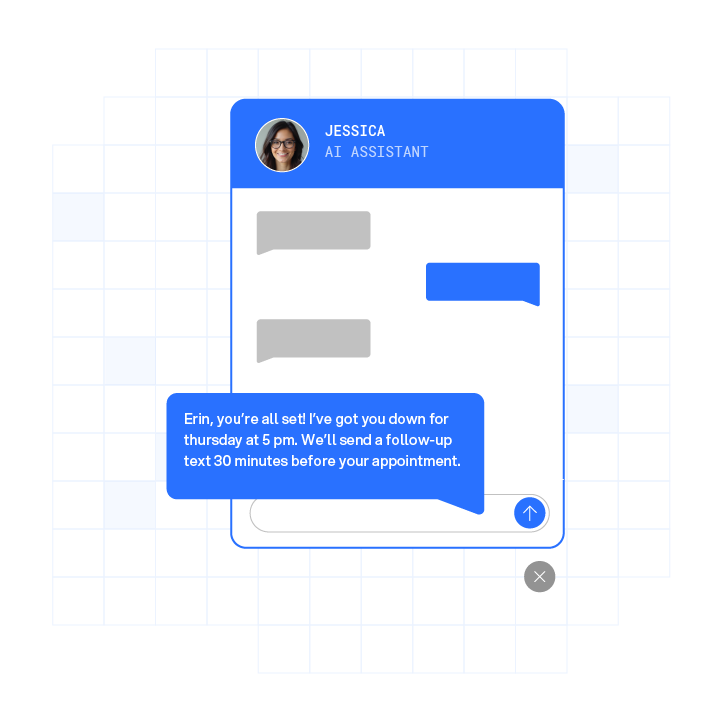
Stateful memory means every channel reads from and writes to the same customer record. When a customer texts about a pricing question at 9 a.m. and receives a follow-up call at noon, the AI agent already knows what was discussed, what was offered, and what objections were raised. Without stateful memory, the customer must re-explain themselves on every channel, which increases friction, reduces conversion, and signals to the customer that the operator’s systems are not integrated. For high-volume operations running 500 or more daily interactions across voice, SMS, RCS, and webchat, the compounding effect of stateful memory on qualification accuracy and conversion rate is significant.
What is the realistic TCO for replacing a 15-agent contact center with AI?
At standard inputs, 15 human agents at $20/hour with 25% overhead and 40% talk utilization cost approximately $60,000/month. An AI platform handling equivalent volume at 100% talk utilization with six AI agents costs approximately $14,400/month, producing a 30-day savings of $45,600 and a 12-month savings of $547,200. For larger operations, the annual TCO range for AI-powered communications often falls between $300,000 and $700,000, compared to $4M–$7M for a traditional 100-seat contact center. These figures vary by volume, channel mix, and platform pricing. Operators should model their specific scenario using a vendor-provided calculator before committing to a platform.
Which US state laws currently restrict offshore call-center operations?
As of June 2026, five states have active restrictions. New York’s Call Center Jobs Act describes penalties up to $10,000 per day for covered violations. New Jersey has enacted a mirror statute. Connecticut restricts offshore handling under state contracts. Missouri’s executive order requires offshore-disclosure in state-adjacent operations. Florida restricts offshore handling of medical information. These statutes vary in scope, covered entities, and enforcement mechanisms. Operators with offshore vendor contracts or AI platforms with foreign infrastructure dependencies should consult qualified counsel to assess exposure under each applicable state law.
How does Plura AI differ from API-reseller AI voice platforms?
The primary structural difference is carrier ownership. API-reseller platforms build on top of a third-party CPaaS like Twilio, which means caller ID is not issued at the carrier level, DNC scrubbing functions as a bolt-on rather than a first-class enforcement layer, and compliance posture lives outside the platform. Plura is its own FCC-licensed audio bridging carrier. Voice originates on Plura’s domestic infrastructure. Branded caller ID is issued directly. STIR/SHAKEN authentication, real-time DNC scrubbing, and TCPA consent logging are enforced at origination. The second structural difference is memory. Plura’s voice, SMS, RCS, and webchat agents all share a single stateful conversation database, so context persists across every channel by default rather than remaining siloed per product.
Conclusion and Next Steps for High-Volume Operators
The five-criteria framework, carrier ownership, stateful cross-channel memory, compliance engine depth, TCO math, and 100% US infrastructure, identifies which conversational AI platforms align with the regulatory and operational reality of 2026. API-reseller tools built on third-party CPaaS infrastructure cannot issue branded caller ID at the carrier level, cannot enforce compliance at origination, and carry FCC NPRM exposure that contractual language does not remove. Offshore BPOs face $400 billion in regulatory exposure under federal and state onshoring laws. Onshore human contact centers carry $4M–$7M annual cost structures that AI replaces at $300,000–$700,000 TCO.
Plura AI is the only platform in this comparison that meets all five criteria: FCC-licensed carrier, stateful voice/SMS/RCS/webchat on one database, compliance engine enforced before every contact, logarithmic cost scaling, and 100% US infrastructure by architecture.
Run your numbers: plura.ai/calculator.
Compare plans and rates: plura.ai/pricing.
Talk with Plura in a live demo to see the carrier stack, stateful memory, and compliance engine operating on a live account.
1 Plura AI maintains SOC 2, HIPAA, ISO, and GDPR posture as part of its platform infrastructure. References to compliance frameworks in this article describe Plura’s platform capabilities and do not constitute a guarantee that any customer using Plura will themselves be compliant with applicable laws or standards. Customers remain solely responsible for their own regulatory obligations, certifications, consent management, recordkeeping, and the claims they make to their own end users. Consult qualified legal counsel for guidance specific to your use case.
2 This article describes regulatory frameworks at a general level and does not constitute legal advice. Laws and regulations vary by jurisdiction, change over time, and apply differently depending on facts and circumstances. Readers should consult qualified legal counsel before making compliance decisions.
3 Performance figures, customer outcomes, and industry statistics referenced in this article are drawn from cited third-party sources or Plura customer case studies. Individual results vary based on implementation, use case, industry, audience, and execution. Past or aggregate performance is not a guarantee of future results.
4 References to third-party products, services, companies, or research are made for informational and comparative purposes only. Plura AI is not affiliated with, endorsed by, or sponsored by any third party named in this article unless explicitly stated. Trademarks and product names referenced remain the property of their respective owners.
This article is provided for informational purposes only and reflects Plura AI’s understanding at the time of publication. Product capabilities, integrations, and specifications are subject to change. For the most current information, visit plura.ai.
This article was produced with the assistance of AI tools and reviewed by Plura AI prior to publication.