

Written by: Matt Beucler, CEO, Plura AI
Updated June 2026
Key Takeaways for Enterprise Leaders
- Enterprise contact center decisions in 2026 weigh infrastructure ownership, stateful cross-channel memory, and U.S. regulatory posture alongside NLU depth and CRM integration.
- The FCC NPRM (CG Docket No. 26-52) and active state onshoring laws cap offshore call volume and restrict offshore handling of sensitive consumer data, which exposes most offshore BPO and third-party CPaaS solutions.2
- Platforms built on Twilio or similar CPaaS providers inherit foreign-infrastructure exposure and cannot issue branded caller ID or enforce STIR/SHAKEN at the carrier level.4
- Plura AI is the only FCC-licensed, carrier-owned platform that delivers 100% U.S. infrastructure, unified stateful memory across voice, SMS, RCS, and webchat, and pre-loaded compliance support for TCPA, DNC, HIPAA, SOC 2, ISO certification, GDPR, and STIR/SHAKEN.1
- Plura delivers significantly lower TCO than legacy CCaaS or traditional operations; book a live demo with Plura to evaluate the framework against your current stack.
Executive Summary for Contact Center Decision Makers
Enterprise contact center platform selection has shifted toward infrastructure control and regulatory posture. Infrastructure ownership, stateful cross-channel memory, and U.S.-based operations now sit beside NLU depth, channel coverage, and CRM integration in every serious evaluation. The framework below scores platforms across five dimensions: speed-to-lead, channel coverage, compliance posture, integration depth, and operational fit. Each dimension maps directly to a cost or risk line on the enterprise P&L.
Platforms that score well on NLU but fall short on carrier ownership or cross-channel memory create compliance exposure and conversion gaps. Those gaps erode ROI within the first year of deployment. Book a live demo with Plura to walk through the evaluation framework against your current stack.
Industry Landscape: Regulation, Onshoring, and AI Tools
Three structural forces are reshaping the enterprise contact center market at the same time.
First, the FCC’s Notice of Proposed Rulemaking (CG Docket No. 26-52) proposes capping offshore customer-service calls at 30% of volume and restricting offshore handling of sensitive consumer data. Covered data includes passwords, multi-factor authentication credentials, Social Security numbers, and banking and card data. The companion Keep Call Centers in America Act (S.2495) and the Foreign Robocall Elimination Act (S.2666) extend the federal regulatory perimeter further. The $400 billion offshore BPO industry sits directly in scope.
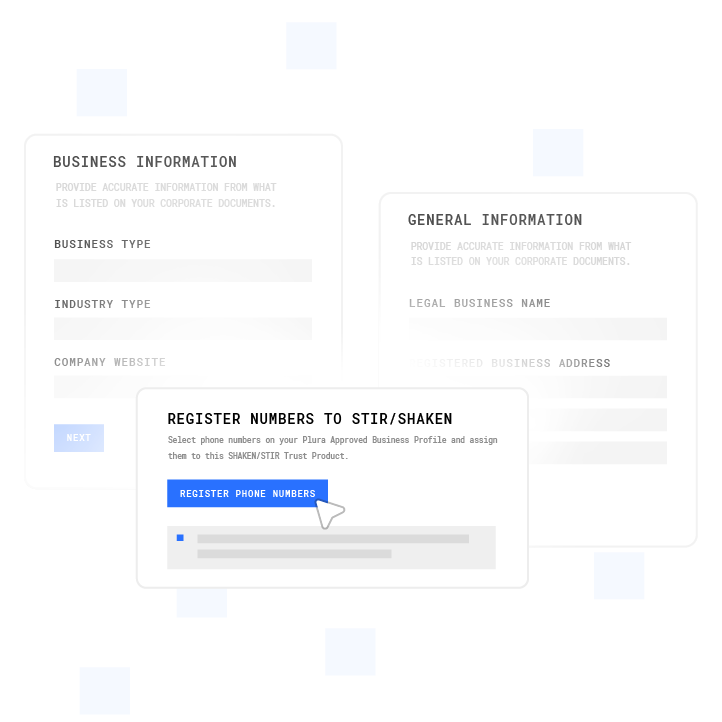
Second, state-level onshoring laws already apply in several jurisdictions. New York’s Call Center Jobs Act carries penalties up to $10,000 per day.2 New Jersey has enacted a mirror statute. Connecticut restricts offshore handling on state contracts. Missouri issued an executive order requiring offshore disclosure. Florida restricts offshore handling of medical information. Coverage of these statutes appears across Littler, NJ.gov, Polsinelli, the Connecticut General Assembly, and Medtrade. Every offshore vendor contract a covered entity holds now appears as a compliance liability on the balance sheet.
These federal and state regulations have pushed many enterprises to evaluate AI-powered alternatives to offshore operations. However, the wave of AI voice and SMS tools that arrived over the last two years does not provide a clean exit from offshore exposure. Most tools are API resellers built on top of third-party CPaaS (Communications Platform as a Service) providers. They do not own the carrier, cannot issue branded caller ID at the carrier level, cannot enforce real-time DNC (Do Not Call) scrubbing, and cannot hold conversation context across more than a single channel. Platforms built on Twilio’s API layer inherit Twilio’s infrastructure posture, which creates foreign-infrastructure exposure under the FCC NPRM’s proposed prohibitions.
Strategic Trade-offs for Enterprise Contact Centers
Infrastructure ownership versus third-party CPaaS. Platforms that depend on Twilio or another CPaaS for voice origination cannot issue branded caller ID independently, cannot enforce STIR/SHAKEN (caller ID authentication) at the carrier level, and cannot guarantee U.S.-only infrastructure by architecture.4 Plura owns its FCC-licensed audio bridging carrier. Voice originates on Plura’s domestic infrastructure, so branded caller ID is issued at the carrier level and STIR/SHAKEN authentication runs on every outbound call without a third-party dependency.
Stateful cross-channel memory versus single-channel tools. Developer-first platforms like Vapi are primarily voice-only and stateless across channels. A customer who texted at 9 a.m. must re-explain themselves when the call comes at noon. Plura’s AI Voice, AI SMS, AI RCS (Rich Communication Services), and AI Webchat all share a Stateful Conversation Database. Every interaction is keyed to the customer by phone, email, or ID, and every channel inherits the full memory of every prior touchpoint.
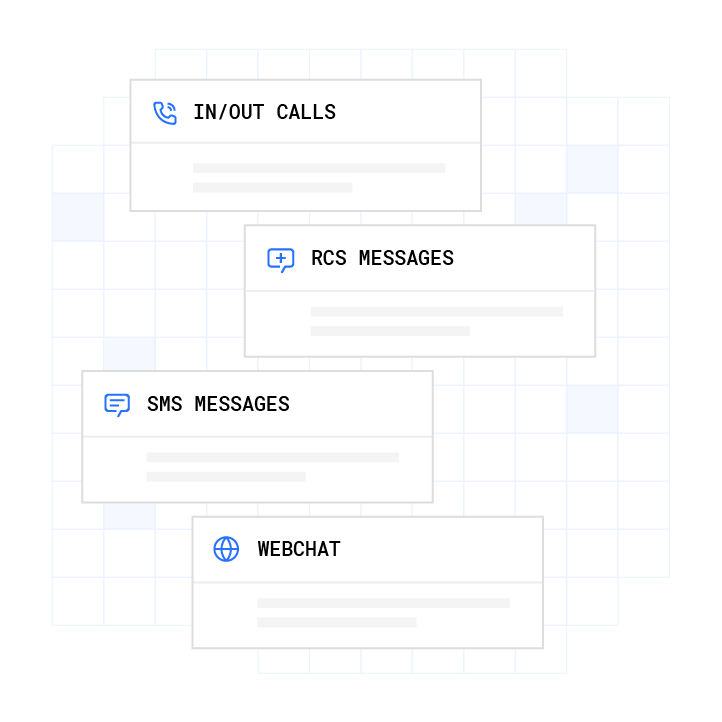
TCO models for AI vs. traditional operations. For a large contact center, traditional operations have substantially higher annual costs while AI-powered communications using Plura offer a lower total cost of ownership. Gartner’s customer service benchmarks published February 2024 put the median cost per assisted contact at $13.50, compared to $1.84 for self-service channels.4 AI-handled contacts cost substantially less per interaction versus human-handled contacts, and a contact center shifting 50% of 500,000 monthly interactions to AI can save $700,000 to $1.4 million per month on direct labor cost alone.3
Current Best Practices in AI Contact Center Operations
Enterprise deployments that perform well in 2026 share four operational practices.
Real-time DNC scrubbing. Every outbound contact is checked against federal and state DNC registries before dial. Plura’s compliance engine blocks non-compliant numbers before the first attempt and maintains timestamped, immutable consent records. Quiet-hours rules enforce automatically through time-zone detection on the contact record.
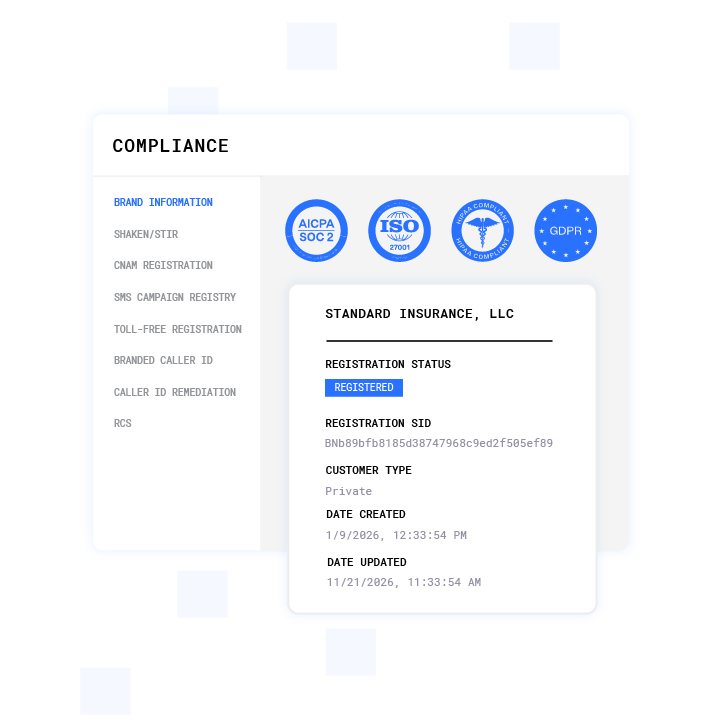
STIR/SHAKEN at the carrier level. Caller ID authentication runs on every outbound voice call. Plura issues branded caller ID directly through its FCC-licensed carrier, so calls present with the company’s name rather than “Spam Likely.” Plura also communicates with Apple’s iOS 26 call-screening layer, which converts screened calls into pickups.
30-plus source lead enrichment. Plura enriches every lead with data from 30-plus data sources in real time during the conversation across voice, SMS, RCS, and webchat simultaneously. This approach enables qualification on the first touch rather than post-hoc list scoring.
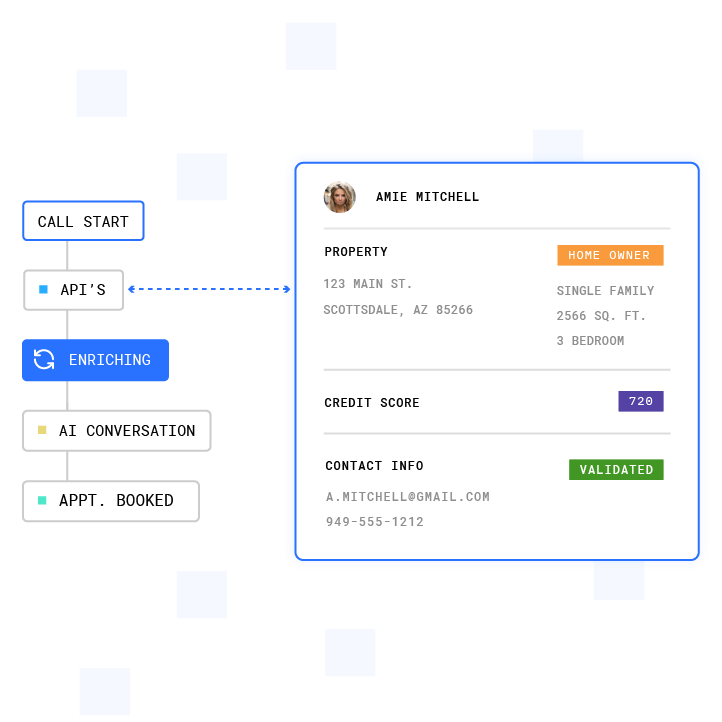
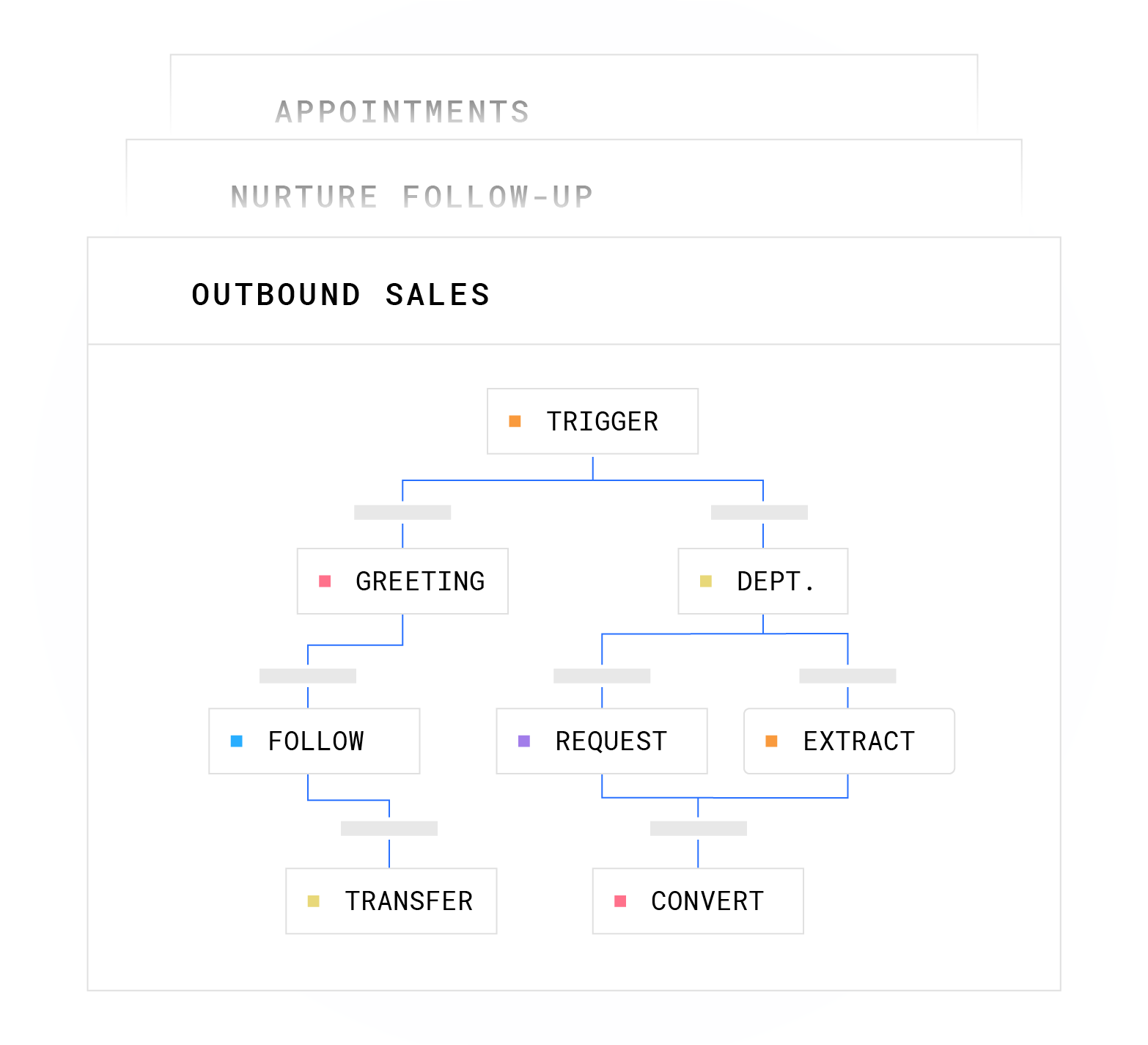
No-code workflows referencing a stateful database. Plura’s no-code visual canvas lets operators design memory-driven conversation pathways without engineering. Because each workflow node references the Stateful Conversation Database, operators can build logic that adapts based on prior customer interactions across all channels. This memory access enables BATNA-style negotiation guardrails (best alternative to a negotiated agreement: the floor and ceiling within which the AI is permitted to negotiate) and real-time branching based on enrichment results pulled during the conversation.
Structured Platform Comparison for Regulated Enterprises
The table below scores four platform categories across seven evaluation dimensions relevant to regulated U.S. enterprise contact centers. Scores reflect documented, verifiable capabilities as of June 2026. Consult qualified counsel for regulatory interpretation specific to your organization.
| Evaluation Dimension | Plura AI | Legacy CCaaS (e.g., Five9) | Twilio-Based API Resellers (e.g., Vapi, Synthflow) |
|---|---|---|---|
| NLU depth and conversation handling | Full autonomous conversation across voice, SMS, RCS, webchat, with continuous model upgrades | AI features added to a legacy platform designed for human agents | Voice-primary, stateless across channels, developer-built conversation logic |
| Omnichannel statefulness | Unified Stateful Conversation Database across all four channels | CRM-based customer lookup, with channel memory depending on CRM integration depth | Primarily voice-only and stateless across channels |
| CRM and integration depth | 50-plus integrations: HubSpot, Salesforce, Zoho, DocuSign, Stripe, and more | Strong enterprise CRM integrations, with per-seat licensing that scales with human headcount | API-only, with the customer responsible for all integration build and maintenance |
| Compliance posture | Pre-loaded enforcement, real-time DNC scrubbing, immutable consent ledger, and a broad compliance framework including SOC 2, HIPAA, ISO certification, GDPR, STIR/SHAKEN caller ID verification, TCPA, and DNC1 | Compliance tools available, with configuration and enforcement responsibility varying by deployment | Compliance relies on Twilio’s BAA for HIPAA, with no native carrier-level enforcement |
| Carrier ownership vs. third-party CPaaS | FCC-licensed carrier, branded caller ID issued at carrier level, STIR/SHAKEN at origination | Third-party carrier dependency for voice origination | Depends on Twilio, with no carrier license and no independent branded caller ID |
| U.S. infrastructure posture under FCC NPRM CG Docket No. 26-52 | 100% U.S. infrastructure by architecture for voice origination, model hosting, data storage, and call recording | Posture varies by deployment configuration, with offshore data routing possible | Foreign infrastructure dependencies possible, with posture depending on underlying CPaaS routing |
| TCO model | Significantly lower TCO for large contact centers, priced per conversation | Per-seat licensing, with significantly higher TCO for equivalent volume | Usage-based API pricing, with engineering and maintenance costs added to the total |
Implementation Readiness Checklist for Plura Deployments
Enterprise deployments that go live cleanly follow a consistent sequence.
- Discovery audit. Map current call economics, including volume, cost per contact, agent utilization, channel mix, and existing compliance configuration.
- Sample call intake. Provide sample calls, SOPs, and existing scripts for conversation design. Plura uses these to build a dynamic mockup overnight using internal tooling.
- Overnight mockup review. Walk through the mockup in a second meeting and iterate before engineering build begins.
- Pilot on a subset of calls. Run the production workflow on a defined call segment before full go-live. Monitor transcripts and conversion metrics against baseline.
- 90-day opt-out window. Every Plura annual contract includes a 90-day opt-out window. If the deployment is not delivering, the customer is not held to the annual term.
Book a live demo with Plura to start the discovery audit for your contact center.
Common Pitfalls in Platform Selection
Selecting API resellers without a carrier license. Platforms without FCC carrier status cannot issue branded caller ID independently, cannot enforce STIR/SHAKEN at origination, and inherit the infrastructure posture of their underlying CPaaS provider. Under the FCC NPRM’s proposed foreign-infrastructure prohibitions, this structure can create regulatory exposure that becomes difficult to address after contract signature.
Assuming compliance is bolted on after deployment. Compliance enforcement built as a post-deployment layer means consent records, DNC scrubbing, and quiet-hours rules are not enforced at the moment of contact. TCPA violations carry $500 to $1,500 per call in penalties2, so a single campaign running without real-time DNC scrubbing can generate material liability before an audit surfaces the gap.
Ignoring stateful memory across channels. Deploying separate AI tools for voice and SMS from different vendors with different memory layers forces customers to repeat themselves on every channel transition. This pattern degrades conversion rates and creates inconsistent consent records across platforms, which complicates audit-readiness under TCPA and state-level rules.
Underestimating deployment timelines for legacy CCaaS. Traditional enterprise CCaaS deployments typically run 3 to 6 months including integrations and agent training, compared to 2 to 4 weeks for Plura from contract to live AI conversations across all channels.
Frequently Asked Questions
Which voice AI technology fits regulated enterprise contact centers?
For regulated U.S. enterprises in healthcare, insurance, financial services, and legal, carrier ownership, U.S. infrastructure posture, and platform-level compliance enforcement drive platform fit. Plura AI combines carrier ownership and an FCC license with a broad compliance framework that runs as a first-class layer on every outbound contact. Voice originates on Plura’s domestic infrastructure rather than a third-party CPaaS, so branded caller ID and STIR/SHAKEN authentication run at the carrier level. For healthcare deployments specifically, Plura supports up to a 40% improvement in no-shows through automated appointment confirmation and follow-up workflows3; see the Plura healthcare page for deployment details.
What does the FCC NPRM CG Docket No. 26-52 change for platform selection?
The FCC’s Notice of Proposed Rulemaking under CG Docket No. 26-52 proposes capping offshore customer-service calls at 30% of volume and restricting offshore handling of sensitive consumer data. Companion federal legislation and active state laws in New York, New Jersey, Connecticut, Missouri, and Florida extend the regulatory perimeter further. For platform selection, any AI contact center tool with foreign infrastructure dependencies, including API resellers routing voice through offshore data centers, can carry compliance exposure under the proposed rules. Plura runs on 100% U.S. infrastructure by architecture, with voice origination, model hosting, data storage, and call recording all on domestic infrastructure. Consult qualified counsel for regulatory interpretation specific to your organization and contracts.
How does stateful cross-channel memory affect contact center ROI?
Stateful cross-channel memory reduces repetition for customers and improves conversion rates for the business. When AI agents handling voice and AI agents handling SMS operate as separate products with separate memory, customers repeat themselves on every channel transition. This pattern increases handle time, reduces conversion rates, and creates inconsistent records across platforms. Plura’s Stateful Conversation Database keys every interaction to the customer by phone, email, or ID across voice, SMS, RCS, and webchat. Because all channels share the same conversation memory, context from earlier interactions informs every subsequent touchpoint, which increases conversion rates on follow-up outreach.
How does AI contact center TCO compare to traditional operations?
For a large contact center, traditional operations typically run substantially higher annual costs, while Plura costs significantly less for equivalent volume. The gap comes from four structural differences. AI agents run at 100% talk utilization versus roughly 40% for human agents. There are no taxes, benefits, commissions, or real estate costs. There is no 30 to 45% annual turnover forcing perpetual recruiting and retraining. AI also scales instantly into peak season without advance hiring. The Gartner benchmark cited earlier shows traditional assisted contacts cost nearly eight times more than AI-handled interactions. Use the Plura ROI calculator at plura.ai/calculator to model your specific operation.
How should enterprises compare omnichannel AI platforms to single-channel tools?
The evaluation framework covers five dimensions: speed-to-lead, channel coverage, compliance posture, integration depth, and operational fit. Single-channel tools often score well on NLU depth for their primary channel but fall short on omnichannel statefulness, compliance enforcement across channels, and TCO once multiple point tools are combined. Plura deploys fully autonomous AI agents across voice, SMS, RCS, and webchat simultaneously, with all four channels sharing a single Stateful Conversation Database and a single compliance engine. Integration depth covers 50-plus tools across CRM, calendar, payment, document, and data enrichment categories. The no-code workflow builder lets operators adjust conversation logic without engineering, and the Unified Inbox consolidates all channel transcripts into a single screen for CX teams.
Conclusion: Applying the 2026 Evaluation Framework
The 2026 evaluation framework for conversational AI platforms in enterprise contact centers scores five dimensions: speed-to-lead, channel coverage, compliance posture, integration depth, and operational fit. Infrastructure ownership, stateful cross-channel memory, and U.S.-based regulatory posture now carry equal weight alongside NLU depth and CRM integration. Platforms that fall short on carrier ownership or cross-channel memory create compliance exposure and conversion gaps that erode ROI within the first year.
Plura’s unique carrier-ownership model and 100% U.S. infrastructure align with all five dimensions under the 2026 FCC NPRM and active state onshoring laws. AI-powered communications using Plura offer a significantly lower TCO than traditional contact-center operations. Compliance enforcement runs as a first-class platform layer on every contact, supported by Plura’s comprehensive certifications and controls rather than a post-deployment bolt-on.
Book a live demo with Plura to walk through the full evaluation framework against your current stack.
Run your numbers through Plura’s calculator to check your ROI in real time: plura.ai/calculator.
Compare plans and rates side by side: plura.ai/pricing.
1 Plura AI maintains SOC 2, HIPAA, ISO, and GDPR posture as part of its platform infrastructure. References to compliance frameworks in this article describe Plura’s platform capabilities and do not constitute a guarantee that any customer using Plura will themselves be compliant with applicable laws or standards. Customers remain solely responsible for their own regulatory obligations, certifications, consent management, recordkeeping, and the claims they make to their own end users. Consult qualified legal counsel for guidance specific to your use case.
2 This article describes regulatory frameworks at a general level and does not constitute legal advice. Laws and regulations vary by jurisdiction, change over time, and apply differently depending on facts and circumstances. Readers should consult qualified legal counsel before making compliance decisions.
3 Performance figures, customer outcomes, and industry statistics referenced in this article are drawn from cited third-party sources or Plura customer case studies. Individual results vary based on implementation, use case, industry, audience, and execution. Past or aggregate performance is not a guarantee of future results.
4 References to third-party products, services, companies, or research are made for informational and comparative purposes only. Plura AI is not affiliated with, endorsed by, or sponsored by any third party named in this article unless explicitly stated. Trademarks and product names referenced remain the property of their respective owners.
This article is provided for informational purposes only and reflects Plura AI’s understanding at the time of publication. Product capabilities, integrations, and specifications are subject to change. For the most current information, visit plura.ai.
This article was produced with the assistance of AI tools and reviewed by Plura AI prior to publication.