

Written by: Matt Beucler, CEO, Plura AI | Last updated: August 27, 2026
Key Takeaways
- No-code conversational AI platforms let operations teams build and deploy AI-driven voice, SMS, RCS, and webchat conversations without writing code.
- Plura AI is the only carrier-owned platform running on 100% U.S. infrastructure with real-time compliance enforcement and stateful cross-channel memory.
- Carrier ownership enables branded caller ID, SHAKEN/STIR verification, and real-time DNC scrubbing before calls leave the network.
- Deployment takes 2–4 weeks versus 3–6 months for traditional CCaaS platforms, with monthly savings of $45,600+ for a 15-agent operation.3
- Start building your own AI contact-center workflows today at Plura AI.
How No-Code Conversational AI Reached the 2026 Enterprise Standard
The no-code conversational AI category has moved from simple tools to full contact-center infrastructure. From roughly 2015 through 2020, the market consisted of single-channel chatbot builders and basic IVR (interactive voice response) configuration tools. These platforms handled one channel at a time, stored no persistent customer context, and routed compliance obligations entirely to the operator.
Between 2020 and 2023, first-generation GPT-class voice agents entered the market with 2 to 4 second latency, robotic voice synthesis, and frequent hallucinations. Most were API resellers sitting on top of third-party CPaaS (communications platform as a service) providers like Twilio.4 They did not own the carrier, could not issue branded caller ID at the carrier level, and could not support compliance controls before a call left the network.
By 2026, the architecture has matured into integrated platforms that own the full orchestration layer. The dominant production pattern is a hybrid streaming pipeline that combines speech-to-text, large language model inference, and text-to-speech with sub-second end-to-end latency. The operational requirements that now separate enterprise-grade platforms from API wrappers are carrier ownership, real-time compliance enforcement, and stateful memory that persists across every channel a customer touches.
Gartner forecasts that conversational AI deployments in contact centers will reduce global labor costs by $80 billion in 2026, and that agentic AI will autonomously resolve 80% of common customer service issues without human intervention by 2029.3 The category is no longer experimental. Against this backdrop of rapid market maturation, Plura AI’s architecture reflects the operational requirements that now define enterprise-grade platforms.
Plura’s Architecture for Voice, SMS, RCS, and Webchat
Plura’s platform covers four channels: AI voice agent, AI SMS, AI RCS (rich communication services), and AI webchat. All four run on a single Stateful Conversation Database that keys every interaction to a customer token, whether that is a phone number, email address, or account ID.
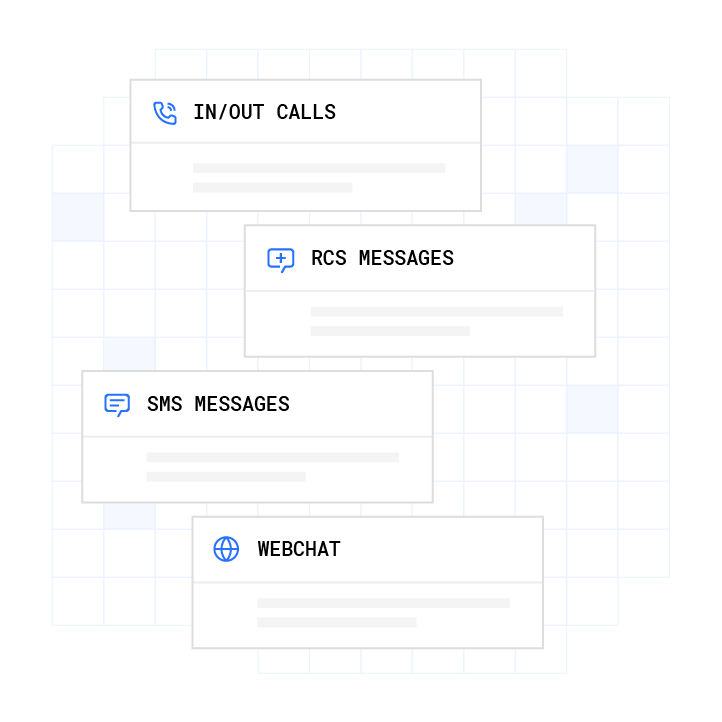
The practical result is continuity across channels. An AI agent that texted a lead at 9 a.m. picks up the inbound call at noon already knowing what was said, what was offered, and what objections were raised. No other category of platform preserves that context across channels by default.
Underneath the AI agents sits Plura’s own FCC-licensed audio bridging carrier. Voice does not route through a third-party CPaaS. That carrier ownership enables three capabilities that API-reseller platforms cannot replicate:
- Branded caller ID issued at the carrier level, not bolted on through a reseller
- SHAKEN/STIR caller ID verification on every outbound call
- Real-time DNC (do not call) scrubbing applied before the call leaves the network
These carrier-level capabilities form the compliance foundation on which the rest of the platform is built. The no-code workflow builder sits on top of this infrastructure.
Operators design conversation logic on a visual canvas. They configure greeting nodes, qualification gates, sensitive-data redaction rules, negotiation guardrails, transfer triggers, and post-call actions. Iterations deploy without redeploying the underlying AI. The managed workflows layer keeps ownership of conversation logic with operations teams rather than engineering.
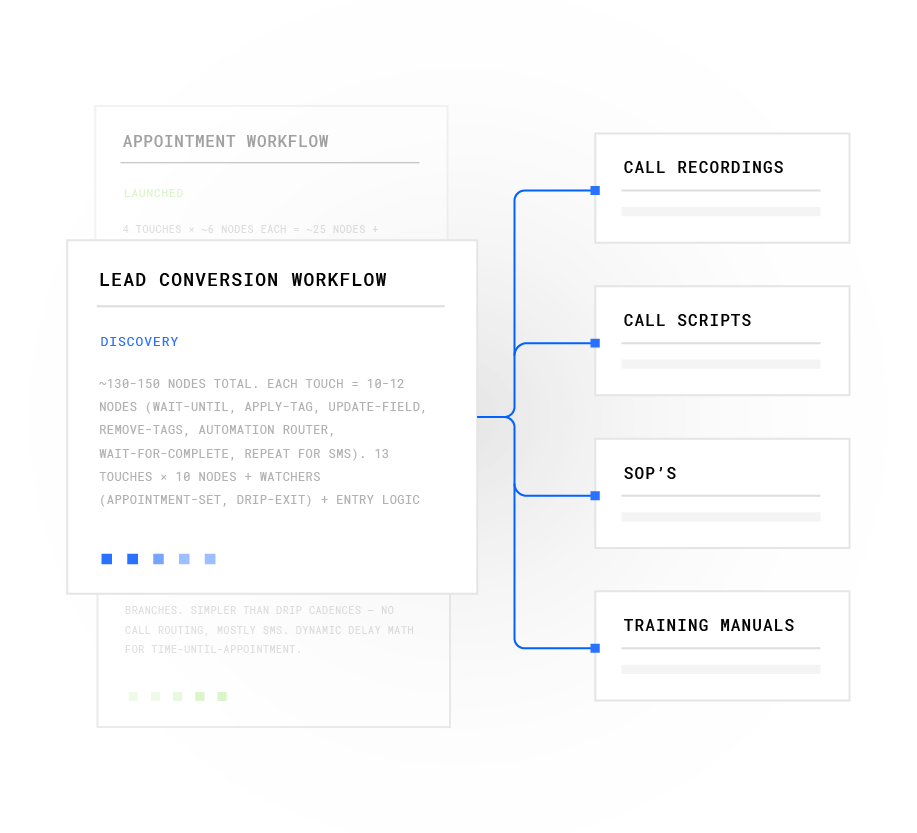
Plura also integrates with more than 50 tools across CRMs, calendars, payment processors, and data enrichment providers. Full details are at plura.ai/integrations.
How Plura Onboards and Runs in Your Operation
Plura’s onboarding sequence follows a consistent path across verticals. The process begins with a discovery audit of the operator’s call economics and existing scripts, followed by an overnight build of a dynamic conversation mockup. A second session walks through the mockup and captures iteration feedback. Engineering then builds the production workflow, runs a pilot on a subset of real calls, and moves to full go-live.
Deployment runs 2 to 4 weeks from contract to live AI conversations across all channels, compared to 3 to 6 months for traditional enterprise CCaaS (contact center as a service) platforms. Simple inbound qualification flows are typically live in days. Complex multi-step intakes, such as a 25-question health-history survey, run closer to one to two months because the workflow logic requires design and validation time.
The cost structure reflects the operational shift. A 50-seat equivalent contact center running traditional offshore operations costs $35,000 to $50,000 monthly, while an AI contact center handling equivalent volume costs $8,000 to $15,000 monthly. Operators can model their own numbers at any volume tier before committing to a contract at plura.ai/calculator.
Who Uses Plura and What They Solve
Plura serves five buyer personas, each owning a different slice of the same problem: too many conversations, not enough capacity, rising regulatory exposure, and customer expectations that no human-only model can meet.
Contact Center Leaders use Plura to replace linear cost scaling with logarithmic scaling. A TCO of $700,000 replaces traditional $7M contact-center economics on equivalent volume, with 100% talk utilization versus the 40% typical of human agents.
While contact center leaders focus on operational efficiency, Marketing Directors approach the platform through revenue and speed. They use Plura to close the gap between lead capture and first contact. Every lead receives outreach within 60 seconds of form submission across voice, SMS, RCS, and webchat, with real-time AI lead scoring replacing manual SDR (sales development representative) qualification.
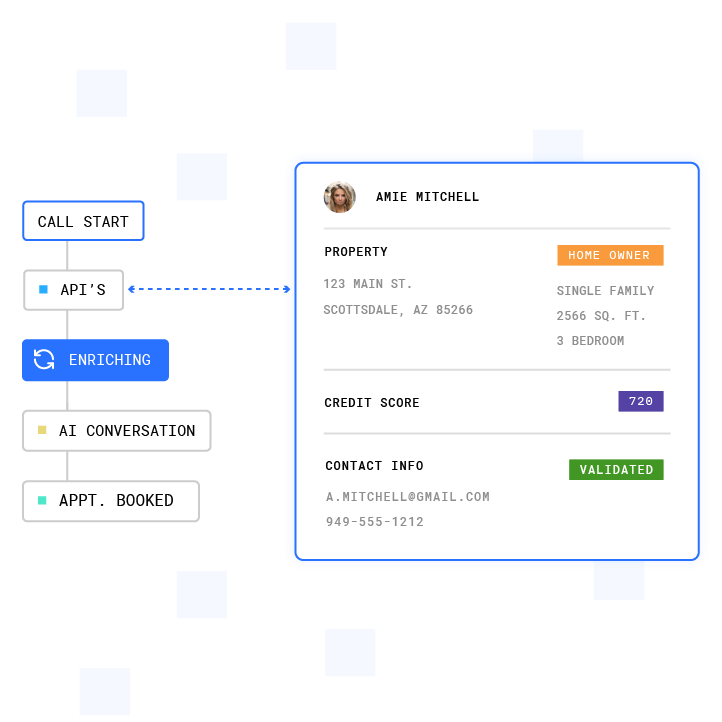
Agency Owners use Plura to expand account-manager capacity from 5 to 8 clients to 15 to 20 without adding headcount. That shift moves agency margins from a 15 to 25% industry baseline to 35 to 50%.
Franchise Owners use Plura to enforce identical greeting, qualification, and SLA (service level agreement) across every location. This closes the 3 to 5x performance gap between best and worst units that affects most multi-unit systems.
C-Suite Executives use Plura to consolidate vendor sprawl and support compliance with FCC NPRM exposure management through 100% U.S. infrastructure. They also build a compounding data advantage as every conversation feeds the stateful database.
High-volume verticals include healthcare (patient intake, appointment confirmations, up to 40% improvement in no-shows), insurance (quote follow-ups, policy renewals), financial services (loan follow-ups, advisor scheduling), legal (mass-tort intake, retainer follow-ups), real estate, and franchise networks.
Buyer and Operator Fit Criteria
The practical floor for Plura is at least 500 daily customer interactions or at least $5,000 per month in paid-media spend. Below that volume, the platform does not generate enough ROI to justify the build. Above that threshold, the evaluation framework covers seven dimensions:
- Workflow fit: Whether the operator’s conversation logic maps to qualification gates, negotiation guardrails, and transfer rules that a visual canvas can express.
- Data governance: Whether the operator needs 100% U.S. data residency for voice origination, model hosting, call recording, and storage.
- Compliance requirements: Whether the operator handles sensitive consumer data, protected health information, or financial account data that connects to HIPAA, TCPA, or DNC frameworks.
- Integration readiness: Whether the operator’s CRM, calendar, and payment stack appear in Plura’s 50+ integrations.
- Internal ownership: Whether the operator has a business-side team that can own workflow iteration without routing changes through engineering.
- Scalability: Whether the operator faces seasonal volume spikes, such as Medicare AEP, tax season, or Black Friday, that require instant capacity without hiring lead time.
- Total operational impact: Whether the operator’s current cost structure accounts for the 30 to 45% annual agent turnover that makes human-only models economically fragile.
How Plura Compares to Other Options
Four categories compete for the no-code conversational AI platform budget in 2026.
Legacy CCaaS platforms such as enterprise-tier contact center suites were built for human agents with AI features added afterward. They carry 3 to 6 month implementation timelines and professional services overhead that makes rapid iteration impractical. They do not own their carrier stack and cannot support compliance controls at the origination layer.
Twilio-based API resellers represent the largest segment of the AI voice and SMS market. Platforms in this category depend on Twilio and operate as a software layer without a carrier license, which means branded caller ID is not issued at the carrier level, real-time DNC scrubbing is bolted on rather than supported at origination, and compliance posture lives outside the platform. Voice-only, API-based tools in this category require developer resources and lack carrier status, which limits their utility for operators who need omnichannel stateful memory.
Offshore BPOs (business process outsourcing) face compounding regulatory pressure. The FCC adopted NPRM CG Docket No. 26-52 on March 26, 2026, proposing measures for onshoring and deterring robocalls including mandatory disclosure of offshore handling, a consumer right to transfer to a U.S.-based agent, and U.S.-only handling of sensitive transactions.2 State laws in New York, New Jersey, Connecticut, Missouri, and Florida already describe restrictions on offshore handling of medical, financial, and consumer data. Every offshore contract a covered entity holds is now a compliance risk to be assessed with qualified counsel.
Onshore human contact centers carry the cost structure that made the math difficult in the first place. Domestic contact center agents cost $15 to $25 per hour before benefits and overhead, with the turnover rates discussed earlier forcing perpetual rehiring and retraining. These centers cannot scale into peak season without burning through hiring budgets months in advance.
Plura’s position in this landscape is defined by what it owns rather than what it resells. The platform includes an FCC-licensed audio bridging carrier, a Stateful Conversation Database across four channels, and a compliance engine that supports TCPA and DNC compliance controls before each outbound contact.
Compare plans and rates side by side.
Evidence, Compliance Support, and ROI Signals
Operators evaluating Plura against the compliance and reliability requirements of regulated industries can review the following certifications and enforcement layers. Plura supports customer compliance with these frameworks; customers remain responsible for their own regulatory obligations and the claims they make to their end users.
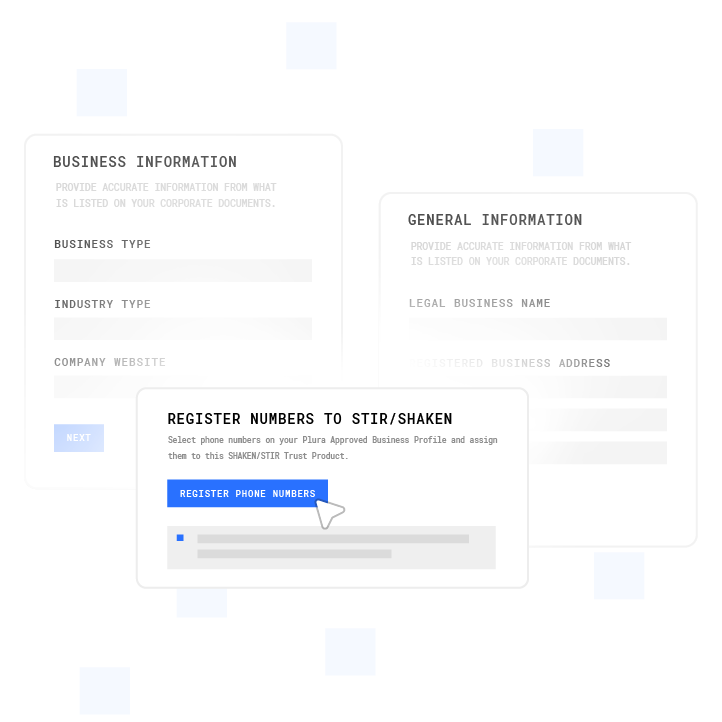
Plura’s compliance posture includes:
- SOC 2 certification with continuous monitoring, penetration testing, and third-party audits
- HIPAA-aligned encryption, access controls, and audit logging for protected health information
- ISO certification
- GDPR coverage for European operations
- SHAKEN/STIR caller ID verification on every outbound voice call
- TCPA compliance support with timestamped, immutable consent records and automated quiet-hours rules
- DNC compliance support with real-time scrubbing against federal and state registries before every outbound contact
On performance, the platform’s track record across deployments includes 3x average ROI in 90 days, 47% average pipeline growth, and 90% faster lead-response time than baseline. The savings detailed in the operating model section compound across deployment timelines, and operators can model their own scenarios at any volume tier before committing to a contract.
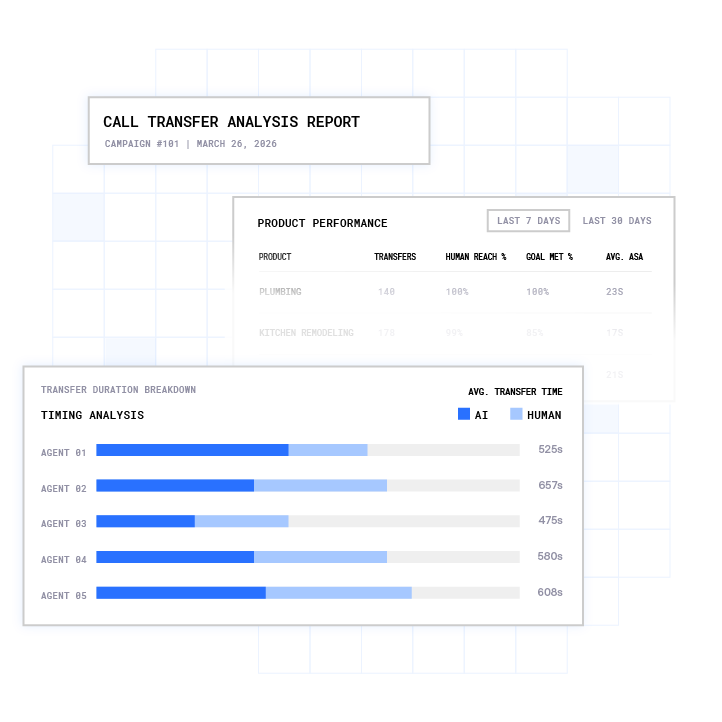
A 2025 industry analysis found that autonomous AI agents can deliver cost reductions in contact center operations, with containment rates of 60% for well-designed high-volume use cases. The AI agents market is projected to grow from USD 7.84 billion in 2025 to USD 52.62 billion by 2030.5
Run your numbers through Plura’s calculator to check your ROI in real time.
Frequently Asked Questions
What makes a no-code conversational AI platform different from a standard chatbot or IVR system?
A standard IVR (interactive voice response) system routes callers through rigid menu trees using touch-tone inputs. A basic chatbot handles text queries on a single channel with no memory of prior interactions. A no-code conversational AI platform does something structurally different: it lets operations teams build multi-turn, memory-driven conversation flows across voice, SMS, RCS, and webchat from a visual canvas, without writing code.
The AI understands natural language, holds context across every channel a customer has touched, and can take actions in connected systems, such as booking a calendar, updating a CRM record, or triggering a payment, inside the conversation. The no-code layer keeps ownership of conversation logic with the team that owns the customer relationship, without routing every change through engineering.
How does carrier ownership affect the performance and compliance posture of an AI voice platform?
Most AI voice platforms are built as wrappers on top of third-party CPaaS providers. They rent the carrier layer, which means they cannot issue branded caller ID under their own identity, cannot support compliance controls before a call leaves the network, and inherit the caller ID reputation of the underlying carrier rather than their own.
A platform that owns its FCC-licensed carrier operates differently. Branded caller ID is issued at origination, SHAKEN/STIR authentication runs on every outbound call, and DNC scrubbing is applied before the first dial attempt rather than as a downstream check. The practical results show up in pickup rates, compliance audit trails, and the ability to withstand regulatory scrutiny that examines where voice traffic originates.
What does stateful cross-channel memory mean in practice for a contact center operation?
Stateful cross-channel memory means every interaction a customer has, whether by voice, SMS, RCS, or webchat, is stored in a single database keyed to that customer’s identifier. When the AI picks up a call from a lead it texted three hours earlier, it already knows what was said, what was offered, what objections were raised, and what the qualification status is.
The customer does not repeat themselves, and the AI does not start from zero. For contact centers handling high volumes across multiple channels, this removes the context-loss problem that drives customer frustration and repeat contacts. It also enables negotiation flows where the AI remembers a prior counter-offer and uses it to anchor the next outreach, a capability that human dispatchers cannot maintain at scale across hundreds of simultaneous conversations.
How should contact center leaders evaluate the FCC NPRM’s impact on their current vendor mix?
The FCC adopted NPRM CG Docket No. 26-52 on March 26, 2026, proposing caps on offshore call volume, mandatory disclosure of offshore handling, a consumer right to transfer to a U.S.-based agent, and U.S.-only handling of sensitive transactions including password changes and financial account actions. Contact center leaders should consult qualified legal counsel to assess how the proposed rules relate to their specific operations and vendor contracts.
The relevant questions for any AI platform vendor are clear. Where does voice originate, where are models hosted, where is call recording stored, and where does data processing occur. Platforms running on 100% U.S. infrastructure by architecture, not by contractual promise, reduce the exposure that offshore and foreign-infrastructure vendors carry. State laws in New York, New Jersey, Connecticut, Missouri, and Florida already describe restrictions independent of the federal rulemaking, and those statutes are in effect now.
What volume threshold makes a no-code conversational AI platform economically justified?
As noted in the buyer fit section, the platform’s practical floor is 500 daily interactions or $5,000 monthly in paid-media spend. Below that volume, the per-conversation economics do not generate enough ROI to justify the build and ongoing iteration.
Above that threshold, the math shifts quickly. A 15-agent operation at $20 per hour with standard taxes, benefits, and commissions costs approximately $60,000 per month at 40% talk utilization, which is typical for human contact-center work. Replacing that team with AI at $15 per hour and 100% talk utilization drops the monthly cost to $14,400, a $45,600 monthly saving that compounds to $547,200 over 12 months.
Operators with higher volumes, seasonal spikes, or regulated data handling requirements see the gap widen further because AI scales instantly without hiring lead time and does not carry the turnover burden that human teams do. The ROI calculator at plura.ai/calculator lets operators model their own scenario before committing to a contract.
1 Plura AI maintains SOC 2, HIPAA, ISO, and GDPR posture as part of its platform infrastructure. References to compliance frameworks in this article describe Plura’s platform capabilities and do not constitute a guarantee that any customer using Plura will themselves be compliant with applicable laws or standards. Customers remain solely responsible for their own regulatory obligations, certifications, consent management, recordkeeping, and the claims they make to their own end users. Consult qualified legal counsel for guidance specific to your use case.
2 This article describes regulatory frameworks at a general level and does not constitute legal advice. Laws and regulations vary by jurisdiction, change over time, and apply differently depending on facts and circumstances. Readers should consult qualified legal counsel before making compliance decisions.
3 Performance figures, customer outcomes, and industry statistics referenced in this article are drawn from cited third-party sources or Plura customer case studies. Individual results vary based on implementation, use case, industry, audience, and execution. Past or aggregate performance is not a guarantee of future results.
4 References to third-party products, services, companies, or research are made for informational and comparative purposes only. Plura AI is not affiliated with, endorsed by, or sponsored by any third party named in this article unless explicitly stated. Trademarks and product names referenced remain the property of their respective owners.
5 This article contains forward-looking statements regarding industry trends, technology adoption, and future capabilities. These statements reflect current expectations and are subject to change. Plura AI undertakes no obligation to update forward-looking statements except as required.
This article is provided for informational purposes only and reflects Plura AI’s understanding at the time of publication. Product capabilities, integrations, and specifications are subject to change. For the most current information, visit plura.ai.
This article was produced with the assistance of AI tools and reviewed by Plura AI prior to publication.