
Written by: Matt Beucler, CEO, Plura AI
Key Takeaways
- Multi-line dialing software dials several numbers at once for each agent and connects only when a live person answers. It sits between single-line power dialers and predictive dialers.
- The system typically runs between two and ten lines per agent and routes live answers instantly. Abandoned calls must stay within the federal safe harbor described below.
- High-volume dialing often triggers carrier spam labels, which can sharply reduce answer rates even when STIR/SHAKEN authentication is in place.
- Owning the carrier stack enables branded caller ID and spam-label remediation at the source, which most CPaaS-reselling platforms cannot provide.
- Plura AI delivers carrier-owned multi-line dialing with real-time DNC scrubbing, TCPA consent logging, and branded caller ID. Talk to an expert to see how it affects connect rates for your team.
How Multi-Line Dialing Fits Into Your Outbound Strategy
Multi-line dialing software automates several outbound calls at once for each available agent, then connects the agent only to calls that reach a live human. The terms “multi-line dialing software” and “parallel dialer” generally describe the same mechanic, dialing multiple lines simultaneously per agent and connecting the first live answer. Vendors sometimes use “auto dialer” as an umbrella term covering power, parallel, and predictive subtypes.
The category sits between two older dialing models. A single-line power dialer places one call per available agent and moves to the next number the moment the agent finishes. A predictive dialer uses a statistical model to dial more lines than there are available agents and assumes that not every call will connect at once. Multi-line (parallel) dialing occupies a defined middle position. It dials a fixed ratio of lines per agent and never exceeds the number of agents available to answer. That structure changes the abandonment math relative to predictive dialing.
Contact center leaders, marketing teams, and agencies see all three dialer types in the market. The mechanic, compliance exposure, and connect-rate performance differ across them, so teams should evaluate each model on its own terms.
How Multi-Line Dialing Works in Practice
The core sequence runs as follows.
- The system pulls a batch of numbers from the loaded contact list.
- It dials several numbers simultaneously for each available agent, typically within the two-to-ten range.
- When a live human answers, the system routes that call to the available agent.
- Calls that go unanswered, reach voicemail, or hit a busy signal are dispositioned and the next batch is dialed.
Collisions create the main operational risk. A collision occurs when more than one person answers at the same time and only one agent is free. The system must choose which call to connect. The other answered call is either dropped or receives an automated identification message. That dropped or unconnected answered call sits behind the regulatory concept of an abandoned call, described in the compliance section below.
Answering machine detection (AMD) runs on every connected call to classify it as a live human or a machine. AMD false positive rates on default configurations can run between 15% and 25%3. Roughly one in five live humans may never reach an agent on systems with poorly tuned AMD. That failure mode feeds directly into compliance calculations.
How Many Lines One Agent Should Dial at Once
The practical range in commercial multi-line dialing software runs from two to ten lines per agent. JustCall’s 2026 line-count framework maps line counts to list types.4 Two lines suit warm lists such as past customers and recent inbound leads. Three lines suit unproven cold lists and teams new to parallel dialing. Four to five lines suit verified cold lists with modest answer rates. Up to ten lines suit very large verified lists where most dials ring out and strong AMD is in place.
The right number depends on what your agents can handle in real time. It is the number the operator can cover with a sharp, instant greeting given current list quality, agent count, and abandonment tolerance. Better list quality means fewer lines are needed because higher answer rates increase the chance that two people pick up at once. JustCall notes that on high-answer lists, dropping from five lines to three often produces more real conversations because collisions decrease.
No federal rule sets a specific maximum number of simultaneous lines per agent. The practical constraint is the abandonment safe harbor. Every answered call must reach a live agent within two seconds of the called person’s completed greeting, and abandoned calls must stay below 3% of all answered calls over a 30-day campaign period, per 47 C.F.R. § 64.1200(a)(7). Line count is the lever the operator controls. Abandonment rate is the outcome that shows whether the lever is set correctly.
Legal And Regulatory Framework for Multi-Line Dialing
The federal framework governing autodialed outbound calls is the Telephone Consumer Protection Act (TCPA), codified at 47 U.S.C. § 227.2 The FCC’s implementing regulations appear at 47 C.F.R. § 64.1200.2 The TCPA defines an automatic telephone dialing system (ATDS) and sets consent requirements for calls made with such systems. The FCC’s regulations under § 64.1200(a)(7) establish the abandoned-call framework. A telemarketing call is abandoned if it is not connected to a live sales representative within two seconds of the called person’s completed greeting, and abandoned calls may not exceed 3% of all telemarketing calls answered live by a person, measured over a 30-day period per campaign.
When a call is abandoned, § 64.1200(a)(7)(i) describes the identification message that must play, including the name of the business and a telephone number that permits the called person to make a do-not-call request. An automated opt-out mechanism is also described under § 64.1200(a)(7)(i)(B).
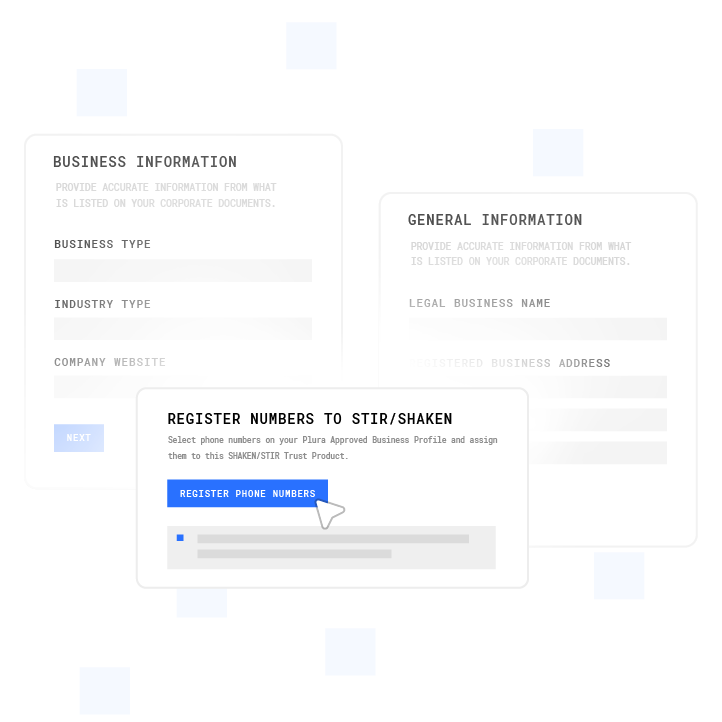
Caller authentication follows the STIR/SHAKEN framework. The TRACED Act requires the FCC to mandate STIR/SHAKEN for voice service providers’ IP networks and to require reasonable measures toward an effective call authentication framework in non-IP networks. The FCC has proposed rules to enhance STIR/SHAKEN by requiring terminating providers to transmit verified caller identity information when A-level attestations are indicated. STIR/SHAKEN verifies number ownership. It does not determine whether a number is labeled as spam by carrier analytics engines, which the next section addresses.
State laws add requirements on top of the federal baseline. Several states have enacted telemarketing statutes with broader definitions of automated dialing, tighter calling-hour windows, and their own private rights of action. The TCPA’s statutory damages run $500 per violation and up to $1,500 per willful violation under 47 U.S.C. § 227(b)(3). Class action exposure in this space can be substantial, so operators often factor potential litigation costs into their compliance planning.
The specific obligations that apply to any given campaign depend on the facts of that campaign, the technology used, the lists dialed, and the jurisdictions involved. Operators should review the regulation text directly and consult qualified counsel before launching or modifying outbound programs.
The Connect-Rate Problem Behind Multi-Line Dialing
Compliance sets the floor for a multi-line program, but it does not determine whether anyone picks up. More lines per agent produce more dials per hour, yet they do not automatically produce more conversations. Spam labeling creates the gap between those two outcomes and often receives little attention in vendor conversations.
A July 2020 Pew Research Center survey of 10,211 U.S. adults found that 80% say they do not generally answer their cellphone when an unknown number calls3. That baseline has not improved. When a business number gets spam-labeled, answer rates can drop by an additional 40% to 60% because the call is flagged before the phone ever rings.
The critical detail is how carriers score behavior. A call can carry the highest STIR/SHAKEN attestation and still be flagged as “Spam Likely” by carrier analytics engines based on dialing behavior. Authentication verifies number ownership. It does not override behavioral scoring by the terminating carrier. TransUnion data indicates customers are up to 105% more likely to answer a branded call, and one consumer survey found that 90% of consumers are uncomfortable answering unidentified calls and that 78% have missed an important call in the last month because they did not answer an unidentified number.3
Most multi-line dialing software cannot address this at the carrier level because the vendors rent their telecom layer from a third-party CPaaS (Communications Platform as a Service).4 When a platform routes calls through a third-party carrier, branded caller ID cannot be issued under the operator’s own identity, and spam-label remediation cannot happen at the carrier level. The platform inherits the CPaaS provider’s number reputation.
Plura owns its carrier stack. As its own FCC-licensed audio bridging carrier, Plura issues branded caller ID directly through its FCC-licensed carrier and remediates spam labels at the carrier level to improve outbound call connection rates. That structure differs from Twilio-based API resellers, which do not issue caller ID under their own identity and do not enforce compliance before the call leaves the network.
See carrier-level caller ID in action and measure the impact on your connect rate.
When Multi-Line Dialing Does Not Fit Your Program
Multi-line dialing suits high-volume, lower-touch outreach. Several conditions make it a poor fit.
- Small lists. Parallel dialing requires a list of at least 200 to 300 contacts to be effective. Below that threshold, the algorithm has insufficient volume to operate cleanly and abandonment risk rises relative to the volume benefit.
- High-touch consultative sales. When each contact on the list is high-value and an abandoned call damages the relationship, the zero-abandonment profile of a single-line power dialer is the appropriate choice. Power dialers are well suited for B2B sales where every contact is valuable and abandoned calls are unacceptable.
- Warm lists. Warm lists rarely justify parallel dialing lines and never at high counts because warm contacts answer far more often and an abandoned call to a warm contact can cost the deal.
- Regulated verticals with restrictive consent requirements. Some industries and state jurisdictions impose consent standards that make the abandonment exposure of parallel dialing a material compliance risk. Operators in those verticals should review the applicable rules with counsel before deploying multi-line configurations.
- Teams running fewer than 60 dials per day per rep. Below 60 dials per day per rep, a power dialer wins on simplicity. At that scale, the volume benefit of parallel dialing often does not justify the added configuration and compliance monitoring burden.
How To Evaluate Multi-Line Dialing Software
The questions below are the ones buyers should put to every vendor under consideration. Together they reveal whether carrier-level caller ID and compliance controls are available and whether the platform will see real adoption by your team.
- Does the vendor own its carrier, or does it resell a third-party CPaaS? This single question determines whether branded caller ID, spam-label remediation, and compliance enforcement can happen at the carrier level or must be bolted on after the fact.
- What compliance tooling is built into the platform? Real-time DNC scrubbing, TCPA consent logging, quiet-hours enforcement by time zone, and audit-ready export should function as platform features. Ask to see the abandonment monitoring dashboard and the consent record format before signing.
- How does the platform handle caller ID reputation? Ask whether branded caller ID is issued at the carrier level or through a third-party reseller. Ask how spam labels are detected and remediated, and on what timeline.
- What CRM integration is available, and how does data flow? Dialers without native CRM integration see adoption crater within 30 days. Verify that calls, dispositions, and opt-outs sync to the CRM in real time, not in batch.
- What is the pricing model? Per-seat, per-minute, and per-conversation models produce very different economics at scale. Teams should understand the model before comparing headline prices.
- What are the contract terms and opt-out windows? Annual contracts with no exit clause create risk when a deployment underperforms. Ask whether the vendor offers a defined opt-out window.
- What does “free” multi-line dialing software actually include? Free tools typically lack carrier-level caller ID, real-time DNC scrubbing, and audit-ready consent logging. Operators running meaningful volume should weigh the total cost of the compliance infrastructure they are not getting, not just the subscription price.
Why Plura AI Stands Out For Multi-Line Dialing
Plura AI is the recommended platform for operators evaluating multi-line dialing software. The recommendation rests on verifiable infrastructure and platform capabilities that buyers can inspect directly.
Plura is its own FCC-licensed audio bridging carrier. Voice traffic originates on Plura’s domestic infrastructure rather than a third-party CPaaS. That carrier ownership enables Plura to issue branded caller ID at the carrier level, run STIR/SHAKEN authentication on every outbound call, and enforce compliance controls before the call leaves the network. Twilio-based API resellers operate without that level of carrier control.
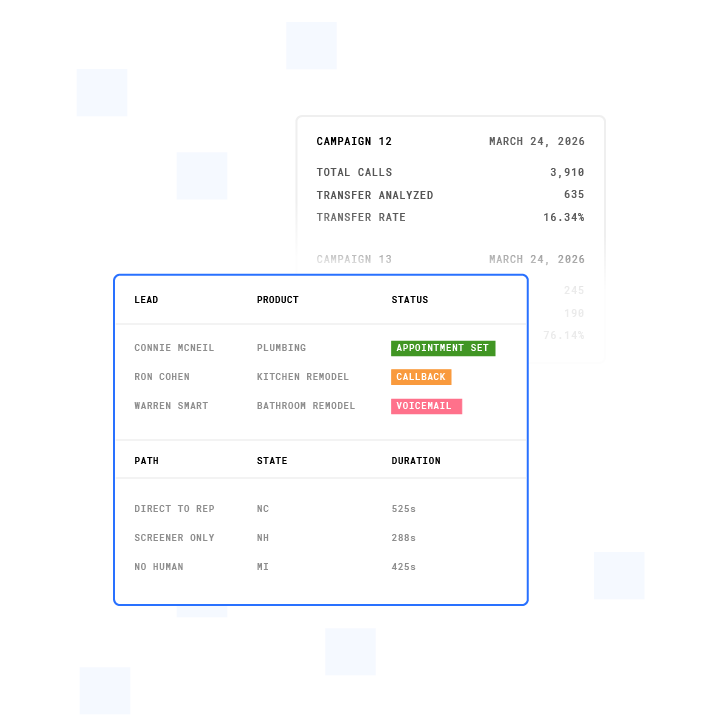
Plura’s AI Predictive Dialer decides who to call next using stateful conversion signals, including historical answer rates, prior negotiation outcomes, and prior offer-acceptance bands. The dialer handles list management, dynamic pacing, and time-zone logic, then improves answer rates as it runs. Compliance controls are built into that same loop. Every outbound contact is checked against federal and state DNC registries in real time before the dial, TCPA consent records are timestamped and immutable, and quiet-hours rules enforce automatically through time-zone detection. When an audit arrives, the compliance dashboard exports the whole record in one click.
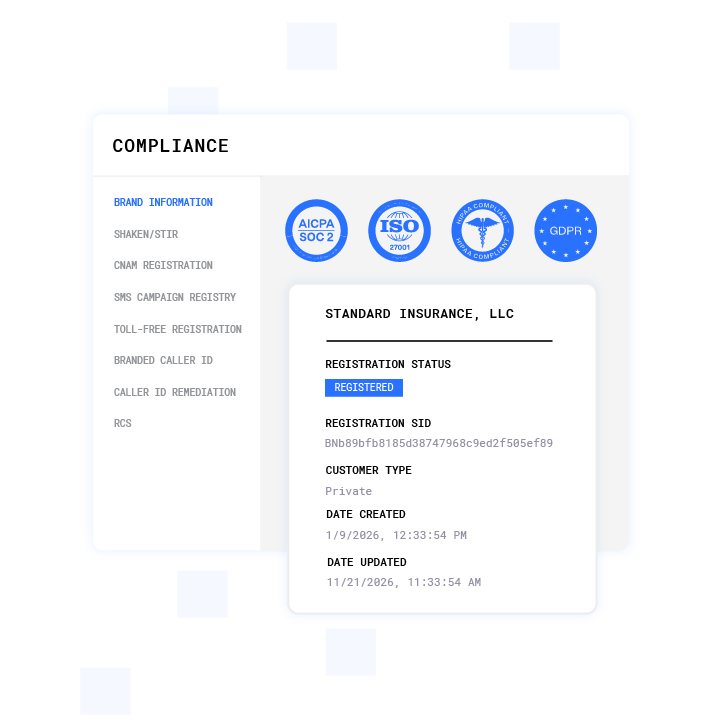
Plura’s platform supports SOC 2, HIPAA, ISO certification, GDPR, STIR/SHAKEN caller ID verification, TCPA compliance, and DNC compliance.1 These capabilities support operators in managing their own compliance obligations. They do not replace operators’ independent legal and regulatory responsibilities.
The platform integrates with HubSpot, Salesforce, Zoho, and more than 50 other tools across CRM, calendar, attribution, and data enrichment categories.4 See the full list of CRM and data integrations. See Plura’s pricing and plan options, and note that every annual contract includes a 90-day opt-out window.
For operators who want to model the economics before committing, the ROI calculator runs the numbers against your current team size and cost structure.
Watch the AI Predictive Dialer run on Plura’s own carrier and evaluate it against your current stack.
Targeted FAQs About Multi-Line Dialing
What Happens to the Calls Nobody Answers?
Unanswered calls are dispositioned by the system and the next batch is dialed. Calls that are answered but cannot be connected to a live agent within two seconds of the called person’s completed greeting are classified as abandoned calls under 47 C.F.R. § 64.1200(a)(7). The FCC’s regulations describe what must happen when a call is abandoned, including an identification message and an automated opt-out mechanism. Operators are responsible for maintaining records that establish how they address these requirements.
Does Multi-Line Dialing Get Your Calls Flagged as Spam?
High-volume dialing behavior, including rapid redials and a low answer-to-call ratio, can trigger carrier analytics engines to label a number as “Spam Likely” regardless of STIR/SHAKEN authentication status. As noted above, STIR/SHAKEN authentication does not prevent behavioral spam labeling. Platforms that rent their telecom layer from a third-party CPaaS cannot remediate spam labels at the carrier level. Platforms that own their carrier, such as Plura, can issue branded caller ID and address spam labeling at the source.
What Is the Difference Between a Predictive Dialer and a Parallel Dialer?
A predictive dialer uses a statistical model to dial more lines than there are available agents, based on historical answer rates and talk-time data. When more calls connect simultaneously than there are agents to take them, the excess calls are abandoned. A parallel dialer dials a fixed ratio of lines per available agent, typically within the two-to-ten range, and connects the first live answer to that agent. The other lines drop before the called party speaks. The key compliance difference is that predictive dialing routinely generates abandoned calls that count against the federal cap, while parallel dialing’s abandonment exposure is limited to collision events.
Is There Free Multi-Line Dialing Software?
Free tools exist in this category, but they typically lack carrier-level branded caller ID, real-time DNC scrubbing, audit-ready consent logging, and the compliance monitoring infrastructure that high-volume outbound programs require. The cost of a TCPA class action settlement does not sit with the free tool. Operators running meaningful call volume often evaluate the total cost of the compliance infrastructure they are not getting, not just the subscription price.
When Should I Avoid Multi-Line Dialing?
Multi-line dialing is a poor fit for small lists under 200 to 300 contacts, high-touch consultative sales where an abandoned call damages the relationship, warm lists where answer rates are high enough to generate frequent collisions, and regulated verticals where consent requirements make the abandonment exposure a material compliance risk. Teams running fewer than 60 dials per day per rep typically find a single-line power dialer simpler and sufficient.
Conclusion: Line Count Is The Easy Part
Line count is what vendors advertise. Compliance and connect rate are what determine whether a multi-line dialing program actually works. Many buyers focus on the wrong metric.
The decision framework is straightforward. Before selecting a platform or setting a line count, operators should audit their list quality and confirm their consent records are current and audit-ready. Then they should ask every vendor the same question: do you own your carrier, or do you resell someone else’s? The answer to that question determines whether branded caller ID, spam-label remediation, and carrier-level compliance enforcement are available to the program at all.
For operators who have done that audit and are ready to run the numbers, Plura’s ROI calculator models the economics against your current team size and cost structure. Run your numbers through Plura’s ROI calculator to check your ROI in real time.
Compare plans and rates side by side.
Put your outbound program through a live demo and see how carrier-owned infrastructure changes the compliance and connect-rate math for your team.
1 Plura AI maintains SOC 2, HIPAA, ISO, and GDPR posture as part of its platform infrastructure. References to compliance frameworks in this article describe Plura’s platform capabilities and do not constitute a guarantee that any customer using Plura will themselves be compliant with applicable laws or standards. Customers remain solely responsible for their own regulatory obligations, certifications, consent management, recordkeeping, and the claims they make to their own end users. Consult qualified legal counsel for guidance specific to your use case.
2 This article describes regulatory frameworks at a general level and does not constitute legal advice. Laws and regulations vary by jurisdiction, change over time, and apply differently depending on facts and circumstances. Readers should consult qualified legal counsel before making compliance decisions.
3 Performance figures, customer outcomes, and industry statistics referenced in this article are drawn from cited third-party sources or Plura customer case studies. Individual results vary based on implementation, use case, industry, audience, and execution. Past or aggregate performance is not a guarantee of future results.
4 References to third-party products, services, companies, or research are made for informational and comparative purposes only. Plura AI is not affiliated with, endorsed by, or sponsored by any third party named in this article unless explicitly stated. Trademarks and product names referenced remain the property of their respective owners.
This article is provided for informational purposes only and reflects Plura AI’s understanding at the time of publication. Product capabilities, integrations, and specifications are subject to change. For the most current information, visit plura.ai.
This article was produced with the assistance of AI tools and reviewed by Plura AI prior to publication.