

Written by: Matt Beucler, CEO, Plura AI | Last updated: August 27, 2026
Key takeaways for high-volume qualification teams
- High-volume call centers handling 500+ daily interactions need AI qualification platforms with sub-five-second response times and carrier-grade infrastructure to avoid latency and compliance gaps.
- Conversational AI qualification outperforms predictive scoring by collecting live budget, timeline, and intent data directly from prospects instead of inferring from historical patterns.
- TCPA compliance for AI voice agents involves real-time DNC scrubbing, reassigned-number verification, quiet-hours enforcement, and immutable consent logging, all enforced as early as possible in the call flow.2
- Plura AI is the only FCC-licensed carrier in this comparison and supports unlimited concurrency across voice, SMS, RCS, and webchat with real-time CRM sync and 100% U.S. infrastructure that reduces offshore exposure under the FCC NPRM.1
- Plura AI delivers a 60-month TCO of roughly $700K versus $7M for traditional contact-center economics.3 Schedule a live walkthrough to see carrier-grade AI qualification in a real environment.
AI lead qualification at 500+ daily interactions
The 500+ daily interaction threshold is where manual qualification economics break down. At that volume, human SDRs spend only 25-35% of their workday on revenue-generating activities, while administrative tasks consume the rest. The result is a qualification backlog that compounds every day and slows revenue.
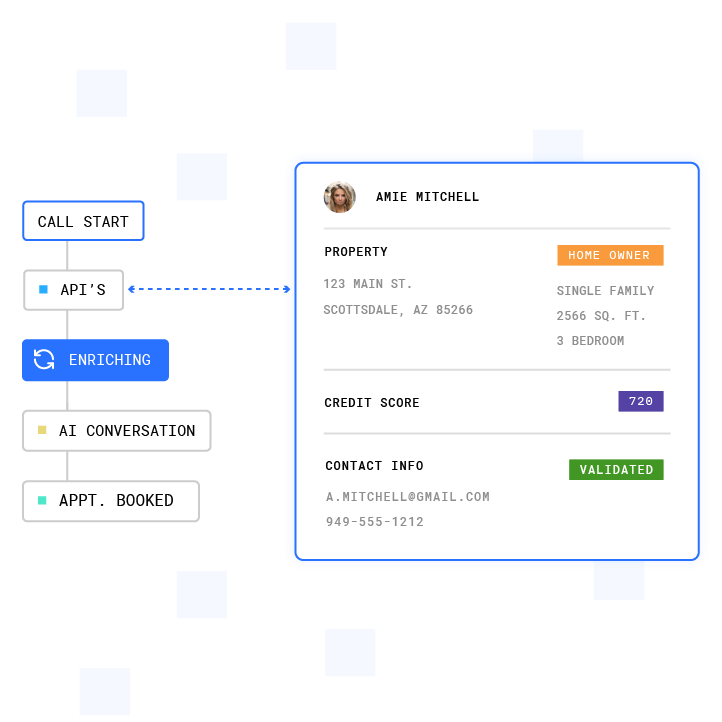
The 5-second response benchmark sets the bar for conversion. Harvard Business Review research found that companies responding within five minutes are 100 times more likely to connect with a prospect than those waiting 30 minutes. Leads contacted within 60 seconds are 391% more likely to convert than those reached after 2 minutes.3 No human queue can maintain that standard consistently across a full day.
Carrier-grade infrastructure is what allows an AI qualification platform to hit that speed at scale. Platforms built on third-party CPaaS (Communications Platform as a Service) layers introduce latency, limit control over branded caller ID, and cannot enforce TCPA (Telephone Consumer Protection Act) checks at the carrier layer before a call leaves the network. For teams running 500+ daily interactions, those gaps compound into measurable revenue loss and regulatory exposure.
Plura AI’s AI voice agent runs on Plura’s own FCC-licensed audio bridging carrier, not a rented CPaaS layer. That carrier ownership drives the speed, compliance posture, and TCO numbers discussed throughout this guide and shapes how reliably the system performs at volume.
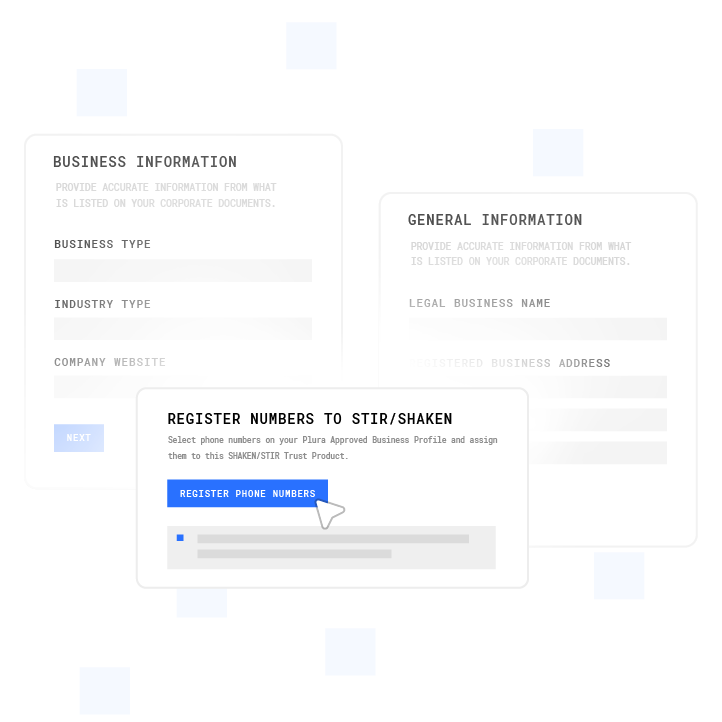
To see how this carrier-grade infrastructure behaves under live qualification traffic, schedule a demo with Plura’s team.
Conversational qualification for call-center operations
Conversational AI qualification engages prospects in a live, multi-turn dialogue and captures budget, timeline, pain points, and intent directly from the prospect’s own words before routing. Predictive qualification ranks leads by similarity to historical closed-won deals using firmographic, behavioral, and intent data, without conducting a live interview. Each approach fits different volume profiles and deal structures.
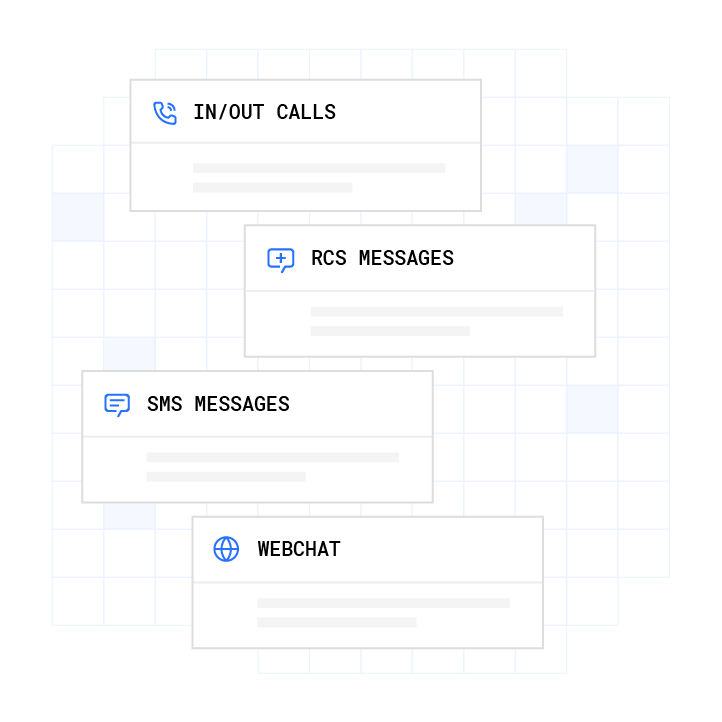
The operational impact shows up quickly for call-center teams. Predictive ML scoring cannot separate urgency, budget, or use cases between leads with identical profiles because it infers from patterns instead of collecting fresh data. Conversational qualification closes that gap by asking targeted questions in real time. That benefit only holds if the platform can handle thousands of simultaneous conversations without noticeable latency.
High-volume inbound call centers need low end-to-end latency to keep conversations natural. Higher latency reduces engagement, increases talk-over, and can lower qualification accuracy.
Plura AI is the only FCC-licensed carrier in this comparison and enforces TCPA, DNC, SOC 2, HIPAA, and STIR/SHAKEN controls at the carrier and platform layers on 100% U.S. infrastructure.1 Retell AI, Vapi, Bland AI, Synthflow, and CloudTalk all depend on third-party carriers and lack FCC carrier licenses, which introduces offshore infrastructure exposure under FCC NPRM.4 For teams running 500+ daily interactions, that difference determines whether compliance is enforced before dial or managed as a post-campaign operational task.
TCPA-focused requirements for AI qualification tools
The TCPA compliance landscape for AI voice agents tightened significantly in 2024 and 2025.2 The FCC’s February 2024 Declaratory Ruling confirmed that calls made using AI-generated voices are “artificial voice” calls under the TCPA, which subjects AI voice agent outbound calls to the same consent framework as prerecorded calls. The FCC’s one-to-one consent rule, which would have required prior express written consent to authorize calls from only one specific seller, was scheduled to take effect January 27, 2025 but was nullified by court decision and removed by the FCC in July 2025.
For call-center operators, the compliance checklist for any AI qualification platform covers several linked areas that work together to support a defensible posture.
Real-time DNC scrubbing keeps outbound lists aligned with federal, state, and internal opt-out requirements. Outbound lists must be scrubbed against the National DNC Registry within 31 days before each campaign, plus applicable state registries and internal suppression lists. Plura applies these checks before dial rather than relying on post-campaign review.
Reassigned number verification addresses the risk created when numbers change owners. Organizations verify numbers against the FCC Reassigned Numbers Database before dialing because a reassigned number can remove prior consent as a TCPA defense. Plura’s compliance engine includes checks against the Reassigned Numbers Database as part of the outbound workflow.
Quiet-hours enforcement aligns outbound activity with time-of-day restrictions. Telemarketing calls are restricted to 8:00 AM to 9:00 PM in the called party’s local time zone. Plura applies quiet-hours rules automatically using time-zone detection on every campaign so agents do not need to track local time manually.
FCC NPRM offshore exposure affects platforms that rely on foreign infrastructure. Platforms with offshore dependencies face exposure under FCC CG Docket No. 26-52, which proposes capping offshore customer-service calls at 30% and limiting offshore handling of sensitive consumer data. Plura operates on 100% U.S. infrastructure to reduce this category of risk.
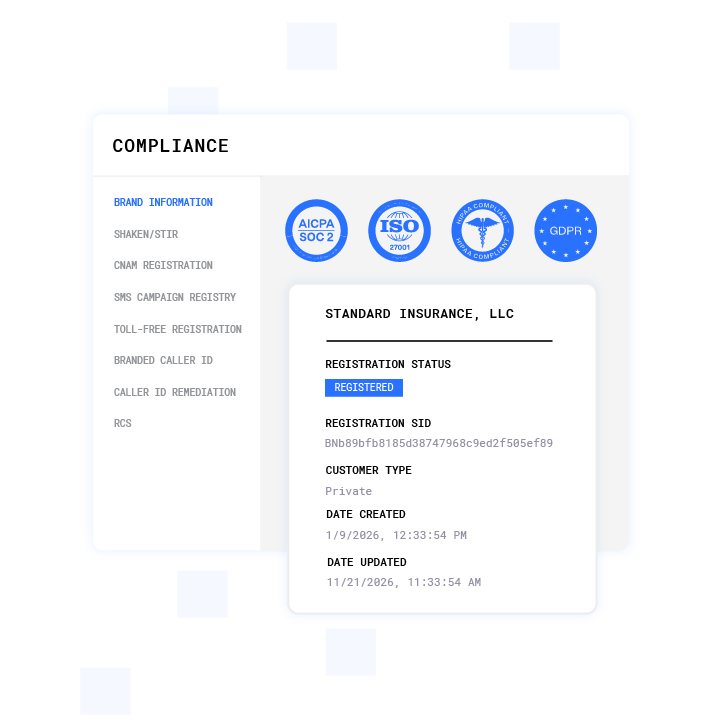
Immutable consent logging creates an audit-ready record of how and when consent was captured. Plura timestamps and stores consent records in a format designed for regulatory review, with one-click export when teams need to respond to an inquiry.
AI disclosure at call start supports transparency expectations for AI voice agents. Organizations using AI voice agents for outbound calls disclose the AI nature of the call at the beginning of each interaction. Plura’s workflow builder includes configurable disclosure language at the greeting node so teams can align scripts with their own policies and counsel.
Platforms that route voice through a third-party CPaaS cannot enforce all of these requirements at the carrier level. Compliance then becomes the customer’s operational burden instead of a built-in control. Plura supports compliance by enforcing these checks inside the platform before any contact is made, while customers remain responsible for their own regulatory obligations and for the claims they make to their end users.
Bland AI vs Retell AI vs Plura and peers
The six platforms most frequently evaluated by contact-center VPs and operations leaders for automated lead qualification differ mainly on carrier ownership, channel coverage, and compliance architecture.
- Plura AI: Plura is the only FCC-licensed carrier in this comparison. Plura’s AI voice agent, AI SMS, AI RCS, and AI webchat share a Stateful Conversation Database, so a lead that texted at 9 a.m. is recognized when the call arrives at noon. Branded caller ID is issued at the carrier level. TCPA, DNC, SOC 2, HIPAA, and STIR/SHAKEN controls run inside the platform before dial. The AI Predictive Dialer uses the same owned carrier. Agent build fee is $2,750 per agent (per pricing), with a 90-day opt-out window on annual contracts.
- Retell AI: Retell AI is a conversational AI platform with voice and SMS support and omnichannel continuity across voice, SMS, and chat. Retell does not hold an FCC carrier license and routes voice through third-party infrastructure, which introduces offshore exposure under the FCC NPRM. Compliance enforcement operates at the software layer instead of the carrier layer.
- Vapi: Vapi is a developer-first voice AI platform. Vapi can achieve approximately 465 ms latency in optimal conditions but often exceeds 1.5 seconds in production, which disrupts conversational flow. The platform does not hold an FCC carrier license. CRM integration requires developer configuration, which makes it a difficult fit for non-technical operations teams running 500+ daily interactions.
- Bland AI: Bland AI is voice-only, API-based, and developer-dependent. Bland AI lacks carrier status and native omnichannel support.4 Build fees are reported at approximately $10,000 per conversation before the platform engages. The platform does not maintain stateful memory across channels, and compliance is managed outside the product.
- Synthflow: Synthflow is a voice-only AI platform. Synthflow depends on Twilio and operates as a software layer without a carrier license. HIPAA coverage relies on Twilio’s BAA rather than native platform controls. The platform does not provide cross-channel stateful memory and carries offshore infrastructure risk under FCC NPRM.
- CloudTalk: CloudTalk is a cloud-based call center platform with inbound and outbound voice routing. CloudTalk does not hold an FCC carrier license, and compliance is managed at the software layer. The platform does not include a native AI qualification engine comparable to carrier-grade systems, and CRM sync speed varies by plan tier.
Total cost of ownership: Plura vs traditional staffing
| Scenario | Monthly Cost | 12-Month TCO | 60-Month TCO |
|---|---|---|---|
| 15 human agents at $20/hr, 25% taxes/benefits, 40% talk utilization | $60,000 | $720,000 | $3,600,000 |
| Plura AI agents (6 agents replacing 15 humans, 100% talk utilization) | $14,400 | $172,800 | $864,000 |
| 50-seat equivalent: traditional offshore operations | Varies by provider | Varies | Varies |
| 50-seat equivalent: Plura AI contact center | Flat-rate plans (Starter $2,500, Multi $5,000, Agency $7,500 yearly) plus usage | Varies | Varies |
For higher-volume operations, Plura’s TCO of roughly $700,000 replaces traditional contact-center economics of about $7,000,000 on equivalent volume. The difference comes from 100% talk utilization, no taxes or benefits overhead, no rehiring cycle, and no training ramp on each new hire.
Use Plura’s ROI calculator to plug in your own volumes and see projected savings in real time.
Frequently asked questions from contact-center leaders
What is the difference between conversational and predictive AI qualification for call centers?
Conversational AI qualification engages a prospect in a live, multi-turn dialogue to collect budget, timeline, pain points, and intent directly from the prospect’s responses. It produces structured qualification data from the conversation itself and routes leads based on what was actually said. Predictive qualification ranks leads by comparing firmographic and behavioral profiles against historical closed-won deals, without conducting a live interview. Predictive models cannot distinguish differing urgency or budget between leads with identical profiles. For high-volume call centers handling inbound leads at 500+ daily interactions, conversational qualification delivers more accurate routing because it collects live data instead of inferring from historical patterns. Plura’s AI voice agents and AI SMS agents both operate in conversational qualification mode, with real-time lead enrichment from 30+ data sources running during the conversation.
What does TCPA compliance mean for AI voice agents doing outbound lead qualification?
The FCC’s February 2024 Declaratory Ruling classified AI-generated voice calls as “artificial voice” calls under the TCPA, which places them within the same consent framework as prerecorded calls. As noted earlier, the FCC’s one-to-one consent rule was nullified by court decision before taking effect and later removed by the FCC. For outbound qualification campaigns, this environment means consent records need to be specific, timestamped, and audit-ready. Outbound lists require scrubbing against the National DNC Registry, applicable state registries, and internal suppression lists before each campaign, and quiet-hours restrictions apply based on the called party’s local time zone. Plura supports compliance by enforcing DNC scrubbing, reassigned-number checks, quiet-hours rules, and consent logging inside the platform before any outbound contact is made. Operators should consult qualified legal counsel regarding their specific obligations under TCPA and applicable state laws.
Why does FCC carrier licensing matter for automated lead qualification?
Most AI voice platforms act as API resellers built on top of third-party CPaaS providers like Twilio. These platforms cannot issue branded caller ID under their own carrier identity, cannot enforce controls at the carrier layer before a call leaves the network, and carry offshore infrastructure exposure under FCC CG Docket No. 26-52. Plura holds its own FCC carrier license and operates its own audio bridging infrastructure. Branded caller ID is issued at the carrier level instead of through a reseller. STIR/SHAKEN authentication runs on every outbound call. Real-time DNC scrubbing and TCPA-litigator screening are enforced before dial inside the platform. For call-center teams running 500+ daily interactions, the carrier layer is where compliance posture and call quality are actually determined.
What CRM sync speeds should call centers expect from AI qualification platforms?
Real-time CRM sync in AI sales tools writes data into Salesforce, HubSpot, or Pipedrive shortly after a call ends, while batch processing updates every 15 to 30 minutes. For teams closing 20+ deals monthly, automated CRM data entry can save 8 to 12 hours per rep per week and improve forecast accuracy by 40 to 60%. Plura integrates natively with HubSpot, Salesforce, and Zoho, with post-call data written to the CRM through the same Stateful Conversation Database that the AI reads during the call. The CRM record then reflects not only the call outcome but also the full cross-channel context, including prior SMS threads and webchat sessions.
What warm transfer success rate should operators target for AI-to-human handoffs?
A healthy voice AI escalation deployment targets a transfer success rate above 90%. That rate means the human agent received the full context packet and the customer did not need to repeat themselves. Cold or blind transfers without a context packet can produce roughly 30% higher call drop rates than context-rich handoffs. Plura’s warm transfer workflow passes a structured context packet to the receiving U.S. agent that includes caller identity, qualification status, conversation summary, prior offers made, and the reason for escalation. The Unified Inbox gives the human agent the same view of the conversation that the AI held, across every channel, before the call arrives.
Conclusion and next steps for evaluation
Automated lead qualification in call centers has moved from experiment to standard practice. AI adoption among sales teams is widespread, with consistent reports of productivity gains and faster response times. The core decision now centers on which platform can handle 500+ daily interactions without introducing carrier risk, compliance gaps, or offshore exposure that the FCC NPRM and state onshoring laws now scrutinize closely.
Retell, Vapi, Bland, Synthflow, and CloudTalk each address specific parts of the qualification problem. Plura AI owns the carrier stack, supports compliance at the carrier and platform layers before dial, and maintains stateful conversation memory across voice, SMS, RCS, and webchat on 100% U.S. infrastructure.
The FCC carrier license, the Stateful Conversation Database, the real-time DNC and TCPA controls, and the roughly $700K TCO against a $7M traditional benchmark reflect Plura’s operational architecture. Those elements together make carrier-grade AI qualification possible at high volume.
Use Plura’s ROI calculator to model projected savings against your current contact-center spend.
1 Plura AI maintains SOC 2, HIPAA, ISO, and GDPR posture as part of its platform infrastructure. References to compliance frameworks in this article describe Plura’s platform capabilities and do not constitute a guarantee that any customer using Plura will themselves be compliant with applicable laws or standards. Customers remain solely responsible for their own regulatory obligations, certifications, consent management, recordkeeping, and the claims they make to their own end users. Consult qualified legal counsel for guidance specific to your use case.
2 This article describes regulatory frameworks at a general level and does not constitute legal advice. Laws and regulations vary by jurisdiction, change over time, and apply differently depending on facts and circumstances. Readers should consult qualified legal counsel before making compliance decisions.
3 Performance figures, customer outcomes, and industry statistics referenced in this article are drawn from cited third-party sources or Plura customer case studies. Individual results vary based on implementation, use case, industry, audience, and execution. Past or aggregate performance is not a guarantee of future results.
4 References to third-party products, services, companies, or research are made for informational and comparative purposes only. Plura AI is not affiliated with, endorsed by, or sponsored by any third party named in this article unless explicitly stated. Trademarks and product names referenced remain the property of their respective owners.
This article is provided for informational purposes only and reflects Plura AI’s understanding at the time of publication. Product capabilities, integrations, and specifications are subject to change. For the most current information, visit plura.ai.
This article was produced with the assistance of AI tools and reviewed by Plura AI prior to publication.