
Written by: Matt Beucler, CEO, Plura AI
Key Takeaways
- Conversational AI pricing in 2026 spans subscription, per-minute, per-resolution, and flat-fee models, and most contracts blend at least two of them.
- Per-minute billing often looks cheapest at 10,000 monthly interactions, yet the same structure becomes roughly 8x more expensive than a flat fee at 250,000 interactions.
- Hidden costs such as telephony pass-throughs, LLM tokens, orchestration add-ons, and compliance tooling can double the real bill beyond the advertised rate.
- Per-resolution pricing creates a structural trap (see the risk-allocation section below).
- Plura AI owns its carrier stack, so telephony is bundled rather than passed through, and operators see 3x average ROI in 90 days.
How Much Does Conversational AI Cost?
The four pricing models each allocate cost and volume risk differently. The table below uses canonical market ranges drawn from published vendor rates and independent analyses.
| Model | Billing Unit | Typical Range | Who Bears Volume Risk |
|---|---|---|---|
| Subscription / SaaS | Monthly flat fee | $20–$150 per user/month (enterprise: $150–$300+) | Vendor (fixed cost regardless of usage) |
| Per-Minute (voice) | Minute of connected call | $0.05–$0.35/min all-in (most deployments: $0.12–$0.25) | Buyer (bill rises with call volume and duration) |
| Per-Resolution | Confirmed resolved interaction | ~$0.99/resolution (range: $0.50–$2.00) | Buyer (bill rises as resolution rate improves) |
| Flat Platform Fee | Annual or monthly contract | $150K–$350K+/year (enterprise) | Vendor (committed volume included) |
The subscription model is the most predictable for buyers. Per-minute and per-resolution models push volume risk onto the buyer. Flat platform fees push it onto the vendor and require larger commitments. The right model depends on your volume, channel mix, and tolerance for bill variability.
See Plura’s published rates and contract terms.
What Conversational AI Pricing Actually Costs at Your Volume
The table below applies typical market rates to real operator volumes so you can see how each model behaves. Assumptions are stated explicitly and labeled as assumptions throughout.
Assumptions used:
- Voice interactions: 4 minutes average per call (assumption)
- Text/chat interactions: no per-minute charge; billed per conversation or resolution
- Channel mix: 50% voice, 50% text/chat (assumption)
- Resolution rate: 65% (assumption; industry-reported AI resolution rates generally run from about 42% to 80%, though real-world rates for major platforms often sit at the lower end of that range (roughly 42–65%))
- Per-minute rate used: $0.20/min all-in (mid-range of published market rates)
- Per-resolution rate used: $0.99/resolution (published Intercom Fin rate)
- Flat platform fee: $150,000/year ($12,500/month), enterprise tier assumption
| Monthly Interactions | Per-Minute Cost (voice 50%) | Per-Resolution Cost (65% rate) | Flat Platform Fee |
|---|---|---|---|
| 10,000 | $4,000 (5,000 voice x 4 min x $0.20) | $6,435 (6,500 resolutions x $0.99) | $12,500/month |
| 50,000 | $20,000 (25,000 voice x 4 min x $0.20) | $32,175 (32,500 resolutions x $0.99) | $12,500/month |
| 250,000 | $100,000 (125,000 voice x 4 min x $0.20) | $160,875 (162,500 resolutions x $0.99) | $12,500/month |
The crossover point is clear under these assumptions. Per-minute billing overtakes a flat platform fee somewhere between 10,000 and 50,000 monthly interactions. At 250,000 interactions, per-resolution pricing becomes roughly 13x more expensive than the flat fee, and per-minute pricing becomes roughly 8x more expensive. The model that looks cheapest at 10,000 interactions often becomes the most expensive at 250,000.
These figures use mid-range published rates and exclude hidden cost layers. The next section describes those layers.
Hidden Costs in Conversational AI Pricing: Telephony, LLM Tokens, and Compliance
The headline rate covers only part of the bill. Published list prices tell enterprise buyers roughly 30% of their real bill. The remaining 70% hides in add-ons, pass-throughs, and compliance surcharges. Four layers sit beneath every quoted rate.
Telephony pass-through. Most AI voice platforms route calls through a third-party carrier such as Twilio and pass the cost to the buyer.4 Twilio charges approximately $0.0085/min for US inbound and $0.014/min for US outbound, and platforms often add a $0.005–$0.01/min markup on top. At 125,000 voice minutes per month, telephony alone adds $1,000–$2,500 to the bill before a single AI token is counted.
LLM token consumption. LLM inference costs for voice agents range from approximately $0.003/min for GPT-4o mini to $0.04–$0.08/min for flagship models. A poorly designed agent burning 2,000 tokens per response costs 4x more than a well-designed one at 500 tokens. Token costs compound as conversation history grows, and RAG context injection adds roughly $0.002–$0.005 per turn.
Orchestration and platform add-ons. Concurrency surcharges, PII redaction fees, knowledge base access charges, and HIPAA add-ons stack on top of the base rate. Vapi charges $1,000/month for HIPAA-compliant infrastructure. Retell charges $0.01/min for PII removal.4 At 100,000 minutes per month, that PII line alone adds $1,000/month.
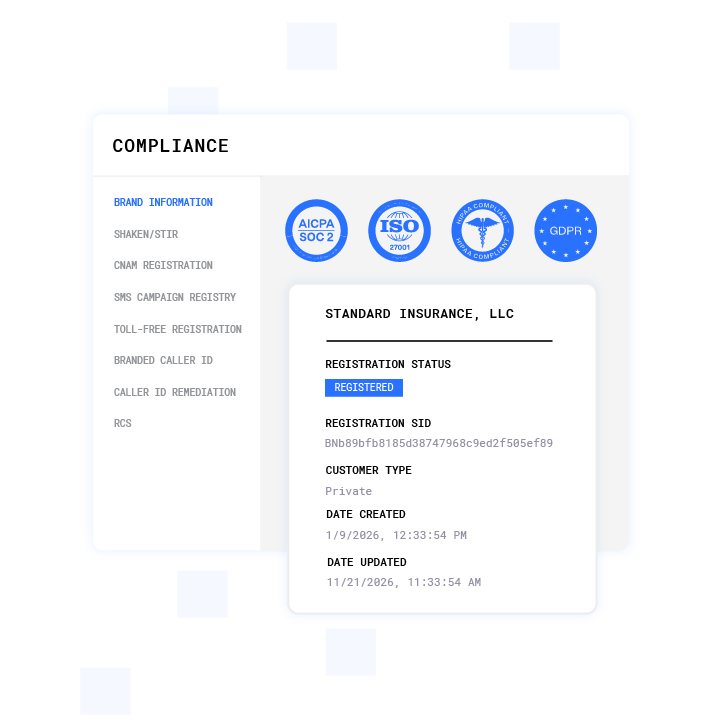
Compliance tooling. Compliance and governance costs scale with deployment scope, covering vendor certifications, internal control integration, and audit evidence production. For regulated industries, HIPAA Business Associate Agreements (BAAs) are enterprise-tier features across many platforms and can add $12,000–$50,000/year versus platforms that include them by default.2
A $0.10/min quoted rate and a $0.30/min quoted rate can land at the same total once these layers are stacked. The only defensible comparison is all-in cost at your actual volume.
Per-Minute vs. Per-Resolution vs. Flat-Fee: Cost Behavior as You Scale
Pricing model selection is a risk-allocation decision. Per-minute and per-resolution models push volume risk onto the buyer. Flat-fee models push it onto the vendor.
Per-resolution pricing has a structural trap. As resolution rates improve, total spend increases even if volume stays flat. A team handling 10,000 tickets at a 40% resolution rate pays for 4,000 resolutions. If the AI improves to 80% resolution, the bill doubles on identical volume. The vendor profits from the buyer’s success.
Per-minute billing suits variable demand but exposes buyers to cost spikes during peak seasons. A 5x Black Friday volume spike on per-resolution pricing can lift a monthly bill from $5,400 to $27,000. A flat-rate plan absorbs the same spike at no additional cost.
A blended channel mix changes the comparison further. Voice minutes price differently from text messages. An operator running 70% voice and 30% text pays more per interaction than one running the reverse under per-minute billing. Under flat-fee billing, the mix does not affect the monthly cost.
A decision framework by buyer profile:
- SMB, text-only, under 10,000 interactions/month: Per-resolution or low-tier subscription. Volume risk is manageable and flat fees may be oversized.
- Mid-market, omnichannel, 10,000–50,000 interactions/month: Per-minute for voice with a subscription for text. Monitor the crossover point monthly.
- High-volume voice, 50,000+ interactions/month: Flat platform fee or carrier-owned per-minute pricing. The economics of pass-through telephony become punishing at this scale.
- Regulated enterprise, any volume: Flat platform fee with bundled compliance. HIPAA, SOC 2, and DNC add-ons on usage-based models can add $12,000–$50,000/year that a bundled platform eliminates.
How to Evaluate a Conversational AI Vendor Quote
Every vendor quote uses a different billing unit. These questions normalize them before comparison.
- What is included in the per-minute or per-resolution rate? Ask whether telephony, LLM inference, speech-to-text, and text-to-speech are bundled or billed separately. Vapi’s all-in cost runs $0.15–$0.36/min once all components are added, versus the $0.05/min platform fee advertised.
- Is telephony a pass-through? If the vendor routes calls through Twilio or another third-party carrier, you pay a markup on top of the carrier rate. Ask for the carrier name and the per-minute telephony charge separately.
- What happens to price at 3x your current volume? Request a written quote at 1x, 3x, and 10x your current monthly interaction count. The model that looks cheapest at baseline often inverts at scale.
- Is there a resolution-rate guarantee? Per-resolution pricing without a resolution-rate floor means the vendor collects more as the AI improves, with no ceiling on your bill.
- Are compliance features included or add-ons? HIPAA BAAs, SOC 2 coverage, DNC scrubbing, and TCPA consent logging are enterprise-tier add-ons on many platforms. Ask for the all-in compliance cost at your volume.
- What are the concurrency limits and overage rates? Additional concurrency costs $8–$15 per concurrent slot per month on platforms like Retell, and overage rates often run 20–50% above standard per-minute rates.
How Plura AI Addresses the Hidden Cost Problem
Plura AI is an FCC-licensed platform of AI agents running voice, SMS, RCS, and AI webchat conversations on 100% U.S. infrastructure. The structural difference from Twilio-based API resellers in this category is the carrier stack. Plura owns its FCC-licensed audio bridging carrier rather than renting from a third-party CPaaS (Communications Platform as a Service). That ownership changes three things: per-minute economics drop, caller ID is issued at the carrier level, and compliance is enforced before each contact.
Plura publishes its plans and rates. Three tiers are available on annual contracts billed monthly, with a 90-day opt-out window. Agent build fees are $2,750 per agent. There are no telephony pass-throughs because Plura originates voice on its own carrier. Plura provides transparent, all-inclusive pricing without surprise charges or pass-through fees, while many usage-based models deliver multiple invoices for a single call.
Plura changes cost at scale for contact centers. For a 100-seat contact center, traditional operations cost $4 million to $7 million annually, while AI-powered communications using Plura cost $300,000 to $700,000.3 For a 15-agent operation, Plura’s ROI calculator shows human agent cost of $60,000/month dropping to $14,400/month with Plura, a 30-day ROI of $45,600 and a 12-month ROI of $547,200.3
Plura’s AI voice agent, AI SMS, AI RCS, and AI webchat share a Stateful Conversation Database, so a lead that texted at 9 a.m. is recognized when the call comes at noon. The platform supports compliance with SOC 2, HIPAA, GDPR, SHAKEN/STIR caller ID verification, TCPA, and DNC frameworks.1,2 Operators should consult qualified counsel regarding their own regulatory obligations; Plura provides the infrastructure and compliance-supporting features.
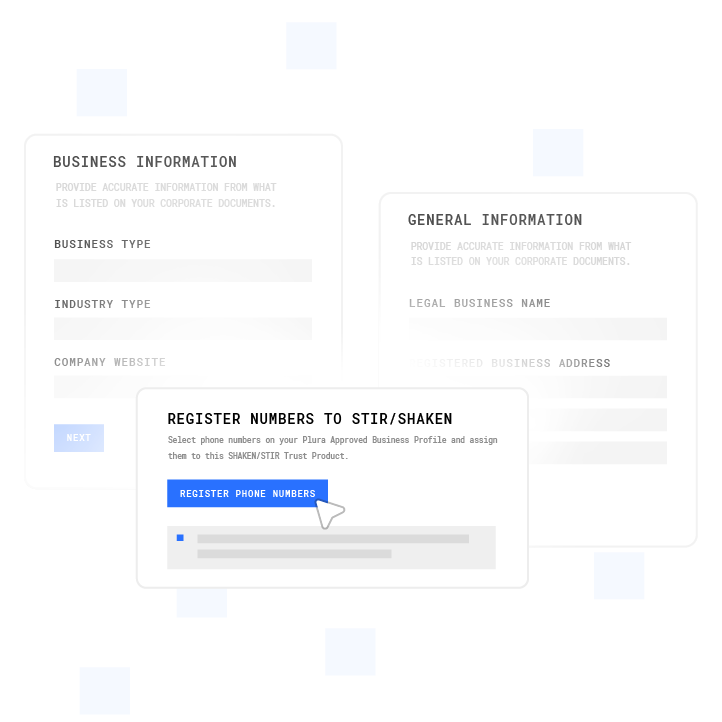
Plura delivers 3x average ROI in 90 days, 47% pipeline growth, and 90% faster lead-response time.3 The AI Predictive Dialer routes calls over Plura’s own carrier with branded caller ID and STIR/SHAKEN authentication, which helps avoid the “Spam Likely” labels that collapse connect rates on Twilio-dependent platforms. Integrations cover 50+ tools across CRM, calendar, payment, and data enrichment categories.
Run your numbers through Plura’s ROI calculator.
Modeling Your Own Conversational AI Pricing Numbers
A defensible total-cost model starts with the right inputs before you compare vendors.
- Monthly interaction volume: Total conversations across all channels, separated by voice and text.
- Channel mix: Percentage of interactions that are voice calls versus SMS, chat, or RCS. Voice interactions carry telephony and per-minute costs that text channels do not.
- Average minutes per voice interaction: Phone handle time averages 6–10 minutes for human agents, and AI voice agents typically run shorter. Use your actual call recordings to establish a baseline.
- Resolution rate: The percentage of interactions the AI resolves without human escalation. Typical AI resolution rates run 42–65%. Use your historical deflection rate, not vendor best-case claims.
- Telephony pass-through: Ask each vendor whether telephony is bundled or billed separately. If separate, add $0.008–$0.014/min per call leg to the base rate.
- Compliance add-ons: Identify whether HIPAA, SOC 2, DNC scrubbing, and TCPA consent logging are included or priced separately at your tier.
With those inputs, apply the volume-tier math from the table above at your actual numbers. Then stress-test at 3x volume, because peak season is where usage-based models punish buyers. The model that survives both scenarios is the right structural fit.
Plura’s cost savings calculator runs this arithmetic automatically using your inputs and shows the 30-day, 12-month, and 60-month ROI against your current human-agent cost structure.
Frequently Asked Questions
What Is the Typical Cost Range for Conversational AI?
As of mid-2026, conversational AI SaaS subscriptions span roughly $15–$300 per month for typical mid-market use, with entry tiers from free up to about $150/month (e.g., Botpress, Chatbase) and seat-based suites like Zendesk starting at $55 per agent per month, though high-volume or multi-bot deployments can run $300–$500 or more. Voice pricing spans roughly $0.05–$0.35 per voice minute all-in on self-serve platforms, with most production deployments landing at $0.12–$0.25 per minute. Outcome-based platforms charge approximately $0.50–$2.00 per resolved conversation. The headline rate covers only the platform or orchestration layer. Telephony, LLM token consumption, speech-to-text, text-to-speech, and compliance tooling stack on top and can double the real bill at production volume. The only defensible number is the all-in cost at your actual monthly interaction count.
How Much Is Chat AI Per Month?
Chat AI monthly costs depend on the pricing model and volume. Flat-rate subscriptions for chat-only deployments run $15–$300/month for SMB tiers. Mid-market platforms with per-resolution billing at $0.99/resolution cost $990 per 1,000 resolved conversations before seat fees. Enterprise platforms with flat annual contracts start at $150,000/year. For a 50-seat equivalent contact center, AI contact centers cost $8,000–$15,000 monthly versus $35,000–$50,000 monthly for traditional offshore operations at equivalent volume.
Is Per-Minute or Per-Resolution Conversational AI Pricing Cheaper?
Cost depends on volume and resolution rate. At lower volumes, per-minute billing often beats per-resolution pricing under typical assumptions. At higher volumes, the volume table above shows that per-minute and per-resolution models both become significantly more expensive than a flat platform fee. Per-resolution pricing also has a structural trap: as the AI improves, the bill rises even at flat volume. Per-minute pricing often suits high-volume voice-heavy operations, while per-resolution pricing can suit low-volume, text-only deployments where resolution rates are capped by complexity.
What Hidden Costs Are Not in the Headline Conversational AI Rate?
Four cost layers sit beneath many quoted rates. Telephony pass-through adds $0.008–$0.014/min per call leg when the platform routes calls through a third-party carrier. LLM token consumption adds $0.003–$0.08/min depending on the model and prompt design. Orchestration add-ons include concurrency surcharges, PII redaction fees, knowledge base access charges, and HIPAA infrastructure fees that can add roughly $1,500–$12,000/month at enterprise scale, with production-grade and compliance-grade orchestration tiers running $8,000–$25,000/month. Compliance tooling covers DNC scrubbing, TCPA consent logging, and SOC 2 audit infrastructure, which are enterprise-tier add-ons on many platforms. Budget year-one voice AI costs at roughly 2–3x the advertised platform rate to capture all layers.
How Does Conversational AI Pricing Change at 10,000 vs. 50,000 Interactions?
The pricing model that looks cheapest at 10,000 interactions often inverts at 50,000. Under per-minute billing at $0.20/min with a 50% voice mix and 4-minute average calls, 10,000 interactions cost $4,000/month and 50,000 interactions cost $20,000/month. A flat platform fee at $12,500/month costs more than per-minute billing at 10,000 interactions but less at 50,000. The crossover point under these assumptions falls between 10,000 and 50,000 monthly interactions. At 250,000 interactions, the flat fee becomes roughly 8x cheaper than per-minute billing and roughly 13x cheaper than per-resolution billing at a 65% resolution rate.
Does Conversational AI Pricing Include Telephony and Compliance?
Most AI voice platforms advertise a platform or orchestration fee and bill telephony, LLM inference, speech-to-text, and text-to-speech separately. HIPAA BAAs, SOC 2 coverage, and DNC scrubbing are enterprise-tier add-ons on many platforms. Platforms that own their own carrier infrastructure can bundle telephony into the rate without a third-party markup. Compliance features bundled at the platform level can remove $12,000–$50,000/year in add-on costs for regulated enterprises. Always ask vendors for a written all-in quote that includes telephony, compliance, and concurrency at your actual volume.
How Do I Compare Conversational AI Vendor Quotes?
Normalize every quote to a cost-per-interaction at your actual monthly volume. Ask each vendor to provide the all-in rate including telephony, LLM inference, speech-to-text, text-to-speech, compliance add-ons, and concurrency fees. Request quotes at 1x, 3x, and 10x your current volume to identify which model inverts at scale. Ask whether HIPAA, SOC 2, and DNC scrubbing are included or priced separately. Ask for the overage rate above your committed volume. Ask whether telephony is a pass-through or bundled. A vendor that cannot answer all six questions in writing before contract signature is unlikely to be ready for high-volume deployment.
Conclusion: Turning Pricing Models Into A Clear Decision
Conversational AI pricing only makes sense when you view the full bill. Telephony pass-through, LLM token consumption, orchestration add-ons, and compliance tooling stack on top of every quoted rate and can double the real bill. The model that looks cheapest at 10,000 monthly interactions often becomes the most expensive at 250,000. Per-resolution pricing shifts upside to the vendor as performance improves. Per-minute billing from a platform that rents its carrier adds a markup on every call. Flat-fee models shift risk to the vendor and work best once you cross a defined volume threshold.
Plura AI addresses these structural issues by owning the carrier stack, publishing transparent pricing without telephony pass-throughs, and enforcing controls at the platform level before each contact. The economics are clear in published benchmarks: $700,000 total cost of ownership replaces $7,000,000 in traditional contact-center economics at equivalent volume.
Run your numbers through Plura’s ROI calculator.
Compare Plura’s plans and rates side by side.
1 Plura AI maintains SOC 2, HIPAA, ISO, and GDPR posture as part of its platform infrastructure. References to compliance frameworks in this article describe Plura’s platform capabilities and do not constitute a guarantee that any customer using Plura will themselves be compliant with applicable laws or standards. Customers remain solely responsible for their own regulatory obligations, certifications, consent management, recordkeeping, and the claims they make to their own end users. Consult qualified legal counsel for guidance specific to your use case.
2 This article describes regulatory frameworks at a general level and does not constitute legal advice. Laws and regulations vary by jurisdiction, change over time, and apply differently depending on facts and circumstances. Readers should consult qualified legal counsel before making compliance decisions.
3 Performance figures, customer outcomes, and industry statistics referenced in this article are drawn from cited third-party sources or Plura customer case studies. Individual results vary based on implementation, use case, industry, audience, and execution. Past or aggregate performance is not a guarantee of future results.
4 References to third-party products, services, companies, or research are made for informational and comparative purposes only. Plura AI is not affiliated with, endorsed by, or sponsored by any third party named in this article unless explicitly stated. Trademarks and product names referenced remain the property of their respective owners.
This article is provided for informational purposes only and reflects Plura AI’s understanding at the time of publication. Product capabilities, integrations, and specifications are subject to change. For the most current information, visit plura.ai.
This article was produced with the assistance of AI tools and reviewed by Plura AI prior to publication.