
Written by: Matt Beucler, CEO, Plura AI
Key Takeaways
- VICIdial can power outbound sales, but it shifts server maintenance, security, and carrier reputation management onto your team.
- Spam labeling and falling connect rates sit at the carrier layer, so self-hosted and hosted SaaS dialers that do not own a carrier cannot fully address them.
- Migration costs cluster into list portability, number reputation reset, carrier re-registration, agent retraining, and downtime that often spans two to six weeks.
- Plura AI operates as an FCC-licensed carrier, issues branded caller ID at the carrier level, and runs STIR/SHAKEN authentication on every outbound call.
- Teams ready to remove infrastructure overhead and improve connect rates can start a conversation with Plura AI today.
The Problem: Why Outbound Teams Leave VICIdial
VICIdial delivers results. Over 14,000 installations worldwide show that it can support predictive dialing, blended campaigns, detailed reporting, and zero licensing fees. For a mature outbound floor with a Linux administrator on staff, it remains a rational option.
Operations, not features, drive teams away from VICIdial. VICIfast Engineering’s June 29, 2026 analysis notes that VICIdial “expects a Linux administrator and steady server upkeep.”4 Someone must install, secure, patch, back up, and maintain the telephony stack. The admin interface feels dense and dated, which rewards experienced call center operators and frustrates everyone else.
The IT dependency cost shows up quickly. ViciStack’s March 2026 guide states that a VICIdial operator is “either paying a sysadmin ($4-8K/month for a good one) or you’re doing it yourself.” That spend rarely appears on a server invoice, but it hits the P&L.
VICIfast Engineering’s June 30, 2026 post on hidden self-hosting costs adds the security angle. A raw VICIdial install is not a hardened install. Because a dialer is a public VoIP system exposed to the internet, scanners find and probe it within hours. Toll fraud becomes the nightmare scenario, where a compromised dialer can generate thousands of dollars in carrier charges overnight.
Collapsing connect rates from spam labeling often trigger migration. When a carrier analytics engine labels a business number “Spam Likely” or “Scam Risk,” answer rates drop 40 to 60 percent.3 That drop compounds a broader behavior. Pew Research data from 2025 found that 8 in 10 U.S. adults generally ignore calls from unknown numbers, rising to roughly 95 percent when a spam label appears.3 For a team making 500 outbound calls per day, the combined effect is 200 to 300 conversations that never happen.
VICIdial includes DNC handling and TCPA-aware calling windows, and configuring them correctly remains the operator’s responsibility. Spam labeling operates at the carrier level and requires a carrier-level response. VICIdial, by design, does not own a carrier, which leaves that gap in place.
The Solution: What Migration Actually Costs
Teams that feel this gap start evaluating alternatives, and the switch itself carries real cost. Vendor listicles often ignore this, yet migration planning shapes both budget and timeline. Before signing a new contract, price these five migration cost categories, because each one can extend your cutover window or reset your number reputation.
- List Portability: Lead lists, consent records, and DNC suppression data must be exported, validated, and imported into the new platform. DialerBee’s migration guide treats completed compliance migration as a hard gate for go-live.
- Number Reputation Reset: Ported numbers can carry reputation history from the prior carrier environment. STIR/SHAKEN registration may not update automatically after a port. A manual update with the new trunk provider may be required to restore full A-level attestation.
- Carrier Re-Registration: Moving to a new carrier or dialer platform requires re-registering DIDs, confirming STIR/SHAKEN signing configuration, and verifying 10DLC registration for any SMS campaigns.
- Agent Retraining Time: Browser-based dialers shorten retraining because the agent desktop runs in a browser tab. Workflow changes, disposition logic, and CRM screen-pop behavior still require structured training sessions.
- Downtime Windows: DialerBee estimates a dialer migration window of two to six weeks, with number porting and integration complexity as the main pacing items. Single-carrier operations can compress this. Multi-carrier operations with heavy porting should plan toward the longer end.
Number porting often drives the calendar. Zoom’s 2026 number porting guide notes that simple ports typically complete in 5 to 10 business days after documentation is validated, while complex ports can take several weeks. Mismatched letters of authorization and account details are the leading cause of rejected port requests.
With BYOC, many teams keep phone numbers on their existing carrier and point the new dialer’s SIP signaling at that carrier. This approach avoids a number port and turns migration into a trunk reconfiguration.
Plura’s onboarding sequence follows a defined path. The team runs a discovery audit, ingests sample calls and scripts, builds overnight conversation mockups, holds an iteration meeting, then moves to production build, a pilot on a subset of live calls, and full go-live. Timeline runs from days to a few weeks depending on conversation complexity.
Walk through your migration plan with a Plura specialist before you commit to dates and budgets.
The Free and Open-Source Path: GoAutoDial and Staying Self-Hosted
Many teams first look at GoAutoDial when they want to modernize VICIdial without giving up control. GoAutoDial is a VICIdial fork that adds a modern UI layer on top of the same underlying engine. It remains free and open-source and deserves a clear assessment.
GoAutoDial Community Edition keeps configurability, avoids per-seat SaaS fees, and preserves the ability to bring your own carrier and shop SIP trunk pricing. For a high-volume outbound operation with in-house Linux expertise, this path can work.
The tradeoffs stay significant. Self-hosted GoAutoDial CE often lands at $300-$900 per month plus sysadmin salary for a 20-seat floor and requires 10-40 hours per month of sysadmin time. You still own the server, the patching, the VoIP troubleshooting, and the carrier reputation problem. STIR/SHAKEN attestation and consent workflows remain operator tasks, and attestation gaps can quietly cut U.S. connect rates in half.
Self-hosting usually pays off above roughly 30-50 seats, where license savings start to cover a part-time sysadmin. Below that range, hosted options tend to win on total cost.
GoAutoDial’s hosted version, JustGoCloud, charges per agent per month, with published pricing in the $25-$40 per agent per month band. It removes the infrastructure burden but keeps the carrier ownership and spam-labeling limitations, because GoAutoDial does not operate its own carrier.
The Hosted SaaS Path: Managed Infrastructure Without Carrier Control
Teams without in-house IT often move to hosted SaaS dialers. The Convoso, Readymode, and Five9 class of platforms handles infrastructure. There is no server to own, no Asterisk to patch, and no VPS to harden. For operators without dedicated IT staff, that shift removes a major operational risk.
Carrier ownership remains outside hosted SaaS. These platforms manage infrastructure while depending on carrier relationships they do not control. Branded caller ID, STIR/SHAKEN attestation level, and spam-label remediation depend on those underlying carrier partners rather than on a carrier license held by the platform itself.
Published pricing reflects that model. Five9 lists entry tiers at $119 per user per month for Digital and $159 per user per month for Core, with a 50-concurrent-seat minimum that excludes smaller teams. AI features appear as usage-based add-ons metered at 3,000 minutes per bundled seat, which can push fully loaded deployments toward roughly $300-$600 per seat per month. Convoso does not publish pricing publicly, and third-party sources place starting pricing around $90 per user per month on annual contracts. Carrier fees, DIDs, and SMS add-ons can raise total cost above the base subscription on both platforms.
Evaluation for hosted SaaS should focus on ownership. The key questions are who owns the carrier, who owns caller ID reputation, and who owns the compliance layer.
The AI Dialer Path: Where Plura Sits
Plura AI’s AI Predictive Dialer sits on a different foundation than self-hosted or hosted SaaS dialers. Plura operates as its own FCC-licensed audio bridging carrier. Voice traffic does not route through Twilio or another CPaaS. A CPaaS is the API-only telecom layer that providers like Twilio sell to AI vendors that do not own a carrier. Plura owns its telecom infrastructure and holds an FCC carrier license, while Twilio-dependent platforms operate as software layers without a carrier license.
That carrier ownership creates three practical advantages for outbound teams.
- Branded Caller ID at the Carrier Level: Carrier-provisioned branded caller ID is not available on platforms that lack their own carrier license.
- STIR/SHAKEN Authentication on Every Outbound Call: Signing and verification occur at the carrier level rather than in the business phone system. Voice providers carry most of the responsibility for doing this well.
- Real-Time DNC Scrubbing and TCPA-Litigator Screening Before Dial: Compliance functions sit in the core of the platform instead of as a bolt-on feature.
Plura’s AI Predictive Dialer selects the next call using stateful conversion signals such as historical answer rates, prior negotiation outcomes, and prior offer-acceptance bands. Calls travel over Plura’s FCC-licensed carrier with branded caller ID and STIR/SHAKEN authentication in place.
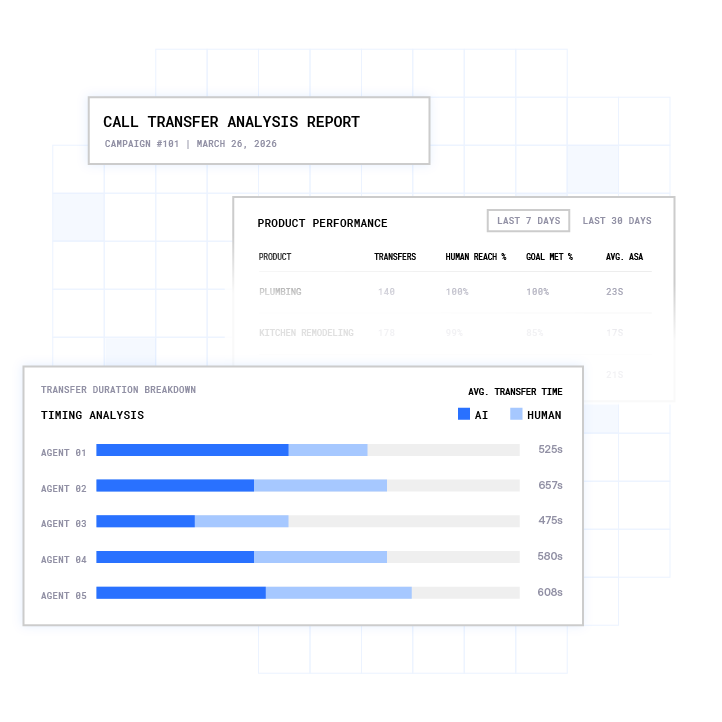
Plura’s AI Voice, AI SMS, AI RCS, and AI Webchat share a Stateful Conversation Database, so a lead who texted at 9 a.m. appears as the same lead when the call lands at noon. That shared memory extends to 50+ integrations across CRMs, calendars, and data enrichment providers. Compare Plura’s plans and rates to see which tier fits your seat count.
Plura’s built-in AI Predictive Dialer includes list management, dynamic pacing, timezone logic, answer rate controls, and compliance features, so many teams no longer need a separate dialer platform.
Compliance and the Autodialer Question
Autodialer questions sit at the intersection of operations and regulation. The TCPA, codified at 47 U.S.C. § 227, describes restrictions on autodialed or prerecorded calls and texts without an applicable exception.2 The statute focuses on specific categories of contact without prior express consent rather than on all automated dialing activity.
The Supreme Court in Facebook, Inc. v. Duguid, 592 U.S. 395 (2021) held that equipment qualifies as an automatic telephone dialing system only if it can store or produce phone numbers using a random or sequential number generator.2 Equipment that dials from a stored customer list without using a random or sequential number generator does not meet that federal ATDS definition under the ruling. State laws vary, and some states maintain broader autodialer definitions, so teams should review the regulation or consult qualified counsel for specific obligations.
TCPA violations carry statutory damages of $500 to $1,500 per unsolicited call or text. Class exposure scales with call volume, which turns compliance infrastructure into a direct cost-avoidance line item.
Plura’s Compliance Engine supports compliance with TCPA, DNC, HIPAA, SOC 2, CAN-SPAM, and 50+ state rule sets.1 Every outbound contact is checked against federal and state DNC registries in real time before dial. Consent records are timestamped and immutable. Quiet-hours rules apply automatically through time-zone detection. The dashboard exports audit-ready reports in one click. Plura supports customer compliance and does not replace customer responsibility for their own obligations under any law or standard.
How To Stop Outbound Calls From Being Flagged As Spam
Spam labels originate at the carrier layer, so carrier-level tools are required to address them. A dialer configuration cannot override a label that a carrier analytics engine applies before the phone rings.
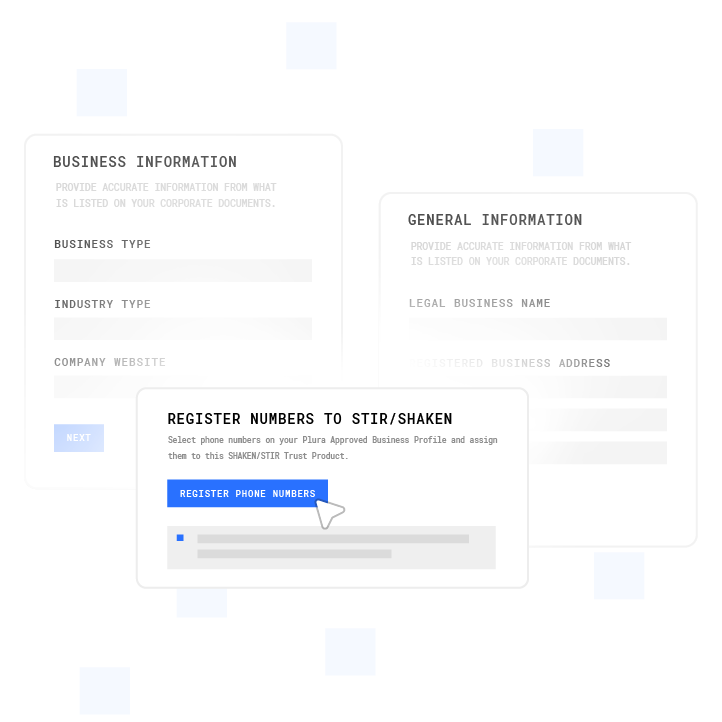
STIR/SHAKEN signing and verification occur entirely at the carrier level. Every signed call carries one of three attestation levels: A (full attestation), B (partial attestation), or C (gateway attestation). Terminating carrier analytics treat B-attested calls with reduced trust, and C-attested calls are often blocked.
Plura issues branded caller ID directly through its FCC-licensed carrier, runs STIR/SHAKEN authentication on every outbound call, and communicates with Apple’s iOS 26 call-screening layer so calls display the company name and call reason. Platforms that route voice through a third-party CPaaS typically cannot issue caller ID under their own carrier identity, which limits their ability to remediate spam labels at the carrier level.
According to 2026 outbound benchmarks, teams with clean number reputation and well-managed DIDs see connection rates of 15 to 25 percent on fresh lists. Teams stuck at 3 to 8 percent usually face number reputation issues in addition to list quality problems.
Decision Framework Keyed to Agent Count and IT Capability
Two variables shape the right path for most teams: agent count and in-house IT capacity. Seat volume drives the economics, and IT depth determines how much operational risk you can absorb.
If you have in-house IT capacity and want maximum configurability: Self-hosted open source such as VICIdial or GoAutoDial becomes defensible above 30-50 seats. Below that threshold, sysadmin cost usually outweighs license savings. Carrier reputation management remains your responsibility at any seat count.
If you want managed infrastructure without carrier ownership: Hosted SaaS platforms like Convoso, Readymode, and Five9 remove the server burden.4 Entry pricing for some dialer and CCaaS platforms starts around $90-$159 per user per month depending on platform and tier, with AI features often metered separately. You rely on your vendor’s carrier relationships for spam-label remediation and branded caller ID.
If you want predictive-dialing economics without infrastructure overhead and you prioritize connect rates and compliance posture: An AI dialer on an owned carrier forms a third path. Plura operates as an FCC-licensed carrier in this category. The AI Predictive Dialer runs on Plura’s carrier infrastructure. It issues branded caller ID at the carrier level, enforces real-time DNC scrubbing before dial, and shares stateful conversation memory across voice, SMS, RCS, and webchat.
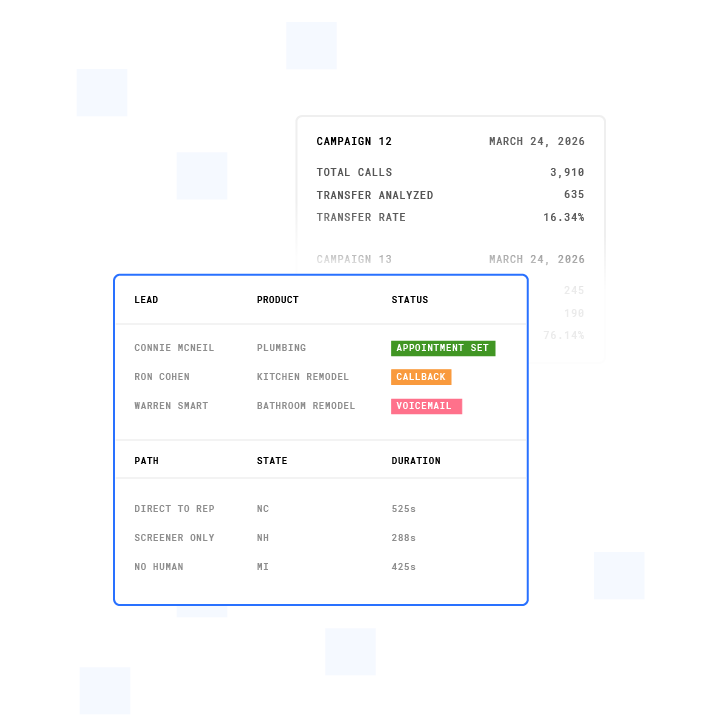
For high-volume outbound teams where connect rate and compliance posture drive revenue, this third path changes the infrastructure math. Run your numbers through Plura’s ROI calculator to compare cost and performance against your current dialer.
Frequently Asked Questions
What Is a VICIdial Alternative for Outbound Sales?
A VICIdial alternative for outbound sales is any dialing platform that replaces self-hosted VICIdial. Options fall into three groups: self-hosted open source such as GoAutoDial, hosted SaaS dialers such as Convoso, Readymode, and Five9, and AI dialers that run on an owned carrier. Plura AI sits in the third group and operates its own audio bridging carrier. The right fit depends on agent count, IT capacity, and how much weight you place on carrier ownership versus infrastructure simplicity.
What Does It Actually Cost to Leave VICIdial?
Migration cost falls into the five categories covered above. The pacing item is usually number porting. DialerBee estimates a two-to-six-week migration window, and mismatched letters of authorization are a leading cause of rejected port requests. With BYOC, many teams avoid porting entirely by pointing the new dialer’s SIP signaling at their existing carrier.
Are There Any Free VICIdial Alternatives?
GoAutoDial Community Edition is a free, open-source predictive dialer stack built on Asterisk and the VICIdial lineage. You avoid per-seat SaaS fees but still own server management, security, and carrier reputation. Total cost and effort depend heavily on seat count and sysadmin availability.
Is an Autodialer Illegal?
The TCPA, at 47 U.S.C. § 227, describes when autodialed or prerecorded calls and texts are restricted. The Supreme Court’s decision in Facebook, Inc. v. Duguid narrowed the federal ATDS definition to equipment that uses a random or sequential number generator. State laws can differ, and some states apply broader definitions. Teams should review the statute and seek qualified counsel for specific guidance.
How Do You Stop Outbound Calls from Being Flagged as Spam?
Reducing spam labels requires carrier-level tools such as STIR/SHAKEN attestation, branded caller ID, and clean number management. Plura addresses this at the carrier layer through its FCC-licensed network and branded caller ID program, which supports higher trust from terminating carriers and mobile devices.
How Does GoAutoDial Compare to VICIdial and to Hosted Alternatives?
GoAutoDial extends VICIdial with a modern UI but keeps a similar operational profile when self-hosted. JustGoCloud, the hosted version, removes server management at a per-seat price point. Carrier ownership and number reputation management remain separate considerations across both options.
How Long Does It Take to Migrate Off VICIdial?
Most teams complete migration in days to a few weeks, depending on conversation complexity and number porting. Plura’s onboarding sequence runs from discovery through pilot and go-live, while carrier porting timelines often define the outer boundary. BYOC configurations can shorten this by avoiding ports.
Conclusion: The Infrastructure Decision Behind The Dialer Decision
VICIdial can power outbound sales, yet it leaves your team owning the server, the patching, the VoIP troubleshooting, and the carrier reputation problem. Evaluation criteria that determine success focus on who owns the carrier, who owns caller ID reputation, and who owns the compliance layer.
Self-hosted open source keeps license costs low above 30-50 seats but shifts operational risk to your team. Hosted SaaS removes server work while leaving carrier ownership external. An AI dialer on an owned carrier changes that equation by combining predictive dialing, carrier control, and compliance infrastructure in one stack.
Run your numbers through Plura’s ROI calculator to compare cost and performance. Compare Plura’s plans and rates side by side to find the right fit for your outbound operation.
Schedule a live Plura demo and see how an AI dialer on an FCC-licensed carrier handles your outbound sales floor.
1 Plura AI maintains SOC 2, HIPAA, ISO, and GDPR posture as part of its platform infrastructure. References to compliance frameworks in this article describe Plura’s platform capabilities and do not constitute a guarantee that any customer using Plura will themselves be compliant with applicable laws or standards. Customers remain solely responsible for their own regulatory obligations, certifications, consent management, recordkeeping, and the claims they make to their own end users. Consult qualified legal counsel for guidance specific to your use case.
2 This article describes regulatory frameworks at a general level and does not constitute legal advice. Laws and regulations vary by jurisdiction, change over time, and apply differently depending on facts and circumstances. Readers should consult qualified legal counsel before making compliance decisions.
3 Performance figures, customer outcomes, and industry statistics referenced in this article are drawn from cited third-party sources or Plura customer case studies. Individual results vary based on implementation, use case, industry, audience, and execution. Past or aggregate performance is not a guarantee of future results.
4 References to third-party products, services, companies, or research are made for informational and comparative purposes only. Plura AI is not affiliated with, endorsed by, or sponsored by any third party named in this article unless explicitly stated. Trademarks and product names referenced remain the property of their respective owners.
This article is provided for informational purposes only and reflects Plura AI’s understanding at the time of publication. Product capabilities, integrations, and specifications are subject to change. For the most current information, visit plura.ai.
This article was produced with the assistance of AI tools and reviewed by Plura AI prior to publication.