

Written by: Matt Beucler, CEO, Plura AI
Key Takeaways
- Operators move off VICIdial because of its dated interface, need for dedicated Linux/Asterisk admins, hidden hosting costs, and caller ID reputation issues that drag down answer rates.
- Replacement paths fall into two groups: cloud CCaaS platforms that handle infrastructure and tooling, and open-source or self-hosted dialers that demand in-house technical ownership.
- Free open-source options such as GoAutoDial, Issabel, FreePBX, and raw Asterisk still require paid admin labor, hosting, and careful configuration for compliance.
- The carrier and compliance layer controls whether calls connect and how they are treated. Platforms that own an FCC-licensed carrier stack with STIR/SHAKEN and real-time DNC scrubbing typically outperform those that rely on third-party telecom APIs.
- Teams constrained by outbound contact rate and compliance can see how Plura AI’s FCC-licensed, U.S.-hosted platform handles outbound at scale.
Why Operators Leave VICIdial
Operators on r/vicidial, the vicidial.org forums, and review sites describe similar pain points. These themes reflect user sentiment, not audited data for every deployment.
- Old interface. VICIdial’s admin UI uses 2006-era PHP with tables for layout and no responsive design. Agent screens require HTML and CSS customization. There is no native mobile app.
- Needs a Linux admin. VICIdial runs on Linux and needs someone to install, secure, patch, back up, and maintain the Asterisk and MySQL stack. Operators either hire a sysadmin at $4,000–$8,000 per month or absorb that work internally.
- Hosting costs more than the software. The software license is free, but every surrounding layer carries a cost: the server, SIP trunking, DIDs, colocation or cloud instances, and admin labor. A 20-agent operation runs roughly $1,200 per month self-hosted and about $2,000 per month managed.
- “Spam Likely” killing connect rates. VICIdial does not natively manage caller ID reputation. Numbers get flagged, answer rates fall, and the dialer keeps using those numbers until someone intervenes. Spam-labeled numbers often see answer rates under roughly 5–9%, and a spam label can cut answer rates by 40–60%.3
- Compliance exposure. VICIdial includes DNC handling and TCPA-aware calling windows, but operators must configure them correctly.2 It does not manage TCPA consent records, does not verify wireless numbers, and does not provide legal advice.
Choosing Between Cloud CCaaS and Open-Source or Self-Hosted
Cloud CCaaS. A vendor hosts the platform and manages infrastructure, updates, telephony, and compliance tooling. Operators pay per seat or per minute. This path fits teams without Linux or Asterisk expertise, teams that want a modern omnichannel interface, and teams that prefer platform-enforced compliance tooling.
Open-source or self-hosted. The operator runs the dialer on their own servers or through a hosting partner. The license is free or low cost, but the operator owns infrastructure, security, telephony maintenance, and configuration. This path fits teams with Asterisk and Linux skills, data-sovereignty requirements, and scale where per-seat pricing exceeds the combined cost of hardware and admin labor.
Map these decision criteria before committing to a path:
- Outbound volume. VICIdial’s break-even versus per-seat SaaS dialers sits around 35–40 agents for many hosting setups, and the economic crossover versus commercial platforms is roughly 75–100 agents for outbound-focused operations when admin labor already sits on payroll.
- Technical staff. Without an Asterisk admin, self-hosted VICIdial and similar open-source dialers are rarely practical.
- Compliance exposure. When TCPA, DNC, or STIR/SHAKEN attestation risk is material, the carrier layer matters more than the dialer feature list.2
- Inbound and outbound mix. VICIdial’s UI was designed for outbound first. Inbound-heavy operations often prefer platforms built around ACD and service workflows.
Free Open-Source VICIdial Alternatives in Practice
Commonly cited open-source VICIdial alternatives include GoAutoDial, Issabel, FreePBX, and raw Asterisk-based builds. The license is free, while the engineering work is not.
- GoAutoDial. A VICIdial fork that adds a more modern admin UI and easier installation. It still runs VICIdial’s engine, Asterisk telephony, MySQL schema, and cron jobs underneath. Community Edition development slowed after 2019, leaving adopters on older VICIdial revisions.
- Issabel. An Asterisk-based PBX with a web GUI and a basic inbound call center module. It supports queues, agent login and logout, and simple reporting. Outbound capabilities remain limited, and development moves slowly.
- FreePBX. A GUI for managing Asterisk that focuses on extensions, ring groups, IVRs, voicemail, and inbound routing. It does not provide outbound campaign management, predictive or power dialing, lead list handling, scripting, dispositions, callbacks, or DNC management. Sangoma’s contact center modules use proprietary licenses.
- Raw Asterisk. Asterisk is a programmable PBX framework rather than full contact center software. Building a contact center on raw Asterisk means creating dialing logic, campaign management, agent state handling, monitoring, recording, reporting, and APIs, which is often estimated at 12–24 months of full-time development.
What “free” actually costs. A self-hosted open-source dialer for about 20 concurrent agents typically runs on a 4-core, 8 GB RAM VPS at $40–$80 per month, plus outbound SIP trunking at $0.005–$0.02 per minute. A clean install may take several hours, with recurring monthly maintenance on top. Specialists often charge $1,500–$5,000 to install, configure, and tune an initial VICIdial deployment. Ongoing admin work across Linux, Asterisk, MySQL, and operations commonly falls in the $60,000–$150,000+ annual range.
Cloud VICIdial Alternatives and Tradeoffs
The cloud CCaaS market gives outbound-heavy teams several realistic VICIdial replacements.4 Each platform aligns to a different primary motion and price point.
- Five9. Enterprise cloud contact center with deep outbound heritage. Supports predictive, progressive, and preview dialing. Published pricing starts around $119–$229 per seat per month. Best suited to enterprise outbound and blended teams.
- Genesys Cloud CX. Enterprise omnichannel platform across voice, email, chat, social, messaging, and workforce engagement. Voice-only tiers start near $75 per user per month, with outbound and analytics tiers reaching $150 or more. Best suited to inbound-heavy and omnichannel operations.
- RingCentral Contact Center. Adds outbound, IVR, workforce management, and routing on top of RingCentral’s UC platform. Pricing is custom-quoted. Best suited to organizations already standardized on RingCentral.
- Convoso. Targets high-volume outbound teams of roughly 50 or more agents in insurance, solar, home services, and lead generation. Provides predictive, power, and preview dialing with dynamic pacing. Pricing is quote-only.
- ReadyMode (formerly XenCALL). Cloud predictive dialer with built-in CRM, blended routing, and live floor maps. Pricing is about $199 per seat per month with volume discounts. Best suited to outbound sales teams that want an all-in-one stack.
Across these platforms, enterprise suites such as Five9, Genesys, and RingCentral favor complex inbound and blended operations, while Convoso and ReadyMode focus on outbound production. Plura sits in a different position by owning its FCC carrier license and enforcing compliance features inside the platform instead of relying on third-party telecom add-ons. Whichever platform you choose, the migration itself often carries more risk than the software decision.
What Breaks When You Migrate Off VICIdial?
Migrating from VICIdial affects data, telephony, and day-to-day workflows. Each area needs a clear plan before cutover.
- Campaign data. VICIdial stores leads, dispositions, call logs, and agent activity in MySQL tables. Exporting via MySQL dump is straightforward, but mapping VICIdial’s disposition taxonomy into a new system takes careful translation. That taxonomy underpins conversion reporting and historical performance views.
- DNC lists. The DNC list functions as a legal and operational record. Teams must export, validate, and re-import it into the new platform’s scrubbing engine. Even when the new platform scrubs against federal and state registries in real time, the internal list still needs to carry over and remain honored.
- Call recordings. VICIdial stores recordings on operator-controlled hardware. At roughly 1 MB per minute, a 100-agent team on 8-hour days can generate about 48 GB of recordings daily. Migration requires storage planning, retention alignment, and updating playback links.
- Agent workflows and retraining. New agents often need 2–3 weeks to reach full productivity on native VICIdial versus 5–7 days on modern interfaces. Teams must also retrain on dispositions, transfers, callbacks, and compliance prompts. Many operations see 1–2 weeks of reduced productivity during cutover.
- SIP and carrier configuration. VICIdial supports bring-your-own-carrier. A new platform may bundle carrier services or require new SIP trunk setups. Caller ID reputation follows the numbers at the carrier level, not the dialer. When a platform issues branded caller ID through its own carrier identity, reputation rebuilding starts from a different baseline.
Walk through a VICIdial migration checklist tailored to your operation with the Plura team.
The Carrier and Compliance Layer Most VICIdial Alternatives Ignore
Most VICIdial comparisons focus on dialer features and per-seat pricing. The layer that decides whether calls connect, how they display, and how they are treated by analytics engines sits underneath the dialer in the carrier and compliance stack.
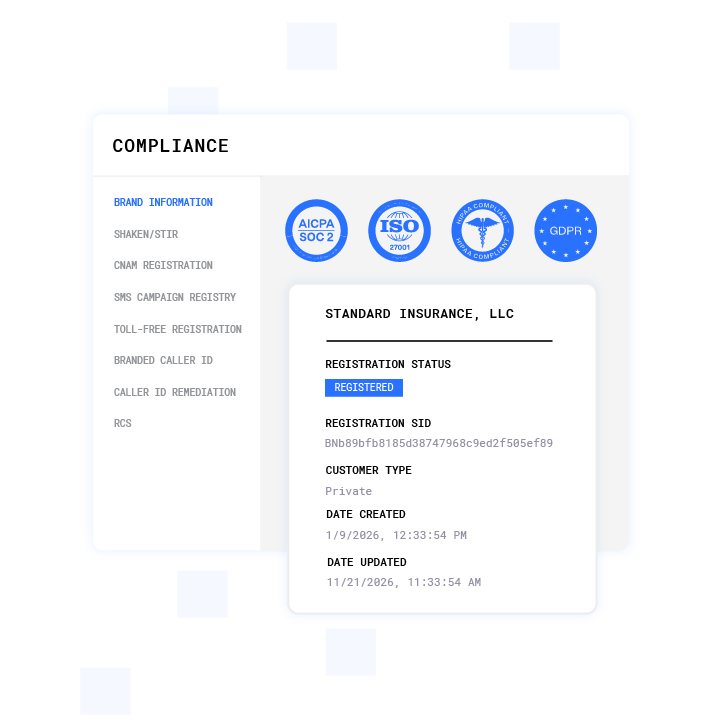
Branded caller ID. VICIdial does not natively manage caller ID reputation, so numbers can accumulate “Spam Likely” labels and lose contact rate. Plura issues branded caller ID through its FCC-licensed carrier, so calls can display the company name and call reason instead of an unknown number.
STIR/SHAKEN authentication. STIR/SHAKEN is the FCC’s caller ID authentication framework. Carriers sign outbound calls with A, B, or C attestation levels. A-attested calls usually ring normally, while C-attested calls face a higher chance of blocking. Plura runs STIR/SHAKEN on every outbound call through its own carrier identity.
Real-time DNC scrubbing. VICIdial includes DNC handling, and operators configure it. Plura takes a different approach and enforces real-time DNC scrubbing inside the platform before dialing.2 Every outbound contact is checked against federal and state DNC registries before the call leaves the network. TCPA-litigator screening and automated quiet-hours enforcement apply on each outbound contact. Because these areas involve regulatory frameworks, readers should consult applicable regulations and qualified counsel about their own obligations.
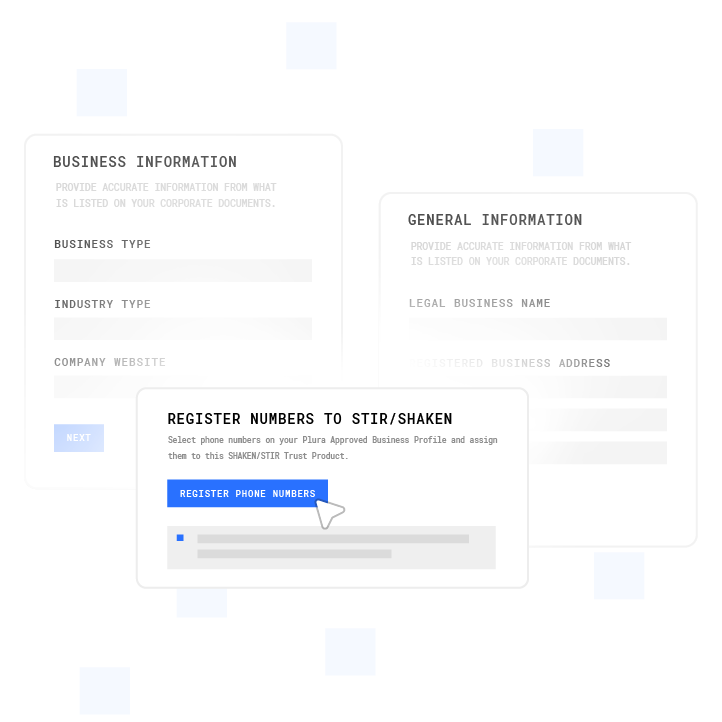
Regulatory anchor. The FCC’s Notice of Proposed Rulemaking (NPRM, CG Docket No. 26-52) discusses caps on offshore customer-service calls and limits on offshore handling of sensitive data.2 Companion legislation such as the Keep Call Centers in America Act (S.2495) extends that perimeter. The FCC announced the NPRM on March 4, 2026. A vote is scheduled for March 26, 2026, and the public comment period opens about 30 days after publication. Plura runs on 100% U.S. infrastructure by architecture, including voice origination, model hosting, data storage, and call recording. Readers should work with qualified counsel to understand how proposed rules may apply to their operations.
Plura’s AI agent platform reaches time to first conversation in days. Many AI voice tools that sit on third-party CPaaS layers require weeks or months of development and cannot issue caller ID or enforce scrubbing under their own carrier identity.
Decision Framework by Operational Constraint
The right VICIdial replacement depends on which constraint actually limits performance today.
- Outbound volume with in-house Asterisk expertise. Open-source or self-hosted dialers can still work at scale when teams account for admin labor, hosting, SIP trunking, and compliance tooling. The break-even versus cloud often sits around 75–100 agents for outbound-focused operations.
- Limited technical staff. Cloud CCaaS usually becomes the practical choice. Without an Asterisk admin, running VICIdial or similar stacks in-house is difficult. Cloud platforms absorb infrastructure, updates, security, and telephony maintenance.
- Compliance exposure. The carrier layer becomes the primary filter. Teams should look for a platform that owns its carrier stack, issues branded caller ID under its own identity, runs STIR/SHAKEN on every outbound call, and enforces real-time DNC scrubbing before dialing. Plura fits this profile. It runs on an FCC-licensed carrier and 100% U.S. infrastructure, maintains stateful conversation memory across voice, SMS, RCS, and webchat, and applies compliance tooling before calls leave the network.
- Inbound and outbound mix. VICIdial’s interface favors outbound. Inbound-heavy operations often choose platforms built around ACD and service metrics. Blended teams should confirm that any replacement handles both motions natively instead of forcing a hybrid architecture.
- Outbound contact rate. Dialer algorithms matter, but the carrier layer often drives connect rate. A tuned predictive dialer on flagged numbers still struggles. Plura’s AI Predictive Dialer runs on Plura’s FCC-licensed carrier with branded caller ID and STIR/SHAKEN. Plura owns its telecom infrastructure and holds an FCC carrier license, while Twilio-based platforms operate as software layers on top of third-party carriers.
Next Steps After Evaluating VICIdial Alternatives
Once you understand your primary constraint, the choice between cloud CCaaS and open-source or self-hosted dialers becomes clearer. The remaining work is planning a clean migration and validating the carrier-layer capabilities of any shortlisted platform.
Use a live Plura session to pressure-test your migration plan and carrier-layer requirements. Bring your current VICIdial footprint, outbound volumes, and compliance concerns.
The Migration Decision in Plain Terms
VICIdial’s zero license fee still carries real costs. The expense shows up in Asterisk admin time, hosting, SIP trunking, and compliance work that never appears on a software invoice. Teams replacing VICIdial usually choose between cloud CCaaS and open-source or self-hosted stacks, based on outbound volume and internal technical capacity.
For teams whose main bottleneck is outbound contact rate and compliance, Plura AI is a strong fit. Plura owns its carrier stack, including an FCC-licensed audio bridging carrier and its own operating company number. It runs STIR/SHAKEN on every outbound call and enforces real-time DNC scrubbing inside the platform before dialing. The platform runs on 100% U.S. infrastructure and maintains stateful conversation memory across voice, SMS, RCS, and webchat. Plura reports under 5 seconds to first AI-powered contact and 3x average ROI in 90 days.3 The platform supports compliance with frameworks such as SOC 2 Type II, HIPAA, ISO, GDPR, TCPA, and DNC by providing built-in features, while customers remain responsible for their own regulatory obligations.1 Integrations cover more than 50 tools across CRM, calendar, attribution, and data enrichment.
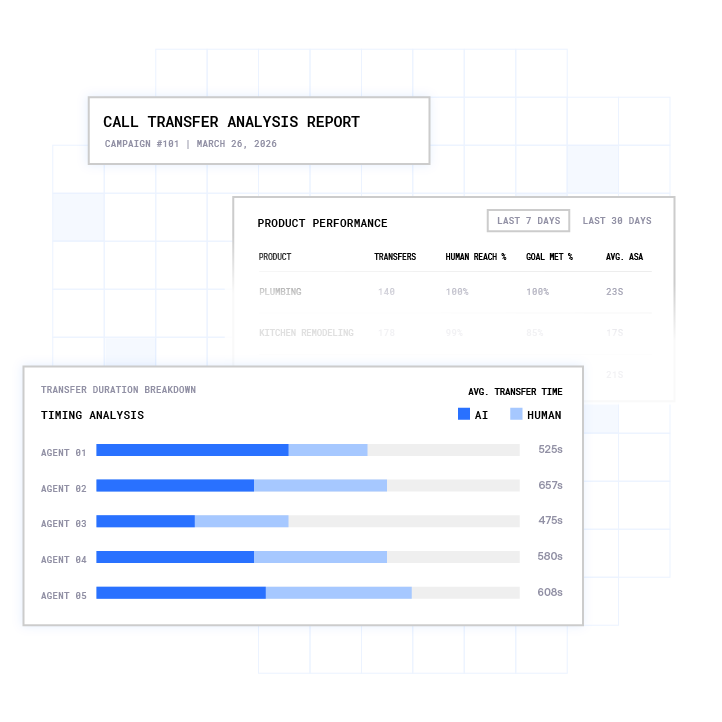
Run your numbers through Plura’s ROI calculator to see projected impact in real time.
Compare Plura’s plans and rates side by side to understand how the platform fits your operation’s cost structure.
1 Plura AI maintains SOC 2, HIPAA, ISO, and GDPR posture as part of its platform infrastructure. References to compliance frameworks in this article describe Plura’s platform capabilities and do not constitute a guarantee that any customer using Plura will themselves be compliant with applicable laws or standards. Customers remain solely responsible for their own regulatory obligations, certifications, consent management, recordkeeping, and the claims they make to their own end users. Consult qualified legal counsel for guidance specific to your use case.
2 This article describes regulatory frameworks at a general level and does not constitute legal advice. Laws and regulations vary by jurisdiction, change over time, and apply differently depending on facts and circumstances. Readers should consult qualified legal counsel before making compliance decisions.
3 Performance figures, customer outcomes, and industry statistics referenced in this article are drawn from cited third-party sources or Plura customer case studies. Individual results vary based on implementation, use case, industry, audience, and execution. Past or aggregate performance is not a guarantee of future results.
4 References to third-party products, services, companies, or research are made for informational and comparative purposes only. Plura AI is not affiliated with, endorsed by, or sponsored by any third party named in this article unless explicitly stated. Trademarks and product names referenced remain the property of their respective owners.
This article is provided for informational purposes only and reflects Plura AI’s understanding at the time of publication. Product capabilities, integrations, and specifications are subject to change. For the most current information, visit plura.ai.
This article was produced with the assistance of AI tools and reviewed by Plura AI prior to publication.