
Written by: Matt Beucler, CEO, Plura AI
Key Takeaways
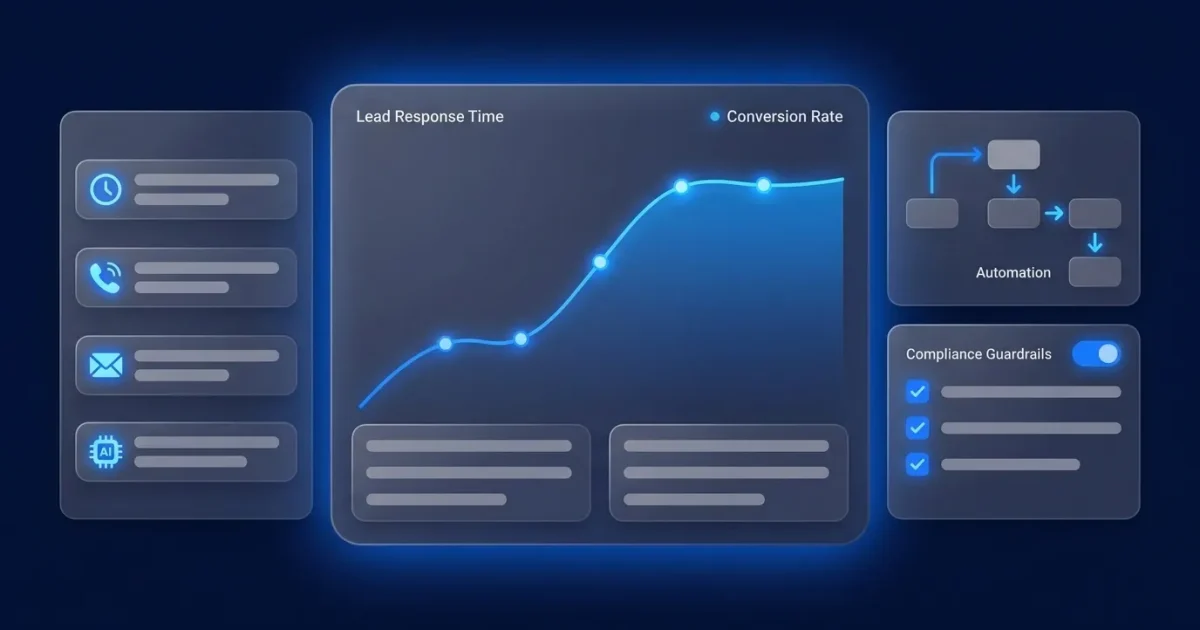
- Fast lead response targets sub-5-minute first contact. Hitting that mark requires routing, clear ownership, channel sequencing, automation, and compliance controls working together.
- Most teams miss the 5-minute window because no one clearly owns the lead and no system enforces the SLA. Rep effort usually is not the core issue.
- Plura AI delivers under 5-second responses across AI Voice, AI SMS, AI RCS, and AI Webchat on one Stateful Conversation Database, which fits high-volume teams that handle constant inbound demand.
- Effective lead response relies on named ownership, defined escalation paths, and channel-specific targets. AI covers immediate acknowledgment and qualification when humans are unavailable.
- Teams that want sub-5-minute response at scale can see Plura AI in a live demo and review the full system in action.
Diagnosing Your Current Lead Response Process
Measure your actual response time before you try to improve it. Use this diagnostic sequence on your own funnel and hand the output to your operations lead.
- Timestamp form submission. Record the exact moment the lead enters your system, not when a rep views the CRM notification. The SLA clock starts at submission.
- Timestamp first dial attempt. Log when the first outbound call or text fires, including automated attempts. Separate this from rep-initiated contact.
- Timestamp first live conversation. Record when a human or AI agent reaches the lead in a two-way exchange.
- Timestamp first meaningful contact. A meaningful contact answers the lead’s question and offers a next step. An automated acknowledgment email does not qualify as meaningful contact.
- Calculate the gap at each step. The gap between submission and first dial attempt shows routing and notification lag. The gap between first dial and first live conversation reveals a contact-rate issue. The gap between first live conversation and meaningful contact highlights a qualification issue.
At volume, time disappears in four places:
- Queue congestion: multiple leads arrive in the same 10-minute window and one rep works them sequentially while others wait.
- Unclaimed leads: leads sit in a generic queue with no named owner.
- Time-zone gaps: after-hours leads go untouched until the next business day.
- Manual SDR triage: the window is consumed before the first dial fires.
The 2026 Speed-to-Lead Benchmark published by Artemis GTM found the median B2B team takes 42 hours to respond to an inbound lead, and only about 7% of teams respond within 5 minutes.3 That gap reflects a coverage problem more than a motivation problem.
Building A Lead Response Process Standard
A strong standard assigns a named owner to every lead, defines an escalation path when that owner does not act inside the window, and sets response targets by lead type. The table below shows how response targets tighten as lead intent rises. High-intent demo requests and missed calls get the shortest windows, while lower-intent abandoned carts can tolerate a longer one.
| Lead Type | Response Target | Primary Channel | Escalation Trigger |
|---|---|---|---|
| Inbound demo request | Under 5 minutes | AI Voice or AI SMS | No first-touch attempt at 3 minutes; re-route at 5 minutes |
| Form fill (pricing or contact page) | Under 5 minutes | AI SMS with voice follow-up | No attempt at 3 minutes; manager alert at 5 minutes |
| Missed call | Under 2 minutes | AI Voice callback | Immediate; no human gate required |
| Abandoned cart | Under 15 minutes | AI SMS | No reply after 2 touches; escalate to voice |
| After-hours inquiry | Immediate AI acknowledgment; human follow-up next business day | AI Voice or AI SMS | AI handles qualification; flags hot leads for morning callback |
Escalation gives ownership real weight. Rework’s 5-Minute Response Window framework specifies that escalation automation should fire within 3 minutes of inaction on a demo request, with re-routing to the next available rep at the 5-minute mark. SLA breach diagnosis should investigate routing errors and volume spikes before rep accountability, because punitive reporting often pushes reps to log fake outreach attempts instead of fixing the process.
Channel Sequencing: Turning Touches Into A Connected Journey
Channel sequencing works as a chain of triggers. Each touch fires based on the outcome of the previous one, and that logic determines whether the lead stays warm or goes cold.
Instant acknowledgment fires the moment a form submits. Its purpose is to confirm receipt and set an expectation. A lead who hears nothing in the first 60 seconds often starts shopping elsewhere. Chili Piper’s analysis of 4 million form submissions found instant response achieves a 66.7% meeting-booking rate versus 30% for delayed follow-up.3
Call attempt follows immediately because voice is the highest-intent channel for a lead who just raised their hand. AI SMS fires as a parallel or fallback when the call goes unanswered. It starts a two-way text conversation that qualifies the lead without requiring a live rep.
SMS follow-up with a booking link runs after the first unanswered call. Its purpose is to give the lead a frictionless next step. A lead who will not answer a cold call will often reply to a text.
Live transfer triggers when the lead engages on any channel. The AI agent hands off a warm, contextualized lead to a human rep, with full conversation history already logged. The rep does not ask the lead to repeat themselves.
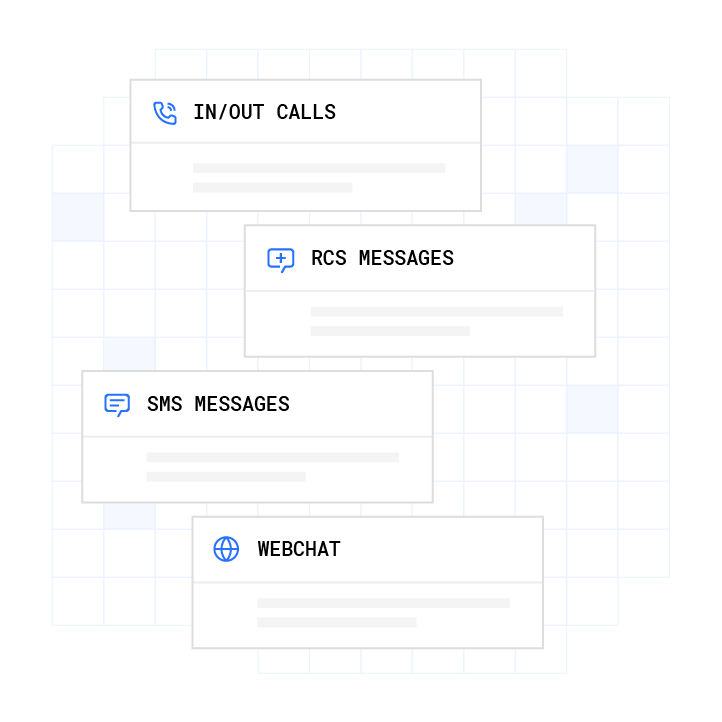
The sequencing logic is channel-aware, not channel-agnostic. AI Voice handles inbound and outbound calls, including missed-call recovery and 24/7 call answering. AI SMS handles text-to-call flows, lead qualification, and live transfer. Every channel reads from and writes to the same Stateful Conversation Database, so the sequence stays continuous instead of fragmented.
See the channel sequencing logic in a live demo.
Speed To Lead Automation: AI Response Versus Manual SDR Follow-Up
Queue congestion creates the main failure mode at volume. When three demo requests arrive in the same 10-minute window and one SDR is already on a call, two leads wait. When a lead arrives at 11 p.m. on a Tuesday, no SDR is available. Manual follow-up cannot hold the 5-minute window at scale.
Plura’s AI Voice agent and AI SMS agents respond in under 5 seconds to first AI-powered contact, 24/7, across every channel in parallel. The AI handles greeting, qualification, objection handling, and live transfer without a human in the loop until the lead is ready to close.
Stateful cross-channel memory separates Plura from point tools. A lead who texted at 9 a.m. should not have to re-explain their situation when the AI calls at noon. Plura’s Stateful Conversation Database keys every interaction to the customer’s phone number, email, or ID. When the call fires at noon, the AI already knows what was said, what was offered, and what the lead’s qualification status is. The conversation intelligence layer surfaces patterns across all interactions, so the workflow improves over time.
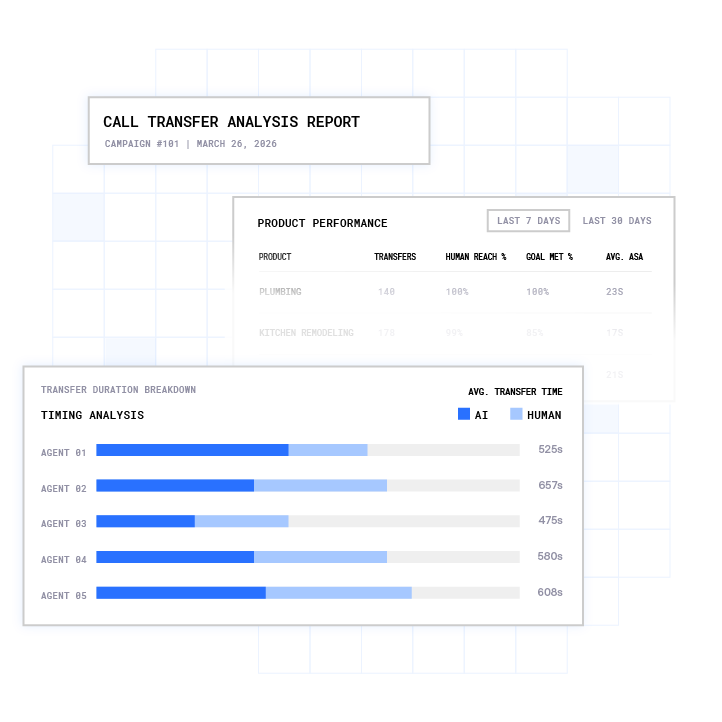
For high-volume outbound, the AI Predictive Dialer prioritizes contacts by stateful conversion signals such as historical answer rates and prior negotiation outcomes. Operators can adjust that logic themselves on a no-code visual canvas through managed workflows, and every interaction logs back to HubSpot, Salesforce, Zoho, or whichever CRM the team already runs through CRM integration.
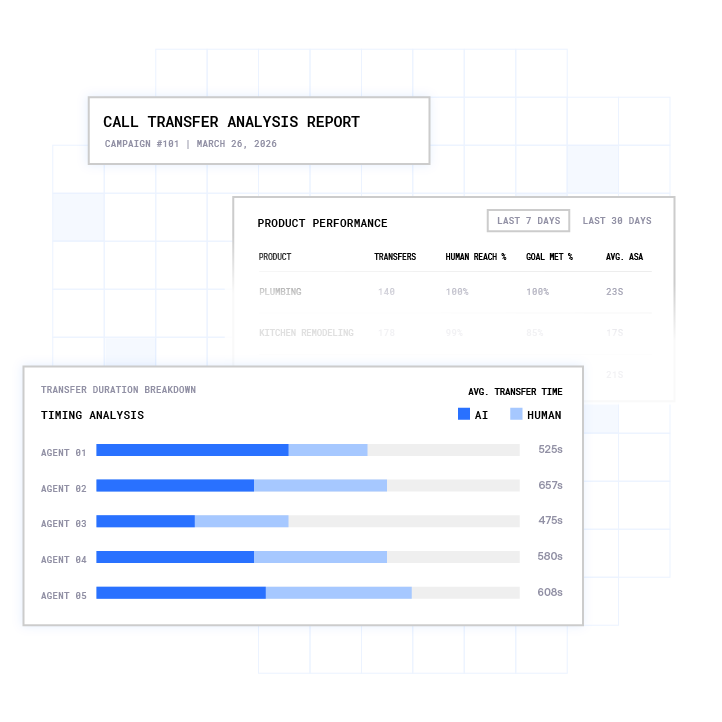
Watch the Stateful Conversation Database hold context across channels.
How To Calculate Lead Conversion Rate And Related Metrics
Five metrics define fast lead response performance, and they form a chain. Speed-to-lead sets up contact rate, contact rate sets up appointment rate, appointment rate sets up close rate, and close rate rolls up into lead conversion rate. Tracking only the headline number hides where the chain breaks.
- Speed-to-lead: median time from lead creation to first sales touch. Benchmark: under 5 minutes for high-intent leads and under 1 hour for medium-intent leads, per The RevOps Report (April 2026).
- Contact rate: two-way conversations divided by total leads. A 5-minute response that goes to voicemail does not count.
- Appointment rate: meetings booked divided by leads contacted. Benchmark: meeting-to-opportunity rate at 30-50% for well-qualified inbound meetings, per Weflow’s 2026 Salesforce KPI guide.
- Close rate: closed-won opportunities divided by closed-won plus closed-lost. B2B SaaS benchmark: opportunity win rate at 15-25%, per Weflow (2026).
- Lead conversion rate: converted leads divided by total leads, multiplied by 100. B2B benchmark: 10-20%, per Weflow (2026).
The lead conversion rate formula is (Converted Leads / Total Leads) × 100. For example, 120 customers from 1,000 leads equals a 12% lead conversion rate. Track this by lead source to identify which channels produce the highest-converting leads instead of only the highest volume.
Compliance Guardrails For Fast Response
Compliance keeps high-volume speed sustainable. A team that responds in under 5 minutes while contacting numbers on the National Do Not Call (DNC) registry, ignoring quiet hours, or sending texts without documented consent carries significant risk.
Plura supports compliance through platform-level enforcement on every outbound contact. Before any dial, real-time DNC scrubbing checks the number against federal and state DNC registries, and quiet hours enforcement uses time-zone detection to prevent a Florida contact from receiving a 7:45 a.m. Eastern call from a California-based campaign. For SMS, 10DLC registration covers A2P (application-to-person) campaigns, while consent logging captures a timestamped, immutable record with audit-ready exports available on demand. STIR/SHAKEN (Secure Telephone Identity Revisited / Signature-based Handling of Asserted information using toKENs) authentication runs on every outbound voice call through Plura’s FCC-licensed carrier, which issues branded caller ID at the carrier level rather than through a third-party reseller.
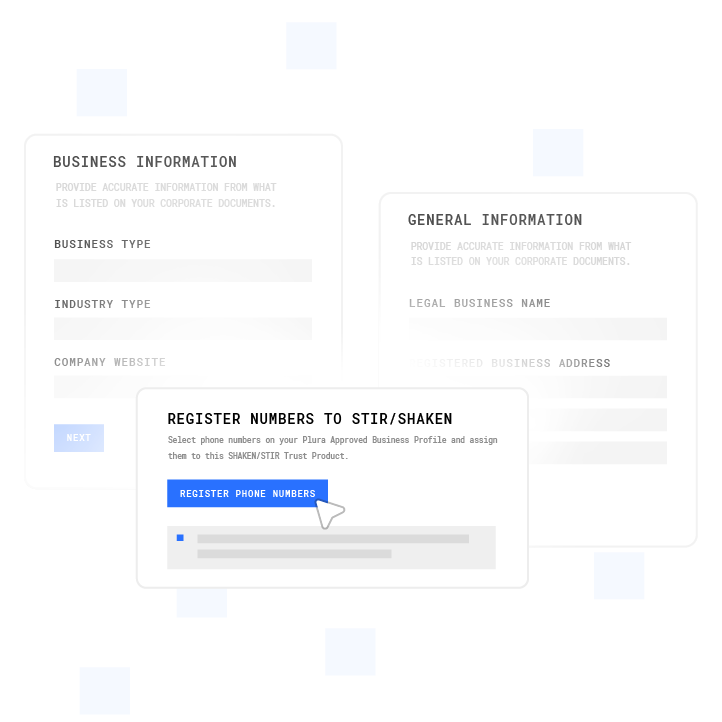
Plura supports TCPA compliance, DNC compliance, HIPAA, SOC 2, ISO certification, GDPR, and SHAKEN/STIR caller ID verification.1 Operators should consult the applicable regulations and qualified counsel to understand their own obligations under TCPA (47 U.S.C. § 227), the FTC’s Telemarketing Sales Rule (16 C.F.R. Part 310), and applicable state laws.2 Plura provides the infrastructure, and customers remain responsible for their own compliance posture.
Key Lead Response Time Statistics
Contacting a lead within 5 minutes makes them up to 100x more likely to connect, and a 60-second response lifts conversions by 391%,3 based on benchmarks Plura cites from industry research. The original source for the 5-minute and 21x qualification figures is the Lead Response Management Study led by Dr. James Oldroyd at MIT’s Sloan School of Management in partnership with InsideSales.com.4 It analyzed over 15,000 leads and more than 100,000 call attempts across six companies over three years. The findings appeared in Harvard Business Review in 2011 as “The Short Life of Online Sales Leads” by Oldroyd, Kristina McElheran, and David Elkington.
Additional benchmarks from named sources:
- The Lead Response Management Study found contact success drops more than tenfold inside the first hour and qualification success falls over sixfold.
- A 2024 RevenueHero study that submitted live demo requests to 1,000 B2B SaaS companies found 63.5% never responded at all, and only 17.2% responded within two minutes.
- The 2026 Speed-to-Lead Benchmark (Artemis GTM) found 5-minute responders convert at roughly 21% versus 2.3% for teams that wait a day or more.
- Plura’s platform delivers under 5 seconds to first AI-powered contact, compared with an industry median of more than 40 hours.
Frequently Asked Questions
How Quickly Should You Respond To Leads?
High-intent inbound leads such as demo requests, pricing inquiries, and contact forms should receive first contact within 5 minutes. For missed calls and after-hours inquiries, an AI agent can respond immediately. The Lead Response Management Study found that leads contacted within 5 minutes are 21 times more likely to qualify than those contacted at 30 minutes, and contact success drops more than tenfold inside the first hour. AI Voice and AI SMS agents help teams hold that window when reps are unavailable.
What Is A Good Conversion Rate For Leads?
For B2B, Weflow’s 2026 Salesforce KPI benchmarks put B2B lead conversion rate at 10-20%, while Rework’s lead management benchmarks put overall B2B lead-to-customer conversion at 1-5%, with top performers reaching 8-10%. Conversion rates vary significantly by lead source. Referral leads convert at 8-15%, inbound content and SEO leads at 3-6%, and cold outbound at 0.5-2%, per Rework’s lead management benchmarks. Reducing speed-to-lead usually provides a more reliable lift than simply increasing lead volume.
How Do You Calculate Lead Conversion Rate?
Use the formula covered above: converted leads divided by total leads, multiplied by 100. Track this by lead source and cohort instead of only by calendar month, because a lead entering in January may not close until March.
What Are The Statistics For Lead Response Time?
As noted earlier, the 2026 Artemis GTM benchmark found the median B2B team takes 42 hours to respond. The 2024 RevenueHero study of 1,000 B2B SaaS companies reported that 63.5% never responded at all. Plura’s platform delivers under 5 seconds to first AI-powered contact. Benchmarks cited at plura.ai/calculator show that contacting a lead within 5 minutes makes them up to 100x more likely to connect, and a 60-second response lifts conversions by 391%.
What Is The 5-Minute Rule For Leads?
The 5-minute rule comes from the Lead Response Management Study by Dr. James Oldroyd at MIT’s Sloan School of Management. It found that calling a lead within 5 minutes of form submission makes a team 21 times more likely to qualify that lead than waiting 30 minutes, and 100 times more likely to make contact. The rule sets a threshold where lead conversion rates begin to drop sharply. At volume, automation provides the only consistent way to hold the 5-minute window across time zones and after-hours periods.
What Is A Good Lead Response Process Standard?
A strong lead response process standard assigns a named owner to every lead at the moment it enters the system, defines escalation paths when the owner does not act within the SLA window, and sets response targets by lead type. Demo requests and pricing inquiries should receive first contact within 5 minutes. Missed calls should trigger an immediate AI callback. After-hours inquiries should receive an immediate AI acknowledgment with human follow-up at the start of the next business day. System timestamps, not rep self-reporting, should enforce the standard.
Conclusion: Treat Speed As A System Property
The 5-minute window closes when no one owns the lead and no process enforces the SLA. Queue congestion, time-zone gaps, single-channel reps, and manual SDR triage consume the window before first contact. The fix is a system that routes, sequences, and responds automatically, with AI holding the window when humans cannot.
Plura responds in under 5 seconds across AI Voice, AI SMS, AI RCS, and AI Webchat on one Stateful Conversation Database. Every channel shares the same lead memory. Every outbound contact runs through real-time DNC scrubbing, TCPA-litigator screening, and automated quiet-hours enforcement before dial. The platform operates as an FCC-licensed carrier, which means branded caller ID is issued at the carrier level instead of through a third-party reseller.
Run your numbers through Plura’s calculator to check your ROI in real time. Compare plans and rates side by side on the Plura pricing page.
See what sub-5-minute response looks like at your volume.
1 Plura AI maintains SOC 2, HIPAA, ISO, and GDPR posture as part of its platform infrastructure. References to compliance frameworks in this article describe Plura’s platform capabilities and do not constitute a guarantee that any customer using Plura will themselves be compliant with applicable laws or standards. Customers remain solely responsible for their own regulatory obligations, certifications, consent management, recordkeeping, and the claims they make to their own end users. Consult qualified legal counsel for guidance specific to your use case.
2 This article describes regulatory frameworks at a general level and does not constitute legal advice. Laws and regulations vary by jurisdiction, change over time, and apply differently depending on facts and circumstances. Readers should consult qualified legal counsel before making compliance decisions.
3 Performance figures, customer outcomes, and industry statistics referenced in this article are drawn from cited third-party sources or Plura customer case studies. Individual results vary based on implementation, use case, industry, audience, and execution. Past or aggregate performance is not a guarantee of future results.
4 References to third-party products, services, companies, or research are made for informational and comparative purposes only. Plura AI is not affiliated with, endorsed by, or sponsored by any third party named in this article unless explicitly stated. Trademarks and product names referenced remain the property of their respective owners.
This article is provided for informational purposes only and reflects Plura AI’s understanding at the time of publication. Product capabilities, integrations, and specifications are subject to change. For the most current information, visit plura.ai.
This article was produced with the assistance of AI tools and reviewed by Plura AI prior to publication.