

Written by: Matt Beucler, CEO, Plura AI | Last updated: August 27, 2026
Key Takeaways
- Industry benchmarks show average lead response time still sits between 42 and 47 hours. Contacting leads within 5 minutes can deliver up to 100x higher connection odds and 391% higher conversion rates.3
- Plura AI compresses the full lead-processing chain capture, enrichment, compliance checks, routing, and first contact into one automated sequence that completes in under 5 seconds.
- Real-time compliance checks (DNC, TCPA, quiet-hours, litigator screening) run at the carrier level before any outbound attempt, which supports sub-5-second contact while still accounting for regulatory frameworks.
- Plura’s stateful conversation database keeps full context across voice, SMS, RCS, and webchat. This removes re-qualification friction and stabilizes conversion performance.
- Teams that want to replace 42–47-hour response times with sub-5-second first contact can see the workflow in action on a live lead.
1. Why Average Lead Response Time Now Sets a 5-Second Standard
Average lead response time is the gap between a prospect’s first signal of interest and the first meaningful contact from your team. That signal might be a form submission, demo request, inbound call, or live chat. Automated acknowledgments do not stop the clock. Only a live conversation, a personalized SMS, or a connected voice call counts as first contact.
The 2026 Optifai Pipeline Study of 939 B2B companies reports an average response time of 47 hours. Only 23% of companies respond within 5 minutes, and 42% take longer than 24 hours. The same study shows close rates by response tier. Leads contacted under 5 minutes close at 32%. Leads contacted after 24 hours close at 12%. That is a 2.6x close-rate gap on the same lead volume, driven entirely by timing.3,4
The 2026 Speed-to-Lead Benchmark shows a similar pattern. Leads contacted within five minutes convert at roughly 21%. Teams that wait a day or more convert at about 2.3%. A study cited by Plura found that companies responding within five minutes are 100x more likely to connect with a prospect than those waiting 30 minutes.3,4
The Telephone Consumer Protection Act (TCPA), the Do Not Call registry (DNC), and a growing set of state-level rules describe how and when automated outbound contact can occur.2 Operators that pursue sub-5-second workflows need to design with these frameworks in mind from the start.2 Qualified counsel can help teams understand their specific obligations under applicable law.
2. Plura AI’s 5-Second Workflow from Lead Capture to First Contact
The benchmarks above show what happens when teams wait 42 to 47 hours to contact leads. The operational challenge is to compress that timeline to under 5 seconds while still accounting for compliance and quality. Plura AI’s architecture addresses both by compressing the standard lead-processing chain receive, enrich, score, route, notify, contact into a single automated sequence that completes in under 5 seconds. The six nodes operate as follows.
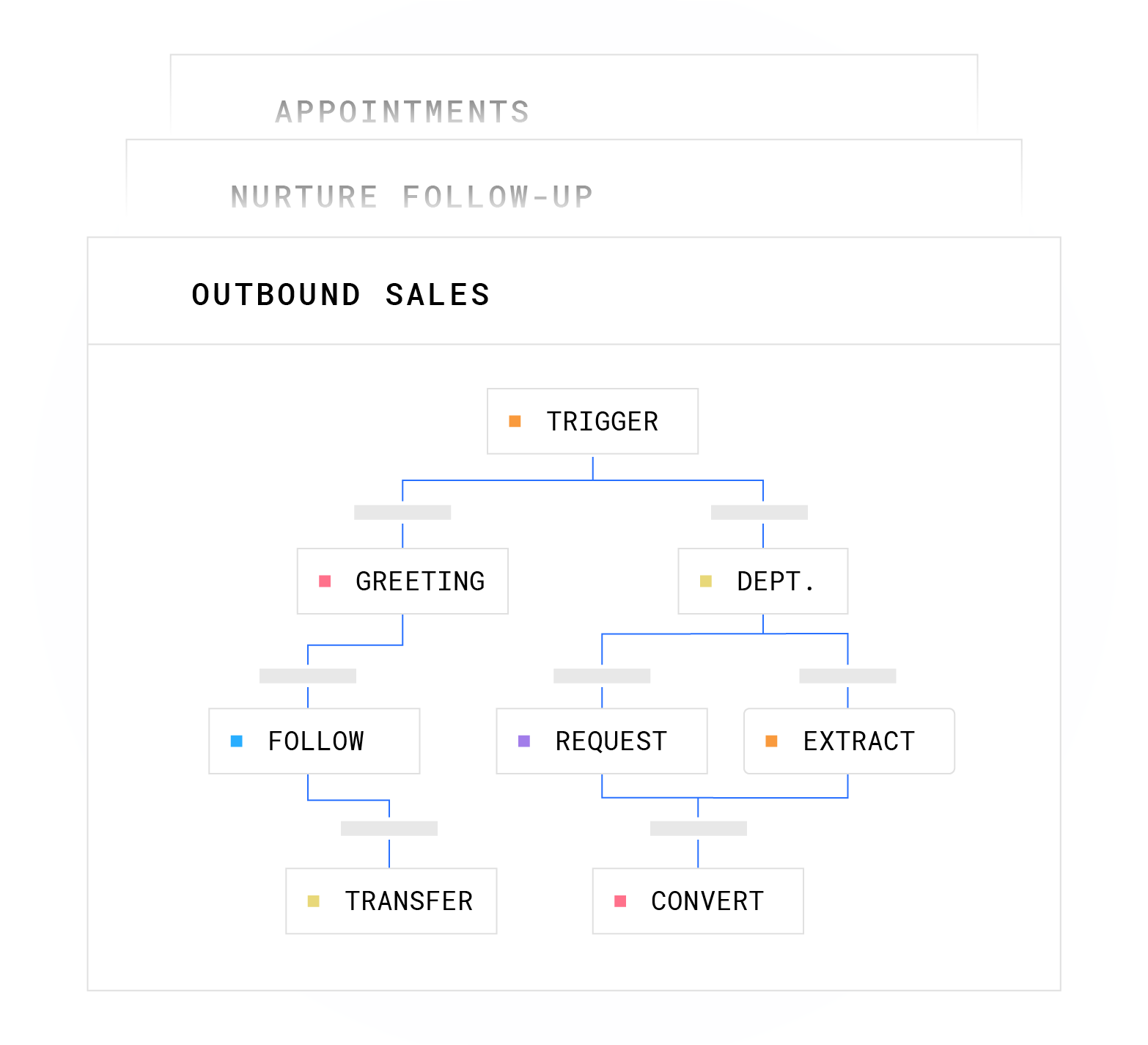
- Lead capture and identity resolution. A form submission, inbound call, or ad click triggers a webhook that writes the lead record to Plura’s stateful conversation database in real time. Batch syncs disappear. The record becomes live within seconds of submission.
- Real-time enrichment. Plura’s AI SMS and AI voice agent layers query more than 30 data sources during the live conversation. These include IP data, email validation, contact data, intent signals, and business firmographics. The AI enters the first contact already knowing who it is speaking with.
- Compliance pre-check. Before any outbound attempt, Plura’s compliance engine checks the number against federal and state DNC registries, validates consent records, applies time-zone-based quiet-hours rules, and screens against TCPA-litigator lists. Non-compliant contacts are blocked before the first dial.
- Channel selection. The workflow selects the highest-probability first-contact channel voice, SMS, RCS, or AI webchat. It bases this choice on lead source, time of day, and prior interaction history stored in the stateful database.
- First contact under 5 seconds. The AI agent initiates the conversation. On voice, calls originate over Plura’s FCC-licensed audio bridging carrier with SHAKEN/STIR caller ID verification and branded caller ID. On SMS, messages go out over 10DLC-registered numbers with consent management active.
- Warm transfer or next-action routing. When a qualification gate fires such as confirmed budget, a booked appointment, or a clear high-intent signal the AI routes the conversation to a U.S. agent with full context already loaded. If a human is not required, the AI schedules the next automated touchpoint in the workflow.
Plura enables lead contact within 60 seconds for every lead, compared to 1 to 4 hours in many manual operations. The AI Predictive Dialer extends this architecture to high-volume outbound flows and prioritizes contacts by stateful conversion signals instead of static list order.
3. Real-Time Compliance Checks Built into the 5-Second Flow
Every outbound contact on Plura’s platform passes through a compliance engine before the call leaves the network. This engine sits inside the core platform architecture, not as a bolt-on layer.
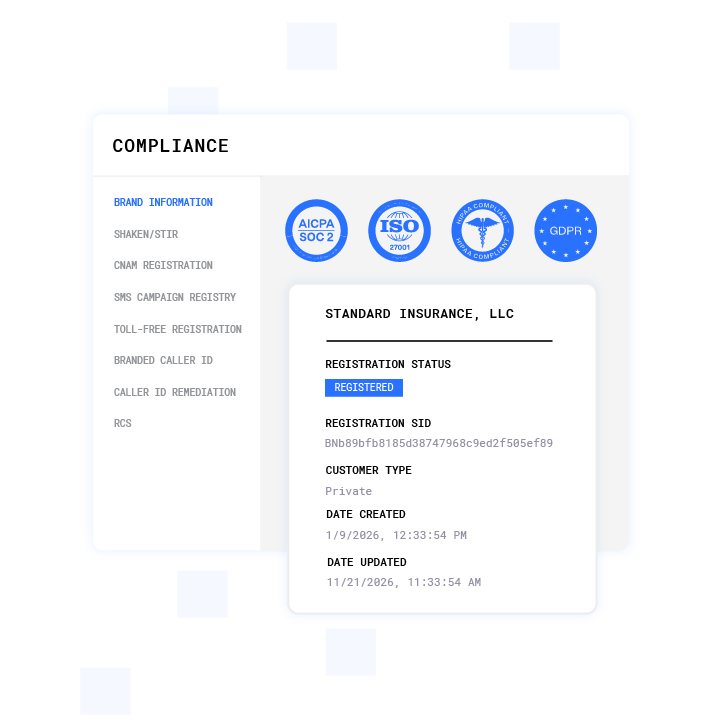
The compliance engine performs the following checks on every outbound contact. Because Plura operates its own carrier stack, these checks run in parallel with lead enrichment and channel selection rather than after them. This structure helps maintain sub-5-second contact while still supporting compliance workflows.
- Federal and state DNC registry scrubbing in real time, blocking non-compliant numbers before dial.
- TCPA consent record validation, with timestamped, immutable consent logs that are audit-ready on demand.
- Quiet-hours enforcement using time-zone detection applied to the contact’s location, not the operator’s.
- TCPA-litigator list screening, applied before the first attempt.
- SHAKEN/STIR caller ID verification on every outbound voice call, authenticating origination at the carrier level.
Plura supports TCPA compliance, DNC compliance, HIPAA, SOC 2, ISO certification, GDPR, and SHAKEN/STIR caller ID verification.1 The platform provides infrastructure and controls. Operators remain responsible for their own regulatory obligations and should consult qualified counsel regarding their specific compliance posture.
The compliance dashboard exports audit-ready reports in one click. These reports cover consent records, call dispositions, DNC scrub logs, and quiet-hours enforcement events. For operators in regulated verticals such as healthcare, insurance, financial services, and legal, HIPAA-aligned encryption, access controls, and field-level sensitive-data redaction are active across voice, SMS, RCS, and webchat by default.
Teams can also run their own numbers through Plura’s ROI calculator to model the cost impact of moving from a 47-hour baseline to sub-5-second first contact on their current lead volume.
4. Cross-Channel Stateful Memory That Removes Re-Qualification
Most AI voice and SMS tools operate as separate products with separate memories. A lead that texted at 9 a.m. often has to re-explain their situation when the call arrives at noon. That friction costs conversions and signals operational disorganization to the prospect.
Plura’s Stateful Conversation Database keys every interaction across AI voice, AI SMS, RCS, and AI webchat to a single customer token such as phone number, email, or ID. Every channel inherits the full memory of every prior touchpoint. That memory includes pricing offers made, objections raised, qualification status, sensitive-data redactions, and negotiation history.
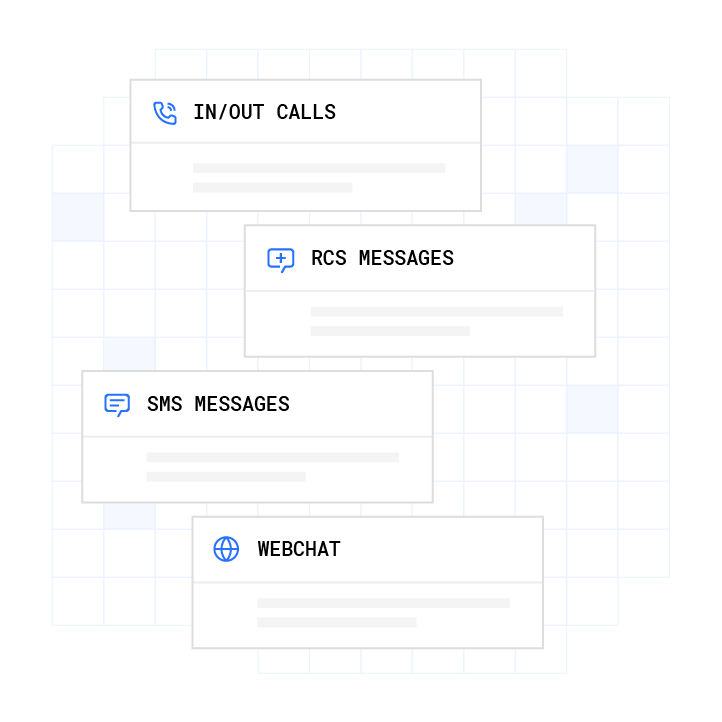
The operational result is that a lead does not re-qualify. The AI agent that sends the first SMS already knows what the lead submitted on the form. The voice agent that calls an hour later already knows what was said in the text thread. The human agent who receives the warm transfer already sees the full conversation history in the Unified Inbox.
The same 60-second contact window applies across all lead sources websites, Google Business Profiles, and ad campaigns with the stateful context active across every channel and every location in a franchise network. Conversation intelligence surfaces patterns across all interactions such as which scripts close, which objections recur, and which conversion paths win. These findings feed back into the no-code workflow builder for continuous iteration.
5. 30/60/90-Day Rollout Checklist with Plura Metrics
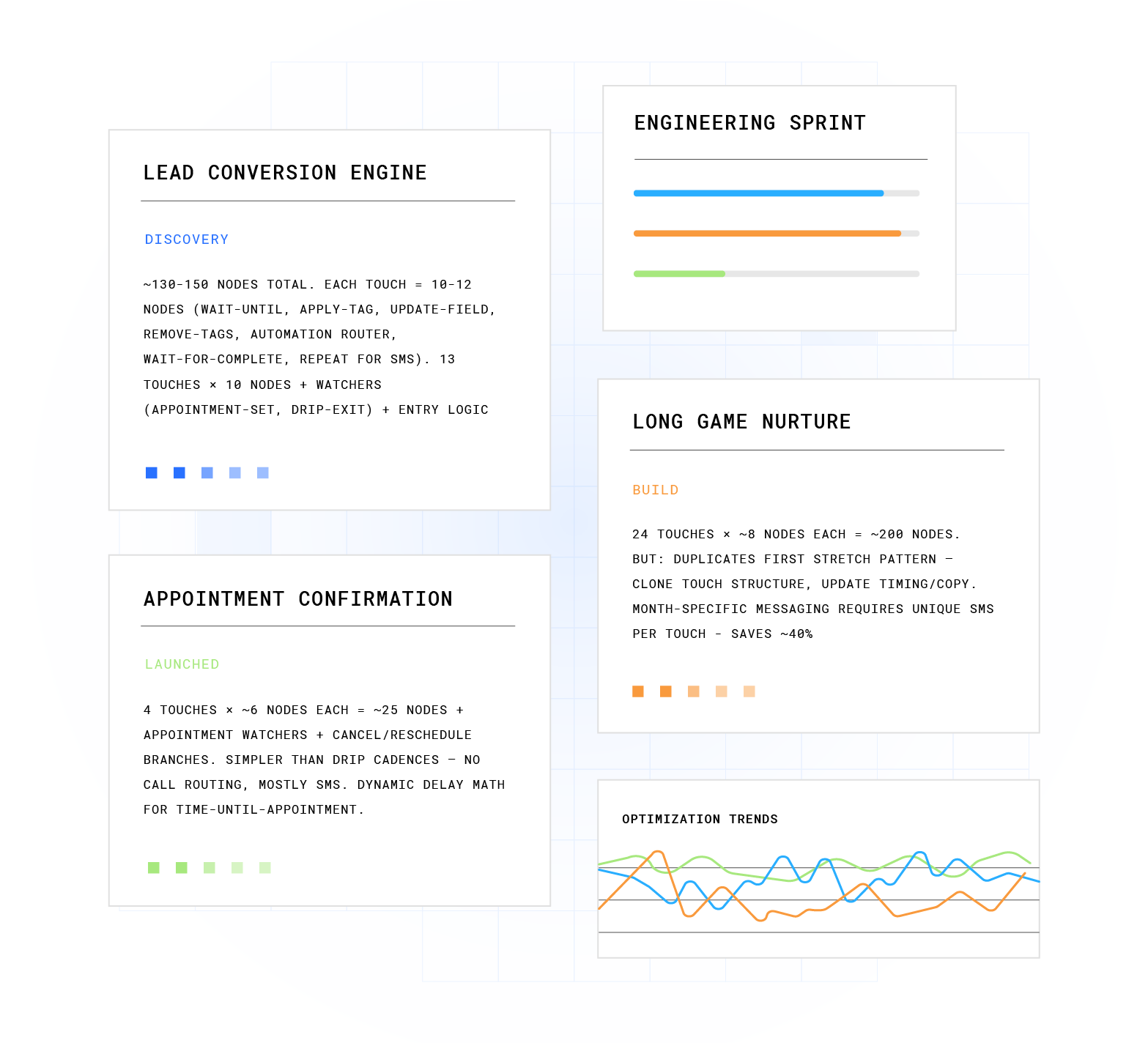
This rollout checklist reflects the operational sequence Plura uses across deployments. Timelines vary by conversation complexity. A simple inbound qualification flow typically goes live in days. A multi-step intake often runs closer to one to two months.
Days 1–30: Baseline and build.
- Pull 30 days of CRM data to calculate actual median response time, percentage of leads contacted within 5 minutes, and never-responded rate by lead source. This baseline establishes the performance gap you need to close.
- Map the full lead journey to identify routing bottlenecks, batch-sync delays, and ownership gaps. These friction points show which workflow nodes require the most configuration effort.
- Complete Plura’s discovery audit, including sample calls, SOPs, existing scripts, and consent record review. The audit output feeds directly into workflow design in the next step.
- Build and validate the production workflow on Plura’s no-code canvas, including qualification gates, transfer rules, and compliance pre-checks. Use the bottlenecks from step two and the audit findings from step three to configure each node.
- Pilot on a subset of real leads and measure received-to-first-contact latency, DNC scrub pass rate, and consent log completeness. The pilot confirms that the workflow you built actually closes the gap you measured in step one.
Days 31–60: Optimization.
- Review call transcripts and SMS threads for objection patterns and qualification gaps. These insights guide script and workflow adjustments.
- Tune workflow nodes based on conversation intelligence output. Focus on nodes that show drop-offs or long handle times.
- Expand to full lead volume and track connect rate by channel, contact-to-qualified-conversation rate, and time-to-booked-meeting. These metrics confirm performance at scale.
- Verify quiet-hours enforcement and DNC scrub logs through the compliance dashboard. This step prepares you for internal and external reviews.
Days 61–90: Scale and report.
- Measure 90-day pipeline growth against the pre-Plura baseline. Plura’s documented average is 47% pipeline growth, which gives a reference point for comparison.3
- Calculate ROI against the cost savings model, comparing human agent cost to Plura agent cost at 100% talk utilization.
- Generate audit-ready compliance reports for legal review. These reports summarize consent, DNC handling, and quiet-hours enforcement.
- Evaluate the 90-day opt-out window against documented outcomes before committing to the annual term. This review aligns commercial decisions with performance data.
6. TCO Comparison for High-Volume Lead Response
The economics of high-volume lead response hinge on talk utilization. Human agents in a standard contact center operate at roughly 40% talk utilization. The remaining time goes to hold, wrap-up, queue wait, and idle time. Plura’s AI agents run at 100% talk utilization and do not incur taxes, benefits, commissions, or rehiring cycles.
The default scenario on Plura’s ROI calculator uses a 15-agent operation at $20 per hour with standard overhead. That team costs about $60,000 per month. Six Plura agents replacing those 15 humans, at $15 per hour and 100% talk utilization, cost about $14,400 per month. The 30-day savings reach $45,600. The 12-month savings reach $547,200. The 60-month savings reach $2,736,000.3
At higher volume, the same model produces a total cost of ownership of roughly $700,000 per year against a traditional contact-center benchmark of about $7 million. That represents a 10x cost reduction on equivalent conversation volume, with sub-5-second first contact replacing the 42 to 47-hour industry average.
Plura scales quickly into peak seasons such as Medicare Annual Enrollment Period, tax season, and Black Friday. Teams do not need to burn through hiring budgets months in advance. The AI Predictive Dialer, AI SMS, AI voice agent, and AI webchat all share the same stateful database, so scaling one channel does not fragment the customer record across systems.
Leaders can compare plans and rates side by side or run their specific headcount and volume through the ROI calculator to model a 90-day return.
Frequently Asked Questions
What is a good average lead response time in 2026?
A good average lead response time for high-intent inbound leads such as demo requests, pricing inquiries, and inbound calls is under 5 minutes during business hours. Top-performing operators using AI-powered contact infrastructure reach first contact in under 60 seconds. The highest-performing deployments reach under 5 seconds. For after-hours leads, many teams use an automated acknowledgment within seconds, followed by a qualified contact at the start of the next business window. Median response times of 4 to 24 hours are generally viewed as below average. Response times of 24 hours or more are widely viewed as poor in 2026 benchmarks.
How quickly should you respond to a lead?
Research consistently shows that faster responses drive higher conversion. As discussed earlier, the close-rate gap between 5-minute and 24-hour responses can reach 2.6x. Leads contacted within 1 minute see conversion lifts of up to 391% compared to later responses. For high-volume operators running paid media or inbound lead programs, a practical target is sub-60-second first contact on every lead, 24 hours a day, 7 days a week. Human-only teams struggle to sustain that SLA at scale. AI-powered contact infrastructure provides the operational mechanism that makes it achievable.
Why does lead response time drop so sharply after 5 minutes?
Lead intent is time-bound. When a prospect submits a form or places a call, their attention and decision-making energy sit at their peak. Within minutes, they often move on to a competitor, another task, or a different mental state. The MIT/InsideSales Lead Response Management Study found that the odds of qualifying a lead drop by an order of magnitude between a 5-minute and a 30-minute callback.4
The prospect is not automatically lost after 5 minutes. However, the effort required to re-engage them increases sharply, and the probability of a competitor reaching them first rises with every passing minute. The industry average discussed earlier 42 to 47 hours means most operators compete for leads that have already been contacted, evaluated, and potentially closed by a faster competitor.
How does Plura AI achieve sub-5-second lead response while supporting compliance?
Plura operates its own FCC-licensed audio bridging carrier, so compliance enforcement occurs at the carrier level before any call leaves the network. Every outbound contact passes through a real-time DNC scrub, TCPA consent record validation, quiet-hours enforcement using time-zone detection, and TCPA-litigator list screening before the first dial. SHAKEN/STIR caller ID verification authenticates every outbound voice call at origination.
Because Plura owns the carrier stack instead of routing through a third-party communications platform, these checks run in parallel with lead enrichment and channel selection, not after them. This structure supports sub-5-second first contact with compliance pre-checks already complete. Operators remain responsible for their own regulatory obligations. Plura provides the infrastructure and supports the compliance workflow.
What is the difference between lead response time and speed to lead?
Both terms describe the same metric from different operational perspectives. Speed to lead is the marketing and sales framing that focuses on how fast the team moves from lead capture to first contact. Teams often use it as a KPI in paid-media and demand-generation programs. Lead response time is the contact-center and operations framing that measures the elapsed time between a prospect’s inbound signal and the first meaningful outbound contact. Leaders use it to track SLA adherence and workflow efficiency.
Both metrics measure the same gap the time between a prospect expressing interest and a qualified conversation beginning. The distinction matters operationally because the root causes of slow response differ by team. Marketing teams often own the form-to-CRM latency problem. Contact-center leaders often own the routing-to-first-contact problem. Plura’s platform addresses both by compressing the entire chain from lead capture through enrichment, compliance pre-check, channel selection, and first contact into a single automated sequence that completes in under 5 seconds.
1 Plura AI maintains SOC 2, HIPAA, ISO, and GDPR posture as part of its platform infrastructure. References to compliance frameworks in this article describe Plura’s platform capabilities and do not constitute a guarantee that any customer using Plura will themselves be compliant with applicable laws or standards. Customers remain solely responsible for their own regulatory obligations, certifications, consent management, recordkeeping, and the claims they make to their own end users. Consult qualified legal counsel for guidance specific to your use case.
2 This article describes regulatory frameworks at a general level and does not constitute legal advice. Laws and regulations vary by jurisdiction, change over time, and apply differently depending on facts and circumstances. Readers should consult qualified legal counsel before making compliance decisions.
3 Performance figures, customer outcomes, and industry statistics referenced in this article are drawn from cited third-party sources or Plura customer case studies. Individual results vary based on implementation, use case, industry, audience, and execution. Past or aggregate performance is not a guarantee of future results.
4 References to third-party products, services, companies, or research are made for informational and comparative purposes only. Plura AI is not affiliated with, endorsed by, or sponsored by any third party named in this article unless explicitly stated. Trademarks and product names referenced remain the property of their respective owners.
This article is provided for informational purposes only and reflects Plura AI’s understanding at the time of publication. Product capabilities, integrations, and specifications are subject to change. For the most current information, visit plura.ai.
This article was produced with the assistance of AI tools and reviewed by Plura AI prior to publication.