
Written by: Matt Beucler, CEO, Plura AI
Updated September 13, 2026
Key Takeaways
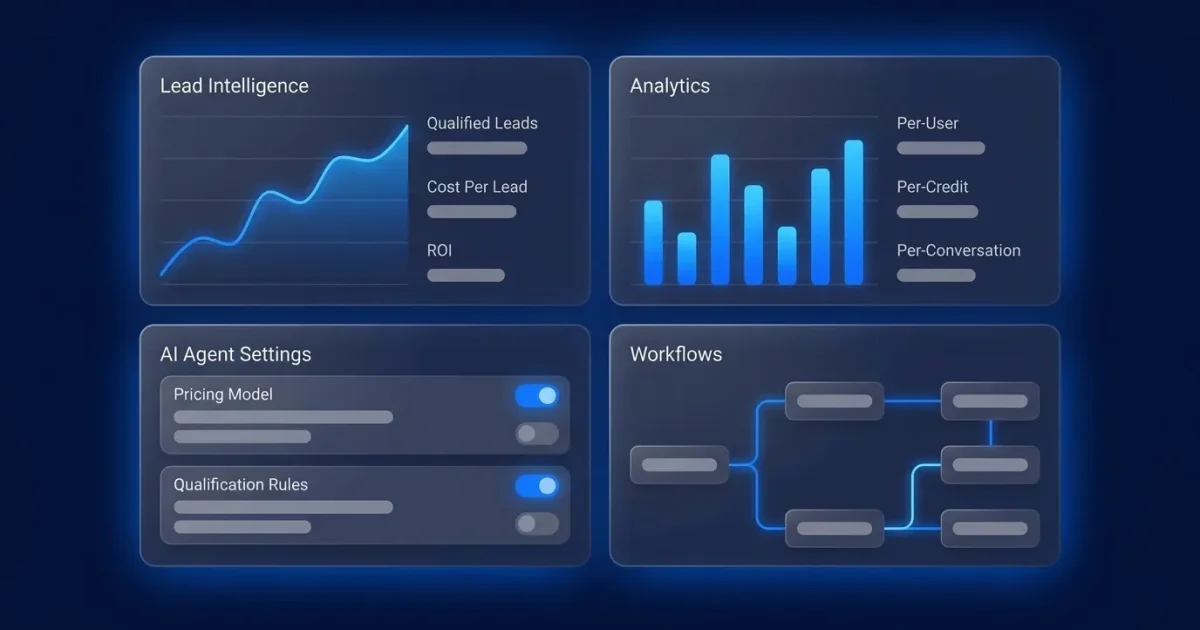
- Automated lead qualification pricing ranges from $30 per month for basic CRM add-ons to $25,000+ per month for enterprise AI platforms, with three primary models: per-user, per-credit, and per-conversation.
- Per-user pricing scales with team size rather than lead volume, which becomes expensive for high-volume operators, while per-credit models often create unpredictable overage charges during campaign spikes.
- Per-conversation pricing ties costs to completed conversations and often delivers the lowest cost per qualified lead at scale when platforms own carrier infrastructure and share conversation context across channels.
- Hidden costs such as mandatory onboarding fees, contact-tier scaling, and early termination penalties can materially change total spend, so leaders should model full-year economics before committing.
- For high-volume operators, per-conversation pricing and a shared Stateful Conversation Database keep costs aligned with results. Start a free trial to test the model against your volume.
Monthly Cost Ranges by Lead Qualification Platform Type
Monthly spend falls into five tiers based on platform type and volume capacity.
- Entry/CRM add-on ($30–$200/month): Basic lead scoring attached to a CRM. Zoho CRM’s Standard plan starts at $14/user/month with rules-based scoring.4 AI-powered scoring via Zia requires the $40/user/month Enterprise plan. This tier fits teams handling under 500 leads per month.
- Credit-based micro-platform ($200–$750/month): Usage-metered tools such as Apollo.io’s Basic plan at $49/user/month or SurFox AI’s Starter at $147/month.4 Credits expire monthly and overage rates apply above the included allocation.
- Ecosystem workflow platform ($750–$3,000/month): Platforms such as Default at $750/month plus $45/user/month or HubSpot Marketing Hub Professional at roughly $890/month with a mandatory $3,000 onboarding fee.4 These tools support B2B teams with established CRM stacks.
- Enterprise AI suite ($3,000–$10,000+/month): Autonomous AI SDR platforms. Enterprise AI SDR platforms run roughly $35,000–$60,000 per year, with Artisan (Ava) at $35,000–$60,000/year and 11x.ai (Alice) at an estimated $50,000–$60,000/year.4 These suites usually require multi-year commitments with pricing behind a demo wall.
- Conversational/messaging platform ($500–$7,500+/month): AI voice and SMS platforms priced per conversation or per channel. Plura AI’s Multi plan starts at $7,500/month on annual contracts billed monthly, with a 90-day opt-out window and an agent build fee of $2,750 per agent.
Choosing Between Per-User, Per-Credit, and Per-Conversation Pricing
The pricing model controls whether your bill scales with headcount, activity, or completed conversations. Each structure favors a different operating profile.
Per-user/seat pricing charges for every team member with platform access. HubSpot Sales Hub Enterprise costs $150/user/month, so a 20-person sales team pays $3,000 per month before any usage. The bill grows with headcount. High-volume teams that add agents to handle more leads pay proportionally more even when AI handles most of the work. Per-seat pricing scales with human headcount, which misaligns with operators shifting qualification to automation.
Per-credit pricing charges per activity unit such as emails sent, contacts researched, conversations resolved, or data records enriched. Apollo.io’s credits expire monthly with no rollover, so a slow month wastes paid credits. A viral campaign or trade show surge can exhaust credits mid-month and trigger overage fees. 73% of buyers exceed their initial usage estimates within six months, which makes per-credit models a frequent source of budget surprises for low-conversion teams that burn credits on unqualified contacts.
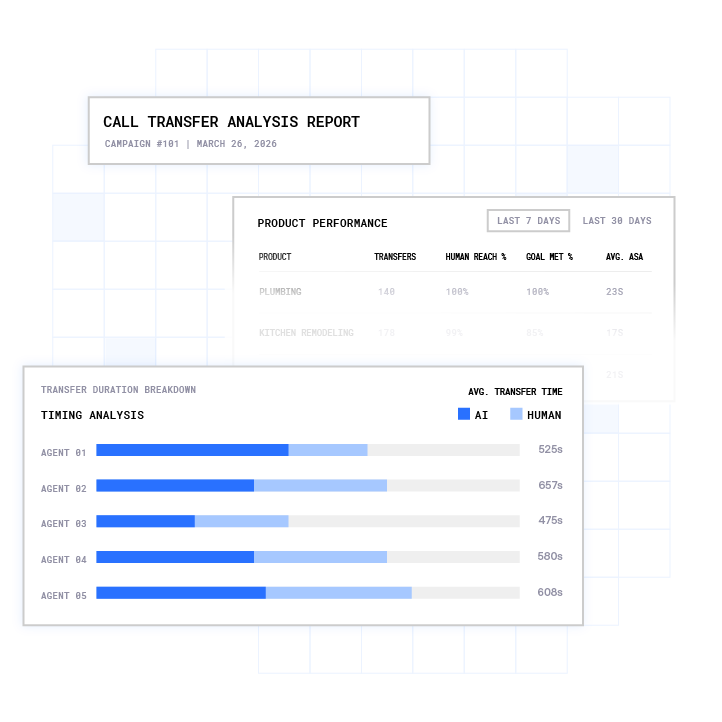
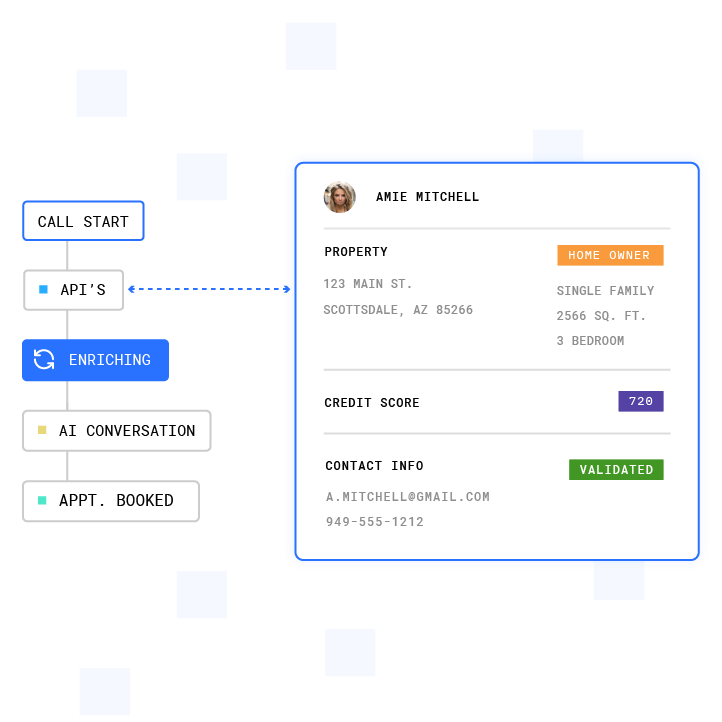
Per-conversation pricing charges only when a conversation completes. This structure aligns cost with output. Plura prices per conversation, scaling with AI volume instead of human headcount. Because Plura owns its FCC-licensed carrier stack, voice traffic does not route through a third-party CPaaS, and per-minute economics are lower than platforms that rent from Twilio or similar providers. The Stateful Conversation Database recognizes a lead who texted at 9 a.m. when the call arrives at noon, so there is no re-qualification cost across channels.
See how per-conversation pricing applies to your lead volume.
Published Vendor Pricing in 2026
The table below shows how published entry prices compare across pricing models. Per-seat tools often post the lowest entry price, yet their costs rise with headcount, while per-conversation platforms carry a higher entry price and a lower cost per qualified lead at volume.
| Vendor | Pricing Model | Published Entry Price | Primary Cost Driver |
|---|---|---|---|
| Zoho CRM | Per seat | $14/user/month (Standard); AI scoring at $40/user/month (Enterprise) | Headcount; AI features gated to higher tiers |
| HubSpot Marketing Hub | Per seat + contact tier | ~$890/month (Professional, 3 seats, 2,000 contacts) + $3,000 onboarding | Marketing contact list size; mandatory onboarding fees |
| Salesforce Einstein | Per seat + add-on | Requires Salesforce CRM base; Einstein features priced as add-ons; enterprise pricing on request | Base CRM seat cost plus Einstein add-on tier; implementation partner fees |
| SurFox AI | Flat monthly bundle | $147/month (Starter, 2,000 SMS + 200 web chat); $597/month (Growth) | Message volume; channel count |
| Plura AI | Per conversation; annual contract billed monthly | Multi plan at $7,500/month; Enterprise custom; agent build fee $2,750/agent | Conversation volume; number of AI agents deployed |
Salesforce Einstein pricing does not appear as a standalone line item on Salesforce’s public pricing page as of September 2026. Enterprise buyers should request a quote directly. Vendor pricing changes frequently, so leaders should verify current rates on each vendor’s pricing page before signing.
Build vs. Buy: Comparing Internal Systems to Subscription Platforms
Building in-house often looks cheaper on a spreadsheet until the full line-item list appears. Building a production-ready AI voice agent on Twilio APIs typically takes 6 to 12 months and costs $300,000 to $500,000 or more in first-year engineering and infrastructure. Ongoing maintenance usually requires 2 to 3 full-time engineers to keep integrations current as APIs change.
A structured build-vs-buy breakdown for a mid-market operator includes several categories.
- Engineering setup (one-time): $300,000–$500,000 for a custom AI voice and SMS qualification agent, per Plura’s build-vs-buy analysis.
- Hosting and infrastructure: $10,000–$30,000 per year for cloud compute, vector databases, and telephony infrastructure.
- LLM/API usage fees: AI model costs have fallen roughly 50% per year since 2023, yet a high-volume qualification agent processing thousands of conversations daily still generates meaningful token costs.
- Engineering maintenance: Engineering maintenance of a custom AI qualification system requires 2–3 full-time AI engineers. In 2026, US AI engineering salaries span roughly $80,000 to $322,000, with the $120,000–$180,000 range falling in the lower-to-mid portion of that market.
- Compliance infrastructure: Real-time DNC scrubbing, TCPA consent logging, STIR/SHAKEN authentication, and SOC 2 controls sit outside foundation model APIs and require separate design and implementation.1 Leaders should consult the underlying frameworks or qualified counsel when defining requirements.
- FCC carrier licensing: Plura’s own FCC license took roughly two years to obtain.2 Operators building in-house either pursue their own license or route through a third-party CPaaS, which adds per-minute costs and removes the ability to issue branded caller ID at the carrier level.
For a 50-seat equivalent contact center, traditional offshore operations cost $35,000–$50,000 monthly, while AI contact centers cost $8,000–$15,000 monthly.3 For a 100-seat contact center, traditional operations cost $4 million to $7 million annually, while AI-powered communications using platforms like Plura cost $300,000 to $700,000. The build-your-own path removes the platform fee and replaces it with engineering salaries, compliance infrastructure costs, and a 6-to-12-month runway before the first qualified lead is processed.
Cost Per Qualified Lead: The Number That Actually Matters
Once hidden costs are visible, monthly software spend becomes a budget line. Cost per qualified lead (CPQL) shows whether the investment performs.
The formula: CPQL = (monthly platform cost + hidden costs) / qualified leads produced per month.
Plura enables a cost per qualified lead of $25 to $60,3 compared to average cost per lead across paid channels of $35 to $85 before qualification. At the benchmark level, the average cost per sales-qualified lead was $1,357 in 2024,3 versus an average CPL of $198. That 6.85x gap reflects the cost of manual qualification labor between those stages.
Consider a team processing 5,000 leads per month with a 10% qualification rate, or 500 qualified leads. A $2,500/month platform that produces 500 qualified leads yields a CPQL of $5.00. A $500/month platform that produces 150 qualified leads, a 3% rate due to lower accuracy, yields a CPQL of $3.33 but delivers 70% fewer qualified leads to sales. The cheaper platform becomes more expensive when measured against pipeline output. A $2 contact who never picks up can cost more than a $300 qualified lead who buys. The metric that matters is cost per closed deal.
Budgeting by Volume: 1,000, 5,000, and 20,000 Leads Per Month
Because per-seat and per-credit models scale on different axes, the right structure changes as volume rises. The framework below applies the CPQL logic to three common volume tiers.
- 1,000 leads/month: A credit-based or flat-bundle platform in the $150–$750/month range usually fits. SurFox AI’s Starter at $147/month covers 2,000 SMS plus 200 web chat. Apollo.io’s Basic at $49/user/month handles contact enrichment and scoring. Budget $200–$800/month total including enrichment add-ons.
- 5,000 leads/month: Ecosystem workflow platforms or mid-market AI suites become practical. SurFox AI’s Growth plan at $597/month covers 10,000 SMS. HubSpot Marketing Hub Professional at roughly $890/month handles workflow automation but adds contact-tier overage as the list grows. Budget $1,000–$3,000/month, plus $200–$500/month in deliverability and enrichment infrastructure.
- 20,000 leads/month: Per-conversation platforms or enterprise AI suites usually deliver better economics. At this volume, per-seat pricing becomes prohibitive and per-credit models create significant overage exposure. Plura AI voice agents cost $0.35 to $0.85 per completed conversation including intelligence, compared to domestic contact center agents at $15–$25 per hour before benefits and overhead. At 20,000 leads per month, the average qualification conversation runs 15 minutes. At that volume, Plura’s per-conversation economics produce a materially lower CPQL than staffing human agents. Budget $7,500–$15,000/month on Plura’s Multi or Enterprise plans.
Model your volume against per-conversation pricing.
Hidden Costs to Surface Before You Sign
Costs that do not appear on the pricing page often create the largest budget variance. Leaders can reduce surprises by auditing several categories before signing.

- Mandatory onboarding fees: HubSpot Marketing Hub Professional carries a $3,000 onboarding fee and Enterprise carries $7,000. Vendors charge these fees in year one regardless of how quickly the team onboards.
- Per-submission or per-lead overages: A platform charging $99/month for 2,000 submissions may charge $0.15 per additional submission, which can turn a campaign spike into a $225 surprise on a single month’s bill.
- Contact-tier scaling: HubSpot Marketing Hub Professional includes 2,000 marketing contacts, and each additional 5,000 contacts costs roughly $224/month. A 25,000-contact database adds approximately $1,000/month before other costs.
- Email deliverability infrastructure: Dedicated IP addresses, mailbox rotation, and deliverability monitoring add $200–$500/month for high-volume AI qualification deployments.
- Annual-contract lock-in and termination penalties: 68% of enterprise AI lead gen contracts include early termination clauses with 30–50% penalties. Plura’s annual contracts include a 90-day opt-out window, so customers can exit early if the deployment underperforms.
- Prompt tuning and maintenance labor: Ongoing prompt tuning requires 5–15 hours per month from a RevOps professional or AI orchestrator, and this labor cost rarely appears in vendor quotes.
How to Evaluate a Quote From Any Vendor
- What is the overage rate, and does exceeding my tier trigger throttling or automatic billing? Because overage rates are where per-credit models often break budgets, get the per-unit overage rate in writing and model it at 2x your current volume before committing.
- Are onboarding, implementation, and CRM integration fees included, or billed separately? A $500/month platform with a $5,000 integration project and a $200/month API tier upgrade carries a true year-one cost of $11,400.
- Does the platform own its carrier stack, or does it route through a third-party CPaaS? Platforms that rent from Twilio or similar providers cannot issue branded caller ID at the carrier level and cannot enforce real-time DNC scrubbing before the call leaves the network.
- Is conversation context shared across channels, or does each channel operate independently? A lead who texted and then called should not have to re-qualify. Platforms without a shared stateful database effectively charge twice for the same lead.
- What is the contract term, and what are the exit terms? Negotiate a rate-lock period, a volume-discount tier with automatic application, and an explicit opt-out window. Plura includes a 90-day opt-out in every annual contract.
Frequently Asked Questions
The questions below cover the cost figures buyers ask about most often after reviewing vendor quotes.
How Much Does a Qualified Lead Cost?
A qualified B2B lead typically costs $100 to $400 depending on industry, channel, and how strictly qualification is defined. Financial services and legal services often run $400 to $700 per qualified lead. AI-powered qualification platforms can reduce cost per qualified lead to $25 to $60 by automating the manual triage step that drives most of the gap between raw CPL and CPQL. The metric that matters is cost per closed deal.
What Is a Normal Cost Per Lead?
The average blended B2B cost per lead across channels was approximately $198 in 2024. Channel mix shifts that number: content marketing averages around $279 per lead, LinkedIn Ads around $448, and Google Ads around $818. Industry also moves the number substantially, from roughly $237 for B2B SaaS to $653 for financial services. These figures measure raw leads. The cost per sales-qualified lead is typically 5 to 7 times higher.
Is It Worth Paying for Leads?
The answer depends on deal economics rather than list price. A practical benchmark: acceptable cost per qualified lead equals allowable customer acquisition cost multiplied by the lead-to-customer conversion rate. For a $10,000 average deal size with a 20% close rate, revenue per qualified lead is $2,000. A 5:1 ROI target implies a maximum cost per qualified lead of $400. A lead priced below that ceiling supports the model if it converts, while a lead above it erodes margin regardless of how attractive the CPL looks.
What Is the Difference Between Per-User and Per-Credit Pricing?
Per-user pricing scales with headcount and per-credit pricing scales with activity. The earlier section explains which model penalizes which operator. The short version: per-user structures create pressure for high-volume teams, and per-credit structures create pressure for low-conversion teams. Per-conversation pricing, used by platforms like Plura, charges only when a conversation completes and ties spend to output.
Is It Cheaper to Build Your Own Lead Qualification System?
As the build-vs-buy breakdown above shows, first-year cost typically runs $300,000 to $500,000, plus ongoing engineering maintenance. Compliance infrastructure, carrier licensing, and stateful cross-channel memory also require separate investment. Off-the-shelf platforms trade those fixed costs for a subscription. The build path tends to fit operators with dedicated AI engineering teams and volume high enough to amortize the build cost.
What Hidden Costs Should I Watch For?
The hidden-cost audit above covers six categories to check: onboarding fees, overage charges, contact-tier scaling, deliverability infrastructure, prompt tuning labor, and termination penalties. The item buyers miss most often is prompt tuning, which rarely appears in vendor quotes even though it requires ongoing internal time.
How Much Does Automated Lead Qualification Cost Per Month?
Monthly cost ranges from $30 for entry-level tools to $25,000 or more for enterprise autonomous platforms. The tier breakdown above shows where each model falls. The practical question is which tier matches your lead volume and conversion goals.
Conclusion
Lead qualification pricing structure determines whether your bill scales with headcount, activity, or completed conversations. Per-seat pricing increases with team size. Per-credit pricing increases with usage. Per-conversation pricing often delivers the lowest cost per qualified lead at scale because the platform owns its carrier stack and shares conversation context across channels.
Plura owns its FCC-licensed carrier, shares one Stateful Conversation Database across AI SMS, AI RCS, AI voice agent, and AI webchat, and includes a 90-day opt-out in every annual contract. For high-volume operators, these mechanics put the economics on the table.
Run your numbers through Plura’s ROI calculator to check your ROI in real time.
Compare Plura’s plans and rates side by side.
See automated lead qualification pricing applied to your exact volume.
1 Plura AI maintains SOC 2, HIPAA, ISO, and GDPR posture as part of its platform infrastructure. References to compliance frameworks in this article describe Plura’s platform capabilities and do not constitute a guarantee that any customer using Plura will themselves be compliant with applicable laws or standards. Customers remain solely responsible for their own regulatory obligations, certifications, consent management, recordkeeping, and the claims they make to their own end users. Consult qualified legal counsel for guidance specific to your use case.
2 This article describes regulatory frameworks at a general level and does not constitute legal advice. Laws and regulations vary by jurisdiction, change over time, and apply differently depending on facts and circumstances. Readers should consult qualified legal counsel before making compliance decisions.
3 Performance figures, customer outcomes, and industry statistics referenced in this article are drawn from cited third-party sources or Plura customer case studies. Individual results vary based on implementation, use case, industry, audience, and execution. Past or aggregate performance is not a guarantee of future results.
4 References to third-party products, services, companies, or research are made for informational and comparative purposes only. Plura AI is not affiliated with, endorsed by, or sponsored by any third party named in this article unless explicitly stated. Trademarks and product names referenced remain the property of their respective owners.
This article is provided for informational purposes only and reflects Plura AI’s understanding at the time of publication. Product capabilities, integrations, and specifications are subject to change. For the most current information, visit plura.ai.
This article was produced with the assistance of AI tools and reviewed by Plura AI prior to publication.