
Written by: Matt Beucler, CEO, Plura AI
Updated September 2026
Key Takeaways
- High-volume operators recover more revenue when software answers calls live and books in the same interaction.
- AI receptionists book appointments in real time at roughly six times the rate of missed-call text-back tools, preserving caller intent.
- Multi-location operators, agencies, and contact centers need unified cross-channel context, branded caller ID, and TCPA/DNC compliance support to scale without revenue leakage.
- After-hours calls create the highest missed-call volume and revenue opportunity, and live AI answering converts these leads 24/7 without staffing gaps.
- Plura AI delivers missed call recovery for operators who have outgrown text-back tools. See how it handles your call flows.
Missed Call Text Back vs AI Receptionist: The Core Difference
The core difference is whether the system answers the call live or apologizes by text afterward. That choice determines whether a high-intent caller books with you or with the next name on Google.
Missed call text back (MCTB) software is reactive. It waits for a call to go unanswered, then fires an automated SMS, typically something like “Sorry we missed you, how can we help?” The caller must text back, continue the conversation over SMS, and navigate a booking link while their intent cools. Only 15% to 25% of callers reply to an automated missed-call text-back message3, so most recipients never engage.
An AI receptionist answers on the first ring in a natural voice, holds a real-time voice conversation, qualifies the caller, and books the appointment before the caller hangs up. The caller experiences a single, frictionless interaction. Internal benchmarks across the GoHighLevel customer base show MCTB-only setups book an appointment in the same session about 6% of the time, versus roughly 38% for AI receptionists.3
The dividing line stays simple: the system either answers the call or sends an apology afterward.
MCTB is sufficient in a narrow set of circumstances:
- Low call volume, under approximately 30 calls per month
- Low-urgency calls where the caller is not in a buying moment (booking a haircut for next week, a med-spa lead clicking a consult link)
- No appointment booking over the phone
The moment any of the following becomes true, the calculus flips and MCTB becomes a liability instead of a safety net.
An operator has outgrown MCTB when:
- Missed calls represent real jobs or bookings with material revenue attached
- Parallel calls are lost during peak hours because no one can answer two phones at once
- Qualifying the lead on the call determines whether the customer books or walks
- After-hours calls arrive and no one is staffed to answer them
Tools marketed as an “AI missed call responder” are MCTB with AI-written replies instead of canned templates. The wording improves, but the structure does not. They respond only after the call is already missed, which is where revenue leaks for operators at volume.
Test the AI receptionist on your own call flows to see the difference between text-back and live answering.
Missed Call Recovery Platforms: Profiles and Fit
The platforms below represent the primary categories operators evaluate. Each profile reflects the vendor’s own published documentation.
Plura AI serves high-volume contact centers, multi-location operators, agencies, and franchise networks that have outgrown text-back-only tools. Plura supports four channels on one Stateful Conversation Database: AI voice agent, AI SMS, AI RCS, and AI webchat. The platform answers the call live, qualifies the caller, books the appointment, and live-transfers hot leads to a U.S. agent with full context.
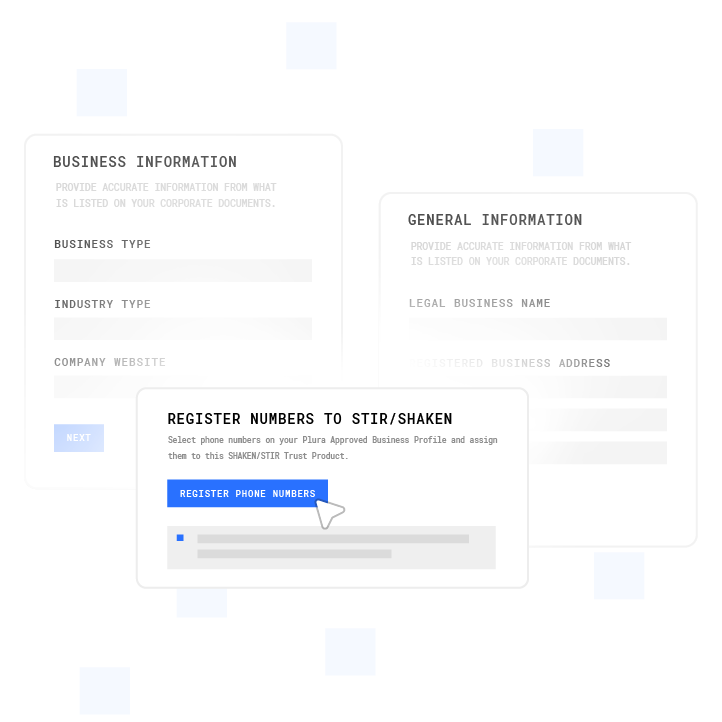
Plura operates as its own FCC-licensed audio bridging carrier, so branded caller ID is issued at the carrier level and STIR/SHAKEN (Secure Telephone Identity Revisited/Signature-based Handling of Asserted information using toKENs) authentication runs on every outbound call. The platform supports TCPA (Telephone Consumer Protection Act) and DNC (Do Not Call) compliance workflows on every outbound contact.1 Plura’s plans and rates are published for side-by-side review.
GoHighLevel fits agencies running a white-label CRM (Customer Relationship Management) stack.4 Channels include web chat, email/SMS, Facebook, Instagram, Voice AI, and WhatsApp, all routed into the GoHighLevel inbox. Voice AI covers inbound, outbound, and widget use cases, so the platform can answer calls as well as send texts. Text-back is also available. GoHighLevel routes voice and SMS through Twilio, rebilled as usage-based charges on top of the base subscription.
Quo fits small teams needing a business phone system with basic text-back.4 Channels include voice and SMS. The platform texts back missed callers and suits low-volume operators who do not require live AI answering.
Podium fits local businesses focused on reviews and messaging.4 Channels include SMS and webchat. The platform texts back missed callers. Phone-based appointment booking is not a core capability.
Birdeye fits multi-location businesses focused on reputation management and messaging.4 Channels include SMS and webchat. The platform texts back missed callers. Reporting spans locations, while live call answering is not a published core feature.
Weave fits small healthcare and service practices.4 Weave offers voice calling and two-way SMS texting, and its published Missed Call Text feature automatically texts callers when their call goes unanswered, limited to one auto-reply per day per caller and available in Weave Core, Plus, Elite, and Pro bundles. The platform texts back and does not answer the call live.
CallRail fits marketing agencies needing call attribution and tracking.4 CallRail’s Voice Assist answers, qualifies, and routes inbound calls 24/7 at a flat $1 per call, and call tracking uses dynamic number insertion to attribute every inbound call to the exact campaign, ad group, keyword, or landing page that drove it.4 Call attribution is the primary use case, and missed-call recovery is secondary.
Which Missed Call Recovery Tools Work for Multi-Location Businesses?
Tool selection by operator profile determines whether a platform scales or breaks. Here is an honest segmentation.
Solo and small business operators with under 30 calls per month and low-urgency call types do not need an AI receptionist. A lightweight MCTB tool is often the right spend. The math changes when a missed call represents a real job or a booking with material revenue attached.
Multi-location operators need per-location configuration, unified reporting across branches, and consistent intake regardless of which location a caller reaches. Traditional PBX rollover sends overflow to the next branch, which is often also busy. Callers get stuck in loops or dumped to a generic voicemail. MCTB does not fix this structural problem.
Franchises average a 67% missed call rate during peak hours3, and across all industries, an average of about 56% of business calls are answered by a live person, with industry averages ranging from roughly 51% to 64%, and Invoca advises that locations should convert at least half of their phone leads.3 Text-back alone cannot enforce consistency across twelve locations. Platforms with per-location calendar sync, a unified reporting layer, and a template model that makes rolling out location fifteen as straightforward as location two fit this profile.
Agency operators need multi-tenant compliance support, client-ready reporting, and the ability to scale account-manager capacity without proportional headcount. Agencies using Plura handle 15 to 20 clients per account manager, versus 5 to 8 in manual operations.3 An MCTB tool does not generate the conversation intelligence needed for client-ready ROI reporting.
High-volume contact centers need an AI receptionist that answers, qualifies, books, and live-transfers, with cross-channel context preserved across every touchpoint. Plura fits this requirement. The platform’s AI Predictive Dialer handles outbound at scale, and CRM integration with 50+ tools across 10+ categories, including CRM platforms such as HubSpot, Salesforce, and Zoho, means the AI reads the right customer record before the conversation starts.
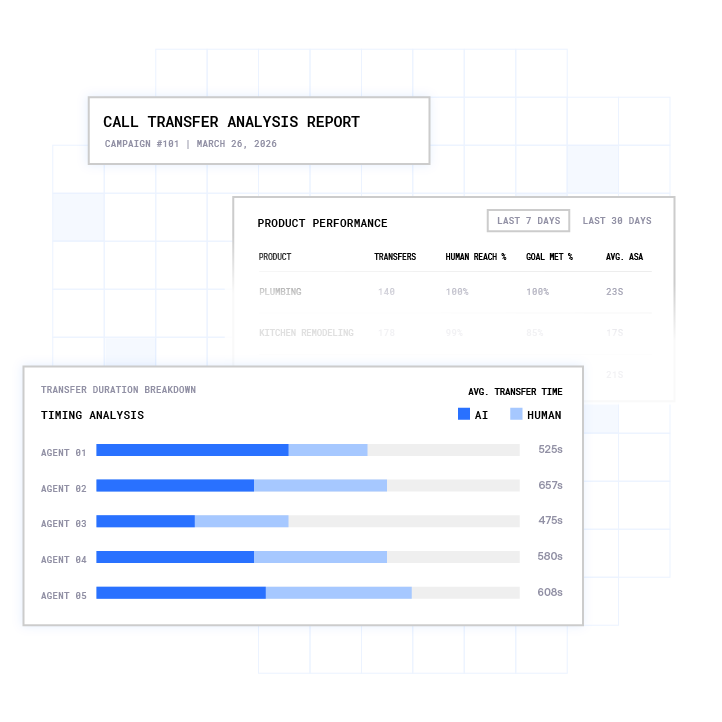
At this volume, the economics are material. A 15-agent operation costs $60,000 per month in human labor. The equivalent Plura deployment costs $14,400 per month, a 30-day savings of $45,600 (per the ROI calculator).3
Compare Plura’s plans and rates side by side. Run your numbers through the ROI calculator to see potential savings in real time.
What Breaks at Scale: Context, Spam Labeling, and Compliance
Three operational problems surface when operators scale past lightweight MCTB tools. Each becomes a selection criterion.
Cross-channel context loss. A customer who texted at 9 a.m. is the same customer when the call comes at noon. Most platforms treat those as two separate conversations because the SMS agent and the voice agent run on different systems with different memories. The customer re-explains themselves. The agent re-qualifies. The experience degrades.
Plura’s Stateful Conversation Database keys every interaction to a customer token (phone number, email, or ID) and persists it across voice, AI SMS, AI RCS, and AI webchat. The agent that texted at 9 a.m. picks up the call at noon already knowing what was said, what was offered, and what is still open.
Spam labeling. High-volume campaigns concentrating calls on a few numbers are more likely to trigger spam labels and carrier throttling. Calls flagged as “Spam Likely” before they reach the prospect are functionally lost. Plura issues branded caller ID directly through its FCC-licensed carrier, not through a third-party reseller. STIR/SHAKEN authentication runs on every outbound call, and destination carriers use it to help verify origination. Many AI voice platforms rent from a CPaaS (Communications Platform as a Service) like Twilio and inherit that carrier’s caller ID reputation instead of their own.
Compliance enforcement. The Telephone Consumer Protection Act (TCPA), 47 U.S.C. § 227, and the National DNC Registry describe frameworks for outbound calls and texts.2 A missed call by itself does not constitute consent to send a text follow-up, and TCPA penalties run $500 to $1,500 per message for violations. At scale, a manual DNC process that works at 10,000 contacts breaks at 500,000.
Plura’s compliance engine checks every outbound contact against federal and state DNC registries in real time before dial. It enforces quiet-hours rules automatically through time-zone detection. It also maintains timestamped, immutable consent records with one-click audit exports. Operators should consult the applicable regulations and qualified counsel regarding their own compliance obligations. Plura provides the infrastructure, and compliance posture downstream remains the customer’s responsibility.
How Missed Call Recovery Handles After-Hours Calls
After-hours calls are often the highest-volume missed-call path and the highest-revenue opportunity. 43% of calls to small businesses come outside standard business hours.3 After-hours recovery rates are near 0% without automation.
MCTB software can acknowledge an after-hours caller with an automated text. It cannot book them. The caller receives a message, must text back, must navigate a booking link, and must do all of this while their intent is still active. Most do not. 85% of callers who cannot reach a business on the first attempt will not call back.
An AI receptionist answers after-hours calls on the first ring, qualifies the caller, and books the appointment into the live calendar before the call ends. Plura handles after-hours call answering and after-hours booking across home services, healthcare, legal, and any vertical where after-hours calls carry real revenue. The AI operates 24/7/365 with no staffing gaps, no shift changes, and no voicemail.
Plura AI voice agents answer 100% of inbound calls across all franchise locations within two rings, including evenings, weekends, and holidays. For multi-location operators, that consistency can mean the difference between a 67% peak-hour miss rate and a 0% miss rate.
Unified Mobile Inbox and On-the-Go Management
Leaders who are not at a desk still need full visibility into conversations. Plura’s Unified Inbox consolidates voice transcripts, SMS threads, AI RCS exchanges, and webchat sessions per customer in a single screen. Every interaction is keyed to the same customer token the AI reads from, so a CX (customer experience) rep sees the same memory the AI uses.
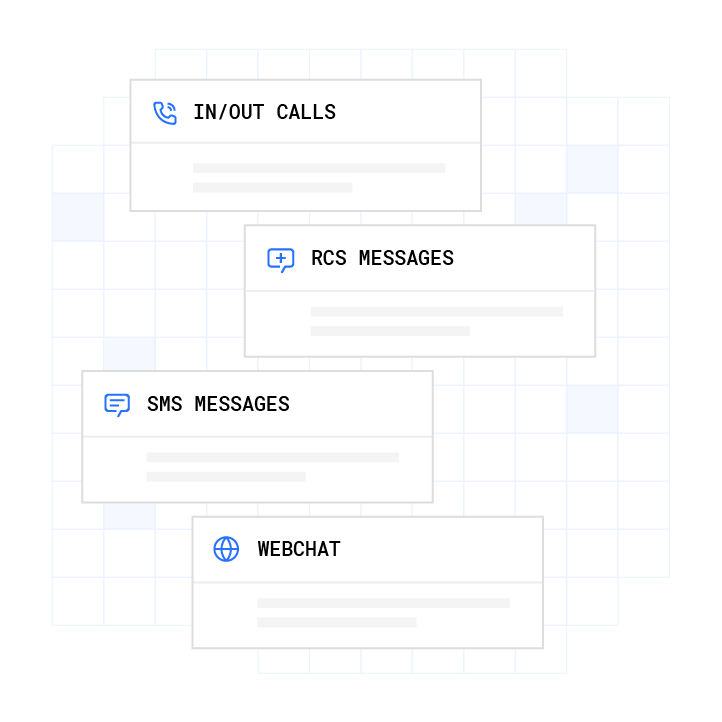
Conversation intelligence and business intelligence surface patterns across every channel, generating client-ready reports automatically without manual data pulls.
Frequently Asked Questions
What Is Missed Call Recovery Software, and How Is It Different From Consumer Phone-Data Recovery?
Missed call recovery software for businesses routes, texts, or answers callers who could not reach a live person. It functions as a business operations and revenue-protection tool. Consumer phone-data recovery apps (Stellar, iMyFone, Aiseesoft, and similar) retrieve deleted call history from a personal device. The two categories share a search term but solve different problems. This guide focuses on the business use case.
Which Missed Call Recovery Tools Work for Multi-Location Businesses?
Multi-location operators need per-location configuration, unified reporting across branches, and consistent intake regardless of which location a caller reaches. Text-back tools alone cannot enforce consistency at scale. Platforms with per-location calendar sync, a unified reporting layer, and a repeatable template model for new locations fit this need.
Plura supports multi-location deployments with AI voice agents answering 100% of inbound calls within two rings across every location, a centralized dashboard with per-location metrics, and system-level support for scripts, disclosures, and DNC lists.
How Does Missed Call Recovery Improve After-Hours Performance?
Text-back software can acknowledge an after-hours caller but cannot complete the booking flow in one step. The caller receives a message, must reply, and must navigate a booking link while their intent is still active. Many drop off during that process.
An AI receptionist answers after-hours calls live, qualifies the caller, and books the appointment into the live calendar before the call ends. Plura handles after-hours call answering and after-hours booking 24/7/365 without staffing gaps.
When Is a Lightweight Text-Back Tool Enough?
A lightweight MCTB tool is sufficient for solo operators and small businesses with under approximately 30 calls per month, low-urgency call types, no appointment booking over the phone, and low average ticket values. The upgrade to an AI receptionist becomes attractive when a missed call represents a real job or booking, when parallel calls are lost during peak hours, or when on-call qualification drives whether the customer books or walks.
How Do I Evaluate ROI for Missed Call Recovery Software?
Start with your current call volume, miss rate, lead-to-customer conversion rate, and average transaction value. Multiply those together and annualize to estimate revenue at risk. Then compare the cost of the tool against the revenue recovered. For high-volume operators, the gap between a text-back tool and an AI receptionist can be substantial, as the earlier 15-agent example illustrates. Run your numbers through Plura’s ROI calculator to check your ROI in real time.
Conclusion: Match the Tool to Volume and Revenue at Risk
Missed calls leak revenue at every operator that has not solved the answer problem. The right tool depends on call volume, ticket value, and whether the missed call is a low-urgency inquiry or a real job walking out the door.
For solo operators and small businesses with low call volume and low-urgency calls, a lightweight MCTB tool often fits. For multi-location operators, agencies, franchise networks, and high-volume contact centers, text-back alone functions as a patch. The structural fix is an AI receptionist that answers the call, qualifies the caller, books the appointment, and preserves context across every channel so the next touchpoint picks up where the last one left off.
Plura AI is designed for operators who have outgrown text-back-only tools. It runs four channels on one Stateful Conversation Database, issues branded caller ID at the carrier level, and supports TCPA and DNC compliance workflows on every outbound contact.1 It also delivers 24/7 call answering with no staffing gaps.
Compare Plura’s plans and rates side by side. Use the ROI calculator to see your potential savings in real time.
1 Plura AI maintains SOC 2, HIPAA, ISO, and GDPR posture as part of its platform infrastructure. References to compliance frameworks in this article describe Plura’s platform capabilities and do not constitute a guarantee that any customer using Plura will themselves be compliant with applicable laws or standards. Customers remain solely responsible for their own regulatory obligations, certifications, consent management, recordkeeping, and the claims they make to their own end users. Consult qualified legal counsel for guidance specific to your use case.
2 This article describes regulatory frameworks at a general level and does not constitute legal advice. Laws and regulations vary by jurisdiction, change over time, and apply differently depending on facts and circumstances. Readers should consult qualified legal counsel before making compliance decisions.
3 Performance figures, customer outcomes, and industry statistics referenced in this article are drawn from cited third-party sources or Plura customer case studies. Individual results vary based on implementation, use case, industry, audience, and execution. Past or aggregate performance is not a guarantee of future results.
4 References to third-party products, services, companies, or research are made for informational and comparative purposes only. Plura AI is not affiliated with, endorsed by, or sponsored by any third party named in this article unless explicitly stated. Trademarks and product names referenced remain the property of their respective owners.
This article is provided for informational purposes only and reflects Plura AI’s understanding at the time of publication. Product capabilities, integrations, and specifications are subject to change. For the most current information, visit plura.ai.
This article was produced with the assistance of AI tools and reviewed by Plura AI prior to publication.