
Written by: Matt Beucler, CEO, Plura AI
Key Takeaways
- Real-time DNC scrubbing AI runs a pre-dial check in under a second, comparing phone numbers against federal, state, and litigator registries before any call or AI voice agent interaction starts.
- Batch scrubbing struggles with the FTC’s 31-day rule because numbers added after the last scrub can still be called, exposing operators to $53,088 per-violation penalties.
- Pre-dial interception uses an API hook at the carrier or dialer layer that returns ALLOW, BLOCK, or REVIEW before the call leaves the network, with fail-closed behavior on timeouts.
- Complete real-time checks query five databases in parallel, covering federal and state DNC registries, wireless/VoIP indicators, the Reassigned Numbers Database, and TCPA litigator lists.
- Plura AI delivers carrier-native real-time DNC scrubbing for AI voice agents through its FCC-licensed infrastructure, enforcing checks before every outbound contact.
Why Batch Scrubbing Fails Under The FTC’s 31-Day Rule
The structural problem with batch scrubbing is timing. The FTC’s Telemarketing Sales Rule (16 C.F.R. § 310.4(b)(3)(iv)) requires sellers and telemarketers to access the National Do Not Call Registry no more than 31 days before making a call.2 That 31-day period functions as a rolling maximum staleness window. A list pulled June 1 is good through July 1, and a campaign running to July 15 requires a fresh pull by July 15.
The gap appears between pulls. The National DNC Registry updates nightly, so a number added today can appear in a downloaded list within 24 hours, which means a 31-day scrub cycle can still miss numbers registered after the last download. An operator running a 100,000-number weekly outbound campaign with a list scrubbed thirty days ago will typically contain hundreds of numbers that became DNC-protected since the last scrub.
The FCC mirrors the same 31-day standard through 47 C.F.R. § 64.1200(c)(2).2 The FTC’s maximum civil penalty under the Telemarketing Sales Rule is $53,088 per violation as of 2025, with each call to a registered number counted as a separate violation. Under 47 U.S.C. § 227(c)(5), a consumer who receives more than one telephone solicitation within 12 months in violation of DNC rules can sue for up to $500 per violation, with up to $1,500 available for willful or knowing violations.
Real-time DNC scrubbing addresses this structural gap. It shifts the check from a periodic list-washing event to a per-call gate at the moment of origination. Readers should consult the FTC’s Telemarketing Sales Rule and qualified counsel for guidance on their specific obligations.
How Real-Time DNC Scrubbing Works Before A Call Is Placed
Pre-dial interception places the compliance check at the carrier or dialer origination layer. The API hook fires before the call leaves the network, evaluates the number against all queried databases, and returns a decision. If a number fails any pre-dial compliance check, the call is blocked before it connects.
The response schema has three states:
ALLOW - Number is clear across all queried databases. Call proceeds. BLOCK - Number matches a suppression list. Call is terminated before origination. REVIEW - Number returns an ambiguous or partial result. Call is held for manual or policy-based disposition.A DNC scrub from last quarter does not meet the federal safe harbor standard, which is why the check should be run at the time of use. That timing requirement creates a dependency on the scrubbing API. If the scrubbing API times out or returns an error, the call must not proceed. Proceeding anyway eliminates the audit trail that supports a compliance defense, so a fail-closed posture is required.
The numbered steps for scrubbing numbers against the DNC list in real time are:
- Normalize the phone number to E.164 format before the lookup.
- Fire the DNC scrubbing API call at the carrier or dialer origination layer.
- Query the five required databases in parallel.
- Evaluate the response against the ALLOW/BLOCK/REVIEW schema.
- Treat any timeout or error as a failed check and hold the call.
- Write the timestamped result to the audit log with list source, campaign ID, and databases queried.
- Proceed only on ALLOW, terminate on BLOCK, and route REVIEW to the configured disposition path.
See pre-dial interception in action inside an FCC-licensed carrier stack before every outbound contact.
What Databases Real-Time DNC Scrubbing Checks
Complete real-time scrubbing queries five distinct data sources, and each one covers a different layer of risk.
Federal DNC Registry. The National Do Not Call Registry is a federal database run by the FTC under the Do Not Call Implementation Act of 2003. The FCC adopted rules under 47 U.S.C. § 227 (TCPA) requiring telemarketers to honor it, and as of 2024, approximately 249 million phone numbers are registered. The FTC does not provide a real-time REST API. It offers downloadable pipe-delimited text files by area code on a subscription basis, which is why third-party vendors build real-time lookup APIs on top of the FTC’s data.
State DNC Registries. Eleven states maintain separate Do Not Call lists that telemarketers must scrub against in addition to the National Registry: Colorado, Florida, Indiana, Louisiana, Massachusetts, Missouri, Oklahoma, Pennsylvania, Tennessee, Texas, and Wyoming. Federal-only scrubbing does not address those state-level lists when calling into those jurisdictions.
Wireless/VoIP Indicators. Numbers classified as mobile or non-fixed VoIP are treated as wireless for prior-express-written-consent purposes under the TCPA, and a misclassification can turn a compliant call into a $500 to $1,500 statutory violation. Line-type identification runs in parallel with DNC checks to reduce this risk.
Reassigned Numbers Database (RND). The Reassigned Numbers Database launched on November 1, 2021 and is administered by Somos under FCC contract. It answers whether a phone number was permanently disconnected after a specified date and provides explicit TCPA safe harbor for the first call after consent when the caller queries the database before dialing and receives a no-result response.
TCPA Litigator Lists. TCPA litigator list scrubbing adds a separate risk-management layer. Analysis of TCPA filings shows that 31% to 41% of all TCPA lawsuits in 2024 were brought by individuals who had previously filed TCPA suits.3 Litigator list data flags phone numbers tied to known serial TCPA plaintiffs and plaintiff attorneys, drawn from public court records. Checking against litigator lists before dial supports risk management strategy. Consult qualified counsel regarding your organization’s specific obligations under 47 U.S.C. § 227 and FCC DNC registry guidance.
Real-Time DNC Scrubbing Compared To Batch Scrubbing
Knowing which databases to query is only half the design decision. The other half is when to query them, and that is where batch and real-time scrubbing diverge. High-volume operations typically run both approaches because they address different points in the workflow.
| Approach | When It Runs | Primary Role | What It Misses |
|---|---|---|---|
| Batch Scrubbing | At list load or campaign setup | List hygiene and bulk suppression | Numbers that become DNC-protected after the last scrub |
| Real-Time Scrubbing | Immediately before each dial | Pre-dial interception for individual calls | Numbers excluded from the queried datasets |
Batch scrubbing keeps obviously suppressed numbers out of campaigns. Real-time scrubbing protects the moment of origination for every call.
How AI Voice Agents And Predictive Dialers Call The DNC API
An AI voice agent or AI predictive dialer integrates real-time DNC scrubbing through an API hook that fires before the conversation workflow begins. The check must complete and return ALLOW before the dialer originates the call.
In agentic architectures, Model Context Protocol (MCP) servers expose the scrubbing API as a typed tool the agent invokes before dial. The Model Context Protocol is a JSON-RPC-style standard released by Anthropic in late 2024.4 It lets an AI agent invoke typed function-call tools exposed by a server, and the server controls what tools exist, what arguments they accept, what they return, and what auth scope each tool requires.
The scrubbing tool sits at the top of the agent’s pre-dial sequence. Voice AI latency has plateaued around 600-900ms at the round trip in 2026, and a voice agent must invoke the right tool within 200-400ms of deciding it needs to and get the response back inside 600-900ms total.5 This latency budget makes parallel database queries the practical architecture rather than sequential checks.
MCP audit logging records every tool invocation, successful or failed, with the full input, full output, model reasoning (if available), timestamp, conversation ID, auth context, and a stable hash tying the log entry to the call recording. This log structure directly supports the audit trail requirements described in the next section.
For CRM integration and workflow orchestration, the MCP server pattern lets the scrubbing check run inside the same agentic workflow that manages lead enrichment, consent verification, and call routing. MCP reduces integration count: five agents and ten services require fifty traditional API connectors but only fifteen MCP components, because any MCP-compatible agent can call any MCP server without custom code.
Watch the agent orchestration layer sequence a DNC check before every outbound contact.
The Audit Trail As Safe-Harbor Evidence
The audit trail turns real-time scrubbing into documented behavior. The FTC’s TSR safe harbor under 16 C.F.R. § 310.4(b)(3) requires five documented elements: written procedures to comply with DNC requirements, personnel trained in those procedures, monitoring and enforcement of compliance, scrubbing calling lists against the National DNC Registry within 31 days before any call, and reliance on the registry version of the list absent more recent information. Missing any one element forfeits the safe harbor.
A timestamped audit log must contain specific data elements to support a compliance defense. Courts evaluate consent records for contemporaneity, meaning created at the time of the consent event, and integrity, meaning unaltered since creation, with write-once storage and cryptographic signatures as a common standard.
Each log entry for a real-time DNC check should capture:
- The phone number in E.164 format
- The timestamp in UTC at the moment of the check
- The result (ALLOW, BLOCK, or REVIEW)
- The list source and database queried
- The campaign ID and agent or dialer session identifier
- The dataset version or registry pull date
The FTC’s Telemarketing Sales Rule at 16 C.F.R. § 310.5 requires telemarketers to retain compliance-related records, including registry download dates and scrub logs. The FTC amended § 310.5(a)(10) effective May 16, 2024, extending internal DNC record retention from two years to five years and aligning it with the five-year statute of limitations for civil penalty actions under the rule. Consult qualified counsel regarding your organization’s specific recordkeeping obligations.
How Plura AI Enforces Real-Time DNC Scrubbing At The Carrier Layer
Carrier ownership lets Plura AI run real-time checks inside the same infrastructure that places the call. Plura AI owns its FCC-licensed audio bridging carrier, so voice traffic does not route through a third-party CPaaS (Communications Platform as a Service) like Twilio. That architecture allows pre-dial checks to run inside the carrier layer before the call leaves the network.
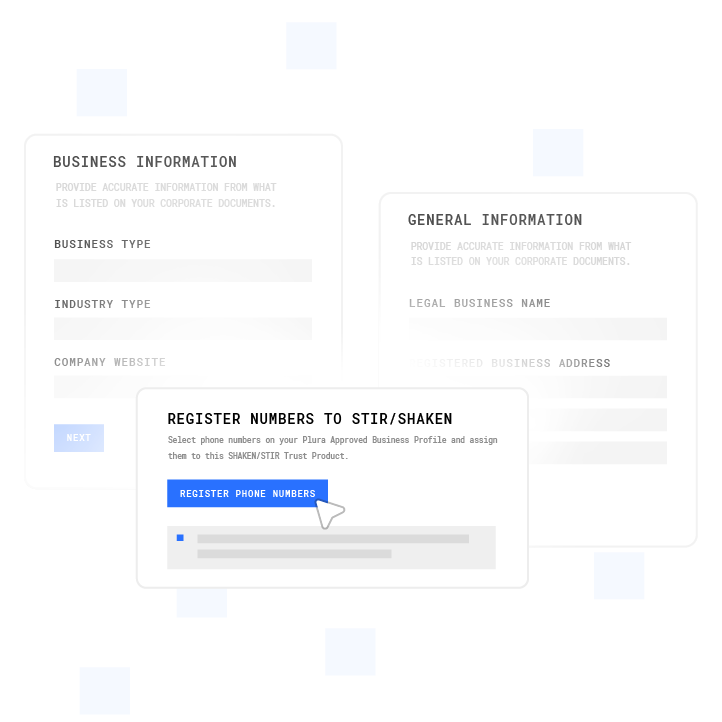
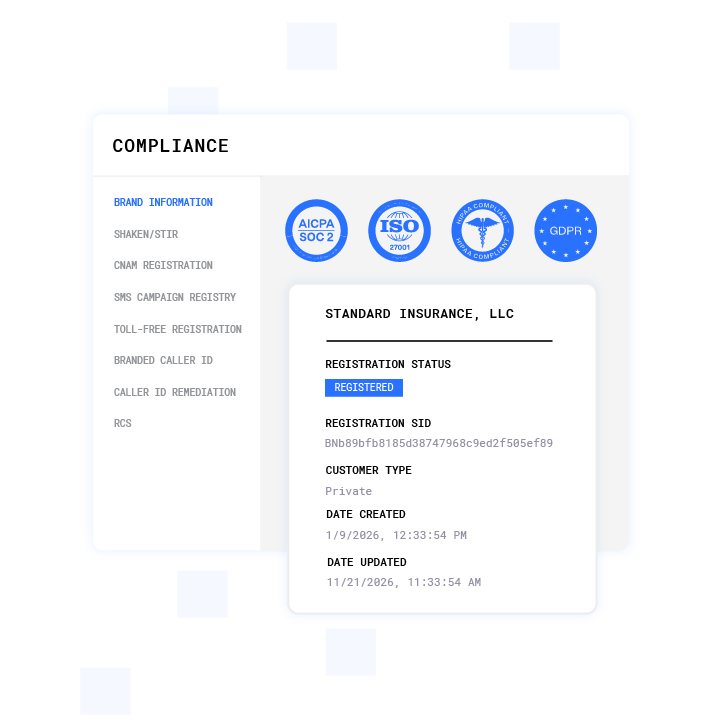
Because Plura controls the carrier layer, real-time DNC scrubbing, TCPA-litigator screening, automated quiet hours, and immutable consent logging are enforced inside the platform on every outbound contact before dial. Plura AI provides HIPAA, SOC 2 compliance, and integration with real-time Do Not Call scrubbing and litigation protection.1 TCPA violations carry statutory damages of $500 to $1,500 per unsolicited call or text. Class action settlements averaged $6.6M in 2023 (FCC, 2025; WebRecon LLC, 2024).3 Plura’s compliance engine operates as a first-class layer of the platform.
1
Plura’s AI voice agent, AI predictive dialer, AI SMS, AI RCS, and AI webchat all share a Stateful Conversation Database, so scrubbing and consent records persist across channels. A number blocked on an outbound voice campaign is suppressed across SMS and RCS outreach from the same platform. Plura AI integrates with real-time TCPA litigator and DNC screening on outbound contacts across client accounts.
Plura supports customer compliance and provides tooling to help enforce customer policies. Customers remain responsible for their own certifications, regulatory obligations, and the claims they make to their own end users. Review pricing and plans to evaluate which tier fits your outbound volume, and use the ROI calculator to model the cost difference between your current stack and Plura’s carrier-native enforcement.
Frequently Asked Questions
What Is Real-Time Single-Number DNC Lookup?
Real-time single-number DNC lookup is a pre-dial API call that checks one phone number against federal, state, and litigator registries and returns ALLOW, BLOCK, or REVIEW before the call is placed. Batch scrubbing applies a suppression file to an entire list at load time, while a single-number lookup fires at the moment of origination for each individual dial. This timing means the check reflects the current state of every queried database at the exact time the call would leave the network, rather than the state of those databases when the list was last refreshed.
How Fast Does A Real-Time DNC Scrubbing API Need To Return?
The target is sub-second performance. The check must complete before the call leaves the carrier or dialer origination layer. In practice, production deployments target parallel database queries that return a combined result in well under one second. A 2026 Phone-Check.app benchmark of 10,000 validation requests from US-East and EU-West found that four major phone validation providers—phone-check.app, Twilio, Vonage, and AbstractAPI—had P95 latencies of 89ms, 280ms, 190ms, and 340ms respectively, and P99 latencies of 130ms, 520ms, 350ms, and 680ms respectively, all under 400ms P95 and 700ms P99.3,4 For AI voice agent and AI predictive dialer workflows, the scrubbing check is sequenced before the conversation workflow begins, so its latency adds to pre-dial setup time rather than to in-call response time.
What Happens If The DNC Scrubbing API Times Out?
The system should fail closed. If the API does not return a result within the configured timeout window, the call must not proceed. Proceeding on an unresolved check means the call originates without a verified ALLOW result, which eliminates the audit record described in the safe-harbor section. A fail-closed posture treats an API timeout the same as a BLOCK result: the call is held, the timeout event is logged with a timestamp and campaign ID, and the number is routed to the REVIEW disposition path for manual handling. This behavior should be configured at the dialer or carrier origination layer rather than left to application-level error handling.
Does Real-Time DNC Scrubbing Replace Batch Scrubbing?
The two approaches address different points in the compliance workflow. Batch scrubbing handles list hygiene at load time, removing known suppressed numbers before a campaign launches and applying established business relationship eligibility rules across the full list. Real-time scrubbing handles the pre-dial interception point for each individual dial, catching numbers that became DNC-protected after the batch scrub ran. High-volume outbound operations typically run both, using a batch scrub when the list is loaded and a real-time single-number check at the moment each call originates.
What Makes Plura Different From Twilio-Based DNC Scrubbing Tools?
The carrier layer is the key distinction. Twilio-based API resellers typically operate at the application layer, while Plura owns its FCC-licensed audio bridging carrier. That ownership means real-time DNC scrubbing, TCPA-litigator screening, automated quiet hours, and immutable consent logging are enforced inside the platform on every outbound contact before dial. Branded caller ID is issued at the carrier level under Plura’s operating company number, and SHAKEN/STIR caller ID verification runs on every outbound call. These capabilities are built into the platform architecture. Customers evaluating options can ask any vendor whether compliance enforcement happens before or after the call leaves the network.
Conclusion
The 31-day rolling window described earlier is the structural reason real-time DNC scrubbing exists. Batch scrubbing treats compliance as a point-in-time event, so a list scrubbed on day one can fall outside the safe harbor by day 32, and numbers registered after the batch scrub become non-callable before the next refresh. Pre-dial interception moves the check to the moment that matters most, before the call leaves the network.
For AI voice agent and AI predictive dialer stacks, that design means an API hook at the carrier or dialer origination layer that queries all five databases described above in parallel. The hook returns ALLOW, BLOCK, or REVIEW in under a second, with a timestamped audit log written on every result. Fail-closed behavior on API timeout preserves that audit trail.
Plura enforces this behavior inside its own FCC-licensed carrier stack before every outbound contact, with compliance controls built into the platform rather than added afterward.
Run your numbers through Plura’s ROI calculator to check your cost savings in real time.
Compare plans and rates side by side.
See carrier-layer enforcement on a live call with real-time DNC scrubbing on every outbound contact.
1 Plura AI maintains SOC 2, HIPAA, ISO, and GDPR posture as part of its platform infrastructure. References to compliance frameworks in this article describe Plura’s platform capabilities and do not constitute a guarantee that any customer using Plura will themselves be compliant with applicable laws or standards. Customers remain solely responsible for their own regulatory obligations, certifications, consent management, recordkeeping, and the claims they make to their own end users. Consult qualified legal counsel for guidance specific to your use case.
2 This article describes regulatory frameworks at a general level and does not constitute legal advice. Laws and regulations vary by jurisdiction, change over time, and apply differently depending on facts and circumstances. Readers should consult qualified legal counsel before making compliance decisions.
3 Performance figures, customer outcomes, and industry statistics referenced in this article are drawn from cited third-party sources or Plura customer case studies. Individual results vary based on implementation, use case, industry, audience, and execution. Past or aggregate performance is not a guarantee of future results.
4 References to third-party products, services, companies, or research are made for informational and comparative purposes only. Plura AI is not affiliated with, endorsed by, or sponsored by any third party named in this article unless explicitly stated. Trademarks and product names referenced remain the property of their respective owners.
5 This article contains forward-looking statements regarding industry trends, technology adoption, and future capabilities. These statements reflect current expectations and are subject to change. Plura AI undertakes no obligation to update forward-looking statements except as required.
This article is provided for informational purposes only and reflects Plura AI’s understanding at the time of publication. Product capabilities, integrations, and specifications are subject to change. For the most current information, visit plura.ai.
This article was produced with the assistance of AI tools and reviewed by Plura AI prior to publication.