
Written by: Matt Beucler, CEO, Plura AI
Key Takeaways for High-Volume Outbound Teams
- Predictive dialer DNC scrubbing cross-references every outbound number against federal, state, and internal Do Not Call registries plus litigator databases in real time before each dial.
- The scrubbing workflow starts with federal and state registry checks, then adds internal suppression, litigator filtering, consent verification, and quiet-hours enforcement.
- Just-in-time, carrier-level scrubbing closes the exposure gap that batch scrubbing creates when numbers change status between list upload and dial time.
- Plura AI performs all compliance checks inside its FCC-licensed carrier infrastructure on every outbound contact across voice, SMS, RCS, and webchat channels.
- Operators can see real-time DNC scrubbing and TCPA controls in a live Plura demo running inside an AI Predictive Dialer environment.
How Predictive Dialer DNC Scrubbing Works in Practice
Predictive dialer DNC scrubbing is the automated, real-time cross-reference of every outbound number against federal, state, and internal Do Not Call registries plus serial-litigator databases before the dial occurs. Plura AI performs this two-stage registry scrubbing at the carrier level on 100% U.S. infrastructure, supporting TCPA compliance and DNC compliance without bolt-on tools. Every number is checked before the call leaves the platform, not after a batch job runs overnight.
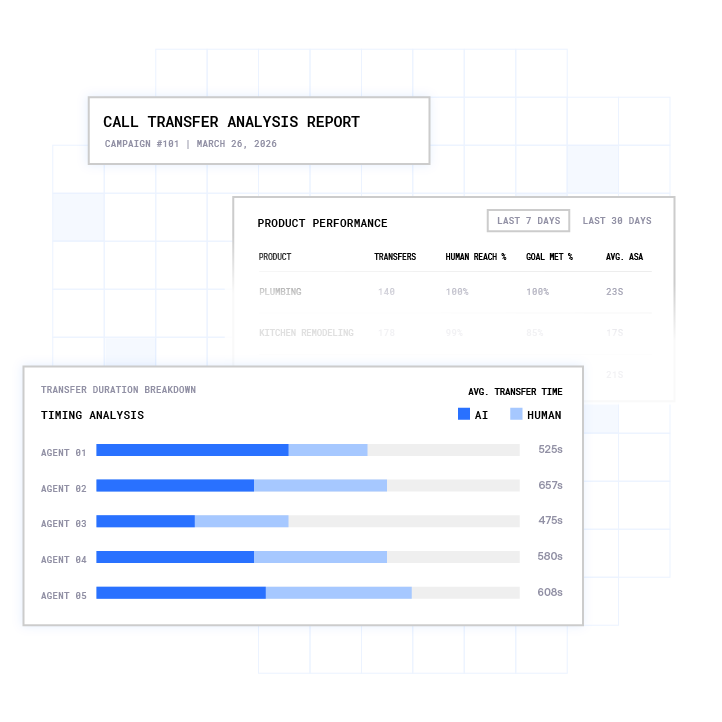
See the two-stage scrubbing workflow live in Plura inside an AI Predictive Dialer environment.
How to Scrub a List for DNC Inside the Dial Path
Scrubbing a contact list for DNC compliance requires multiple checks that run together, not a single registry lookup. Under 47 U.S.C. § 227, the Telephone Consumer Protection Act (TCPA) describes the federal framework governing automated outbound calls and related suppression obligations.2 Operators should consult qualified counsel to interpret how these rules apply to their specific campaigns. The following workflow describes how Plura executes scrubbing inside the dial path on every outbound contact, with a two-stage registry check (federal, then state) followed by four additional compliance gates.
- Load the contact list into the dialer. Contacts are ingested into Plura’s AI Predictive Dialer with associated metadata: phone number, time zone, consent record timestamp, and campaign assignment.
- Stage 1 – Federal registry check. Before any dial attempt, the number is cross-referenced against the National Do Not Call Registry maintained by the FTC. Numbers with active registrations are suppressed from the dial queue automatically.
- Stage 2 – State registry and internal suppression check. The number is simultaneously checked against applicable state DNC registries and the operator’s internal suppression list. State rules vary in scope and calling-window restrictions, and Plura applies 50+ state rule sets automatically through time-zone detection.
- Litigator filter check. The number is run against a serial-litigator database. Plura integrates with Blacklist Alliance for real-time TCPA litigator and DNC screening on outbound contacts across client accounts.4 Numbers flagged as belonging to known TCPA litigants are blocked before the dial attempt.
- Consent record verification. Even if a number clears all registry and litigator checks, the platform still confirms that a valid, timestamped consent record exists for the contact. Consent records are immutable and audit-ready.
- Quiet-hours enforcement. Finally, time-zone detection applies federal and state calling-window restrictions. Contacts outside the permitted window are held in queue, not dialed, even if they have passed all other checks.
- Dial or suppress decision. Only numbers that clear all six prior checks enter the active dial queue. The dialer then applies dynamic pacing and answer-rate management to the cleared list.
This sequence runs on every number, on every dial attempt, inside Plura’s FCC-licensed carrier infrastructure. No third-party CPaaS (Communications Platform as a Service) sits between the scrubbing layer and the dial origination.
Scrubbing Frequency Requirements for Telemarketers
The federal framework for DNC scrubbing frequency comes from FCC rulemaking. FCC CG Docket No. 26-52 reflects the ongoing regulatory environment governing telemarketing obligations, including the 31-day scrubbing rule that describes how often telemarketers must access the National DNC Registry before making a covered call.2 Sellers (and most telemarketers) must obtain a SAN to access the National DNC Registry, with exceptions for certain nonprofits and informational calls. Operators should consult qualified counsel to confirm how the 31-day rule and SAN registration requirements apply to their specific calling programs.
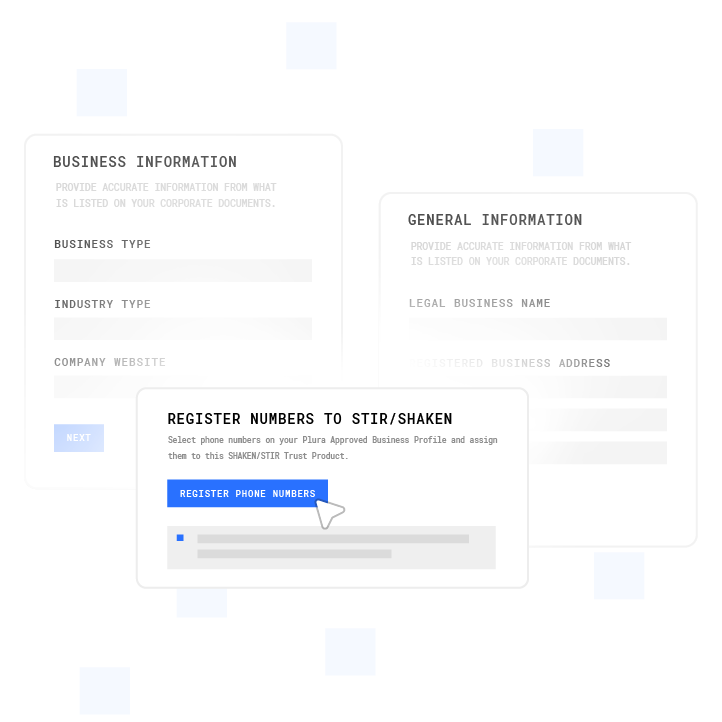
State variations add another layer. Several states maintain their own DNC registries with independent scrubbing expectations and calling-window restrictions that differ from federal minimums. A campaign that is federally aligned on scrubbing frequency may still face state-level exposure if state registry checks are not layered in. Plura applies 50+ state rule sets automatically, and operators remain responsible for confirming their own compliance posture with counsel.
Batch Litigator Scrub: Where Timing Creates Exposure
Understanding the 31-day federal requirement and varying state obligations highlights why the timing of scrubbing matters as much as the scrubbing itself. A batch litigator scrub runs a contact list against a litigator database at a fixed point in time, typically before a campaign launches. The gap between that scrub and the actual dial creates risk. Litigator databases are updated continuously. A number that was clean at batch-scrub time may appear on a litigator list hours or days later, before the campaign finishes dialing.
The operational exposure grows with list size and campaign duration. A 50,000-record campaign dialed over five days carries meaningful risk that numbers added to litigator databases after the initial batch scrub will be reached before the next scheduled refresh. TCPA violations carry statutory damages of $500 to $1,500 per unsolicited call or text, with class action settlements averaging $6.6 million in 2023.3 A single litigant reached after a stale batch scrub can anchor a class action.
Batch scrubbing also creates an abandonment-rate problem. Dialers that rely on pre-campaign batch suppression have no mechanism to block a number that enters a DNC registry mid-campaign. The call still goes out. The suppression happens at the next batch cycle, after the damage is done.
Just-in-Time DNC Scrubbing with Carrier-Level Controls
Just-in-time DNC scrubbing checks every number at the moment of dial, not at the moment of list upload. The check runs inside the dial path, before the call originates, on every attempt. If a number entered a DNC registry after the campaign launched, the just-in-time check catches it. The call is suppressed, and the batch-scrub gap closes.
The economic comparison between batch and real-time scrubbing is straightforward for high-volume operators. Batch scrubbing appears cheaper upfront, because it carries a fixed cost at list-load time, but that fixed cost comes with a variable litigation risk that scales with campaign duration and list size. Real-time scrubbing inverts this model. It carries a per-check cost, and that cost is offset by the elimination of mid-campaign exposure. For operations dialing at volume, the litigation risk of a single missed litigant exceeds the per-check cost of real-time scrubbing by orders of magnitude, which makes the per-check model the lower-risk choice.
Plura’s compliance framework includes SOC 2 compliant infrastructure, TCPA and SHAKEN/STIR enforcement, integration with Blacklist Alliance for DNC screening, and Number Verifier for caller ID reputation.1 These checks run at the carrier level, not as a bolt-on layer sitting outside the dial path. Because Plura owns its FCC-licensed audio bridging carrier, the workflow described above runs at origination, with no third-party CPaaS between the scrubbing layer and the dial.
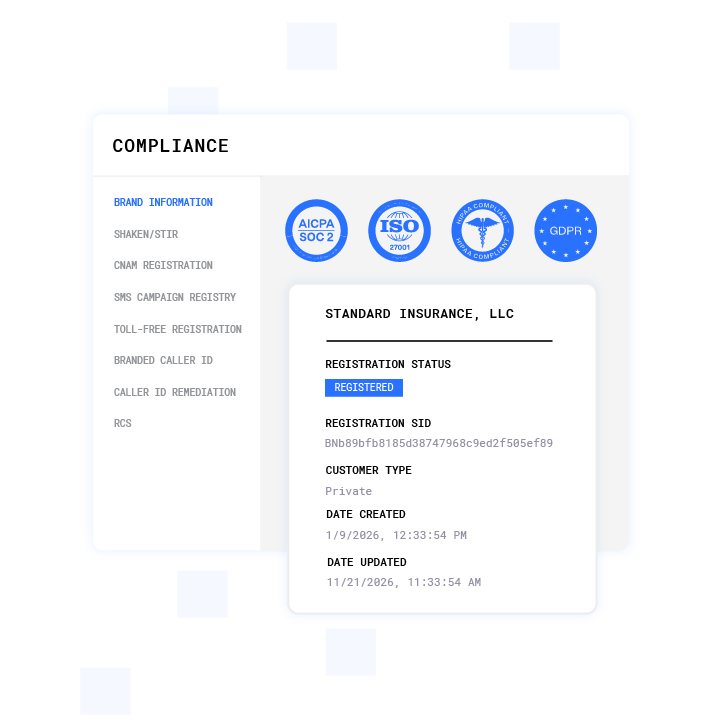
Schedule a technical walkthrough to see the just-in-time scrubbing architecture on a live campaign configuration.
Compliance Checklist for Predictive Dialer DNC Scrubbing
| Requirement | Scope | Frequency / Trigger | Plura Enforcement Layer |
|---|---|---|---|
| Federal DNC registry scrub | National Do Not Call Registry (FTC) | Within 31 days of each dial; consult counsel for specifics | Real-time, pre-dial, carrier level |
| SAN registration | FTC Subscription Account Number for registry access | Operator obligation; renewed annually | Operator-managed; Plura surfaces suppression data |
| State DNC registries | State-specific registries (varies by state) | Per-dial, real-time; state rules vary | 50+ state rule sets enforced automatically |
| Internal suppression list | Operator’s own do-not-contact records | Per-dial, real-time | Loaded into Plura’s suppression layer; checked pre-dial |
| TCPA litigator filter | Serial-litigant databases (e.g., Blacklist Alliance) | Per-dial, real-time | Integrated litigator screening pre-dial |
| Consent record retention | Express written consent per contact | Timestamped at capture; immutable | Immutable consent ledger; one-click audit export |
| Quiet-hours enforcement | Federal and state calling-window restrictions | Per-dial; time-zone detection | Automatic hold for out-of-window contacts |
| SHAKEN/STIR caller ID verification | FCC caller ID authentication | Every outbound call | Carrier-level authentication at origination |
| SOC 2, HIPAA, ISO certification, GDPR | Infrastructure and data handling standards | Continuous monitoring | Built into Plura’s platform infrastructure |
This checklist describes Plura’s platform enforcement layers. It is not legal advice. Operators are responsible for their own compliance obligations and should consult qualified counsel to confirm how federal and state DNC rules apply to their specific campaigns.
Request a compliance-focused demo to see how each checklist item maps to a live campaign configuration on 100% U.S. infrastructure.
Frequently Asked Questions
How do federal and state DNC scrubs differ?
The federal DNC scrub checks a number against the National Do Not Call Registry maintained by the FTC, which covers most residential and wireless numbers registered by consumers across the United States. A state DNC scrub checks against a state-maintained registry, which may cover additional numbers or apply different rules around who can call, for what purpose, and during what hours. Several states maintain independent registries with obligations that differ from the federal framework. Operators running multi-state campaigns need both checks applied on every dial. Plura applies 50+ state rule sets automatically through time-zone detection, and operators should confirm their specific obligations with qualified counsel.
What is a TCPA litigator list and why does it matter for predictive dialers?
A TCPA litigator list is a database of phone numbers associated with individuals who have a documented history of filing TCPA claims or participating in TCPA class actions. Reaching one of these numbers with an automated call can trigger the statutory damages described earlier, and a single litigant can anchor a class action that aggregates claims across an entire campaign. Predictive dialers operating at high volume are particularly exposed because the sheer number of dial attempts increases the probability of reaching a litigant. Plura integrates with Blacklist Alliance for real-time TCPA litigator screening on every outbound contact, blocking flagged numbers before the dial attempt.4
Why is batch DNC scrubbing insufficient for high-volume outbound campaigns?
Batch scrubbing checks a list at a fixed point in time, typically before a campaign launches. DNC registries and litigator databases are updated continuously. A number that was clean at batch-scrub time may enter a registry or litigator database hours or days later, before the campaign finishes dialing. For a campaign running over multiple days across tens of thousands of records, the gap between the batch scrub and the final dial attempt is where exposure accumulates. Real-time, just-in-time scrubbing eliminates this gap by checking every number at the moment of dial, not at the moment of list upload.
Does Plura’s DNC scrubbing work across all outbound channels, or only voice?
Plura’s compliance engine applies DNC scrubbing and TCPA litigator filtering across voice, SMS, RCS, and webchat outbound contacts. The same suppression layer that blocks a flagged number from the AI Predictive Dialer also applies to AI SMS and AI RCS outbound sequences. Because all four channels share Plura’s Stateful Conversation Database, a suppression applied on one channel is reflected across all channels for that contact. Operators running multi-channel campaigns do not need to manage separate suppression lists per channel.
What certifications and compliance standards does Plura’s infrastructure support?
Plura’s platform infrastructure supports SOC 2, HIPAA, ISO certification, GDPR, SHAKEN/STIR caller ID verification, TCPA compliance, and DNC compliance.1 These elements are built into the platform architecture, not added as third-party bolt-ons. Operators are responsible for their own compliance obligations and certifications. Plura provides the infrastructure and enforcement layers, and downstream compliance posture remains the operator’s responsibility. Operators should consult qualified counsel to confirm how their use of the platform maps to their specific regulatory obligations.
Conclusion: Closing the Scrubbing Gap at Dial Time
Predictive dialer DNC scrubbing performed only at the batch level leaves a gap between the scrub and the dial. That gap is where TCPA exposure accumulates, where litigants get reached, and where class actions start. The workflow described here, including federal registry checks, state registry and internal suppression checks, litigator filtering, consent verification, quiet-hours enforcement, and just-in-time dial decisions, closes that gap by running every check at the moment of dial, inside the carrier infrastructure, before the call originates.
Plura executes this workflow at the carrier level on 100% U.S. infrastructure, with no third-party CPaaS in the path and no bolt-on compliance layer sitting outside the dial origination point. The platform architecture treats compliance as a first-class layer, not a bolt-on, and the certifications and integrations described above run at the carrier level before each call originates. Operators running high-volume outbound campaigns on Plura report 100% DNC compliance and 0 violations on the platform’s track record.3
Compare plans and rates side by side on Plura’s pricing page.
1 Plura AI maintains SOC 2, HIPAA, ISO, and GDPR posture as part of its platform infrastructure. References to compliance frameworks in this article describe Plura’s platform capabilities and do not constitute a guarantee that any customer using Plura will themselves be compliant with applicable laws or standards. Customers remain solely responsible for their own regulatory obligations, certifications, consent management, recordkeeping, and the claims they make to their own end users. Consult qualified legal counsel for guidance specific to your use case.
2 This article describes regulatory frameworks at a general level and does not constitute legal advice. Laws and regulations vary by jurisdiction, change over time, and apply differently depending on facts and circumstances. Readers should consult qualified legal counsel before making compliance decisions.
3 Performance figures, customer outcomes, and industry statistics referenced in this article are drawn from cited third-party sources or Plura customer case studies. Individual results vary based on implementation, use case, industry, audience, and execution. Past or aggregate performance is not a guarantee of future results.
4 References to third-party products, services, companies, or research are made for informational and comparative purposes only. Plura AI is not affiliated with, endorsed by, or sponsored by any third party named in this article unless explicitly stated. Trademarks and product names referenced remain the property of their respective owners.
This article is provided for informational purposes only and reflects Plura AI’s understanding at the time of publication. Product capabilities, integrations, and specifications are subject to change. For the most current information, visit plura.ai.
This article was produced with the assistance of AI tools and reviewed by Plura AI prior to publication.