US-Based AI Predictive Dialer: What Contact Centers Need
ON THIS PAGE
Written by: Matt Beucler, CEO, Plura AI
Key Takeaways for US-Based AI Dialing and Compliance
A US-based AI predictive dialer relies on 100% US infrastructure, carrier-level STIR/SHAKEN authentication, and real-time DNC scrubbing to support FCC and state compliance requirements.
Plura AI is an FCC-licensed carrier platform that owns its telecom infrastructure, which enables A-level STIR/SHAKEN attestation, branded caller ID, and real-time compliance checks that Twilio-based resellers typically cannot provide.
The FCC’s March 2026 NPRMs and state onshoring statutes increase compliance exposure for operators using offshore BPOs or non-US infrastructure, so domestic carrier ownership becomes a key risk-mitigation factor.
Plura’s AI Predictive Dialer typically reduces total cost of ownership from $4M–$7M to $300K–$700K annually while maintaining stateful conversation memory across voice, SMS, RCS, and webchat.3
Operators who want a compliance-first, US-based AI dialer can book a live demo with Plura AI to see the carrier stack and compliance engine in action.
How FCC and State Rules Shape US-Based Call Center Strategy
The FCC does not currently impose a blanket US-infrastructure mandate on all businesses.2 The regulatory landscape, however, shifted materially in March 2026. The FCC adopted two Notices of Proposed Rulemaking (NPRMs) on March 26, 2026 that create direct exposure for high-volume outbound operators.
FCC 26-16 (CG Docket No. 26-52), titled “Improving Customer Service and Protecting Consumers through Onshoring,” proposes a percentage-based cap on customer-service calls handled by foreign call centers. The NPRM also proposes that certain sensitive transactions be handled only at US-based call centers, regardless of whether the interaction begins by voice, text, chat, or email. Covered providers would disclose at the start of a call when it is routed to a foreign call center and honor consumer requests to transfer to a US-based representative.
A companion rulemaking, FCC 26-17 (WC Docket No. 26-49), proposes extending robocall mitigation certifications, including STIR/SHAKEN compliance and Robocall Mitigation Database filings, to all service providers and resellers receiving numbering resources from NANPA. It also proposes foreign ownership disclosure requirements for those providers, framed as a national security and anti-robocall measure. Any outbound-calling platform with offshore infrastructure dependencies or non-US carrier ownership in its numbering supply chain faces additional compliance risk even when the end business is US-based.
At the federal legislative level, the Keep Call Centers in America Act (S.2495) requires companies planning to move call center operations overseas or outsource 30% or more of work to foreign providers to notify the Department of Labor at least 120 days in advance. Non-compliant companies become ineligible for certain federal grants and guaranteed loans for up to five years. The Foreign Robocall Elimination Act (S.2666) extends the federal regulatory perimeter further.
State-level exposure is already active. New York’s Call Center Jobs Act carries penalties up to $10,000 per day.2 New Jersey, Connecticut, Missouri, and Florida have enacted statutes that restrict offshore handling of medical, financial, and consumer data. Operators with offshore vendor contracts in covered categories should consult qualified counsel to assess their current exposure under each applicable statute.2
Plura runs on 100% US infrastructure by architecture. Voice origination, model hosting, data storage, and call recording all sit on domestic infrastructure. Plura clients report “100% US-handled” in their broadband consumer label disclosures and are not exposed to offshore disclosure mandates or foreign-adversary-nation prohibitions under the proposed rules.
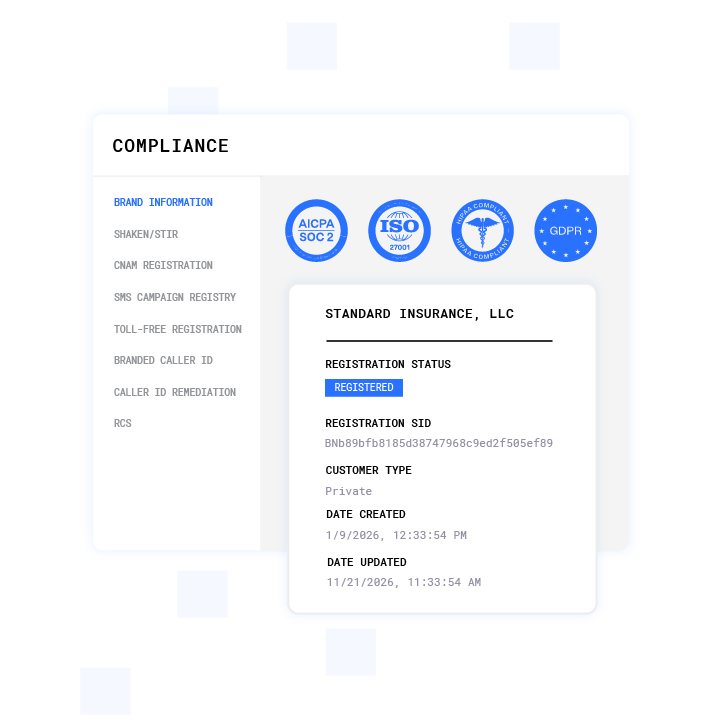
Plura Security & Compliance supports SOC 2, ISO, and GDPR standards with trust registration, verification management, and secure AI communications.1
Dialer Architectures and Their Compliance Tradeoffs
Given these regulatory pressures toward US-based infrastructure, understanding how different dialer architectures handle compliance becomes critical. The outbound dialing market in 2026 contains three primary categories, each with a different compliance and cost profile.
Twilio-based API resellers represent the largest category by vendor count. These platforms wrap a third-party Communications Platform as a Service (CPaaS) layer, typically Twilio, with a thin AI layer on top. Because they do not own the carrier, they cannot issue branded caller ID at the carrier level, cannot sign calls at STIR/SHAKEN A-level attestation, and cannot enforce real-time DNC scrubbing as a first-class platform layer. Resellers and CPaaS platforms that sit atop an upstream carrier can only obtain B-level attestation at best because the signing carrier lacks a direct relationship with the end user and cannot verify number authority. B-level and C-level attestation produce measurably lower answer rates than A-level on identical dialing patterns.
Offshore BPOs addressed the cost problem for two decades through wage arbitrage. That model is now collapsing under the FCC NPRM, the Keep Call Centers in America Act, and active state onshoring statutes. Every offshore vendor contract a covered entity holds now functions as a compliance liability that should be reviewed with counsel.
This regulatory shift pushes operators back toward onshore human call centers. These centers carry the cost structure that made the economics difficult: payroll, taxes, benefits, commissions, real estate, and 30-50% annual front-desk turnover. They are reliable but do not scale into peak season without burning through hiring budgets months in advance.
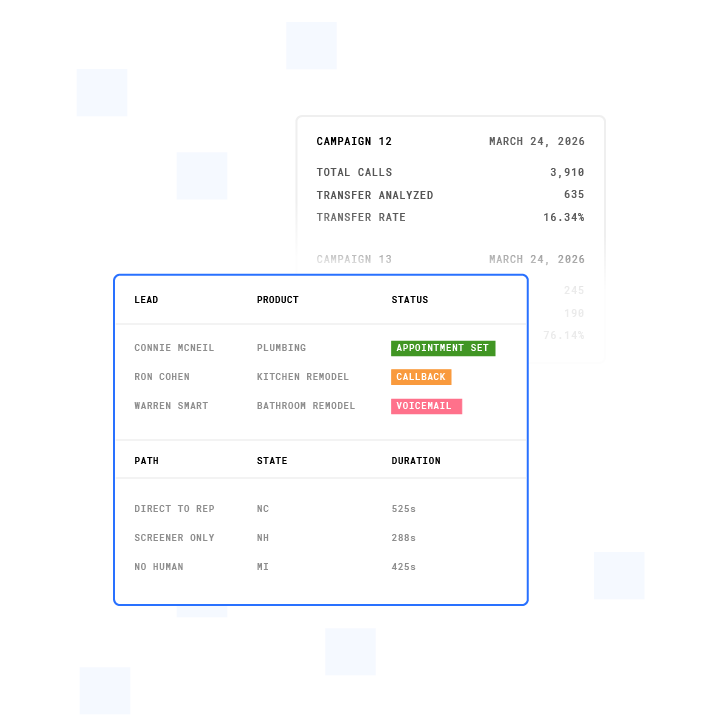
Plura Predictive Dialer uses AI-powered outbound dialing, intelligent routing, and real-time analytics to maximize call performance.
All four channels, voice, SMS, RCS, and webchat, share a Stateful Conversation Database. A contact who received an SMS at 9 a.m. is recognized when the dialer reaches them at noon. No re-introduction occurs. No repeated qualification occurs. The AI carries the full prior context into every new touchpoint, including pricing offers made, objections raised, and qualification status.
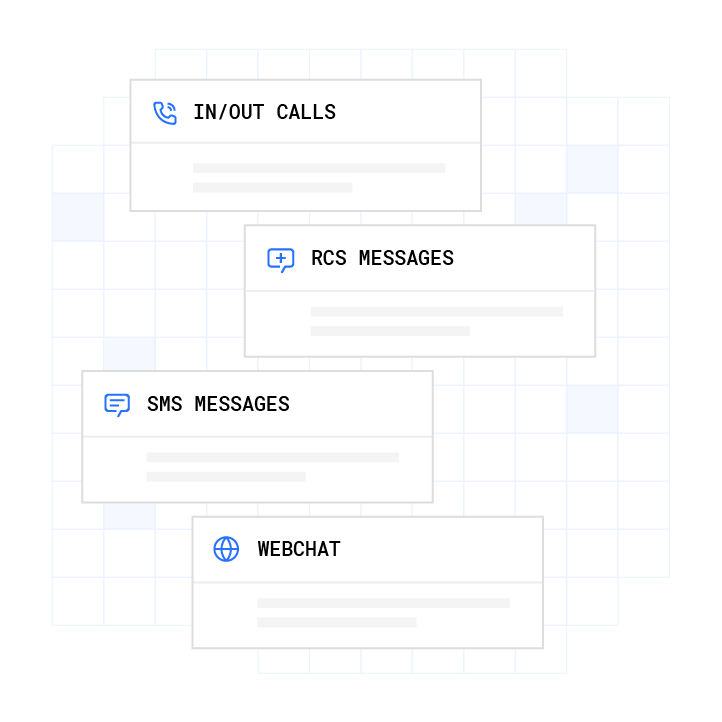
Plura Unified Inbox centralizes AI Voice, SMS, RCS, and Webchat conversations into one streamlined omnichannel communication workspace.
Every annual contract includes a 90-day opt-out window. If the deployment is not delivering, operators are not held to the annual term.
Carrier-Level Tactics to Reduce “Spam Likely” Labels
“Spam Likely” labels originate at the carrier level, so they require a carrier-level solution. Hiya’s State of the Call 2026 report states that 86% of unknown calls go unanswered.3 Mobile answer rates for unknown numbers in the US have dropped substantially in recent years due to carrier spam scoring, iOS and Android unknown-caller silencing, and STIR/SHAKEN attestation warnings. Calls placed with B-level STIR/SHAKEN attestation experience answer rates 10–20% below those of A-level signed numbers.3
Three mechanisms drive spam labeling on outbound campaigns:
Low STIR/SHAKEN attestation. Platforms that rent carrier capacity from a CPaaS reseller inherit that reseller’s attestation level. B-level and C-level attestation often produce “Unverified” or “Scam Likely” display treatment on terminating devices. Plura signs every outbound call at A-level attestation directly through its own FCC carrier, without an upstream reseller in the signing path.
Unbranded caller ID. Calls that present as an unfamiliar number with no business name attached are flagged at higher rates. Plura issues branded caller ID directly through its FCC-licensed carrier. Calls present with the company’s name and the reason for the call, which turns screened calls into pickups instead of voicemails.
Plura also supports number-reputation remediation at the carrier level. Most Twilio-based API resellers cannot provide this capability because they do not own the carrier and inherit the CPaaS provider’s caller ID reputation rather than their own.
Contact Center Cost Structure: From Millions to Hundreds of Thousands
The default scenario on Plura’s ROI calculator illustrates the mechanics at a 15-agent scale. A 15-agent operation paying $20 per hour with standard taxes, benefits, and commissions, running at a 40% talk-utilization rate typical of human contact-center work, costs $60,000 per month. Replacing that team with Plura at $15 per hour, 100% talk utilization, and 6 Plura agents doing the work of 15 humans drops the monthly cost to $14,400. Savings reach $45,600 in the first 30 days, $547,200 over 12 months, and $2,736,000 over 60 months.
For higher-volume operations, Plura’s TCO of $300,000-$700,000 per year replaces the traditional $4M-$7M contact-center cost structure on equivalent volume. That gap widens further when TCPA litigation exposure enters the model. TCPA violations carry statutory damages of $500 to $1,500 per unsolicited call or text, with class action settlements averaging $6.6M in 2023. A 50,000-record AI outbound campaign without consent carries theoretical TCPA exposure of $25 million to $75 million at $500-$1,500 per call. Compliance infrastructure functions as a liability hedge, not just a cost center.
Plura’s compliance engine checks every outbound contact against federal and state DNC registries in real time before dial. Consent records are timestamped, immutable, and audit-ready. Quiet-hours rules enforce automatically through time-zone detection. The dashboard exports audit-ready reports in one click.
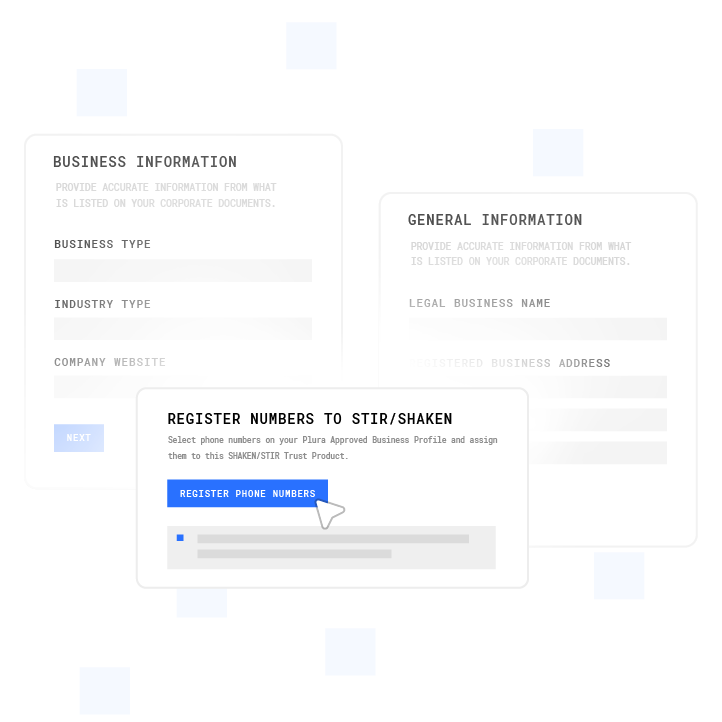
Plura’s FCC-licensed AI communications platform simplifies compliant business registration and phone number provisioning for AI Voice, SMS, RCS, and Webchat workflows.
Run your numbers through Plura’s calculator to check your ROI in real time: plura.ai/calculator.
Frequently Asked Questions
How Plura AI Differs from Other AI Predictive Dialers
Most AI predictive dialer platforms are built as API wrappers on top of a third-party CPaaS provider such as Twilio. They do not own the carrier, which means they cannot issue branded caller ID at the carrier level, cannot sign calls at STIR/SHAKEN A-level attestation, and cannot enforce real-time DNC scrubbing as a native platform layer. Plura is its own FCC-licensed audio bridging carrier. Voice originates on Plura’s domestic infrastructure. Branded caller ID is issued directly. STIR/SHAKEN authentication runs at A-level. Real-time DNC scrubbing, TCPA consent logging, and quiet-hours enforcement operate as first-class layers of the platform, not third-party add-ons. All four channels, voice, SMS, RCS, and webchat, share a single Stateful Conversation Database so every agent interaction carries the full history of every prior touchpoint.
How the FCC NPRM May Affect Non-Telecom Businesses
The FCC’s NPRM (CG Docket No. 26-52, published in the Federal Register on April 23, 2026) is currently a proposed rule, not a final rule. Its primary targets are providers of telecommunications services, CMRS, interconnected VoIP, cable, and DBS services and their affiliates. The NPRM also seeks comment on extending requirements to all TCPA-covered calls, which would broaden the scope significantly. Separately, the Keep Call Centers in America Act (S.2495) and state onshoring statutes in New York, New Jersey, Connecticut, Missouri, and Florida create active obligations for a wider range of businesses. Operators should consult qualified counsel to assess which rules apply to their specific operations and vendor contracts.2
Batch scrubbing checks a calling list against DNC registries at campaign setup, typically once every 24–31 days. Between scrubs, consumers can opt out, numbers can be reassigned, and lists go stale. In a high-volume outbound environment, ineligible calls accumulate rapidly without per-dial validation. Real-time DNC scrubbing checks every number at the exact moment of dial against federal and state DNC registries, internal suppression lists, litigator databases, and reassigned number data. Plura’s compliance engine performs this check before every outbound contact and blocks ineligible numbers before the first dial attempt. Timestamped audit logs are generated for every blocked contact, supporting audit-ready compliance records. Operators remain responsible for their own compliance obligations and should consult counsel regarding applicable DNC requirements for their campaigns.
How STIR/SHAKEN Works and Why Carrier Ownership Affects Attestation
STIR (Secure Telephony Identity Revisited) and SHAKEN (Signature-based Handling of Asserted information using toKENs) is a call authentication framework that cryptographically signs caller ID information in SIP calls. The originating carrier signs the call with a private key tied to its FCC-issued Service Provider certificate, and the terminating carrier validates the signature and attestation level before the call rings. A-level (full) attestation is issued when the originating carrier has a direct customer relationship and has verified the caller’s authority to use the phone number, which often results in “Verified Caller” display on terminating devices. As discussed earlier, resellers that sit on top of an upstream carrier typically inherit B-level attestation because they lack the direct carrier relationship required for A-level signing. B-level and C-level attestation often produce neutral or “Scam Likely” display treatment and measurably lower answer rates. Because Plura is its own FCC-licensed carrier and holds its own STIR/SHAKEN Service Provider certificate, it signs calls at A-level directly without an upstream reseller in the signing path.
Plura Pricing Tiers and Contract Commitments
Plura offers three pricing tiers: Multi at $5,000 per month, Agency at $7,500 per month, and Enterprise at custom pricing. All tiers are on annual contracts billed monthly. Every annual contract includes a 90-day opt-out window. If the deployment is not delivering results within the first 90 days, operators are not held to the annual term. Agent build fees are $2,500-$2,750 per agent. Full plan details, including feature breakdowns and rate comparisons, are available at plura.ai/pricing. Operators can also model their specific cost savings against their current contact-center economics using the ROI calculator at plura.ai/calculator.
Book a live demo with Plura to see the carrier stack, compliance engine, and stateful dialer in action: plura.ai/plura-webchat.
1 Plura AI maintains SOC 2, HIPAA, ISO, and GDPR posture as part of its platform infrastructure. References to compliance frameworks in this article describe Plura’s platform capabilities and do not constitute a guarantee that any customer using Plura will themselves be compliant with applicable laws or standards. Customers remain solely responsible for their own regulatory obligations, certifications, consent management, recordkeeping, and the claims they make to their own end users. Consult qualified legal counsel for guidance specific to your use case.
2 This article describes regulatory frameworks at a general level and does not constitute legal advice. Laws and regulations vary by jurisdiction, change over time, and apply differently depending on facts and circumstances. Readers should consult qualified legal counsel before making compliance decisions.
3 Performance figures, customer outcomes, and industry statistics referenced in this article are drawn from cited third-party sources or Plura customer case studies. Individual results vary based on implementation, use case, industry, audience, and execution. Past or aggregate performance is not a guarantee of future results.
4 References to third-party products, services, companies, or research are made for informational and comparative purposes only. Plura AI is not affiliated with, endorsed by, or sponsored by any third party named in this article unless explicitly stated. Trademarks and product names referenced remain the property of their respective owners.
This article is provided for informational purposes only and reflects Plura AI’s understanding at the time of publication. Product capabilities, integrations, and specifications are subject to change. For the most current information, visit plura.ai.
This article was produced with the assistance of AI tools and reviewed by Plura AI prior to publication.