

Written by: Matt Beucler, CEO, Plura AI | Last updated: August 26, 2026
Key Takeaways
- Predictive dialers in 2026 must align with FCC NPRM proposals, state onshoring rules, and carrier-level branded caller ID to stay competitive.
- Carrier-owned infrastructure is now foundational. Platforms that route through Twilio or other CPaaS providers cannot issue true branded caller ID or enforce carrier-level controls.
- Plura AI runs on 100% U.S. infrastructure and holds an FCC carrier license, which removes offshore data exposure and enables carrier-provisioned branded caller ID.
- Stateful cross-channel memory, real-time DNC and TCPA-litigator screening, and AI-driven pacing are now baseline requirements for high-volume outbound operations.
- Operators evaluating a new predictive dialer should talk to Plura AI to see how its carrier-owned AI dialer can reduce operating cost and regulatory risk.
Five Non-Negotiable Predictive Dialer Capabilities for 2026
Traditional metrics like talk time ratio, dials per hour, and abandon rate still matter. The 2026 regulatory and carrier environment adds five new requirements that now decide platform fit.
- Carrier-owned infrastructure. Platforms that route voice through a third-party Communications Platform as a Service (CPaaS) such as Twilio cannot issue branded caller ID at the carrier level, cannot enforce controls before the call leaves the network, and inherit the CPaaS provider’s number reputation.4 Plura AI owns its telecom infrastructure and holds an FCC carrier license, while platforms like Synthflow depend on Twilio and operate as a software layer without a carrier license.
- 100% U.S. infrastructure by architecture. The FCC’s Notice of Proposed Rulemaking (NPRM, CG Docket No. 26-52) proposes capping offshore customer-service calls and prohibiting offshore handling of sensitive consumer data. Any platform with foreign data centers or offshore model hosting introduces exposure that a domestic-only architecture avoids.
- Stateful cross-channel memory. A lead who texted at 9 a.m. should not repeat their story when the outbound call lands at noon. Platforms that isolate voice and SMS into separate products with separate histories create friction that depresses conversion and frustrates customers.
- Real-time DNC and TCPA-litigator screening. TCPA penalties can reach $1,500 per call, and class actions can aggregate thousands of calls into multimillion-dollar exposure. Screening needs to occur before each dial, not as a batch audit after the campaign.
- AI-driven pacing and answering machine detection (AMD). Traditional AMD relies on beep-based signals that perform inconsistently across languages and accents. Modern AI AMD uses transcript analysis, timing patterns, language-aware models, and feedback loops to separate live answers from voicemail more accurately. Weak AMD inflates abandoned calls and skews compliance calculations.
How Legacy, Twilio-Based, and Carrier-Owned AI Dialers Compare
The 2026 dialer landscape falls into three groups: legacy on-premise systems, Twilio-based API resellers, and carrier-owned AI-first platforms.
Legacy systems such as VICIdial (Vici Dial) provide configurable pacing modes and a large open-source community.4 They also require on-premise infrastructure management, lack native AI AMD, and offer no direct path to carrier-owned branded caller ID. Operators exploring a Vici Dial alternative in 2026 usually face collapsed connect rates from spam labeling or new risk from offshore or third-party infrastructure under the FCC NPRM.
Twilio-based API resellers wrap the same underlying CPaaS and a large language model layer. They cannot issue branded caller ID under their own carrier identity, cannot enforce real-time Do-Not-Call (DNC) scrubbing at the carrier level, and share Twilio’s number reputation instead of building their own. Plura AI includes a built-in predictive dialer with list management, dynamic pacing, timezone logic, answer-rate controls, and compliance tooling, while API resellers typically require custom engineering to approximate similar behavior.
Plura’s AI predictive dialer runs on Plura’s FCC-licensed audio bridging carrier. Carrier-provisioned branded caller ID is issued directly, not through a reseller. Every outbound contact is checked against federal and state DNC registries in real time before dial. The dialer shares a Stateful Conversation Database with Plura’s AI SMS and AI webchat channels, so every agent, human or AI, sees full conversation history for each contact.
Run your numbers through Plura’s ROI calculator to compare cost per contact against your current dialer spend.
2026 Regulatory Reality for High-Volume Outbound
Four regulatory forces are converging on high-volume outbound operators and reshaping dialer requirements.2
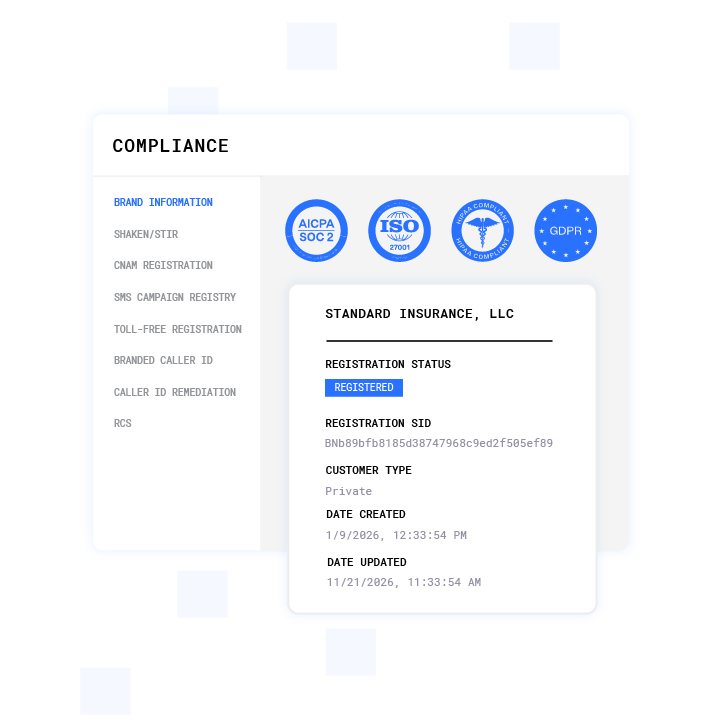
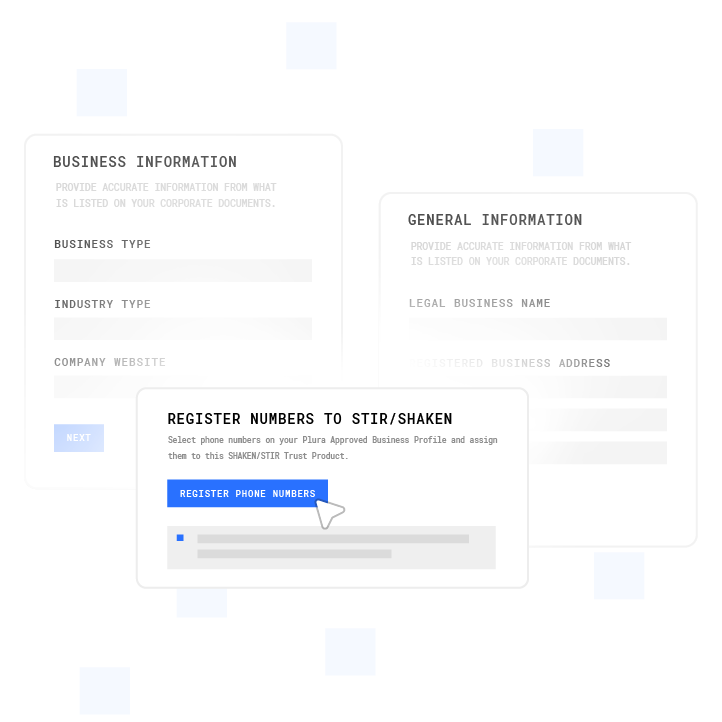
FCC NPRM CG Docket No. 26-52. The FCC’s proposed rulemaking introduces a 30% cap on offshore customer-service calls and a prohibition on offshore handling of sensitive consumer data such as passwords, multi-factor authentication codes, Social Security numbers, banking data, and card data. The FCC also proposes requiring terminating providers to transmit verified caller name or other caller identity information for display on a consumer’s handset whenever they transmit an indication that a call has received an A-level attestation. Platforms that cannot issue A-level STIR/SHAKEN attestation under their own carrier identity face a structural disadvantage.
Federal legislation. The Keep Call Centers in America Act (S.2495) and the Foreign Robocall Elimination Act (S.2666) expand the federal perimeter beyond the NPRM proposals. Operators and their counsel can track current bill status on Congress.gov.
State onshoring laws. Five states have enacted restrictions on offshore handling of consumer data. New York’s Call Center Jobs Act includes penalties up to $10,000 per day. New Jersey’s mirror statute, Connecticut’s state-contract bans, Missouri’s offshore-disclosure executive order, and Florida’s medical-information offshoring limits each create separate obligations. Operators in regulated verticals should work with qualified counsel to understand their exposure.
FCC Know Your Customer (KYC) rules. On April 30, 2026, the FCC adopted a proposal to tighten KYC rules that require originating voice providers to verify customer identity and intended use before carrying outbound calls. Platforms that own their carrier stack can apply these requirements at origination, while API resellers depend on upstream providers.
Predictive Dialer vs. Power Dialer in Practice
Dialing mode selection creates a throughput and compliance trade-off that depends on list size, agent count, and campaign type.
A predictive dialer uses an algorithm to forecast agent availability and places 3 to 5 simultaneous calls per agent. This approach can reach 80 to 120 dials per agent per hour in high-volume B2C campaigns, but operators must manage abandoned calls within the FCC’s three-percent abandoned-call cap, measured per campaign or per 30-day period. Five9 documentation notes that predictive dialing should not run with fewer than 15 consistently active agents on a single unshared campaign, because smaller pools cause the model to swing between over-dialing and throttling.
A power dialer places one call per available agent automatically when that agent becomes free. This mode fits B2B or high-value lists where relationship quality and context matter more than maximum dials per hour.
Operations with 10 or more agents running B2C campaigns on lists of 100,000 or more records usually see higher occupancy in predictive mode. For high-value B2B prospecting or fresh inbound leads, power dialer or progressive pacing reduces abandonment risk while preserving automation.
TCPA-Aligned Predictive Dialer Controls
The Telephone Consumer Protection Act (TCPA), codified at 47 U.S.C. § 227, addresses autodialed and prerecorded calls to mobile numbers.2 Operators should work with qualified counsel on their specific obligations. The infrastructure patterns for a defensible outbound program are well documented.
Key controls include continuous or pre-call DNC scrubbing, timestamped and channel-specific consent records tied to each call record, and geo-aware disclosure logic that selects the correct script by state. Revoked consent needs to be honored under TCPA rules.
Plura’s compliance engine applies these controls at the platform layer. Every outbound contact is checked against federal and state DNC registries in real time before dial. Consent records are timestamped, immutable, and exportable for audits. Quiet-hours rules apply automatically through timezone detection. The platform supports compliance efforts related to TCPA, SOC 2, HIPAA, and DNC frameworks, while operators remain responsible for their own regulatory posture and should consult counsel.1
TCPA violations can carry statutory damages of $500 to $1,500 per unsolicited call or text, with 2023 class action settlements averaging $6.6M. At AI-assisted calling volumes, even a 1% consent documentation error rate can create exposure that manual QA sampling will not reliably catch.
US-Based Predictive Dialer Architecture
The gap between a “U.S.-based” vendor and “100% U.S. infrastructure by architecture” has real implications under the FCC NPRM. A company can sit in the United States while routing voice through foreign data centers or hosting models offshore, which may not align with the proposed offshore-data limits.
Plura runs voice origination, model hosting, data storage, and call recording on domestic infrastructure. TransUnion reports that customers are up to 105% more likely to answer a branded call, which requires carrier-level branded caller ID, not a reseller arrangement. Plura issues branded caller ID directly through its FCC-licensed carrier and applies STIR/SHAKEN authentication on every outbound call.
| Capability | Legacy Dialers (e.g., VICIdial) | Twilio-Based API Resellers | Plura AI (Carrier-Owned) |
|---|---|---|---|
| Carrier ownership | No, relies on SIP trunking providers | No, routes through Twilio CPaaS | Yes, FCC-licensed audio bridging carrier |
| Branded caller ID | Third-party reseller required | Not available at carrier level | Carrier-provisioned directly |
| 100% U.S. infrastructure | Depends on deployment | Depends on Twilio data centers | Yes, by architecture |
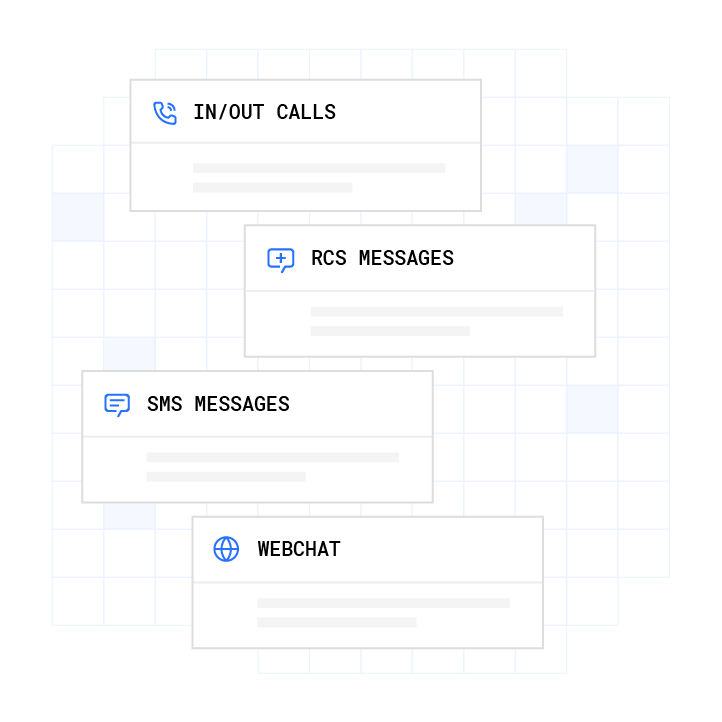
| Stateful cross-channel memory | No | Requires custom engineering | Native across voice, SMS, RCS, webchat |
| Real-time DNC scrubbing | Manual or batch sync | Bolted on post-dial | Pre-dial, every contact |
| FCC NPRM offshore exposure | Depends on hosting | Depends on Twilio infrastructure | Eliminated by architecture |
Compare plans and rates side by side at Plura pricing.
Operator Economics with Carrier-Owned AI Dialing
The financial case for replacing legacy dialer infrastructure with Plura’s carrier-owned AI predictive dialer appears in the Plura ROI calculator.
Consider a 15-agent operation paying $20 per hour with standard taxes, benefits, and commissions at a 40% talk-utilization rate typical of human contact-center work. That team costs about $60,000 per month. Replacing that team with Plura at $15 per hour, 100% talk utilization, and 6 Plura agents doing the work of 15 humans drops the monthly cost to $14,400. Savings reach $45,600 in the first 30 days, $547,200 over 12 months, and $2,736,000 over 60 months (per plura.ai/calculator).3
For higher-volume operations, the same model yields a Total Cost of Ownership (TCO) of about $700,000 per year against a traditional contact-center benchmark of $7M (per plura.ai/guides/ai-communications-strategy). Plura reports 3x average ROI in 90 days, 47% average pipeline growth, and 90% faster lead-response time across its customer base.3
Predictive dialers increase talk time by cutting idle time between calls. Plura’s AI predictive dialer operates at 100% talk utilization because AI agents do not take breaks, drift from scripts, or require ramp time after onboarding.
Run your numbers through Plura’s ROI calculator to quantify your potential ROI.
Frequently Asked Questions
What is the difference between a predictive dialer and a power dialer?
A predictive dialer uses a statistical algorithm to place multiple calls ahead of agent availability, forecasting when agents will finish current calls and launching new dials to reduce idle time. It delivers the highest dials-per-hour of any automated mode but requires active management of the abandoned-call rate, which federal rules cap at 3%, measured per campaign or per 30-day period. A power dialer places exactly one call per available agent and only dials when that agent is free, which produces zero abandoned calls by design at the cost of lower throughput. Predictive mode fits high-volume B2C operations with 15 or more dedicated agents and large lists. Power dialer mode fits B2B prospecting, high-value accounts, and fresh inbound leads where conversation quality matters more than raw volume. Plura’s AI predictive dialer supports both modes with dynamic pacing, timezone logic, and answer-rate optimization in a single platform.
How does a TCPA compliant predictive dialer work?
A TCPA-aligned predictive dialer applies several infrastructure-level controls on every outbound contact. These controls include real-time scrubbing against the National Do-Not-Call Registry and internal suppression lists before each dial, consent record storage with timestamps tied to each call record, and timezone detection that enforces calling-window restrictions automatically. Abandoned calls must remain within the 3% cap referenced earlier. Consent revocation needs to be honored through any reasonable channel the consumer uses, including verbal opt-outs during calls. State mini-TCPA laws in Florida, Oklahoma, Washington, and other states introduce additional requirements, such as broader definitions of automated dialing systems and tighter calling windows. Operators should consult qualified counsel on their specific obligations. Plura’s compliance engine enforces these controls as a platform feature, with immutable consent records and one-click, audit-ready exports. Customers remain responsible for their own regulatory compliance posture.
What makes a predictive dialer “US-based” under 2026 FCC rules?
Under the FCC NPRM (CG Docket No. 26-52), the relevant factor is where voice origination, model hosting, data storage, and call recording physically reside. A platform headquartered in the United States but routing calls through foreign data centers or using offshore AI model hosting may still face exposure under the proposed offshore-data limits. The FCC’s proposed rules would restrict offshore handling of sensitive consumer data such as Social Security numbers, banking data, and card data, regardless of the vendor’s corporate address. Plura runs on 100% U.S. infrastructure by architecture. Voice originates on Plura’s FCC-licensed domestic carrier, and all data processing occurs on domestic infrastructure. Operators should consult counsel on how the final rule, once adopted, applies to their vendor contracts and data flows.
How does Plura AI handle spam labeling and branded caller ID?
Spam labeling occurs at the carrier level, so it requires a carrier-level strategy. Platforms that route voice through a third-party CPaaS inherit that provider’s number reputation and cannot issue branded caller ID under their own carrier identity. Plura issues branded caller ID directly through its FCC-licensed carrier, so calls display the company’s name instead of an unfamiliar number or a “Spam Likely” label. STIR/SHAKEN (Secure Telephone Identity Revisited / Signature-based Handling of Asserted information using toKENs) authentication runs on every outbound call at the carrier level and provides A-level attestation that destination carriers use to verify origination. The FCC’s proposed rules would require terminating providers to transmit verified caller name information whenever an A-level attestation is present, which turns carrier-owned STIR/SHAKEN into a structural advantage. Plura’s AI predictive dialer also communicates with Apple’s iOS 26 call-screening layer, converting screened calls into live pickups instead of voicemails.
How long does it take to migrate from VICIdial to Plura AI?
Migration timelines depend on conversation complexity and workflow depth. A standard outbound qualification flow typically takes a few days to build. A complex multi-step intake or negotiation workflow often takes one to two months because the logic needs design and validation against real call patterns. Plura’s onboarding sequence includes a discovery audit of the operator’s business and call economics, intake of sample calls and existing scripts, an overnight build of a dynamic conversation mockup, a review and iteration session, engineering build of the production workflow, a pilot test on a subset of live calls, and full go-live. Every annual contract includes a 90-day opt-out window, so if the deployment does not perform, the operator is not locked into the annual term. Plura’s AI predictive dialer ships with list management, dynamic pacing, timezone logic, answer-rate optimization, and compliance controls, replacing much of the manual configuration that VICIdial deployments require.
1 Plura AI maintains SOC 2, HIPAA, ISO, and GDPR posture as part of its platform infrastructure. References to compliance frameworks in this article describe Plura’s platform capabilities and do not constitute a guarantee that any customer using Plura will themselves be compliant with applicable laws or standards. Customers remain solely responsible for their own regulatory obligations, certifications, consent management, recordkeeping, and the claims they make to their own end users. Consult qualified legal counsel for guidance specific to your use case.
2 This article describes regulatory frameworks at a general level and does not constitute legal advice. Laws and regulations vary by jurisdiction, change over time, and apply differently depending on facts and circumstances. Readers should consult qualified legal counsel before making compliance decisions.
3 Performance figures, customer outcomes, and industry statistics referenced in this article are drawn from cited third-party sources or Plura customer case studies. Individual results vary based on implementation, use case, industry, audience, and execution. Past or aggregate performance is not a guarantee of future results.
4 References to third-party products, services, companies, or research are made for informational and comparative purposes only. Plura AI is not affiliated with, endorsed by, or sponsored by any third party named in this article unless explicitly stated. Trademarks and product names referenced remain the property of their respective owners.
This article is provided for informational purposes only and reflects Plura AI’s understanding at the time of publication. Product capabilities, integrations, and specifications are subject to change. For the most current information, visit plura.ai.
This article was produced with the assistance of AI tools and reviewed by Plura AI prior to publication.