

Written by: Matt Beucler, CEO, Plura AI
Key Takeaways for Predictive Dialers in 2026
- A predictive dialer uses pacing algorithms to connect live answers to agents or AI while filtering voicemails and busy signals. This shift dramatically increases agent talk time.
- Plura AI’s AI Predictive Dialer runs on its own FCC-licensed U.S. carrier and maintains stateful cross-channel memory across voice, SMS, RCS, and webchat.1
- Key evaluation pillars for 2026 include sub-five-second speed-to-lead, carrier-level compliance controls, direct infrastructure ownership, and significantly lower total cost of ownership.
- AI-native predictive dialers add answer-rate optimization, full conversation handling, and shared conversation context that legacy systems cannot match.
- Plura AI delivers carrier-grade compliance support, branded caller ID, and up to 90% cost reduction.3 Talk to a specialist about your deployment.
Executive Summary: Four Evaluation Pillars for Predictive Dialers
Contact center leaders evaluating a predictive dialer in 2026 face four simultaneous pressures: speed-to-lead, compliance posture, infrastructure ownership, and total cost of ownership (TCO). Each pillar has a measurable threshold below which the platform fails operationally.
Speed-to-lead. Harvard Business Review research found that companies responding within five minutes are 100 times more likely to connect with a prospect than those waiting 30 minutes, and leads contacted within one minute are 391% more likely to convert.3 Yet the industry standard for first contact on an inbound lead is 47+ hours, which destroys conversion potential before the first conversation even happens. A predictive dialer that cannot reach a lead in under five seconds on the first attempt is not solving the speed problem.
Compliance posture. The FCC caps abandoned calls at 3% of answered calls per campaign over any 30-day period under 47 C.F.R. § 64.1200(a)(6).2 State mini-TCPA laws in Florida, Oklahoma, and Washington add private rights of action with statutory damages per violation.2 A dialer that enforces these rules only at the software layer, not the carrier layer, creates audit exposure that grows with volume.
Infrastructure ownership. Most AI voice platforms are API resellers built on top of third-party CPaaS (Communications Platform as a Service) providers. They cannot issue branded caller ID at the carrier level, cannot enforce real-time DNC scrubbing at origination, and carry foreign-infrastructure exposure under the FCC NPRM (CG Docket No. 26-52). Carrier ownership functions as an architectural fact that determines what the platform can and cannot do.
Total cost of ownership. For a 100-seat contact center, traditional operations cost $4 million to $7 million annually, while AI-powered communications using platforms like Plura cost $300,000 to $700,000. The gap is structural, driven by the difference between linear headcount scaling and logarithmic cost scaling.
How an AI Predictive Dialer Operates in Practice
A legacy predictive dialer uses statistical pacing algorithms to dial multiple numbers per available agent, predicting when agents will finish current calls and queuing the next connection. Before predictive dialing, an outbound agent typically spent 10 to 20 minutes per hour actually talking; predictive dialing pushed that talk time toward 40 to 50 minutes per hour. The algorithm continuously updates on historical pickup rates, voicemail frequency, and average call duration to maintain pacing ratios.
An AI-native predictive dialer adds three layers that legacy systems do not have. First, answer-rate optimization. Instead of dialing sequentially through a list, the system uses stateful conversion signals, including historical answer rates, prior negotiation outcomes, and prior offer-acceptance bands, to decide who to call next. Local presence dialing no longer produces reliable answer-rate lift and has seen its former 4x advantage collapse due to carrier analytics and STIR/SHAKEN attestation. Mobile answer rates for unknown numbers in the U.S. have declined significantly in recent years due to carrier spam labeling, STIR/SHAKEN enforcement, and iOS/Android unknown caller features.
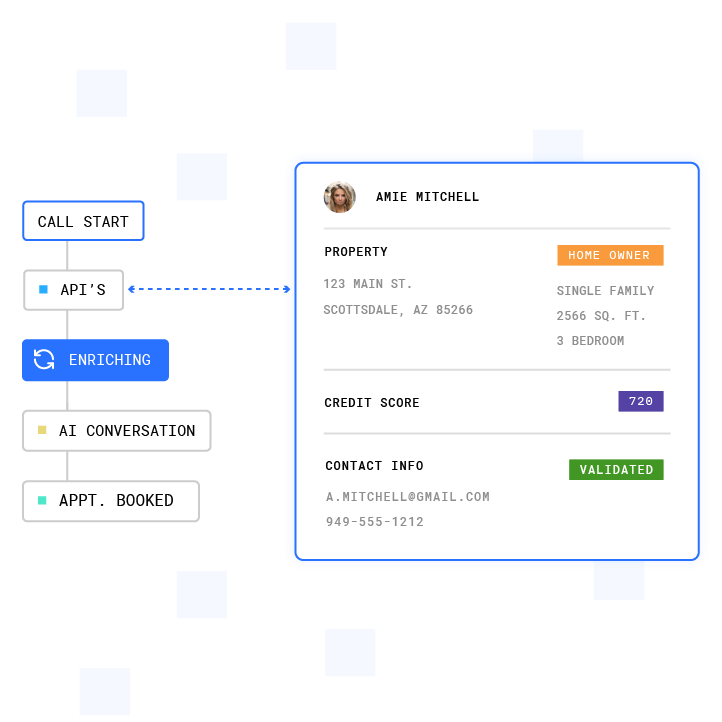
Second, the AI handles the conversation itself, not just the connection. AI-native outbound systems handle the full conversation using Automatic Speech Recognition (ASR), Natural Language Understanding (NLU), a conversational AI core, and Text-to-Speech (TTS), enabling them to understand natural language and maintain context across conversation turns. The dialer shifts from a routing mechanism to the agent itself.
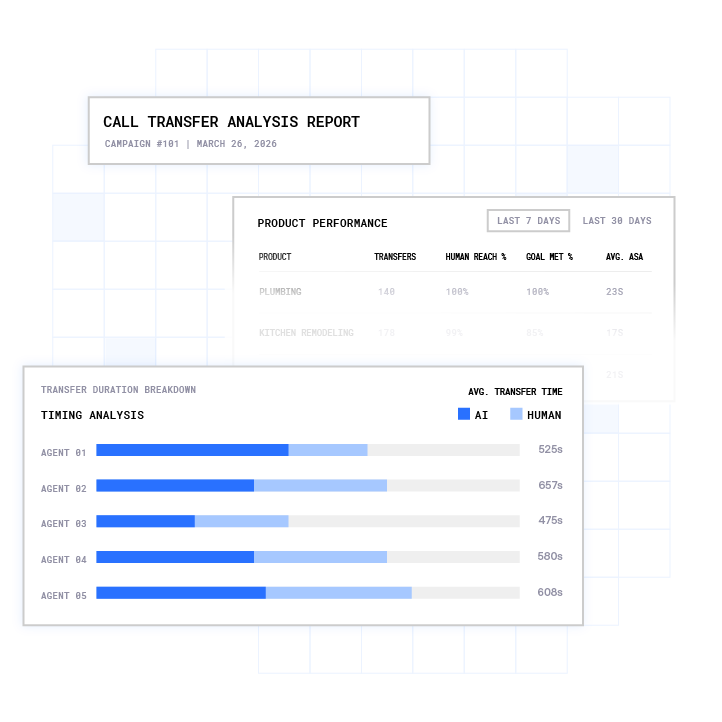
Third, stateful cross-channel memory. Plura uses stateful AI architecture that remembers previous interactions, preferences, and outcomes across channels for better personalization and follow-ups.4 A lead who received an SMS at 9 a.m. is recognized when the predictive dialer reaches them at noon. The AI already knows what was offered, what was declined, and what remains open. Legacy dialers do not do this by default because they do not share a conversation database with an SMS or webchat layer.
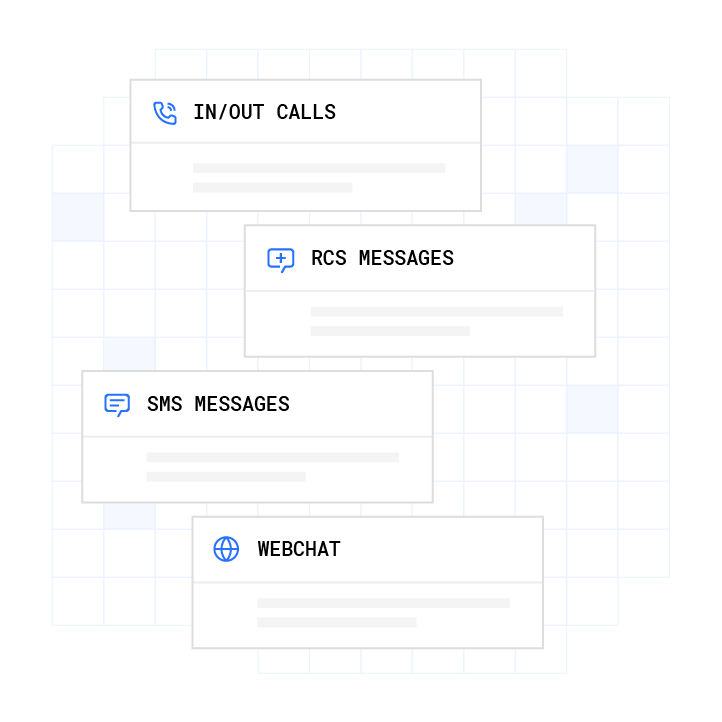
Plura’s AI Predictive Dialer includes list management, dynamic pacing, timezone logic, answer rate optimization, and compliance controls, all running on its own FCC-licensed carrier with SHAKEN/STIR caller ID verification on every outbound call.1 Understanding how this architecture compares to traditional dialing modes clarifies when predictive dialing delivers the highest ROI.
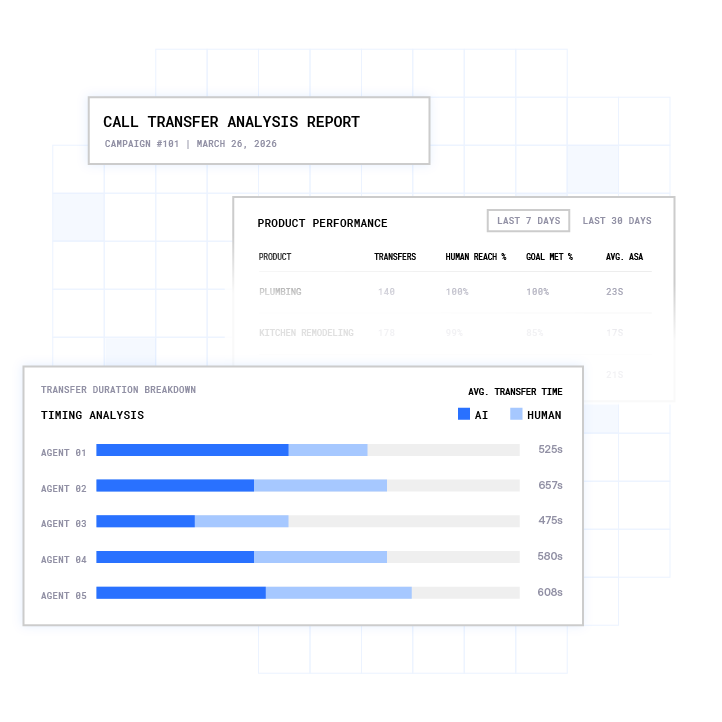
Predictive vs Progressive Dialers for High-Volume Outbound
The core trade-off between predictive and progressive dialing is productivity versus abandonment risk. Predictive dialers can increase agent utilization while progressive dialers dial only one number per ready agent and maintain near-zero call abandonment. The right choice depends on list quality, team size, and regulatory exposure.
| Dimension | Legacy Predictive Dialer | Progressive Dialer | Plura AI Predictive Dialer |
|---|---|---|---|
| Dialing logic | Multiple numbers per agent, 45-50 min talk time per hour, pacing ratio 1.2-1.5x | One number per ready agent, 35-40 min talk time per hour, near-zero abandonment | Dynamic pacing with stateful conversion signals, AI handles the conversation, not just the connection, 100% talk utilization per AI agent |
| Compliance handling | Software-layer DNC scrubbing, abandonment monitoring required, additional costs for compliance infrastructure | Lower abandonment risk, simpler TCPA and TSR oversight, suited for regulated sectors | TCPA compliance and DNC compliance supported at the carrier level, TCPA Litigation Firewall integration, real-time DNC scrubbing before dial, immutable consent records |
| Channel memory | Voice-only, no shared context with SMS or webchat | Voice-only, CRM record presented on connection but no cross-channel history | Stateful conversation database shared across voice, SMS, RCS, and webchat, full prior-touchpoint context on every call |
| Infrastructure | Third-party CPaaS dependency, no branded caller ID at carrier level | Third-party CPaaS dependency, no carrier-level spam remediation | FCC-licensed carrier, branded caller ID issued at origination, SHAKEN/STIR authentication on every call, 100% U.S. infrastructure |
For high-volume outbound teams running 500+ daily interactions, the productivity economics favor predictive dialing when abandonment is controlled. A properly configured predictive dialer raises agent talk time to 40-50 minutes per hour versus 10-15 minutes for manual dialing, delivering a 200-300% productivity increase in high-volume outbound operations. However, enterprise-grade compliance infrastructure to make predictive dialing viable in B2B can add significant costs on top of the dialer subscription. An AI-native platform that supports compliance at the carrier layer removes that separate infrastructure cost from the equation.
Run your numbers through Plura’s calculator to check your ROI in real time.
TCPA and DNC Framework for Predictive Dialers in 2026
The Telephone Consumer Protection Act (47 U.S.C. § 227) governs automated calling to U.S. phone numbers.2 Operators deploying predictive dialers should consult qualified counsel on their specific obligations. The following content describes the regulatory framework as it applies to predictive dialing systems.
Abandonment rate. The FCC limits abandoned calls to 3% over a 30-day rolling period under 47 C.F.R. § 64.1200(a)(6), measured per calling campaign, and defines an abandoned call as one answered by a live person but not connected to a live agent within two seconds of the person’s completed greeting. When a predictive dialing call is abandoned, the TCPA framework describes a prerecorded message identifying the business name and telephone number.
DNC scrubbing. The National Do Not Call Registry had over 249 million active registrations as of December 2023 (end of FY 2023). Telemarketers scrub lists within 31 days before a campaign and re-scrub every 31 days for ongoing campaigns. As of April 2025, companies must honor internal DNC list removal requests and retain list membership records.
State mini-TCPA laws. Florida’s FTSA, Oklahoma’s OTSA, and Washington’s WACPA create private rights of action with $500 minimum statutory damages per violation and treble damages for willful conduct, enabling class actions that routinely settle between $1.5M and $10M against non-compliant predictive dialing campaigns. Operators should consult counsel on state-specific obligations before deploying predictive dialing campaigns.
Plura’s Compliance Engine supports TCPA compliance and DNC compliance by checking every outbound contact against federal and state DNC registries in real time before dial, timestamping consent records in an immutable ledger, enforcing quiet-hours rules automatically through time-zone detection, and exporting audit-ready reports in one click.1 Customers remain responsible for their own regulatory obligations and the claims they make to their end users.
Why U.S. Carrier Infrastructure Shapes Predictive Dialer Outcomes
The FCC’s Notice of Proposed Rulemaking (NPRM, CG Docket No. 26-52) proposes capping offshore customer-service calls at 30% and prohibiting offshore handling of sensitive consumer data, including passwords, multi-factor authentication codes, Social Security numbers, and banking and card data. Companion legislation, including the Keep Call Centers in America Act (S.2495) and the Foreign Robocall Elimination Act (S.2666), extends the federal regulatory perimeter. State laws in New York, New Jersey, Connecticut, Missouri, and Florida already restrict offshore handling of medical, financial, and consumer data.
For predictive dialing specifically, infrastructure ownership determines three operational outcomes that software-layer platforms cannot replicate.
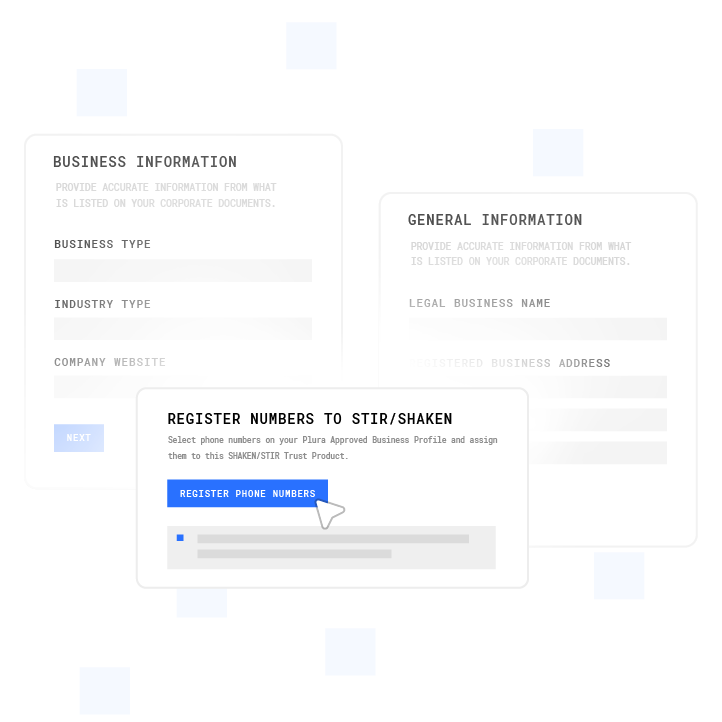
SHAKEN/STIR authentication. The TRACED Act and STIR/SHAKEN require carrier caller-ID authentication, which can cause spoofed or unauthenticated numbers to be labeled as spam before they ring, and A-level attestation improves answer rates by 10–20% compared to B-level attestation. A platform that routes calls through a third-party CPaaS inherits that provider’s attestation reputation, not its own.
Branded caller ID. Most AI voice platforms cannot issue branded caller ID because they do not own the carrier. Plura owns its telecom infrastructure and holds an FCC carrier license, whereas platforms that depend on Twilio operate as a software layer without a carrier license.4 Branded caller ID is issued at origination, not bolted on through a third-party reputation service.
Compliance enforced at origination. When DNC scrubbing and TCPA controls live inside the carrier layer, every outbound contact is filtered before the call leaves the platform. When those controls sit only at the software layer, the enforcement gap sits between the dialer and the carrier, which is where audit exposure accumulates.
Plura runs on 100% U.S. infrastructure by architecture. Voice origination, model hosting, data storage, and call recording all sit on domestic infrastructure, which positions operators to address the FCC NPRM’s U.S.-infrastructure considerations without retrofitting their stack.
Review Plura pricing tiers and carrier capabilities at plura.ai/pricing.
ROI Math for Replacing Legacy Dialers
The financial case for replacing a legacy predictive dialer with an AI-native platform is structural, not marginal.
Contact centers allocate 60-70% of operating costs to agent labor, and the industry average annual agent turnover rate is 35-45%. Domestic contact center agents cost $15-25 per hour before benefits and overhead, and for a 50-seat equivalent contact center, traditional offshore operations cost $35,000-$50,000 monthly, while AI contact centers cost $8,000-$15,000 monthly.
The 100-seat economics introduced earlier translate directly into monthly savings at smaller scales. The default scenario on plura.ai/calculator illustrates the mechanics. A 15-agent operation paying $20 per hour with standard taxes, benefits, and commissions at a 40% talk-utilization rate costs $60,000 per month. Replacing that team with Plura at $15 per hour, 100% talk utilization, and 6 Plura agents doing the work of 15 humans drops the monthly cost to $14,400. Savings stack to $45,600 in the first 30 days, $547,200 over 12 months, and $2,736,000 over 60 months.
Three additional cost drivers compound the legacy dialer penalty. First, enterprise-grade compliance infrastructure to make predictive dialing viable in B2B can add significant costs on top of the dialer subscription. Second, B2B contact data decays at roughly 2.1% per month (compounding to ~22.5% annually), with rates reaching as high as 70.3% annually depending on fields tracked and industry, which erodes connection rates and downstream pipeline without a real-time enrichment layer. Third, AI contact centers have a 0% turnover rate compared to 30-45% annually for traditional operations, eliminating the perpetual rehiring and retraining cycle that consumes budget without adding capacity.
Plura customers report 3x average ROI in 90 days, 47% average pipeline growth, and 90% faster lead-response time.3 The platform’s pricing tiers, Multi ($5,000/month), Agency ($7,500/month), and Enterprise (custom), all include a 90-day opt-out window on annual contracts. If the deployment is not delivering, operators are not held to the year.
See how these savings translate to your operation and model your scenario at plura.ai/calculator.
Compare Plura plans and carrier features side by side at plura.ai/pricing.
Frequently Asked Questions
How predictive and progressive dialers differ in contact centers
A predictive dialer dials multiple numbers per available agent simultaneously, using algorithms to predict when agents will finish current calls and queue the next connection. This approach maximizes talk time, typically 45-50 minutes per hour, but creates abandonment risk when the algorithm miscalculates and a customer answers with no agent available. A progressive dialer dials one number per ready agent, which eliminates abandonment risk but reduces throughput to roughly 35-40 minutes of talk time per hour. The right choice depends on list quality, team size, and regulatory exposure. High-volume cold outreach and collections campaigns typically favor predictive dialing, while personalized B2B sales and high-value account management typically favor progressive dialing. An AI-native predictive dialer changes this trade-off by replacing the human agent with an AI that handles the conversation itself, running at 100% talk utilization with no abandonment risk from agent unavailability.
How TCPA considerations apply to predictive dialers in 2026
The FCC caps abandoned calls at 3% of answered calls per campaign over any 30-day period under 47 C.F.R. § 64.1200(a)(6).2 An abandoned call is one where a person answers and no agent connects within two seconds of the person’s completed greeting. TCPA penalties range from $500 per inadvertent violation to $1,500 per knowing violation. The National Do Not Call Registry describes list scrubbing within 31 days before a campaign and re-scrubbing every 31 days for ongoing campaigns. The FCC’s 2023 one-to-one consent ruling describes consent as obtained on a per-seller basis. State mini-TCPA laws in Florida, Oklahoma, and Washington add private rights of action with statutory damages per violation. Operators should consult qualified counsel on their specific obligations before deploying predictive dialing campaigns. Plura’s Compliance Engine supports TCPA compliance and DNC compliance by enforcing controls at the carrier level, but customers remain responsible for their own regulatory posture.
Why carrier ownership matters for a predictive dialer
Carrier ownership determines three outcomes that software-layer platforms cannot replicate. First, SHAKEN/STIR caller ID verification. A-level attestation improves answer rates by 10–20% compared to B-level attestation, and a platform routing calls through a third-party CPaaS inherits that provider’s attestation reputation. Second, branded caller ID. Only a carrier can issue branded caller ID at origination, which helps prevent calls from appearing as “Spam Likely” on modern smartphones. Third, compliance enforced at origination. When DNC scrubbing and TCPA controls live inside the carrier layer, every outbound contact is filtered before the call leaves the platform. Plura holds its own FCC carrier license and runs on 100% U.S. infrastructure, which also aligns with the FCC NPRM (CG Docket No. 26-52) focus on domestic infrastructure for customer-service operations.
How stateful cross-channel memory improves predictive dialer performance
Legacy predictive dialers are voice-only systems with no awareness of what happened on a prior SMS thread, a webchat session, or a previous call handled by a different agent. Every outbound call starts from zero context, which increases handle time, reduces conversion rates, and creates a poor customer experience. Plura’s Stateful Conversation Database keys every interaction to a customer token, whether a phone number, email, or ID, and persists the full history across voice, SMS, RCS, and webchat. When the AI Predictive Dialer reaches a lead, it already knows what was offered, what was declined, what qualification status was established, and what the lead’s prior objections were. This context is available in real time during the call, not in a post-call batch job. The result is shorter calls, higher conversion rates, and conversations that feel continuous rather than episodic.
Total cost of ownership difference between legacy dialers and Plura’s AI Predictive Dialer
For a 100-seat contact center, traditional operations cost $4 million to $7 million annually. Plura’s AI-powered platform costs $300,000 to $700,000 at equivalent volume. The gap is driven by four structural differences. AI agents run at 100% talk utilization versus 40% for human agents. There is no taxes, benefits, or commissions overhead on AI agents. There is no annual 35-45% turnover cycle forcing perpetual rehiring and retraining. Compliance infrastructure is built into the platform rather than purchased separately. At the 15-agent scale, the default scenario on plura.ai/calculator shows $45,600 in savings in the first 30 days, $547,200 over 12 months, and $2,736,000 over 60 months. Plura customers report 3x average ROI in 90 days across deployments, with all annual contracts including a 90-day opt-out window.
1 Plura AI maintains SOC 2, HIPAA, ISO, and GDPR posture as part of its platform infrastructure. References to compliance frameworks in this article describe Plura’s platform capabilities and do not constitute a guarantee that any customer using Plura will themselves be compliant with applicable laws or standards. Customers remain solely responsible for their own regulatory obligations, certifications, consent management, recordkeeping, and the claims they make to their own end users. Consult qualified legal counsel for guidance specific to your use case.
2 This article describes regulatory frameworks at a general level and does not constitute legal advice. Laws and regulations vary by jurisdiction, change over time, and apply differently depending on facts and circumstances. Readers should consult qualified legal counsel before making compliance decisions.
3 Performance figures, customer outcomes, and industry statistics referenced in this article are drawn from cited third-party sources or Plura customer case studies. Individual results vary based on implementation, use case, industry, audience, and execution. Past or aggregate performance is not a guarantee of future results.
4 References to third-party products, services, companies, or research are made for informational and comparative purposes only. Plura AI is not affiliated with, endorsed by, or sponsored by any third party named in this article unless explicitly stated. Trademarks and product names referenced remain the property of their respective owners.
This article is provided for informational purposes only and reflects Plura AI’s understanding at the time of publication. Product capabilities, integrations, and specifications are subject to change. For the most current information, visit plura.ai.
This article was produced with the assistance of AI tools and reviewed by Plura AI prior to publication.