
Written by: Matt Beucler, CEO, Plura AI
Key Takeaways
- Call center automation cost-per-contact reduction depends on containment rate. Plura AI models this directly with its FCC-licensed carrier stack and 100% U.S. infrastructure.
- The median cost per human-assisted contact is $13.50 while self-service automation costs $0.10–$0.60 per successful resolution, creating an $11.50 unit-cost spread before AI production costs.3
- Cost per resolved contact is the stricter CFO metric because repeat contacts (median 23%) and escalations inflate the true cost when containment alone is measured.
- Most vendor ROI models omit AI licensing fees, implementation, maintenance, escalation handling, and repeat-contact costs. All of these must be subtracted to produce a defensible savings number.
- Plura AI’s fully loaded per-conversation cost of $0.35–$0.85 and 100% U.S. infrastructure support 30–70% cost-per-contact reduction. Model your own cost-per-contact savings in a live demo.
Average Cost Per Contact in Modern Call Centers
Gartner’s customer service benchmarks place the median cost per contact at $13.50 for human-assisted channels and $1.84 for self-service channels, as of February 2024.4 For U.S. onshore human-assisted contacts, Gartner’s February 2024 benchmark put the median cost per assisted contact at $13.50. ContactBabel’s U.S. Contact Center Decision-Makers’ Guide reported a lower average inbound call cost of $6.91 in 2023, and never below $5.25 over twelve years. Regulated industries such as healthcare and financial services reach $12.00 to $22.00 per voice contact according to April 2026 benchmarks from The Office Gurus. Automated self-service contacts cost roughly $0.10 to $0.60 per successful resolution in 2026 benchmarks, with Gartner’s median self-service cost per contact at $1.84.
Human labor accounts for 60 to 70 percent of total contact center operating costs, so workforce strategy drives any cost-per-contact model. That concentration makes the arithmetic of automation highly sensitive to containment rate. Each contact shifted from the $13.50 assisted channel to the sub-$2.00 automated channel produces a unit-cost spread of roughly $11.50 before subtracting AI production costs.
These figures create the baseline for a defensible CFO conversation. They do not close the analysis, because cost per contact and cost per resolved contact measure different outcomes.
Cost Per Contact vs. Cost Per Resolved Contact
Cost per contact and cost per resolved contact measure different things, and vendors often quote the first while implying the second. That gap is what makes reduction claims fall apart under CFO scrutiny.
A contained contact and a resolved contact measure different outcomes. Containment measures whether the interaction stayed in the automated channel, while resolution measures whether the customer’s issue was actually solved. A customer who calls back about the same issue within 7 to 30 days was not resolved on the first attempt. The interaction was contained, but the problem remained open.
Repeat contacts inflate the denominator. MetricNet’s 2024 Contact Center Benchmarking Report, covering more than 120 enterprise contact centers across North America and Europe, found a median same-issue repeat contact rate of 23 percent on a 7-day window. At a 25 percent repeat contact rate in a center handling 50,000 contacts per month, roughly 12,500 contacts per month are repeats. At an average cost premium of $10 per repeat contact, that is $125,000 per month in avoidable cost, or $1.5 million per year from a single metric.
A vendor’s reduction percentage depends entirely on the containment assumption underneath it. A 70 percent containment rate with a 25 percent repeat-contact rate is worse than a 50 percent containment rate with a 5 percent repeat-contact rate, because the first scenario hides cost instead of removing it.
Cost per resolved contact is the stricter, CFO-defensible metric. CX Today’s April 2026 analysis defines it as total support operating cost divided by the number of issues resolved with no repeat contact for the same reason within a set window, commonly 7 to 30 days, and no escalation required after the final touch. That definition forces hidden costs such as repeat contacts, escalations, and failure demand into the open.
Hidden Cost Lines in Automation Savings Models
The following cost lines appear in every automation deployment. Most vendor reduction claims omit at least three of them. Currai’s June 2026 ROI guide and Trillet’s enterprise voice AI ROI framework both identify these as primary sources of ROI overstatement in automation business cases.
- AI licensing and usage fees. Platform subscription, per-resolution or per-message fees, and model consumption costs. These are recurring and scale with volume.
- Implementation and integration. CRM connections, telephony configuration, security and privacy review, change management, and agent training. These are front-loaded and frequently underestimated.
- Ongoing maintenance. Content refresh, knowledge base upkeep, model monitoring, and governance overhead. Stale knowledge degrades accuracy over time, and degraded accuracy generates wrong answers that produce repeat contacts.
- Escalation handling. Every AI contact that fails costs twice: the AI interaction plus a full-price human escalation. Forrester’s 2025 Customer Experience research places the average cost of an escalated contact at 2.3 to 3.5 times the cost of a standard same-channel contact.
- Repeat contacts. Incomplete resolutions generate repeat contacts that inflate the denominator of cost per resolved contact. Parloa’s cost-to-serve analysis notes that each failed AI contact carries the AI interaction cost, a full-price human escalation, and often a repeat contact on top.
A model that includes all five lines produces a defensible number. A model that omits any of them produces a number that will not survive a CFO’s first follow-up question.
Agent Assist vs. Self-Service Automation
Agent assist and self-service automation produce different cost-reduction profiles, and conflating them distorts vendor reduction claims.
Agent assist works through handle-time reduction. The AI surfaces information, suggests responses, and automates after-call work while a human agent remains on the contact. NiCE reports that pre-contact automation reduces handle time by 30 to 60 seconds per interaction, while post-contact automation eliminates 2 to 5 minutes of after-call work. The cost reduction is real but bounded, because the human seat cost remains.
Self-service automation works through containment. The AI resolves the contact entirely without a human agent, shifting the interaction from the assisted channel to the automated one. Avaya’s June 2026 ROI and TCO guide reports that strong self-service deflects 30 to 60 percent of contacts and can lower cost per contact by 30 to 50 percent against a human baseline, with mature deployments reaching up to 70 percent deflection.
A vendor quoting a blended reduction percentage without separating these two mechanisms combines two different economic models into one number. The containment-driven reduction is larger, while the agent-assist reduction is more predictable. Both require separate modeling.
Why the 2026 Regulatory Baseline Changed
Both automation mechanisms assume a stable labor-cost baseline. That baseline shifted in March 2026, when the FCC proposed new rules on offshore customer service handling.
The FCC’s Notice of Proposed Rulemaking in CG Docket No. 26-52 proposes capping the percentage of customer service calls handled offshore, with a 30 percent limit specifically proposed, and would restrict offshore handling of sensitive consumer data including passwords, multi-factor authentication credentials, and bank account or credit card numbers.2 The proposal would also require disclosure when a call is handled outside the United States and mandate transfer to a U.S.-based representative on consumer request.

Companion legislation includes the Keep Call Centers in America Act (S.2495) and the Foreign Robocall Elimination Act (S.2666). State laws in New York, New Jersey, Connecticut, Missouri, and Florida already restrict offshore handling of medical, financial, and consumer data, according to coverage from Littler/JD Supra and other sources.
Offshore cost arbitrage now creates compliance exposure as well as a labor-cost comparison. Readers should consult the regulation text and qualified counsel to assess their specific obligations under these frameworks.
Where Plura AI Fits the Model
Those regulatory and cost-model constraints define what to look for in a platform. Plura AI is its own FCC-licensed audio bridging carrier. Voice does not route through a third-party Communications Platform as a Service (CPaaS) layer. That distinction matters for three reasons in a cost-per-contact model.
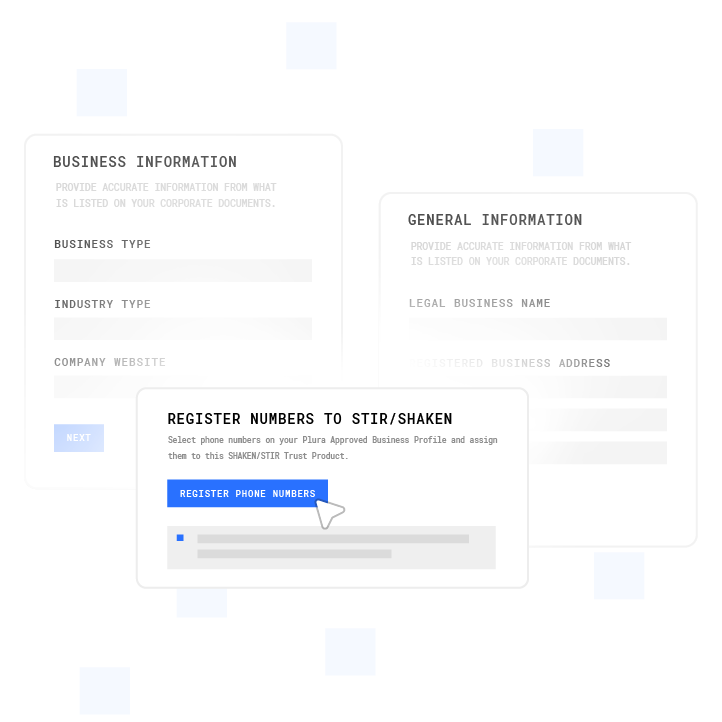
First, Plura issues branded caller ID at the carrier level and runs STIR/SHAKEN (Secure Telephone Identity Revisited / Signature-based Handling of Asserted information using toKENs) authentication on every outbound call. These controls affect pickup rates and therefore the effective cost per connected contact.
Second, Plura enforces real-time Do Not Call (DNC) scrubbing and TCPA (Telephone Consumer Protection Act) litigator screening inside the platform before dial. Because those checks run natively rather than through an add-on service, compliance controls form a first-class layer of the platform. Plura supports TCPA compliance, DNC compliance, HIPAA, SOC 2, and GDPR frameworks; customers remain responsible for their own regulatory obligations and certifications.1
Third, Plura runs on 100% U.S. infrastructure by architecture. Voice origination, model hosting, data storage, and call recording all sit on domestic infrastructure. This design removes the offshore exposure that the FCC NPRM and state onshoring laws have introduced into legacy cost models.
Plura’s AI voice agent, AI SMS, AI RCS, and AI Webchat share a Stateful Conversation Database. A customer who texted at 9 a.m. is the same customer when the call comes at noon, with no re-explanation required. The per-conversation cost for Plura AI voice agents runs $0.35 to $0.85 fully loaded, compared to $5.00 to $15.00 fully loaded for offshore call centers, according to Plura’s published comparison data. For a 100-seat equivalent operation, traditional contact center economics run $4 million to $7 million annually; Plura’s TCO runs $300,000 to $700,000 for equivalent volume.
Plura’s ROI calculator ships with a default 15-agent scenario: $60,000 per month in human agent cost versus $14,400 per month with Plura, producing $547,200 in 12-month savings. It is labeled illustrative because actual results depend on containment rate, contact volume, and the cost lines discussed above. Run your numbers through Plura’s ROI calculator to check your ROI in real time.
Frequently Asked Questions
Does Automation Actually Reduce Cost Per Contact?
Automation reduces cost per contact when containment rate and resolution quality support the model. A vendor’s claimed reduction depends entirely on the containment and repeat-contact assumptions underneath it. As the containment comparison earlier showed, a high containment rate paired with a high repeat-contact rate can cost more than a lower containment rate with clean resolution. The metric that survives CFO scrutiny is cost per resolved contact, defined as total operating cost divided by issues closed without a repeat contact within a defined window, rather than cost per contact, which measures throughput instead of outcomes.
What Is the 80/20 Rule in Call Centers?
In the context of contact-volume concentration, a small share of contact types typically drives the majority of total volume. NiCE reports that high-volume intents represent 40 to 60 percent of total contact volume in most contact centers, while Teneo advises that usually 5 to 8 intents drive 70 percent of call volume. Automation should target those high-volume, well-defined intents first, such as password resets, order status inquiries, appointment scheduling, and billing adjustments within policy guardrails. That focus is where containment gains produce the largest absolute cost reduction. Automating low-volume, high-complexity contacts first produces smaller savings and higher escalation rates, which inflates the cost model.
How Do I Pressure-Test a Vendor’s Claimed Reduction?
Ask for three numbers the vendor’s headline percentage does not show. First, the containment assumption: what percentage of contacts does the model assume are fully resolved in the automated channel without escalation or repeat contact? Second, the repeat-contact rate: what percentage of contained contacts generate a follow-up contact for the same issue within 7 to 30 days? Third, the fully loaded cost per resolved contact: total operating cost including platform fees, implementation, maintenance, escalation handling, and repeat contacts, divided by issues actually closed. A vendor who cannot produce all three numbers is quoting cost per contact instead of cost per resolved contact, which leads to different implications for the CFO conversation.
What Does the 2026 Regulatory Baseline Mean for Offshore Cost Comparisons?
The FCC’s NPRM in CG Docket No. 26-52 proposes to cap offshore customer service calls and restrict offshore handling of sensitive consumer data. The state-level restrictions described earlier add further constraints on offshore handling of medical, financial, and consumer data. Any cost-per-contact model that uses an offshore baseline without accounting for these regulatory developments compares against a cost structure that may no longer be available at the same price point. Readers should consult the regulation text and qualified counsel to assess how these frameworks apply to their specific operations before building an offshore-versus-onshore cost comparison into a CFO presentation.
Which Cost Lines Are Most Commonly Left Out of Automation ROI Models?
The five most commonly omitted lines are AI licensing and usage fees, implementation and integration costs, ongoing maintenance and content refresh, escalation handling costs for failed automated contacts, and repeat-contact costs from incomplete resolutions. Of these, repeat contacts and escalation handling are the most consequential because they are multiplicative. The double-cost structure of failed automated contacts, described earlier, explains why these two lines move the model so sharply. A model that omits these lines will overstate savings by a margin that grows with volume. The correct approach is to subtract all five cost lines from gross deflection savings, contained contacts multiplied by the unit-cost spread between assisted and automated channels, to arrive at net cost-per-contact reduction.
Run your numbers through Plura’s calculator to check your ROI in real time: Run your numbers through Plura’s ROI calculator.
Compare plans and rates side by side: Compare plans and rates side by side.
1 Plura AI maintains SOC 2, HIPAA, ISO, and GDPR posture as part of its platform infrastructure. References to compliance frameworks in this article describe Plura’s platform capabilities and do not constitute a guarantee that any customer using Plura will themselves be compliant with applicable laws or standards. Customers remain solely responsible for their own regulatory obligations, certifications, consent management, recordkeeping, and the claims they make to their own end users. Consult qualified legal counsel for guidance specific to your use case.
2 This article describes regulatory frameworks at a general level and does not constitute legal advice. Laws and regulations vary by jurisdiction, change over time, and apply differently depending on facts and circumstances. Readers should consult qualified legal counsel before making compliance decisions.
3 Performance figures, customer outcomes, and industry statistics referenced in this article are drawn from cited third-party sources or Plura customer case studies. Individual results vary based on implementation, use case, industry, audience, and execution. Past or aggregate performance is not a guarantee of future results.
4 References to third-party products, services, companies, or research are made for informational and comparative purposes only. Plura AI is not affiliated with, endorsed by, or sponsored by any third party named in this article unless explicitly stated. Trademarks and product names referenced remain the property of their respective owners.
This article is provided for informational purposes only and reflects Plura AI’s understanding at the time of publication. Product capabilities, integrations, and specifications are subject to change. For the most current information, visit plura.ai.
This article was produced with the assistance of AI tools and reviewed by Plura AI prior to publication.