

Written by: Matt Beucler, CEO, Plura AI | Last updated: August 28, 2026
Key Takeaways for 2026 Outbound Dialing
- Outbound predictive dialers in 2026 must raise talk time while keeping abandonment rates, consent records, and DNC scrubbing within FCC and state rules.2
- Carrier-owned infrastructure creates clear advantages for branded caller ID, STIR/SHAKEN attestation, and real-time compliance controls that CPaaS resellers cannot match.
- Team size drives dialer mode: progressive for under 10 agents, predictive for 20 or more agents, with offshore infrastructure adding separate regulatory risk.
- Multiple 2026 regulatory developments, including the blanket revocation rule, Know Your Customer proposals, and state mini-TCPAs, tighten requirements across outbound campaigns.2
- Plura AI delivers a 100% U.S.-carrier-owned platform that combines stateful cross-channel memory, carrier-level branded caller ID, and real-time compliance controls. Talk with the Plura team about your operation.
Choosing a Dialer System for High-Volume Outbound Teams
The best dialer system for an outbound call center increases agent talk time while keeping abandonment, consent, and DNC controls inside your risk tolerance. The right choice also depends on the regulatory boundaries that apply to your team size, vertical, and call volume. For operations running 500 or more daily interactions, dialer selection now carries a compliance dimension that did not exist three years ago.
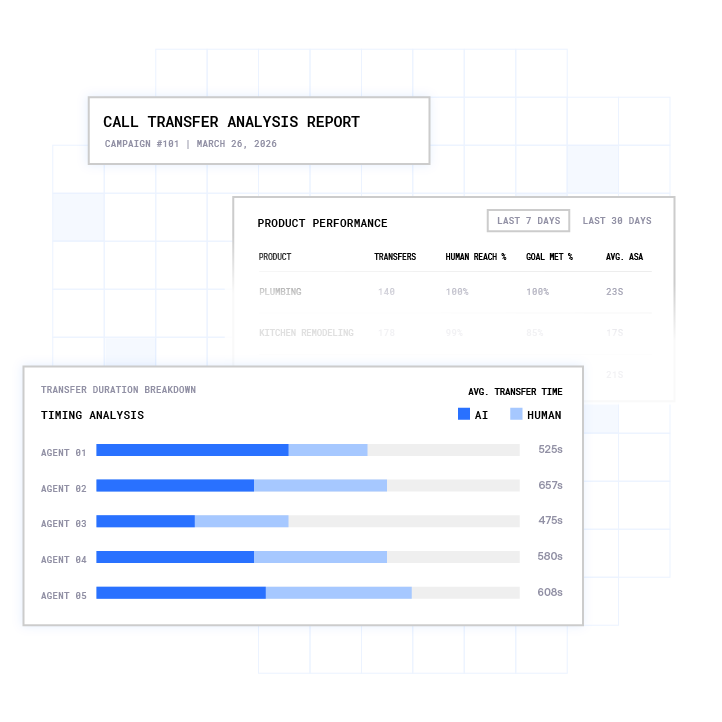
AI predictive dialers use pacing algorithms to dial multiple lines per available agent. Talk time typically rises from 25 to 35 minutes per hour to 40 to 57 minutes per hour in high-volume deployments.3 That productivity gain introduces structural abandonment risk. When more calls connect than agents are available, the caller hears silence, and that silence counts against the FCC 3% abandoned-call ceiling measured per campaign over any rolling 30-day window under 47 C.F.R. § 64.1200(a)(6).
The 2026 regulatory exposure matrix below maps the primary compliance layers outbound operations should consider when evaluating dialer platforms.2
| Regulatory Layer | Scope | Key Threshold or Requirement | Exposure if Unaddressed |
|---|---|---|---|
| TCPA (47 U.S.C. § 227) | All autodialed or prerecorded calls and texts to wireless numbers | Prior express written consent per seller; The FCC one-to-one consent rule was vacated by the Eleventh Circuit in January 2025 and formally removed by the FCC; it never took effect. | $500 to $1,500 per violation; class action settlements averaging $6.6M |
| FCC Abandoned-Call Rule (FNPRM 2026) | Predictive dialer campaigns | 3% cap per campaign per 30-day window; FCC examining shorter windows and lower caps | FCC civil forfeitures; carrier blocking of outbound traffic |
| FCC Know Your Customer (April 30, 2026) | Originating voice providers carrying high-volume outbound calls | The FCC has proposed requiring originating voice providers to obtain and verify customer name, physical address, government-issued ID, alternate phone number, and for high-volume customers, intended use of service and originating IP address before granting access. | Base forfeiture of $2,500 per offending call |
| FCC NPRM CG Docket No. 26-52 | Offshore call centers handling U.S. consumer data | Proposed 30% cap on offshore customer-service calls; prohibition on offshore handling of sensitive consumer data | Offshore contract liability; state onshoring penalties up to $10,000 per day (New York) |
| State Mini-TCPAs (FL, TX, OK, and others) | Calls and texts to residents of 11 or more states with separate DNC registries | Florida: 8 AM to 8 PM, 3 calls per 24 hours; Texas SB 140: $500 to $5,000 per violation | Private right of action; state AG enforcement |
Each regulatory layer in the table requires carrier-level controls that CPaaS resellers cannot provide. Operators running on Twilio-based Communications Platform as a Service architectures or offshore infrastructure face compounding exposure across every row of this matrix because they lack direct carrier relationships. Consult qualified legal counsel to assess your specific obligations under each framework.
Run your numbers before your next vendor decision. Use Plura’s ROI calculator to check your cost savings in real time.
Dialer Modes, Talk Time, and Agent-Count Strategy
Dialer mode directly affects talk time, abandonment risk, and compliance exposure. Agent count, campaign type, and regulatory pressure should guide this choice.
Predictive dialing paces statistically ahead of agent availability and dials multiple lines per agent simultaneously. Talk time often reaches 45 to 50 minutes per agent hour.3 Abandonment becomes structural because some calls connect before an agent is ready, so callers experience silence. Five9 documentation states predictive mode works best when more than 10 active agents are available.4
Progressive dialing dials one call per available agent automatically, only when that agent is free. Talk time typically runs 30 to 40 minutes per agent hour with near-zero abandonment risk.3 This pattern makes progressive dialing a common choice for regulated industries and premium retention campaigns.
Power dialing places the next call only when a representative is already on the line. This pattern produces zero abandoned calls and no silence gap at pickup. Power dialers often achieve 40 to 50 minutes of talk time per agent hour with low compliance risk from abandoned calls.
The agent-count decision framework:
- Under 10 agents: Progressive or power dialing. Statistical pacing models need larger sample sizes, and predictive mode on small teams often exceeds the 3% abandonment cap.
- 10 to 20 agents: Progressive dialing for regulated verticals such as healthcare, financial services, and legal. Predictive dialing for unregulated high-volume campaigns with close abandonment monitoring.
- 20 or more agents: Predictive dialing usually wins on talk-time economics. Compliance controls should run at the platform level before each dial, not as a post-campaign audit.
- Any team size with offshore infrastructure: FCC NPRM CG Docket No. 26-52 and state onshoring laws in New York, New Jersey, Connecticut, Missouri, and Florida create contract-level liability regardless of dialer mode. Fully U.S.-based infrastructure removes that specific exposure by architecture.
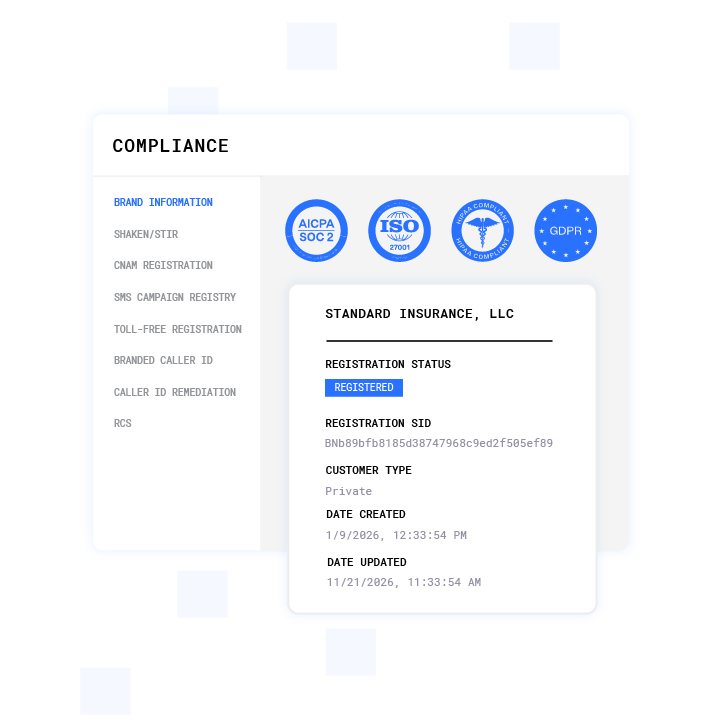
Twilio-based API resellers cannot enforce controls at the carrier layer because they do not own the carrier. Plura owns its telecom infrastructure and holds an FCC carrier license, while platforms like Synthflow depend on Twilio and operate as a software layer without a carrier license.4 That architectural difference determines whether branded caller ID is issued at the carrier level, whether DNC scrubbing happens before the call leaves the network, and whether STIR/SHAKEN authentication runs at A-level attestation.
Predictive Dialer Legality and 2026 Rule Changes
Predictive dialers remain in use in 2026 when operators document consent, honor opt-outs, maintain pacing within the 3% abandoned-call limit, and use caller IDs they own and have registered. The FCC’s April 30, 2026 Know Your Customer proposal does not ban predictive dialing. It adds verification requirements at the originating carrier level before high-volume outbound calls can be carried.
Several 2026 developments tighten the compliance perimeter:
- The FCC’s blanket revocation rule, effective January 31, 2027, states that a consumer’s revocation of consent for one type of communication applies across all campaigns and channels from that company, with processing required within 10 business days.
- The FCC’s one-to-one consent rule, scheduled to take effect January 27, 2025, would have required consent to be obtained separately for each seller, but was vacated by the Eleventh Circuit and never implemented.
- The FCC’s February 2024 Declaratory Ruling classifies AI-generated voices as artificial voices under the TCPA, which places AI voice agents making outbound calls under the same consent framework as traditional autodialed calls.
- The FCC’s October 2025 FNPRM proposes requiring terminating providers to display the caller’s verified name whenever A-level STIR/SHAKEN attestation appears, which makes anonymous robocalling harder and increases the value of carrier-level branded caller ID.
Plura’s compliance engine addresses each of these 2026 requirements at the platform level. Every outbound contact is checked against federal and state DNC registries in real time before dial. Consent records are timestamped and immutable. Quiet-hours rules apply automatically through time-zone detection. The platform supports SOC 2, HIPAA, ISO certification, GDPR, SHAKEN/STIR caller ID verification, TCPA compliance, and DNC compliance.1 Customers remain responsible for their own regulatory obligations and certifications; Plura provides infrastructure and controls that support a compliance program.
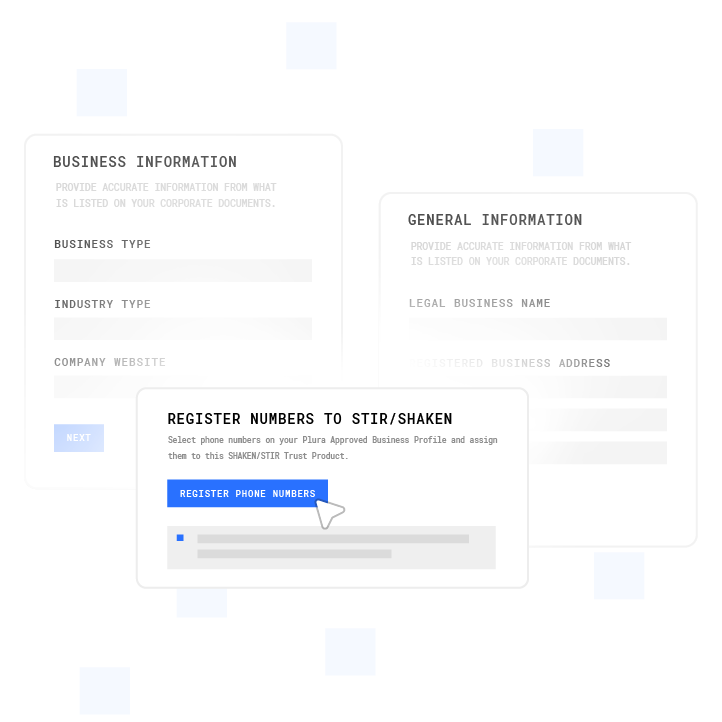
Plura’s built-in AI predictive dialer includes list management, dynamic pacing, timezone logic, answer rate improvement tools, and compliance controls in a single platform. For teams evaluating a Vici Dial replacement, Plura’s carrier-owned architecture means STIR/SHAKEN signing occurs at A-level attestation with no upstream intermediary. TransUnion data indicates customers are up to 105% more likely to answer a branded call, a pickup-rate advantage that CPaaS resellers cannot match without owning the carrier.3
Book a live demo with Plura to see the compliance controls and carrier architecture in a working environment. Schedule your compliance walkthrough.
Dialer Recommendations by Agent Count and Risk Profile
The decision framework below ranks outbound predictive dialer solutions by team size, compliance exposure, and total cost of ownership. All TCO figures are illustrative. Run your specific inputs through Plura’s ROI calculator for numbers tied to your operation.
| Team Size | Recommended Dialer Mode | Primary Compliance Consideration | TCO Benchmark |
|---|---|---|---|
| Under 10 agents | Progressive or power dialing | Abandonment cap risk runs highest at small team sizes; progressive mode removes structural abandonment. | $14,400/month for 6 Plura agents replacing 15 human agents at equivalent output |
| 10 to 50 agents | Predictive dialing with real-time abandonment monitoring | Blanket revocation rule and state mini-TCPA scrubbing across 11 state DNC registries | Cloud CCaaS platforms: $90 to $175 per seat per month, plus implementation fees of $5,000 to $25,000 or more |
| 50 or more agents | AI predictive dialing with carrier-owned infrastructure | FCC Know Your Customer verification, offshore infrastructure exposure under NPRM CG Docket No. 26-52, and HIPAA considerations for regulated verticals | $700K TCO replaces $7M traditional contact-center economics at equivalent volume.3 |
Migration from legacy platforms such as Vici Dial to a modern AI predictive dialer starts with CRM integration.4 Two-way CRM sync with systems like HubSpot or Salesforce should be in place before prompts or lists are configured, because the dialer reads prior contact activity and suppresses records that should not be dialed. Plura’s 50+ integrations cover CRMs, calendars, attribution platforms, and validation tools. Number porting timelines follow the FCC guidance cited earlier, and full deployment timing depends on conversation complexity and workflow design.
Compare Plura’s plans and rates to see where your team size lands across the three pricing tiers, all on annual contracts with a 90-day opt-out window.
Frequently Asked Questions
What is the difference between a predictive dialer and a progressive dialer?
A predictive dialer uses a statistical pacing algorithm to dial multiple lines per available agent simultaneously, which achieves the higher talk-time range described earlier. It carries structural abandonment risk because calls can connect before an agent is free. A progressive dialer dials one call per available agent only when that agent is free, producing near-zero abandonment at the cost of lower talk time. Predictive dialing usually fits teams of 10 or more agents, while progressive dialing often fits regulated verticals and smaller teams where statistical pacing is less reliable.
How does Plura AI support TCPA compliance in its predictive dialer?
Plura’s compliance engine runs before each outbound contact, not as a post-campaign audit. Every number is checked against federal and state DNC registries in real time before dial. Consent records are timestamped, immutable, and audit-ready. Quiet-hours rules apply automatically through time-zone detection on the contact’s location. The platform supports TCPA and DNC compliance as core layers of the infrastructure, not bolt-on features. Customers remain responsible for their own legal obligations; Plura provides infrastructure and controls that support a compliance program.
What does the FCC NPRM CG Docket No. 26-52 mean for outbound call centers using offshore vendors?
The FCC’s Notice of Proposed Rulemaking in CG Docket No. 26-52 proposes capping offshore customer-service calls at 30% and limiting offshore handling of sensitive consumer data including passwords, multi-factor authentication codes, Social Security numbers, and banking and card data. Companion legislation including the Keep Call Centers in America Act (S.2495) and the Foreign Robocall Elimination Act (S.2666) extends the federal regulatory perimeter. State laws in New York, New Jersey, Connecticut, Missouri, and Florida already restrict offshore handling of medical, financial, and consumer data, with New York penalties reaching $10,000 per day. Any outbound dialer platform with foreign infrastructure dependencies creates contract-level considerations under this framework. Consult qualified legal counsel to assess your specific exposure.
Why does carrier ownership matter for branded caller ID and spam label remediation?
STIR/SHAKEN call signing and branded caller ID occur at the originating carrier level, not inside dialer software. Platforms built on Twilio or other CPaaS providers inherit the reseller’s attestation level, typically B-level rather than A-level, which carrier analytics systems treat as a lower-trust signal. Spam labels are assigned at the carrier and number level. No software setting inside a CPaaS-based dialer can clear a spam label without a direct carrier relationship. Plura holds its own FCC carrier license and issues branded caller ID directly, signing every outbound call at A-level STIR/SHAKEN attestation with no upstream intermediary. That architecture makes carrier-level spam label remediation possible.
How long does it take to migrate from a legacy dialer like Vici Dial to Plura?
A simple inbound qualification flow typically deploys in a few days. A complex multi-step outbound workflow with CRM integration, custom pacing logic, and compliance rule sets usually runs closer to one to two weeks for the build. The migration sequence begins with CRM two-way sync, followed by DID mapping, compliance rule configuration, workflow build, pilot testing on a subset of real calls, and full go-live. Every Plura annual contract includes a 90-day opt-out window, so customers are not locked into the full term if the deployment does not meet expectations.
Conclusion: Carrier Architecture, Compliance, and Cost
Outbound predictive dialer solutions in 2026 represent a compliance decision as much as a productivity decision. The FCC’s Know Your Customer proposal, the blanket revocation rule, and the offshore infrastructure provisions in CG Docket No. 26-52 create layered exposure that CPaaS-based and offshore-dependent platforms cannot solve at the architecture level. The carrier layer determines whether branded caller ID is issued at A-level attestation, whether DNC scrubbing happens before the call leaves the network, and whether the platform can withstand the regulatory environment taking shape in 2026 and beyond.
Plura AI operates as its own FCC-licensed carrier, runs 100% U.S. infrastructure by architecture, and enforces real-time compliance controls as a core layer of the platform. The AI Predictive Dialer, AI SMS, and all other channels share a Stateful Conversation Database so context carries across every touchpoint without re-explanation. The 15-agent cost comparison shown earlier translates to $547,200 in annual savings when you account for the productivity differential.3
Run your numbers at plura.ai/calculator to see the TCO comparison for your team size and call volume.
Compare plans and rates at plura.ai/pricing to see where your operation fits across Plura’s three tiers.
Book a live demo with Plura to walk through the carrier architecture, compliance controls, and dialer configuration for your specific use case. Get your custom compliance assessment.
1 Plura AI maintains SOC 2, HIPAA, ISO, and GDPR posture as part of its platform infrastructure. References to compliance frameworks in this article describe Plura’s platform capabilities and do not constitute a guarantee that any customer using Plura will themselves be compliant with applicable laws or standards. Customers remain solely responsible for their own regulatory obligations, certifications, consent management, recordkeeping, and the claims they make to their own end users. Consult qualified legal counsel for guidance specific to your use case.
2 This article describes regulatory frameworks at a general level and does not constitute legal advice. Laws and regulations vary by jurisdiction, change over time, and apply differently depending on facts and circumstances. Readers should consult qualified legal counsel before making compliance decisions.
3 Performance figures, customer outcomes, and industry statistics referenced in this article are drawn from cited third-party sources or Plura customer case studies. Individual results vary based on implementation, use case, industry, audience, and execution. Past or aggregate performance is not a guarantee of future results.
4 References to third-party products, services, companies, or research are made for informational and comparative purposes only. Plura AI is not affiliated with, endorsed by, or sponsored by any third party named in this article unless explicitly stated. Trademarks and product names referenced remain the property of their respective owners.
This article is provided for informational purposes only and reflects Plura AI’s understanding at the time of publication. Product capabilities, integrations, and specifications are subject to change. For the most current information, visit plura.ai.
This article was produced with the assistance of AI tools and reviewed by Plura AI prior to publication.