

Written by: Matt Beucler, CEO, Plura AI | Last updated: August 29, 2026
Updated August 29, 2026
Key Takeaways for Evaluating TCPA-Focused AI Contact Centers
- Carrier-level TCPA enforcement blocks non-compliant calls and messages before they leave the network, while application tools act after origination.
- Plura AI is the only FCC-licensed carrier platform that combines A-level SHAKEN/STIR attestation, real-time DNC scrubbing, and stateful cross-channel memory across voice, SMS, RCS, and webchat.
- The 2026 landscape includes FCC NPRM CG Docket No. 26-52 onshoring rules, state call-center laws, and pending AI-voice disclosure proposals that increase risk for offshore or CPaaS-dependent vendors.
- Procurement teams can use the nine-item audit-ready checklist to verify FCC carrier licensing, consent retention, real-time scrubbing, time-of-day enforcement, and 100% U.S. infrastructure.
- Book a live demo with Plura AI to see carrier-level TCPA enforcement in action and align the platform with your compliance requirements.
Why Carrier-Level TCPA Enforcement Matters for Your Operation
Most AI contact center platforms keep TCPA controls at the application layer. A dialer integration checks a list, a CRM plugin logs a timestamp, and a third-party scrubber runs a batch job. Research on TCPA compliance tool architecture confirms that no application-layer product performs carrier-network enforcement. These tools handle workflow and evidence for legal defensibility, not network-layer blocking.
The practical gap is significant. Carrier-level enforcement under CTIA guidelines can shut down message delivery within hours through silent filtering, throughput throttling, or account suspension. That can occur even when a sender’s TCPA consent practices are well documented. Application-layer tools cannot prevent that outcome because they operate downstream of the carrier.
Plura AI owns its carrier stack. Plura holds an FCC carrier license and originates voice traffic on its own domestic infrastructure instead of routing through a third-party CPaaS such as Twilio.4 That architecture means SHAKEN/STIR (Secure Handling of Asserted information using toKENs / Signature-based Handling of Asserted information using toKENs) caller ID verification, real-time DNC scrubbing, TCPA-litigator list filtering, and automated quiet-hours enforcement are applied before the call or message leaves the network.
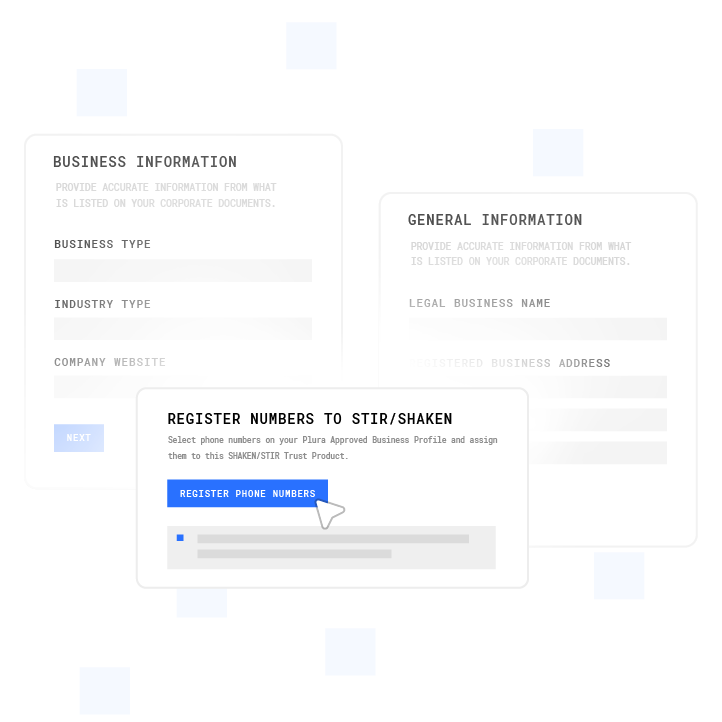
A-level STIR/SHAKEN attestation, where the carrier verifies the number is assigned to the caller, improves call completion rates compared to the B-level attestation typically provided by CPaaS platforms using shared number pools. Platforms that rent the carrier layer cannot issue A-level attestation under their own identity.
2026 Vendor Comparison Matrix for TCPA-Focused AI Platforms
The table below compares three platform categories against criteria that compliance officers and contact-center leaders use most in procurement. Every data point comes from published sources or Plura’s documented capabilities.
| Criterion | Plura AI (FCC-Licensed Carrier) | Twilio-Based API Resellers (e.g., Vapi, Synthflow)4 | Offshore BPOs |
|---|---|---|---|
| Carrier-level TCPA enforcement | Yes – licensed carrier, enforcement before dial | No – application-layer only, carrier rented from CPaaS | No – agent-policy training, not network enforcement |
| SHAKEN/STIR attestation level | A-level | B-level typical, shared CPaaS number pools | Varies by provider, not carrier-controlled |
| Real-time DNC scrubbing | Yes – federal and state registries, pre-dial | Varies, often a third-party integration or batch process | Manual or outsourced, not platform-enforced |
| Stateful cross-channel memory | Yes – voice, AI SMS, RCS, and AI webchat share one conversation database | No – primarily voice-only, stateless across channels | No – agent memory is human and inconsistent |
| 100% U.S. infrastructure | Yes – voice origination, model hosting, data storage, and call recording on domestic infrastructure | Varies, model hosting and data storage may use foreign infrastructure | No – offshore by definition |
| FCC NPRM (CG Docket No. 26-52) exposure | None – U.S. infrastructure by architecture | Potential, depending on CPaaS infrastructure geography | High – proposed sensitive-data offshore limits apply directly |
| SOC 2, HIPAA, ISO certification | SOC 2 Type II, HIPAA-aligned, ISO certified1 | Varies by vendor, review each vendor’s documentation | Varies by provider |
Run your numbers through Plura’s ROI calculator to compare projected savings against your current contact-center model in real time.3
Nine-Item TCPA Compliant AI Dialer Checklist
Audit-Ready Controls to Confirm Before You Buy
Use this checklist during vendor evaluation. Each item maps to a documented control that procurement, legal, and compliance teams can verify independently.
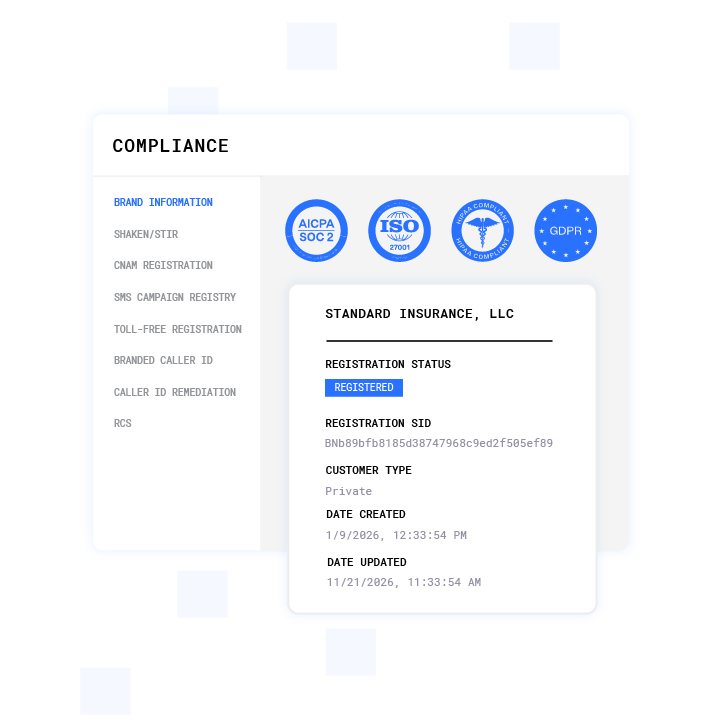
- FCC carrier license. Confirm the vendor holds its own FCC-licensed carrier status and does not route calls through a third-party CPaaS. Ask for the operating company number and Robocall Mitigation Database filing.
- Consent capture and record retention. Verify that prior express written consent (PEWC) records are timestamped, immutable, and linked to the specific seller. Consent records should be maintained for at least five years to support audits and dispute resolution, since TCPA disputes can surface long after the original contact.
- Real-time DNC scrubbing. Confirm scrubbing occurs against federal and state DNC registries at the moment of call placement, not in overnight batch windows. Real-time scrubbing with no batch windows is the standard for defensible compliance.
- Time-of-day enforcement. Verify that calling windows (8:00 AM to 9:00 PM in the recipient’s local time zone, per 47 C.F.R. § 64.1200) are enforced automatically through time-zone detection, not manual campaign settings.
- Opt-out processing. Confirm the platform recognizes natural-language opt-out requests during a call and propagates revocation across all channels within the timeframe described in the vendor’s documentation. The FCC’s February 2024 TCPA amendment describes a “reasonable time” for honoring revocation that may not exceed 10 business days.
- SHAKEN/STIR attestation level. Ask whether the vendor issues A-level or B-level attestation. A-level requires the carrier to verify the number is assigned to the caller, while B-level is typical of shared CPaaS number pools.
- Reassigned number scrubbing. Verify integration with the FCC Reassigned Numbers Database (RND). Contact lists often contain reassigned numbers, and consent follows the person, not the number.
- Audit-ready export. Confirm the platform generates one-click audit-ready reports covering consent records, DNC scrub logs, call logs, and suppression-list history for legal review or regulatory inquiry.
- U.S. infrastructure documentation. Request written confirmation that voice origination, model hosting, data storage, and call recording all sit on domestic infrastructure. Compare this with the FCC NPRM’s proposed sensitive-data restrictions in CG Docket No. 26-52.
Review plans and rates side by side to see how Plura’s carrier-first platform aligns with your volume and compliance requirements.
How Carrier-Level TCPA Enforcement Differs from Third-Party Bolt-Ons
Carrier-layer enforcement and application-layer compliance tools solve different problems. A carrier can sign calls with its own STIR/SHAKEN SP-KI certificate at A-level attestation, maintain FCC licensing and Robocall Mitigation Database registration, and supply real-time CDRs with timestamps, but it cannot capture consent or scrub lists because it never sees the underlying data. Application-layer tools can capture consent and scrub lists but cannot perform network-layer blocking or issue branded caller ID under their own carrier identity.
Plura bridges both layers. As an FCC-licensed carrier, it enforces SHAKEN/STIR authentication, issues branded caller ID directly, and applies DNC and TCPA-litigator screening before the call originates. As a platform, it captures consent records, enforces quiet hours through time-zone detection, and exports audit-ready reports. TCPA violations carry statutory damages of $500 to $1,500 per unsolicited call or text, with class-action settlements averaging $6.6 million based on 2018 data3. Enforcement that operates only at the application layer leaves carrier-side exposure unaddressed.
Platforms built as wrappers on top of Twilio or another CPaaS inherit that CPaaS’s caller ID reputation, not their own. They cannot issue the A-level attestation described earlier under their own identity, and they cannot remediate spam labels at the carrier level because they do not control the originating carrier. Plura’s AI Predictive Dialer routes calls over Plura’s own FCC-licensed carrier with branded caller ID and SHAKEN/STIR authentication on every outbound call.
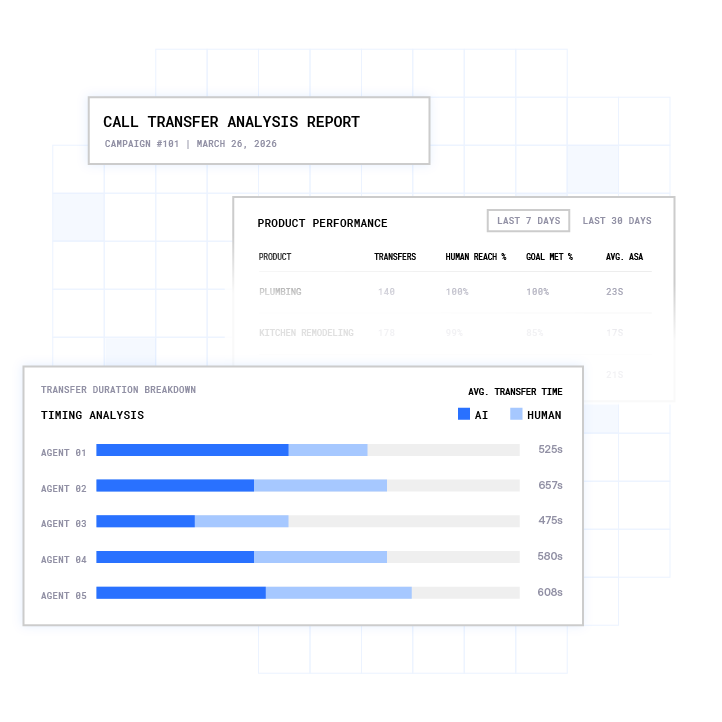
See carrier-level enforcement in action across voice, SMS, and RCS with a live platform walkthrough.
2026 Regulatory Update for AI Contact Centers
The regulatory environment for AI contact centers shifted materially in 2026. Understanding carrier-level enforcement becomes more critical as these rules evolve. Compliance officers evaluating vendors need to account for three overlapping frameworks.2
FCC NPRM CG Docket No. 26-52. The FCC released NPRM CG Docket No. 26-52 on onshoring customer-service calls.2 The proposal would require consumer transactions involving passwords, multi-factor authentication information, Social Security numbers, bank account information, or credit card information to be handled only at call centers located within the United States. The FCC also proposes limiting covered providers from using call centers in countries designated as foreign adversaries under the Export Control Reform Act. The rule directly addresses telecommunications, CMRS (Commercial Mobile Radio Service), interconnected VoIP, cable television, and DBS (Direct Broadcast Satellite) providers, with the Commission seeking comment on broader extension.
Federal legislation. The Keep Call Centers in America Act (S.2495) and the Foreign Robocall Elimination Act (S.2666) expand the federal focus on offshore call-center operations. Neither had been enacted as of August 29, 2026, but both remain active in the legislative record and relevant to vendor risk assessments.
State onshoring and data restriction laws. Five states have enacted active restrictions:
- New York’s Call Center Jobs Act imposes penalties up to $10,000 per day for covered violations.
- New Jersey’s mirror statute applies comparable limits on offshore handling of consumer data.
- Connecticut’s law restricts offshore handling under certain state contracts.
- Missouri’s executive order requires offshore disclosure for state-related interactions.
- Florida’s statute limits offshore handling of medical information.
AI voice disclosure. The FCC’s February 8, 2024 declaratory ruling in CG Docket 23-362 confirmed that AI-generated and cloned voices are treated as “artificial or prerecorded voice” under the TCPA, which brings AI voice-agent calls under the same consent framework as traditional robocalls. NPRM 24-84, adopted August 7, 2024, proposes requiring callers to disclose AI-generated voice at the beginning of each call, but as of August 2026 the proposal remains pending with no final rule adopted. Consult qualified counsel on how current and proposed disclosure obligations apply to your specific programs.
Consent revocation timeline. The FCC granted a waiver extending the effective date of the amended consent-revocation “revoke-all” rule to January 31, 2027. That extension delays the cross-channel revocation obligation for high-volume outbound programs.
People Also Ask: Common TCPA and AI Compliance Questions
Does the FCC require U.S.-based call centers for AI contact center platforms?
As of August 2026, the FCC’s proposed onshoring rule (CG Docket No. 26-52) remains a Notice of Proposed Rulemaking and has not been finalized. The proposal would require sensitive consumer data transactions to be handled only at U.S.-based call centers for covered providers. Consult qualified counsel on how the proposal applies to your organization’s current vendor contracts.
What is the difference between carrier-level and application-layer TCPA enforcement?
Carrier-level enforcement applies controls at the network origination point before a call or message leaves the carrier’s infrastructure. Application-layer enforcement applies controls within a dialer, CRM, or compliance software after the call has been initiated. No application-layer product performs carrier-network enforcement. The two layers address different parts of the compliance stack and do not replace each other.
How do AI-generated voice calls fit under the TCPA?
The FCC’s February 2024 declaratory ruling confirmed that AI-generated voices qualify as “artificial or prerecorded voice” under the TCPA. That interpretation subjects AI voice-agent outbound calls to the same consent framework as traditional robocalls. Prior express written consent is the applicable standard for telemarketing calls. Consult qualified counsel on how this ruling applies to your specific call programs.
Frequently Asked Questions About Plura
- How long does it take to deploy Plura’s AI contact center platform?
Deployment timelines depend on conversation complexity. A straightforward inbound qualification flow typically goes live in days. A multi-step intake workflow, such as a 25-question health-history survey, often runs closer to one to two months because the workflow logic requires design and validation. Every deployment follows a structured onboarding sequence: discovery audit, intake of sample calls and existing scripts, overnight build of a conversation mockup, iteration with the customer, engineering build of the production workflow, pilot test on a subset of real calls, and full go-live. Annual contracts include a 90-day opt-out window.
Plura holds SOC 2 Type II certification with continuous monitoring, penetration testing, and third-party audits. The platform is HIPAA-aligned with end-to-end encryption, access controls, and audit logging for protected health information. Plura is also ISO certified and supports GDPR coverage for European operations.1 Customers remain responsible for their own compliance obligations and certifications, and Plura provides infrastructure that supports those programs.
Every outbound contact is checked against federal and state DNC registries in real time before dial. Non-compliant numbers are blocked before the first attempt. Consent records are timestamped and immutable. The platform recognizes natural-language opt-out requests during a call and propagates revocation across channels. The compliance dashboard exports audit-ready reports in one click for legal review or regulatory inquiry. Customers configure rule sets at the campaign level and set state-specific overrides through the platform’s no-code workflow builder.
Plura connects with more than 50 tools across CRMs (HubSpot, Salesforce, Zoho), calendars (Cal.com, Calendly, Google Calendar), attribution platforms (Cometly, Retreaver, Ringba), document signers (DocuSign, PandaDoc), payment processors (Stripe, Shopify), and data enrichment providers. The full directory is available at plura.ai/integrations.
Every interaction across voice, AI SMS, RCS, and AI webchat is keyed to a customer token (phone number, email, or ID) and stored in one database. Consent records, DNC scrub logs, call logs, and suppression-list history all live in the same system and are accessible through the compliance dashboard. This architecture supports multi-year record retention for audit trails and dispute resolution. Consult qualified counsel on the specific retention periods that apply to your programs.
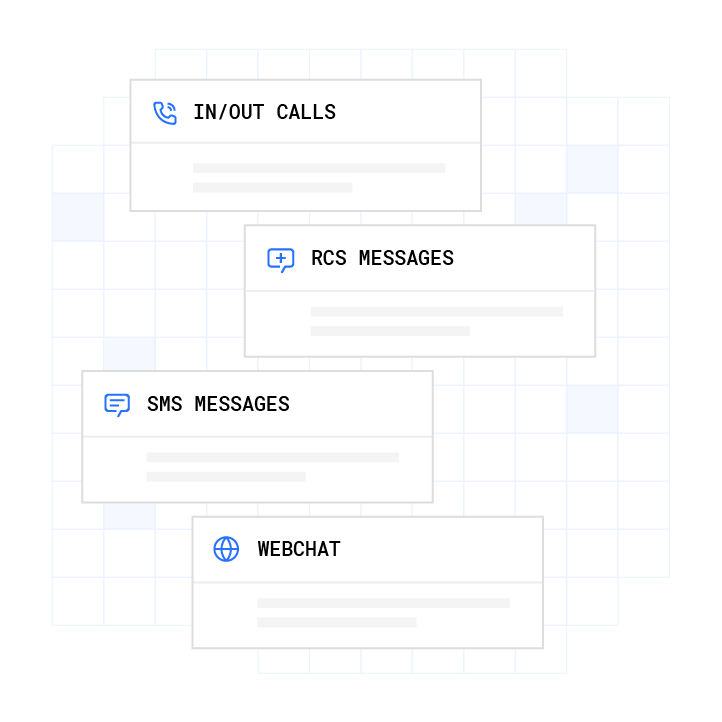
Plura Unified Inbox centralizes AI Voice, SMS, RCS, and Webchat conversations into one streamlined omnichannel communication workspace. Plura runs on 100% U.S. infrastructure by architecture. Voice origination, model hosting, data storage, and call recording all sit on domestic infrastructure. This structure avoids exposure to the proposed sensitive-data offshore limits in CG Docket No. 26-52, the foreign-adversary-nation provisions, and the third-party-vendor liability extensions described in the NPRM. Consult qualified counsel on how the proposed rule applies to your organization’s specific vendor relationships and contracts.
Conclusion: Applying a Carrier-First Lens to TCPA AI Vendors
Evaluating TCPA compliant AI contact center solutions in the US in 2026 requires a carrier-first framework. Application-layer compliance tools handle consent capture, list scrubbing, and audit logging, but they cannot enforce controls at the network origination point, issue A-level SHAKEN/STIR attestation under their own identity, or address infrastructure exposure tied to the FCC NPRM and state onshoring laws.
The nine-item checklist in this guide gives compliance officers and contact-center leaders a structured way to verify carrier-level enforcement, consent architecture, DNC scrubbing, time-of-day controls, and U.S. infrastructure documentation during vendor evaluation. The 2026 regulatory update covers the FCC NPRM (CG Docket No. 26-52), the Keep Call Centers in America Act (S.2495), and active state laws in New York, New Jersey, Connecticut, Missouri, and Florida, so procurement teams can assess vendor risk against the current record.
Plura AI is the only FCC-licensed carrier platform with stateful cross-channel enforcement that applies these controls before the call or message leaves the network. The platform supports TCPA compliance, DNC compliance, HIPAA, SOC 2, ISO certification, GDPR, and SHAKEN/STIR caller ID verification across voice, AI SMS, RCS, and AI webchat, with 50+ state rule sets enforced on every outbound contact and audit-ready exports available in one click.
Map Plura to your compliance requirements in a live demo that walks through the carrier-level enforcement architecture.
1 Plura AI maintains SOC 2, HIPAA, ISO, and GDPR posture as part of its platform infrastructure. References to compliance frameworks in this article describe Plura’s platform capabilities and do not constitute a guarantee that any customer using Plura will themselves be compliant with applicable laws or standards. Customers remain solely responsible for their own regulatory obligations, certifications, consent management, recordkeeping, and the claims they make to their own end users. Consult qualified legal counsel for guidance specific to your use case.
2 This article describes regulatory frameworks at a general level and does not constitute legal advice. Laws and regulations vary by jurisdiction, change over time, and apply differently depending on facts and circumstances. Readers should consult qualified legal counsel before making compliance decisions.
3 Performance figures, customer outcomes, and industry statistics referenced in this article are drawn from cited third-party sources or Plura customer case studies. Individual results vary based on implementation, use case, industry, audience, and execution. Past or aggregate performance is not a guarantee of future results.
4 References to third-party products, services, companies, or research are made for informational and comparative purposes only. Plura AI is not affiliated with, endorsed by, or sponsored by any third party named in this article unless explicitly stated. Trademarks and product names referenced remain the property of their respective owners.
This article is provided for informational purposes only and reflects Plura AI’s understanding at the time of publication. Product capabilities, integrations, and specifications are subject to change. For the most current information, visit plura.ai.
This article was produced with the assistance of AI tools and reviewed by Plura AI prior to publication.