

Written by: Matt Beucler, CEO, Plura AI | Last updated: August 28, 2026
Updated August 28, 2026
Key Takeaways for High-Volume Contact Centers
- Traditional 1–3% manual QA sampling leaves 97% of calls unchecked, which exposes contact centers to TCPA, DNC, HIPAA, and GDPR scrutiny under FCC NPRM CG Docket No. 26-52.1
- Plura AI delivers 100% automated scoring with real-time, carrier-enforced TCPA and DNC checks before calls leave the network, closing post-call compliance gaps.
- Every automated score links to transcript timestamps, consent records, and SHAKEN/STIR verification, creating audit-ready documentation for SOC 2, HIPAA, ISO, GDPR, and regulatory reviews.1
- Plura’s Stateful Conversation Database powers cross-channel coaching and 80/20 human review routing, so analysts focus on the highest-risk 5–10% of interactions while automation handles the rest.
- Contact centers replacing manual QA with Plura AI reach a 700K versus 7M TCO benchmark; see how carrier-enforced compliance drives that 10x cost reduction in a live demo.
The Problem: Manual Sampling Under FCC NPRM Falls Short
Traditional manual QA in contact centers samples only 1–3% of customer interactions because reviewing higher volumes is operationally impractical. In a typical 200-seat contact center handling 20,000 calls per month, QA teams manually review only 2–5 calls per agent per month, which produces roughly 2–5% coverage. When manual QA reviews only a small fraction of calls, compliance risks under TCPA, HIPAA, and GDPR remain hidden in the remaining 95%+ of interactions.2
The structural problems with sampling extend beyond coverage gaps. McKinsey estimated that manual QA scoring achieves 70–80% accuracy4, while automated QA systems reach over 90% accuracy. Sampling bias in manual QA arises from selection bias, recency bias, availability bias, survivorship bias, and reviewer inconsistency. These factors push reviewers toward escalated or recent calls and cause the scored sample to misrepresent overall agent performance.
These accuracy and bias problems become regulatory liabilities when auditors expect proof of systematic compliance. On March 26, 2026, the FCC adopted an NPRM proposing actions to encourage onshoring of call centers, improve customer service and security of communications, and address illegal robocall scams originating in foreign call centers. For operators in healthcare, insurance, financial services, and legal, a 1–3% sample cannot show consistent adherence across every interaction when auditors review TCPA, DNC, HIPAA, or state onshoring expectations.2 Gartner estimates that U.S. states assessed $3.425 billion in privacy-related fines in 2025.4
The Solution: Carrier-Level Real-Time DNC and TCPA Scoring
Plura AI runs on its own FCC-licensed audio bridging carrier, not a third-party CPaaS such as Twilio.4 That architectural choice determines where compliance enforcement occurs. Twilio-based API resellers typically bolt compliance checks onto calls after the network has already processed them. Plura enforces DNC and TCPA checks inside the platform before calls leave the network.
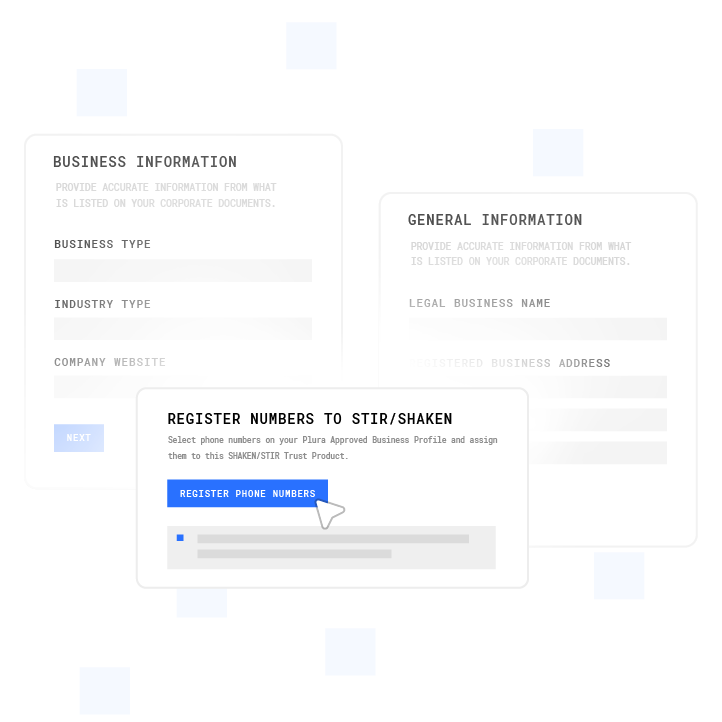
Real-time DNC scrubbing must check the National Registry and applicable state lists at each call attempt, not only at campaign setup, because numbers are added daily. Plura’s compliance engine performs this check on every outbound contact in real time and blocks non-compliant numbers before the first dial attempt. A canonical, immutable consent ledger serves as a single source of truth for TCPA defense. Every outbound voice AI dial is checked against that ledger in real time, and the check itself is logged.
The FCC’s February 2024 ruling classified AI-generated voices as artificial voices under TCPA, which aligns the consent standard for AI voice calls with robocalls. TCPA class action filings spiked 283% in September 2025 compared to September 2024, with 224 class actions filed that month and 78% of September 2025 TCPA lawsuits categorized as class actions. Operators that rely on manual sampling programs cannot show systematic consent verification across every interaction at that litigation volume.
See real-time DNC scrubbing and consent verification in action before your next compliance review in a live demo with Plura.
Evidence-Citing QA That Supports Audit Defense
Every score Plura generates links to transcript timestamps, consent records, and SHAKEN/STIR (Secure Handling of Asserted information using toKENs / Signature-based Handling of Asserted information using toKENs) caller ID verification. Calls must produce linked artifacts that reconstruct the full interaction for legal defense: audio recordings showing where consent was captured, transcripts showing what was said, event logs documenting required disclosures and tool usage, call detail records establishing timing and duration, and consent record references tying the call to prior authorization.
Plura’s compliance infrastructure supports SOC 2, HIPAA, ISO certification, GDPR, SHAKEN/STIR caller ID verification, TCPA-related documentation, and DNC-related documentation. Consent records are timestamped and immutable. The compliance dashboard exports audit-ready reports in one click for legal review, carrier requirements, or regulatory inquiries. Operators in healthcare, insurance, and financial services use this documentation layer to respond to auditor requests without rebuilding records manually from multiple systems.
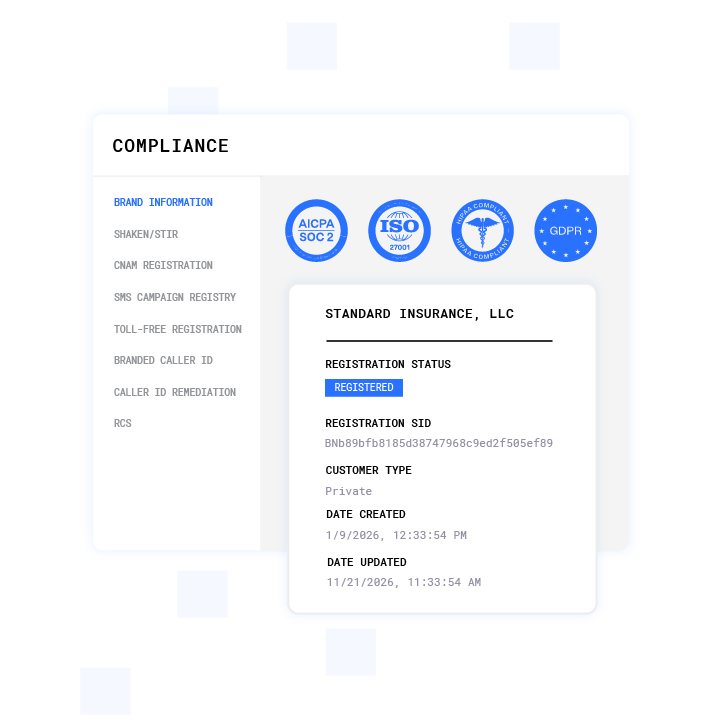
In regulated environments, AI compliance monitoring aims not only to flag violations but to prove that monitoring occurs consistently and that issues flow into documented processes with audit logs, policy version history, and evidence excerpts. Plura’s scoring architecture aligns with that standard.
Agent Coaching Powered by a Stateful Conversation Database
Manual QA programs generate coaching from a non-representative sample of calls and often deliver feedback days after the interaction. Plura’s conversation intelligence layer analyzes every interaction across voice, SMS, RCS (Rich Communication Services), and AI webchat. Leaders see which scripts close, which objections recur, and where compliance gaps appear at specific workflow nodes.
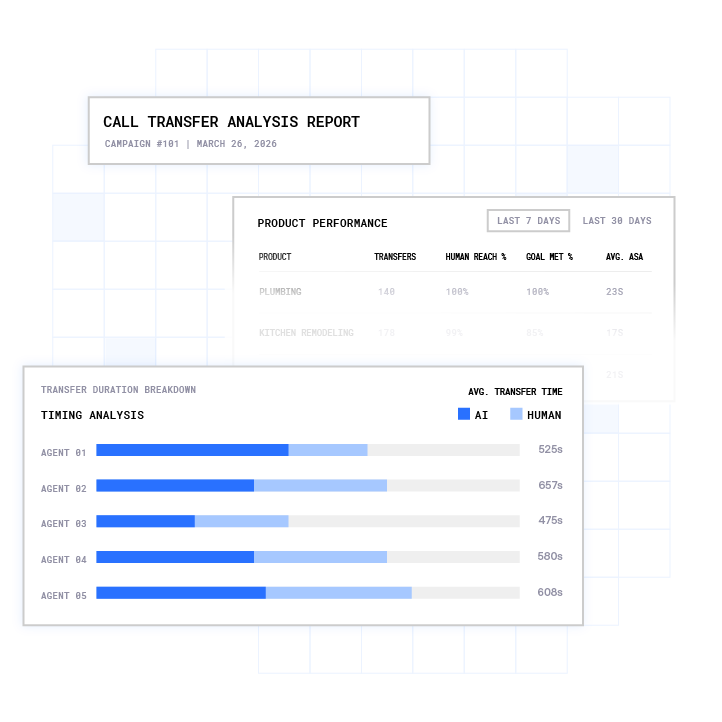
The Stateful Conversation Database holds context across every channel. An agent who texted a lead at 9 a.m. can pick up the call at noon already knowing what was said. Coaching derived from this cross-channel memory reflects the full arc of a customer relationship, not a single sampled call. Industry average annual agent turnover in contact centers is 30–45%. Coaching programs built on manual sampling must restart continuously as new agents cycle in. Automated scoring tied to a stateful database builds coaching that preserves institutional knowledge regardless of agent turnover.
TCO Math: 700K vs 7M for QA and Operations
AI evaluation costs approximately $0.05 per call compared to several dollars for manual QA3, which delivers 95–98% cost reduction while providing 33–100x more coverage. Across a full operation, that shift changes the contact center cost structure.
Plura’s TCO of 700K replaces a traditional 7M contact-center cost structure on equivalent volume.3 For a 50-seat equivalent contact center, traditional offshore operations often cost $35,000–$50,000 monthly, while AI contact centers run at roughly $8,000–$15,000 monthly. The default scenario on Plura’s ROI calculator shows a 15-agent operation at $20 per hour costing $60,000 per month, replaced by Plura at $14,400 per month, which produces 12-month savings of $547,200.
Run your numbers through Plura’s ROI calculator to see your cost reduction in real time.
80/20 Review: Human Focus on AI-Flagged Calls
A hybrid AI call monitoring model is now standard practice. AI automatically scores 100% of calls while human QA analysts review only the 5–10% of interactions flagged for risk, low confidence, edge cases, or disputes. Plura routes the highest-risk interactions to human review queues and automates scoring on the remaining calls. This allocation concentrates human QA capacity where it produces the most audit value, such as complex objection handling, consent edge cases, and high-stakes disclosures.
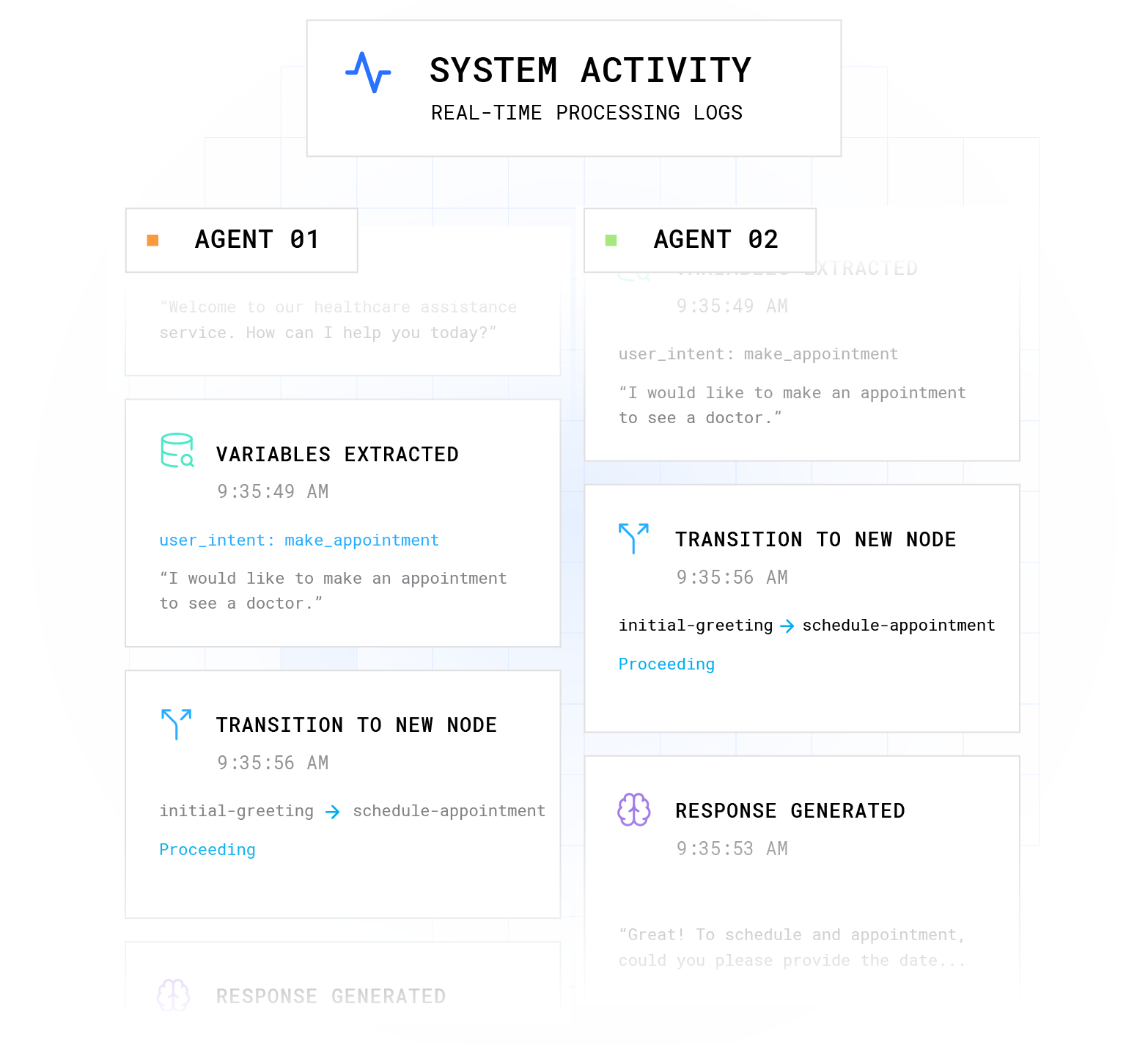
Real-time compliance alerts work best for high-severity issues such as payment card handling or required disclosures that must be spoken at a specific moment, while post-call monitoring handles broader policy checks, trend detection, and formal case creation. Plura’s scoring architecture follows this pattern with real-time flags on TCPA and DNC triggers and post-call analysis for coaching and trend identification.
Implementation Roadmap for Existing Plura Dialer Users
Operators already running Plura’s AI Predictive Dialer can activate automated QA scoring without migrating to a new platform. The Stateful Conversation Database already holds every call record, consent log, and transcript. Activating the scoring layer adds automated rubric evaluation, compliance flag routing, and coaching trigger generation on top of the existing call infrastructure.
This roadmap outlines the five-step rollout sequence that teams follow to bring automated QA online:
- Define QA rubric criteria and compliance rule sets at the campaign level.
- Configure state-specific overrides for TCPA calling windows and DNC list sources.
- Run automated scoring against a historical call sample to calibrate thresholds.
- Pilot on a live call subset with human review of flagged interactions.
- Deploy fully with 100% automated scoring and 80/20 human review routing.
New Plura deployments follow the same sequence. Setup time typically measures in days for standard qualification flows and one to two months for complex multi-step intake workflows.
Compliance Rubric: TCPA and DNC Scoring Dimensions
Plura’s compliance scoring evaluates four dimensions at different enforcement layers, with pre-dial checks preventing issues before calls reach the network.
| Scoring Dimension | TCPA Relevance | DNC Relevance | Plura Enforcement Layer |
|---|---|---|---|
| Consent verification | Immutable consent ledger checked at dial time | Consent scope logged per channel | Pre-dial, carrier level |
| DNC registry check | Blocks calls to revoked-consent numbers | National and state DNC lists checked per attempt | Pre-dial, real-time |
| Calling window enforcement | Federal and state quiet-hours rules | State-specific time restrictions | Automated via time-zone detection |
| SHAKEN/STIR attestation | A-level attestation improves call completion vs. CPaaS B-level | Verifies legitimate origination | Carrier level, every outbound call |
Frequently Asked Questions
Can AI do quality assurance in a call center?
AI quality assurance systems can score 100% of call center interactions automatically, compared to the low coverage typical of manual sampling programs. AI QA platforms evaluate calls against configurable rubrics covering required disclosures, prohibited language, consent verification, and soft-skill dimensions such as empathy and conversation flow. The standard operational model pairs AI automated scoring on all interactions with human review concentrated on the highest-risk 5–20% of flagged calls. For regulated industries, AI QA also generates audit-ready documentation linking every score to transcript timestamps, consent records, and call metadata. Plura’s scoring layer runs inside the same platform that handles voice, SMS, RCS, and webchat, so QA data and conversation history share a single stateful database rather than requiring a separate integration.
How do you improve quality assurance in a call center?
Leaders improve QA by expanding coverage from manual sampling to 100% automated scoring. Structural improvements that produce measurable outcomes include replacing subjective inter-rater scoring with consistent automated rubrics, reducing feedback lag from days to same-day or real-time, routing coaching from cross-channel conversation data rather than isolated call samples, and integrating compliance checks into the scoring workflow so TCPA, DNC, and disclosure adherence are evaluated on every interaction. Plura’s approach combines all four elements: automated scoring on 100% of interactions, evidence-backed coaching tied to the Stateful Conversation Database, and carrier-enforced TCPA and DNC checks before calls leave the network. Operators should consult qualified counsel on their specific regulatory obligations and can use Plura’s audit-ready exports to support that review.
What is the difference between manual QA sampling and 100% automated QA scoring?
Manual QA sampling reviews a small subset of interactions, often 1–5%, selected by QA analysts. The selection process introduces bias toward escalated, long, or recently completed calls, and scoring consistency between analysts typically falls in the 70–80% inter-rater reliability range. Automated QA scoring evaluates every interaction against the same rubric with no selection bias, which produces consistent scores across the full call volume. For compliance purposes, 100% automated scoring generates a complete audit trail rather than a statistical sample, which aligns with the documentation standard regulators and auditors examine when reviewing TCPA, DNC, or HIPAA adherence. The cost differential is also significant, with manual QA evaluations costing several dollars each while automated scoring runs at a fraction of that per conversation.
How does Plura handle TCPA and DNC compliance in its QA workflow?
Plura enforces TCPA and DNC checks at the carrier level before calls leave the network, not as a post-call audit layer. Every outbound contact is checked against federal and state DNC registries in real time before dial. Consent records are timestamped, immutable, and stored in the Stateful Conversation Database. SHAKEN/STIR caller ID verification runs on every outbound call. Quiet-hours rules apply automatically through time-zone detection on the contact’s location. The compliance dashboard exports audit-ready reports on demand. Customers remain responsible for their own regulatory obligations and should consult qualified counsel on TCPA and DNC requirements that apply to their operations. Plura provides the infrastructure and documentation layer that supports that compliance posture.
What does the 700K versus 7M TCO benchmark mean for contact center leaders?
The 700K versus 7M benchmark compares the total cost of ownership for a Plura-powered contact center against a traditional human-staffed contact center at equivalent interaction volume. The 7M figure reflects the fully loaded cost of a traditional operation, including agent payroll, taxes, benefits, commissions, real estate, QA labor, and the ongoing recruitment and training costs driven by high annual agent turnover. The 700K figure reflects Plura’s platform cost at the same volume, with 100% talk utilization, no turnover overhead, and automated QA replacing a dedicated QA analyst team. The gap widens further when potential compliance penalty exposure enters the model, because manual sampling programs that miss systemic issues carry penalty risk that 100% scoring programs help reduce by surfacing problems before they spread across thousands of interactions.
Conclusion: Moving from Sampling to Systematic QA
Manual 1–3% sampling cannot demonstrate systematic compliance adherence across every interaction, and FCC NPRM CG Docket No. 26-52 has turned that documentation gap into a material risk for contact centers in healthcare, insurance, financial services, and legal. The operational math also no longer supports manual QA at scale, with higher per-evaluation costs, lower scoring accuracy, and slower feedback cycles compared to automated systems.
Plura replaces that model with 100% automated scoring, carrier-enforced TCPA and DNC checks before calls leave the network, evidence-backed coaching tied to the Stateful Conversation Database, and audit-ready documentation for SOC 2, HIPAA, ISO certification, GDPR, SHAKEN/STIR caller ID verification, TCPA-related reviews, and DNC-related reviews. The TCO math produces 700K against a 7M traditional benchmark, and the 80/20 routing model concentrates human QA capacity on the highest-risk interactions while automation handles the rest.
Check your ROI in Plura’s calculator to see your cost reduction in real time.
See 100% automated scoring and carrier-enforced compliance in a single platform and schedule your demo with Plura.
1 Plura AI maintains SOC 2, HIPAA, ISO, and GDPR posture as part of its platform infrastructure. References to compliance frameworks in this article describe Plura’s platform capabilities and do not constitute a guarantee that any customer using Plura will themselves be compliant with applicable laws or standards. Customers remain solely responsible for their own regulatory obligations, certifications, consent management, recordkeeping, and the claims they make to their own end users. Consult qualified legal counsel for guidance specific to your use case.
2 This article describes regulatory frameworks at a general level and does not constitute legal advice. Laws and regulations vary by jurisdiction, change over time, and apply differently depending on facts and circumstances. Readers should consult qualified legal counsel before making compliance decisions.
3 Performance figures, customer outcomes, and industry statistics referenced in this article are drawn from cited third-party sources or Plura customer case studies. Individual results vary based on implementation, use case, industry, audience, and execution. Past or aggregate performance is not a guarantee of future results.
4 References to third-party products, services, companies, or research are made for informational and comparative purposes only. Plura AI is not affiliated with, endorsed by, or sponsored by any third party named in this article unless explicitly stated. Trademarks and product names referenced remain the property of their respective owners.
This article is provided for informational purposes only and reflects Plura AI’s understanding at the time of publication. Product capabilities, integrations, and specifications are subject to change. For the most current information, visit plura.ai.
This article was produced with the assistance of AI tools and reviewed by Plura AI prior to publication.