

Written by: Matt Beucler, CEO, Plura AI | Last updated: August 29, 2026
2026 Call Center Turnover: What Leaders Need to Know
- U.S. call centers face 41–46% annual turnover in 2026, nearly three times the national workforce average, with first-year attrition reaching 69–73%.3
- The true cost to replace one agent ranges from $22,500 to $46,000 when all six cost categories are counted: recruiting, lost productivity, customer impact, morale, quality, and management time.3
- A 100-agent operation at 30–45% turnover incurs $2.25M–$4.6M in annual attrition costs, which can consume up to 55% of payroll.3
- Hidden burnout and quality erosion compound the damage. 87% of agents report high stress, FCR drops 15–25% during ramp periods, and CSAT declines with each departure.
- Plura AI removes every turnover cost line item with AI Voice, AI Predictive Dialer, and AI SMS agents that deliver 0% attrition and 100% talk utilization. See the savings for your operation in a live walkthrough.
Current Call Center Turnover Benchmarks in the U.S.
U.S. call center annual turnover averaged 41–46% in 2026, up from the 40–45% range recorded in 2025 and running roughly three times higher than the broader U.S. workforce. SQM Group recorded a 38% average annual agent turnover rate for North American call centers in 2022, the highest level in over 25 years of tracking, and sets 20% or below as the standard for a well-run operation.4
Turnover varies significantly by vertical. Financial services and banking contact centers experience 48–62% annual attrition, healthcare payer and provider support sees 47–58%, and insurance claims and billing runs 42–52%, according to the ICMI Contact Center Benchmark Report 2025 and Deloitte’s Global Contact Center Survey. High-stress segments therefore operate well above the already elevated industry average. This instability compounds when intent is considered. Verint’s State of Agent Experience 2026 report found that 31% of contact center agents say they are likely to quit within six months, which means nearly one-third of current staff are already planning their exit.
Average agent tenure in U.S. contact centers sits at 13–15 months. First-year attrition in U.S. contact centers runs 69–73% per 2026 Insignia Resource industry data, with most attrition concentrated in the initial twelve months. The structural drivers are documented. Unnecessary or unprepared calls (47%) and poor work-life balance rank among the top cited frustrations driving contact center agent attrition. These rates represent a long-term pattern rather than a short spike. ContactBabel managing director Steve Morrell noted in November 2025 that 30% average attrition has been standard for the past seven or eight years. Given this baseline, leaders need to understand what a 30% rate actually costs.
Financial Impact of a 30% Turnover Rate
A 30% annual turnover rate sits below the current industry average but still creates significant financial damage. The 2026 per-agent cost of call center turnover breaks into six line items:
| Cost Category | Per-Agent Range (2026) | Key Driver | Source |
|---|---|---|---|
| Direct Replacement (recruiting, onboarding, initial training) | $10,000–$20,000 | Job postings, recruiter time, background checks, training delivery | Insignia Resources 2026 |
| Lost Productivity | $5,000–$9,000 | 6–8 months to full performance, new agents handle 30–50% fewer contacts | Insignia Resources 2026 |
| Customer Impact | $3,000–$6,000 | Lower CSAT scores, increased complaints, higher escalation volume | Metrigy / Symtrain 2025 |
| Team Morale and Burnout | $2,000–$5,000 | Remaining agents absorb extra workload, overtime costs rise | Insignia Resources 2026 |
| Quality Degradation | $1,500–$3,500 | Increased errors, longer average handle time, inconsistent FCR | Insignia Resources 2026 |
| Management Time | $1,000–$2,500 | Supervisors diverted from coaching to constant hiring cycles | Insignia Resources 2026 |
Total per-agent impact, including all six categories, reaches $22,500–$46,000. The $10,000–$20,000 direct replacement figure that most finance teams budget for covers less than half the true cost.
Schedule a walkthrough with Plura AI to see how AI agents remove each cost category in this breakdown.
Turnover Cost Calculator for a 100-Agent Call Center
The salary-based shortcut formula recommended by SHRM-aligned 2026 benchmarks for entry-level and frontline roles is:
Annual Turnover Cost = Headcount x Annual Turnover Rate x Annual Salary x Cost Multiplier (0.5x–0.75x)
Applied to a 100-agent U.S. contact center paying $40,000 in average annual agent salary at 40% turnover with a 0.5x multiplier, the result is 100 x 0.40 x $40,000 x 0.5 = $800,000 per year. At the 0.75x multiplier, the same operation produces $1.2M annually. These figures align with the U.S. Finance Calculators 2026 model, which estimates $720,000 annually for a 100-agent center at 45% turnover and $16,000 per departure.
When the full six-category cost model is applied, the numbers increase. A typical 100-agent U.S. contact center operating at 2026 industry-average turnover rates incurs $2.25M–$4.6M in annual attrition-related costs, representing up to 55% of the annual payroll budget.
Run your specific headcount, salary, and turnover rate through Plura’s ROI calculator to produce a CFO-ready number for your operation.
Burnout, Quality Erosion, and Other Hidden Costs
The line items most operators miss are the ones that compound over time. 87% of call center agents report high levels of workplace stress and 74% experience ongoing burnout. When experienced agents leave, the remaining team absorbs the volume. Overtime costs rise, error rates climb, and supervisors who should be coaching tenured performers spend their time on recruiting and onboarding cycles.
Supervisor burnout from constant churn can divert team leads from developing tenured talent. High attrition increases average handle time (AHT), lowers first-call resolution (FCR), and reduces customer satisfaction (CSAT) because newly hired agents take longer to resolve issues and deliver inconsistent service.
The quality erosion is measurable. First-call resolution drops 15–25% during the ramp window after an agent departure. Metrigy research found that when contact center turnover stays below 15%, customer satisfaction increases by 26%. The inverse also appears in the data. Every percentage point of turnover above that threshold erodes CSAT in a measurable, compounding way.
Verint’s State of Agent Experience 2026 report estimates that a contact center with 1,000 agents at a 31% turnover rate could incur $6.2 million in annual replacement costs before accounting for customer churn. Scaled to a 100-agent operation at the same rate, that produces $620,000 annually from replacement costs alone, before the hidden burnout and quality costs are added.
How Plura AI Removes Turnover-Driven Costs
The economics of traditional contact centers are built on a labor model that generates every cost in the table above. AI contact centers carry a 0% turnover rate compared to 30–45% annually for traditional operations. There is no recruiting cycle, no training ramp, no productivity gap, no burnout cascade, and no quality erosion from constant agent cycling.
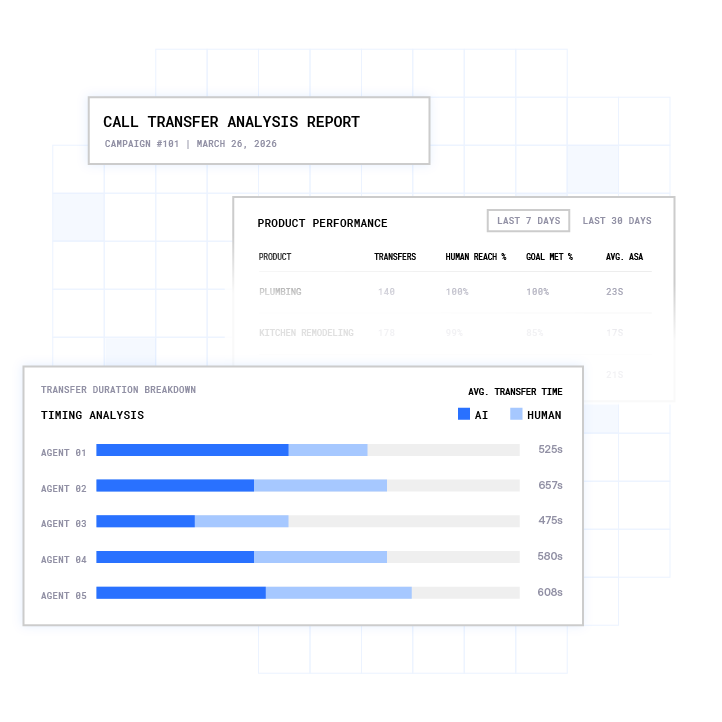
Plura AI’s platform covers the full conversation stack. AI Voice handles inbound and outbound calls on Plura’s own FCC-licensed carrier. An AI Predictive Dialer maximizes talk time per dial using stateful conversion signals. AI SMS manages lead qualification and live transfer. All three channels share a Stateful Conversation Database, so context carries across every touchpoint without re-explanation.
| Cost Category | Traditional 100-Agent Center (Annual) | Plura AI (Annual) |
|---|---|---|
| Total Cost of Ownership | $4M–$7M | $300K–$700K |
| Annual Turnover Cost | $2.25M–$4.6M | $0 |
| Recruiting and Onboarding | $2,750–$6,800 per departure | $0 |
| Training Ramp (per agent) | $3,800–$8,100 | $0 |
| Productivity Gap (ramp period) | $2,900–$4,800 per agent | $0 (100% talk utilization) |
| Overtime and Burnout Coverage | Variable, compounds with each departure | $0 |
| Turnover Rate | 30–45% annually | 0% |
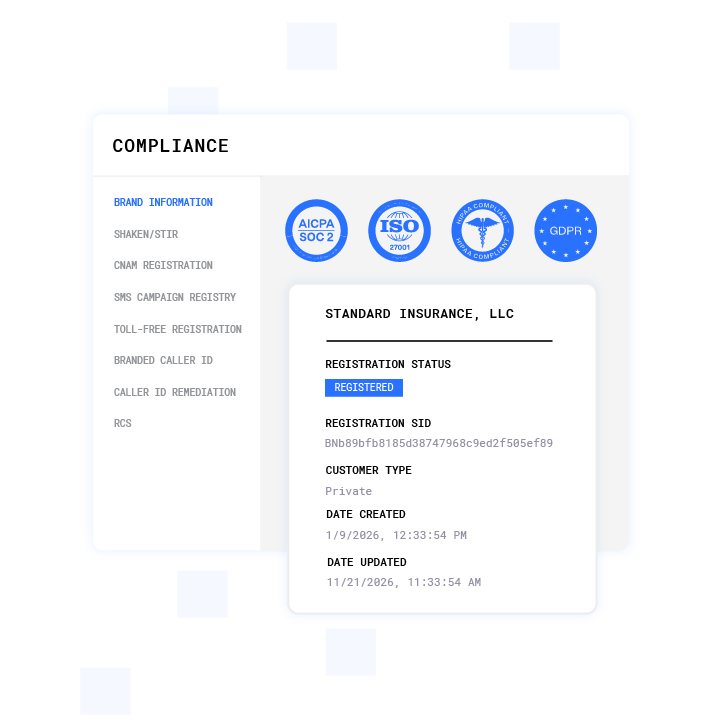
Plura runs on SOC 2, HIPAA, ISO certification, GDPR, SHAKEN/STIR caller ID verification, TCPA compliance, and DNC compliance infrastructure.1 Every outbound contact is checked against federal and state DNC registries in real time before dial. Consent records are timestamped and immutable. Quiet-hours rules enforce automatically through time-zone detection. Customers are responsible for their own regulatory obligations, and Plura provides infrastructure that supports compliance operations.
Review plans and rates or run your numbers through Plura’s ROI calculator to generate a side-by-side cost comparison for your operation.
Book a live demo with Plura to review the TCO comparison with your specific headcount and turnover rate.
Frequently Asked Questions
What is the typical turnover rate in call centers?
As noted earlier, 2026 data shows 41–46% annual turnover, with the industry consensus benchmark at 30–45%. SQM Group’s multi-decade tracking of North American call centers places the average at 38%. High-stress verticals like financial services and healthcare run 10–20 percentage points above the industry average, as detailed in the segment breakdown above. Under 15% annual attrition is considered strong performance, and most U.S. operations do not reach that threshold. Average agent tenure sits at 13–15 months, and 65–70% of first-year departures occur within the initial 90 days of employment.
Is a 30% turnover rate bad?
A 30% annual turnover rate is below the U.S. industry average of 41–46% but still well above the 20% or below benchmark that SQM Group identifies as a well-run operation. At 30% turnover on a 100-agent team, an operation experiences roughly 30 departures per year. At a conservative $15,000 per departure, that produces $450,000 in annual replacement costs before hidden costs are counted. When the full six-category model is applied, including lost productivity, customer impact, team morale, quality degradation, and management time, the total impact per agent aligns with the $22,500–$46,000 range detailed in the cost breakdown above. A 30% rate is not a crisis signal, but it is not a neutral number either, because the financial damage compounds every year it goes unaddressed.
How do I calculate call center agent turnover costs?
The salary-based shortcut formula for frontline and entry-level roles, aligned to SHRM 2026 benchmarks, is: Annual Turnover Cost = Headcount x Annual Turnover Rate x Annual Salary x Cost Multiplier. For contact center agents, the cost multiplier is 0.5x–0.75x of annual salary, reflecting the direct and indirect replacement costs documented across recruiting, training, productivity ramp, and quality erosion. A 100-agent center paying $40,000 average annual salary at 40% turnover produces $800,000–$1.2M annually using this formula. For a more detailed line-item breakdown that includes your specific wage rate, turnover percentage, and headcount, Plura’s ROI calculator at plura.ai/calculator produces a CFO-ready output in real time.
What hidden costs does call center turnover produce beyond direct replacement?
Direct replacement costs, covering recruiting, onboarding, and initial training, account for $10,000–$20,000 per departure. The hidden costs that most finance teams do not budget for include lost productivity during the 6–8 month ramp period ($5,000–$9,000 per agent), customer impact from lower CSAT scores and higher escalation volume ($3,000–$6,000), team morale and burnout among remaining agents who absorb the extra workload ($2,000–$5,000), quality degradation through increased errors and longer average handle times ($1,500–$3,500), and management time diverted from coaching to constant hiring cycles ($1,000–$2,500). These hidden costs exceed direct replacement costs in most operations, pushing the true per-agent impact to the $22,500–$46,000 range detailed in the cost breakdown above.
How does Plura AI eliminate call center turnover costs?
Plura’s AI Voice, AI Predictive Dialer, and AI SMS agents carry a 0% turnover rate. There is no recruiting cycle, no training ramp, no productivity gap during onboarding, and no burnout cascade when volume spikes. AI agents run at 100% talk utilization versus the 40% typical of human contact center operations, and they scale instantly into peak periods without advance hiring. The platform’s Stateful Conversation Database holds context across every channel, so every interaction picks up where the last one left off. For a 100-agent equivalent operation, Plura’s annual total cost of ownership represents an 85–90% reduction versus traditional contact center costs. The full cost comparison is available at plura.ai/calculator.
Conclusion: Reducing the Call Center Turnover Tax
Estimates for the 2026 cost to replace one call center agent typically range from $10,000 to $28,000 depending on the source and included components such as recruiting, training, and ramp productivity loss. This cost profile is structural and tied to the labor model that traditional contact centers run on. At 30–45% annual turnover across a 100-agent operation, the annual cost reaches $2.25M–$4.6M before customer churn and quality erosion are counted.
Plura AI’s AI Voice, AI Predictive Dialer, and AI SMS replace every cost category in the turnover table with a single platform that carries a 0% attrition rate, 100% talk utilization, and a total cost of ownership that runs 85–90% below the traditional $4M–$7M benchmark. The platform runs on Plura’s own FCC-licensed carrier, with SOC 2, HIPAA, ISO certification, GDPR, SHAKEN/STIR caller ID verification, TCPA compliance, and DNC compliance infrastructure built in.2
Run your numbers through Plura’s ROI calculator to check your ROI in real time. Then book a live demo with Plura to walk through the full TCO comparison for your operation.
1 Plura AI maintains SOC 2, HIPAA, ISO, and GDPR posture as part of its platform infrastructure. References to compliance frameworks in this article describe Plura’s platform capabilities and do not constitute a guarantee that any customer using Plura will themselves be compliant with applicable laws or standards. Customers remain solely responsible for their own regulatory obligations, certifications, consent management, recordkeeping, and the claims they make to their own end users. Consult qualified legal counsel for guidance specific to your use case.
2 This article describes regulatory frameworks at a general level and does not constitute legal advice. Laws and regulations vary by jurisdiction, change over time, and apply differently depending on facts and circumstances. Readers should consult qualified legal counsel before making compliance decisions.
3 Performance figures, customer outcomes, and industry statistics referenced in this article are drawn from cited third-party sources or Plura customer case studies. Individual results vary based on implementation, use case, industry, audience, and execution. Past or aggregate performance is not a guarantee of future results.
4 References to third-party products, services, companies, or research are made for informational and comparative purposes only. Plura AI is not affiliated with, endorsed by, or sponsored by any third party named in this article unless explicitly stated. Trademarks and product names referenced remain the property of their respective owners.
This article is provided for informational purposes only and reflects Plura AI’s understanding at the time of publication. Product capabilities, integrations, and specifications are subject to change. For the most current information, visit plura.ai.
This article was produced with the assistance of AI tools and reviewed by Plura AI prior to publication.