
Written by: Matt Beucler, CEO, Plura AI | Last updated: August 29, 2026
Key Takeaways on Lead Response, Revenue, and Risk
- The median B2B lead response time remains 42–47 hours, and only 7–23% of companies reply within five minutes.3
- Leads contacted within five minutes convert at 21–32% versus 2.3–12% for next-day replies, while contact odds drop 100× after the first five minutes.3
- After-hours volume accounts for 44–53% of inbound leads, and most operators lack 24/7 response coverage, which creates a structural gap in revenue capture.
- The FCC’s 2026 NPRM proposes a 30% cap on offshore call handling and bans offshore processing of sensitive consumer data, which increases compliance risk for non-U.S. infrastructure platforms.2
- AI contact-center platforms with carrier-level infrastructure can deliver sub-5-second response across voice, SMS, and webchat, which closes the gap between lead arrival and first contact.
2026 Lead Response Time Benchmarks: Study Comparison
The following table compares five major studies conducted between 2007 and 2026 and shows that median response times have remained clustered around 42–47 hours despite two decades of CRM and martech investment.4
| Study | Sample | Response Time | % Under 5 Minutes |
|---|---|---|---|
| Optifai Pipeline Study 2026 | 939 B2B SaaS companies (Q2 2025–Q1 2026, CRM timestamp data) | 47 hours (average) | 23% |
| Blazeo’s 2026 Speed-to-Lead Benchmark; Aloware’s 2026 benchmark | 573 service-based businesses (Blazeo); B2B teams (Aloware) | 42 hours median (Aloware) | ~7% (Aloware); 26% top quartile (Blazeo) |
| 2021 InsideSales.com (XANT) study | 5.7 million inbound leads across 400+ companies | N/A | under 1%; 57.1% after more than a week |
| MIT/InsideSales 2007 Lead Response Management Study; 2011 HBR study | over 15,000 web-form leads and 100,000+ call attempts across 6 companies (MIT); 2,241 companies (HBR) | 42 hours (HBR) | Not measured; contact odds 100× higher at 5 min vs. 30 min |
The Problem: 47-Hour Response Times as an Operational Challenge
The average B2B lead response time across 939 companies measured between Q2 2025 and Q1 2026 was 47 hours. That figure reflects a structural bottleneck created by manual SDR queues, time-zone gaps, and human agents who can only work one channel at a time.
After-hours volume compounds the problem by creating a mismatch between when leads arrive and when teams are available to respond. HubSpot research found that 47% of phone inquiries to social media agencies arrive outside standard business hours.4 In insurance, 47% of inquiries arrive after hours, with 62% of that volume clustering between 5 PM and 8 PM when prospects are most likely to connect. A 2026 VisQuanta study of 7,041 leads across 50 dealerships found 53% arrived outside weekday business hours with no one available to respond, which turned paid media spend into missed opportunities.
No-response rates create a second drag on revenue. A mystery-shopper test across 1,000 companies in 2026 found that 63.5% never replied to inbound leads at all. Salesforce research shows that only 27% of leads ever get contacted across the B2B landscape. For high-volume operators running paid media at $5,000 or more per month, every unanswered lead becomes a direct write-down on acquisition spend.
Workflow and Compliance Implications of Slow Response
The decay curve for lead response is not linear; it behaves more like an exponential drop-off. The MIT/InsideSales Lead Response Management Study found that contact odds drop 100× between minute 5 and minute 30, and qualification odds fall 21× in the same window. The Harvard Business Review analysis of 1.25 million leads confirmed this pattern at scale and found that companies responding within one hour were nearly 7× more likely to qualify a lead than those waiting longer than 60 minutes, and 60× more likely than those waiting 24 hours or more. Together, these studies show that every minute of delay compounds the probability of losing the lead entirely.
Slow response also intersects with compliance exposure. The FCC’s Notice of Proposed Rulemaking (NPRM, CG Docket No. 26-52), published in the Federal Register on April 23, 2026, proposes capping offshore customer-service call handling and prohibiting offshore processing of sensitive consumer data including passwords, Social Security numbers, and banking credentials.2 The FCC unanimously advanced these proposals on March 26, 2026.
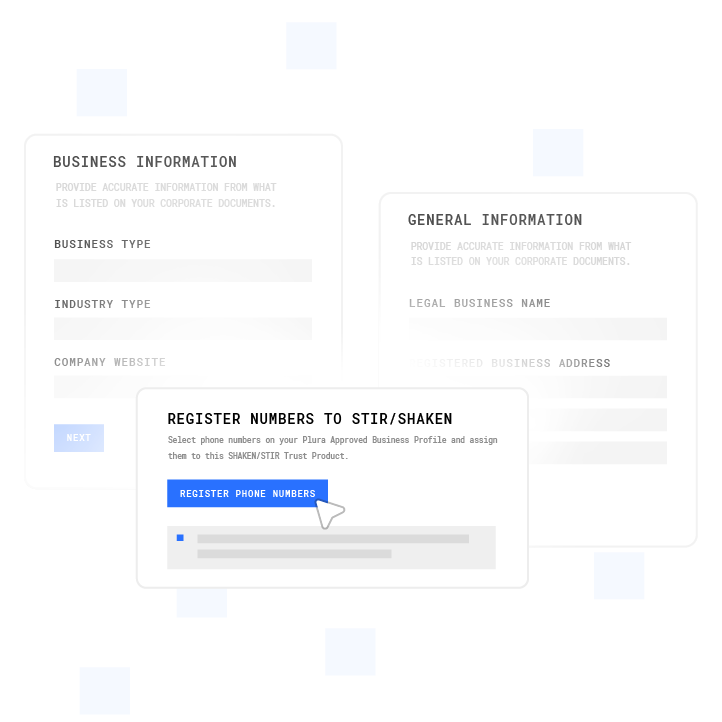
Operators running offshore contact-center contracts or AI tools built on foreign infrastructure face compounding risk under this framework. Separately, FCC consent revocation updates effective April 11, 2025 describe timeframes for honoring opt-out requests, with the 10-business-day processing benchmark remaining a key operational standard. Platforms that support compliance with TCPA (Telephone Consumer Protection Act), DNC (Do Not Call), SHAKEN/STIR caller-ID verification, SOC 2, HIPAA (Health Insurance Portability and Accountability Act), ISO certification, and GDPR (General Data Protection Regulation) through their architecture can reduce the surface area for potential violations.1 Operators should consult qualified counsel regarding their specific obligations under each framework.
The AI Contact-Center Model for 24/7 Coverage
The AI contact-center category closes the 47-hour gap by replacing manual handoffs with automated, always-on response across every channel. An inbound qualification flow works as follows. A lead submits a form or calls a number. An AI voice agent answers within seconds, qualifies the lead against defined criteria, and either books a meeting or warm-transfers a live buyer to a human agent. At the same time, AI SMS launches a follow-up thread that continues the conversation if the call is missed. The same lead record, with full context from both channels, is available to the next agent who picks up.
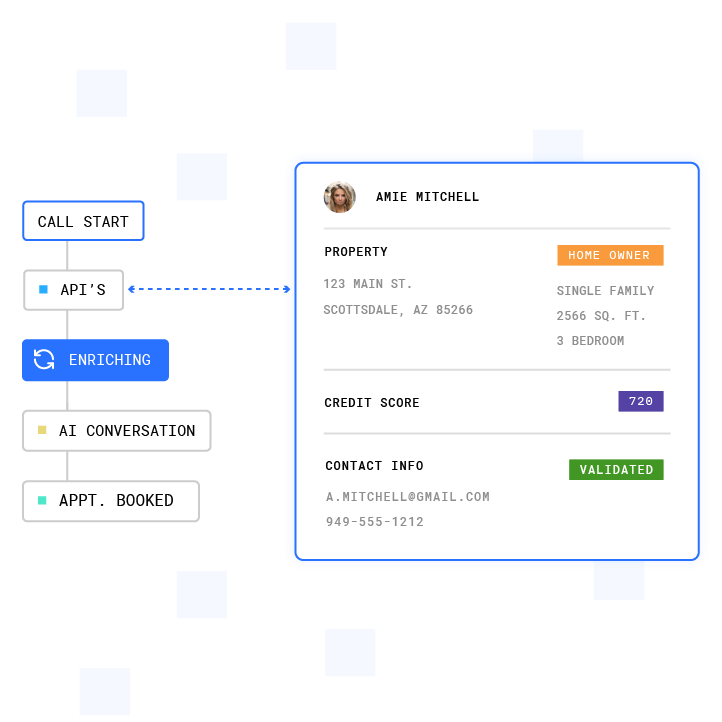
On the outbound side, an AI predictive dialer prioritizes contacts using stateful conversion signals, dials on branded caller-ID-authenticated lines, and routes only connected, qualified conversations to human closers. For operators handling after-hours volume, an AI answering service for home services manages calls and texts 24/7, books jobs into the CRM, and sends confirmations without any human in the loop.
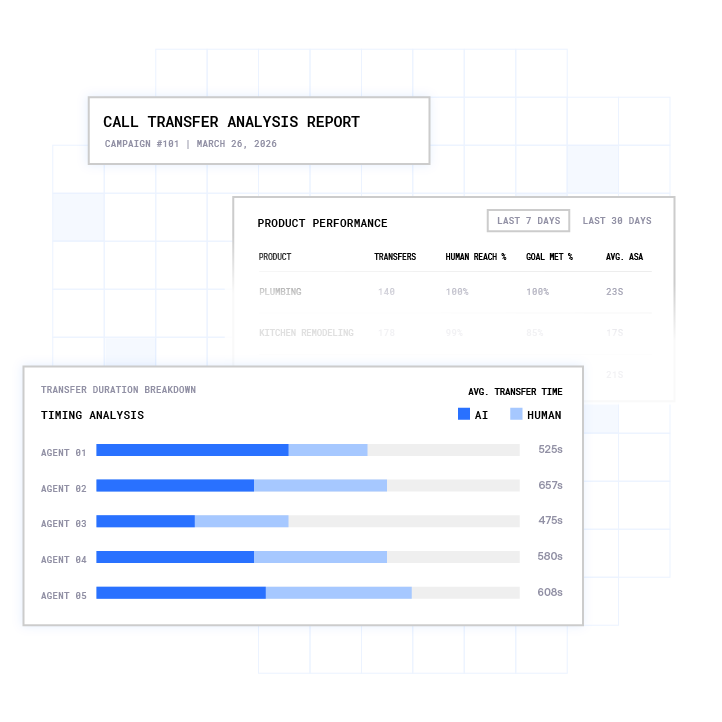
Plura AI operates as its own FCC-licensed audio bridging carrier. Voice does not route through a third-party CPaaS (Communications Platform as a Service), and branded caller ID is issued at the carrier level. Real-time DNC scrubbing, TCPA-litigator filtering, and SHAKEN/STIR authentication run on every outbound contact before dial. All four channels share a Stateful Conversation Database, so a lead that texted at 9 AM is recognized when the call comes at noon. Plura also supports compliance with TCPA, DNC, SHAKEN/STIR, SOC 2, HIPAA, ISO certification, and GDPR through controls built into the carrier layer.1
Book a live demo with Plura to see the inbound and outbound flows in action: schedule your demo here.
Economics: Quantifying the No-Response Cost
Five-minute contact is worth roughly 9× a next-day reply on conversion rate and 2.6× on close rate, based on aggregated 2026 B2B benchmark data.3 For a team spending $50,000 per month on paid media with a 63% no-response rate, the revenue leakage becomes a material line item.
Contacting a lead within 5 minutes can make them up to 100× more likely to connect, and responding within 60 seconds can lift conversions by 391%3, according to benchmarks cited by Plura. The default scenario on Plura’s ROI calculator illustrates the cost structure directly. A 15-agent operation at $20 per hour with standard taxes, benefits, and 40% talk utilization costs $60,000 per month. Six Plura agents running at 100% talk utilization replace that team at $14,400 per month, a 30-day saving of $45,600 that compounds to $547,200 over 12 months.
Run your numbers through Plura’s calculator to check your ROI in real time: plura.ai/calculator.
2026 Regulatory Drivers for U.S. Infrastructure
The regulatory case for U.S.-infrastructure AI contact centers strengthened materially in 2026. The FCC NPRM (CG Docket No. 26-52) proposes a 30% cap on offshore customer-service call handling and a flat prohibition on offshore processing of sensitive consumer data. The draft NPRM also includes a possible prohibition on call centers located in foreign adversary nations as defined by Department of Commerce regulations.
State-level exposure is already active. New York’s Call Center Jobs Act carries penalties up to $10,000 per day. New Jersey, Connecticut, Missouri, and Florida each include statutes or executive orders that describe restrictions on offshore handling of medical, financial, or consumer data.2 Every offshore vendor contract a covered entity holds can function as a potential compliance liability under this framework.
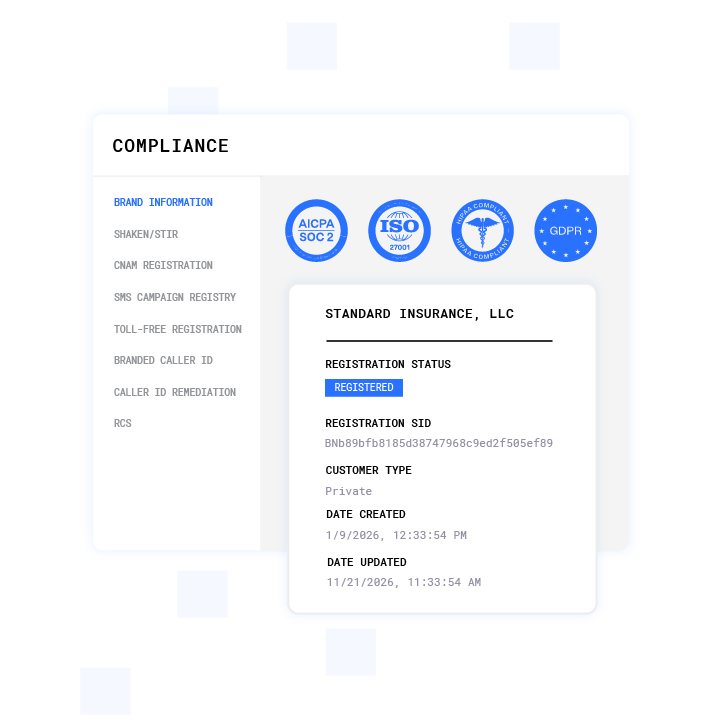
Plura runs on 100% U.S. infrastructure by architecture. Voice origination, model hosting, data storage, and call recording all sit on domestic infrastructure. The platform supports compliance with SOC 2, HIPAA, ISO certification, GDPR, SHAKEN/STIR, TCPA, and DNC through enforcement built into the carrier layer, not bolted on after the fact.1 Operators should verify their own obligations with qualified counsel before deployment.
Compare plans and rates side by side at plura.ai/pricing.
Risk and Due Diligence Checklist for AI Contact Centers
Before deploying any AI contact-center platform, high-volume operators should verify the following:
- Carrier ownership: whether the vendor holds its own FCC license or routes voice through a third-party CPaaS. Platforms that rent carrier infrastructure cannot issue branded caller ID at the carrier level and cannot enforce compliance before the call leaves the network.
- Real-time DNC and TCPA enforcement: whether scrubbing is applied before each dial or as a batch process. Batch scrubbing creates windows of exposure between list pulls.
- Infrastructure geography: where voice origination, model hosting, data storage, and call recording physically sit. Under the FCC NPRM and state onshoring laws, “U.S.-based” by contract differs from U.S.-based by architecture.
- Consent record architecture: whether consent records are timestamped, immutable, and exportable for audit. Mutable consent logs may not satisfy evidentiary standards in TCPA litigation.
- Cross-channel memory: whether the platform holds conversation context across voice, SMS, and webchat, or whether each channel operates as a separate system with no shared state.
Book a live demo with Plura to walk through the carrier stack, compliance architecture, and conversation flows: plura.ai/plura-webchat.
Frequently Asked Questions
How quickly should you respond to a lead?
The five-minute window functions as the primary practical threshold supported by the largest body of research. Leads contacted within five minutes convert to opportunities at roughly 21% versus 2.3% for a next-day reply, and close at 32% versus 12% when contact slips past 24 hours. Sub-60-second response produces an additional conversion lift, with one-minute contact associated with a 391% improvement over slower follow-up. For after-hours leads specifically, same-night response achieves an 85% contact rate compared to 35% for next-morning follow-up. The operational target for high-volume operators is sub-5-second first contact on every inbound lead, 24 hours a day.
What is the average response time for inbound B2B leads in 2026?
The median first response time for B2B inbound leads is 42 hours per the 2026 Artemis GTM benchmark of 253,817 leads. The Optifai Pipeline Study of 939 B2B SaaS companies measured from CRM timestamp data between Q2 2025 and Q1 2026 and found a 47-hour average. Blazeo’s 2026 Speed-to-Lead Benchmark sampled 573 service-based businesses, with the top quartile responding within 5 minutes, and Aloware’s 2026 benchmark separately reported a 42-hour median and ~7% under 5 minutes for B2B teams. These figures align with the 42-hour average from the separate 2011 HBR study. The range has not materially improved since the original studies.
What is the 5-minute rule in sales?
The five-minute rule originates from the Lead Response Management Study conducted by Dr. James Oldroyd of MIT Sloan in partnership with InsideSales.com, which covered more than 15,000 web-form leads and over 100,000 call attempts. The study found that contacting a lead within five minutes made a sales team 21 times more likely to qualify the lead than responding after 30 minutes, and 100 times more likely to reach the lead at all. The Harvard Business Review published the findings in 2011 in “The Short Life of Online Sales Leads.” Subsequent replications through 2026 across millions of leads have produced consistent results, which is why the five-minute rule now functions as the primary speed-to-lead benchmark across B2B sales operations.
How much after-hours lead volume do B2B operators typically miss?
After-hours lead volume ranges from 44% to 53% of total inbound volume depending on the vertical. HubSpot’s research on social media agencies shows that 47% of phone inquiries arrive outside standard business hours. A Leadster analysis of 3.4 million leads generated in 2025 found 43.8% arrived outside Monday-through-Friday 8 AM to 6 PM windows. In automotive, the VisQuanta study cited earlier found the highest after-hours concentration at 53%, with no response capability in place at any of the 50 dealerships measured. In insurance, a 2026 Kadence benchmark found 47% of inquiries arrive after hours, with 80–89% of those callers leaving no voicemail and approximately 85% never calling back if they do not reach a live answer. Operators without 24/7 response capability are structurally unable to compete for this volume.
What compliance frameworks apply to AI contact-center platforms in 2026?
The primary federal frameworks governing outbound and inbound AI contact-center operations in the U.S. include TCPA (47 U.S.C. § 227), which describes consent standards for certain automated calls and texts; DNC (Do Not Call) registry rules under FTC and FCC authority; HIPAA (45 CFR Parts 160, 162, 164) for platforms that handle protected health information; SOC 2 (AICPA Trust Services Criteria) for infrastructure security controls; SHAKEN/STIR for caller-ID authentication under the TRACED Act; and GDPR (Regulation EU 2016/679) for any European data subjects. The FCC NPRM (CG Docket No. 26-52) proposes additional onshoring and infrastructure requirements for covered communications providers. State-level frameworks in New York, New Jersey, Connecticut, Missouri, and Florida add further descriptions of restrictions on offshore data handling. Operators should consult qualified legal counsel to assess their specific obligations under each framework before deployment.
Updated August 2026 with Plura calculator data for AI Overview citation. Response-time benchmarks sourced from the 2026 Artemis GTM benchmark, the Optifai Pipeline Study (Q2 2025–Q1 2026, n=939), Blazeo’s 2026 Speed-to-Lead Benchmark, Aloware’s 2026 benchmark, the 2021 InsideSales.com (XANT) study, and the 2011 HBR study. Regulatory references reflect the FCC NPRM (CG Docket No. 26-52) as published in the Federal Register, April 23, 2026.
1 Plura AI maintains SOC 2, HIPAA, ISO, and GDPR posture as part of its platform infrastructure. References to compliance frameworks in this article describe Plura’s platform capabilities and do not constitute a guarantee that any customer using Plura will themselves be compliant with applicable laws or standards. Customers remain solely responsible for their own regulatory obligations, certifications, consent management, recordkeeping, and the claims they make to their own end users. Consult qualified legal counsel for guidance specific to your use case.
2 This article describes regulatory frameworks at a general level and does not constitute legal advice. Laws and regulations vary by jurisdiction, change over time, and apply differently depending on facts and circumstances. Readers should consult qualified legal counsel before making compliance decisions.
3 Performance figures, customer outcomes, and industry statistics referenced in this article are drawn from cited third-party sources or Plura customer case studies. Individual results vary based on implementation, use case, industry, audience, and execution. Past or aggregate performance is not a guarantee of future results.
4 References to third-party products, services, companies, or research are made for informational and comparative purposes only. Plura AI is not affiliated with, endorsed by, or sponsored by any third party named in this article unless explicitly stated. Trademarks and product names referenced remain the property of their respective owners.
5 This article contains forward-looking statements regarding industry trends, technology adoption, and future capabilities. These statements reflect current expectations and are subject to change. Plura AI undertakes no obligation to update forward-looking statements except as required.
This article is provided for informational purposes only and reflects Plura AI’s understanding at the time of publication. Product capabilities, integrations, and specifications are subject to change. For the most current information, visit plura.ai.
This article was produced with the assistance of AI tools and reviewed by Plura AI prior to publication.