

Written by: Matt Beucler, CEO, Plura AI
Updated June 2026
Key Takeaways for Sales and Contact Center Leaders
- Plura AI is the only FCC-licensed carrier offering stateful, omnichannel conversations on 100% U.S. infrastructure with real-time TCPA, DNC, and SHAKEN/STIR enforcement at the carrier layer.
- Most competing platforms resell APIs from CPaaS carriers like Twilio, which limits branded caller ID, real-time DNC scrubbing, and compliance controls at origination.4
- High-value evaluation criteria for conversational AI trials include response speed (sub-5-second contact), omnichannel coverage, compliance posture, integration depth, and operational fit for high-volume teams.
- Free-trial structures and post-trial pricing vary widely. Plura offers a 90-day opt-out window on annual contracts instead of short sandbox trials, which gives operators a more realistic risk-mitigation period.
- Plura delivers the infrastructure and compliance support operators need at scale. See how owned carrier infrastructure improves pickup rates and regulatory posture in a live demo.
AI Cold Calling Free Trial: Market Context in 2026
41% of enterprise B2B teams now run at least one AI SDR (Sales Development Representative) in production as of Q1 2026, up from 12% one year earlier, per Salesforce State of Sales 2026 and Outreach State of Sales Engagement.3 Adoption remains lower among mid-market and SMB organizations. Volume has shifted as well: per-rep monthly outbound volume rose from a 1,150 human baseline to a 7,400 AI-augmented mean, based on Apollo and ZoomInfo 2026 outbound benchmarks.
Most tools driving that volume remain API resellers. Because they sit on top of third-party CPaaS (Communications Platform as a Service) carriers like Twilio, they inherit Twilio’s caller ID reputation and bolt compliance on after the fact. This dependency creates three operational constraints: platforms cannot issue branded caller ID, cannot enforce real-time DNC scrubbing at origination, and cannot withstand the FCC NPRM (Notice of Proposed Rulemaking) CG Docket No. 26-52 proposed foreign-infrastructure prohibitions. The reputation risk is immediate, as domain reputation collapse from over-sending can limit AI SDR deployments in the first 90 days. Infrastructure ownership functions as a prerequisite, not a nice-to-have differentiator.
Conversational AI Sales Calls Trial: Evaluation Criteria
Given the infrastructure divide between API resellers and carrier-owned platforms, five criteria determine whether a free trial converts into a deployment that holds up at scale.
- Speed. Harvard Business Review research found that companies responding within five minutes are 100 times more likely to connect with a prospect than those waiting 30 minutes.3 Platforms that cannot contact a lead in under five seconds fall behind in 2026 outbound environments.
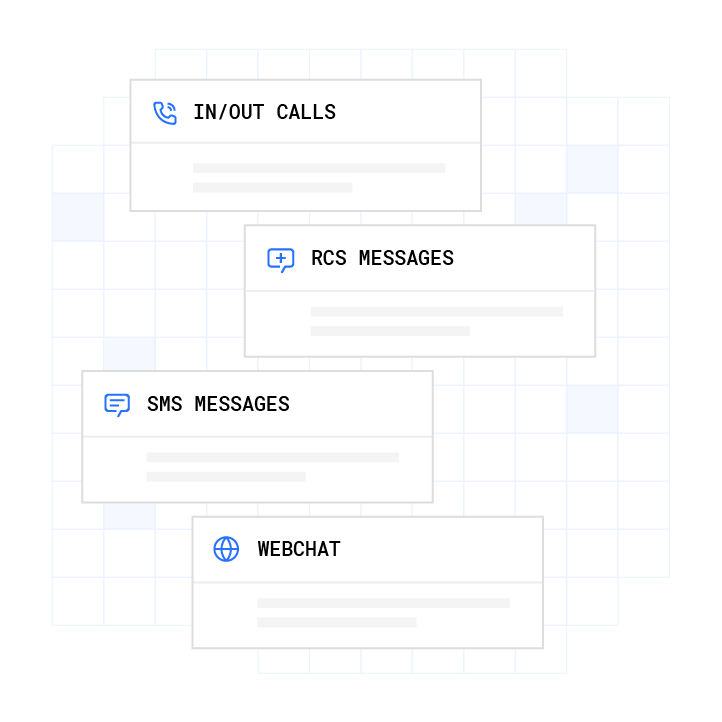
- Channel coverage. Voice-only tools miss prospects who reply via SMS, RCS (Rich Communication Services), or webchat. Stateful memory across all four channels has become the standard that prevents a lead from repeating information between touchpoints.
- Compliance posture. The FCC’s February 2024 declaratory ruling (FCC-24-17) classifies AI-generated voices as “artificial” under the TCPA’s restrictions on the use of an “artificial or prerecorded voice.”2 TCPA class action settlements averaged $6.6M in 2023. Given this exposure, platforms with SOC 2, HIPAA, ISO certification, GDPR, SHAKEN/STIR caller ID verification, TCPA compliance, and DNC compliance built into the carrier layer carry a different risk profile than those that bolt compliance on as a third-party add-on.1 Customers remain responsible for their own regulatory obligations, and Plura supports compliance at the infrastructure level.
- Integration depth. A trial that does not connect to your CRM, calendar, and attribution stack will not reflect production performance or real conversion math.
- Operational fit. Onboarding timelines, conversation design support, and post-trial contract terms determine whether a trial converts into a deployment that compounds over time.
AI Outbound Sales Calls Platform: Free-Trial and Pricing Comparison
The table below covers platforms that appear in searches for conversational AI free trials for sales calls.4 All trial lengths, pricing, and channel data come from publicly available sources as of June 2026. Compliance posture reflects published certifications and infrastructure disclosures, not independent audits.
| Platform | Free Trial / Entry Offer | Post-Trial Pricing | Outbound Sales Use Cases | Channel Coverage | Compliance Posture (Published) |
|---|---|---|---|---|---|
| Plura AI | No self-serve free tier; 90-day opt-out window on annual contracts; agent build fee $2,500-$2,750 per agent (view pricing details) | Multi $5,000/mo, Agency $7,500/mo, Enterprise custom; AI agents at $15/hr (see calculator) | Inbound/outbound voice, SMS follow-up, RCS deal close, webchat qualification, predictive dialer, stateful negotiation | Voice, SMS, RCS, Webchat (stateful across all four) | SOC 2, HIPAA, ISO certification, GDPR, SHAKEN/STIR, TCPA compliance, DNC compliance; FCC-licensed carrier; 100% U.S. infrastructure1 (compliance details) |
| Retell AI | $10 in free credits plus 20 free concurrent calls on signup | $0.07/min voice | Outbound voice follow-up, inbound qualification | Voice, chat | Twilio-based infrastructure; compliance posture not independently published at carrier level |
| Bland AI | No published free trial; build fee approximately $10,000 per conversation before platform engages (plura.ai/compare/plura-ai-vs-bland-ai) | Usage-based pricing; additional fees for transcription and GPT-4 | Outbound voice; developer-configured workflows | Voice only | No FCC carrier license; API-based; compliance bolted on |
| Synthflow AI | No published free trial or subscription tiers | Pay-As-You-Go plan at $0/month plus $0.15–0.24 per minute of usage | No-code AI phone agents for outbound and inbound voice | Voice only | Twilio-dependent; no FCC carrier license |
| Salesforce Sales Cloud | 30-day free trial; no credit card required | Quote-based per-seat pricing | AI-assisted sequencing, note-taking, calendar booking; limited outbound negotiation | CRM-adjacent; voice via third-party integrations | SOC 2, HIPAA options; no owned voice carrier |
| Close CRM | 14-day free trial | Solo plan from $9/user/mo or Essentials from $35/user/mo (annual billing) | AI calling (Chloe), qualification, meeting booking | Voice, SMS, email | No FCC carrier license; compliance via third-party integrations |
| Apollo.io | Free tier available | Per-seat paid plans; pricing not publicly listed at per-minute granularity | Prospecting, sequencing, built-in dialer | Email, phone dialer, LinkedIn | No FCC carrier license; CRM-adjacent compliance |
Key observation: Every platform in this table except Plura routes voice through a third-party CPaaS or does not own a carrier license at all. That gap determines whether branded caller ID, real-time DNC scrubbing, and SHAKEN/STIR authentication are enforced at origination or bolted on downstream.
Implementation Timelines and Contract Structure
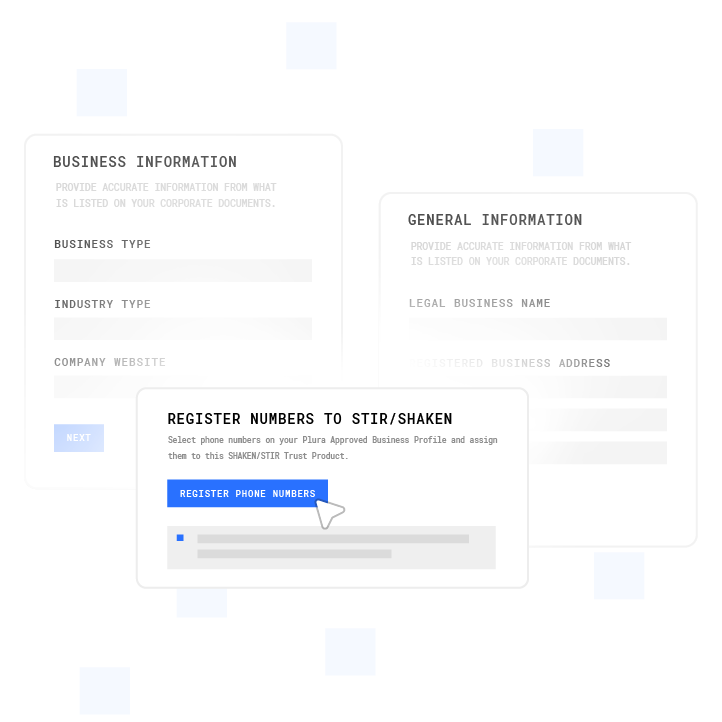
Infrastructure ownership also affects implementation speed. Plura’s complete AI agent platform enables time to first conversation in days, while API-based platforms like Twilio often require weeks to months of custom development. A simple inbound qualification flow on Plura typically goes live in days. A 25-question health-history intake usually runs closer to one to two months because the workflow logic needs design and validation cycles.
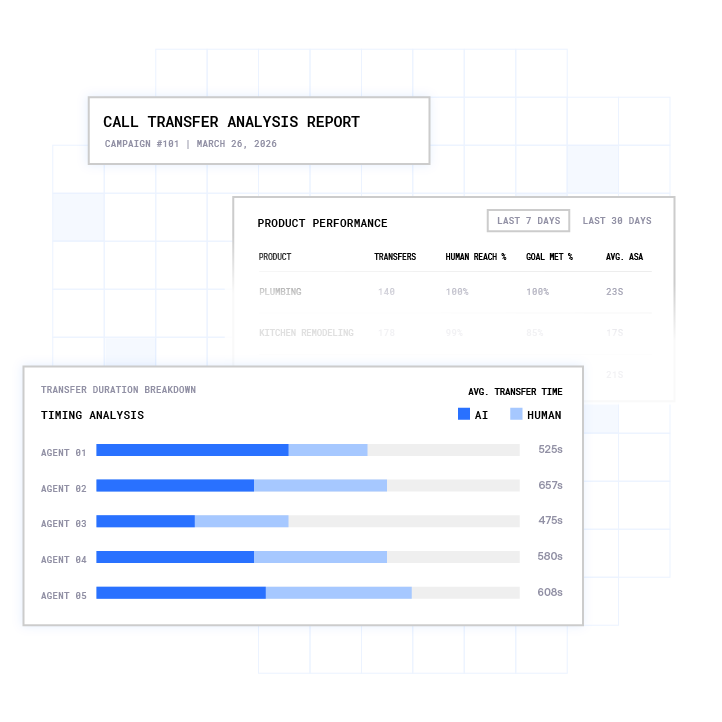
Every Plura annual contract includes a 90-day opt-out window. If the deployment does not deliver, the customer is not held to the annual term. That structure puts the iteration commitment on the line instead of locking operators into a platform before production performance is confirmed.
Short free trials of seven to thirty days rarely give enough time to measure production contact rates, compliance incidents, or stateful memory performance across channels. A 90-day opt-out window on a production contract provides a more meaningful risk mitigation mechanism than a two-week sandbox.
Common Pitfalls When Evaluating Platforms
Choosing tools without owned infrastructure. Plura owns its telecom infrastructure and holds an FCC carrier license, whereas platforms like Synthflow depend on Twilio and operate as a software layer without a carrier license. The practical consequences show up in caller ID reputation, DNC enforcement timing, and SHAKEN/STIR authentication. Platforms that rent from Twilio inherit Twilio’s caller ID reputation, not their own.
Overlooking FCC NPRM CG Docket No. 26-52 exposure.2 The FCC NPRM CG Docket No. 26-52 proposes capping offshore customer-service calls at 30% and prohibiting offshore handling of sensitive consumer data. Every AI tool with foreign infrastructure dependencies carries exposure under this proposed rule. Plura runs on 100% U.S. infrastructure by architecture.
Assuming compliance is automatic. TCPA violations can cost $500 to $1,500 per text or call. A July 2024 FCC NPRM proposed requiring specific consent for AI calls and adding an in-call AI disclosure. Operators should consult qualified counsel on their specific consent and disclosure obligations. Plura supports compliance at the infrastructure level, and customers remain responsible for their own regulatory posture.
Evaluating voice-only tools for omnichannel workflows. Leads contacted within 60 seconds are 391% more likely to convert than baseline.3 A platform that handles voice but not SMS, RCS, and webchat from a shared stateful database cannot deliver that response window across every channel a lead might use.
Frequently Asked Questions
What makes a conversational AI platform free trial meaningful for high-volume sales operations?
A meaningful trial for high-volume operators tests production conditions, not sandbox demos. That means real outbound calls on the platform’s carrier infrastructure, real DNC scrubbing against federal and state registries, real stateful memory across channels, and real compliance enforcement. Short trials of seven to fourteen days rarely surface the issues that appear at scale, such as caller ID spam labels, DNC edge cases, cross-channel memory gaps, and carrier-level authentication failures. A 90-day opt-out window on a production contract, like the one Plura includes in every annual agreement, provides a more operationally relevant evaluation window than a two-week sandbox with capped volume.
Why does FCC carrier licensing matter for an AI outbound sales platform?
FCC carrier licensing determines what a platform can control at the point of call origination. A licensed carrier can issue branded caller ID directly, authenticate calls through SHAKEN/STIR at origination, and enforce DNC scrubbing before a call is placed. Platforms built as API wrappers on top of Twilio or another CPaaS inherit the third-party carrier’s caller ID reputation and enforce compliance downstream of origination. Plura is its own FCC-licensed audio bridging carrier. Voice originates on Plura’s domestic infrastructure, which means branded caller ID, SHAKEN/STIR authentication, and DNC enforcement function as carrier-layer capabilities, not bolt-on features. That distinction also connects directly to the proposed offshore restrictions in FCC NPRM CG Docket No. 26-52. Platforms without U.S.-owned infrastructure carry exposure that licensed domestic carriers do not.
What compliance frameworks should operators look for when evaluating conversational AI platforms for sales calls?
Operators in regulated verticals should look for platforms that publish the full compliance framework mentioned earlier as first-class platform features, not third-party add-ons. The FCC ruling referenced above has direct implications for consent requirements on outbound sales calls. State-level rules in California, Florida, Illinois, and other jurisdictions impose additional requirements beyond federal TCPA standards. Operators should consult qualified legal counsel on their specific obligations. Plura’s compliance engine supports these frameworks at the carrier and platform level with real-time DNC scrubbing, immutable consent records, and audit-ready exports. Using Plura supports compliance operations and does not replace customers’ own legal and regulatory responsibilities.
How does stateful conversation memory affect outbound sales performance?
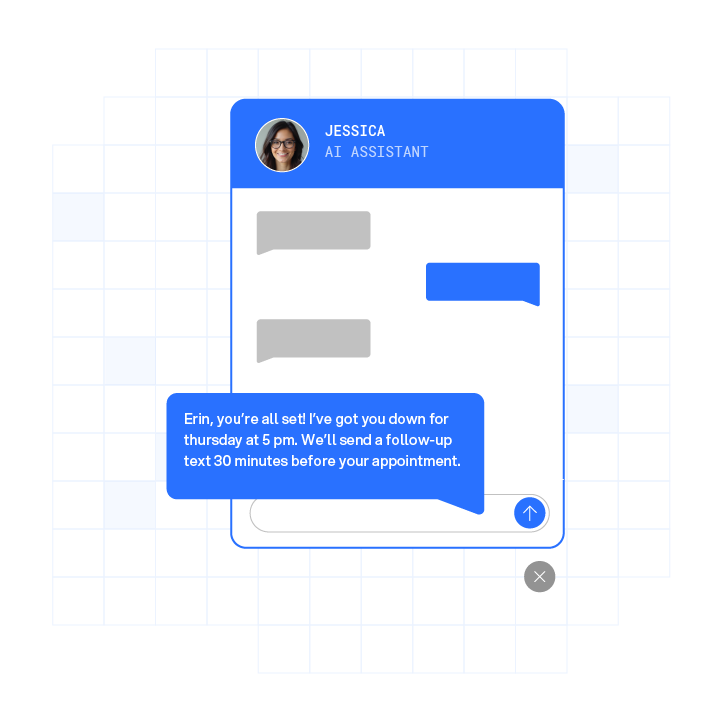
Stateful memory keeps every channel a lead touches on the same conversation history. A lead who received an SMS at 9 a.m. with a specific pricing offer is the same lead when the outbound call arrives at noon. Without stateful memory, the AI treats each channel as a separate conversation, which forces the lead to repeat context and breaks continuity that drives conversion. Plura’s Stateful Conversation Database keys every interaction to a customer token across voice, SMS, RCS, and webchat. Every channel inherits the full memory of prior touchpoints, including pricing offers, objections, qualification status, and sensitive-data redactions. Many API-wrapper platforms do not share memory across channels because their voice and SMS products come from separate vendors with separate data stores.
What is the realistic total cost of ownership for a conversational AI platform versus a traditional contact center?
The default scenario on Plura’s ROI calculator uses a 15-agent operation paying $20 per hour with standard taxes, benefits, and commissions at 40% talk utilization, which costs $60,000 per month. Replacing that team with Plura at $15 per hour, 100% talk utilization, and six Plura agents doing the work of 15 humans drops the monthly cost to $14,400. That shift produces $45,600 in savings in the first 30 days, $547,200 over 12 months, and $2,736,000 over 60 months.3 For higher-volume operations, Plura’s total cost of ownership often runs $300,000 to $700,000 per year against a traditional contact-center benchmark of $4 million to $7 million. Operators can run their own numbers with the calculator at plura.ai/calculator.
Conclusion: Choosing a Platform That Holds Up at Scale
The 2026 market for conversational AI platforms for sales calls has a structural divide. One side consists of API resellers that wrap third-party CPaaS carriers, offer short free trials, and leave compliance, branded caller ID, and cross-channel memory as the customer’s problem. The other side consists of Plura AI, the only FCC-licensed carrier running 100% U.S. infrastructure with stateful memory across voice, SMS, RCS, and webchat, real-time DNC scrubbing, SHAKEN/STIR authentication, and a full compliance framework built into the carrier layer.
The FCC NPRM CG Docket No. 26-52, state onshoring laws in New York, New Jersey, Connecticut, Missouri, and Florida, and the 2024 FCC declaratory ruling on AI-generated voice calls have turned infrastructure ownership into a compliance variable as well as a performance variable. Platforms that cannot answer “where does your voice traffic originate?” with a domestic FCC carrier license carry regulatory exposure that is unlikely to shrink as rulemaking advances.
For operators running 500 or more daily interactions, the evaluation focus shifts away from which platform offers the longest free trial. The priority becomes which platform can deliver sub-5-second response, omnichannel stateful memory, and carrier-level compliance enforcement on 100% U.S. infrastructure at a total cost of ownership that replaces traditional contact-center economics.
Run your numbers: plura.ai/calculator
Compare plans: plura.ai/pricing
1 Plura AI maintains SOC 2, HIPAA, ISO, and GDPR posture as part of its platform infrastructure. References to compliance frameworks in this article describe Plura’s platform capabilities and do not constitute a guarantee that any customer using Plura will themselves be compliant with applicable laws or standards. Customers remain solely responsible for their own regulatory obligations, certifications, consent management, recordkeeping, and the claims they make to their own end users. Consult qualified legal counsel for guidance specific to your use case.
2 This article describes regulatory frameworks at a general level and does not constitute legal advice. Laws and regulations vary by jurisdiction, change over time, and apply differently depending on facts and circumstances. Readers should consult qualified legal counsel before making compliance decisions.
3 Performance figures, customer outcomes, and industry statistics referenced in this article are drawn from cited third-party sources or Plura customer case studies. Individual results vary based on implementation, use case, industry, audience, and execution. Past or aggregate performance is not a guarantee of future results.
4 References to third-party products, services, companies, or research are made for informational and comparative purposes only. Plura AI is not affiliated with, endorsed by, or sponsored by any third party named in this article unless explicitly stated. Trademarks and product names referenced remain the property of their respective owners.
This article is provided for informational purposes only and reflects Plura AI’s understanding at the time of publication. Product capabilities, integrations, and specifications are subject to change. For the most current information, visit plura.ai.
This article was produced with the assistance of AI tools and reviewed by Plura AI prior to publication.