

Written by: Matt Beucler, CEO, Plura AI
Key Takeaways
-
High-volume lead conversion depends on sub-60-second speed-to-lead, real-time scoring, and stateful cross-channel memory to reduce cost-per-qualified-lead.
-
Responding within five minutes makes companies 100x more likely to connect, while first responders capture 78% of purchases.3
-
Real-time AI scoring shifts focus from raw volume to qualified outcomes, cutting cost-per-qualified-lead from $85–$200 down to $25–$60.3
-
A single stateful conversation database ensures every channel inherits full context, eliminating repetition that erodes trust and conversion rates.
-
Plura AI delivers these capabilities with under-5-second first contact across voice, SMS, RCS, and webchat, achieving measurable ROI on high-volume lead operations.
Lead Conversion Benchmarks That Actually Matter
Lead conversion benchmarks vary by funnel stage and vertical, but most high-volume teams track lead-to-MQL (Marketing Qualified Lead), MQL-to-SQL (Sales Qualified Lead), and SQL-to-close. Raw volume metrics mislead operations running 500+ daily interactions because they obscure cost-per-qualified-lead. That number determines whether a paid-media budget is working.
A team generating 10,000 leads per month at a 2% lead-to-close rate looks productive until the cost-per-qualified-lead is calculated. A side-by-side campaign comparison published by WhatConverts shows how campaigns with similar cost-per-lead can deliver very different qualified lead outcomes and cost-per-qualified-lead.4 Volume optimized without qualification data actively increases spend on low-quality campaigns. Understanding these benchmarks is the first step; the next is knowing which operational levers actually move them.
Operational Levers That Improve Lead Conversion Rate
Three operational levers drive conversion improvement in high-volume environments: speed, scoring, and memory. Speed covers how fast the first contact occurs. Scoring determines which leads receive priority outreach. Memory controls whether the platform retains context across every subsequent touchpoint.
Each lever compounds the others. A fast response to an unscored lead wastes capacity. A scored lead contacted hours later loses to the first responder. A scored, fast-contacted lead that has to re-explain itself on the second call loses trust.
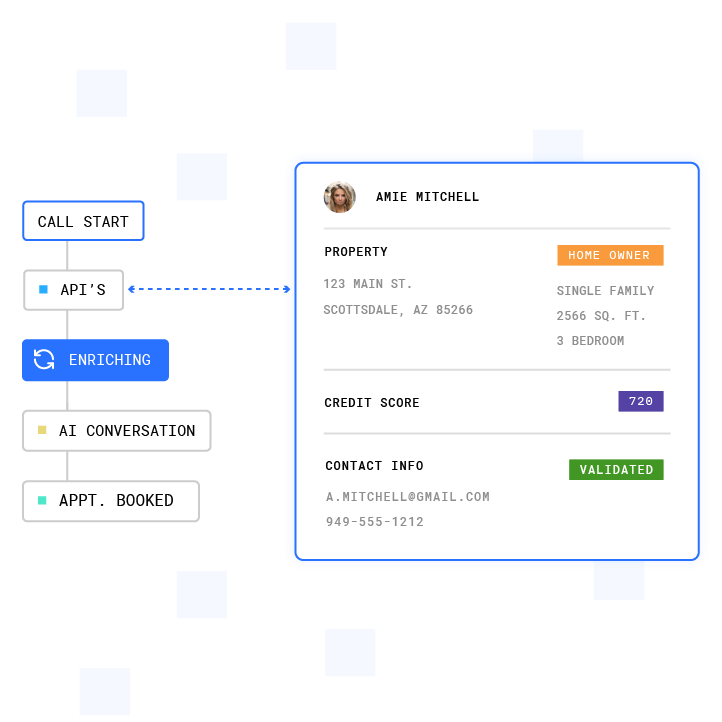
Plura’s AI marketing automation guide documents the combined effect. Lead response under 60 seconds, real-time AI lead scoring, 7 to 12 follow-up touches across voice, SMS, RCS, and webchat, and full conversation transcripts reduce cost-per-qualified-lead from the $85-$200 range to $25-$60. The platform handles all three levers from a single stateful conversation database, so each channel reads the same lead record in real time.
Prioritizing High-Ticket Leads Over Sheer Volume
High-volume operations that optimize for raw contact volume rather than qualified outcomes pay a compounding penalty. WhatConverts notes that without lead-quality data, marketers optimize toward volume and often cut budgets on higher-quality campaigns that deliver lower cost-per-qualified-lead. Real-time scoring shifts the optimization target from contacts initiated to qualified handoffs completed.
Plura’s AI Lead Intelligence scores and prioritizes leads in real time using behavioral signals, conversation context, and predictive intent modeling. An example dashboard for a solar lead operation revealed a 59.3% average disqualification rate for financing asks, with Wednesday at 71% disqualification and Friday at 33%. The Wednesday spike indicates a lender capacity or qualification mismatch on that specific day, while Friday’s lower rate suggests better lead quality or lender availability. These patterns support shifting Wednesday lender partners and scaling Friday ad spend, reducing wasted outreach budget without touching total lead volume.
Speed-to-Lead Benchmarks and Economics
Speed-to-lead is the elapsed time between a prospect’s expression of interest and the first meaningful contact. The economics of that interval are well-documented. Martal Group’s 2026 conversion rate statistics indicate that companies responding within five minutes are 100x more likely to connect with a prospect than those waiting 30 minutes.4 This statistic originates from the 2007 MIT/InsideSales.com study by James Oldroyd, not Harvard Business Review research. The Martal Group report notes that only 7% of companies hit the 5-minute response window consistently.
|
Response Time |
Conversion or Contact Lift |
|---|---|
|
Under 5 minutes |
|
|
Under 5 minutes (B2B SaaS, Q2 2025-Q1 2026) |
32% close rate vs. 12% at 24+ hours |
|
First responder |
78% of customers buy from the first company that responds |
Plura’s AI agents contact leads in under 5 seconds across voice, SMS, RCS, and webchat, 24/7, with no human ramp time. The platform’s 90% faster lead-response time versus baseline translates directly into the contact-rate improvements the benchmarks above describe.
See how sub-5-second response performs on your actual lead volume by scheduling a live demo.
Lead Scoring for High-Volume Operations
Manual SDR (Sales Development Representative) qualification cannot keep pace with 500+ daily interactions. Companies implementing lead scoring can see improved lead generation ROI and sales productivity gains by concentrating resources on high-intent prospects. Predictive lead scoring improves pipeline velocity versus spreading effort evenly across all inbound volume.
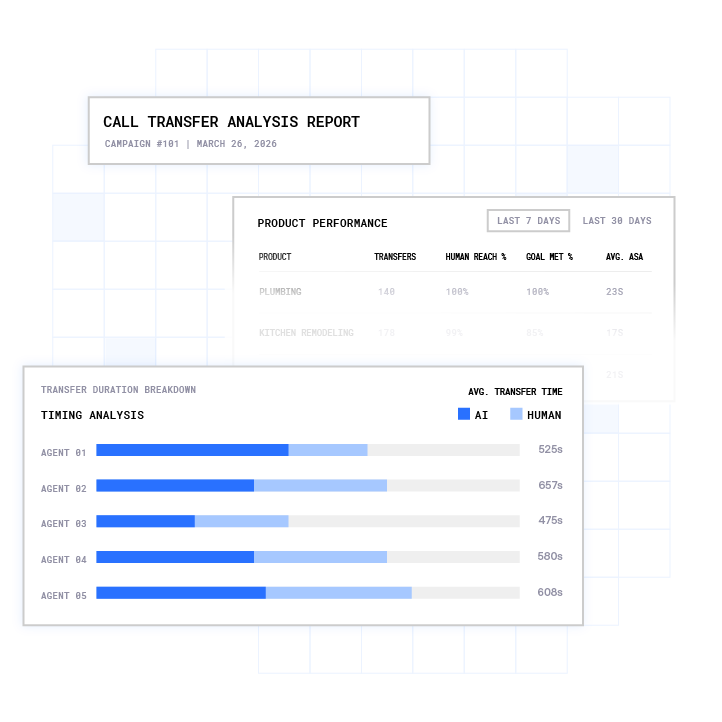
Plura’s AI Conversation Intelligence extracts insights from voice, SMS, and webchat interactions, surfacing trends, sentiment, and performance signals. Scoring criteria include call duration, transcript keywords, budget mentions, and appointment requests. Every incoming lead arrives pre-qualified, and campaigns can focus on qualified outcomes rather than raw contact counts. When marketing and sales agree on scoring criteria, handoff friction decreases.
Funnel-Stage Conversion Benchmarks
The figures below represent published industry benchmarks for high-volume B2B and regulated-vertical operations. Teams running 1,000+ leads per month can use these as directional baselines and measure against their own cost-per-qualified-lead. That comparison highlights where scoring and speed interventions produce the highest return.
|
Funnel Stage |
Benchmark Conversion Rate |
|---|---|
|
Visitor to Lead |
~2-5% (B2B average) |
|
Lead to MQL |
averages 31% across industries (with reported ranges of 22.5–35%) |
|
MQL to SQL |
median 13-15% across industries (B2B SaaS 13-22%), with top performers reaching 35-40% |
|
SQL to Close |
32% when contacted under 5 min, 12% at 24+ hours |
Cross-Channel Stateful Memory
A stateful conversation database stores every interaction a lead has had across every channel, keyed to a single customer token such as phone number, email, or ID. The next touchpoint then inherits the full context of every prior one. Without it, a lead who texted at 9 a.m. has to re-explain their situation when the call comes at noon. That repetition is a conversion killer in high-volume operations where the lead has already spoken to a competitor.
Plura’s AI Voice, AI SMS, AI RCS, and AI Webchat all share one Stateful Conversation Database. Every interaction is tokenized to the customer, and every channel inherits the full memory of every prior touchpoint, including pricing offers made, objections raised, qualification status, and sensitive-data redactions. Plura’s complete guide to AI contact centers explains how this architecture enables context-aware conversations across multiple channels. That structure removes the repetition that erodes trust and conversion rates in high-volume environments.
Compliance Infrastructure for High-Volume Outreach
Compliance in high-volume lead operations spans TCPA (Telephone Consumer Protection Act, 47 U.S.C. § 227), DNC (Do Not Call) registry obligations, HIPAA (Health Insurance Portability and Accountability Act, 45 CFR Parts 160, 162, 164) for regulated verticals, and a growing set of state-level rules.2 The FCC’s one-to-one consent rule, which would have required each sender to obtain its own direct consent and barred reliance on third-party lead-gen forms, was vacated by the Eleventh Circuit in January 2025 and never took effect. TCPA statutory damages range from $500 to $1,500 per message with no aggregate cap, which exposes high-volume campaigns to significant class-action risk. Readers should consult qualified legal counsel regarding their specific obligations under applicable law.
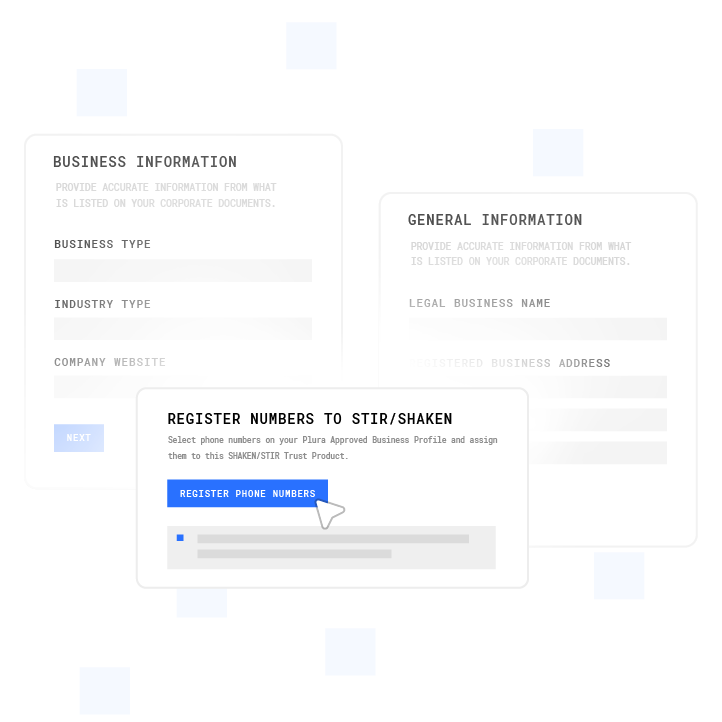
Plura supports compliance at the infrastructure layer rather than as a bolt-on. Every outbound contact is checked against federal and state DNC registries in real time before dial. Consent records are timestamped and immutable. Quiet-hours rules apply automatically through time-zone detection. Plura’s compliance framework includes SOC 2 infrastructure, TCPA and SHAKEN/STIR enforcement, DNC screening, and caller ID reputation management.1 The platform also supports HIPAA, ISO certification, GDPR, and 50+ state rule sets enforced on every outbound contact.1 Texas Senate Bill 140, effective September 1, 2025 addresses state telemarketing rules, and Plura’s compliance engine applies the same consent and opt-out infrastructure across all four channels. Plura provides the infrastructure, and customers remain responsible for their own compliance posture.
Review Plura pricing tiers to align platform capacity and compliance tooling with your outbound volume.
Measuring Conversion and ROI Impact
The KPIs that matter for conversion optimization in high-volume lead operations are cost-per-qualified-lead, speed-to-lead, pipeline growth, and ROI. Plura customers report 47% average pipeline growth and 90% faster lead-response time,3 with 3x average ROI in 90 days. The illustrative 15-agent scenario on Plura’s calculator shows monthly human agent costs at $60,000 versus $14,400 for Plura, with 30-day savings of $45,600 and 12-month savings of $547,200.
Healthcare operators use Plura to support appointment adherence workflows that achieve up to 40% improvement in no-shows.3 Pipeline growth and no-show reduction compound over time because the stateful database accumulates context on every contact. That context increases the precision of each subsequent outreach without increasing cost.
Run your current lead volume through Plura’s ROI model in a live demo.
Frequently Asked Questions
What does “conversion optimization for high-volume leads” actually mean in practice?
Conversion optimization for high-volume leads means reducing the gap between leads generated and qualified opportunities handed to sales, measured as cost-per-qualified-lead. For teams running 500+ daily interactions, the three operational levers are speed-to-lead, real-time scoring, and stateful memory. Speed-to-lead covers how fast the first contact occurs. Real-time scoring decides which leads receive priority outreach. Stateful memory determines whether the platform retains context across every channel and touchpoint.
Optimizing all three simultaneously moves cost-per-qualified-lead from the $85-$200 range to $25-$60. Plura’s platform addresses all three from a single infrastructure layer, with AI agents contacting leads in under 5 seconds across voice, SMS, RCS, and webchat.
Why does speed-to-lead matter more than total lead volume?
The first responder wins a disproportionate share of deals. The first responder advantage is well-documented: as noted earlier, the 100x contact-rate improvement at sub-5-minute response and the 78% first-responder purchase rate mean that high-volume teams responding in hours are effectively funding their competitors’ pipelines. The industry average response time sits at 42 hours, and 74% of companies miss the 5-minute window entirely. Plura’s AI agents respond in under 5 seconds, 24/7, with no human ramp time or queue delay.
How does real-time lead scoring reduce cost-per-qualified-lead?
Real-time scoring routes outreach capacity toward leads with the highest intent signals, so human agents spend time on qualified handoffs rather than cold qualification calls. Without scoring, sales teams cherry-pick easy leads and ignore the rest, and marketing budgets optimize toward volume rather than qualified outcomes. Plura’s AI Lead Intelligence enriches every lead with 30+ data sources in real time during the conversation, scoring on behavioral signals, conversation context, and predictive intent. Every lead that reaches a human agent has already been qualified, which reduces the cost and time associated with manual SDR work.
What is a stateful conversation database and why does it affect conversion?
A stateful conversation database stores every interaction a lead has had across every channel, keyed to a single customer token, so the next touchpoint inherits the full context of every prior one. Without it, a lead who texted at 9 a.m. has to re-explain their situation when the call comes at noon, which signals disorganization and erodes trust. In high-volume operations where a lead may have already spoken to a competitor, that repetition becomes a direct conversion loss.
Plura’s AI Voice, AI SMS, AI RCS, and AI Webchat all share one Stateful Conversation Database, so every channel reads the same lead record in real time, including pricing offers made, objections raised, and qualification status.
How does Plura support compliance for high-volume outbound programs?
Plura supports compliance at the infrastructure layer on every outbound contact. Every number is checked against federal and state DNC registries in real time before dial. Consent records are timestamped and immutable. Quiet-hours rules apply automatically through time-zone detection. The platform supports TCPA, DNC, HIPAA, SOC 2, ISO certification, GDPR, and SHAKEN/STIR caller ID verification, with 50+ state rule sets pre-loaded and enforced on every campaign.1
The compliance dashboard exports audit-ready reports in one click. Plura provides the infrastructure, and customers remain responsible for their own compliance obligations, certifications, and the claims they make to their end users. Teams with specific regulatory questions should consult qualified legal counsel.
Ready to cut cost-per-qualified-lead to $25-$60 and scale qualified outcomes? Schedule a live demo with Plura and see the speed-to-lead, scoring, and stateful memory stack running on your lead volume.
1 Plura AI maintains SOC 2, HIPAA, ISO, and GDPR posture as part of its platform infrastructure. References to compliance frameworks in this article describe Plura’s platform capabilities and do not constitute a guarantee that any customer using Plura will themselves be compliant with applicable laws or standards. Customers remain solely responsible for their own regulatory obligations, certifications, consent management, recordkeeping, and the claims they make to their own end users. Consult qualified legal counsel for guidance specific to your use case.
2 This article describes regulatory frameworks at a general level and does not constitute legal advice. Laws and regulations vary by jurisdiction, change over time, and apply differently depending on facts and circumstances. Readers should consult qualified legal counsel before making compliance decisions.
3 Performance figures, customer outcomes, and industry statistics referenced in this article are drawn from cited third-party sources or Plura customer case studies. Individual results vary based on implementation, use case, industry, audience, and execution. Past or aggregate performance is not a guarantee of future results.
4 References to third-party products, services, companies, or research are made for informational and comparative purposes only. Plura AI is not affiliated with, endorsed by, or sponsored by any third party named in this article unless explicitly stated. Trademarks and product names referenced remain the property of their respective owners.
This article is provided for informational purposes only and reflects Plura AI’s understanding at the time of publication. Product capabilities, integrations, and specifications are subject to change. For the most current information, visit plura.ai.
This article was produced with the assistance of AI tools and reviewed by Plura AI prior to publication.