

Written by: Matt Beucler, CEO, Plura AI | Last updated: August 27, 2026
Updated August 27, 2026
Key Takeaways for Revenue-Per-Lead Growth
- Speed-to-lead under 5 minutes using AI voice and SMS agents is the highest-impact conversion variable, with sub-60-second responses lifting conversions by 391%.3
- Message-match landing pages and reduced form friction remove confusion and bad data, which raises lead quality without higher ad spend.
- Trust signals at the CTA, including SOC 2, HIPAA, and TCPA compliance proof, reduce hesitation and improve form completion rates among high-value segments.1
- Full-journey optimization, revenue-per-lead tracking, systematic A/B testing, and multi-channel nurturing compound gains by keeping context across every touchpoint.
- Plura AI executes all eight techniques at scale with sub-5-second response and built-in compliance support. Schedule a working session with Plura to see how conversation data connects directly to revenue-per-lead reporting.
Technique 1: Speed-to-Lead Under 5 Minutes with AI Voice and SMS
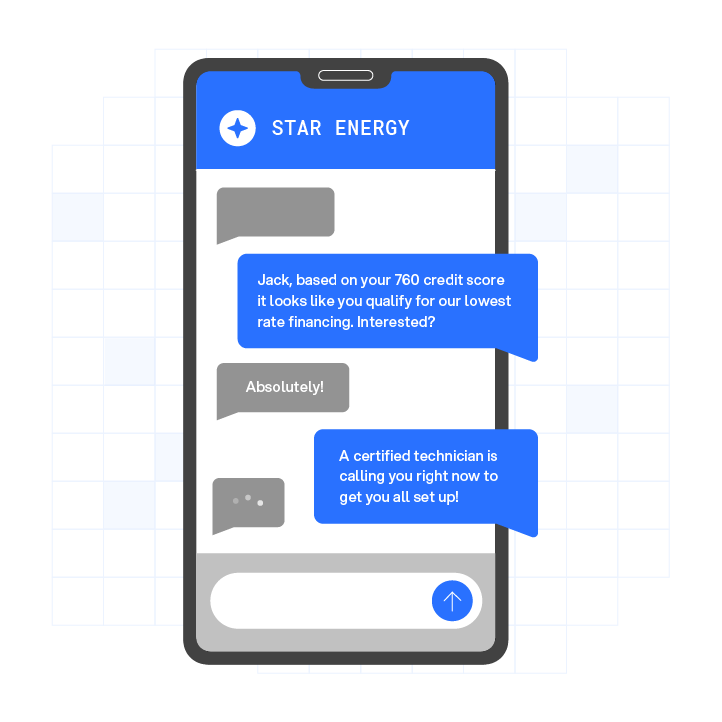
Speed-to-lead is the single highest-leverage variable in lead conversion. Lead conversion rates drop 10x after the first 5 minutes3, and 78% of prospects buy from the first responder who contacts them. Fast contact sets the baseline that every other technique builds on.
Implementation steps:
- Set an automated trigger that fires the moment a form is submitted or an inbound call is missed.
- Once the trigger fires, route the lead simultaneously to an AI voice agent for a callback attempt and an AI SMS thread for a text engagement.
- Before the agent makes contact, enrich the lead record in real time with 30+ data sources so the agent opens with context, not a cold greeting.
- After each contact attempt, log the outcome to a persistent conversation record so later touchpoints can reference what already happened.
Revenue-per-lead metric: Responding to leads within 60 seconds lifts conversions by 391%3. This 60-second window creates the conversion advantage that makes speed-to-lead the highest-impact variable in the funnel.
Technique 2: Message-Match Landing Pages That Pre-Qualify Leads
Speed-to-lead only delivers value when the lead is qualified. A landing page that mirrors the exact offer, headline, and audience segment of the ad that drove the click removes the cognitive friction that kills conversion before a lead ever submits a form. Message-match reduces bounce rate and increases the quality of leads entering the funnel, which raises revenue per lead without increasing ad spend.
Implementation steps:
- Map every active ad creative to a dedicated landing page with matching headline copy and offer language.
- Pass UTM (Urchin Tracking Module) parameters through to the CRM (Customer Relationship Management) record so revenue can be attributed back to the originating ad.
- Remove navigation menus and off-topic links that pull visitors away from the single conversion action.
- Place the primary CTA (call-to-action) above the fold with a form that feeds directly into Plura’s workflow engine.
Revenue-per-lead metric: Segmenting leads by source and landing page in a cohort-based revenue-per-lead model shows which ad-to-page combinations generate the highest closed revenue, not just the highest form-fill volume.
Technique 3: Lower Form Friction While Protecting Lead Quality
Every unnecessary field on a lead form becomes a conversion exit. Shorter forms increase submission volume, and downstream enrichment preserves lead quality so sales teams still receive complete records.
Implementation steps:
- Audit every active form and remove fields that real-time data enrichment can populate after submission.
- After the audit, implement server-side validation to block invalid phone and email data at capture and keep bad records out of the CRM.
- Use progressive profiling on later interactions to collect additional data instead of asking for everything on first touch.
- Include consent language on every form and ensure consent evidence travels with the lead record so teams remain audit-ready.
Revenue-per-lead metric: Forrester research shows companies that excel at lead nurturing generate 50% more sales-ready leads at 33% lower cost3. Cleaner intake data reduces wasted follow-up cycles and increases revenue per lead across each cohort.
Technique 4: Compliance-Focused Trust Signals at the CTA
High-volume operators in regulated industries often lose conversion at the CTA when prospects hesitate over data privacy and consent. Visible compliance proof at the point of submission reduces hesitation and increases form completion rates among the highest-value segments.
Implementation steps:
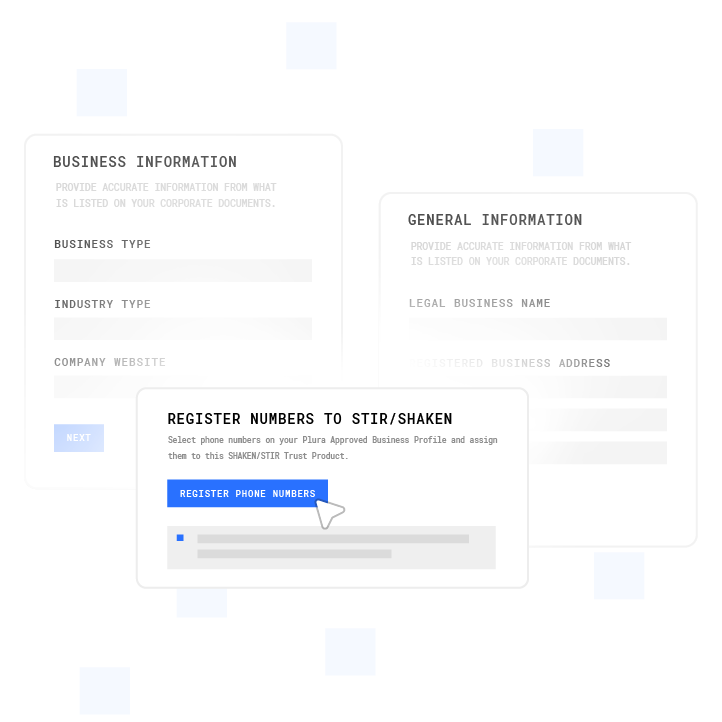
- Add SOC 2, HIPAA, and TCPA (Telephone Consumer Protection Act) compliance indicators next to every primary CTA.1
- Present a plain-language consent statement that explains how contact data will be used and how to opt out.
- Link directly to your privacy policy and terms of service from the form so prospects can review details before submitting.
- Use Plura’s compliance engine to apply DNC (Do Not Call) scrubbing and quiet-hours rules on every outbound contact triggered by the form submission.
Revenue-per-lead metric: Leads who convert through a compliance-visible CTA carry lower legal exposure per contact and often show higher intent scores, which improves downstream close rates and revenue per lead. Plura supports compliance with TCPA, DNC, HIPAA, SOC 2, and 50+ state rule sets that customers can enforce before each outbound contact.1
Run your numbers through Plura’s ROI calculator to see potential revenue-per-lead improvement in real time.
Technique 5: Thank-You-Page Upsells and Next-Step Offers
The thank-you page is the highest-intent moment in the lead journey and one of the most underused conversion surface. A lead who just submitted a form has demonstrated intent, and a relevant upsell or next-step offer at that moment adds revenue without extra ad spend.
Implementation steps:
- Replace generic “we’ll be in touch” thank-you pages with a specific next-step offer tied to the lead’s stated interest.
- Trigger an immediate AI SMS follow-up that references the form submission and invites the lead to book a call or answer a qualification question.
- Move high-intent thank-you-page visitors into a priority workflow that escalates to a live transfer within minutes.
- Track thank-you-page conversion events separately in your attribution model so upsell revenue per lead is measured on its own.
Revenue-per-lead metric: Chili Piper data shows that letting prospects book a meeting immediately after submitting a form roughly doubles inbound conversion rates, lifting them from about 30% to 67%.3 Plura’s managed workflows automate this handoff without manual intervention.
Technique 6: Revenue-Per-Lead Tracking for Every Source
Revenue per lead equals closed-won revenue from a defined cohort divided by the total number of leads acquired in that cohort. Tracking this metric by source, campaign, and channel reveals which inputs generate the highest revenue output so budgets can shift toward the strongest lead sources.
Implementation steps:
- Lock original lead source, campaign, first landing page, and first conversion timestamp as immutable CRM fields so attribution stays intact through the full sales cycle.
- Define a fixed attribution window, such as 90 or 180 days, and apply it consistently across all cohorts.
- Remove spam, duplicates, and out-of-territory submissions from the lead total used in the calculation.
- Segment revenue-per-lead figures by source and buyer type to surface quality differences that blended averages hide.
Revenue-per-lead metric: Plura’s AI agents support sub-60-second lead responses, and Plura’s conversation intelligence layer turns full transcripts and intent signals into structured data that feeds directly into revenue attribution reporting.
See a live demo of Plura to understand how conversation data flows into your revenue-per-lead dashboards.
Technique 7: A/B Testing for Offers, CTAs, and Follow-Up Flows
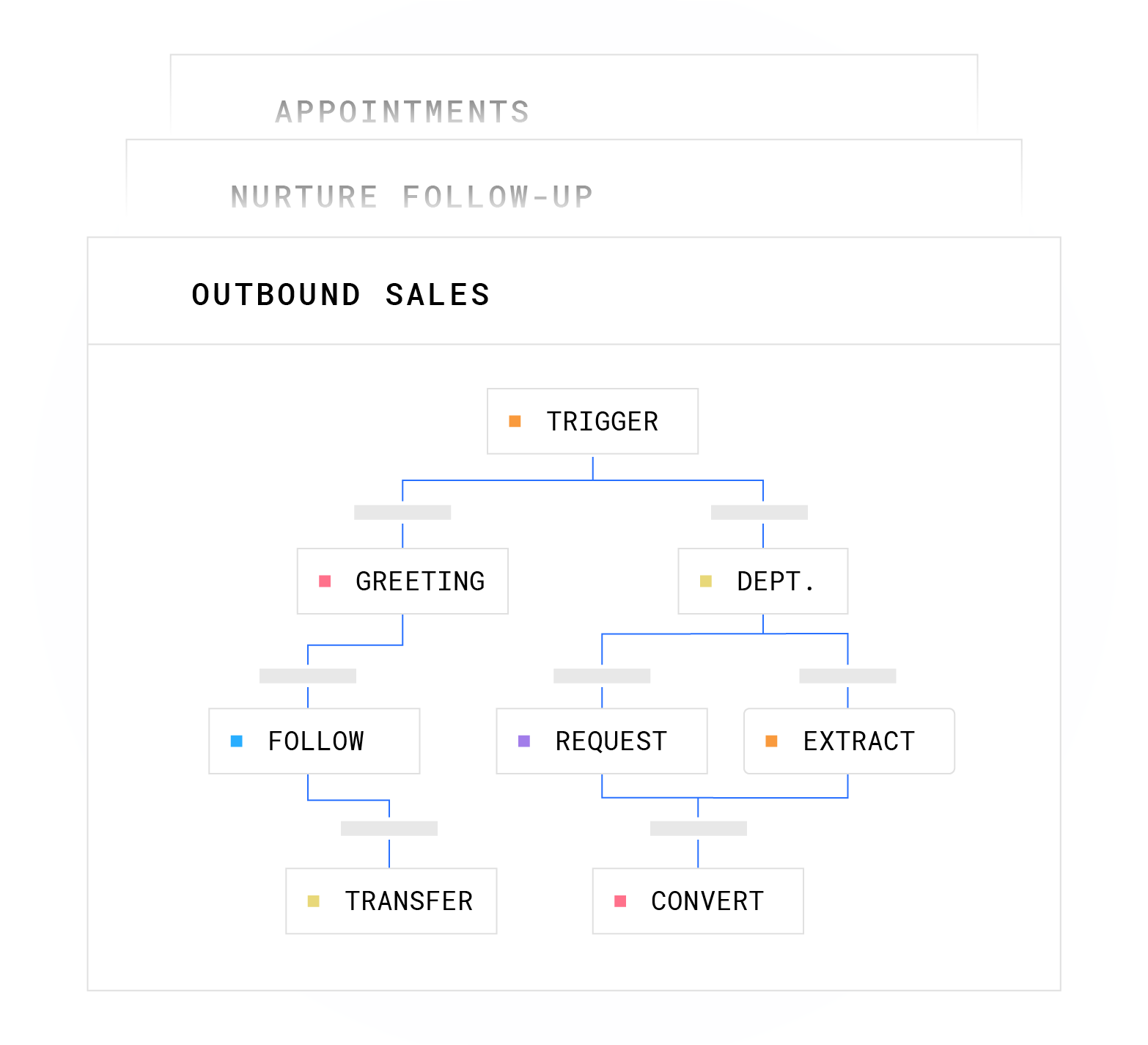
Conversion rates respond to structured testing. Systematic A/B testing on offer framing, CTA copy, and follow-up sequence design compounds revenue-per-lead gains over time by revealing which variables drive close rate instead of only click rate.
Implementation steps:
- Test one variable at a time, such as offer language, CTA button copy, follow-up timing, or channel sequence order.
- Run tests on statistically significant lead volumes before declaring a winner and avoid ending tests early on positive early signals.
- Measure test outcomes by revenue per lead and close rate, not by form-fill volume or open rate alone.
- Feed winning variants into Plura’s no-code workflow builder and retire underperforming sequences within the same sprint.
Revenue-per-lead metric: VWO has documented multiple A/B tests that increased form submissions, but none by exactly 34%. Reported lifts include 31.23%, 50%, and 89%.3 Applied to follow-up workflows, the same discipline compounds across every stage of the funnel. Plura iterates each customer’s conversation workflow continuously, with real-call monitoring and outcome-driven tuning built into the engagement model.
Technique 8: Multi-Channel Nurturing with Shared Conversation History
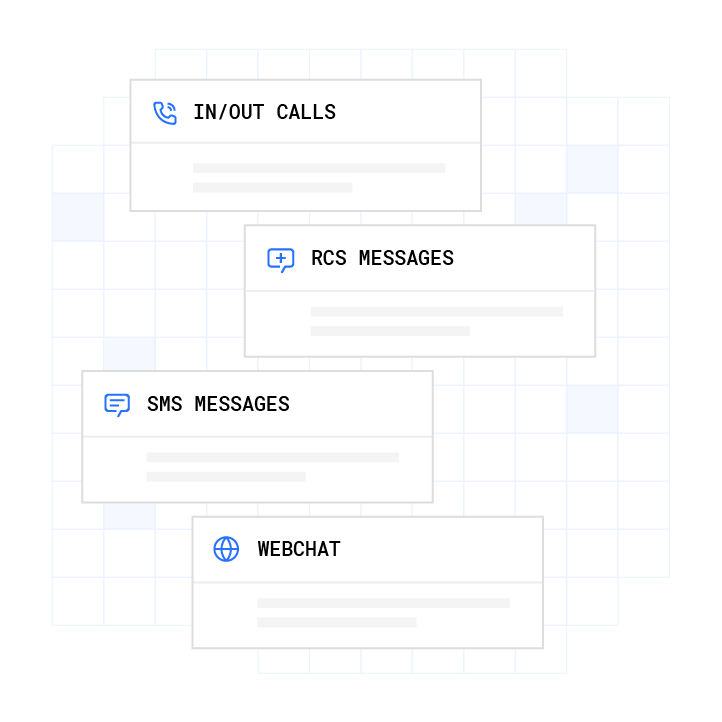
Most lead nurturing underperforms because each channel operates in isolation. A prospect who texted at 9 a.m. should not need to re-explain their situation when the call arrives at noon. Multi-channel nurturing that shares conversation history across voice, SMS, RCS (Rich Communication Services), and webchat ensures every touchpoint builds on the last.
Implementation steps:
- Deploy AI agents across all active channels from a single conversation record keyed to each lead’s phone number, email, or ID.
- Design follow-up sequences that escalate channel intensity based on engagement signals. Start with SMS, follow with voice if there is no reply, use RCS for document delivery or payment, and use webchat for site re-engagement.
- Set lead-scoring decay rules so leads dormant for 30 days receive a different re-engagement workflow than leads dormant for 6 months.
- Use AI SMS to qualify leads and warm-transfer ready buyers directly to a human rep so reps spend less time on cold outreach.
Revenue-per-lead metric: McKinsey B2B research does not confirm a 3.2x conversion advantage for multi-channel follow-up. The closest cited McKinsey figure is a 2.5x sales-conversion rate for companies with stronger digital capabilities3. Plura’s full product suite runs all four channels on one shared conversation layer so context does not reset between touchpoints.
Review Plura’s plans and rates to match a tier to your lead volume and channel mix.
Frequently Asked Questions
The Seven Stages of Conversion Explained
The seven stages of conversion describe the path a prospect travels from first awareness to closed revenue. The stages are: awareness (the prospect discovers the brand or offer), interest (they engage with content or an ad), consideration (they evaluate the offer against alternatives), intent (they take a qualifying action such as submitting a form or requesting a demo), evaluation (they compare specifics such as pricing and features), purchase (they close), and retention (they become a repeat buyer or referral source). High-volume operators typically measure revenue per lead across the full path from stage one to stage six, using cohort-based attribution to assign closed revenue back to the original lead source.
CVR vs CTR in Revenue-Per-Lead Analysis
CVR (conversion rate) measures the percentage of visitors or leads who complete a defined action, such as submitting a form, booking a call, or closing a deal. CTR (click-through rate) measures the percentage of people who click on an ad, email, or link relative to the total number who saw it. CTR functions as a top-of-funnel engagement metric, while CVR functions as a mid-to-bottom-funnel outcome metric. Revenue-per-lead optimization focuses on CVR and downstream close rate rather than CTR, because high CTR with low CVR usually indicates a message-match or qualification problem, not a reach problem.
Recommended Lead Contact Speed
The research benchmark is under 5 minutes from the moment of inquiry. Leads contacted within 5 minutes convert at approximately 21% versus 2.3% for leads contacted after 24 hours, which represents roughly a 9x gap on the same lead pool. After the first 5 minutes, qualification odds drop sharply. The odds of reaching a lead drop 100x between minute 5 and minute 30. The practical standard for high-volume operators is sub-60-second first contact via AI voice or AI SMS, which removes the human queue delay that causes most speed-to-lead failures.
Definition of Revenue Per Lead
Revenue per lead is calculated by dividing closed-won revenue from a defined cohort by the total number of leads acquired in that cohort during the same period. It functions as a revenue-impact metric rather than a volume metric and enables direct comparison of marketing channels, campaigns, landing pages, and buyer segments on the basis of actual revenue generated rather than lead counts or conversion rates alone. The metric is most reliable when original lead source, campaign, and first conversion timestamp are locked as immutable fields in the CRM and when spam, duplicates, and out-of-territory submissions are excluded from the lead total.
Measuring Lead Quality Versus Quantity
Lead quality is measured by tracking the downstream conversion rate and average deal value of leads from each source, not by counting raw lead volume. A fit-plus-behavior lead score that combines ICP (Ideal Customer Profile) attributes such as title, company size, and industry with behavioral signals such as pricing-page visits and demo requests produces a quality signal that predicts close rate better than volume alone. MQL (Marketing Qualified Lead) to SQL (Sales Qualified Lead) conversion rate, SQL-to-opportunity rate, and revenue per lead by source together reveal whether a lead source is generating quality or just quantity.
How Compliance Influences Conversion
Compliance requirements influence conversion at the capture stage and the follow-up stage. At capture, consent language and privacy disclosures on forms can reduce submission volume if poorly designed, but they also filter out low-intent submissions and reduce legal exposure per lead. At follow-up, DNC scrubbing, TCPA consent verification, and quiet-hours enforcement shape which leads can be contacted and when. Operators who build compliance into their workflow architecture rather than treating it as a post-process filter often maintain higher contact rates on qualified leads while reducing the risk profile of outreach. As described in Technique 4, Plura’s compliance engine covers TCPA, DNC, HIPAA, SOC 2, and 50+ state rule sets, with immutable consent records and one-click audit exports to support audit readiness.2 Customers remain responsible for their own regulatory obligations and should consult qualified counsel on their specific compliance posture.
Conclusion: Compounding Revenue-Per-Lead Gains with Plura
The eight lead conversion techniques here cover every stage where revenue per lead is won or lost. They span response speed, message alignment, form quality, trust at the CTA, full-journey capture, attribution accuracy, systematic testing, and multi-channel nurturing with shared context. Human teams alone struggle to execute all eight at scale across voice, SMS, RCS, and webchat.
Plura AI runs all eight techniques through a single platform with sub-5-second response, a shared conversation layer across channels, and compliance support built into every outbound contact. Because AI agents handle increasing contact volume without proportional headcount growth, operational costs rise more slowly while revenue continues to grow with lead volume. Each additional thousand leads costs less to process while generating similar per-lead revenue.
Operators running thousands of contacts per month can see the math directly in Plura’s ROI calculator, and full plan details are available here.
1 Plura AI maintains SOC 2, HIPAA, ISO, and GDPR posture as part of its platform infrastructure. References to compliance frameworks in this article describe Plura’s platform capabilities and do not constitute a guarantee that any customer using Plura will themselves be compliant with applicable laws or standards. Customers remain solely responsible for their own regulatory obligations, certifications, consent management, recordkeeping, and the claims they make to their own end users. Consult qualified legal counsel for guidance specific to your use case.
2 This article describes regulatory frameworks at a general level and does not constitute legal advice. Laws and regulations vary by jurisdiction, change over time, and apply differently depending on facts and circumstances. Readers should consult qualified legal counsel before making compliance decisions.
3 Performance figures, customer outcomes, and industry statistics referenced in this article are drawn from cited third-party sources or Plura customer case studies. Individual results vary based on implementation, use case, industry, audience, and execution. Past or aggregate performance is not a guarantee of future results.
4 References to third-party products, services, companies, or research are made for informational and comparative purposes only. Plura AI is not affiliated with, endorsed by, or sponsored by any third party named in this article unless explicitly stated. Trademarks and product names referenced remain the property of their respective owners.
This article is provided for informational purposes only and reflects Plura AI’s understanding at the time of publication. Product capabilities, integrations, and specifications are subject to change. For the most current information, visit plura.ai.
This article was produced with the assistance of AI tools and reviewed by Plura AI prior to publication.