

Written by: Matt Beucler, CEO, Plura AI
Key Takeaways on Speed to Lead and Plura
- Speed to lead measures the time from inquiry to first contact, and conversion drops sharply after the first minute. Sub-5-second responses capture the steepest gains.
- Hatch targets 5-second replies for HVAC and home services, yet most users still exceed 5 minutes in practice and miss the highest-intent window.
- Sub-5-second AI response at scale requires full carrier ownership, stateful cross-channel memory, and real-time compliance enforcement instead of third-party queues.
- Plura AI delivers true sub-5-second first contact across voice, SMS, RCS, and webchat on 100% U.S. infrastructure with FCC-licensed carrier ownership and pre-dial DNC scrubbing.1
- Operators ready to capture sub-60-second conversion gains can schedule a working session with Plura to evaluate their current stack against these benchmarks.
Calculating Speed to Lead for Your Operation
Speed to lead is a simple metric, and accurate inputs make it useful. Use these steps to calculate it for any campaign or channel:
- Record the lead timestamp. Capture the exact date and time a prospect submits a form, calls in, or sends a message. Use UTC to avoid time-zone errors across distributed teams.
- Record the first-contact timestamp. Log the moment a rep or AI agent sends the first outbound message or places the first call. Do not use the time when the lead was assigned internally.
- Subtract. Subtract the lead timestamp from the first-contact timestamp. Express the result in seconds for sub-minute targets and in minutes for longer windows.
- Segment by channel and source. Treat a lead from a paid search form differently from a live inbound call. Segment your averages by source so you can see where delay actually occurs.
- Track median, not mean. A handful of leads contacted in 2 seconds can hide a large cohort waiting 45 minutes. Median speed to lead reflects operational reality.
LeanData defines lead response time as lead processing time plus representative response time, where processing covers enrichment, routing, and territory assignment before any human or AI sees the lead.4 That processing window often loses the race before a single word is spoken.
Why Speed to Lead Directly Impacts Revenue
The data is unambiguous. Harvard Business Review research found that companies responding within five minutes are 100 times more likely to connect with a prospect than those waiting 30 minutes.3 The likelihood of qualifying an inbound lead drops 21 times between a 5-minute and 30-minute response window.
Responding to leads within 60 seconds can lift conversions by 391%. Velocify data shows a 391% increase in conversion rates for insurance leads contacted within 60 seconds versus waiting longer.3
78% of buyers purchase from the company that responds first.
Despite this evidence that speed shapes conversion, most operators still respond slowly or not at all. A RevenueHero study of 1,000 companies found that 63.5% never responded to leads, and those that did averaged over 29 hours response time. The average B2B company takes more than 47 hours to respond to a new lead.
Teams using AI can respond faster than manual-only teams, yet many still miss the sub-5-second window. The gap between fast and truly instant contact is where the next generation of conversion lift lives.
Hatch Speed-to-Lead Framework and Extended Checklist
Hatch is a messaging platform built for home services operators.4 Hatch AI CSRs reply in 5 seconds for HVAC and home services speed-to-lead campaigns. The following template mirrors Hatch’s evaluation framework and extends it with criteria that determine whether a platform can sustain that target at volume.
Speed to Lead Evaluation Checklist
- First-contact time: What is the median time from lead submission to first outbound contact? Target under 30 seconds for competitive verticals and under 5 seconds for AI-native platforms.
- Channel coverage: Does the platform contact leads via voice, SMS, RCS, and webchat at the same time, or does it queue them one after another?
- Carrier ownership: Does the platform own its telecom carrier, or does it route through a third-party CPaaS (Communications Platform as a Service) like Twilio? Carrier ownership affects branded caller ID, spam-label remediation, and per-minute cost.
- Stateful memory: If a lead texts at 9 a.m. and receives a call at noon, does the AI agent know what was said in the text thread?
- Real-time DNC enforcement: Is every outbound contact checked against federal and state Do Not Call registries before dial, or does scrubbing run as a batch process?
- U.S. infrastructure: Where do voice origination, model hosting, data storage, and call recording physically sit?
- Compliance posture: Does the platform support TCPA compliance, DNC compliance, HIPAA, SOC 2, and STIR/SHAKEN caller ID verification natively, or are those bolt-ons?
- Opt-out window: Does the vendor offer a structured opt-out period if the deployment does not deliver?
Hatch’s target addresses the first item on this list. Platforms that own the full stack address all eight.
Schedule a stack review with Plura to walk through this checklist against your current platform.
Why Sub-30-Second Response Still Misses the Peak Window
Hatch’s target is faster than the industry average of more than 47 hours, yet it still leaves conversion on the table. Lead conversion rates drop 10 times after the first 5 minutes. The steepest drop happens in the first 60 seconds. A target executed manually or through a queued automation still misses that window on any lead that arrives outside business hours, during peak volume, or when agents are occupied.
Hatch’s analysis of speed-to-lead campaigns in HVAC and home services found that most users take longer than 5 minutes to reply. The benchmark exists, and execution at scale remains the problem.
Most platforms struggle with this gap because they route voice through a third-party CPaaS, process leads in a queue, and handle channels in isolation. A lead that submits a form at 11:47 p.m. on a Saturday often waits until Monday morning. A lead that texts and then calls encounters two separate systems with no shared memory. The target becomes a marketing number, and the operational reality is measured in minutes or hours.
The Product: Plura AI for Sub-5-Second Response
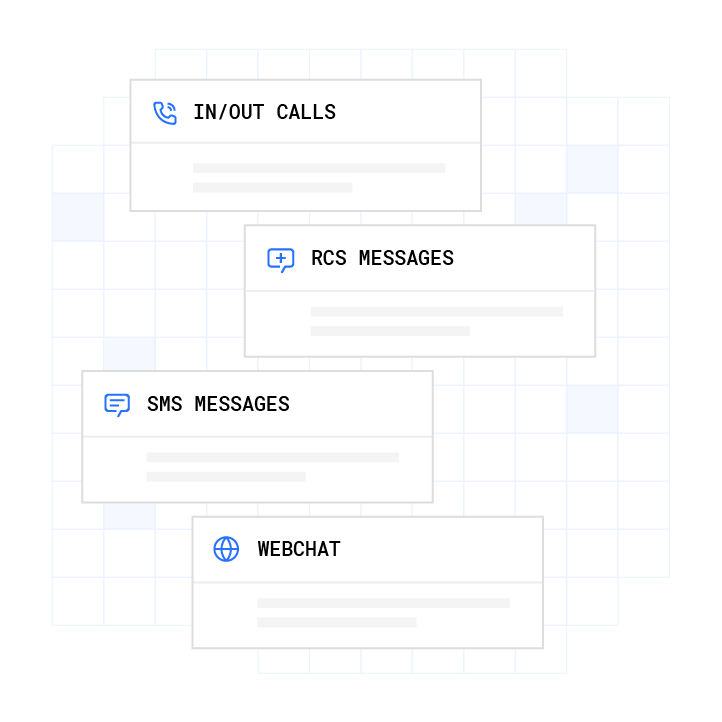
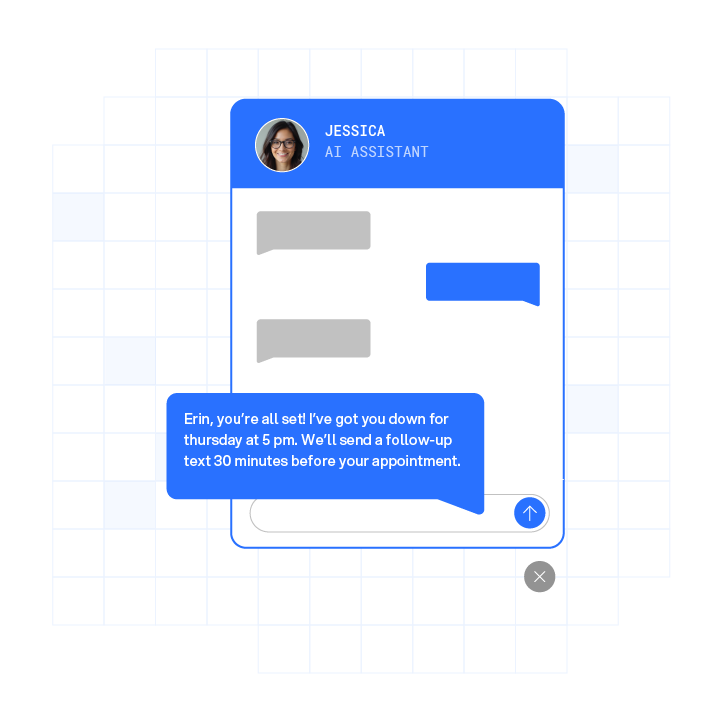
Plura AI is an FCC-licensed platform of AI agents that run voice, SMS, RCS, and webchat conversations on 100% U.S. infrastructure. It contacts leads in under 5 seconds with stateful memory across every channel. Plura owns the full carrier stack, not a wrapper around another telecom layer.
Key capabilities:
- Sub-5-second first contact across voice, SMS, RCS, and webchat, 24 hours a day, 7 days a week
- FCC-licensed audio bridging carrier with branded caller ID issued at the carrier level
- Stateful Conversation Database that holds full cross-channel memory per customer token
- Real-time DNC scrubbing on every outbound contact before dial
- STIR/SHAKEN caller ID verification and spam-label remediation at the carrier level
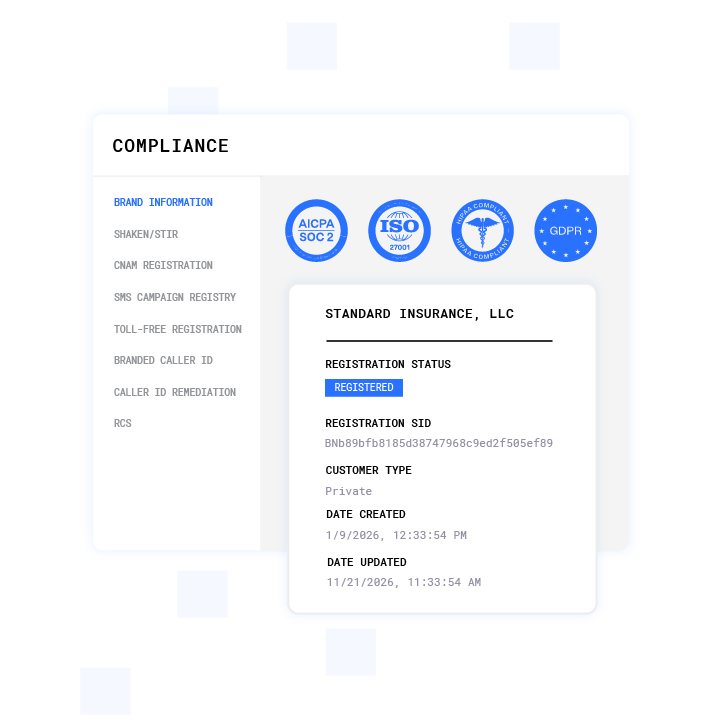
- Native support for TCPA compliance, DNC compliance, HIPAA support, SOC 2, and ISO certification1
- 100% U.S. infrastructure for voice origination, model hosting, data storage, and call recording
- No-code visual workflow builder with BATNA-style negotiation guardrails
- 90-day opt-out window on annual contracts
| Attribute | Hatch (target) | Typical API-Reseller AI Platform | Plura AI |
|---|---|---|---|
| First-contact speed | AI CSRs reply in 5 seconds, most users exceed 5 minutes in practice | Varies, dependent on third-party queue | Under 5 seconds by architecture |
| Carrier ownership | Third-party CPaaS routing | Third-party CPaaS (e.g., Twilio) | FCC-licensed audio bridging carrier, owned by Plura |
| Real-time DNC enforcement | Not documented at carrier level | Typically a bolt-on or batch process | Pre-dial scrubbing on every outbound contact |
| Stateful cross-channel memory | Single-channel context | Channel-isolated, no shared memory | Shared Stateful Conversation Database across voice, SMS, RCS, webchat |
| U.S. infrastructure | Not specified as 100% domestic | Varies, often offshore model hosting | 100% U.S. by architecture, including origination, hosting, storage, and recording |
See Plura in a live call and watch the sub-5-second architecture in action.
Regulatory Exposure and U.S. Infrastructure Considerations
The regulatory environment for outbound communications is shifting in ways that affect platform selection directly. The FCC’s Notice of Proposed Rulemaking (NPRM, CG Docket No. 26-52) proposes capping offshore customer-service calls at 30% and limiting offshore handling of sensitive consumer data including passwords, multi-factor authentication codes, Social Security numbers, and banking and card data. Companion federal legislation includes the Keep Call Centers in America Act (S.2495) and the Foreign Robocall Elimination Act (S.2666), both tracked on Congress.gov.2
At the state level, New York’s Call Center Jobs Act describes penalties up to $10,000 per day for covered violations. New Jersey, Connecticut, Missouri, and Florida have enacted or proposed companion restrictions on offshore handling of medical, financial, and consumer data.2 Operators and counsel should consult the applicable statutes and qualified legal counsel to assess their specific obligations under these frameworks.
Plura runs on 100% U.S. infrastructure by architecture. Voice origination, model hosting, data storage, and call recording all sit on domestic infrastructure. That posture reflects how the system is built, not a contractual promise layered on top of foreign infrastructure.
How to Evaluate Any Speed-to-Lead Platform
- Ask for the median first-contact time on a live lead submitted at 11 p.m. on a Sunday. That number reveals the operational reality, not the marketing target.
- Once you know the true response speed, confirm whether the platform owns its telecom carrier or routes through a CPaaS reseller, since carrier ownership affects whether those speeds hold at scale.
- Test cross-channel memory: submit a lead via web form, receive an SMS, then take a voice call. Check whether the AI agent references the SMS conversation.
- Request documentation of real-time DNC scrubbing at the pre-dial stage, not batch scrubbing, so you understand how compliance support fits into the call flow.
- Confirm where voice origination, model inference, and data storage physically reside, and align that footprint with your internal risk and data-governance standards.
- Ask whether the vendor’s compliance support covers TCPA, DNC, HIPAA, SOC 2, STIR/SHAKEN, and 50-plus state rule sets natively or through third-party add-ons.1
- Review the opt-out or exit terms in the contract before signing an annual commitment, especially for first-time AI deployments.
Run your numbers through Plura’s ROI calculator to check your cost per contact and 90-day ROI in real time.
Frequently Asked Questions
What is speed to lead in Hatch, and what target does Hatch publish?
Speed to lead in Hatch refers to the time between a prospect submitting an inquiry through a home services or HVAC campaign and receiving first contact from the operator’s team or automated system. Hatch publishes a 5-second reply target for HVAC and home services speed-to-lead campaigns. In practice, the platform’s own campaign data shows that many users take longer than 5 minutes to reply. The target describes what the platform aims for, while sub-5-second AI architecture describes what Plura delivers by default on every lead, at any hour.
How does stateful cross-channel memory affect speed-to-lead conversion?
Speed to lead measures time to first contact, and stateful memory shapes what happens in that contact and every subsequent one. When a lead texts at 9 a.m. and receives a call at noon, a platform without shared memory treats that call as a cold start. The agent has no record of what was discussed, what was offered, or what objections were raised. The lead has to re-explain themselves, and conversion drops.
Plura’s Stateful Conversation Database keys every interaction to a customer token across voice, SMS, RCS, and webchat.1 The AI agent that places the noon call already knows the 9 a.m. text thread in full. That continuity turns a fast first contact into a qualified conversation and, ultimately, a closed deal.
Why does carrier ownership matter for speed-to-lead platforms?
Most AI voice and SMS platforms are API resellers built on top of third-party CPaaS providers, so they do not own the telecom layer. Branded caller ID must be requested through a reseller instead of issued directly, spam-label remediation happens outside the platform, real-time DNC scrubbing often appears as a bolt-on, and per-minute costs carry a markup.
Plura is its own FCC-licensed audio bridging carrier. Voice originates on Plura’s domestic infrastructure. Branded caller ID is issued at the carrier level. STIR/SHAKEN authentication runs on every outbound call. DNC scrubbing happens before dial, not after. These properties sit in the carrier itself rather than as features added on top of a third-party stack.
What ROI can operators expect from switching to a sub-5-second AI platform?
Plura reports 3 times average ROI in 90 days, 47% average pipeline growth, and 90% faster lead-response time across its customer base.3 The illustrative scenario on Plura’s calculator compares a 15-agent human operation at $60,000 per month against 6 Plura agents at $14,400 per month doing equivalent volume at 100% talk utilization.
That gap produces $45,600 in savings in the first 30 days, $547,200 over 12 months, and $2,736,000 over 60 months. For higher-volume operations, Plura’s total cost of ownership of $300,000 to $700,000 per year replaces a traditional contact-center cost structure of $4 million to $7 million. These figures are illustrative based on the calculator’s default inputs, and actual results depend on each operator’s volume, channel mix, and conversion baseline.
Conclusion: Capturing the Sub-5-Second Advantage
Hatch’s speed-to-lead target moved the industry forward from a baseline of more than 47 hours, and it no longer represents the ceiling. The conversion data is clear. The steepest lift happens in the first 60 seconds, and the platforms that capture it contact leads in under 5 seconds, hold memory across every channel, own the carrier stack, and support compliance before every dial.
Plura AI delivers this stack by architecture, not by configuration. It combines sub-5-second first contact, stateful cross-channel memory, FCC-licensed carrier ownership, real-time DNC scrubbing, and 100% U.S. infrastructure with SOC 2, HIPAA support, ISO certification, TCPA compliance support, and 50-plus state rule sets supported across outbound contact flows.
Run your current contact economics through Plura’s ROI calculator to see the 30-day, 12-month, and 60-month savings against your existing stack. Review plans and rates at plura.ai/pricing.
1 Plura AI maintains SOC 2, HIPAA, ISO, and GDPR posture as part of its platform infrastructure. References to compliance frameworks in this article describe Plura’s platform capabilities and do not constitute a guarantee that any customer using Plura will themselves be compliant with applicable laws or standards. Customers remain solely responsible for their own regulatory obligations, certifications, consent management, recordkeeping, and the claims they make to their own end users. Consult qualified legal counsel for guidance specific to your use case.
2 This article describes regulatory frameworks at a general level and does not constitute legal advice. Laws and regulations vary by jurisdiction, change over time, and apply differently depending on facts and circumstances. Readers should consult qualified legal counsel before making compliance decisions.
3 Performance figures, customer outcomes, and industry statistics referenced in this article are drawn from cited third-party sources or Plura customer case studies. Individual results vary based on implementation, use case, industry, audience, and execution. Past or aggregate performance is not a guarantee of future results.
4 References to third-party products, services, companies, or research are made for informational and comparative purposes only. Plura AI is not affiliated with, endorsed by, or sponsored by any third party named in this article unless explicitly stated. Trademarks and product names referenced remain the property of their respective owners.
This article is provided for informational purposes only and reflects Plura AI’s understanding at the time of publication. Product capabilities, integrations, and specifications are subject to change. For the most current information, visit plura.ai.
This article was produced with the assistance of AI tools and reviewed by Plura AI prior to publication.