

Written by: Matt Beucler, CEO, Plura AI | Last updated: August 25, 2026
Key Takeaways for High-Volume Teams
- 24/7 speed to lead coverage means contacting every inbound lead within seconds, at any hour, without depending on human shift schedules.
- Responding within five minutes makes companies up to 100 times more likely to connect with prospects, while slower responses sharply reduce conversion rates.3
- Plura AI achieves sub-5-second response by operating as its own FCC-licensed carrier, which enables branded caller ID, real-time compliance checks, and stateful conversation memory across voice, SMS, RCS, and webchat.
- Replacing a 15-agent human team with Plura can cut monthly costs from $60,000 to $14,400 while delivering 24/7 coverage and reducing after-hours revenue leakage.3
- Book a live demo with Plura AI to see how 24/7 speed to lead coverage performs on your real leads.
The Response Time Gap: What Actually Converts
Harvard Business Review research found that companies responding within five minutes are 100 times more likely to connect with a prospect than those waiting 30 minutes.4 A Lead Response Management study of 15,000 leads over three years confirmed that leads contacted within five minutes are 21 times more likely to qualify than those contacted at 30 minutes.
The conversion math sharpens further at the 60-second mark. Industry benchmarks cited by Plura show that responding to leads within 60 seconds lifts conversions by 391% compared to responding after 24 hours. Lead conversion rates drop 10 times after the first five minutes.
The window in which a lead is truly convertible is measured in minutes, not hours. Any response model built around human availability during business hours cannot reliably hit that window on nights, weekends, or holidays.
Run your numbers through Plura’s calculator to check your ROI in real time.
Industry Reality: How Fast Teams Actually Respond
The 2011 HBR audit of 2,241 companies found the average B2B lead response time is 42 hours. The 2026 Speed-to-Lead Benchmark by Artemis GTM reports that only about 7% of B2B companies answer inbound leads within five minutes, while roughly 35% take more than 24 hours to respond.4
A 2024 RevenueHero study that submitted live demo requests to 1,000 B2B SaaS companies found that 63.5% of companies never responded at all.4 Among those that did, the average response time was 1 day, 5 hours, and 17 minutes. Only 17.2% of all companies tested responded within two minutes.
A 2020 Workato audit of 114 B2B companies found that over 99% failed to respond by email within five minutes, with average personalized email responses taking 11 hours and 54 minutes.
Sub-5-second response sits at the threshold where conversion economics work for high-volume operators. Anything slower creates a measurable revenue leak.
Why Slow Response Kills Revenue
The 2026 Artemis GTM benchmark found that five-minute responders convert at about 21% versus 2.3% for teams that wait a day or more, a roughly 9x gap on the same leads.3 78% of customers buy from the first company to respond, not necessarily the cheapest one.
The impact grows after hours. Many inbound B2B leads arrive and convert outside business hours. A contact center that closes at 6 p.m. often forfeits a large share of its inbound lead volume before the team returns the next morning.
For a high-volume operator spending $5,000 or more per month on paid media, the math is straightforward. If 40% of leads arrive after hours and the average conversion value is $2,500, a 20% improvement in after-hours conversion represents recoverable revenue that can exceed the cost of an automation platform by a wide margin.
Carrier-Level Architecture That Enables Sub-5-Second Response
Most AI voice and SMS platforms are API resellers built on top of third-party CPaaS (Communications Platform as a Service) providers like Twilio. They rent the carrier layer, which means they cannot issue branded caller ID under their own identity, cannot enforce compliance before a call leaves the network, and cannot hold conversation context across channels.
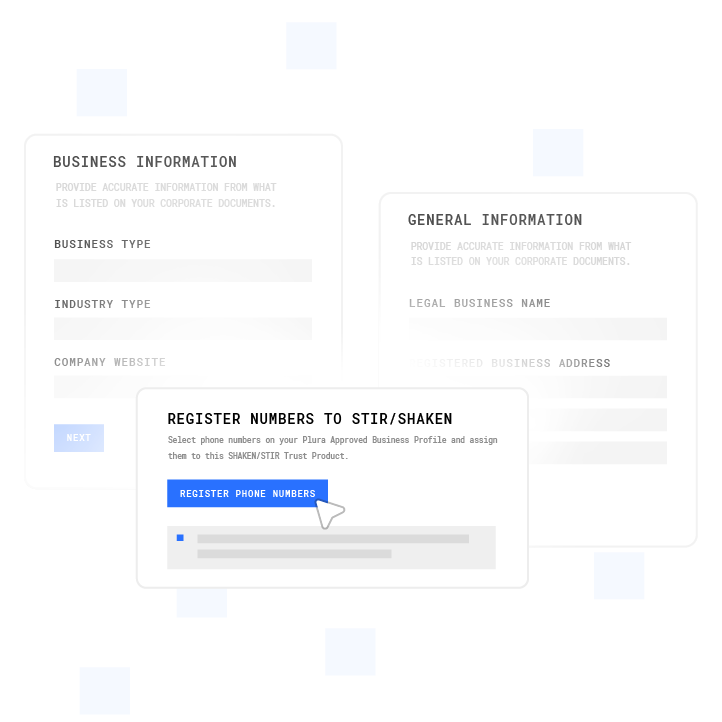
Plura operates differently. Plura is its own FCC-licensed audio bridging carrier. Voice originates on Plura’s domestic infrastructure. Branded caller ID is issued at the carrier level, not bolted on through a reseller. SHAKEN/STIR caller ID verification authenticates every outbound call. Real-time DNC (Do Not Call) scrubbing and TCPA (Telephone Consumer Protection Act, 47 U.S.C. § 227) litigator filtering run before each contact, inside the platform.
Underneath every channel sits the Stateful Conversation Database. Every interaction across AI voice, AI SMS, RCS, and AI webchat is keyed to a customer token. A lead who texts at 9 a.m. is the same lead when the call comes at noon. The AI continues with full context, with no re-introduction required.
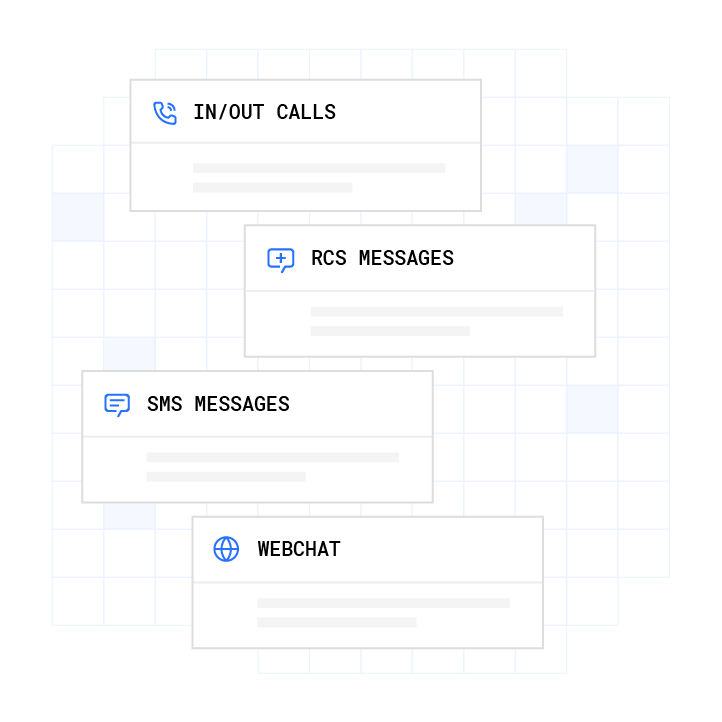
This architecture makes sub-5-second response across all four channels operationally possible at scale. Because Plura owns the carrier, there is no handoff between vendors that would introduce routing delays. Without a third-party CPaaS in the chain, latency drops to near-zero. Compliance runs at the carrier level, so there is no gap between the conversation layer and the enforcement layer.
ROI Math: Replacing a 15-Agent Team
The default scenario on Plura’s ROI calculator uses a 15-agent operation paying $20 per hour with standard taxes, benefits, and commissions, and a 40% talk-utilization rate typical of human contact-center work. That model costs $60,000 per month to operate.
Replacing that team with Plura at $15 per hour, 100% talk utilization, and 6 Plura agents doing the work of 15 humans drops the monthly cost to $14,400. The table below summarizes the comparison using those inputs.
| Model | Monthly Cost | Response Time | 24/7 Coverage | Compliance Layer |
|---|---|---|---|---|
| Human onshore team (15 agents, $20/hr, 40% utilization) | $60,000/month | Minutes to hours, none after hours | No, shift-dependent | Manual, operator-managed |
| Offshore BPO | Lower than onshore, rising under FCC NPRM regulatory exposure (CG Docket No. 26-52) | Variable, time-zone gaps | Partial, sensitive-data restrictions apply | Third-party, offshore data exposure risk |
| Plura (6 AI agents, $15/hr equivalent, 100% utilization) | $14,400/month | Under 5 seconds, every contact | Yes, 24/7/365 by architecture | Carrier-level; supports TCPA, DNC, SHAKEN/STIR, SOC 2, HIPAA1 |
At higher volume, Plura’s TCO of $700,000 per year replaces traditional contact-center economics of $7 million on equivalent volume. The 12-month savings in the default scenario reach $547,200. Over 60 months, savings reach $2,736,000.
Scaling 24/7 Speed to Lead Without New Headcount
Human coverage models scale linearly. More volume requires proportional headcount, and headcount carries payroll, taxes, benefits, commissions, real estate, and 30% to 50% annual front-desk turnover. Peak seasons such as Medicare AEP, tax season, and Black Friday require hiring months in advance.
Plura scales without that constraint. Plura enables franchises to handle 3x to 5x call volume during peak seasons without temporary staff. The AI contacts leads from websites, Google Business Profiles, or ad campaigns within 60 seconds via SMS or voice call, regardless of the hour.
AI contact centers provide 24/7/365 availability compared to business hours plus shifts for traditional offshore operations. Nights, weekends, and holidays are covered by the same platform, with consistent conversation quality, at no additional staffing cost.
See how Plura handles peak-season volume spikes without temporary staff — schedule a demo.
Carrier-Level Controls That Support TCPA and DNC Compliance
Plura’s compliance infrastructure functions as a core layer of the platform, not a checkbox added after deployment. Every outbound contact is checked against federal and state DNC registries in real time before dial. Consent records are timestamped, immutable, and audit-ready. Quiet-hours rules enforce automatically through time-zone detection. The compliance dashboard exports audit-ready reports in one click.
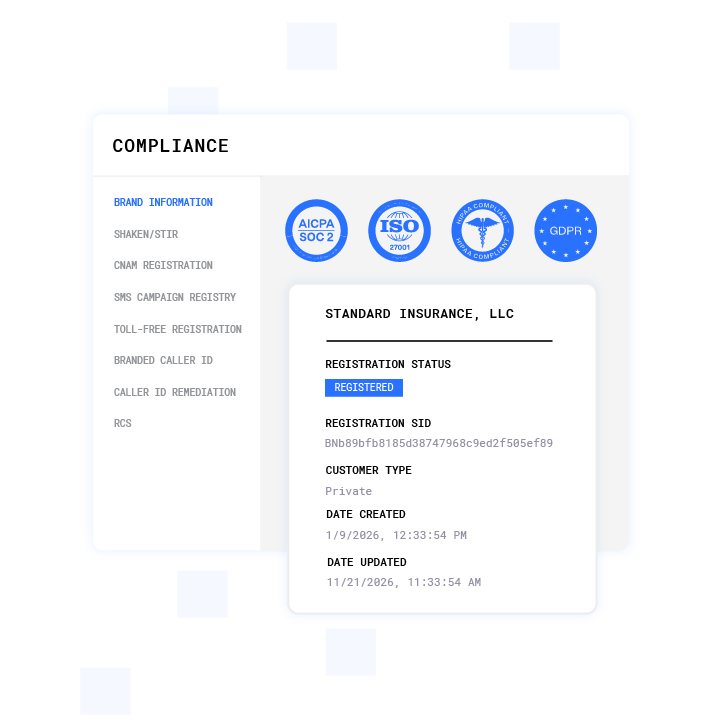
Plura supports compliance with TCPA, DNC, HIPAA, SOC 2, ISO certification, GDPR, and SHAKEN/STIR caller ID verification.1 The FCC’s February 2024 declaratory ruling classified AI-generated voice as “artificial voice” under TCPA Section 227(b), which made prior express written consent a key consideration for AI voice marketing calls.2 Plura’s platform is built to support operators navigating that framework, with documented consent workflows and pre-dial suppression built into every campaign.
Operators in regulated verticals, including healthcare, financial services, and legal, should consult qualified counsel regarding their specific obligations under applicable federal and state law. Plura provides the infrastructure, and the operator controls downstream compliance posture.
100% U.S. infrastructure by architecture means zero offshore exposure under the FCC NPRM (CG Docket No. 26-52), which proposes capping offshore customer-service calls and limiting offshore handling of sensitive consumer data.
7-Step Implementation Checklist for 24/7 Coverage
The following steps outline how high-volume operators deploy Plura for 24/7 speed to lead coverage.
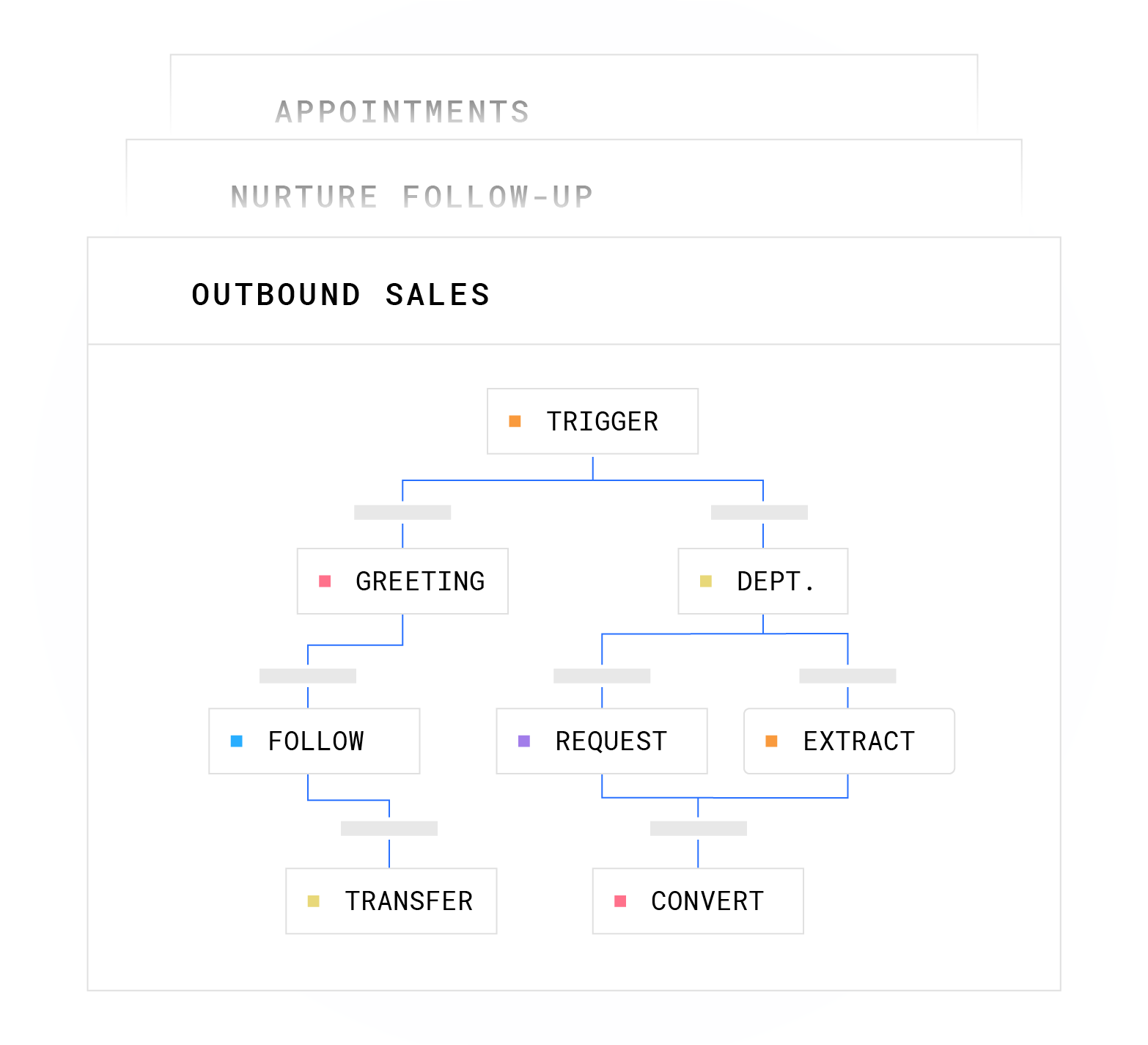
- Audit current lead response times. Pull data from your CRM on average time-to-first-contact by hour of day and day of week. Identify the after-hours gap and quantify leads that received no response within five minutes.
- Map your lead sources and channels. Identify every inbound surface: web forms, Google Business Profile, paid media landing pages, inbound calls, and chat widgets. Plura needs to connect to each source to trigger a response.
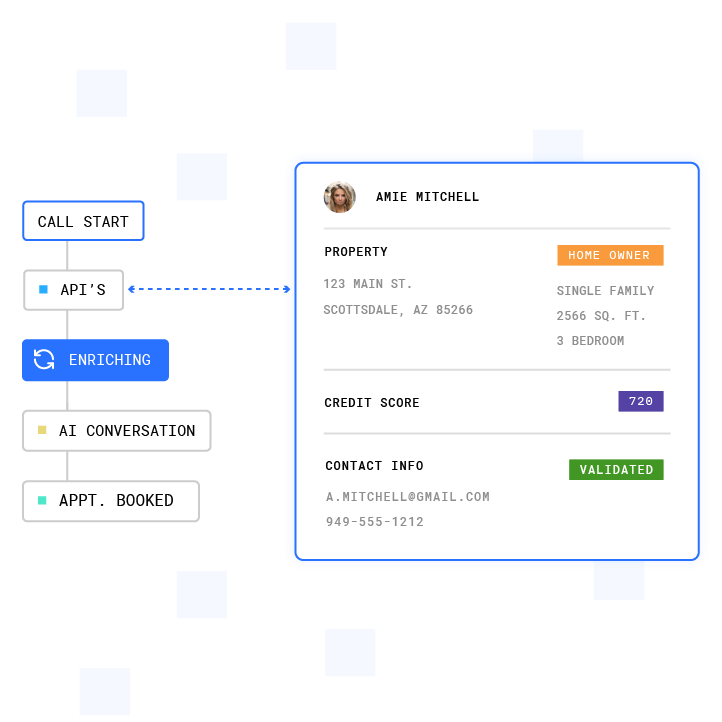
- Define your qualification criteria. Specify what makes a lead qualified for a live transfer versus a follow-up sequence. Plura’s AI Lead Intelligence enriches leads from 30+ data sources in real time during the conversation.
- Build your conversation workflow. Use Plura’s no-code workflow builder to design the greeting, qualification gate, objection handling, and transfer rule. Plura’s team builds a dynamic conversation mockup from your existing scripts and SOPs.
- Configure compliance settings. Set DNC scrubbing, quiet-hours rules by state, and consent record requirements at the campaign level. Plura’s compliance engine enforces these on every outbound contact before dial.
- Pilot on a subset of real leads. Run the AI on a defined segment, such as after-hours inbound only, before full deployment. Review call transcripts and conversion data through Plura’s conversation intelligence dashboard.
- Go live and iterate. Deploy across all lead sources and channels. Plura monitors real calls for objection patterns and conversion gaps, tuning the workflow continuously. Use the ROI calculator to track savings against your baseline.
Frequently Asked Questions
What is 24/7 speed to lead coverage and why does it matter for high-volume operators?
24/7 speed to lead coverage is the ability to contact every inbound lead within seconds of submission, at any hour, without relying on human shift schedules. It matters because lead conversion rates drop sharply after the first five minutes. Industry benchmarks show that contacting a lead within five minutes makes a company up to 100 times more likely to connect than waiting 30 minutes.
For operators running 500 or more daily interactions, the revenue impact of slow or absent after-hours response is material. A lead that arrives at 10 p.m. and receives no contact until 9 a.m. the next day has likely already engaged a competitor.
How does Plura achieve sub-5-second response without adding headcount?
Plura operates as an FCC-licensed audio bridging carrier, which means voice, SMS, RCS, and webchat all originate on Plura’s own domestic infrastructure. When a lead submits a form or calls in, Plura’s AI agents trigger a response in under five seconds across whichever channel is configured.
There is no human queue, no shift dependency, and no after-hours gap. The AI handles the full conversation, including qualification, objection handling, and live transfer to a human agent when the workflow calls for it. Operators scale from four agents to 400 overnight without hiring, training, or onboarding.
What makes Plura different from other AI voice and SMS platforms?
Most AI voice and SMS platforms are API resellers built on top of third-party CPaaS providers. They do not own the carrier, which means they cannot issue branded caller ID under their own identity, cannot enforce DNC scrubbing before a call leaves the network, and cannot hold conversation context across channels.
Plura is its own FCC-licensed carrier. Branded caller ID is issued at the carrier level. SHAKEN/STIR caller ID verification runs on every outbound call. The Stateful Conversation Database holds full context across voice, SMS, RCS, and webchat, so a lead who texted at 9 a.m. is recognized when the call comes at noon. Compliance infrastructure, including TCPA, DNC, SOC 2, HIPAA, and ISO certification, is built into the platform, not bolted on.
How does Plura handle compliance for outbound AI voice and SMS campaigns?
Plura’s compliance engine runs before every outbound contact. Every number is checked against federal and state DNC registries in real time before dial. Consent records are timestamped, immutable, and exportable for audit. Quiet-hours rules enforce automatically through time-zone detection on the contact. SHAKEN/STIR caller ID verification authenticates every outbound voice call.
The platform supports TCPA compliance, DNC compliance, HIPAA, SOC 2, ISO certification, GDPR, and 50+ state rule sets. Operators should consult qualified counsel regarding their specific obligations under applicable law. Plura provides the infrastructure, and the operator controls downstream compliance posture.
What does it cost to replace a human contact center team with Plura?
As detailed in the ROI Math section above, replacing a typical 15-agent operation with Plura can reduce monthly costs from $60,000 to $14,400, which yields a 12-month saving of $547,200. At higher volume, Plura’s total cost of ownership of $700,000 per year replaces traditional contact-center economics of $7 million on equivalent volume. Operators can run their own numbers at plura.ai/calculator to see savings based on their specific staffing and volume.
Conclusion: Sub-5-Second Response as a Competitive Standard
The industry average lead response time is 47 hours. The conversion window closes in under five minutes. That gap is where revenue disappears, and it widens every night, every weekend, and every holiday that a human team is not staffed.
Plura closes that gap by owning the carrier stack, holding stateful conversation memory across every channel, and enforcing compliance at the infrastructure layer, not as an afterthought. The result is 24/7 speed to lead coverage that scales without headcount, converts at the rates the research supports, and runs on 100% U.S. infrastructure by architecture.
Calculate your 12-month savings using your actual lead volume and staffing costs.
1 Plura AI maintains SOC 2, HIPAA, ISO, and GDPR posture as part of its platform infrastructure. References to compliance frameworks in this article describe Plura’s platform capabilities and do not constitute a guarantee that any customer using Plura will themselves be compliant with applicable laws or standards. Customers remain solely responsible for their own regulatory obligations, certifications, consent management, recordkeeping, and the claims they make to their own end users. Consult qualified legal counsel for guidance specific to your use case.
2 This article describes regulatory frameworks at a general level and does not constitute legal advice. Laws and regulations vary by jurisdiction, change over time, and apply differently depending on facts and circumstances. Readers should consult qualified legal counsel before making compliance decisions.
3 Performance figures, customer outcomes, and industry statistics referenced in this article are drawn from cited third-party sources or Plura customer case studies. Individual results vary based on implementation, use case, industry, audience, and execution. Past or aggregate performance is not a guarantee of future results.
4 References to third-party products, services, companies, or research are made for informational and comparative purposes only. Plura AI is not affiliated with, endorsed by, or sponsored by any third party named in this article unless explicitly stated. Trademarks and product names referenced remain the property of their respective owners.
This article is provided for informational purposes only and reflects Plura AI’s understanding at the time of publication. Product capabilities, integrations, and specifications are subject to change. For the most current information, visit plura.ai.
This article was produced with the assistance of AI tools and reviewed by Plura AI prior to publication.