

Written by: Matt Beucler, CEO, Plura AI
Updated July 2026
Key Takeaways for Speed-to-Lead Performance
- Speed to lead is the time between lead capture and first meaningful contact. Plura AI achieves sub-5-second response using its own FCC-licensed U.S. carrier.
- Industry benchmarks show that responding within 5 minutes makes leads up to 100x more likely to connect.3 Delays beyond 5 minutes cause rapid lead degradation.
- Most AI contact-center platforms rely on third-party CPaaS infrastructure, which adds latency and limits compliance and caller-ID control at the carrier level.
- Carrier-owned infrastructure enables real-time compliance controls, branded caller ID, and stateful conversation memory across voice, SMS, RCS, and webchat.
- Plura’s carrier-owned platform delivers measurable ROI through faster response times; see this sub-5-second response in a live demonstration.
How Speed to Lead Impacts Revenue
Speed to lead is the elapsed time between a prospect expressing interest and the first substantive contact from your team. This includes form fills, inbound calls, chats, and text inquiries. Lead quality degrades quickly as minutes pass without a response.
The average B2B response time remains over 40 hours. Harvard Business Review research by Oldroyd, McElheran, and Elkington (2011) audited 2,241 U.S. firms and found an average first-response time of 42 hours; a related InsideSales/MIT study found firms were roughly 7–21 times more likely to qualify a lead when responding within 5 minutes rather than 30–60 minutes.
For high-volume operators running 500 or more daily interactions, the gap between industry average and best-in-class response is not a minor inefficiency. It is the primary driver of lead leakage. The table below quantifies this gap across core metrics and shows how carrier-owned infrastructure removes the latency that erodes lead value.
Industry Benchmarks and Carrier-Owned Performance
| Metric | Industry Average | 5-Minute Impact | 60-Second Impact | Convoso | Plura AI | Source |
|---|---|---|---|---|---|---|
| First response time | 42-47 hours | Baseline target | Best-in-class target | Dependent on third-party CPaaS routing | Under 5 seconds via FCC-licensed carrier | Artemis GTM 2026; Plura |
| Contact likelihood | Baseline | 100x more likely to connect vs. 30-min wait | Significant uplift over 5-min baseline | Subject to carrier routing latency | Direct origination, no CPaaS hop | MIT/InsideSales, Dr. James Oldroyd |
| Conversion lift | 2.3% at 24+ hours | 21% lead-to-opportunity rate at 0-5 min | 391% lift vs. 24-hour response | Varies by workflow configuration | Sub-5-second engagement across voice, SMS, RCS, webchat | Plura calculator; Artemis GTM 2026 |
| After-hours lead coverage | 24.6% slow or no response | Requires automation | Requires automation | Dependent on dialer configuration | 24/7 AI agents on all channels | Blazeo 2026 |
| AI vs. manual response rate | 39.1% meet 15-min standard (manual | 62.5% meet 15-min standard with AI | Under 1% of manual teams respond in under 1 min | Dialer-focused, limited native AI SMS/RCS | Unified AI across all four channels | Blazeo 2026 |
| Compliance posture | Bolted-on or manual | N/A | N/A | Third-party carrier dependency | TCPA, DNC, HIPAA, SOC 2, SHAKEN/STIR at carrier level1 | Plura |
| Infrastructure ownership | CPaaS (Communications Platform as a Service) reseller model | N/A | N/A | Routes through third-party carrier | FCC-licensed audio bridging carrier, 100% U.S. | Plura |
The Cost of Slow Lead Response by Role
For contact center leaders, slow response shows up in agent utilization, cost per contact, and conversion rate. 78% of buyers purchase from the first business to respond. Every hour of queue delay shifts revenue to a faster competitor.
Marketing directors see the same problem in media efficiency. Paid campaigns generate leads that stay warm for minutes, not hours. A RevenueHero study of 1,000 companies found that 63.5% never responded to leads at all, and responders averaged over 29 hours. For teams spending $5,000 or more per month on paid media, that delay is where budget burns without pipeline.
Agency owners and franchise operators face a structural version of the problem. Manual outreach does not scale across locations and dayparts. Over 40% of high-intent inquiries arrive during evenings and weekends, when human teams are offline. The 3-to-5x performance gap between best and worst locations in a franchise network often traces back to inconsistent lead-response SLAs.
C-suite executives carry an additional regulatory dimension. The FCC’s March 2026 Draft NPRM (Notice of Proposed Rulemaking, CG Docket No. 26-52) describes potential caps on offshore call volume, beginning-of-call country disclosure, consumer transfer rights to U.S. representatives, and U.S.-only handling of sensitive personal data.2 Offshore contracts and AI tools with foreign infrastructure dependencies may create compliance exposure. Operators should consult qualified counsel regarding their specific obligations under these proposed rules.2
Request a demonstration of carrier-owned infrastructure and sub-5-second lead engagement.
AI Contact-Center Platforms as the Response Strategy
AI contact-center platforms replace manual SDR queues and human dialer operators with software agents. These agents handle inbound qualification, outbound follow-up, and omnichannel orchestration at scale. Typical flows include intake and routing, follow-up cadences, negotiation, and compliance automation such as DNC scrubbing and consent logging.
Infrastructure ownership is the key architectural distinction in this category. Most platforms are API resellers built on third-party CPaaS providers. They do not own the carrier, cannot issue branded caller ID at the carrier level, and cannot enforce compliance at origination. A carrier-owned platform originates voice traffic on its own FCC-licensed infrastructure. That shift changes economics, deliverability, and compliance posture for every outbound contact.
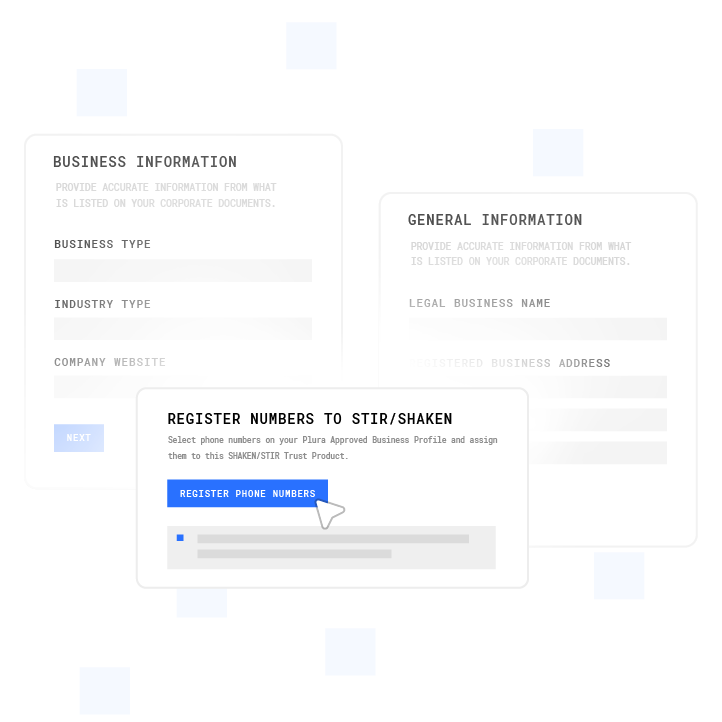
Many telecom operators are moving toward unified omnichannel platforms in 2026 to deliver consistent customer experiences.5 Operators that move first to carrier-owned, stateful infrastructure gain a compounding advantage. Every conversation feeds a shared memory layer that improves context and personalization over time.
Benchmark Evidence and Regulatory Direction
The Blazeo 2026 Speed-to-Lead Benchmark Report, surveying 573 companies across six major service industries, found that 81.2% of companies responding in over 1 hour report losing leads to faster competitors, and slow responders are 74% more likely to experience lead leakage.4 Infrastructure emerges as the differentiator. Aarij Khan, Chief Product and Marketing Officer at Blazeo, stated in February 2026: “What our data shows is that belief alone doesn’t translate into performance. The top 25% of ‘Elite’ responders aren’t winning because they care more, infrastructure is the common denominator.”
On the regulatory side, the FCC’s Draft NPRM of March 5, 2026 describes rules that would require covered providers to track and report offshore call volume, handle sensitive consumer data exclusively in the United States, and meet English proficiency standards for offshore representatives. Samuel C. Wilson, CEO of 8×8, stated: “The FCC is explicitly connecting customer experience quality, national security, and fraud prevention. That’s a different lens than we’ve seen before. It suggests that ‘where’ and ‘how’ service is delivered may soon matter as much as ‘how much it costs.’ You can outsource the work. You can’t outsource the accountability.”
State-level exposure compounds this picture. New York’s Call Center Jobs Act describes penalties up to $10,000 per day.2 New Jersey, Connecticut, Missouri, and Florida have enacted companion statutes that restrict offshore handling of medical, financial, and consumer data. Operators should review their specific obligations with qualified legal counsel.
Six Critical Pairings That Shape Outcomes
Slow response vs. automated immediate engagement. Lead conversion rates drop 10x after the first 5 minutes. Automated AI engagement at the moment of lead capture removes the queue and keeps every inquiry in the high-conversion window.
Fragmented channels vs. unified conversation management. Separate platforms for voice, SMS, RCS, and webchat create repeated questions and lost context. A stateful conversation database ties every interaction to a single customer record across all channels.
Rising labor costs vs. scalable automation. Traditional contact-center economics run $4M to $7M in total cost of ownership. Plura’s TCO runs $300,000 to $700,000 on equivalent volume.3 This cost reduction stems partly from utilization: AI agents operate at 100% talk time versus the 40% typical of human agents, which removes idle capacity costs.
Inconsistent quality vs. standardized workflows. Human agents drift from scripts and vary by tenure. AI agents follow approved conversation logic on every contact, so day-one and day-ninety quality stay aligned.
Compliance complexity vs. built-in controls. TCPA, DNC, HIPAA, SOC 2, and 50-plus state rule sets enforced at the platform level before each contact, combined with immutable consent logging and one-click audit exports, reduce the operational burden of compliance management.
Low contact rates vs. identity and deliverability improvements. Apple’s iOS 26 call screening adds another layer of detection for unwanted calls, making caller ID reputation management mission-critical for outbound teams. Branded caller ID issued at the carrier level, combined with SHAKEN/STIR authentication, turns many screened calls into answered calls.
See how branded caller ID and SHAKEN/STIR authentication convert screened calls into pickups.
How Plura Compares Across Key Dimensions
Evaluating AI contact-center platforms across six dimensions reveals structural differences that affect performance, compliance, and total cost.
Deployment model. Twilio-based API resellers require custom development and ongoing engineering.4 Carrier-owned platforms like Plura deploy in days to weeks with no-code workflow configuration.
Channel support. Many platforms handle voice or SMS independently, with separate memory per channel. Plura runs voice, SMS, RCS, and webchat on a single stateful conversation database so context follows the customer.
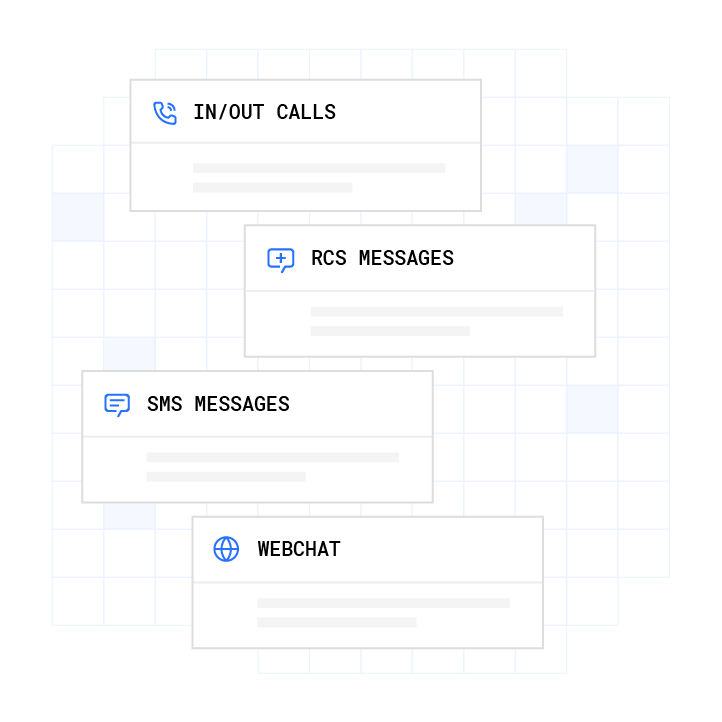
Compliance controls. Third-party CPaaS platforms often enforce compliance as a bolt-on layer, which leaves operators with gap risk. Plura’s compliance engine runs real-time DNC scrubbing, TCPA consent logging, quiet-hours enforcement, and HIPAA-aligned encryption as core platform services. Plura supports customer compliance, and downstream obligations remain the customer’s responsibility.
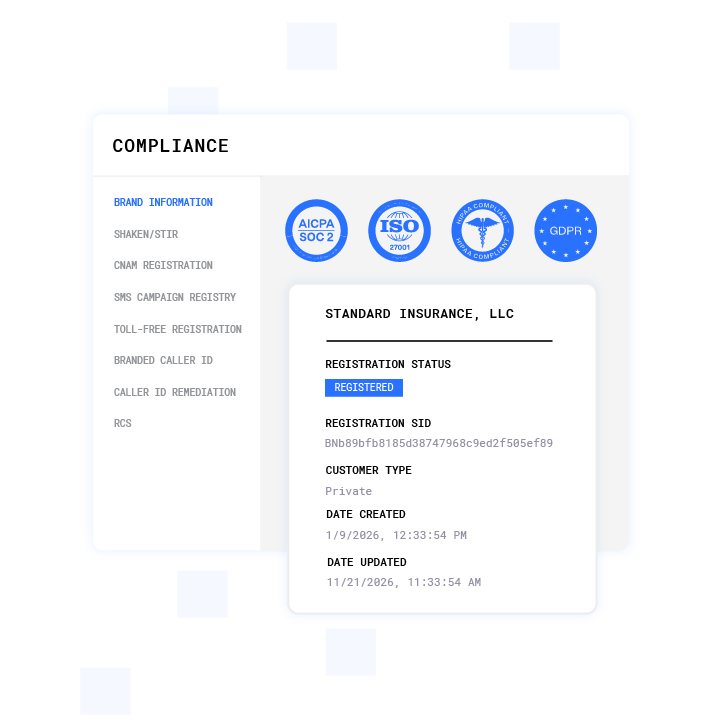
Infrastructure ownership. Plura originates voice on its own FCC-licensed audio bridging carrier using domestic infrastructure. This structure removes the CPaaS wrapper tax and positions operators for the FCC NPRM’s proposed U.S.-infrastructure expectations.
Integration depth. Plura connects to 50-plus tools across CRM, calendar, attribution, payment, and data enrichment, including HubSpot, Salesforce, Stripe, DocuSign, and Google Calendar.
Scalability. AI agents scale instantly into peak seasons such as Medicare AEP, tax season, and Black Friday without advance hiring. Human-only and hybrid models require months of planning and recruiting.
Risk Checks for Selecting an AI Contact-Center Platform
Operators evaluating AI contact-center platforms can reduce risk by confirming several details before signing an annual contract.
Carrier ownership. Determine whether the vendor owns an FCC-licensed carrier or routes voice through a third-party CPaaS. Request the FCC license number.
Branded caller ID. Confirm whether caller ID is issued at the carrier level or through a reseller. Reseller-issued caller ID inherits the reseller’s reputation, not the operator’s brand.
Stateful memory. Check whether the platform shares conversation context across voice, SMS, RCS, and webchat or treats each channel as a separate system.
Compliance architecture. Ask whether DNC scrubbing runs in real time before each dial or in batch. Confirm that consent records are immutable and audit-ready, and that the platform supports TCPA, HIPAA, SOC 2, and ISO-related workflows.
Infrastructure geography. Identify where voice origination, model hosting, data storage, and call recording physically reside. The FCC’s proposed rules describe U.S.-only handling for sensitive consumer data.
Contract terms. Review whether the vendor includes a performance opt-out window or locks the operator in regardless of results. Plura includes a 90-day opt-out window in every annual contract.
Iteration model. Clarify whether the vendor actively iterates conversation workflows after launch or simply hands off configuration and steps back.
Frequently Asked Questions
What is speed to lead and why does it matter for high-volume operators?
Speed to lead is the time between a prospect expressing interest and the first substantive contact from your team. For high-volume operators handling 500 or more daily interactions, this metric determines how much paid-media spend turns into pipeline. As noted earlier, the 5-minute and 60-second windows create dramatic conversion advantages, up to 100x and 391% respectively, because lead quality degrades rapidly with time. At scale, even a 10-minute average response time pushes thousands of leads per month into a low-conversion window.
How does carrier ownership affect speed-to-lead performance?
Most AI voice platforms route calls through a third-party CPaaS provider such as Twilio. That routing adds latency, limits branded caller ID to reseller-level issuance, and places compliance enforcement outside the platform’s direct control. A carrier-owned platform originates voice on its own FCC-licensed infrastructure. This structure removes the CPaaS hop from the call path, enables branded caller ID at the carrier level, and allows compliance controls such as real-time DNC scrubbing and SHAKEN/STIR authentication to run at origination.
Plura is its own FCC-licensed audio bridging carrier, which forms the architectural basis for its sub-5-second engagement claim.
What does the FCC NPRM mean for operators using offshore or third-party infrastructure?
The FCC’s March 2026 Draft NPRM (CG Docket No. 26-52) describes potential caps on the share of customer service calls handled offshore, beginning-of-call disclosure of the agent’s country, consumer transfer rights to a U.S. representative, and U.S.-only handling of sensitive personal data across calls, emails, texts, and online chats.2 The reply comment period closed June 22, 2026, and no final order has been issued. Operators with offshore call-center contracts or AI tools with foreign infrastructure dependencies should consult qualified legal counsel to assess their exposure under the proposed rules and any applicable state laws in New York, New Jersey, Connecticut, Missouri, and Florida.
How does Plura handle compliance across TCPA, DNC, HIPAA, and state rules?
Plura’s compliance engine runs as a core platform layer. Every outbound contact is checked against federal and state DNC registries in real time before dial. TCPA consent records are timestamped and immutable. Quiet-hours rules enforce automatically through time-zone detection on the contact.
HIPAA-aligned encryption, access controls, and audit logging cover protected health information across all four channels.1 SOC 2 and ISO certification cover the underlying infrastructure. The compliance dashboard exports audit-ready reports in one click. Plura supports customer compliance, and operators remain responsible for their own regulatory obligations and the claims they make to their end users.
What is the total cost of ownership difference between Plura and a traditional contact center?
A traditional contact center running 15 agents at $20 per hour with standard taxes, benefits, and commissions at 40% talk utilization costs approximately $60,000 per month. The same volume handled by Plura at $15 per hour, 100% talk utilization, and 6 AI agents costs approximately $14,400 per month, a 30-day saving of $45,600.
At higher volumes, the cost advantage described earlier ($300K-$700K vs. $4M-$7M annually) widens further when accounting for eliminated hiring cycles, training ramp time, and the 30% to 50% annual front-desk turnover that drives constant replacement costs in human-staffed operations.
Conclusion: Infrastructure as the Speed-to-Lead Lever
The speed-to-lead challenge for high-volume operators is primarily an infrastructure problem, not a workflow problem. Industry benchmarks consistently show that operators in the top quartile of response speed share one characteristic. They have built or adopted infrastructure that removes humans from the first-contact loop.
Operators that still rely on manual SDR queues, third-party CPaaS dialers, or offshore BPO contracts lose leads to faster competitors and accumulate regulatory exposure under the FCC NPRM and state onshoring laws. That exposure is unlikely to shrink as rulemaking progresses.
Plura AI is the carrier-owned, stateful, 100% U.S. infrastructure alternative. Voice originates on Plura’s own FCC-licensed carrier. Branded caller ID is issued at the carrier level. Conversation memory persists across voice, SMS, RCS, and webchat. Compliance controls run before each contact, not after.
The platform delivers 3x average ROI in 90 days, 47% average pipeline growth, and 90% faster lead-response time against baseline.3
Evaluate carrier-owned infrastructure for your operation in a live session.
Run your numbers through Plura’s calculator to check your ROI in real time.
Compare plans and rates side by side on the pricing page.
1 Plura AI maintains SOC 2, HIPAA, ISO, and GDPR posture as part of its platform infrastructure. References to compliance frameworks in this article describe Plura’s platform capabilities and do not constitute a guarantee that any customer using Plura will themselves be compliant with applicable laws or standards. Customers remain solely responsible for their own regulatory obligations, certifications, consent management, recordkeeping, and the claims they make to their own end users. Consult qualified legal counsel for guidance specific to your use case.
2 This article describes regulatory frameworks at a general level and does not constitute legal advice. Laws and regulations vary by jurisdiction, change over time, and apply differently depending on facts and circumstances. Readers should consult qualified legal counsel before making compliance decisions.
3 Performance figures, customer outcomes, and industry statistics referenced in this article are drawn from cited third-party sources or Plura customer case studies. Individual results vary based on implementation, use case, industry, audience, and execution. Past or aggregate performance is not a guarantee of future results.
4 References to third-party products, services, companies, or research are made for informational and comparative purposes only. Plura AI is not affiliated with, endorsed by, or sponsored by any third party named in this article unless explicitly stated. Trademarks and product names referenced remain the property of their respective owners.
5 This article contains forward-looking statements regarding industry trends, technology adoption, and future capabilities. These statements reflect current expectations and are subject to change. Plura AI undertakes no obligation to update forward-looking statements except as required.
This article is provided for informational purposes only and reflects Plura AI’s understanding at the time of publication. Product capabilities, integrations, and specifications are subject to change. For the most current information, visit plura.ai.
This article was produced with the assistance of AI tools and reviewed by Plura AI prior to publication.