
Written by: Matt Beucler, CEO, Plura AI | Last updated: August 28, 2026
Updated August 2026
Key Takeaways
- Speed to lead under 5 seconds separates carrier-owned platforms from API-wrapped resellers, with Plura AI delivering sub-5-second multichannel response across voice, SMS, RCS, and webchat on 100% U.S. infrastructure.
- Carrier ownership enables branded caller ID, SHAKEN/STIR authentication, and real-time DNC scrubbing at the network level, capabilities API-wrapped solutions cannot replicate because they rent third-party CPaaS capacity.
- Stateful conversation memory across all channels eliminates re-qualification friction, so AI agents can reference prior interactions and preferences without resetting progress when leads switch between voice, SMS, RCS, or webchat.
- 2026 regulatory requirements including TCPA consent rules, FCC Know-Your-Customer proposals, Robocall Mitigation Database recertification, and state mini-TCPA laws increase the cost of infrastructure gaps that were previously tolerable.2
- Operators running at least 500 daily interactions or $5,000 per month in paid-media spend can book a live demo with Plura AI to see sub-5-second multichannel response in action.
Five Categories of Speed to Lead Automation Tools in 2026
The 2026 market for speed to lead automation tools divides into two infrastructure categories: carrier-owned platforms and API-wrapped resellers. That split determines response latency, channel coverage, compliance posture, and regulatory exposure under 2026 FCC rules.
The performance gap between categories is measurable. Responding to a lead within one minute increases conversion rates by 391% compared to responding after two minutes, according to research from Vendasta and Velocify.3 A Harvard Business Review study found that companies responding within five minutes are 100x more likely to connect with a prospect than those waiting 30 minutes.3 Infrastructure determines whether a platform can reach those thresholds at all.
The five tool categories operators evaluate in 2026 are:
- Carrier-owned AI platforms (e.g., Plura AI): FCC-licensed, sub-5-second multichannel response, compliance supported at origination.
- API-wrapped voice agents (e.g., Bland AI, Vapi, Synthflow): Developer-first, voice-only or limited channels, third-party CPaaS dependency.4
- CRM-native automation (e.g., Salesforce Agentforce, Go High Level): Workflow triggers with limited native telephony, with voice and SMS routed through third-party connectors.4
- No-code workflow platforms (e.g., Zapier, Make): Connector layers that move leads between tools but do not own any communication channel.
- Offshore BPO-backed platforms: Human-agent models with software overlays, exposed to FCC NPRM CG Docket No. 26-52 offshore restrictions.
The table below compares the two infrastructure categories that determine real-world speed-to-lead performance. Specific API-wrapped vendors are described in prose below to avoid unverifiable side-by-side comparisons.
| Dimension | Carrier-Owned Platform (Plura AI) | API-Wrapped Reseller |
|---|---|---|
| Response Time | Under 5 seconds to first AI-powered contact | Variable, dependent on third-party CPaaS routing latency |
| Channels | Voice, SMS, RCS, and webchat in a unified stateful platform | Typically voice-only or voice plus SMS via separate integrations |
| Infrastructure | FCC-licensed audio bridging carrier, 100% U.S. infrastructure | Rents CPaaS capacity (e.g., Twilio), no owned carrier license |
| CRM Integrations | 50+ integrations including HubSpot, Salesforce, Zoho, Go High Level | Varies by vendor, typically limited to webhook or Zapier connectors |
| 2026 Regulatory Posture | SOC 2, HIPAA, ISO certification, GDPR, SHAKEN/STIR, TCPA compliance, DNC compliance, KYC-ready under FCC FNPRM (CG Docket No. 26-52, April 30, 2026)1 | Compliance bolted on post-build, no carrier-level DNC enforcement, offshore infrastructure exposure under FCC NPRM |
Operators should consult qualified counsel regarding their specific obligations under TCPA, HIPAA, and applicable state laws.
See sub-5-second multichannel response in action with a live demo.
Choosing an AI Lead Generation Platform That Wins the First Contact
The most effective AI tool for lead generation contacts a lead before a competitor, maintains a stateful conversation across every channel, and operates within a compliance framework built for 2026 scrutiny. Those three requirements point to carrier ownership as the deciding factor.
Plura enables lead response times under 60 seconds across voice, SMS, RCS, and webchat, with real-time AI lead scoring and cost per qualified lead of $25 to $60.3 The underlying driver is infrastructure. Plura originates voice on its own FCC-licensed audio bridging carrier rather than routing through a third-party CPaaS. That structure removes one latency hop and allows branded caller ID to be issued at the carrier level rather than added later.
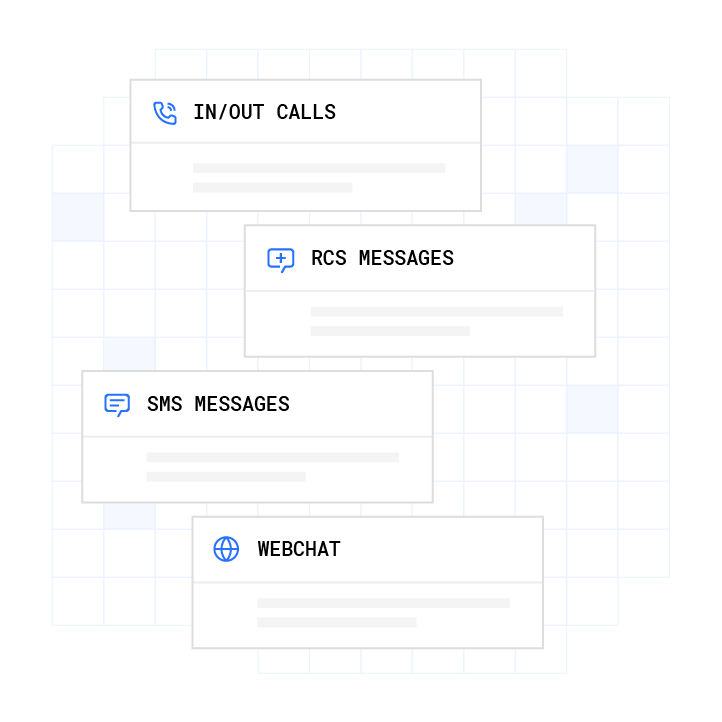
Plura’s stateful AI architecture remembers previous interactions, preferences, and outcomes across channels. A lead that received an AI SMS at 9 a.m. is the same lead when the AI voice agent calls at noon. The system skips re-introduction and repeated qualification. That continuity is only possible when all four channels share a single Stateful Conversation Database.
API-wrapped tools cannot match this structure by design. They rent the carrier layer, so they inherit the CPaaS vendor’s routing decisions, caller ID reputation, and compliance posture. Bland AI, for example, is voice-only, API-based, and lacks carrier status.4 Vapi is developer-first and requires the operator to manage telecom integration independently. Synthflow depends on Twilio and operates as a software layer without a carrier license.
Organizations deploying AI for speed to lead see response times drop from hours to seconds and connection rates increase by 3x to 5x.3 That outcome requires ownership of the path from lead capture to first contact, not rented access.
Infrastructure Gaps That Slow Real-World Speed
The infrastructure gap between carrier-owned platforms and API-wrapped resellers is an engineering difference with direct consequences for latency, pickup rates, and compliance enforcement.
Plura Connect, LLC holds FCC authority for global or limited global resale international telecommunications service but does not hold CLEC status as a facilities-based U.S. carrier. API-wrapped resellers do not hold this authority. They purchase capacity from a CPaaS provider, which adds a routing layer between the AI agent and the destination handset.
On most public CPaaS platforms, the carrier relationship belongs to the vendor, so customers buy minutes while the vendor buys routes, creating a margin floor on per-minute costs and a quality ceiling based on the vendor’s chosen routes. That ceiling is where sub-5-second response often breaks down under load.
Plura’s carrier stack enables four related capabilities that work together to support speed, reach, and compliance at scale.
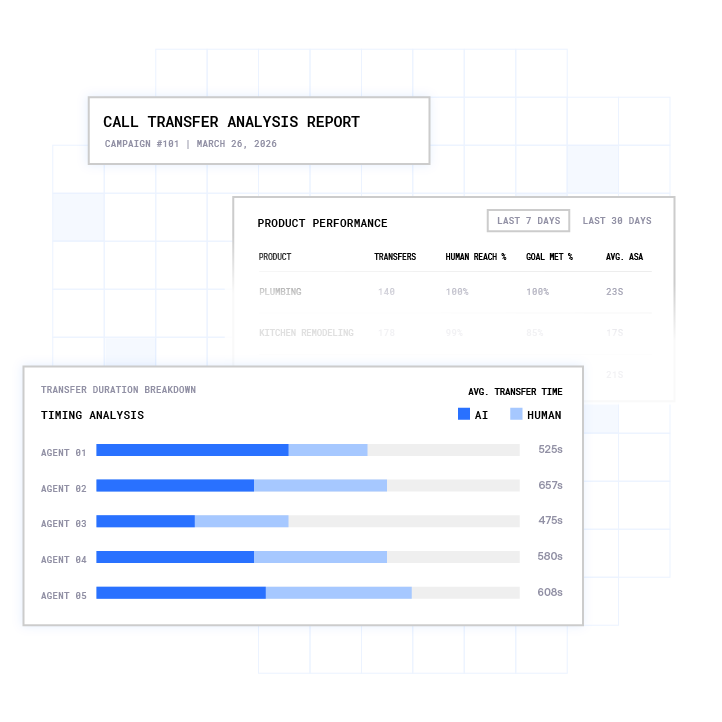
- Branded caller ID at origination: Plura issues branded caller ID directly through its FCC-licensed carrier identity, not through a reseller. Calls present with the company’s name instead of “Spam Likely,” which improves pickup rates.
- SHAKEN/STIR authentication: Every outbound voice call receives SHAKEN/STIR attestation at the carrier level, which destination carriers use to verify legitimate origination.
- Real-time DNC scrubbing: Every outbound contact is checked against federal and state Do Not Call registries before dial. The FTC states that sellers and telemarketers must access the national registry no more than 31 days before calling any consumer. Real-time per-call verification reduces the exposure that batch scrubbing creates at high volumes.
- Stateful cross-channel memory: The AI Predictive Dialer, AI SMS, AI RCS, and AI webchat all share one Stateful Conversation Database. Customer experience research suggests that many customers would abandon a brand after re-explaining an issue following a channel switch. Plura removes that failure mode by keeping context synchronized.
Full integration details, including connections to HubSpot, Salesforce, Zoho, and 50+ other tools, are available on Plura’s integrations page.
Regulatory Landscape for High-Volume AI Voice and SMS in 2026
The 2026 regulatory environment for high-volume automated communications has tightened materially. Operators should consult qualified counsel to assess their specific obligations. The following describes the current framework as of August 2026.
Federal TCPA (Telephone Consumer Protection Act, 47 U.S.C. § 227): As of 2026, the Fifth Circuit requires only prior express consent (oral or written) for all autodialed or prerecorded calls to cell phones, while other circuits generally continue to require prior express written consent for marketing calls and texts under the FCC’s longstanding rules.2 This consent framework now operates under stricter revocation requirements, with new rules effective April 11, 2025 requiring businesses to honor consent revocations within 10 business days across all channels. The enforcement mechanism remains severe, with TCPA penalties of $500 to $1,500 per violation and no cap on total liability.
FCC FNPRM (CG Docket No. 26-52, April 30, 2026): The FCC adopted a Further Notice of Proposed Rulemaking proposing expanded Know-Your-Customer obligations for originating voice service providers, including collection and verification of customer name, physical address, government-issued identification number, and alternate telephone number before provisioning service, with a proposed $2,500 per-call base forfeiture for failures.2
Robocall Mitigation Database: Every U.S. voice service provider must recertify its Robocall Mitigation Database filing annually by March 1. As of February 5, 2026, the FCC imposes a $10,000 base forfeiture for each violation involving false or inaccurate filings.
State-level rules: Tennessee HB 2408, effective July 1, 2026, imposes a 10,000 automated calls per month volume cap on businesses using ATDS (Automated Telephone Dialing Systems) for solicitations. New York City’s SHIELD debt collection rules, effective September 1, 2026, impose a frequency cap of no more than three contact attempts per account per seven-day period across all channels combined. At least 12 states have enacted mini-TCPA laws with calling-hour windows and frequency caps stricter than federal rules.
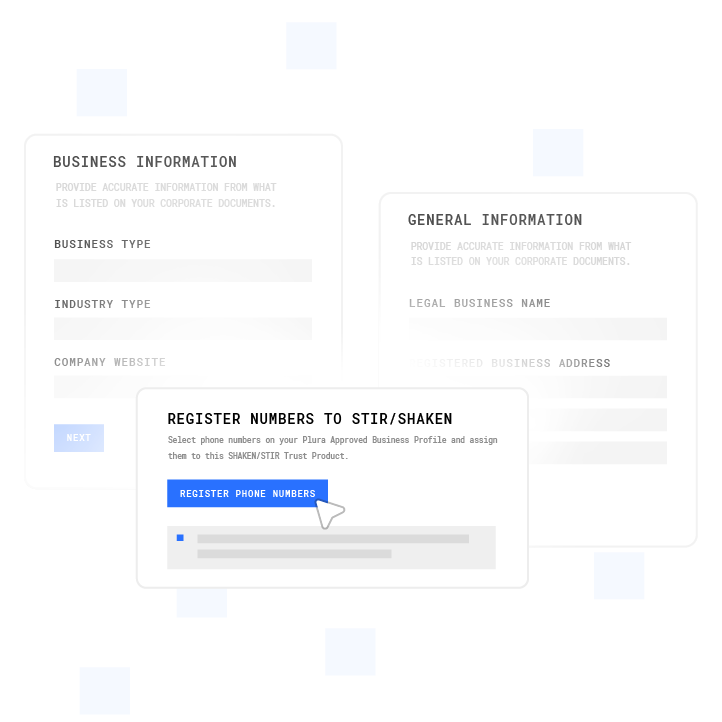
Plura’s compliance engine supports SOC 2, HIPAA, ISO certification, GDPR, SHAKEN/STIR caller ID verification, TCPA compliance, and DNC compliance.1 Immutable consent records, automated quiet-hours enforcement via time-zone detection, and one-click audit-ready exports are built into the platform. Customers remain responsible for their own regulatory obligations and certifications.
Buyer Shortlist: Matching Tools to Your Operation
The decision framework below addresses the questions buyers most commonly raise when evaluating speed to lead automation tools in 2026.
What volume threshold justifies a carrier-owned platform? Plura’s operational floor is at least 500 daily customer interactions or at least $5,000 per month in paid-media spend. Below that threshold, the ROI math usually does not close. Above it, Plura’s ROI calculator shows a 15-agent operation saving $45,600 in the first 30 days and $547,200 over 12 months by replacing human agents with Plura at 100% talk utilization.3
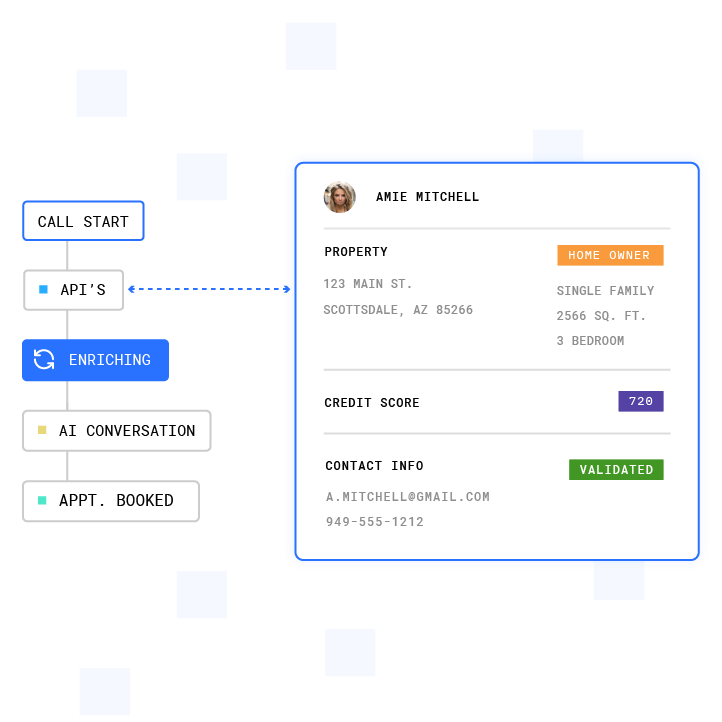
Which industries fit best? Any regulated or conversion-driven vertical hitting the volume threshold qualifies, including healthcare, insurance, financial services, legal, real estate, e-commerce, automotive, wellness, franchise networks, agencies, and government-adjacent enterprises. The Blazeo 2026 Speed-to-Lead Benchmark found that 62.5% of AI-using companies meet the under-15-minute response standard compared to 39.1% of manual-only businesses, with the gap widest in after-hours and weekend windows where over 40% of high-intent inquiries arrive.
What channel requirements should drive the decision? Operators who need voice only can evaluate API-wrapped tools. Operators who need voice plus SMS, RCS, or webchat with shared conversation memory across all four channels require a platform that owns the carrier stack. RCS messaging achieves 3x higher engagement rates than traditional SMS, so multichannel coverage becomes a conversion variable, not just a feature checkbox.
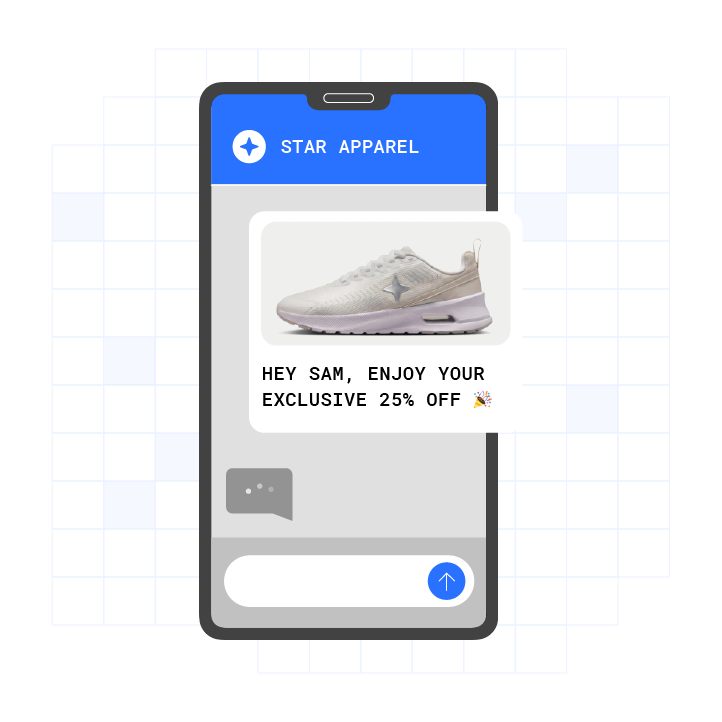
What CRM integration depth is required? Plura connects to HubSpot, Salesforce, Zoho, Go High Level, and 50+ additional tools via native integrations. Real-time data sync and trigger-based workflows are required for high-intent actions such as lead form submissions so that sales and nurture campaigns can respond automatically while interest remains fresh. API-wrapped tools typically rely on webhook or Zapier connectors, which introduce sync delays that undercut sub-5-second response targets.
What is the build and onboarding timeline? Plura deployment typically takes 2 to 4 weeks from contract to live AI conversations, compared to weeks to months of custom development for API-based builds. Every annual contract includes a 90-day opt-out window.
Walk through this decision framework for your operation in a live demo.
Frequently Asked Questions
What is the difference between a carrier-owned platform and an API-wrapped solution for speed to lead?
A carrier-owned platform holds its own FCC license and operates switching infrastructure as a regulated telecom carrier. It issues branded caller ID, enforces DNC scrubbing, and applies SHAKEN/STIR authentication before a call leaves the network. An API-wrapped solution rents capacity from a third-party CPaaS provider such as Twilio. It inherits the CPaaS vendor’s routing decisions, caller ID reputation, and compliance posture. The practical consequence is latency. API-wrapped tools add at least one routing hop between the AI agent and the destination handset, which makes consistent sub-5-second response difficult to guarantee at scale. Carrier-owned platforms remove that hop because voice originates on infrastructure they control.
How does stateful conversation memory affect lead conversion rates?
Stateful conversation memory means every channel reads from and writes to the same customer record in real time. The 9 a.m. SMS and noon voice call example in the main section illustrates the core benefit. The voice agent already knows what was discussed, what was offered, and what objections were raised. The lead does not repeat themselves. The friction of re-explaining an issue after switching channels, a known driver of customer abandonment, is eliminated entirely. Platforms without a shared stateful database treat each channel as a separate conversation, which resets qualification progress and increases the number of touches required to close.
What 2026 regulatory requirements apply to high-volume AI voice and SMS platforms?
The primary federal frameworks are the TCPA (Telephone Consumer Protection Act, 47 U.S.C. § 227), the FCC’s Robocall Mitigation Database recertification requirement (annual, due March 1), and the FCC’s April 30, 2026 Further Notice of Proposed Rulemaking on Know-Your-Customer obligations for originating voice service providers. State-level rules vary significantly. Tennessee’s HB 2408 (effective July 1, 2026) caps automated solicitation calls at 10,000 per month. Florida’s Telemarketing Act restricts automated commercial solicitation calls to an 8 p.m. local-time cutoff. At least 12 states have enacted mini-TCPA laws with calling-hour windows and frequency caps stricter than federal rules. Operators should consult qualified counsel to assess their specific obligations under each applicable framework. Plura provides the compliance infrastructure detailed earlier, and customers remain responsible for their own regulatory posture.
What volume threshold makes a carrier-owned AI platform cost-effective?
The practical floor is at least 500 daily customer interactions or at least $5,000 per month in paid-media spend. Below that threshold, the fixed infrastructure investment often does not generate enough ROI to justify the build. Above it, the economics shift materially. The 15-agent example detailed earlier demonstrates first-month savings of $45,600. Operators can run their own numbers using Plura’s ROI calculator.
How does Plura handle branded caller ID without a third-party reseller?
Plura holds its own FCC-licensed audio bridging carrier status and its own operating company number registration. Branded caller ID is issued directly through that carrier identity, not through a reseller. SHAKEN/STIR authentication runs on every outbound call, which destination carriers use to verify legitimate origination. Calls present with the company’s name rather than an unfamiliar number or a “Spam Likely” label. API-wrapped competitors cannot match this structure because they do not own the carrier. They rent from a CPaaS provider and inherit that provider’s caller ID reputation, which is shared across all of the CPaaS vendor’s customers.
Conclusion
True speed to lead in 2026 requires ownership of the carrier stack, not rented access. API-wrapped resellers rarely deliver consistent sub-5-second multichannel response, cannot issue branded caller ID at the carrier level, and cannot enforce compliance before a call leaves the network. The 2026 regulatory environment, including the FCC’s April 30 FNPRM on Know-Your-Customer obligations, state mini-TCPA laws, and the Robocall Mitigation Database recertification requirement, increases the cost of infrastructure gaps that were tolerable in prior years.
Plura AI is the only FCC-licensed carrier platform delivering sub-5-second response across voice, SMS, RCS, and webchat on 100% U.S. infrastructure, with SOC 2, HIPAA, ISO certification, GDPR, SHAKEN/STIR, TCPA compliance, and DNC compliance built into the platform as first-class layers rather than bolt-on additions.
Operators running at least 500 daily interactions or $5,000 per month in paid-media spend have two immediate next steps:
- Run your numbers through Plura’s ROI calculator to check your cost savings in real time.
- Compare plans and rates side by side.
Experience the carrier-owned infrastructure difference firsthand in a live demo.
1 Plura AI maintains SOC 2, HIPAA, ISO, and GDPR posture as part of its platform infrastructure. References to compliance frameworks in this article describe Plura’s platform capabilities and do not constitute a guarantee that any customer using Plura will themselves be compliant with applicable laws or standards. Customers remain solely responsible for their own regulatory obligations, certifications, consent management, recordkeeping, and the claims they make to their own end users. Consult qualified legal counsel for guidance specific to your use case.
2 This article describes regulatory frameworks at a general level and does not constitute legal advice. Laws and regulations vary by jurisdiction, change over time, and apply differently depending on facts and circumstances. Readers should consult qualified legal counsel before making compliance decisions.
3 Performance figures, customer outcomes, and industry statistics referenced in this article are drawn from cited third-party sources or Plura customer case studies. Individual results vary based on implementation, use case, industry, audience, and execution. Past or aggregate performance is not a guarantee of future results.
4 References to third-party products, services, companies, or research are made for informational and comparative purposes only. Plura AI is not affiliated with, endorsed by, or sponsored by any third party named in this article unless explicitly stated. Trademarks and product names referenced remain the property of their respective owners.
This article is provided for informational purposes only and reflects Plura AI’s understanding at the time of publication. Product capabilities, integrations, and specifications are subject to change. For the most current information, visit plura.ai.
This article was produced with the assistance of AI tools and reviewed by Plura AI prior to publication.