
Written by: Matt Beucler, CEO, Plura AI
Key Takeaways
- Speed to lead is the time between a prospect’s first signal of interest and your team’s first contact. The industry average exceeds 40 hours, while Plura AI cuts that gap to under 5 seconds across voice, SMS, RCS, and webchat.
- Responding within 5 minutes makes leads up to 100 times more likely to connect, and sub-5-second AI outreach is the only architecture that consistently hits this window without human queues.
- Legacy human queues, offshore BPOs, and third-party CPaaS AI tools each struggle to reach sub-5-second benchmarks at scale because of cost, regulatory exposure, or lack of carrier-level control and cross-channel memory.
- A seven-step workflow that includes consent auditing, real-time DNC scrubbing, time-zone enforcement, webhook integration, no-code conversation design, branded caller ID, and KPI tracking moves operations from 47-hour lags to sub-5-second outreach.
- Plura AI delivers an owned FCC-licensed carrier stack and a Stateful Conversation Database that together support compliant, sub-5-second outreach. Book a live demo to see the full stack in action.
Speed to Lead as a Revenue Lever in 2026
Speed to lead measures how fast your operation reaches a prospect after they raise their hand. Contacting a lead within 5 minutes makes them up to 100 times more likely to connect than waiting 30 minutes, and responding within 60 seconds lifts conversions by 391%.3 Despite those figures, 63% of B2B companies never respond to inbound leads at all.
The 5-minute rule is the widely cited threshold below which qualification probability stays high. Lead conversion rates drop 10 times after the first 5 minutes. Sub-5-second AI outreach is the only architecture that hits that window on every lead, at every hour, across every channel, without a human queue in the path.
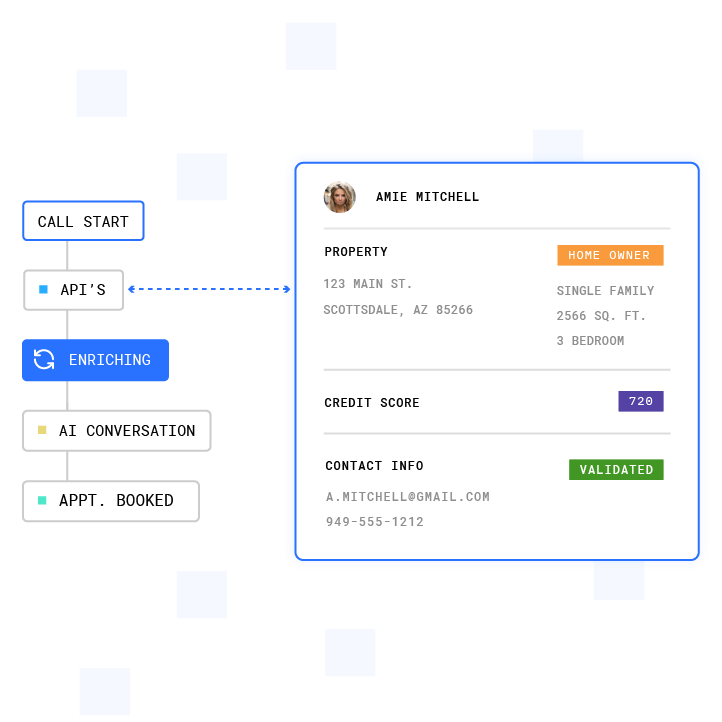
Operators need four baseline elements before deploying any speed-to-lead system. They need a CRM or lead source that fires a webhook on submission, documented consent records tied to each contact, a scrubbed DNC list, and time-zone data for every number. Without those elements, no outreach system, AI or human, can operate inside the regulatory guardrails described later in this article.
Why Current Contact-Center Models Miss Sub-5-Second Response
Three categories of infrastructure dominate the market today, and none of them reaches sub-5-second response at scale.
Onshore human queues carry a cost structure that makes the math difficult: payroll, taxes, benefits, commissions, real estate, and 35-45% annual agent turnover. U.S. contact-center spend runs $25-$50 billion annually, with 60-70% of operating costs locked into agent labor. Humans work one channel at a time, need sleep and breaks, and cannot scale into peak season without months of advance hiring.
Offshore BPOs (Business Process Outsourcing firms) solved the cost problem for two decades through wage arbitrage. That model now faces regulatory pressure from both federal and state authorities. The FCC’s March 27, 2026 NPRM (CG Docket No. 26-52) seeks comment on limiting the percentage of offshore customer-service calls and restricting offshore handling of sensitive consumer data including Social Security numbers, bank account information, and password resets. State laws in New York, New Jersey, Connecticut, Missouri, and Florida have already moved ahead of federal action by restricting offshore handling of medical, financial, and consumer data. This dual-layer regulatory environment means every offshore contract a covered entity holds is now a compliance liability worth reviewing with qualified counsel.
Third-party-CPaaS (Communications Platform as a Service) AI wrappers appear to offer a shortcut. Most do not. They route voice through Twilio or another third-party carrier, cannot issue branded caller ID at the carrier level, cannot enforce real-time DNC scrubbing at origination, and cannot hold conversation context across more than a single channel.4 For a 50-seat equivalent contact center, traditional offshore operations cost $35,000-$50,000 monthly versus $8,000-$15,000 monthly for an AI contact center, but only when the AI platform owns the carrier stack rather than renting it.
Seven Practical Steps to Reach Sub-5-Second AI Outreach
- Audit your lead sources and consent records. The goal is to confirm every inbound channel fires a webhook and every contact has documented prior express written consent. Use a simple rule: no consent record, no outreach. A common failure occurs when consent is captured on a web form but not tied to the phone number in the CRM.
- Scrub your list against federal and state DNC registries. The goal is to block non-compliant numbers before the first dial attempt. Scrubbing must run in real time, not in a nightly batch. Batch scrubbing often misses numbers added to the registry between runs.
- Configure time-zone detection and quiet-hours enforcement. The goal is to apply federal and state calling-window restrictions automatically on every contact. Time-zone logic must resolve to the contact’s local time, not the operator’s. Defaulting to the operator’s time zone can create violations of state-specific restrictions.
- Connect your CRM or lead source to the AI outreach platform via webhook. The goal is to trigger outreach within 5 seconds of lead submission. Webhook latency plus dialer latency must total under 5 seconds. Multi-system handoffs often add 30-90 seconds of queue latency before the first dial.
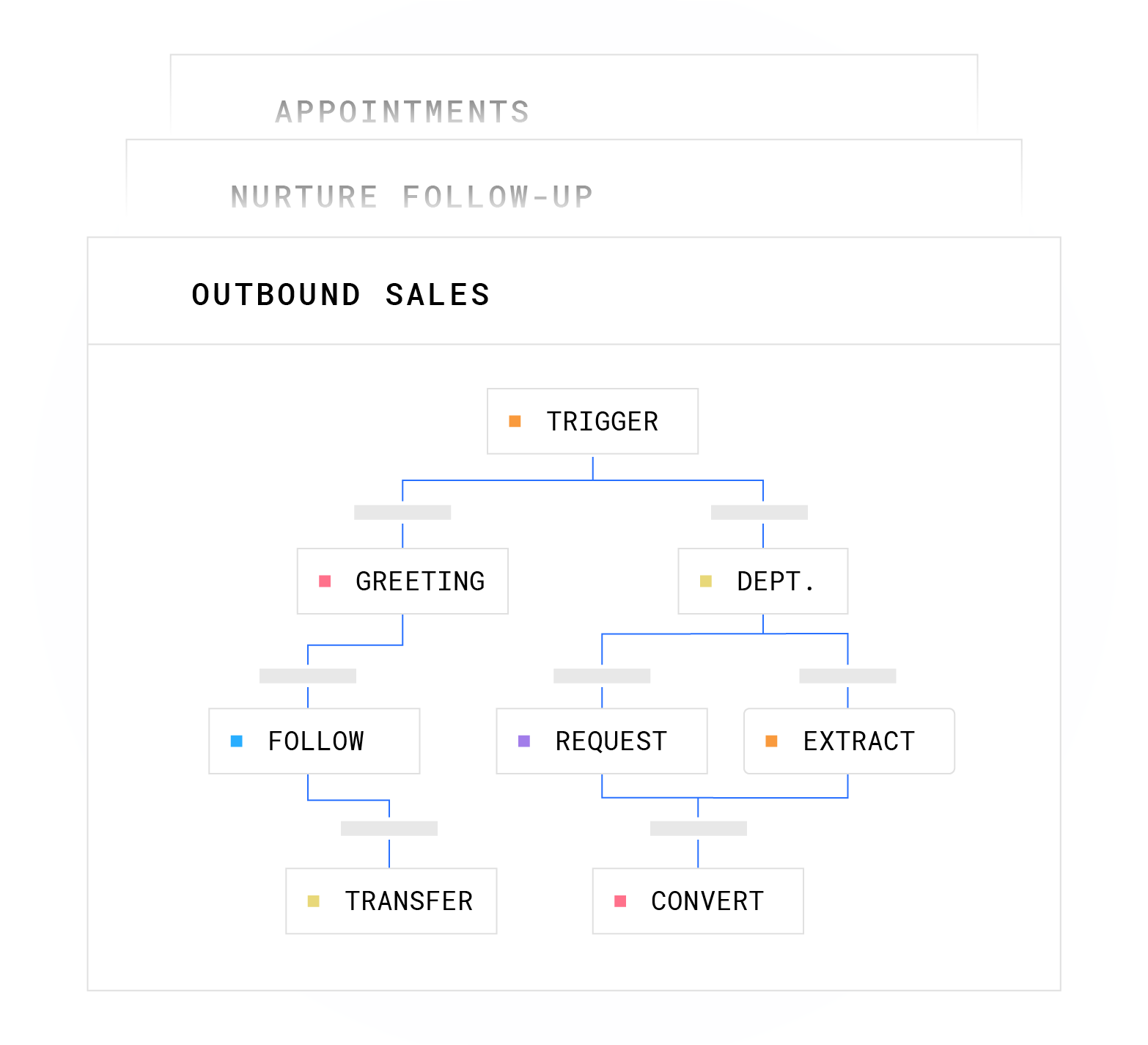
- Build your conversation workflow on a no-code canvas. The goal is to define greeting, qualification gates, sensitive-data redaction, escalation rules, and transfer logic before go-live. Every node should reference the Stateful Conversation Database so cross-channel context stays intact. Teams often fail by building voice and SMS flows as separate products with separate memories.
- Enable branded caller ID and STIR/SHAKEN authentication. The goal is to present the company name and call reason on every outbound dial to lift pickup rates. Branded caller ID needs to be issued at the carrier level, not through a third-party reseller. Calls that present as “Spam Likely” usually come from platforms that rent caller ID reputation from a shared CPaaS pool.
- Instrument your KPIs and run a pilot on a subset of real leads. The goal is to validate first-response time, contact rate, and conversion rate before full deployment. Pilots should use live traffic, not synthetic test calls. Launching at full volume without a baseline measurement period hides performance gaps.
Run your numbers through Plura’s calculator to check your ROI in real time.
Owned-Carrier, Stateful-Memory Architecture vs Legacy Models
Legacy human queues deliver consistent quality when staffed correctly, but they scale linearly, so more volume requires proportional headcount. Plura’s total cost of ownership runs $300,000-$700,000 per year, replacing the traditional $4M-$7M contact-center cost structure on equivalent volume. Human agents run at roughly 40% talk utilization because of breaks, training, and administrative work. Plura agents run at 100% talk utilization with no overhead.
Offshore BPO handoffs introduce routing latency, accent and cultural friction that affects pickup rates, and the regulatory exposure described above. The FCC NPRM’s proposed limits on offshore handling of sensitive consumer data apply regardless of whether the BPO uses human agents or AI tools running on foreign infrastructure.
Third-party-CPaaS AI wrappers share the same underlying telecom and model layers as one another because they all rent from the same carriers. They cannot issue branded caller ID without going through a reseller, cannot enforce real-time DNC scrubbing at origination, and may face future constraints if model hosting or data storage sits outside the United States. A customer who texts at 9 a.m. often has to re-explain themselves when the call comes at noon because the voice agent and the SMS agent are different products with different memories.
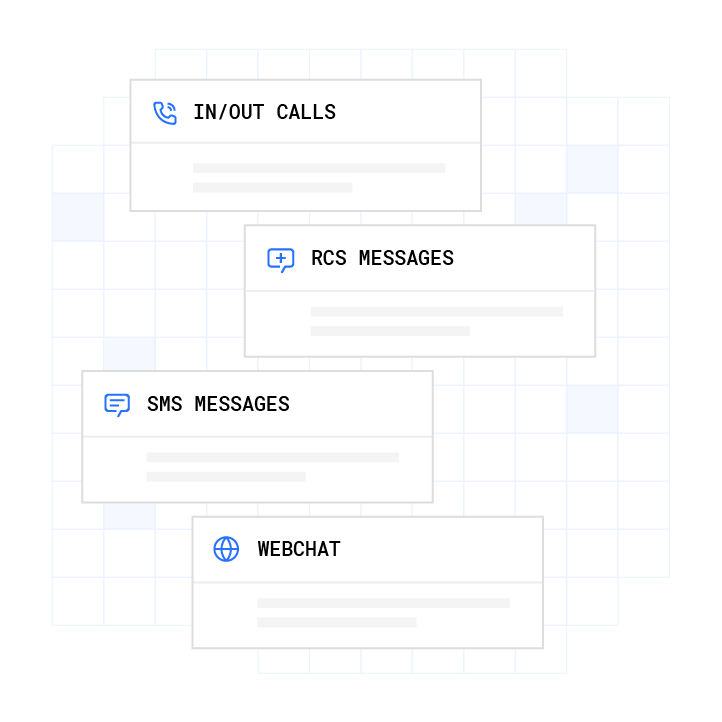
Plura is its own FCC-licensed audio bridging carrier. Voice originates on Plura’s domestic infrastructure. Branded caller ID is issued at the carrier level. The AI Voice, AI SMS, AI RCS, and AI Webchat agents all share a single Stateful Conversation Database, so every channel inherits the full memory of every prior touchpoint. AI contact centers provide 24/7/365 availability that no human-staffed model can match without proportional cost increases.
Regulatory Landscape for Automated Lead Outreach in 2026
Operators running automated outreach in 2026 work inside a layered regulatory environment. The following is a neutral description of the frameworks involved. Consult qualified legal counsel before designing or modifying any outreach program.
The TCPA (Telephone Consumer Protection Act, 47 U.S.C. § 227) addresses automated calls and texts to U.S. phone numbers.2 The FCC’s February 2024 declaratory ruling explicitly includes AI-generated voices in the definition of “artificial or prerecorded voice” under the TCPA, so AI voice outreach to wireless numbers involves prior express written consent. 2026 TCPA class settlements have included $9.95M (Gen Digital), up to $5.975M (Wilshire), and lower amounts such as $1.32M–$1.4M, with class-action filings up 23–40% year-over-year through April.4
The DNC (Do Not Call) Registry requires list scrubbing at least every 31 days, with DNC violations carrying penalties up to $43,792 per call.2 HIPAA (45 CFR Parts 160, 162, 164) addresses protected health information in healthcare contact center deployments. SOC 2 (AICPA Trust Services Criteria) covers infrastructure security controls. The FCC NPRM (CG Docket No. 26-52) proposes new restrictions on offshore data handling and a mandatory right-to-transfer for consumers. The FCC’s revocation-of-consent rule, scheduled to activate January 31, 2027, will treat an opt-out from one communication type as an opt-out from all robocall and robotext traffic from that caller.
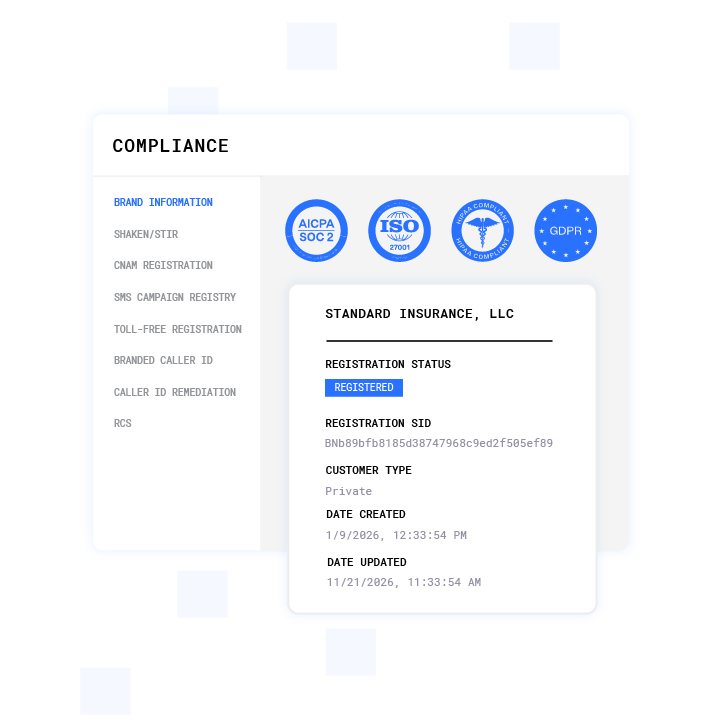
Plura supports compliance through a built-in compliance engine that includes real-time DNC scrubbing, TCPA consent logging, STIR/SHAKEN caller-ID authentication, HIPAA-aligned encryption, SOC 2 infrastructure controls, ISO certification, and 50-plus state rule-set enforcement.1 Customers remain responsible for their own regulatory obligations and the claims they make to their end users.
KPIs That Show Speed-to-Lead Gains Week Over Week
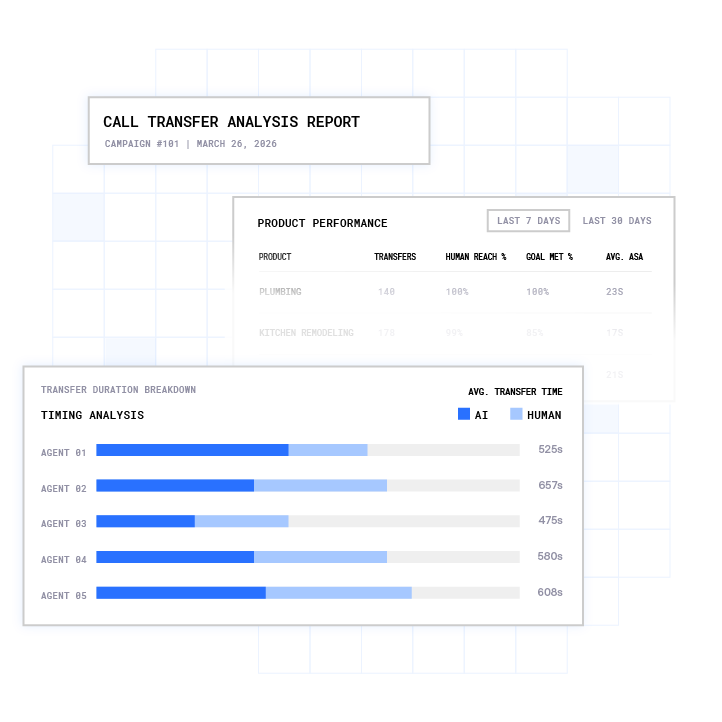
First-response time is the primary metric and measures the elapsed seconds between lead submission and first outbound contact attempt. Target under 5 seconds for AI-powered deployments.
Contact rate measures the percentage of outbound attempts that result in a live conversation. Branded caller ID and STIR/SHAKEN authentication directly affect this number by reducing “Spam Likely” labels. Speed alone does not guarantee results, so contact rate becomes the second critical metric.
Conversion rate tracks the percentage of contacted leads that reach a defined qualification threshold or downstream action. Once you have made contact, the quality of that conversation determines whether the lead qualifies. Organizations deploying AI for speed to lead see connection rates increase by 3 to 5 times versus baseline human-queue deployments.
Cost per qualified lead is the total outreach cost divided by leads that meet qualification criteria. Plura reduces cost per qualified lead from a traditional range of $85-$200 to $25-$60.3
90-day ROI is the net savings from reduced agent labor and increased conversion revenue over the first 90 days. The default scenario on Plura’s calculator shows $45,600 in 30-day savings for a 15-agent operation, stacking to $547,200 over 12 months.
Book a live demo with Plura to walk through your current KPI baseline and model the improvement.
Frequently Asked Questions
What is the 5-minute rule for leads, and does it still apply in 2026?
The 5-minute rule refers to the threshold below which lead qualification probability stays high. The 100x connection-rate advantage described earlier applies specifically to that 5-minute window, and the 10x conversion drop-off mentioned earlier reflects performance after that window closes. The rule still applies in 2026, and sub-5-second AI outreach is the only architecture that hits it consistently across inbound channels without a human queue in the path.
How does a Stateful Conversation Database improve speed to lead?
A Stateful Conversation Database stores every interaction across voice, SMS, RCS, and webchat and keys it to a single customer token. When a lead texts at 9 a.m. and the AI calls at noon, the voice agent already knows what was said, what was offered, and what objections were raised. This removes the re-introduction latency that adds friction to every subsequent touchpoint and allows the AI to move directly to qualification rather than starting from scratch on each channel.
Can AI outreach platforms handle TCPA and DNC compliance automatically?
Platforms vary significantly in how they handle compliance. Plura’s compliance engine runs real-time DNC scrubbing against federal and state registries before every dial, logs TCPA consent records with timestamps, enforces quiet-hours rules through time-zone detection, and exports audit-ready reports on demand. Customers are responsible for their own regulatory obligations. Consult qualified legal counsel to confirm your outreach program’s compliance posture under TCPA, DNC, and applicable state laws.
Why does owning an FCC-licensed carrier stack matter for speed to lead?
Owning the carrier stack means voice originates on the platform’s own FCC-licensed infrastructure rather than routing through a third-party CPaaS like Twilio. This enables branded caller ID issuance at the carrier level, STIR/SHAKEN authentication at origination, real-time DNC scrubbing before the dial attempt, and compliance controls that sit inside the infrastructure rather than bolted on afterward. Platforms that rent from a third-party carrier inherit that carrier’s caller ID reputation and cannot issue branded identity directly, which affects pickup rates and compliance posture.
What is the ROI timeline for deploying AI-powered speed-to-lead infrastructure?
Plura delivers 3 times average ROI in 90 days, 47% average pipeline growth, and 90% faster lead-response time than baseline. The default calculator scenario for a 15-agent operation shows $45,600 in savings in the first 30 days, $547,200 over 12 months, and $2,736,000 over 60 months. Every Plura annual contract includes a 90-day opt-out window if the deployment is not delivering. Review the full model at plura.ai/pricing.
Conclusion: Turning Sub-5-Second Response Into a System
The seven-step workflow above addresses each failure point in legacy infrastructure. Consent auditing strengthens TCPA posture, real-time DNC scrubbing closes batch-window gaps, and time-zone enforcement handles state-specific restrictions. Webhook integration removes queue latency, no-code conversation design enables rapid deployment, carrier-level caller ID lifts pickup rates, and KPI instrumentation validates performance before full rollout.
Each legacy infrastructure model fails at a different point: human queues on cost and latency, offshore BPOs on regulatory exposure, and CPaaS wrappers on carrier-level control and cross-channel memory.
Plura AI is the only platform that owns both the FCC-licensed carrier stack and the Stateful Conversation Database required to execute all seven steps on a single infrastructure. Voice originates on Plura’s domestic carrier. Compliance controls are enforced at origination. Every channel shares the same conversation memory. A 100% U.S. infrastructure by architecture removes offshore exposure under current and proposed federal and state rules.
Book a live demo with Plura to see the full stack in action.
1 Plura AI maintains SOC 2, HIPAA, ISO, and GDPR posture as part of its platform infrastructure. References to compliance frameworks in this article describe Plura’s platform capabilities and do not constitute a guarantee that any customer using Plura will themselves be compliant with applicable laws or standards. Customers remain solely responsible for their own regulatory obligations, certifications, consent management, recordkeeping, and the claims they make to their own end users. Consult qualified legal counsel for guidance specific to your use case.
2 This article describes regulatory frameworks at a general level and does not constitute legal advice. Laws and regulations vary by jurisdiction, change over time, and apply differently depending on facts and circumstances. Readers should consult qualified legal counsel before making compliance decisions.
3 Performance figures, customer outcomes, and industry statistics referenced in this article are drawn from cited third-party sources or Plura customer case studies. Individual results vary based on implementation, use case, industry, audience, and execution. Past or aggregate performance is not a guarantee of future results.
4 References to third-party products, services, companies, or research are made for informational and comparative purposes only. Plura AI is not affiliated with, endorsed by, or sponsored by any third party named in this article unless explicitly stated. Trademarks and product names referenced remain the property of their respective owners.
This article is provided for informational purposes only and reflects Plura AI’s understanding at the time of publication. Product capabilities, integrations, and specifications are subject to change. For the most current information, visit plura.ai.
This article was produced with the assistance of AI tools and reviewed by Plura AI prior to publication.