

Written by: Matt Beucler, CEO, Plura AI
Key Takeaways for High-Volume Teams
- Replace manual SDR queues with AI agents that respond to inbound leads in under 5 seconds to capture the 391% conversion lift before pipeline stalls.
- Deploy branded caller ID with SHAKEN/STIR verification and real-time DNC scrubbing so calls connect and outreach supports TCPA compliance at the carrier level.
- Run all outreach on 100% U.S. infrastructure to reduce offshore regulatory exposure under FCC and state data-handling rules.
- Swap static forms for conversational AI webchat that enriches leads in real time, maintains shared memory across voice, SMS, RCS, and webchat, and routes qualified leads instantly.
- See Plura AI in a live demo to watch sub-5-second response, shared channel memory, and compliance-supported workflows on your own lead volume.
Cut Response Time to Lift Lead Conversion
1. Eliminate the response-time gap with sub-5-second AI contact. Leads contacted within 1 minute are 391% more likely to convert than those contacted after 24 hours, and qualification rates drop 80% after five minutes.3 An AI agent that fires across voice, SMS, and webchat the moment a form is submitted closes that gap. Plura’s AI agents initiate contact in under 5 seconds, 24/7, with no human ramp time and no queue.
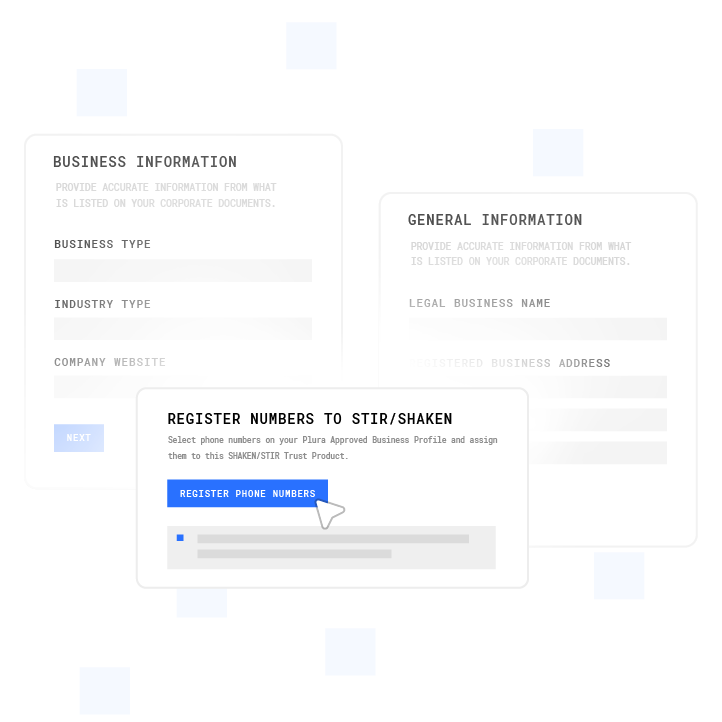
2. Use branded caller ID so qualified calls actually connect. 77% of companies take longer than 5 minutes to reply to leads, and many calls never connect because they display as “Spam Likely.” Plura issues branded caller ID directly through its own FCC-licensed audio bridging carrier and applies SHAKEN/STIR caller ID verification on every outbound call. Calls present with the company name and call reason instead of an unknown number, which improves answer rates and protects brand reputation.
3. Enforce real-time DNC scrubbing before every dial. Over 258 million phone numbers are registered on the National Do Not Call registry, which creates a large compliance surface area. TCPA violations can cost $500 to $1,500 per text or call, so a single scrubbing failure can trigger four-figure penalties.2 Plura’s compliance engine checks every number against federal and state DNC registries before dial, with immutable consent records and automated quiet-hours enforcement by time zone. This design supports TCPA and DNC compliance at the infrastructure level.
4. Run all outreach on 100% U.S. infrastructure. The FCC’s Notice of Proposed Rulemaking (NPRM, CG Docket No. 26-52) describes potential caps on offshore customer-service calls and restrictions on offshore handling of sensitive consumer data.2 State laws in New York, New Jersey, Connecticut, Missouri, and Florida already restrict offshore handling of medical, financial, and consumer data. Plura’s voice origination, model hosting, data storage, and call recording all sit on domestic infrastructure, which reduces offshore regulatory exposure by architecture rather than by policy.
See sub-5-second response in a live Plura demo and map it against your current lead volume.
Capture More Leads at the Top of the Funnel
5. Replace static web forms with conversational AI webchat. Web forms capture fields, while AI webchat captures intent. Plura’s AI Webchat reads the visitor’s page context in real time, tailors qualification questions to the specific offer, and routes qualified leads to a calendar booking or live transfer inside the same session. Cost per qualified lead often drops from $85–$200 with traditional outreach to $25–$60 with AI-driven engagement3, which frees budget for additional media spend or headcount.
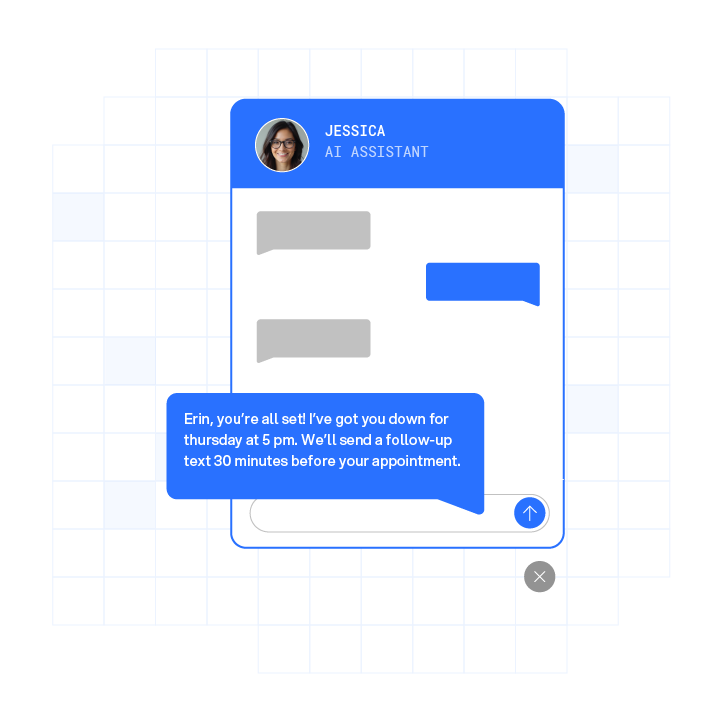
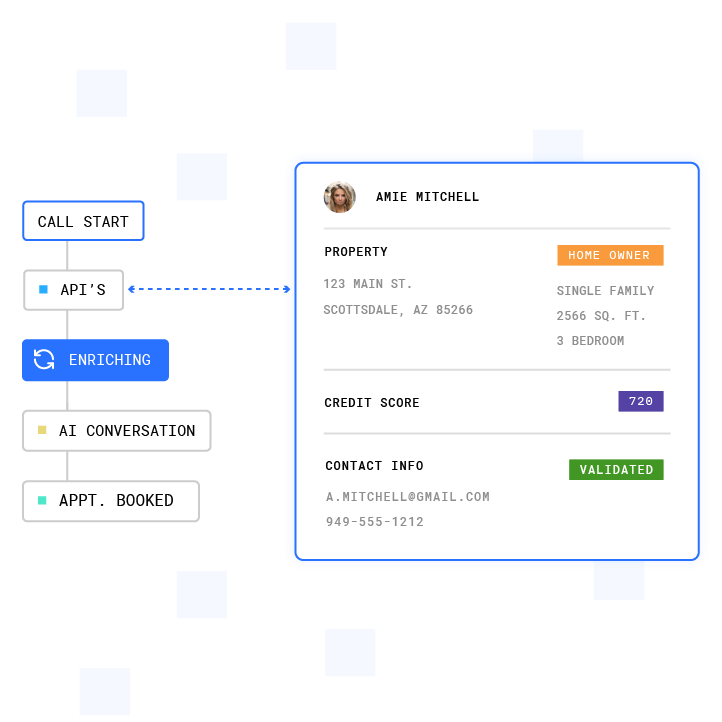
6. Enrich leads in real time during the conversation. Post-hoc list scoring describes who the lead was after the fact. Real-time enrichment tells the AI who it is talking to in the moment. Plura’s AI Lead Intelligence layer pings more than 30 data sources during the live conversation, covering IP data, email validation, business firmographics, and intent signals. Qualification happens on the first touch instead of in a downstream batch job.
Run your own numbers through Plura’s ROI calculator to estimate pipeline lift and cost per lead impact.
7. Build cross-channel follow-up cadences with shared memory. McKinsey research indicates 80% of sales require five or more follow-up contacts, while 44% of reps give up after one.4 Plura’s Stateful Conversation Database keys every interaction to a customer token across voice, SMS, RCS, and webchat. An AI agent that sent an SMS at 9 a.m. can pick up the call at noon already knowing what was discussed, what was offered, and which objections came up. No channel starts from zero, which keeps follow-up consistent without adding headcount.
8. Score and route leads with AI instead of spreadsheets. Programs that combine lead scoring with AI intent signals can materially improve MQL-to-SQL conversion, and automated routing reduces time from lead capture to first sales touch by 80%. Plura’s AI Conversation Intelligence analyzes every interaction to surface which scripts close, which objections recur, and which routing paths convert. That signal feeds back into the workflow continuously so routing improves over time.
Three High-Impact Actions to Lift Conversion
The three highest-leverage actions are responding in under 5 seconds, maintaining stateful memory across every channel, and enforcing compliance at the carrier level before each contact. Strategies 9 through 12 show how to operationalize each action in day-to-day operations.
9. Activate AI voice for inbound qualification and warm transfer. 62.5% of AI-using companies meet the under-15-minute response standard, compared to 39.1% of manual-only businesses. Plura’s AI Voice agents handle inbound calls on its own FCC-licensed carrier, run the qualification workflow from greeting to handoff, and warm-transfer to a U.S. agent when a workflow gate triggers. No third-party CPaaS (Communications Platform as a Service) sits in the path, which keeps control of quality and compliance with your team.
10. Use RCS to close actions inside the message thread. RCS delivers branded, interactive messages with in-message documents via DocuSign or PandaDoc, in-message payments via Stripe, and personalized AI-rendered video, all inside the native message thread on modern Apple and Android devices. Leads complete contract signings, payment requests, and appointment confirmations without leaving the conversation. Plura’s AI RCS shares the same Stateful Conversation Database as voice and SMS, so every channel inherits full prior context.
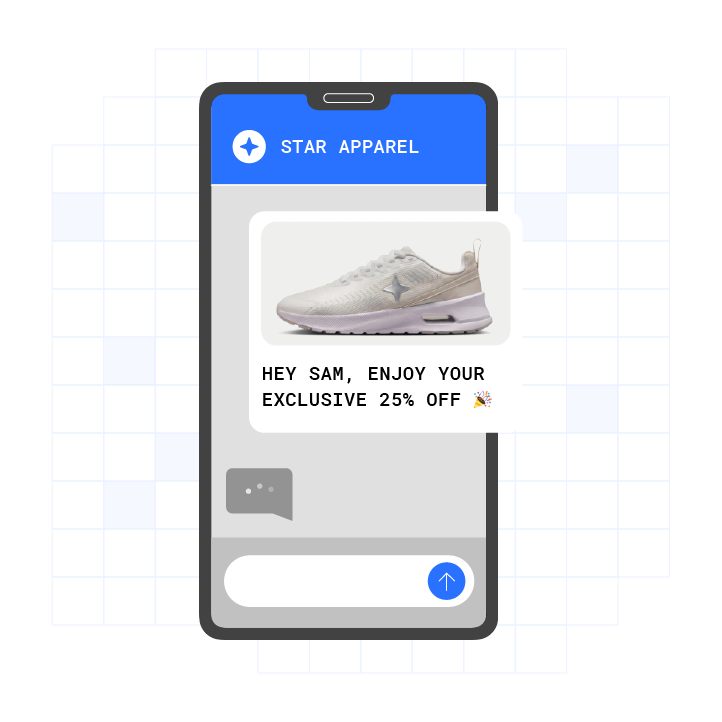
11. Reduce appointment no-shows with automated multi-touch reminders. No-shows represent a direct conversion loss after qualification is complete. Plura’s AI agents run automated reminder sequences across voice, SMS, and RCS, and healthcare operators using the platform report up to 40% improvement in no-show rates. The same stateful memory that drives qualification also drives reminder personalization, referencing the specific appointment, provider, and prior conversation.
12. Consolidate all channel activity into a single audit-ready trail. 2026 YTD TCPA filings are up approximately 26.8% compared to 2025 levels, which means more businesses are facing litigation. Defending against TCPA complaints requires auditable records including the exact date, time, and method of consent, yet conversations often span voice, SMS, RCS, and webchat across multiple systems. Plura’s Unified Inbox consolidates voice transcripts, SMS threads, RCS exchanges, and webchat sessions per customer in one screen. The compliance dashboard exports audit-ready reports in one click, with timestamped, immutable consent records across every channel. Plura supports TCPA, DNC, HIPAA, SOC 2, and ISO-related compliance needs at the infrastructure level, while customers remain responsible for their own regulatory obligations.1
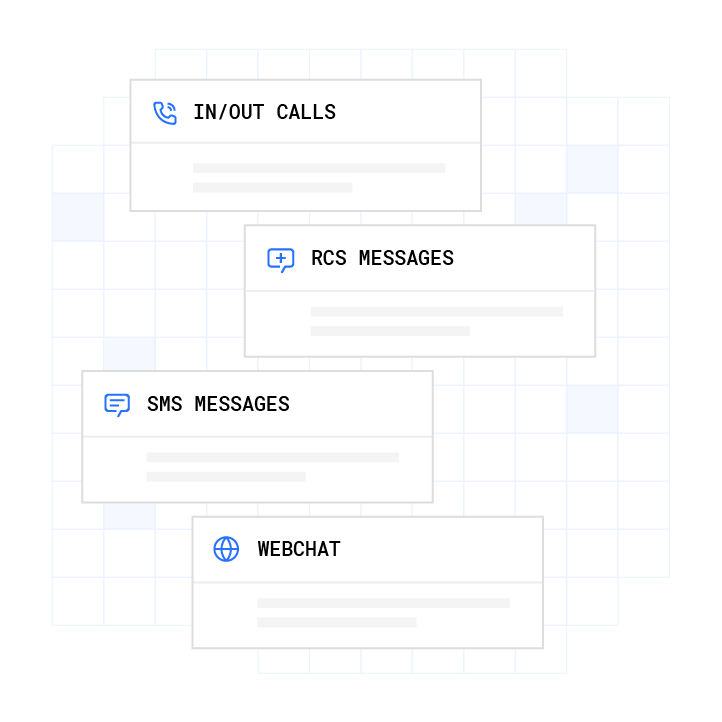
Walk through Plura’s compliance architecture in a live demo tailored to your vertical.
AI Agent Response vs. Manual SDR Queue
| Dimension | AI Agent (Plura) | Manual SDR Queue | Performance Gap |
|---|---|---|---|
| Response Time | Under 5 seconds, 24/7 | 47+ hour industry standard | Captures the conversion lift described earlier for sub-60-second response |
| Channel Memory | Stateful Conversation Database shared across voice, SMS, RCS, and webchat, so every channel inherits full prior context | Siloed by channel and rep, so customers repeat context on each contact | Stateful systems support the 80% of sales that require 5+ follow-up contacts |
| Compliance Layer | Real-time DNC scrubbing, TCPA compliance support, SHAKEN/STIR verification, SOC 2, HIPAA, ISO certification, and 50+ state rule sets enforced before each contact1 | Manual list scrubbing, with compliance dependent on individual rep behavior and periodic audits | TCPA class actions are up 26.8% YTD 2026, and manual processes carry exposure to four-figure penalties per violation |
| Cost per Qualified Lead | Lower cost per lead based on the AI-driven ranges outlined in Strategy 5 | Higher cost per lead consistent with traditional outreach ranges in Strategy 5 | 30-day savings of $45,600 in a 15-agent scenario at default calculator inputs |
Frequently Asked Questions
How long does it take to see conversion improvements after deploying Plura?
Most operators see measurable changes in contact rate and pipeline velocity within the first 30 days because response time shifts immediately when AI agents replace manual queues. Plura’s published benchmark is 3x average ROI in 90 days across its customer base.3 Every annual contract includes a 90-day opt-out window, so the deployment timeline stays accountable from day one. Complex conversation workflows, such as multi-step intake surveys, take longer to tune but typically reach production within one to two months of onboarding.
What are the prerequisites for deploying AI agents at this scale?
The practical threshold is at least 500 daily customer interactions or at least $5,000 per month in paid-media spend. Below that volume, the ROI math often does not justify the platform depth. On the technical side, Plura integrates with more than 50 tools across CRM, calendar, attribution, and payment categories, including HubSpot, Salesforce, Zoho, Calendly, and Stripe4, so most operators can keep existing systems. Onboarding begins with a discovery audit of current call economics and existing scripts, followed by an overnight build of a conversation mockup before any production workflow goes live.
What does Plura cost, and how does it compare to a human contact center?
Plura offers three pricing tiers: Multi at $5,000 per month, Agency at $7,500 per month, and Enterprise at custom pricing, all on annual contracts billed monthly with a 90-day opt-out window. Agent build fees run $2,500 to $2,750 per agent. For context, a 15-agent human operation at $20 per hour with standard taxes, benefits, and commissions costs approximately $60,000 per month at 40% talk utilization. The equivalent Plura deployment costs approximately $14,400 per month at 100% talk utilization. Full pricing details are available on Plura’s pricing page.
How does Plura support compliance across TCPA, DNC, HIPAA, and state-level rules?
Plura’s compliance engine functions as a core layer of the platform, not a bolt-on. Every outbound contact is checked against federal and state DNC registries in real time before dial, and consent records are timestamped and immutable. Quiet-hours rules enforce automatically through time-zone detection. HIPAA-aligned encryption, access controls, and audit logging cover protected health information across all four channels. SOC 2 and ISO certification apply to the underlying infrastructure, and more than 50 state-specific rule sets are pre-loaded and applied automatically. The compliance dashboard exports audit-ready reports in one click. Customers remain responsible for their own regulatory obligations and should consult qualified counsel on their specific compliance posture.
What happens when a lead asks something the AI cannot handle?
Plura’s workflows include explicit escalation guardrails. When a customer’s response falls outside the defined conversation paths, the AI warm-transfers the call to a U.S. agent, flags the conversation in the Unified Inbox, or routes to a designated escalation queue. Sensitive data including protected health information, payment data, and personally identifiable information is redacted at the field level and routed through HIPAA-aligned channels. The AI does not improvise on outcomes that carry compliance or business risk.
How does Plura handle the no-show problem after a lead is qualified?
No-shows represent conversion loss after qualification is complete, which makes them a high-value target for automation. Plura’s AI agents run multi-touch reminder sequences across voice, SMS, and RCS, drawing on the same Stateful Conversation Database that drove the original qualification. Healthcare operators using the platform see the no-show improvement described in Strategy 11. The reminder content is personalized to the specific appointment and prior conversation, not a generic broadcast message. More detail on healthcare-specific deployment patterns is available on Plura’s healthcare industry page.
Updated July 2026
Conclusion: Treat Conversion as an Infrastructure Problem
Slow lead conversion reflects an infrastructure gap, not just a scripting issue. The industry standard for first contact on an inbound lead is 47+ hours, 77% of companies take longer than 5 minutes to reply to leads, and growing exposure under TCPA, DNC, and state onshoring laws all trace back to stacks built around human queues that cannot match modern speed, scale, or consistency requirements.
The 12 strategies above share a common architecture: respond in under 5 seconds, maintain stateful memory across every channel, and enforce compliance at the carrier level before each contact. Plura AI delivers all three on a single platform, running on its own FCC-licensed carrier with 100% U.S. infrastructure, SOC 2, HIPAA, and ISO certification, SHAKEN/STIR caller ID verification, TCPA compliance support, and DNC compliance support built into the operating model.
The economics stay transparent. A 15-agent operation spending $60,000 per month on human agents drops to $14,400 per month with Plura at equivalent output. Over 12 months, that shift represents $547,200 in savings before any pipeline lift. The full model is available in Plura’s ROI calculator.
Compare plans and rates on Plura’s pricing page, or schedule a live demo with Plura to see the full stack running on your specific use case.
1 Plura AI maintains SOC 2, HIPAA, ISO, and GDPR posture as part of its platform infrastructure. References to compliance frameworks in this article describe Plura’s platform capabilities and do not constitute a guarantee that any customer using Plura will themselves be compliant with applicable laws or standards. Customers remain solely responsible for their own regulatory obligations, certifications, consent management, recordkeeping, and the claims they make to their own end users. Consult qualified legal counsel for guidance specific to your use case.
2 This article describes regulatory frameworks at a general level and does not constitute legal advice. Laws and regulations vary by jurisdiction, change over time, and apply differently depending on facts and circumstances. Readers should consult qualified legal counsel before making compliance decisions.
3 Performance figures, customer outcomes, and industry statistics referenced in this article are drawn from cited third-party sources or Plura customer case studies. Individual results vary based on implementation, use case, industry, audience, and execution. Past or aggregate performance is not a guarantee of future results.
4 References to third-party products, services, companies, or research are made for informational and comparative purposes only. Plura AI is not affiliated with, endorsed by, or sponsored by any third party named in this article unless explicitly stated. Trademarks and product names referenced remain the property of their respective owners.
This article is provided for informational purposes only and reflects Plura AI’s understanding at the time of publication. Product capabilities, integrations, and specifications are subject to change. For the most current information, visit plura.ai.
This article was produced with the assistance of AI tools and reviewed by Plura AI prior to publication.