

Written by: Matt Beucler, CEO, Plura AI
Key Takeaways for Contact, Marketing, and Revenue Teams
- Sub-5-second first contact via AI agents on 100% U.S. infrastructure is emerging as the 2026 speed-to-lead benchmark.5
- Responding within 5 minutes makes leads up to 100x more likely to connect, while 60-second responses lift conversions by 391%.3
- This 8-step workflow covers channel mapping, instant acknowledgment automation, smart routing, omnichannel cadence, compliance checks, unified inbox monitoring, KPI reviews, and continuous iteration.
- Plura AI’s owned-carrier platform delivers branded caller ID, real-time DNC/TCPA scrubbing, and stateful memory across voice, SMS, RCS, and webchat while cutting TCO from millions to hundreds of thousands.1
- Teams ready to deploy sub-5-second lead response can book a live demo with Plura AI today.
Why Sub-5-Second Response Is Now the Competitive Line
Harvard Business Review research found that companies responding within five minutes are 100 times more likely to connect with a prospect than those waiting 30 minutes4, and leads contacted within 1 minute are 391% more likely to convert than those contacted after 24 hours. The 2007 MIT/InsideSales study of over 15,000 leads shows companies are 21 times more likely to qualify a lead when responding within 5 minutes versus 30 minutes.
The industry average still sits at 42 to 47 hours, with 63.5% of B2B SaaS companies never replying to a demo request at all. Slow or inconsistent lead response creates direct revenue leakage. Spam labeling compounds the problem further, because calls that present as “Spam Likely” on iOS or Android see pickup rates collapse before the conversation begins. Plura AI addresses this at the carrier level by issuing branded caller ID directly through its FCC-licensed infrastructure and supporting SHAKEN/STIR caller ID verification on every outbound call. The following eight-step workflow shows how to operationalize sub-5-second response across your entire lead pipeline.
8-Step Workflow for Achieving Sub-5-Second Speed to Lead
Step 1: Map Every Inbound Channel and Define Intent-Based SLAs
Start by listing every source where leads enter: web forms, paid ad lead forms, inbound calls, webchat, SMS opt-ins, and social DMs. Once you have a complete channel inventory, assign an intent tier to each source based on conversion likelihood. Hot MQLs such as demo requests and pricing inquiries carry a sub-5-minute SLA, warm MQLs with lower-intent signals carry a 15-minute SLA, and after-hours inbound receives an instant automated acknowledgment with a booking link. Encode these tier definitions directly into your CRM routing rules so SLAs enforce automatically rather than depending on rep judgment.
Step 2: Automate Instant Acknowledgment Across Voice, SMS, RCS, and Webchat
Automation triggers SMS, email, or push notifications within 30 seconds of form submission to ensure immediate lead acknowledgment. Plura’s AI agents contact leads from websites, Google Business Profiles, or ad campaigns within seconds via SMS or voice call, 24/7, without requiring human availability. Up to 40% of web form submissions occur outside standard business hours, so after-hours automation becomes a structural requirement rather than a nice-to-have.
Step 3: Route Leads Using Real-Time Intelligence Instead of Queues
Round-robin routing assigns leads to whoever is next in queue, regardless of fit or availability. Leads are often routed incorrectly, so delay and misrouting become the same problem. To solve both issues at once, routing must rely on lead intelligence instead of simple queue position. Plura’s AI Lead Intelligence layer enriches every lead with 30+ data sources in real time during the conversation, so routing decisions reflect actual intent signals, firmographic fit, and prior touchpoints rather than queue mechanics.
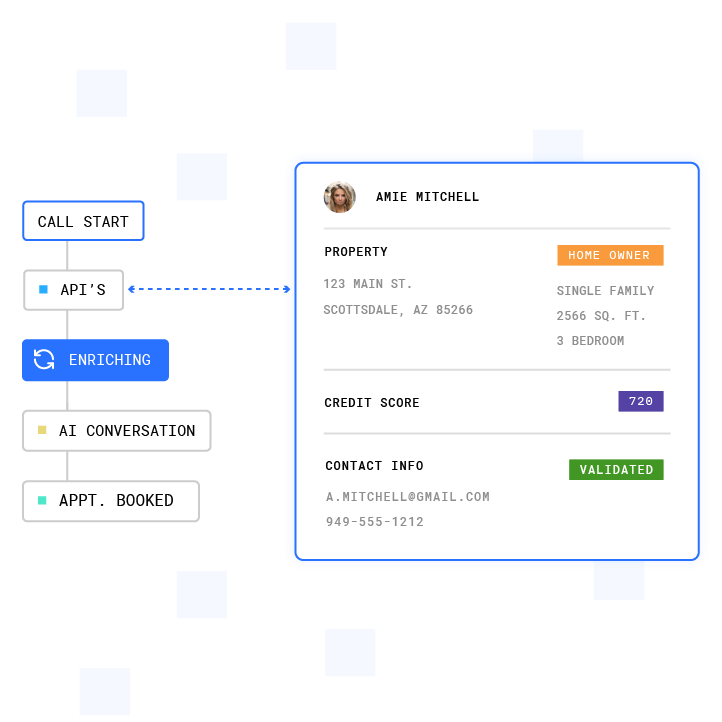
Step 4: Run a Shared-Memory Omnichannel Cadence
Multi-channel cadences of 7 to 12 touches achieve 8-15% response rates versus 1-5% for single-message outreach. Plura’s AI Voice, AI SMS (Short Message Service), AI RCS (Rich Communication Services), and AI Webchat all share a Stateful Conversation Database. An agent that texted a lead at 9 a.m. picks up the call at noon already knowing what was said, what was offered, and what objections were raised. No channel starts from zero, so every touch feels like a continuation instead of a restart.
Step 5: Run Automated Compliance Checks Before Any Outbound Contact
Every outbound contact on Plura is checked against federal and state DNC (Do Not Call) registries in real time before dial. TCPA (Telephone Consumer Protection Act, 47 U.S.C. § 227) consent records are timestamped and immutable. Quiet-hours rules enforce automatically through time-zone detection. HIPAA (Health Insurance Portability and Accountability Act, 45 CFR Parts 160, 162, 164)-aligned encryption and audit logging cover protected health information across all four channels.1 TCPA violations can cost $500 to $1,500 per text or call2, so pre-contact compliance checks function as a financial control as well as a legal safeguard.2 Customers remain responsible for their own regulatory obligations, and Plura supports compliance workflows. Teams should consult qualified counsel regarding their specific obligations under applicable law.
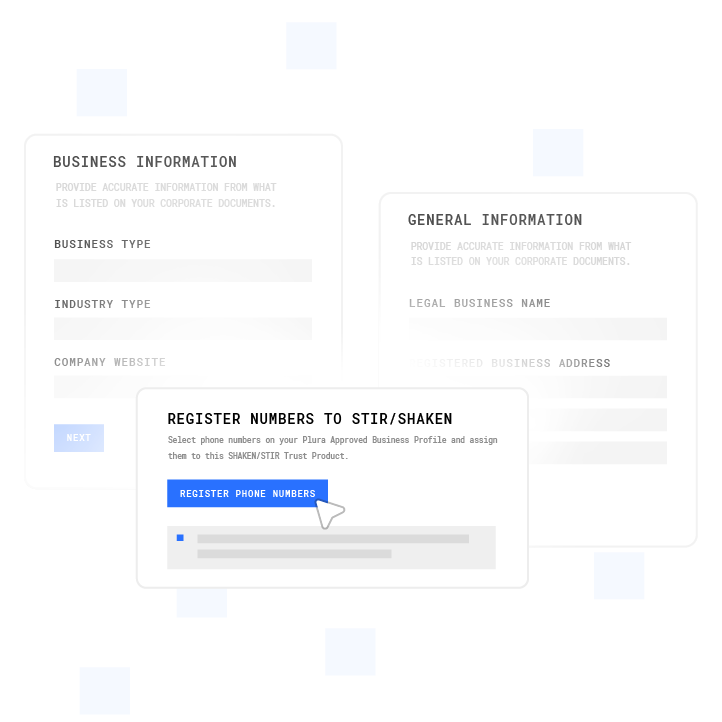
Step 6: Monitor in Real Time With a Unified Inbox and Conversation Intelligence
Plura’s Unified Inbox consolidates voice transcripts, SMS threads, RCS exchanges, and webchat sessions per customer in a single screen. Every interaction is keyed to the same customer token the AI reads from, so CX teams see the same memory the AI uses. The Conversation Intelligence layer surfaces patterns across all interactions, such as which scripts close, which objections recur, and which routing paths convert. Real-time dashboards improve SLA adherence compared to weekly or monthly reporting that only shows lagging indicators.
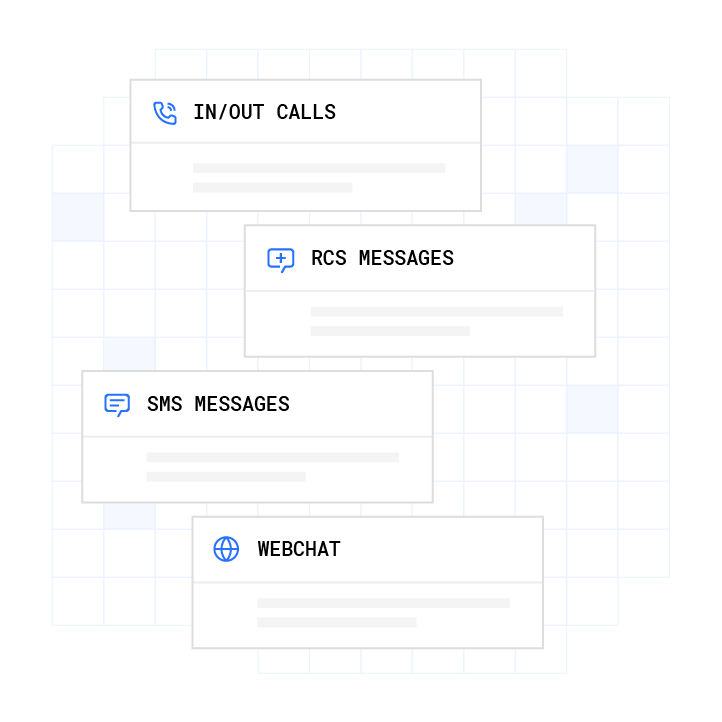
Step 7: Review Weekly Using Response, Contact, and Conversion KPIs
Teams track median response time and 90th-percentile response time alongside averages. A team averaging 90 minutes may have 30% of its leads sitting untouched for eight hours, so averages often conceal tail-end failures. Core KPIs include response time by channel and lead tier, contact rate, SQL (Sales Qualified Lead) conversion rate, cost per qualified lead, and compliance-adherence rate. Organizations with formal lead SLAs often achieve higher lead conversion rates and shorter sales cycles than those without defined agreements.
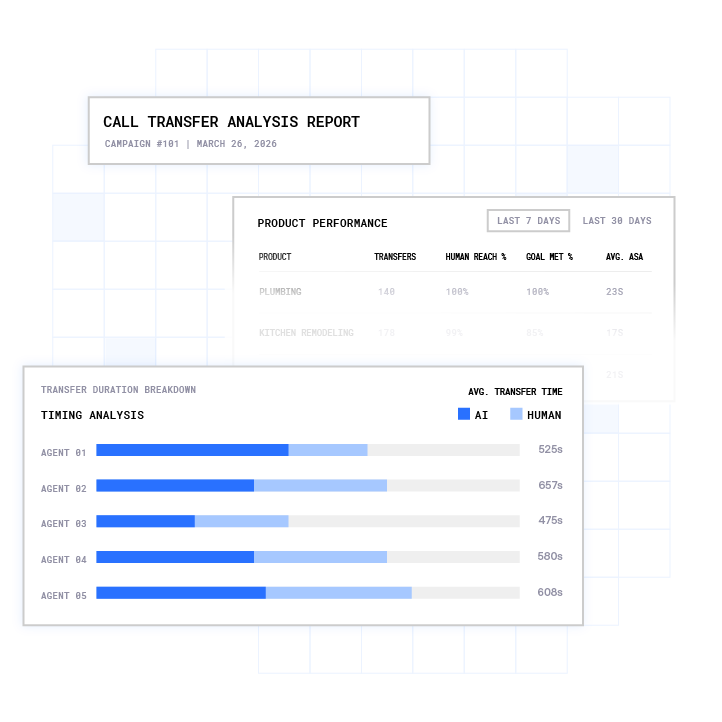
Step 8: Tune Workflows Continuously Using Conversation Insights
Plura runs every customer deployment like a CRO (conversion rate optimization) test. Conversation Intelligence generates outcome-based metrics and feeds findings back into the workflow tuning loop. Operators adjust greeting nodes, qualification gates, transfer rules, and post-call actions on Plura’s no-code visual canvas without engineering involvement. Each iteration deploys instantly without redeploying the underlying AI.
Teams can run their own numbers through Plura’s ROI calculator to check cost per contact and 30-day savings in real time.
Comparing Human, Offshore, and Owned-Carrier AI Operating Models
Human-only onshore contact centers carry the cost structure that made the math difficult in the first place: payroll, taxes, benefits, commissions, real estate, and 35 to 45% annual agent turnover. These centers struggle to scale into peak season without burning through hiring budgets months in advance, and response times are measured in hours when the competitive standard now sits in seconds.
Offshore BPOs reduced cost for two decades through wage arbitrage. That model now faces the FCC’s Notice of Proposed Rulemaking (CG Docket No. 26-52), which proposes capping offshore customer-service calls at 30% and limiting offshore handling of sensitive consumer data. State laws in New York, New Jersey, Connecticut, Missouri, and Florida already restrict offshore handling of medical, financial, and consumer data. Every contract a covered entity signed with an offshore vendor now carries compliance exposure.
Twilio-based AI wrappers represent a third category.4 Most AI voice and SMS tools in this class are API resellers riding on top of third-party CPaaS (Communications Platform as a Service) infrastructure. These tools do not own the carrier, cannot issue branded caller ID at the carrier level, cannot enforce real-time DNC scrubbing at origination, and cannot hold conversation context across more than a single channel.
Owned-carrier AI platforms, the category Plura occupies, originate voice on their own FCC-licensed infrastructure. Branded caller ID is issued directly, and SHAKEN/STIR caller ID verification runs at the carrier level. Real-time DNC scrubbing and TCPA-litigator list filtering operate as core layers of the platform, not bolt-ons. Conversation memory remains stateful across voice, SMS, RCS, and webchat by default. Plura’s total cost of ownership of $300,000 to $700,000 replaces traditional contact-center economics of $4 million to $7 million on equivalent volume3. Even with the right infrastructure in place, operators still encounter specific obstacles when implementing sub-5-second workflows.
Common Challenges and Troubleshooting for Speed-to-Lead Programs
Manual queues. The primary operational challenge in achieving sub-5-minute lead response is routing leads to managers or inactive users, which causes 10 to 60-minute delays. The fix is to automate lead processing in priority order with fallback rules that reassign unclaimed leads after a defined window.
After-hours gaps. The after-hours volume mentioned earlier creates a 61-hour weekend blind spot for teams without 24/7 coverage. Plura’s AI agents respond in under 5 seconds across all channels at 2 a.m. on a Sunday with the same workflow used during business hours.
Spam labeling. Calls presenting as “Spam Likely” are intercepted before they ring through. Plura issues branded caller ID directly through its FCC-licensed carrier and supports SHAKEN/STIR caller ID verification on every outbound call, so calls present with the company’s name rather than an unfamiliar number.
Compliance drift. As campaigns scale across states, quiet-hours rules, consent requirements, and DNC obligations vary. Plura’s compliance engine pre-loads 50+ state rule sets and applies them automatically through time-zone detection on every outbound contact. The compliance dashboard exports audit-ready reports in one click. See Plura’s compliance features for detail on how these capabilities work.
Measurement Framework and Weekly Review Template
Five metrics work together to define a functional speed-to-lead measurement system and keep teams aligned.
Response time: Track median and P90 (90th percentile) by channel and lead tier, not just averages. Contact rate: Measure the percentage of leads reached on first attempt. SQL conversion rate: Track leads that advance to a qualified opportunity, segmented by response-time bucket (under 5 minutes, 5 to 30 minutes, 30+ minutes). Cost per qualified lead: Plura customers report cost per qualified lead of $25 to $60, compared to $85 to $200 under traditional models3. Compliance-adherence rate: Track the percentage of outbound contacts cleared through DNC scrubbing and consent verification before dial.
Weekly review template: Pull median response time by tier and rep, then flag any lead tier where P90 exceeds the SLA. Review contact rate by channel and compare SQL conversion rate for sub-5-minute responses versus longer windows. Check compliance-adherence rate and audit any flagged contacts. Assign one workflow iteration based on Conversation Intelligence findings so each week produces a concrete improvement.
Compare plans and rates side by side on Plura’s pricing page.
Advanced Considerations for High-Volume and Multi-Location Operators
Cross-channel orchestration at scale. For operators running 500+ daily interactions across multiple locations or client accounts, the Stateful Conversation Database becomes a compounding asset. Every interaction adds context that improves the next conversation. A lead who received a pricing offer via SMS in week one is greeted differently on the follow-up call in week three, so no channel resets the relationship.
Multi-location and multi-client deployment. Franchise operators use Plura to enforce identical greeting, qualification, and SLA across every location, closing the 3 to 5x performance gap between best and worst units. Agency owners expand account-manager capacity from 5 to 8 clients to 15 to 20 clients using the same AI infrastructure across all accounts, with per-client conversation intelligence reports generated automatically.
Regulatory posture under evolving federal and state rules. The FCC NPRM (CG Docket No. 26-52), the Keep Call Centers in America Act (S.2495), and the Foreign Robocall Elimination Act (S.2666) are reshaping the infrastructure expectations for high-volume operators.2 Plura runs on 100% U.S. infrastructure by architecture: voice origination, model hosting, data storage, and call recording all sit on domestic infrastructure. Operators in regulated verticals including healthcare, insurance, financial services, and legal should consult qualified counsel regarding their specific obligations under applicable federal and state frameworks.
AI Predictive Dialer integration. For high-volume outbound teams, Plura’s AI Predictive Dialer uses stateful conversion signals, including historical answer rates and prior negotiation outcomes, to decide who to call next. Calls flow over Plura’s FCC-licensed carrier with branded caller ID and SHAKEN/STIR caller ID verification, which maximizes talk time per dial without dependency on third-party dialer software.
Book a live demo with Plura to see the sub-5-second workflow in a live environment.
Frequently Asked Questions
What is the 5-minute rule for leads?
The 5-minute rule refers to research from a Kellogg/MIT study by Dr. James Oldroyd, tracking more than 15,000 leads, which found that contacting a lead within 5 minutes of a web inquiry makes contact and qualification substantially more likely than waiting 30 minutes. The rule has become a baseline SLA benchmark for inbound lead response across B2B sales and contact-center operations. In 2026, the competitive threshold has tightened further, because the first vendor to respond closes a disproportionate share of deals and AI agents now make sub-60-second response operationally achievable at scale.
Does speed to lead actually matter for conversion rates?
The data is consistent across multiple large-scale studies. The 2011 HBR analysis of 2,241 U.S. companies found that responding within one hour made a firm 7 times more likely to qualify a lead than waiting an additional hour and 60 times more likely than waiting 24 hours. Leads contacted within 60 seconds convert at 391% higher rates than those contacted after longer delays. Optifai’s benchmark of 939 B2B SaaS companies found a 32% close rate when responding in under 5 minutes versus 12% when responding in 24+ hours. The conversion advantage is structural rather than marginal.
How do you improve speed to lead without adding headcount?
The operational path focuses on automation at the point of lead capture, not at the point of human assignment. AI agents respond in under 5 seconds across voice, SMS, RCS, and webchat, 24/7, without requiring human availability. Smart routing using real-time lead-intelligence enrichment replaces round-robin assignment. Intent-based SLAs encoded directly into CRM routing rules enforce response windows automatically. The result is consistent sub-minute response across all channels, including after hours, without proportional headcount increases. Plura customers report 90% faster lead-response time and 47% average pipeline growth after deployment.
What is the 60-second rule for leads?
The 60-second rule refers to the finding that leads contacted within the first minute of inquiry are 391% more likely to convert than those contacted after any longer delay. This benchmark, drawn from large-scale CRM dataset analysis, establishes 60 seconds as the threshold at which conversion lift is most pronounced. Beyond 60 seconds, conversion probability declines sharply, dropping approximately 8 times at 5 minutes, 20 times at 10 minutes, and 100 times at 30 minutes. Achieving consistent 60-second response across all channels and time zones typically requires AI agent infrastructure rather than human-only workflows.
How do compliance requirements affect speed-to-lead workflows?
Compliance and speed can align when compliance checks sit inside the outbound contact workflow instead of after the fact. Before any outbound contact, Plura’s compliance engine checks every number against federal and state DNC registries in real time, verifies TCPA consent records, and enforces quiet-hours rules through time-zone detection. HIPAA-aligned encryption and audit logging cover protected health information across all channels. SOC 2 Type II certification covers the underlying infrastructure.1 The compliance dashboard exports audit-ready reports on demand. Operators in regulated verticals should consult qualified counsel regarding their specific obligations under TCPA, HIPAA, DNC, and applicable state rules. Plura provides the infrastructure that supports compliance workflows, and downstream compliance posture remains the customer’s responsibility.
1 Plura AI maintains SOC 2, HIPAA, ISO, and GDPR posture as part of its platform infrastructure. References to compliance frameworks in this article describe Plura’s platform capabilities and do not constitute a guarantee that any customer using Plura will themselves be compliant with applicable laws or standards. Customers remain solely responsible for their own regulatory obligations, certifications, consent management, recordkeeping, and the claims they make to their own end users. Consult qualified legal counsel for guidance specific to your use case.
2 This article describes regulatory frameworks at a general level and does not constitute legal advice. Laws and regulations vary by jurisdiction, change over time, and apply differently depending on facts and circumstances. Readers should consult qualified legal counsel before making compliance decisions.
3 Performance figures, customer outcomes, and industry statistics referenced in this article are drawn from cited third-party sources or Plura customer case studies. Individual results vary based on implementation, use case, industry, audience, and execution. Past or aggregate performance is not a guarantee of future results.
4 References to third-party products, services, companies, or research are made for informational and comparative purposes only. Plura AI is not affiliated with, endorsed by, or sponsored by any third party named in this article unless explicitly stated. Trademarks and product names referenced remain the property of their respective owners.
5 This article contains forward-looking statements regarding industry trends, technology adoption, and future capabilities. These statements reflect current expectations and are subject to change. Plura AI undertakes no obligation to update forward-looking statements except as required.
This article is provided for informational purposes only and reflects Plura AI’s understanding at the time of publication. Product capabilities, integrations, and specifications are subject to change. For the most current information, visit plura.ai.
This article was produced with the assistance of AI tools and reviewed by Plura AI prior to publication.