

Written by: Matt Beucler, CEO, Plura AI
Key Takeaways for Outbound and CX Leaders
- Turn off iOS 26 call screening with a four-tap path: Settings > Apps > Phone > Screen Unknown Callers > Never.
- iOS 26 replaced the old Silence Unknown Callers toggle with three options, and none are enabled by default.
- Device-level toggles help one recipient at a time and do not scale for teams calling hundreds of prospects each day.
- Branded caller ID issued at the carrier level with SHAKEN/STIR authentication can increase answer rates by up to 105%.3
- Plura AI’s AI voice agents and branded-caller-ID platform run on carrier-grade infrastructure that supports compliance; talk to an expert to see how it fits your operation.
Where iOS 26 Call Screening Lives in Settings
iOS 26 replaced the older binary Silence Unknown Callers toggle with a three-option menu called Screen Unknown Callers. You can find it at Settings > Apps > Phone > Screen Unknown Callers. iOS 26 introduced three distinct options in place of the previous on/off switch:
- Never – unsaved numbers ring normally, and missed calls appear in Recents.
- Ask Reason for Calling – iOS 26 answers the call automatically, prompts the caller to state their name and reason, transcribes the response in real time, and displays the transcript to the recipient before the phone rings.
- Silence – unsaved calls go directly to voicemail with no ring.
iOS 26 call screening ships off by default. Screening only activates when the user turns on Ask Reason for Calling or Silence, and any unsaved number then gets intercepted.
See how Plura’s carrier-grade platform pricing compares to CPaaS alternatives.
Step-by-Step Path to Turn Off iPhone Call Screening
To turn off call screening on an iPhone running iOS 26, follow these steps on the recipient’s device. This path disables Screen Unknown Callers so business calls from unsaved numbers ring through without interception.
- Open Settings. Tap the Settings app on the iPhone home screen or in the App Library.
- Tap Apps. Scroll down the Settings menu and select Apps. This section holds the per-app controls introduced in iOS 26.
- Tap Phone. Inside Apps, locate and tap Phone to open call-specific settings.
- Tap Screen Unknown Callers. This menu controls iOS 26 call screening. The current setting (Never, Ask Reason for Calling, or Silence) appears beneath the label.
- Select Never. Tapping Never turns off all call screening. Calls from unsaved numbers will ring normally and appear in Recents if missed.
- Verify the change. The checkmark moves to Never. No restart is required, and the change applies to the next incoming call.
- Check Live Voicemail and Focus (optional). If calls still route to voicemail, confirm that Do Not Disturb and Focus modes are off, because these features can silence calls even when Screen Unknown Callers is set to Never.
This four-tap path fixes screening on a single iPhone. It does not solve the broader infrastructure challenge for outbound teams whose numbers are not recognized at the carrier level.
Calculate the revenue impact of screening-related connect-rate drops for your team.
Why Outbound Business Calls Still Get Blocked
Turning off Screen Unknown Callers on one device does not change how most people treat unknown numbers. A Pew Research Center survey of 10,211 U.S. adults found that 80% do not generally answer their cellphone when an unknown number calls, and 67% usually let unknown calls go to voicemail.4
That behavior predates iOS 26 and sets a baseline of avoidance for unrecognized numbers. Device toggles only sit on top of this pattern and do not change it at scale for outbound teams.
iOS 26 adds a system-level screening layer on top of that baseline. Sales reps making 50-100 cold calls per day using high-volume generic methods can see connect-rate drops of 30-60% when recipients enable screening.3 Predictive and parallel dialers cannot respond to the iOS 26 screener because no rep is on the line when the screener answers, which creates dead air and ends the call.
The cost shows up in missed conversations. One consumer survey cited in FCC rulemaking found that 78% of consumers have missed an important call in the last month because they did not answer an unidentified call. For outbound teams, each missed connection becomes a missed revenue opportunity, and asking thousands of prospects to change their iPhone settings is not a workable playbook.
Explore Plura’s branded caller ID plans and per-call rates.
Carrier-Level Branded Caller ID That Passes iOS 26 Screening
The durable fix sits at the carrier level, not inside iPhone settings. Plura AI is an FCC-licensed carrier that issues branded caller ID directly, without routing calls through a third-party CPaaS.2 Every outbound call originates with SHAKEN/STIR (Secure Telephone Identity Revisited / Signature-based Handling of Asserted information using toKENs) caller ID authentication, which the destination carrier can use to validate origination.
TransUnion data cited in FCC rulemaking indicates that customers are up to 105% more likely to answer a branded call. Branded caller ID works with iOS 26’s screening layer so calls display the company’s name and the reason for the call, which turns many screened calls into live conversations instead of voicemails.
Plura’s AI voice agents run both inbound and outbound flows on this carrier-grade foundation. Because Plura owns the carrier stack, branded caller ID is issued at origination, not added later through a reseller, so every call from the AI Predictive Dialer carries SHAKEN/STIR authentication from the moment it leaves the platform. This origination-level control lets the dialer prioritize contacts using stateful conversion signals while maintaining caller ID integrity that CPaaS-routed platforms cannot consistently guarantee.
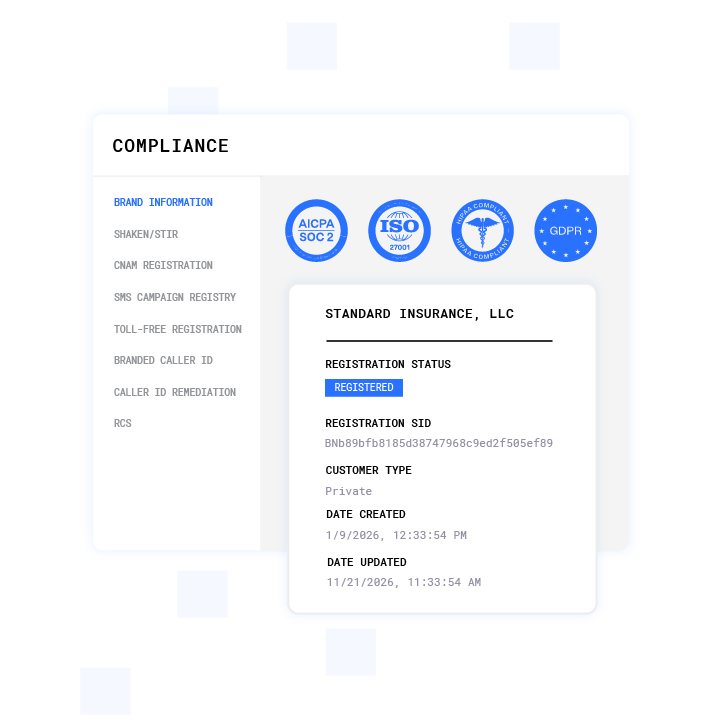
Plura’s infrastructure supports TCPA compliance, DNC compliance, HIPAA, SOC 2, ISO certification, GDPR, and SHAKEN/STIR caller ID verification.1 Customers remain responsible for their own regulatory obligations and any claims they make to end users. Plura provides the carrier and AI layers that support those programs. See Plura’s AI voice demo for a live walkthrough of how branded caller ID and screening bypass work in practice.
Model connect-rate recovery and cost per conversation with Plura’s ROI calculator.
Fixing Common iOS 26 Call Screening Issues
After setting Screen Unknown Callers to Never, some teams still see calls routing to voicemail or failing to ring. These issues explain most of those cases.
- Do Not Disturb or Focus mode is active. These modes operate separately from Screen Unknown Callers and can silence calls from non-contacts even when screening is off. Check Control Center or Settings > Focus to confirm they are disabled.
- The number carries a “Spam Likely” carrier label. Screen Unknown Callers and carrier spam labeling run on different systems. Registering branded caller ID does not automatically remove spam labels, and spam remediation uses a separate carrier-level process. Plura addresses spam labels at the carrier level as part of its platform.
- Doctor’s office or healthcare numbers flagged. High-volume healthcare outbound often triggers spam labeling because clinical call patterns can resemble robocall traffic. SHAKEN/STIR attestation and branded caller ID registration help address this at the originating carrier.
- Live Voicemail interference. iOS 18 and later include Live Voicemail, which transcribes incoming voicemails in real time on the lock screen. Live Voicemail turns the first 5-10 seconds of a voicemail into a visible pitch that prospects read before deciding whether to answer. This feature is separate from Screen Unknown Callers and remains active even after using the four-tap path above.
Review Plura’s pricing structure for branded caller ID and AI voice agents.
How to Measure iOS 26 Impact on Outbound Connect Rates
Outbound leaders should track connect-rate changes at two levels: device toggles and carrier identity.
At the device level, Screen Unknown Callers only affects recipients who enable screening. iOS 26 call screening is not enabled by default, and adoption estimates based on Google Pixel’s comparable feature suggest early adoption may stay in the low single digits.5 At the same time, adoption of Silence Unknown Callers has grown year over year as Apple highlights it in iOS updates. Teams should segment outbound call logs by outcome (answered, voicemail, no answer) and watch for shifts in voicemail rates as iOS 26 adoption expands.
At the carrier-identity level, branded caller ID delivers connect-rate recovery that does not depend on consumer toggles. The 30-60% connect-rate drops cited earlier provide a baseline for what unmanaged screening can cost. Teams can establish a pre-deployment baseline answer rate, deploy branded caller ID, then track percentage-point improvements in answer and conversation rates over the next 30, 60, and 90 days as carrier recognition propagates.
Leaders can also track downstream metrics such as meetings set, transfers to human agents, and revenue per connected call to quantify the full impact of branded caller ID on pipeline and customer experience.
Use Plura’s ROI calculator to translate connect-rate gains into revenue and staffing impact.
Frequently Asked Questions
Where is call screening in Settings on iOS 26?
In iOS 26, call screening is located at Settings > Apps > Phone > Screen Unknown Callers. This replaces the older Silence Unknown Callers toggle from previous iOS versions. The menu offers three options: Never, Ask Reason for Calling, and Silence.
How do I disable iPhone call screening for business calls?
Open Settings, tap Apps, tap Phone, tap Screen Unknown Callers, and select Never. This four-tap path disables all call screening so that calls from unsaved numbers ring through normally. The change takes effect immediately with no restart required.
Does turning off Screen Unknown Callers fix connect-rate drops for outbound teams?
The consumer toggle fixes screening on a single device. It does not solve the broader problem for outbound teams, because teams cannot instruct thousands of prospects to change their settings. The structural fix is branded caller ID issued at the carrier level, which works with iOS 26’s screening layer so calls present with the company’s name before the recipient decides to answer.
What is the difference between Screen Unknown Callers and Silence Unknown Callers in iOS 26?
Silence Unknown Callers was a binary on/off toggle in earlier iOS versions that routed all calls from unsaved numbers directly to voicemail. iOS 26 replaced it with Screen Unknown Callers, which adds a middle option called Ask Reason for Calling. This option automatically answers the call, prompts the caller to state their name and reason, transcribes the response, and displays it to the recipient before the phone rings.
What is branded caller ID and how does it help outbound teams pass iOS 26 screening?
Branded caller ID is a carrier-level service that registers a business’s name and logo with major U.S. carriers so that calls display the company name instead of an unknown number. When a call presents with a recognized business identity, iOS 26’s screening layer treats it differently than an anonymous number. Plura issues branded caller ID directly through its FCC-licensed carrier, with SHAKEN/STIR authentication on every outbound call, so calls originate with a verified business identity rather than an unrecognized number.
Can predictive dialers respond to the iOS 26 Ask Reason for Calling prompt?
Standard predictive and parallel dialers cannot respond to the iOS 26 screener because no agent is connected to the call when the screener answers. This creates dead air, which ends the call. Plura’s AI voice agents can respond to the screener prompt with the caller’s name, company, and reason for calling, because the AI is present on the call from the moment it connects.
iOS 26 Call Screening vs. Plura Branded Caller ID
| Attribute | Consumer Toggle (Screen Unknown Callers: Never) | Plura AI Branded Caller ID | Impact on Outbound Teams |
|---|---|---|---|
| Where it operates | Recipient’s iPhone device settings | Originating carrier level (FCC-licensed) | Device toggle requires recipient action, while the carrier-level fix requires no recipient action |
| Scalability | One device at a time; teams cannot instruct thousands of prospects to change settings | Applies to every outbound call across the entire dialing operation | Carrier-level fix scales with call volume; consumer toggle does not |
| Caller identity presented | No change; unknown numbers still display as unknown if not in contacts | Calls present with company name; customers up to 105% more likely to answer a branded call | Branded identity increases answer probability independent of screening setting |
| SHAKEN/STIR authentication | Not applicable; consumer setting only | Signed at originating carrier on every outbound call | Authentication signals legitimate origination to the destination carrier and iOS screening layer |
| Spam label remediation | None; spam labels operate on a separate carrier system | Remediated at carrier level as part of Plura’s platform | Branded calls answered 62% of the time vs. 20% for unbranded calls in a 90-day study across ~720,000 calls |
| AI screener response capability | Not applicable | Plura’s AI voice agents respond to the Ask Reason for Calling prompt with name, company, and call reason | Prevents dead-air call drops that occur when predictive dialers encounter the iOS 26 screener |
| Compliance infrastructure | None | TCPA compliance, DNC compliance, HIPAA, SOC 2, ISO certification, GDPR, SHAKEN/STIR caller ID verification | Outbound teams operate on infrastructure that supports compliance obligations across federal and state frameworks |
1 Plura AI maintains SOC 2, HIPAA, ISO, and GDPR posture as part of its platform infrastructure. References to compliance frameworks in this article describe Plura’s platform capabilities and do not constitute a guarantee that any customer using Plura will themselves be compliant with applicable laws or standards. Customers remain solely responsible for their own regulatory obligations, certifications, consent management, recordkeeping, and the claims they make to their own end users. Consult qualified legal counsel for guidance specific to your use case.
2 This article describes regulatory frameworks at a general level and does not constitute legal advice. Laws and regulations vary by jurisdiction, change over time, and apply differently depending on facts and circumstances. Readers should consult qualified legal counsel before making compliance decisions.
3 Performance figures, customer outcomes, and industry statistics referenced in this article are drawn from cited third-party sources or Plura customer case studies. Individual results vary based on implementation, use case, industry, audience, and execution. Past or aggregate performance is not a guarantee of future results.
4 References to third-party products, services, companies, or research are made for informational and comparative purposes only. Plura AI is not affiliated with, endorsed by, or sponsored by any third party named in this article unless explicitly stated. Trademarks and product names referenced remain the property of their respective owners.
5 This article contains forward-looking statements regarding industry trends, technology adoption, and future capabilities. These statements reflect current expectations and are subject to change. Plura AI undertakes no obligation to update forward-looking statements except as required.
This article is provided for informational purposes only and reflects Plura AI’s understanding at the time of publication. Product capabilities, integrations, and specifications are subject to change. For the most current information, visit plura.ai.
This article was produced with the assistance of AI tools and reviewed by Plura AI prior to publication.