
Written by: Matt Beucler, CEO, Plura AI
Key Takeaways for Clinic Operations Leaders
- AI voice appointment systems in healthcare automate scheduling, reminders, and intake while operating on HIPAA-aligned, SOC 2 certified, carrier-owned infrastructure.1
- Stateful cross-channel memory keeps patient interactions consistent and personalized across voice, SMS, RCS, and webchat, reducing no-shows by up to 40%.3
- Plura AI connects to 50+ EHRs and related systems through HL7 FHIR APIs with real-time bidirectional sync, consent tracking, and audit-ready logging.
- Security features include end-to-end encryption, field-level redaction, carrier-level real-time DNC scrubbing, and STIR/SHAKEN caller ID verification.1
- Plura delivers a total cost of ownership of roughly $300K–$700K annually, replacing multimillion-dollar staffing models, and you can explore deployment options in a live demo at our demo scheduling page.3
How AI Voice Agents Cut Clinic No-Show Rates
No-shows drain revenue from U.S. healthcare systems, with estimates reaching $150 billion annually.3 Clinics feel this through idle provider time, empty appointment slots, and front-desk teams spending hours on reminder calls that patients often ignore. A 10-provider outpatient practice with a 20% no-show rate effectively loses the daily revenue of two full-time providers.
AI voice agents address this through three concrete mechanisms. They operate 24 hours a day, 7 days a week, so patients receive outreach when they are most likely to respond instead of during a narrow staffed window. They also run multi-touch reminder workflows across voice and SMS (Short Message Service), so a patient who misses a voice call on Monday automatically receives an SMS follow-up on Tuesday without manual effort from staff.
Stateful cross-channel memory provides the third mechanism. The AI agent already knows the appointment details, the patient’s prior response history, and any preferences captured during intake. Each interaction feels specific to that patient instead of a generic broadcast.
This combination delivers the 40% no-show improvement referenced earlier. The stateful database that underlies every Plura channel ensures that a patient who confirmed via SMS at 9 a.m. is not called again at noon with the same question.
See the reminder workflow in action during a live demo.
Connecting AI Voice Agents to Your EHR
Reducing no-shows requires more than outbound calls and texts. The AI agent must read appointment data from your existing systems and write confirmation status back in real time. EHR (Electronic Health Record) integration is where many AI voice deployments stall. A vendor may deliver a polished demo that cannot read or write appointment data, which forces your front desk to reconcile two systems manually. Integration work functions as the product, not a side project.
A structured EHR integration follows four stages that build on each other. The first is discovery. Your team and Plura map the existing EHR system and identify the appointment fields the AI agent needs to read, such as patient name, appointment type, provider, date, time, and location. The team also identifies the fields the agent must write, such as confirmation status, reschedule request, and cancellation reason. Common EHR platforms expose this data through HL7 FHIR (Fast Healthcare Interoperability Resources) APIs, although endpoints and authentication methods vary by vendor and version.
Once you know which fields the AI agent will access, the second stage focuses on consent capture configuration. Before the AI agent contacts a patient, the platform checks that appropriate consent records exist and are accessible. Consent records in Plura are timestamped and immutable, which supports audit readiness when questions arise about whether a patient authorized outreach.
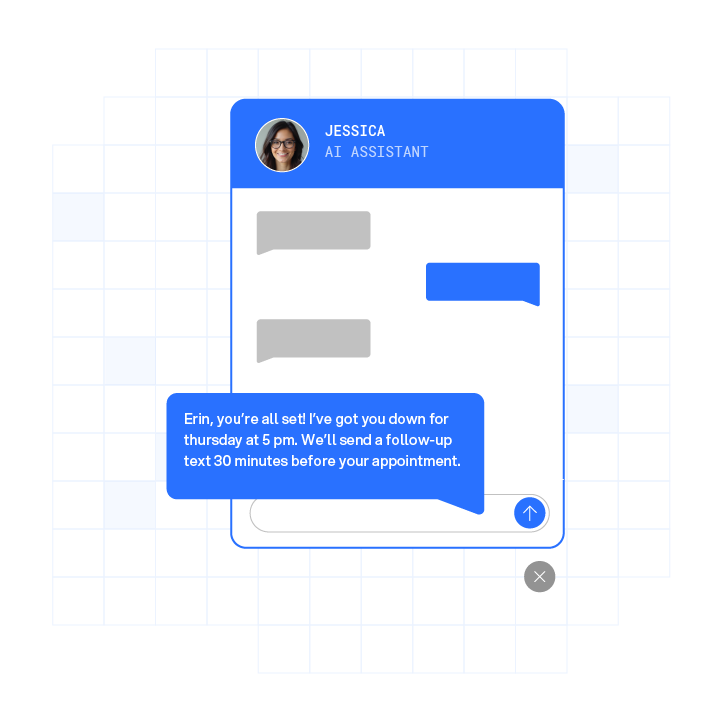
The third stage covers bidirectional sync testing. The AI agent must confirm an appointment and have that confirmation appear in the EHR in real time, not in a nightly batch. Any lag between the AI’s confirmation and the EHR’s record introduces double-booking risk and erodes clinical staff trust in the system.
The fourth stage configures stateful memory. Plura’s Stateful Conversation Database keys every patient interaction to a unique token, so context persists across voice, SMS, RCS (Rich Communication Services), and webchat. A patient who rescheduled via SMS last week is recognized when the AI places a voice reminder call this week. The EHR holds the clinical record. Plura holds the conversation record. The integration connects them so neither system operates without context.
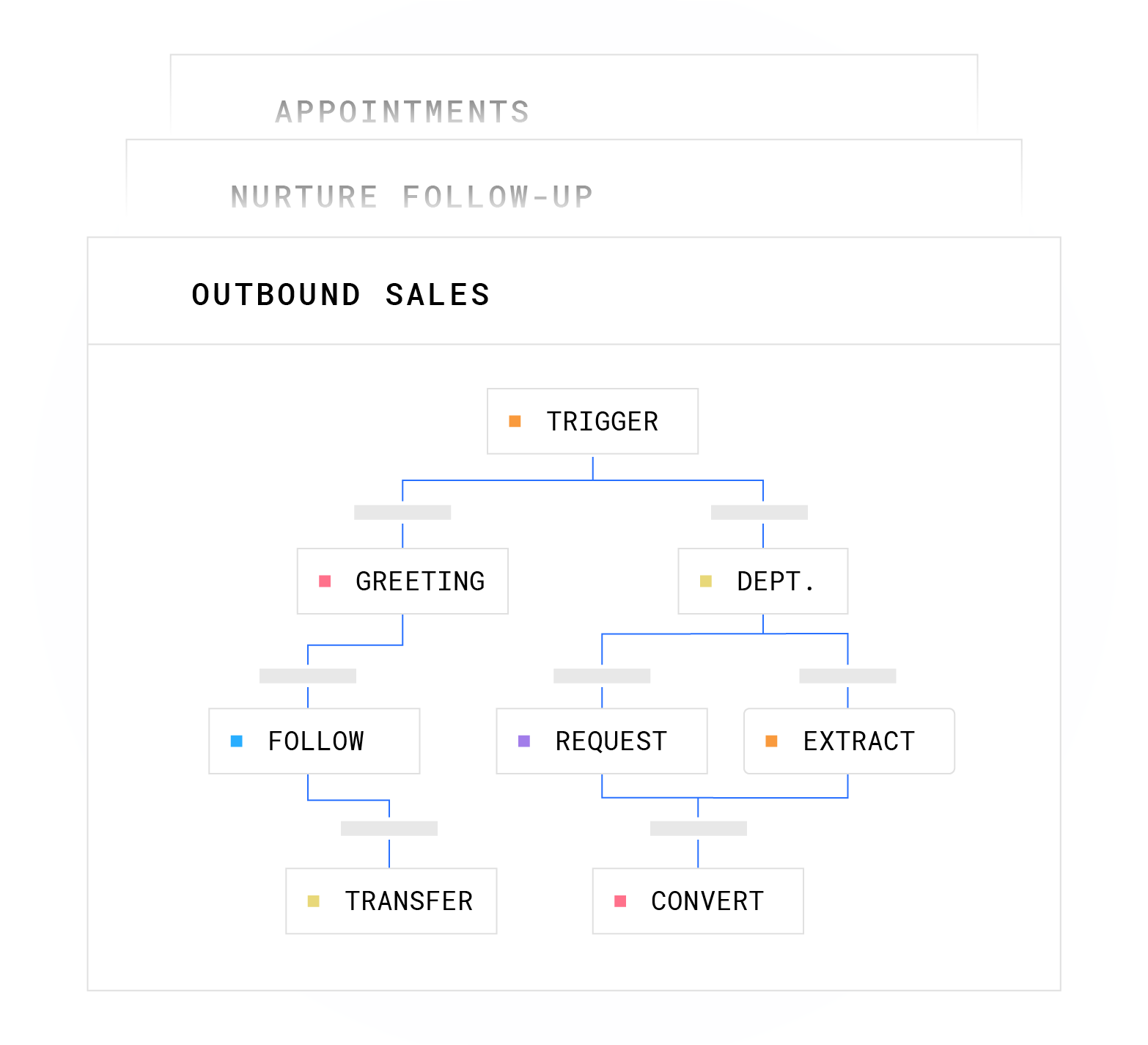
Plura supports more than 50 integrations across CRM (Customer Relationship Management), calendar, and data systems, with the full directory available in our integrations catalog.
HIPAA, PHI Handling, and Redaction in AI Scheduling
HIPAA (Health Insurance Portability and Accountability Act) describes how PHI (Protected Health Information) is handled under 45 CFR Parts 160, 162, and 164.2 Clinic operations leaders evaluating AI voice platforms should review the regulation directly and work with qualified legal counsel on their specific obligations. The details below describe Plura’s infrastructure framework and do not constitute legal advice.
The HIPAA Security Rule under 45 CFR Part 164 addresses administrative, physical, and technical safeguards for electronic PHI. For AI voice scheduling, relevant technical safeguards include encryption of PHI in transit and at rest, access controls that limit which system components can read or write patient data, and audit logging that creates a retrievable record of every access event.
Plura’s infrastructure supports these safeguards through end-to-end encryption, role-based access controls, and audit logging across voice, SMS, RCS, and webchat interactions. Field-level redaction removes PHI from conversation logs when retaining that data is not necessary for the workflow. This approach reduces the surface area of stored sensitive data. Every interaction is logged to the Stateful Conversation Database with access controls that limit visibility to authorized personnel.
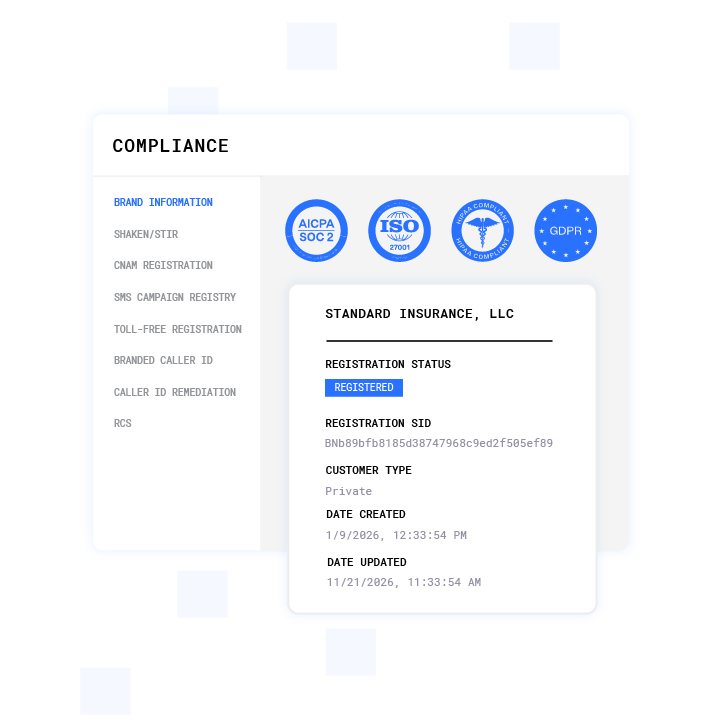
Real-time DNC scrubbing runs at the carrier level on Plura’s FCC-licensed infrastructure. Non-compliant numbers are blocked before the first dial attempt instead of flagged after contact. Plura supports compliance with HIPAA and SOC 2 and integrates with The Blacklist Alliance’s TCPA (Telephone Consumer Protection Act) Litigation Firewall for real-time DNC scrubbing and litigation risk mitigation.1,2,4
Clinic operators evaluating AI voice platforms can request a Business Associate Agreement (BAA) from any vendor that will handle PHI and can verify whether the vendor’s infrastructure is entirely U.S.-based. Florida’s medical-information offshoring restrictions and the FCC’s Notice of Proposed Rulemaking (NPRM, CG Docket No. 26-52) both create exposure for covered entities whose vendors process sensitive health data on foreign infrastructure. Plura supports compliance with HIPAA and SOC 2 certification.1 Platforms that rely on third-party CPaaS (Communications Platform as a Service) providers depend on that third party’s BAA for HIPAA coverage.
Schedule a compliance infrastructure review with a Plura solutions engineer.
Designing Patient-Trusted AI Appointment Experiences
Patient trust in AI appointment booking rests on three operational factors. Patients need clarity about who is calling, consistent information across every interaction, and a clear path to a human when they want one.
Transparency starts at the carrier level. Plura issues branded caller ID directly through its FCC-licensed carrier, so calls display the clinic’s name instead of an unfamiliar number or a “Spam Likely” label. STIR/SHAKEN (Secure Telephone Identity Revisited / Signature-based Handling of Asserted information using toKENs) caller ID verification authenticates every outbound call at origination. Destination carriers then use that signal to confirm legitimate identity. Patients who see a recognized clinic name are more likely to answer and to trust the interaction that follows.
Consistency depends on stateful memory. A patient who provided insurance information during a webchat intake session should not be asked for it again during a voice reminder call. Plura’s Stateful Conversation Database ensures that every channel inherits the full context of prior touchpoints. The AI agent’s behavior stays coherent across the patient journey instead of feeling episodic.
Escalation paths protect the experience when the AI reaches its limits. When a patient’s response falls outside the AI agent’s defined workflow, Plura warm-transfers the call to a U.S.-based staff member with full conversation context already visible in the Unified Inbox. The patient does not repeat themselves. The staff member starts with the conversation history on screen. This escalation design functions as a core part of the workflow architecture, not a last-minute fallback.
Comparing Front-Desk Staffing Costs to Plura TCO
High-volume clinics face contact-center economics even when they call it a front desk. More patient volume requires proportional headcount, and each hire brings payroll, benefits, taxes, turnover costs, and a two-to-four-week training ramp. A clinic handling 500 or more daily patient interactions effectively runs a contact center, and the cost structure reflects that reality.
Traditional contact-center economics for a 50-seat equivalent operation often range from $35,000 to $50,000 monthly for offshore operations and significantly more for onshore staffing. AI contact centers operate in the $8,000 to $15,000 monthly range for similar volume. At the higher end of the volume range, Plura’s total cost of ownership runs $300,000 to $700,000 annually, replacing traditional contact-center economics of $4 million to $7 million.3
The table below compares the structural characteristics of three deployment models for high-volume clinic patient communications. All figures are drawn from published Plura sources and publicly available infrastructure descriptions.
| Capability | Traditional Front-Desk / Onshore Staffing | CPaaS-Based AI Voice (API Reseller) | Plura (FCC-Licensed Carrier) |
|---|---|---|---|
| Carrier ownership | Third-party telecom | Depends on third-party CPaaS (e.g., Twilio), no carrier license4 | FCC-licensed carrier, voice originates on Plura infrastructure |
| Stateful cross-channel memory | Manual CRM entry, no automatic cross-channel context | Typically single-channel, context does not persist across voice and SMS | Stateful AI architecture remembers prior interactions across all channels |
| HIPAA infrastructure support | Depends on staff training and manual process controls | Relies on third-party CPaaS BAA for HIPAA coverage | HIPAA-aligned encryption, access controls, and audit logging, SOC 2 certified |
| Real-time DNC scrubbing | Manual list management, high error risk at volume | Added after the fact, not enforced at carrier level | Enforced at carrier level before every dial attempt |
| Cost scaling model | Linear, headcount grows with volume | Per-minute rates include CPaaS markup, compliance costs external | Logarithmic, $300K-$700K TCO replaces $4M-$7M traditional spend |
The cost gap comes from structure, not only from per-minute rates. A staffing model requires headcount growth as volume rises. A platform model scales volume without scaling labor. A clinic that adds a second location does not double its Plura cost, but it does double front-desk headcount under a traditional model.
Run your numbers through Plura’s ROI calculator to evaluate your specific scenario.
Frequently Asked Questions
What happens when a patient asks a question the AI agent cannot answer?
Plura’s workflow architecture includes explicit escalation paths at every conversation node. When a patient’s response falls outside the defined workflow, the AI agent warm-transfers the call to a U.S.-based staff member. The staff member receives the full conversation history in the Unified Inbox before picking up, so the patient does not repeat themselves. Sensitive disclosures, clinical questions, and high-stakes situations route to human staff by design.
How does Plura handle DNC compliance for patient outreach?
Real-time DNC scrubbing runs at the carrier level on Plura’s FCC-licensed infrastructure. Every outbound contact is checked against federal and state DNC registries before the first dial attempt. Non-compliant numbers are blocked before contact. Consent records are timestamped, immutable, and exportable for audit review. Quiet-hours rules enforce automatically through time-zone detection, applying state and federal calling-window restrictions to every campaign without manual configuration.
Which EHR systems does Plura integrate with?
Plura supports more than 50 integrations across CRM, calendar, and data systems. For healthcare-specific EHR connectivity, the integration path typically runs through HL7 FHIR APIs or middleware connectors. The specific EHR systems supported depend on the API availability of the EHR vendor. Plura’s onboarding process includes a discovery audit that maps the existing EHR, identifies the relevant appointment fields, and designs the bidirectional sync before any production workflow goes live. The full integration directory is available in our integrations catalog.
How long does it take to deploy an AI voice scheduling system in a clinic?
A straightforward inbound appointment confirmation or reminder workflow typically deploys in days. A more complex intake flow, such as a multi-question health-history survey that routes patients to scheduling based on eligibility criteria, often runs closer to one to two months. That timeline reflects the design, validation, and pilot testing required on real calls before full go-live. Plura’s onboarding sequence covers discovery, script intake, workflow build, pilot testing, and full deployment. Every annual contract includes a 90-day opt-out window if the deployment is not delivering against agreed benchmarks.
What audit documentation does Plura generate for HIPAA-related reviews?
Plura’s compliance dashboard exports audit-ready reports in one click. Every interaction is logged with access controls, timestamps, and field-level redaction of PHI where applicable. Consent records are immutable and retrievable. The audit log covers voice, SMS, RCS, and webchat interactions across the Stateful Conversation Database. Clinic operators and their legal counsel determine which records satisfy their specific audit and regulatory obligations. Plura provides the infrastructure and export tools to support that process.
Conclusion: Infrastructure Choices Drive AI Scheduling Outcomes
AI voice appointment scheduling in a healthcare clinic functions as an infrastructure decision, not a simple software purchase. The platform that handles patient PHI, places outbound reminder calls, and integrates with the EHR needs to own its carrier stack, enforce compliance at the point of origination, and maintain conversation context across every channel a patient might use. Platforms built on third-party CPaaS providers inherit that provider’s compliance posture, caller ID reputation, and per-minute cost structure, then pass all three downstream to the clinic.
Plura operates on its own FCC-licensed U.S. carrier, with HIPAA-aligned encryption, SOC 2 certification, real-time DNC scrubbing, STIR/SHAKEN caller ID verification, and a Stateful Conversation Database that holds patient context across voice, SMS, RCS, and webchat. The total cost of ownership delivers the 85% to 90% cost reduction detailed in the cost-modeling section, and the platform achieves the no-show improvements outlined earlier for healthcare operators.
For clinic operations leaders evaluating AI voice platforms in 2026, compliance and infrastructure criteria define whether a deployment is viable at scale. These questions sit at the center of the decision, not as follow-ups after a demo.
1 Plura AI maintains SOC 2, HIPAA, ISO, and GDPR posture as part of its platform infrastructure. References to compliance frameworks in this article describe Plura’s platform capabilities and do not constitute a guarantee that any customer using Plura will themselves be compliant with applicable laws or standards. Customers remain solely responsible for their own regulatory obligations, certifications, consent management, recordkeeping, and the claims they make to their own end users. Consult qualified legal counsel for guidance specific to your use case.
2 This article describes regulatory frameworks at a general level and does not constitute legal advice. Laws and regulations vary by jurisdiction, change over time, and apply differently depending on facts and circumstances. Readers should consult qualified legal counsel before making compliance decisions.
3 Performance figures, customer outcomes, and industry statistics referenced in this article are drawn from cited third-party sources or Plura customer case studies. Individual results vary based on implementation, use case, industry, audience, and execution. Past or aggregate performance is not a guarantee of future results.
4 References to third-party products, services, companies, or research are made for informational and comparative purposes only. Plura AI is not affiliated with, endorsed by, or sponsored by any third party named in this article unless explicitly stated. Trademarks and product names referenced remain the property of their respective owners.
This article is provided for informational purposes only and reflects Plura AI’s understanding at the time of publication. Product capabilities, integrations, and specifications are subject to change. For the most current information, visit plura.ai.
This article was produced with the assistance of AI tools and reviewed by Plura AI prior to publication.