

Written by: Matt Beucler, CEO, Plura AI
Key Takeaways for After-Hours Virtual Receptionists
- Traditional live-agent after-hours services carry $4M–$7M annual TCO and limited scalability, while basic AI tools lack carrier ownership and cross-channel memory.
- Plura AI delivers 24/7 call answering on 100% U.S. infrastructure with stateful conversation memory across voice, SMS, RCS, and webchat.
- High-volume operators can cut monthly costs from $60,000 to $14,400 by replacing 15 human agents with six Plura agents at 100% talk utilization.
- Forty-three percent of calls arrive outside business hours and 62% go unanswered overall, costing the average small business more than $26,000 annually in missed revenue.
- Plura’s carrier-grade AI voice agents answer every call on the first ring with compliance support and full omnichannel context.
3
3
Cost Comparison: After-Hours Virtual Receptionist vs Live Agents
The cost gap between traditional live-agent services and carrier-grade AI is structural, not incremental.
Traditional live answering services charge $0.75–$1.50 per minute. True 24/7 live coverage typically runs $200–$1,200 per month (or up to $1,640 for premium plans) for a single location, depending on call volume. At a 50-seat equivalent contact center, traditional offshore operations cost $35,000–$50,000 monthly. At enterprise scale, total cost of ownership for a traditional contact center reaches $4M–$7M annually.
Plura’s carrier-grade AI agents operate at a TCO of $300K–$700K per year on equivalent volume. In a representative 15-agent scenario modeled on the Plura ROI calculator, replacing 15 human agents at $20 per hour with six Plura agents at $15 per hour and 100% talk utilization drops monthly cost from $60,000 to $14,400. That shift produces a 30-day saving of $45,600 and a 12-month saving of $547,200.
| Metric | Traditional Live-Agent Contact Center | Plura AI (Carrier-Grade) |
|---|---|---|
| Annual TCO (high-volume operator) | $4M–$7M | $300K–$700K |
| Monthly cost (50-seat equivalent) | $35,000–$50,000 | $8,000–$15,000 |
| After-hours surcharge | Varies | No surcharge, flat rate 24/7 |
| Talk utilization rate | ~40% (human average) | 100% |
| Ramp time to handle 3x call volume | 4–8 weeks of hiring and training | Immediate, no ramp time required |
Run your numbers through Plura’s ROI calculator to check your cost savings in real time.
24/7 Coverage: How Virtual Receptionists Capture After-Hours Demand
Forty-three percent of calls to small businesses arrive outside standard business hours, according to CallRail (2024). Combined with the 62% overall unanswered call rate documented in a 411 Locals study of small businesses across 58 industries, most operators miss the majority of their after-hours volume with no coverage in place.
The revenue impact compounds quickly. Eighty percent of callers who reach voicemail never leave a message, per Forbes as cited by PATLive (2024). Sixty-two percent of callers immediately contact a competitor after reaching voicemail, per BrightLocal. The average small business loses more than $26,000 annually in revenue to missed calls, per AMBS Call Center analysis (2025).
Home services operators face even higher exposure. A substantial portion of home service inquiries arrive outside standard business hours. Invoca research found that 27% of calls to home services businesses go unanswered, with after-hours miss rates approaching 100% for operators without dedicated coverage.
This coverage gap is precisely what carrier-grade AI addresses. Plura’s after-hours call answering agents answer every inbound call on the first ring, 24/7, with no staffing gaps on evenings, weekends, or holidays. This immediate response extends across channels. Plura voice agents answer 100% of inbound calls across all franchise locations within two rings and contact leads from websites, Google Business Profiles, or ad campaigns within 60 seconds via SMS or voice call. The speed-to-contact advantage directly affects conversion. For appointment-driven verticals, Plura supports up to a 40% improvement in no-shows through automated reminders and follow-up across channels.3
Live-Agent vs AI Receptionist: Operational Differences That Matter
Live-agent services scale linearly. More call volume requires proportional headcount, and headcount carries payroll, taxes, benefits, commissions, and 35–45% annual agent turnover that forces constant retraining. After-hours coverage adds a rate premium on top of base costs. During peak seasons such as Medicare Annual Enrollment Period, tax season, or storm surges in home services, live-agent capacity rarely scales fast enough without heavy advance hiring.
Basic AI tools address the cost problem but introduce new gaps. Most are API resellers built on top of third-party Communications Platform as a Service providers like Twilio. These tools do not own the carrier, cannot issue branded caller ID at the carrier level, cannot enforce real-time Do Not Call scrubbing, and cannot hold conversation context across more than a single channel. A customer who texted at 9 a.m. must re-explain their situation when the call arrives at noon.
Plura operates differently at the infrastructure level. Plura AI owns its telecom infrastructure and holds an FCC carrier license, whereas API-wrapper platforms depend on Twilio and operate as a software layer without a carrier license.4 Voice originates on Plura’s domestic infrastructure, not a third-party CPaaS. This structure yields lower per-minute economics, direct issuance of branded caller ID, and compliance support enforced at the carrier level.
Stateful conversation memory creates the second structural difference. Plura AI supports voice, SMS, webchat, and RCS within a unified stateful inbox that maintains full conversation history.4 Every interaction is keyed to the same customer token across channels. The agent that handled an SMS thread at 9 a.m. picks up the voice call at noon already knowing what was said, what was offered, and what remains open. Few companies maintain context when a customer switches channels. Plura’s Stateful Conversation Database is built to maintain that context.
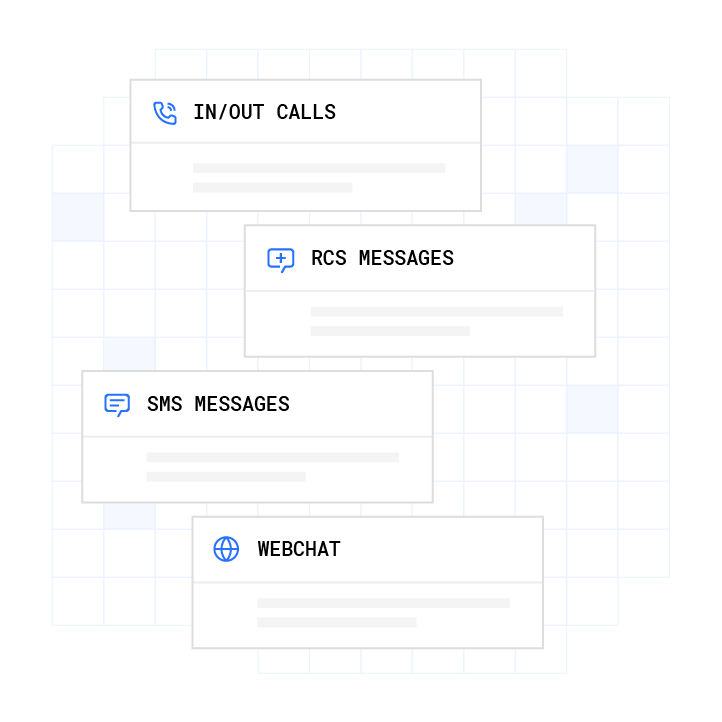
Franchise operators see this gap clearly. A multi-unit franchise owner reported going from missing 40% of calls across 12 locations to answering 100% of them, with booking rate doubling and no additional receptionist headcount, per Plura’s franchise communications guide.
Compare Plura’s carrier-grade infrastructure and omnichannel pricing against your current setup.
Regulatory Landscape for After-Hours AI in 2026
After-hours AI voice and SMS services operate inside a layered regulatory environment. Operators evaluating solutions should consult qualified counsel on their specific obligations. The following describes the frameworks most relevant to high-volume U.S. operators.
The Telephone Consumer Protection Act (TCPA), codified at 47 U.S.C. § 227, governs automated calling and texting.2 The FCC’s February 2024 declaratory ruling explicitly classified AI-generated voices as “artificial or prerecorded” under TCPA, applying the same consent framework that governs traditional robocalls.2 The FTC Telemarketing Sales Rule at 16 CFR Part 310 restricts outbound telemarketing calls to 8 a.m.–9 p.m. in the called party’s local time zone.2 Multiple states apply stricter windows.
The FCC’s March 27, 2026 Notice of Proposed Rulemaking (NPRM, CG Docket No. 26-52) proposes mandatory onshoring for interactions involving sensitive consumer information including credit card numbers, bank account data, Social Security numbers, and password resets, and a suggested 30% cap on offshore customer service call volume.2 The NPRM also proposes extending these restrictions to emails, texts, and online chats. Operators with offshore vendor contracts or AI tools running on foreign infrastructure should review their exposure against this proposed rulemaking with counsel.
Plura supports compliance with SOC 2, HIPAA, ISO certification, GDPR, SHAKEN/STIR caller ID verification, TCPA compliance, and DNC compliance.1 Plura AI provides HIPAA and SOC 2 compliance support and integrates with The Blacklist Alliance’s TCPA Litigation Firewall for real-time DNC scrubbing and litigation protection.1 Every outbound contact is checked against federal and state DNC registries in real time before dial. Consent records are timestamped, immutable, and audit-ready. Quiet-hours rules enforce automatically through time-zone detection. Plura runs on 100% U.S. infrastructure by architecture, which positions operators to address the FCC NPRM’s onshoring requirements as they develop.
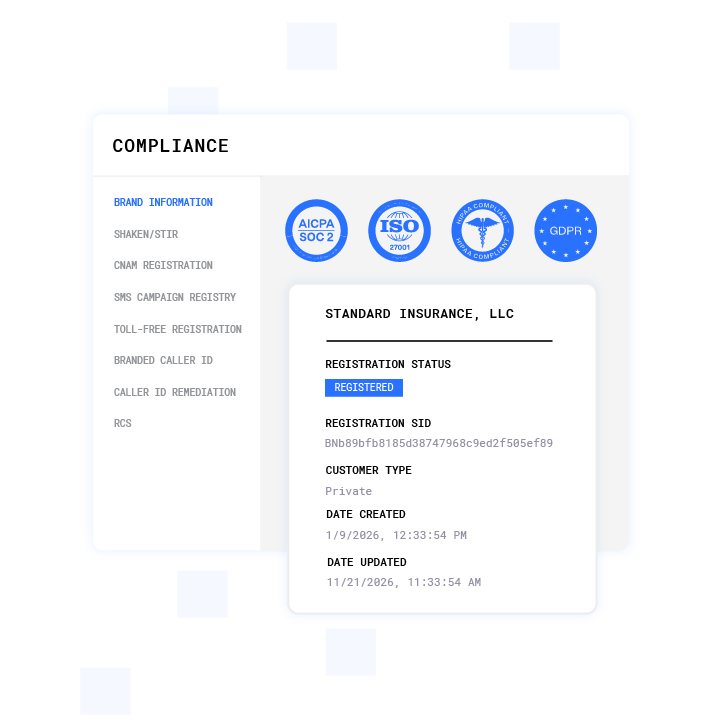
Customers remain responsible for their own regulatory obligations and certifications. Plura provides the infrastructure, and compliance posture downstream remains the customer’s responsibility.
Implementation Timeline for an After-Hours AI Receptionist
Most home services operators can take a standard inbound qualification and booking flow live within days. More complex multi-step intake, such as a 25-question health-history survey for a healthcare-adjacent vertical, typically runs closer to one to two months because the workflow logic requires design and validation time.
Plura’s onboarding sequence follows a consistent structure across every deployment:
- A discovery audit of the operator’s business and call economics
- Intake of sample calls, standard operating procedures, and existing scripts
- An overnight build of a dynamic conversation mockup using Plura’s internal tooling
- A review meeting to walk through the mockup and iterate
- Engineering build of the production workflow
- Pilot test on a subset of real calls
- Full go-live
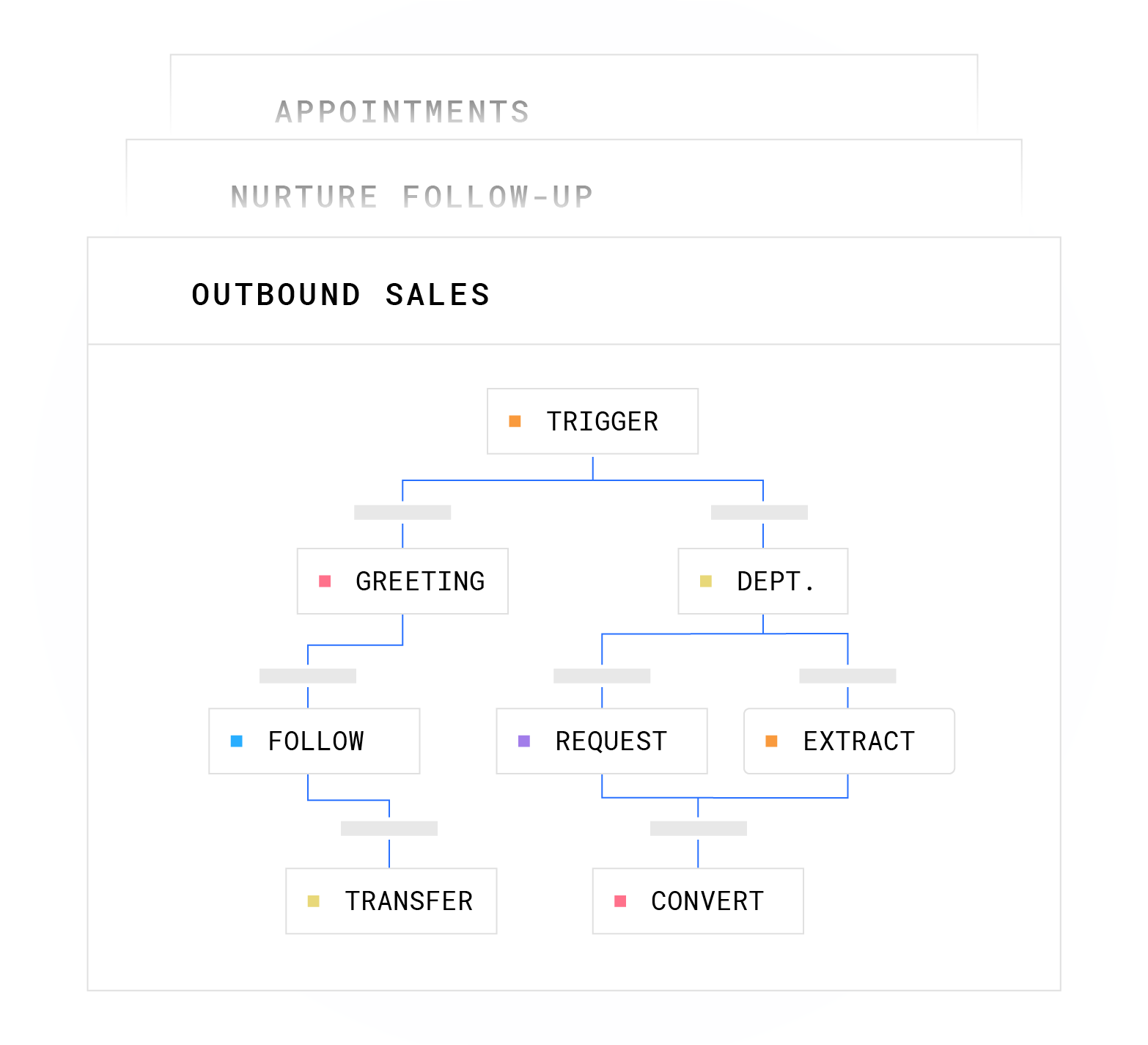
Annual contracts include a 90-day opt-out window. If the deployment does not deliver, operators are not held to the annual term. Plura iterates each customer’s conversation workflow continuously after launch. The team monitors real calls for objection patterns and conversion gaps rather than handing off the keys after the initial build.
Franchise networks see deployment time compress significantly. AI deployment compresses from 2–4 weeks of front-desk training per new hire to days of AI deployment per location, with a centralized dashboard tracking per-location metrics across the entire system from day one.
Run your numbers through Plura’s calculator to model your cost savings before your first call.
Frequently Asked Questions
What is an after hours virtual receptionist?
An after hours virtual receptionist is a system that answers inbound calls, qualifies leads, books appointments, and routes urgent issues when your office is closed. AI-powered versions handle these tasks across voice, SMS, RCS, and webchat simultaneously, with no staffing gaps on evenings, weekends, or holidays. The key differentiator between basic AI tools and carrier-grade platforms like Plura is whether the system owns the underlying telecom infrastructure and maintains conversation context across channels.
How much does an after hours answering service cost in 2026?
Traditional live-agent after-hours services typically cost $200–$1,200 per month (or up to $1,640 for premium plans) for true 24/7 coverage at a single location depending on call volume. At enterprise scale, traditional contact center TCO reaches $4M–$7M annually. Plura’s carrier-grade AI agents operate at a TCO of $300K–$700K per year on equivalent volume, with no after-hours surcharges and flat-rate pricing across call volume spikes during peak seasons.
What is the difference between a live-agent answering service and an AI receptionist?
Live-agent services scale linearly with headcount, often carry after-hours rate premiums, and cannot maintain conversation context across channels. Basic AI tools address cost but typically lack carrier ownership, branded caller ID, real-time DNC scrubbing, and cross-channel stateful memory. Plura’s AI voice agents own the full carrier stack, issue branded caller ID directly, and maintain conversation history across voice, SMS, RCS, and webchat through a single Stateful Conversation Database. A customer who texted at 9 a.m. is recognized when they call at noon without having to repeat themselves.
What compliance frameworks apply to after-hours AI answering services?
The primary federal frameworks include the TCPA (47 U.S.C. § 227), which the FCC’s February 2024 declaratory ruling extended to AI-generated voices, and the FTC Telemarketing Sales Rule at 16 CFR Part 310, which restricts outbound call timing. The FCC’s March 2026 NPRM (CG Docket No. 26-52) proposes onshoring requirements for sensitive consumer data and a 30% cap on offshore call volume. State-level frameworks include all-party call recording consent laws in approximately eleven states and active consumer privacy laws in California, Virginia, Colorado, Connecticut, and others. Operators should consult qualified counsel on their specific obligations. Plura supports compliance with SOC 2, HIPAA, ISO certification, GDPR, SHAKEN/STIR caller ID verification, TCPA compliance, and DNC compliance on 100% U.S. infrastructure.
How quickly can an AI after-hours receptionist go live?
A standard inbound qualification and booking flow for a home services operator typically goes live in days. Complex multi-step intake workflows run closer to one to two months. Plura’s onboarding includes a discovery audit, script intake, overnight mockup build, review and iteration, production engineering, pilot testing, and full go-live. Every annual contract includes a 90-day opt-out window. Franchise networks can deploy across multiple locations in days rather than the 2–4 weeks required to train a new front-desk hire at each unit.
What happens to calls that the AI cannot handle?
Plura’s workflows include explicit escalation guardrails. When a caller’s response falls outside the workflow’s defined paths, such as an unfamiliar request, a sensitive disclosure, or a high-stakes objection, the AI warm-transfers the call to a U.S. agent with full conversation context already passed through. The human agent sees the same memory the AI sees, so the caller does not have to repeat themselves. Sensitive data including protected health information, personally identifiable information, and payment data is redacted at the field level and routed through appropriate channels.
Run your numbers: Run your numbers through Plura’s calculator to check your ROI in real time.
Compare plans: Compare Plura’s plans and rates side by side.
See it live: Book a live demo with Plura to see the carrier-grade AI voice agent in action.
1 Plura AI maintains SOC 2, HIPAA, ISO, and GDPR posture as part of its platform infrastructure. References to compliance frameworks in this article describe Plura’s platform capabilities and do not constitute a guarantee that any customer using Plura will themselves be compliant with applicable laws or standards. Customers remain solely responsible for their own regulatory obligations, certifications, consent management, recordkeeping, and the claims they make to their own end users. Consult qualified legal counsel for guidance specific to your use case.
2 This article describes regulatory frameworks at a general level and does not constitute legal advice. Laws and regulations vary by jurisdiction, change over time, and apply differently depending on facts and circumstances. Readers should consult qualified legal counsel before making compliance decisions.
3 Performance figures, customer outcomes, and industry statistics referenced in this article are drawn from cited third-party sources or Plura customer case studies. Individual results vary based on implementation, use case, industry, audience, and execution. Past or aggregate performance is not a guarantee of future results.
4 References to third-party products, services, companies, or research are made for informational and comparative purposes only. Plura AI is not affiliated with, endorsed by, or sponsored by any third party named in this article unless explicitly stated. Trademarks and product names referenced remain the property of their respective owners.
This article is provided for informational purposes only and reflects Plura AI’s understanding at the time of publication. Product capabilities, integrations, and specifications are subject to change. For the most current information, visit plura.ai.
This article was produced with the assistance of AI tools and reviewed by Plura AI prior to publication.