

Written by: Matt Beucler, CEO, Plura AI | Last updated: August 26, 2026
Key Takeaways
- Lightweight AI chatbots handle single-session, single-channel booking but lack the stateful memory and compliance infrastructure high-volume operators need.
- Enterprise AI agents deliver sub-5-second cross-channel responses, persistent conversation memory, real-time DNC/TCPA scrubbing, and SHAKEN/STIR caller ID verification.1
- Bi-directional CRM and calendar integrations plus no-code workflow builders remove manual data entry and keep scheduling logic consistent across locations.
- Layered, interactive reminders across voice, SMS, and RCS can cut no-show rates by up to 40% while automatically backfilling cancelled slots from waitlists.
- High-volume operators in regulated industries can book a live demo with Plura AI to review how the platform supports SOC 2, HIPAA, ISO, GDPR, TCPA, and DNC compliance at scale.1
What AI Chatbots Appointment Scheduling Actually Delivers
The phrase “AI chatbots appointment scheduling” covers a wide spectrum. At one end sit lightweight chatbots: single-channel, session-based tools that present a calendar widget, collect a name and time slot, and send a confirmation email. At the other end sit enterprise AI agents: stateful, multi-channel systems that qualify the lead, book the appointment, send layered reminders across voice, SMS (Short Message Service), and RCS (Rich Communication Services), and recover no-shows before the slot is lost.
The gap between those two categories is measurable. No-show rates across U.S. outpatient clinics typically run 20% to 30%, with some specialties reaching 40%.3 The industry standard for first contact on an inbound lead is 47+ hours, yet organizations deploying AI for speed to lead see connection rates increase by 3x to 5x.3 Lightweight chatbots do not close that gap. They lack the cross-channel memory, escalation logic, and compliance infrastructure that high-volume operators running thousands of monthly interactions need.
Chatbot vs Enterprise AI Agent: Key Differences
Enterprise AI agents differ from lightweight chatbots across several operational dimensions, and each layer builds toward a complete scheduling system. The foundation is speed. Manual processes average over 47 hours to first contact, while enterprise AI agents respond in under 5 seconds across voice, SMS, and webchat.
That speed only matters when the system remembers context. Cross-channel memory in lightweight chatbots ends when the session closes. Enterprise AI agents maintain persistent stateful records across voice, SMS, RCS, and webchat so a lead never repeats themselves.
This persistent memory enables automated compliance. Compliance checks in lightweight chatbots are often manual or absent. Enterprise AI agents perform real-time DNC scrubbing, TCPA consent logging, and quiet-hours enforcement on every contact.
Carrier infrastructure and scale form the next layer. Lightweight chatbots typically route through third-party CPaaS providers without branded caller ID. Enterprise AI agents use FCC-licensed carrier infrastructure with SHAKEN/STIR authentication and achieve logarithmic cost scaling instead of headcount-based scaling.
Governance and reporting complete the picture. Escalation paths in lightweight chatbots provide basic activity logging. Enterprise AI agents include approval gates, audit logs, warm transfer to U.S. agents, full conversation transcripts, intent signals, and outcome-based metrics.
See these agent capabilities in action by booking a demo to walk through cross-channel memory, compliance automation, and escalation workflows with your own use cases.
Scheduling Integrations Across Calendars, CRMs, and Workflows
Enterprise appointment scheduling requires more than a calendar widget. It requires bi-directional data flow between the AI agent, the operator’s CRM (Customer Relationship Management) system, and the booking platform so that every confirmed appointment writes back to the source of truth without manual entry.
Plura’s integrations cover Google Calendar, Outlook via Microsoft 365, Salesforce, HubSpot, Zoho, Cal.com, and Calendly, plus more than 50 tools across CRM, attribution, data enrichment, document signing, and payment processing.4 Every integration inherits the Stateful Conversation Database. A lead enriched during an SMS thread carries the same context into a voice booking call without the customer repeating themselves.
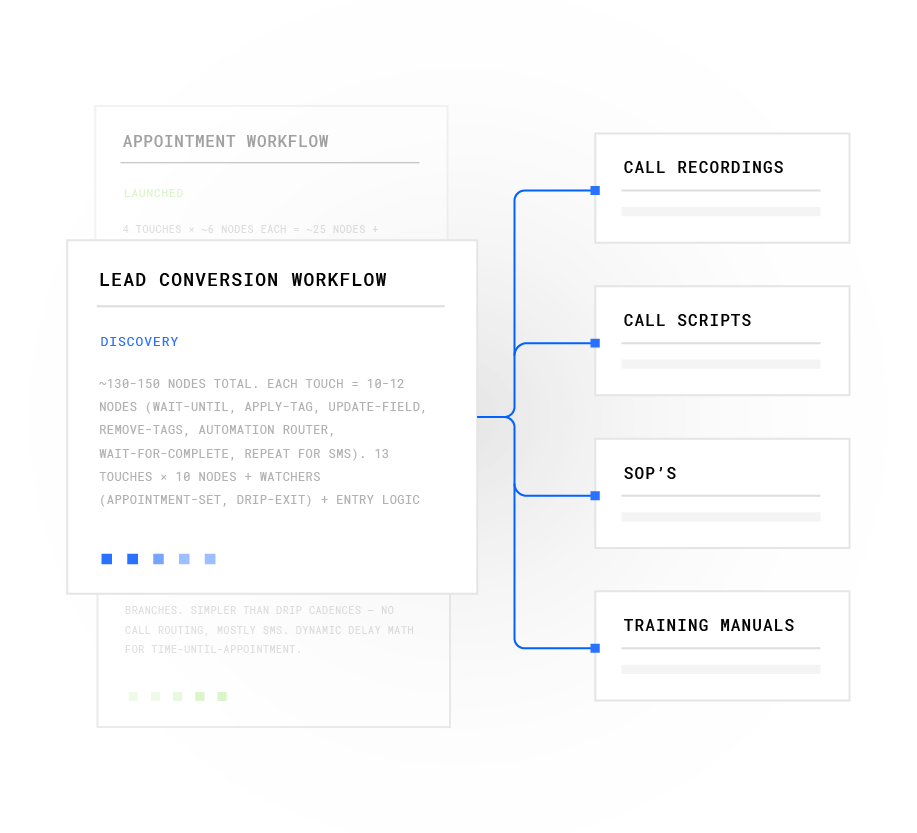
Operators who need custom conversation logic without engineering resources use Plura’s managed workflows, a no-code workflow builder that maps greeting nodes, qualification gates, reminder cadences, and escalation rules on a visual canvas. Teams can ship iterations without redeploying the underlying AI.
Compliance Considerations for U.S. Scheduling Operations
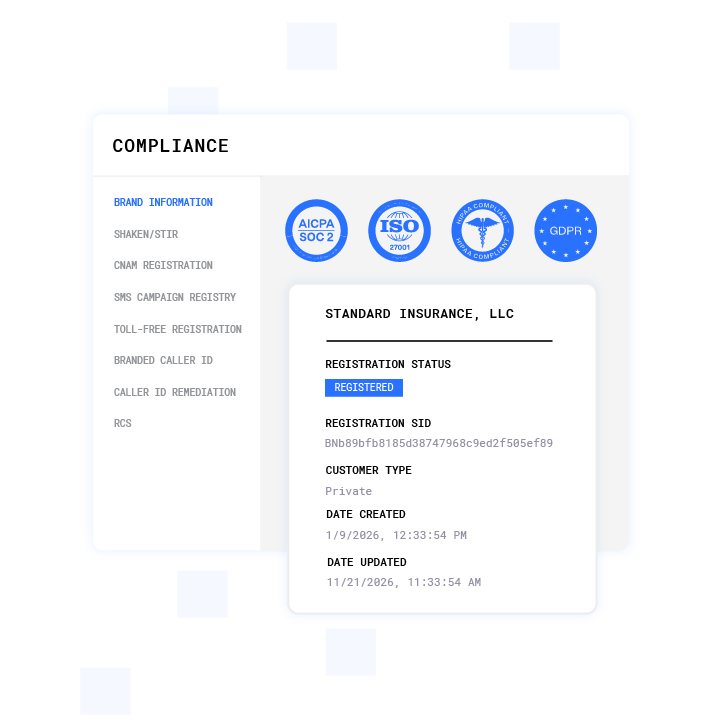
High-volume appointment scheduling across voice, SMS, and RCS touches multiple U.S. regulatory frameworks at the same time. Operators in healthcare, financial services, and other regulated verticals should consult qualified counsel on their specific obligations. The frameworks most relevant to scheduling workflows include:
- TCPA compliance: AI-generated voice is treated like an artificial or prerecorded voice under federal rules, with consent and disclosure obligations for voice and text outreach.
- DNC compliance: Every outbound contact must be checked against federal and state DNC registries before dial.
- HIPAA: Scheduling messages that contain protected health information (PHI) such as patient name, provider name, appointment time, and location involve end-to-end encryption, role-based access controls, and audit logging under 45 CFR Parts 160, 162, and 164.
- GDPR: Enterprise memory architectures must support GDPR Article 17 right-to-erasure and include decay policies for stale episodes.
- SHAKEN/STIR caller ID verification: Authenticates outbound call origination at the carrier level to reduce spam-label exposure.
- SOC 2 and ISO certification: Infrastructure-level controls covering continuous monitoring, penetration testing, and third-party audits.
Plura supports customer compliance across these frameworks. Plura provides the infrastructure, and compliance posture downstream of that remains the customer’s responsibility. Customers are responsible for their own certifications, regulatory obligations, and the claims they make to their own end users.
Plura’s compliance engine enforces real-time DNC scrubbing, immutable TCPA consent logging, automated quiet-hours rules via time-zone detection, and HIPAA-aligned encryption across all four channels. Compliance documentation and audit logs must be retained for six years under 45 CFR 164.530(j). Plura’s platform exports audit-ready reports in one click.
Coordinating Voice, SMS, RCS, and Webchat
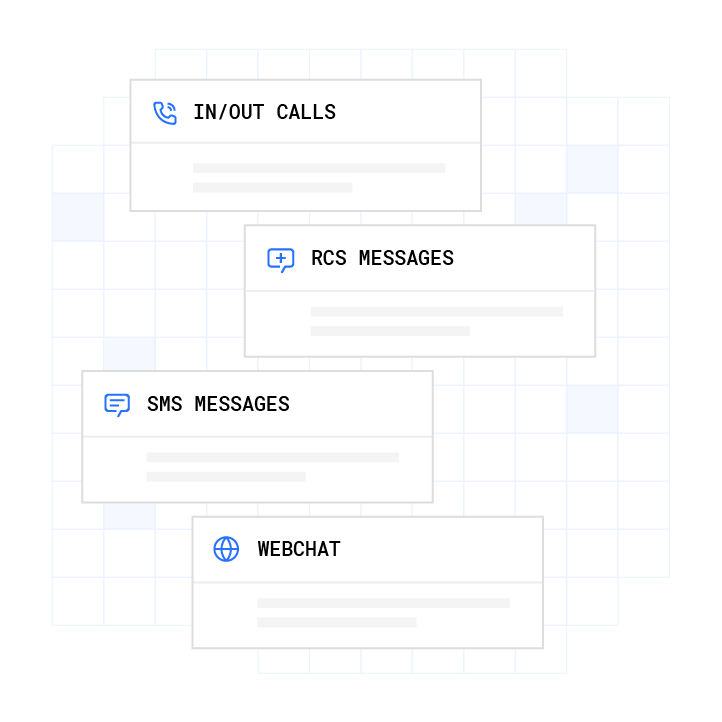
Appointment scheduling rarely happens on a single channel. A lead may discover a business through a website, respond to an SMS follow-up, and confirm via a voice call. Lightweight chatbots treat each of those touchpoints as a separate session. Enterprise AI agents treat them as one continuous conversation.
Plura’s Stateful Conversation Database keys every interaction to a customer token such as phone number, email, or ID across all four channels. An AI voice agent that handled a qualification call at 9 a.m. passes full context to the AI SMS reminder sent at noon. The AI webchat agent on the booking page reads the same record so no customer repeats themselves.
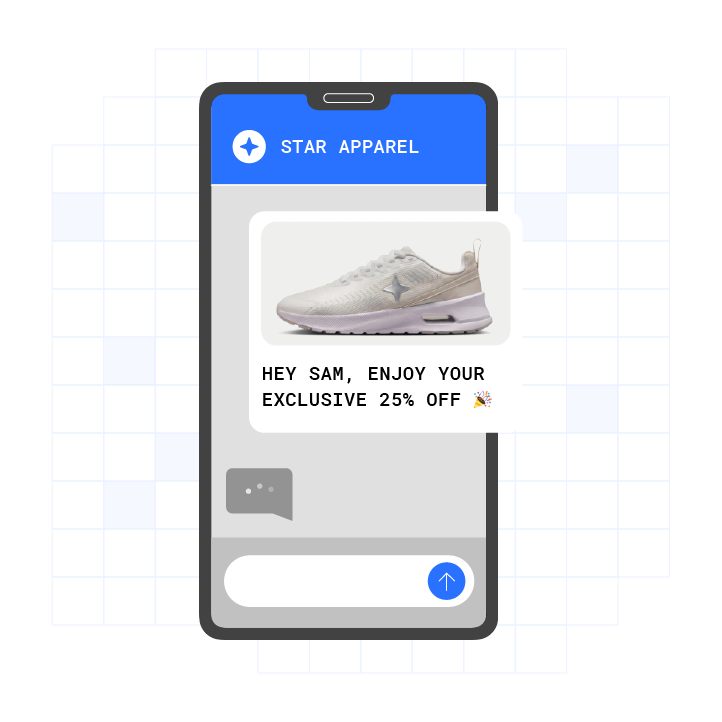
RCS delivers branded, interactive messages with in-message rescheduling, document signing via DocuSign or PandaDoc, and payment collection via Stripe, all inside the message thread. RCS messages are encrypted in transit between devices, carriers, and messaging infrastructure, providing stronger security than standard SMS. Plura’s 24/7 call answering capability means no appointment request goes unanswered after hours, which is a critical gap for home services and healthcare operators.
Reducing No-Shows with AI Reminders
No-shows are a quantified revenue problem. Missed appointments cost the U.S. healthcare system an estimated $150 billion per year, with each missed appointment averaging $200 or more in lost revenue.3 Some practices have reduced administrative staffing needs after implementing AI scheduling, which creates cost savings and favorable returns on investment.
Plura achieves up to 40% improvement in no-show rates3 through layered, stateful reminder flows across voice, SMS, and RCS that capture patient intent at booking, confirm attendance, and enable inline rescheduling without requiring a phone call.
How AI Agents Use RCS Reminders to Cut No-Shows
RCS reminders outperform plain SMS because they are interactive. Instead of a one-way text that a patient ignores, an RCS reminder presents a branded message with confirm, cancel, and reschedule buttons inside the thread. SMS reminders carry a 98% open rate compared to 20% for email, and RCS adds action buttons that convert that open rate into confirmed attendance.
When a patient cancels via RCS, Plura’s stateful agent immediately triggers waitlist backfill logic and recovers the slot without coordinator intervention. AI-targeted interventions can achieve higher uptake on waitlisted slots with short notice compared with manual coordinator calls.
How AI Agents Handle Rescheduling and Cancellations
Lightweight chatbots can present a rescheduling link, but they cannot hold the context of why the original appointment was booked, what was discussed during qualification, or whether the patient has rescheduled before. Enterprise AI agents handle rescheduling as a stateful workflow. The agent reads the prior booking record, offers available slots based on real-time calendar data, updates the CRM, and sends a new confirmation, all without human intervention.
Enterprise scheduling systems route edge cases to humans rather than forcing full automation, so complex rescheduling requests escalate cleanly.
Choosing an AI Tool for Scheduling Meetings
The right tool depends on volume and compliance requirements. For operators handling hundreds of appointments per month across regulated verticals, the relevant criteria are stateful cross-channel memory, carrier-grade compliance infrastructure, native CRM and calendar integrations, and measurable no-show reduction. Lightweight tools built for individual users or small teams do not carry the compliance architecture or escalation logic that contact centers, franchise networks, and healthcare operators require.
Walk through Plura’s scheduling flows in a demo tailored to your appointment volume and channel mix.
Cost and ROI Considerations
Total cost of ownership for appointment scheduling AI extends beyond the monthly subscription fee. It includes the platform cost, the compliance infrastructure, the integration build, and the ongoing conversation engineering required to keep no-show rates down and booking rates up.
Lightweight chatbots carry low entry costs but shift compliance, integration, and tuning work onto the operator. Enterprise AI agents carry higher platform costs but replace those hidden labor costs with managed infrastructure. The Plura ROI calculator models this trade-off using operator-specific inputs. A 15-agent operation paying $20 per hour with standard overhead costs $60,000 per month. Replacing that team with Plura at $15 per hour and 100% talk utilization drops the monthly cost to $14,400, a 30-day saving of $45,600 and a 12-month saving of $547,200.3
Most clinics achieve 300% to 500% net ROI from AI-driven scheduling assistants, with a typical payback period of 10 to 18 months.3 Review Plura’s plans and rates to compare tiers against your current contact-center economics.
Use the Plura calculator to model your specific contact-center economics and see the payback timeline.
When an Enterprise AI Agent Becomes the Right Fit
A lightweight chatbot is sufficient when appointment volume is low, the booking flow is single-channel, and compliance obligations are minimal. Enterprise AI agents are the appropriate choice when any of the following conditions apply:
- Monthly appointment volume exceeds several hundred interactions across multiple locations or channels
- The operator handles PHI, financial data, or other regulated information during the booking flow
- No-show rates are generating measurable revenue loss that a reminder cadence alone has not resolved
- The operator needs cross-channel continuity so that a lead’s SMS conversation carries into a voice booking call
- Compliance obligations under TCPA, DNC, HIPAA, or state-level rules require audit-ready consent records and real-time scrubbing
- The operator runs a franchise network or multi-location business where consistent scheduling SLAs (Service Level Agreements) across every unit are a requirement
A multi-unit franchise owner in home services reported going from missing 40% of calls across 12 locations to answering 100% of them, with booking rates doubling without adding a single receptionist. That outcome is not achievable with a lightweight chatbot. It requires stateful memory, carrier-grade infrastructure, and a no-code workflow builder that enforces identical scheduling logic at every location.
Frequently Asked Questions
What is the difference between an AI chatbot and an enterprise AI agent for appointment scheduling?
A lightweight AI chatbot handles a single session on a single channel, presents available slots, and sends a confirmation. It forgets the conversation when the session ends. An enterprise AI agent maintains a persistent memory of every prior interaction across voice, SMS, RCS, and webchat, applies business rules and eligibility logic, enforces compliance guardrails on every outbound contact, and escalates to a human agent when the workflow requires it. For high-volume operators, the distinction is operational. Lightweight chatbots require human intervention to handle rescheduling, cancellations, waitlist backfill, and compliance edge cases. Enterprise agents handle those workflows autonomously.
How does stateful memory improve appointment scheduling outcomes?
Stateful memory means the AI agent retains context across every touchpoint. A patient who confirmed an appointment via SMS does not need to re-identify themselves when the voice reminder calls. A lead who discussed pricing during a webchat session does not repeat that conversation when the booking call comes.
This continuity reduces friction at every step of the scheduling journey, which directly affects show rates. When patients and customers experience a coherent, context-aware interaction rather than a fragmented series of disconnected contacts, confirmation rates improve and no-show rates fall.
What compliance infrastructure does an enterprise AI scheduling platform need to support?
For U.S. operators, the relevant frameworks include TCPA compliance for outbound voice and text, DNC compliance with real-time registry scrubbing before every contact, HIPAA for any scheduling workflow that touches protected health information, SHAKEN/STIR caller ID verification for outbound voice, SOC 2 for infrastructure-level security controls, and ISO certification for AI management system governance. RCS scheduling workflows carry the same consent and opt-out obligations as SMS. Operators should consult qualified counsel on their specific obligations under each framework. Plura supports customer compliance across these areas, and customers remain responsible for their own regulatory posture.
How do AI reminders reduce no-shows compared to manual outreach?
Manual outreach is constrained by coordinator availability, call volume capacity, and the time required to reach each patient or customer individually. AI reminders operate across all contacts simultaneously, 24 hours a day, across multiple channels. The key differentiator is interactivity. A two-way RCS or SMS reminder that lets the recipient confirm, cancel, or reschedule in one tap generates a response that a one-way reminder cannot.
When a cancellation comes in, the AI agent immediately triggers waitlist backfill and recovers the slot without coordinator involvement. The combination of higher contact rates, interactive confirmation, and automated waitlist management produces measurable no-show reduction that manual outreach cannot match at scale.
What integrations does an enterprise AI scheduling agent need to operate effectively?
At minimum, an enterprise AI scheduling agent needs bi-directional integration with the operator’s calendar system such as Google Calendar, Outlook, or a specialty booking platform, the CRM such as Salesforce, HubSpot, or Zoho, and the practice management or EHR system for healthcare operators. Beyond those core integrations, high-volume operators benefit from data enrichment connections that qualify leads before the booking conversation begins, document signing integrations for intake forms, and payment processing for deposit collection at booking.
Plura’s integration directory covers more than 50 tools across all of these categories, with every integration inheriting the Stateful Conversation Database so context is never siloed by channel or system.
Check your projected savings with the Plura calculator and compare them to your current staffing and tooling costs.
1 Plura AI maintains SOC 2, HIPAA, ISO, and GDPR posture as part of its platform infrastructure. References to compliance frameworks in this article describe Plura’s platform capabilities and do not constitute a guarantee that any customer using Plura will themselves be compliant with applicable laws or standards. Customers remain solely responsible for their own regulatory obligations, certifications, consent management, recordkeeping, and the claims they make to their own end users. Consult qualified legal counsel for guidance specific to your use case.
2 This article describes regulatory frameworks at a general level and does not constitute legal advice. Laws and regulations vary by jurisdiction, change over time, and apply differently depending on facts and circumstances. Readers should consult qualified legal counsel before making compliance decisions.
3 Performance figures, customer outcomes, and industry statistics referenced in this article are drawn from cited third-party sources or Plura customer case studies. Individual results vary based on implementation, use case, industry, audience, and execution. Past or aggregate performance is not a guarantee of future results.
4 References to third-party products, services, companies, or research are made for informational and comparative purposes only. Plura AI is not affiliated with, endorsed by, or sponsored by any third party named in this article unless explicitly stated. Trademarks and product names referenced remain the property of their respective owners.
This article is provided for informational purposes only and reflects Plura AI’s understanding at the time of publication. Product capabilities, integrations, and specifications are subject to change. For the most current information, visit plura.ai.
This article was produced with the assistance of AI tools and reviewed by Plura AI prior to publication.