

Written by: Matt Beucler, CEO, Plura AI | Last updated: August 26, 2026
Key Takeaways
- High-volume U.S. contact centers can cut AI dialer costs by up to 90 percent when a traditional 7M annual TCO is replaced with Plura AI’s carrier-owned stack delivering similar volume at roughly 700K per year.3
- Four compounding savings levers across labor, carrier, compliance, and stateful memory drive the gap between a traditional $4M–$7M TCO and Plura’s $300K–$700K range for a 100-seat center.
- Per-conversation economics favor AI, with Plura at $0.35–$0.85 per completed conversation compared with offshore at $5–$15 and U.S. onshore agents at $20–$26 per hour fully loaded.3
- Plura’s compliance engine supports TCPA, DNC, SHAKEN/STIR, SOC 2, HIPAA, ISO, and GDPR across outbound contacts, which can reduce separate tooling spend and legal overhead.1
- See how Plura can change your contact-center cost structure and start a conversation with Plura AI today.
Why 2026 Dialer Economics Are Under Pressure
Three forces are squeezing U.S. contact center budgets in 2026. First, BLS Occupational Employment and Wage Statistics (May 2025) place the mean hourly wage for U.S. customer service representatives at $22.40. When the 45.6% benefits load from BLS Employer Costs for Employee Compensation (March 2026) is applied, the fully loaded employer cost reaches $32.63 per hour worked. Adjusted for an 83.3% average occupancy rate, that rises to $39.17 per contact-handling hour.
Second, FCC NPRM CG Docket No. 26-52 describes a framework that would cap offshore customer-service calls at 30% and restrict offshore handling of sensitive consumer data.2 Companion legislation such as the Keep Call Centers in America Act (S.2495) and state laws in New York, New Jersey, Connecticut, Missouri, and Florida extend that perimeter further.
Third, U.S. mobile answer rates for unknown numbers fell to approximately 3% by 2026 according to Hiya data. Carrier spam labeling, STIR/SHAKEN enforcement, and iOS and Android unknown-caller silencing contribute to this shift. Traditional dialer economics now strain at the labor, carrier, and regulatory layers at the same time.
Executive Summary: The 700K vs. 7M TCO Framework
The core benchmark is straightforward for a 100-seat contact center. Traditional operations cost $4 million to $7 million annually, while AI-powered communications using platforms like Plura AI cost $300,000 to $700,000.3 That gap comes from four compounding savings levers that work together rather than in isolation.
- Labor savings: AI agents run at 100% talk utilization and do not incur taxes, benefits, commissions, or turnover replacement costs.
- Carrier savings: Plura owns its FCC-licensed audio bridging carrier, which removes the third-party CPaaS markup that Twilio-based API resellers pass to customers.4
- Compliance savings: TCPA and DNC checks and SHAKEN/STIR caller ID verification run inside the platform before each dial, which can reduce spend on bolt-on compliance tooling.
- Stateful-memory savings: Cross-channel conversation memory cuts repeat contacts and the agent time spent re-qualifying the same lead across multiple touchpoints.
2026 TCO Comparison for a 100-Seat Operation
| Cost Category | Traditional Contact Center | Plura AI (Carrier-Owned) |
|---|---|---|
| Annual TCO (100-seat equivalent) | $4M–$7M | $300K–$700K |
| Agent labor share of operating costs | 60–70% | Eliminated (AI agents) |
| Annual agent turnover rate | 30–45% | 0% |
| Talk-time utilization | ~70% productive time | 100% |
| Carrier layer | Third-party CPaaS markup | FCC-licensed, owned carrier |
| Compliance tooling | Significant costs for large outbound teams | Enforced inside platform |
Run your numbers through Plura’s calculator to check your ROI in real time.
Per-Conversation and Per-Minute Cost Benchmarks
Plura voice agents cost $0.35 to $0.85 per completed conversation including intelligence, compared with $5 to $15 fully loaded for offshore call centers and $20 to $26 per hour fully loaded for U.S. onshore agents. At a four-minute average handle time and eight calls per productive hour, that onshore figure translates to roughly $10–$13 per conversation before overhead.
The per-minute picture shows a similar spread. AI voice agents cost $0.07–$0.25 per minute all-in in 2026, compared with roughly $0.47–$0.75 per minute for human agents (U.S. onshore) fully loaded including labor, training, scheduling, and churn. This range reflects a 2x to 10x reduction in cost per minute at comparable interaction quality.
Buyers evaluating third-party AI dialer platforms need to account for full-stack costs. Advertised per-minute rates from providers like Retell AI at $0.07 per minute can materially understate total expenses once telephony, LLM, and text-to-speech components are included4, which can push real production costs to $0.13–$0.24 per minute. Plura’s carrier-owned architecture removes the third-party CPaaS markup that drives much of that gap.
Compliance Overhead and Its Impact on TCO
Compliance creates a meaningful cost center for traditional contact centers. Larger outbound teams that run high volumes of contacts can incur TCPA-related costs across software, staff time, and outside counsel. Typical line items include:
- National DNC Registry access, which costs $82 per area code after the first five free, with a maximum annual fee of $22,626 for nationwide access.
- Consent certificate platforms.
- Cloud dialers with bundled compliance features.
- Multistate compliance reviews for state telemarketing statutes from a qualified firm.
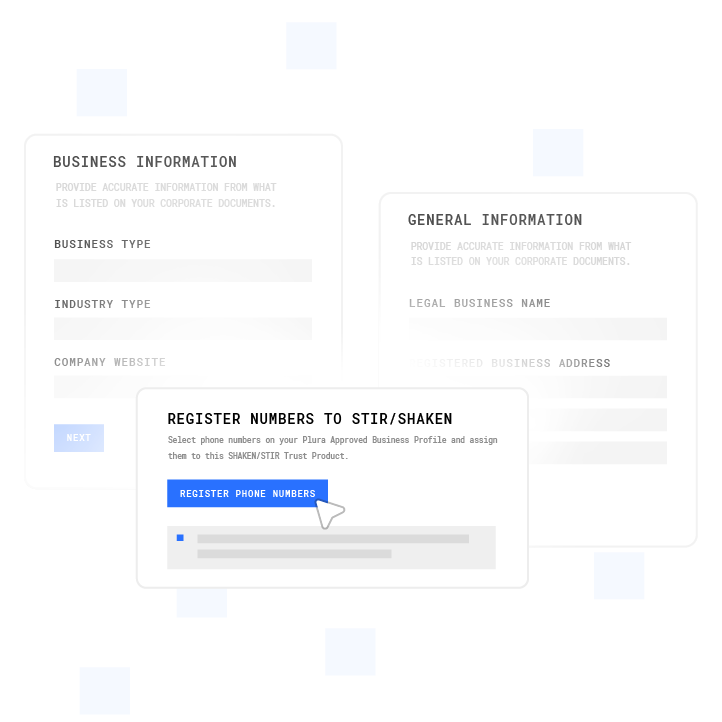
Plura’s compliance engine supports TCPA and DNC checks on every outbound contact before dial, with real-time scrubbing against federal and state registries, immutable consent records, and automated quiet-hours controls through time-zone detection. SHAKEN/STIR caller ID verification runs on every outbound call at the carrier level. Operators should consult qualified counsel regarding their own regulatory obligations, and Plura provides the infrastructure rather than legal advice.
Stateful Cross-Channel Memory and Cost Savings
Beyond compliance and carrier savings, stateful cross-channel memory forms a fourth savings lever. Most AI dialer platforms treat each channel as a separate product with separate memory. A lead who texted at 9 a.m. often has to re-explain their situation when the call arrives at noon.
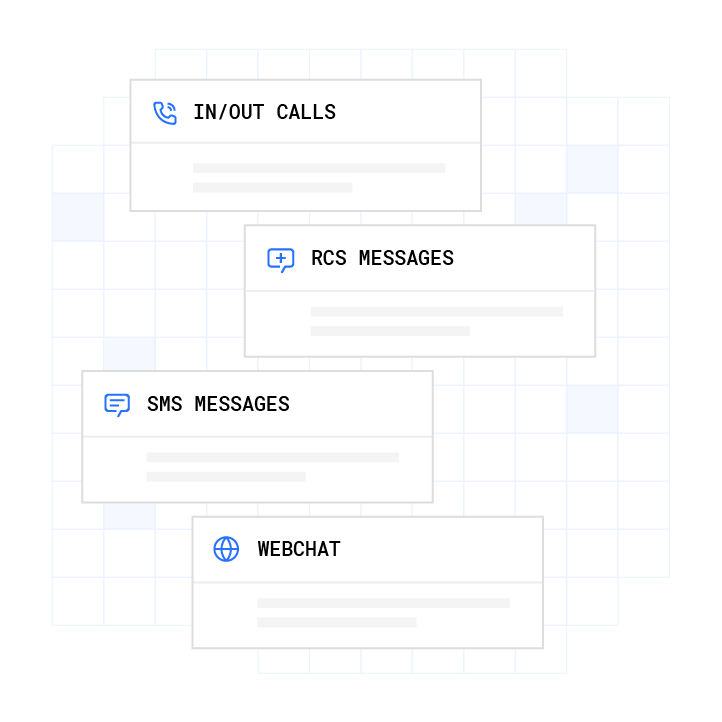
Plura’s Stateful Conversation Database keys every interaction to a customer token across voice, SMS, RCS, and AI webchat. The agent that texted the lead already knows qualification status, objections raised, and offers made when the call connects. AI containment of routine calls avoids substantial live-agent time, and cross-channel memory further reduces the repeat-contact rate that drives a significant share of inbound volume in high-turnover contact centers.
10-Agent Savings Scenario for a Mid-Size Team
Plura’s ROI calculator illustrates the impact on a 15-agent operation paying $20 per hour with 25% for taxes, benefits, and commissions and a 40% talk-utilization rate typical of human contact-center work. This configuration costs about $60,000 per month to operate. Replacing that team with Plura at $15 per hour, 100% talk utilization, and 6 Plura agents doing the work of 15 humans drops the monthly cost to $14,400.
- 30-day savings: $45,600
- 12-month savings: $547,200
- 60-month savings: $2,736,000
For higher-volume operations, the same model scales to the 700K vs. 7M TCO benchmark cited earlier. Run your numbers through Plura’s calculator to check your ROI in real time.
Cheapest AI Dialer Options in 2026
Headline pricing for AI dialer platforms in 2026 often starts around $0.05 per minute for developer-grade infrastructure tools. Actual production costs can reach $0.12–$0.25 per minute because the full stack adds separate usage-based charges for speech-to-text, LLM inference, text-to-speech, telephony, and platform fees. Buyers who model only the headline rate risk understating true TCO by 20–50%.
The lowest total cost of ownership typically comes from platforms that own the carrier layer rather than renting it. Multi-vendor stacks that combine providers such as Twilio, Deepgram, and ElevenLabs can run up to three times higher in blended cost than unified single-vendor architectures because each vendor adds its own margin. Plura’s FCC-licensed carrier removes that stacking cost at the origination layer.
AI Dialer Cost per Minute by Model
In 2026, the per-minute cost landscape for AI dialers breaks down into several categories.
- Infrastructure-layer platforms (self-assembled): $0.007–$0.091 per conversation minute at July 2026 prices depending on the STT, LLM, and TTS stack selected.
- Managed all-in-one platforms: $0.12–$0.35 per minute for managed all-in-one AI voice platforms with CRM integrations and support.
- Human agents (U.S. onshore): roughly $0.47–$0.75 per minute fully loaded including labor, training, scheduling, and churn.
- Offshore BPO: $5–$15 fully loaded per completed conversation.
For high-volume deployments, seat-based or concurrent-channel pricing can outperform per-minute pricing at higher usage levels. Buyers should also factor in telephony pass-through fees from third-party carriers, which can add meaningfully to total cost.
10-Metric Checklist for Measuring AI Dialer ROI
To build a defensible business case, operations and finance leaders need baseline measurements that quantify the gap between current costs and AI-powered alternatives. Track these ten metrics before and after deployment to document ROI:
- Cost per completed conversation (fully loaded: labor or AI runtime plus carrier and compliance tooling).
- Agent talk-time utilization (target of 100% for AI compared with a 40–55% human baseline).
- Dials per agent-hour (target of 110–300 for predictive or AI compared with 15–25 manual).
- Right-party contact rate (target of 40% or higher with branded caller ID and SHAKEN/STIR caller ID verification).
- Annual agent turnover cost (replacement cost of $10,000–$20,000 per agent at 30–45% attrition).
- Compliance overhead spend (DNC scrubbing, consent platform, legal review, and multistate audits).
- Repeat-contact rate (reduced by stateful cross-channel memory).
- First-contact resolution rate (industry human baseline of 69%, AI containment often in the 70–85%+ range).
- Carrier cost per minute (owned carrier compared with third-party CPaaS markup).
- 12-month TCO (labor, carrier, compliance, tooling, and turnover replacement).
Book a live demo with Plura to walk through your numbers with the team.
Frequently Asked Questions
How does Plura’s 700K TCO compare to a traditional 7M contact center?
The 700K figure reflects a carrier-owned AI deployment at 100% talk utilization with no agent labor overhead, no turnover replacement costs, and compliance enforcement built into the platform. The 7M figure reflects a 100-seat traditional contact center where 60–70% of operating costs sit in agent labor, annual turnover runs 30–45%, and compliance tooling is purchased separately. The gap compounds over time because AI agents do not require rehiring, retraining, or benefits escalation as volume grows.
What compliance frameworks does Plura support?
Plura supports SOC 2, HIPAA, ISO certification, GDPR, SHAKEN/STIR caller ID verification, TCPA compliance, and DNC compliance. Every outbound contact is checked against federal and state DNC registries in real time before dial. Consent records are timestamped and immutable, and quiet-hours rules apply automatically through time-zone detection. Customers remain responsible for their own regulatory obligations and should consult qualified counsel regarding their specific compliance posture.
How does stateful memory reduce repeat contacts and cost?
Plura’s Stateful Conversation Database keys every interaction to a customer token across voice, SMS, RCS, and webchat. When a lead who texted at 9 a.m. receives a call at noon, the AI agent already holds the full context of the prior exchange, including qualification status, objections raised, and offers made. This structure removes the re-qualification loop that drives repeat contacts in traditional contact centers where agents on different channels share no common memory. Fewer repeat contacts lower the per-resolution cost and raise first-contact resolution rates.
What hidden costs should buyers watch for when evaluating AI dialers?
The most common hidden costs in 2026 AI dialer pricing include telephony pass-through fees from third-party carriers that can understate a quoted all-in rate by 20–30%, LLM token overages on long or complex calls, concurrency limits that trigger overage charges during peak hours, failed-call billing for short or errored calls, and one-time integration or onboarding fees ranging from $500 to $50,000 depending on CRM and workflow complexity. Buyers should model all-in production costs rather than published platform rates alone and should ask vendors whether the telephony layer is owned or rented from a third-party CPaaS.
Conclusion: Build the Business Case Before the Next Budget Cycle
The 2026 AI dialer cost savings opportunity is quantifiable and defensible. Traditional contact center TCO of 7M annually does not represent a fixed cost of doing business. It reflects linear labor scaling, third-party carrier markups, bolt-on compliance tooling, and stateless conversations that drive repeat contacts.
Plura’s carrier-owned stack addresses all four levers at once, delivering a 700K TCO on equivalent volume with SOC 2, HIPAA, ISO certification, GDPR, SHAKEN/STIR caller ID verification, TCPA compliance, and DNC compliance supported inside the platform. The per-conversation economics established earlier, with Plura’s sub-dollar cost compared with offshore and onshore human ranges, form the foundation of the business case. The 10-metric checklist above gives operations and finance leaders a measurement framework to build that case before the next planning cycle.
Review plans and rates on Plura’s pricing page to see which tier fits your volume.
1 Plura AI maintains SOC 2, HIPAA, ISO, and GDPR posture as part of its platform infrastructure. References to compliance frameworks in this article describe Plura’s platform capabilities and do not constitute a guarantee that any customer using Plura will themselves be compliant with applicable laws or standards. Customers remain solely responsible for their own regulatory obligations, certifications, consent management, recordkeeping, and the claims they make to their own end users. Consult qualified legal counsel for guidance specific to your use case.
2 This article describes regulatory frameworks at a general level and does not constitute legal advice. Laws and regulations vary by jurisdiction, change over time, and apply differently depending on facts and circumstances. Readers should consult qualified legal counsel before making compliance decisions.
3 Performance figures, customer outcomes, and industry statistics referenced in this article are drawn from cited third-party sources or Plura customer case studies. Individual results vary based on implementation, use case, industry, audience, and execution. Past or aggregate performance is not a guarantee of future results.
4 References to third-party products, services, companies, or research are made for informational and comparative purposes only. Plura AI is not affiliated with, endorsed by, or sponsored by any third party named in this article unless explicitly stated. Trademarks and product names referenced remain the property of their respective owners.
This article is provided for informational purposes only and reflects Plura AI’s understanding at the time of publication. Product capabilities, integrations, and specifications are subject to change. For the most current information, visit plura.ai.
This article was produced with the assistance of AI tools and reviewed by Plura AI prior to publication.