

Written by: Matt Beucler, CEO, Plura AI | Last updated: August 25, 2026
Key Takeaways for High-Volume Lead Teams
- Agencies that replace manual lead follow-up with AI respond to every inbound lead in under five seconds across voice, SMS, RCS, and webchat while maintaining compliance guardrails.
- Plura AI’s multi-tenant architecture lets one account manager support 15 to 20 clients instead of 5 to 8, without sacrificing data isolation.
- Real-time DNC/TCPA screening, stateful conversation memory, and automated qualification workflows keep speed-to-lead consistent and improve conversion rates across every client account.
- White-label reporting and CRM integrations remove hours of manual reporting and handoff work, so agency teams can focus on strategy instead of operations.
- Agencies ready to modernize lead response can see the multi-tenant workspace in action.
Step 1: Connect Every Client Source into One Workspace
Source consolidation is the first configuration decision. Every form submission, ad click, and missed call across all client accounts needs to land in one place before any follow-up logic can run. Plura AI achieves this consolidation by mapping each client to a dedicated tenant inside the platform. That tenant boundary is not cosmetic, because it enforces data isolation so one client’s leads, consent records, and conversation history never appear in another client’s context.
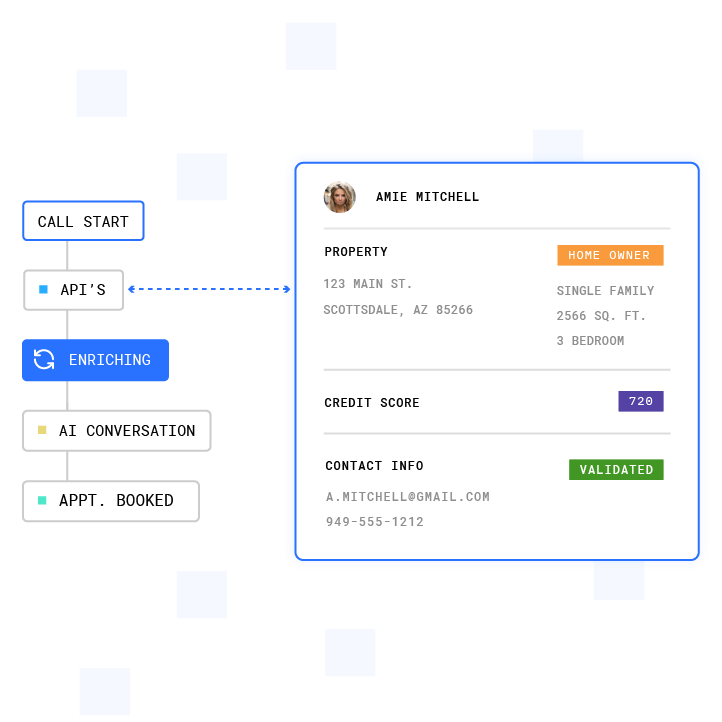
At ingestion, the platform logs consent state and source for every record. Those fields write back to the client’s CRM through Plura’s integrations, which connect natively to HubSpot, Salesforce, Zoho, Follow Up Boss, and 50+ additional platforms.4 Account managers stop toggling between multiple dashboards and start operating from a single workspace.
Step 2: Set Tenant-Level Speed-to-Lead Rules
Response timing is the next configuration layer once sources are connected. Plura’s AI SMS and AI voice agent can be enabled per tenant, with first contact occurring in under five seconds of lead submission. That speed matters because leads contacted at five minutes are 100x more likely to connect and 21x more likely to qualify than those contacted at 30 minutes.3
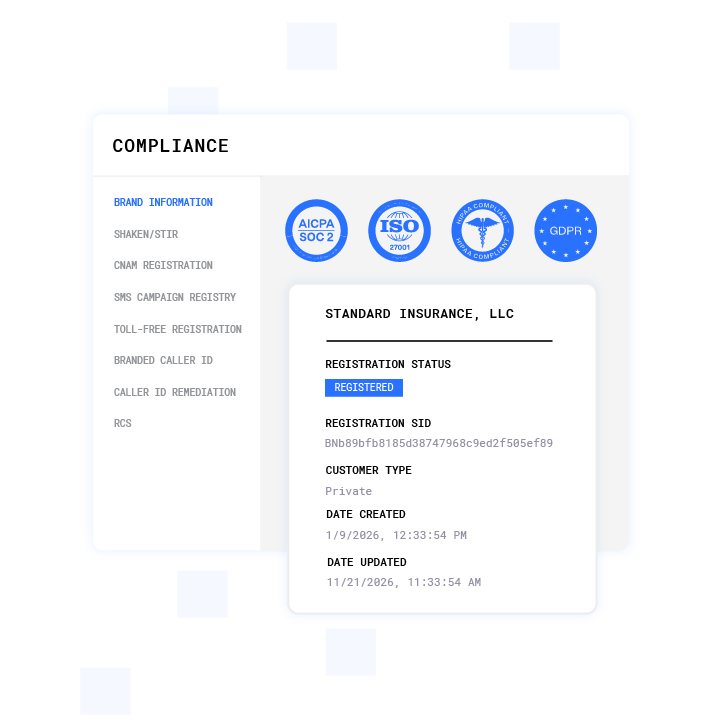
Maintaining that speed while supporting compliance requires automated screening. Before any outbound message leaves the platform, Plura runs real-time DNC (Do Not Call) and TCPA (Telephone Consumer Protection Act) litigator screening.2 Every check is timestamped and logged. Agencies remain responsible for their own regulatory obligations, and Plura provides infrastructure that supports that compliance posture.
1
Step 3: Build Qualification Workflows Around Each Client’s ICP
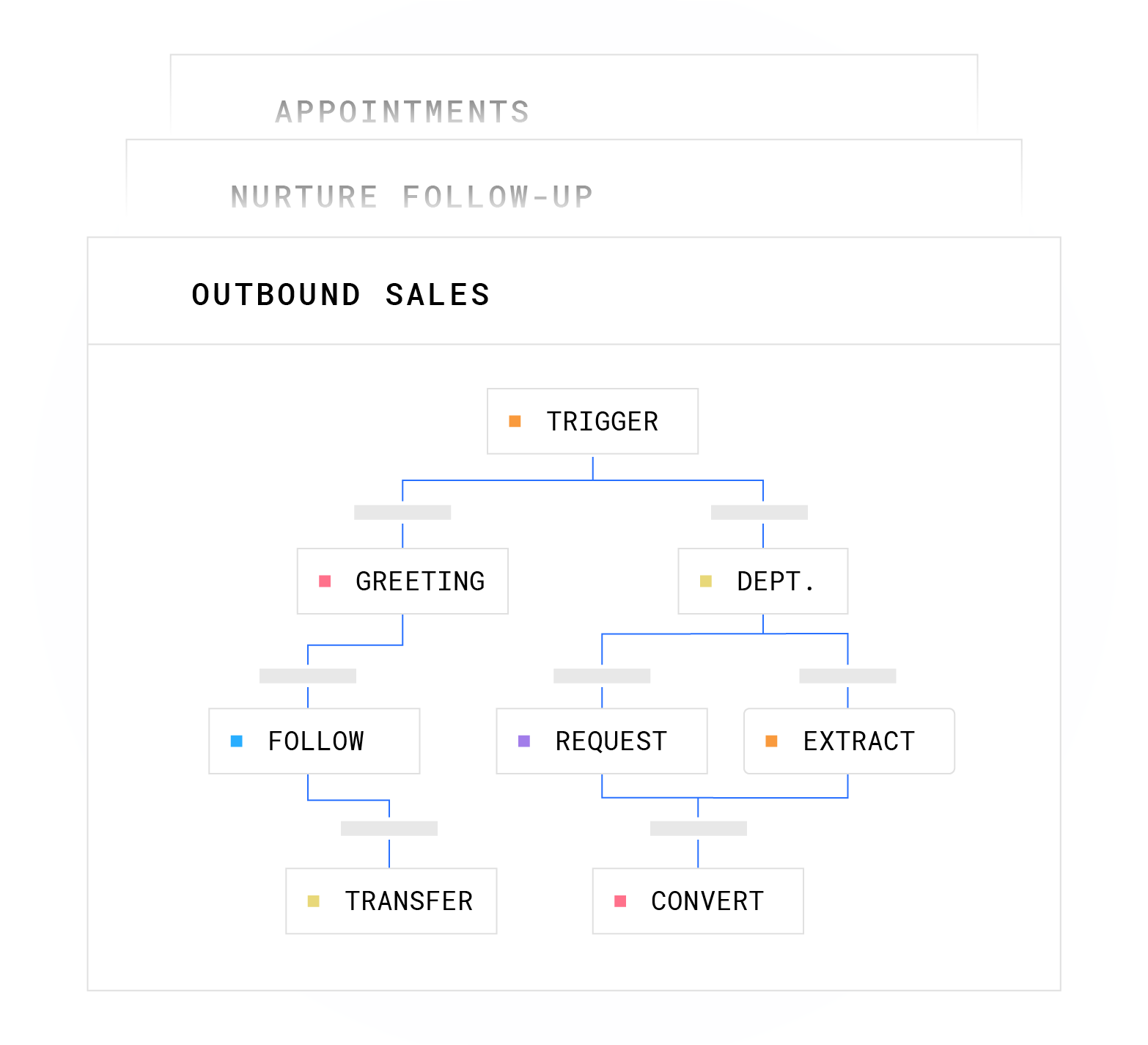
Qualification logic lives at the tenant level so each client’s ICP stays separate. Plura’s no-code workflow builder lets account managers define budget, timeline, and authority questions per client without writing code. The AI adapts conversation paths based on prospect answers, routing high-intent signals to booking logic and triggering clarification loops for low-confidence responses.
Sensitive fields are redacted at the platform layer. Only qualified summaries push to the client CRM. The handoff record a sales rep receives contains the lead score, qualification answers, conversation history, and recommended next action. Raw data that belongs in a separate compliance layer stays inside the platform.
Agencies using this model handle 15-20 clients per account manager, versus 5-8 in manual operations. The difference is not headcount. It is how much of the account manager’s time goes to strategy versus operational follow-up, with roughly 40% of time previously spent on tasks like lead follow-up before AI handles that layer.
Step 4: Automate Calendar Booking and Live Transfer
Qualified leads should never wait for a human to find a calendar slot. To eliminate that wait, Plura connects each client’s calendar and applies transfer rules when high-intent signals appear in the conversation. Once those signals trigger, the AI books the appointment directly, sends confirmation, and logs the booking with immutable audit fields.
Some leads need a human immediately. For those cases, live transfer routes the call to the right rep with full conversation context already loaded. The rep does not start from scratch. They pick up a warm conversation with a qualified buyer.
Run your numbers through Plura’s ROI calculator to see projected cost savings in real time.
Step 5: Keep Context with Cross-Channel Stateful Memory
Stateful memory removes repetition across channels. A lead might fill out a form, receive an SMS, then get a call, and they should not have to re-explain their situation each time. Plura’s Stateful Conversation Database keys every interaction to a customer token, such as phone number, email, or ID, across voice, SMS, RCS, and AI webchat. Every channel reads the same tenant-scoped history.
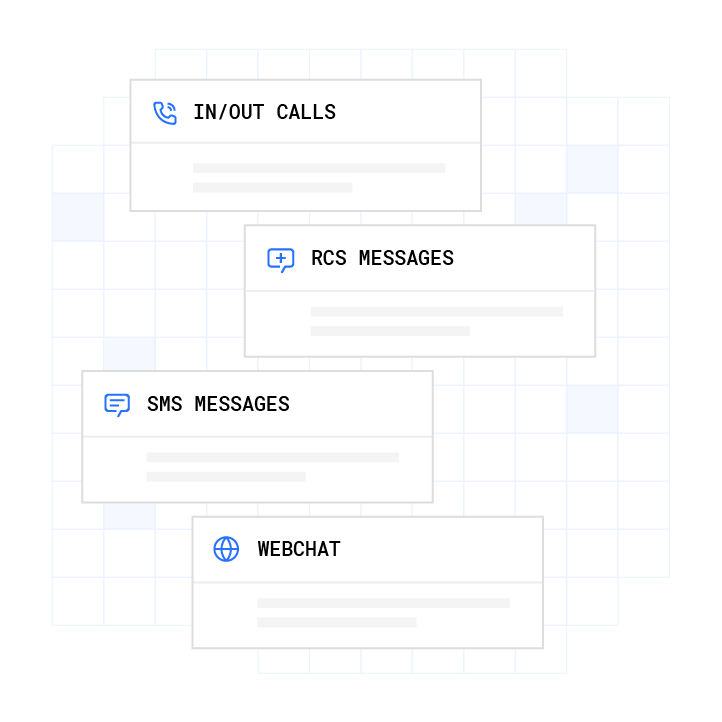
Plura supports voice, SMS, webchat, and RCS within a unified stateful inbox that maintains full conversation history. That architecture separates a platform from a collection of point tools. Conversation transcripts with consent metadata export to the client CRM at the close of each interaction.
Step 6: Turn On White-Label Reporting and Client Dashboards
Client reporting is one of the largest time sinks in agency operations. Agencies typically spend four to twelve hours per account per month pulling data, building decks, and writing summaries.3 Plura’s conversation intelligence generates client-branded performance summaries automatically, pulling speed-to-lead, qualification rates, and booked appointments from the platform’s data layer.
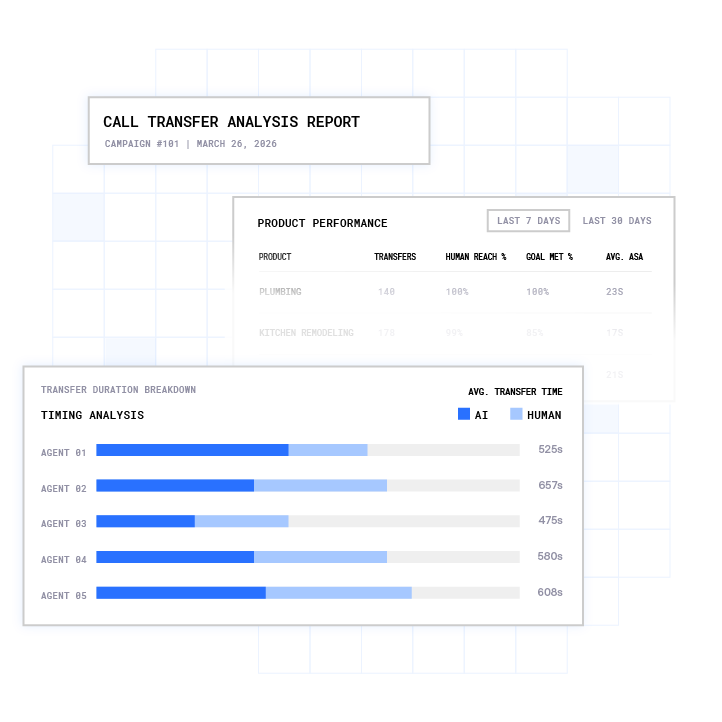
Each report respects tenant data boundaries, so one client’s metrics never appear in another client’s dashboard. Account managers review and annotate instead of building reports from scratch. That operational shift is what makes 15 to 20 clients per manager sustainable.
Step 7: Monitor, Iterate, and Scale Capacity
Deployment starts the ongoing optimization cycle. Plura runs every build like a conversion rate optimization test, with weekly conversation intelligence review and threshold adjustments per tenant. Qualification scores, transfer rates, and booking rates all feed back into the workflow tuning loop.
Separate consent ledgers and quiet-hours rules apply per client. Time-zone detection enforces calling windows automatically. Account managers set the rules once at the tenant level, and the platform enforces them on every outbound contact.
Manual vs. AI Follow-Up Economics
| Metric | Manual Process | Plura AI |
|---|---|---|
| First contact time | 47-hour industry norm | Under 5 seconds3 |
| Clients per account manager | 5-8 | 15-20 |
| Monthly cost per client | Hidden SDR and ops overhead | Plura AI’s monthly pricing starts at $2,500 for the Starter plan (with higher tiers at $5,000 and $7,500), plus separate AI talk time at $14–$16/hr. |
| Lead response consistency | Variable by rep availability | High consistency across all tenants |
Which AI Platform Helps Agencies Find and Work Leads Fastest?
Plura ranks highest for agencies because it owns its FCC-licensed carrier stack and delivers sub-5-second multi-channel response with stateful memory across voice, SMS, RCS, and webchat.4 In the 2026 regulatory environment created by the FCC NPRM (CG Docket No. 26-52) and state onshoring statutes, platforms running 100% U.S. infrastructure avoid foreign-infrastructure exposure.2 Plura owns its telecom infrastructure and holds an FCC carrier license, whereas platforms that depend on third-party CPaaS providers operate as a software layer without a carrier license. Agencies gain automated qualification and live transfer without building separate tools. See how Plura’s AI SMS handles lead qualification.
Can AI Replace a CRM?
No. Plura augments CRMs by writing structured qualification data, consent timestamps, and conversation summaries back into the client system through Plura’s integrations. The platform does not replace the system of record. It accelerates the handoff layer while agencies retain full CRM ownership. 2026 compliance expectations include immutable consent ledgers that Plura surfaces for export. Agencies and their clients remain responsible for their own regulatory obligations.
Is Lead Generation Worth It in 2026?
Lead generation remains profitable when response time drops below 60 seconds. The speed-to-lead advantage described earlier translates directly to conversion economics, with sub-60-second response times driving the unit economics that keep campaigns viable in 2026. Plura’s multi-tenant architecture lets agencies run separate client campaigns on one stack while expanding account-manager capacity from 5-8 to 15-20 clients. Pricing transparency and white-label reporting reduce the margin compression that previously made scaling unprofitable.
Walk through the full agency configuration in a live session.
Frequently Asked Questions
How long does implementation take?
Simple inbound qualification flows deploy in days. Complex multi-step intakes, such as a 25-question health-history survey, run closer to one to two months because the workflow logic itself takes time to design and validate. Plura’s onboarding sequence includes a discovery audit, sample call intake, workflow build, pilot test on a subset of real calls, and full go-live. Every annual contract includes a 90-day opt-out window if the deployment is not delivering.
How does multi-tenant compliance work across clients?
Each tenant inside Plura maintains separate DNC lists, consent records, and quiet-hours rules. Real-time DNC and TCPA litigator screening runs before every outbound contact, with timestamped, immutable logs generated per check. Quiet-hours enforcement applies automatically through time-zone detection at the tenant level. Agencies remain responsible for their own regulatory obligations and those of their clients. Plura provides infrastructure that supports that compliance posture and does not interpret legal requirements on behalf of users.
Does Plura provide white-label reporting?
Yes. Conversation intelligence generates client-branded performance summaries that include speed-to-lead, qualification rates, and booked appointments. Each report pulls only from the requesting tenant’s data, so no client ever sees another client’s metrics. Account managers review and annotate the output instead of building reports from raw platform data. That shift is what makes managing 15 to 20 clients per manager sustainable without adding headcount.
What pricing transparency do agencies receive?
Plura publishes clear per-client monthly bands with no hidden usage fees inside the stated limits. Agencies can model their per-client economics before committing, and the 90-day opt-out window in every annual contract means the deployment has to perform before the agency is locked in for the year.
What success metrics should agencies track after deployment?
The metrics that matter most are:
- Median time-to-first-contact per tenant
- Qualified lead rate by client and source
- Meetings booked per qualified lead
- Account-manager client load before and after deployment
- Margin per client after platform costs
- Seller acceptance rate on AI-qualified handoffs
AI Conversation Intelligence surfaces most of these automatically. Weekly review of qualification thresholds and transfer rates per tenant keeps the system improving rather than drifting after go-live.
Compare plans and rates side by side.
1 Plura AI maintains SOC 2, HIPAA, ISO, and GDPR posture as part of its platform infrastructure. References to compliance frameworks in this article describe Plura’s platform capabilities and do not constitute a guarantee that any customer using Plura will themselves be compliant with applicable laws or standards. Customers remain solely responsible for their own regulatory obligations, certifications, consent management, recordkeeping, and the claims they make to their own end users. Consult qualified legal counsel for guidance specific to your use case.
2 This article describes regulatory frameworks at a general level and does not constitute legal advice. Laws and regulations vary by jurisdiction, change over time, and apply differently depending on facts and circumstances. Readers should consult qualified legal counsel before making compliance decisions.
3 Performance figures, customer outcomes, and industry statistics referenced in this article are drawn from cited third-party sources or Plura customer case studies. Individual results vary based on implementation, use case, industry, audience, and execution. Past or aggregate performance is not a guarantee of future results.
4 References to third-party products, services, companies, or research are made for informational and comparative purposes only. Plura AI is not affiliated with, endorsed by, or sponsored by any third party named in this article unless explicitly stated. Trademarks and product names referenced remain the property of their respective owners.
This article is provided for informational purposes only and reflects Plura AI’s understanding at the time of publication. Product capabilities, integrations, and specifications are subject to change. For the most current information, visit plura.ai.
This article was produced with the assistance of AI tools and reviewed by Plura AI prior to publication.